
The Best Clothing Storage Solutions to Organize Your Closet

The best clothing storage solutions aren't one-size-fits-all. They're about creating a system that perfectly fits your clothes and your closet's quirks. It often comes down to a smart mix of categorizing your wardrobe, using vertical space wisely, and bringing in specialized tools—like space-saving hangers—that can instantly free up a crowded clothing rod. The real win is a closet that makes getting dressed easy and, dare I say, enjoyable.
Your Guide to a Clutter-Free Closet
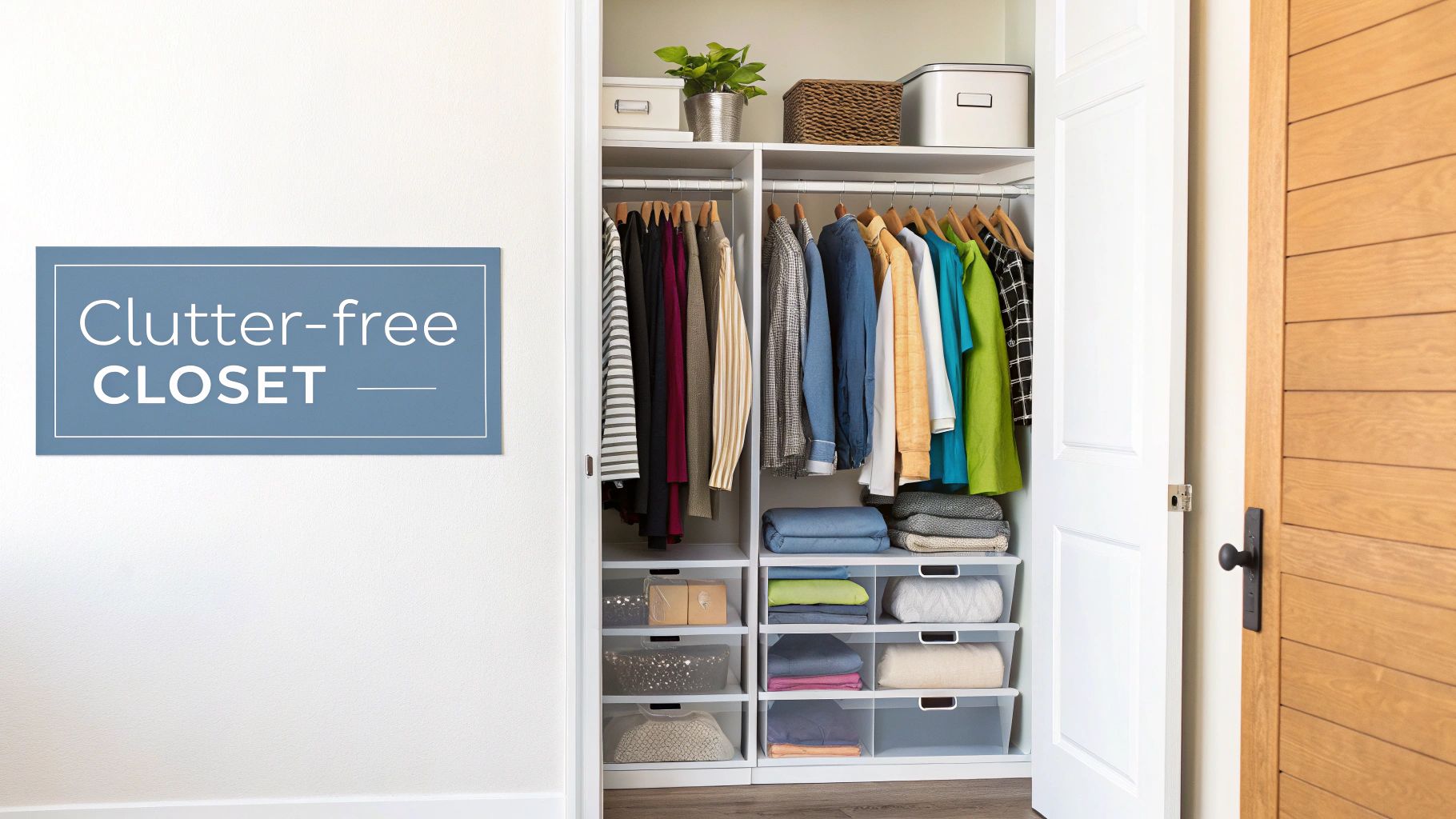
We've all been there: staring into a chaotic, overstuffed closet, feeling that familiar wave of frustration. Trying to find that one specific shirt can feel like an impossible task, turning your morning routine into a stressful mess. This guide is here to change that. We're going to walk through practical, effective clothing storage solutions that actually work for a real closet.
Forget the generic advice and overwhelming systems that are impossible to stick with. A great closet system should simplify your life, not make it more complicated. The journey to a truly organized closet is less about buying every bin and basket in sight and more about smart, intentional planning.
Building a Foundation for an Organized Closet
Here's a little secret: a tidy closet is simply the result of a good system. It’s not about having fewer clothes (unless you want to!), but about storing them more intelligently. Getting that mindset right is the first real step toward long-term success.
Think of this guide as your roadmap to a streamlined, functional closet that finally feels calm. We'll cover everything from taking an honest look at your wardrobe to choosing game-changing tools like modular organizers and the right hangers for the job.
You'll quickly see that the benefits go way beyond just a neat-looking closet. A well-organized space saves you precious time during the morning rush and helps you rediscover clothes you forgot you even had. When everything is visible and easy to grab, you'll find yourself creating new outfits and getting more value out of your wardrobe.
Why Closet Organization Is More Important Than Ever
The growing interest in better closet systems isn't just a fleeting trend; it’s a direct response to modern life. With more people living in smaller urban spaces, making every square inch of your closet count has become a necessity.
This is why the global market for closet organizers is booming, projected to jump from USD 7.64 billion in 2024 to an incredible USD 11.15 billion by 2029. This growth isn't just a statistic; it shows a widespread desire to bring more order and efficiency into our homes. If you're curious, you can read more about these market trends and their drivers.
A well-organized closet isn't just about aesthetics; it's about creating a system that gives you back time, reduces daily friction, and allows you to start your day with a sense of calm and control.
To get you started on the right foot, I've broken down the entire process into a simple blueprint. This is the core strategy we'll be exploring in this guide.
Your 4-Step Closet Transformation Blueprint
Here’s a quick overview of our approach. We’ll tackle this transformation one logical phase at a time to keep it manageable and ensure you get lasting results.
| Phase | Objective | Key Action |
|---|---|---|
| Wardrobe Assessment | Get a clear picture of what you own and need to store in your closet. | Declutter and categorize every single item you have. |
| Tool Selection | Choose storage solutions that fit your clothes and your closet space. | Select the right hangers, bins, and dividers for your space. |
| Layout Planning | Design a closet that's intuitive and accessible. | Create logical "zones" for different types of clothing. |
| System Maintenance | Keep your closet organized for the long haul. | Build simple habits for daily and seasonal upkeep. |
By following these four phases, you're not just tidying up—you're building a sustainable closet system that will serve you well for years to come.
Get to Know Your Wardrobe and Closet Space, Really Know Them
I see it all the time: people rush out to buy bins and organizers, only to find they don't solve the real problem. The secret to a truly organized closet isn't about buying more stuff; it's about starting with a solid plan. And that plan begins with an honest look at what you actually own and the closet you're working with.
Think of yourself as a detective for your own closet. Before you can crack the case of the clutter, you have to gather all the evidence. Taking the time to do this upfront means every solution you pick will actually work for you and your closet.
The Big Wardrobe Audit
First things first: you need to conduct a full-scale wardrobe audit. This means pulling everything out of your closet. Yes, everything. Pile it all on your bed. It’s a bit dramatic, I know, but seeing the sheer volume of what you own is often the wake-up call we all need.
With your mountain of clothes staring back at you, it's time to get sorting. Make three piles, and be firm with yourself.
- Keep: These are the clothes you genuinely love and wear often. They fit you right now, not "someday." If you haven't touched it in a year, it doesn't get to stay here.
- Donate/Sell: For all the good-condition items that just aren't you anymore. Maybe your style evolved, the fit is off, or you simply never found the right occasion. Let someone else love them.
- Store (Off-Season): This is for the items you love but don't need in your primary closet all year. Think heavy parkas in the summer or linen shorts in the dead of winter.
Being ruthless is the name of the game. Did you know the average person wears only about 20% of their clothes on a regular basis? The goal here is to make your closet a functional home for that hard-working 20%. If you're struggling, our guide on decluttering your wardrobe can walk you through it step-by-step.
Categorize What's Left
Okay, now you're left with just the "keep" pile. This is where you switch from a declutterer to an organizer. By grouping similar items, you'll start to see the patterns in what you own and figure out what kind of storage your closet actually needs.
Break it down, starting broad and getting more specific:
- Group by Type: First, put all the pants in one pile, all the shirts in another, dresses together, and so on.
- Sub-categorize: Now, take that shirt pile and split it up. Separate your work blouses from your casual tees and your workout tops. Do the same for your pants—jeans, trousers, leggings.
- Organize by Color: Finally, arrange each of those smaller piles by color. This not only looks fantastic but makes finding that one specific shirt a breeze.
This might feel a little tedious, but trust me, the payoff is huge. You'll instantly see that you have ten black t-shirts or that your sweater collection has officially taken over. This is the exact information you need to plan your new closet layout effectively.
Measure Every Inch of Your Closet
Now, let’s turn our attention from your clothes to their home. Grab a tape measure and get the real dimensions of your closet—width, depth, and height. Don't just eyeball it. Precision is your best friend when you're trying to fit new storage solutions into a tight space.
Pay special attention to the "dead zones." That super-high shelf you can barely reach? The awkward corner where things get lost? That huge gap of empty space under your hanging shirts? These are all golden opportunities for smarter closet storage.
Make sure you measure these underutilized areas. The floor space could be perfect for a shoe rack or a set of drawers. That high shelf is an ideal spot for bins holding your off-season clothes. I always recommend sketching a quick diagram of your closet with all your measurements. This little blueprint will be invaluable when you start shopping for organizers.
By finishing this deep-dive assessment, you’ve moved beyond a vague wish for a "cleaner closet" and created a concrete, actionable plan. You know exactly what you own and the precise map of your closet, which is the perfect foundation for choosing the best clothing storage solutions for your needs.
2. Choosing the Right Closet Organization Tools
Okay, you've done the hard work of assessing your closet. Now for the fun part: picking the gear that will transform that cluttered space into a streamlined, functional wardrobe. This isn't just a shopping trip; it's about making strategic investments in tools that solve your specific closet storage headaches, whether that's a jammed clothing rod or a mountain of shoes.

This kind of process is crucial. It ensures you buy what you actually need based on the clothes you're keeping and the exact dimensions of your space. No more wasting money on closet organizers that don't quite fit or solve the wrong problem.
Start with Your Hanging Space
For most of us, the clothing rod is prime closet real estate—and it's almost always overcrowded. That makes hangers the single most powerful tool for an immediate, visible upgrade. Let's be honest, those bulky, mismatched plastic hangers you've collected over the years are space hogs. They also do a terrible job of holding onto your clothes, leading to stretched-out necks and garments constantly slipping onto the floor.
Switching to a uniform set of slim, space-saving hangers is a total game-changer for any closet. Here are a couple of my go-to options:
- Velvet-Flocked Hangers: Their ultra-thin profile lets you pack more onto the rod without cramming. Plus, the velvety texture grips silky tops, tank tops, and wide-neck sweaters so they stay put.
- Tiered Hangers: These are absolute lifesavers for pants, skirts, and even collections of camisoles. A single MORALVE hanger, for instance, can vertically stack multiple pairs of trousers, cutting down the space they take up by as much as 80%. It’s an incredible trick for maximizing vertical space inside your closet.
The demand for better organization is real. The clothes hanger market was valued at USD 2,352 million in 2021 and is on track to hit USD 2,833.9 million by 2025. We're all looking for smart ways to fit more into our closets and keep our clothes looking great.
Beyond the Clothing Rod
A truly organized closet needs more than just great hangers. Your initial wardrobe assessment is your guide here. Did you find a huge pile of sweaters? A drawer that explodes with socks every time you open it? There's a tool for that.
Modular cube organizers are fantastic for closets that are short on built-in shelving. You can stack and arrange them to fit into odd corners or under hanging clothes, creating the perfect spot for folded jeans, chunky knits, or handbags. They're incredibly adaptable, so they can change as your closet needs do.
For all the small stuff, drawer dividers are an absolute must. They create a neat, tidy grid for socks, underwear, and accessories, turning a chaotic jumble into an orderly display. You won't believe how much quicker your mornings will be when you can see everything at a glance. For a deeper look at how different systems can work together, our guide on the best closet organizer systems is a great resource.
Expert Tip: The best closet system is the one you'll actually use. If it's too complicated to put things away, you'll end up with piles of clothes again. Always prioritize simplicity and easy access within your closet.
To help you get started, here's a breakdown of some popular closet storage solutions to help you select the perfect tools for your specific needs.
Comparing Essential Closet Storage Tools
| Storage Solution | Best For | Space-Saving Potential | Average Cost |
|---|---|---|---|
| Tiered Hangers | Pants, skirts, shorts, scarves | High | $15 - $30 |
| Velvet Hangers | Silky tops, dresses, wide-neck shirts | High | $20 - $40 (for 50) |
| Modular Cubes | Folded sweaters, jeans, handbags, shoes | Medium to High | $30 - $70 |
| Drawer Dividers | Socks, underwear, belts, small accessories | Medium | $10 - $25 |
| Over-the-Door Racks | Robes, towels, jackets, scarves | High | $15 - $50 |
Choosing from this list based on your inventory will set you on the right path to a truly organized closet space.
Find Solutions for Your Specific Closet Needs
Every wardrobe is different. A shoe lover has completely different closet storage challenges than someone with a passion for collecting vintage scarves. The secret is to find specialized tools that target your personal closet clutter hot spots.
Think about these common scenarios:
- For the Capsule Wardrobe: If you've curated a lean collection of go-to pieces, keeping them organized is key. A simple closet system with dedicated hanging and shelf space keeps everything visible and accessible.
- For the Accessory Collector: Don't let your belts, ties, and scarves become a tangled mess. Specialized hangers with multiple hooks or loops are perfect for keeping them organized and visible inside your closet. Clear acrylic shelf dividers are also great for propping up clutches and handbags on a shelf.
- For the Sneaker Enthusiast: To protect and display a prized shoe collection within your closet, consider investing in premium sneaker display cases. They keep your best pairs dust-free and easy to admire.
The end goal is to build a closet system that feels like it was custom-made for you and your stuff. By mixing broad solutions like space-saving hangers with a few specialized organizers, you can finally create a setup that brings lasting order to the chaos.
Designing a Smarter Closet Layout
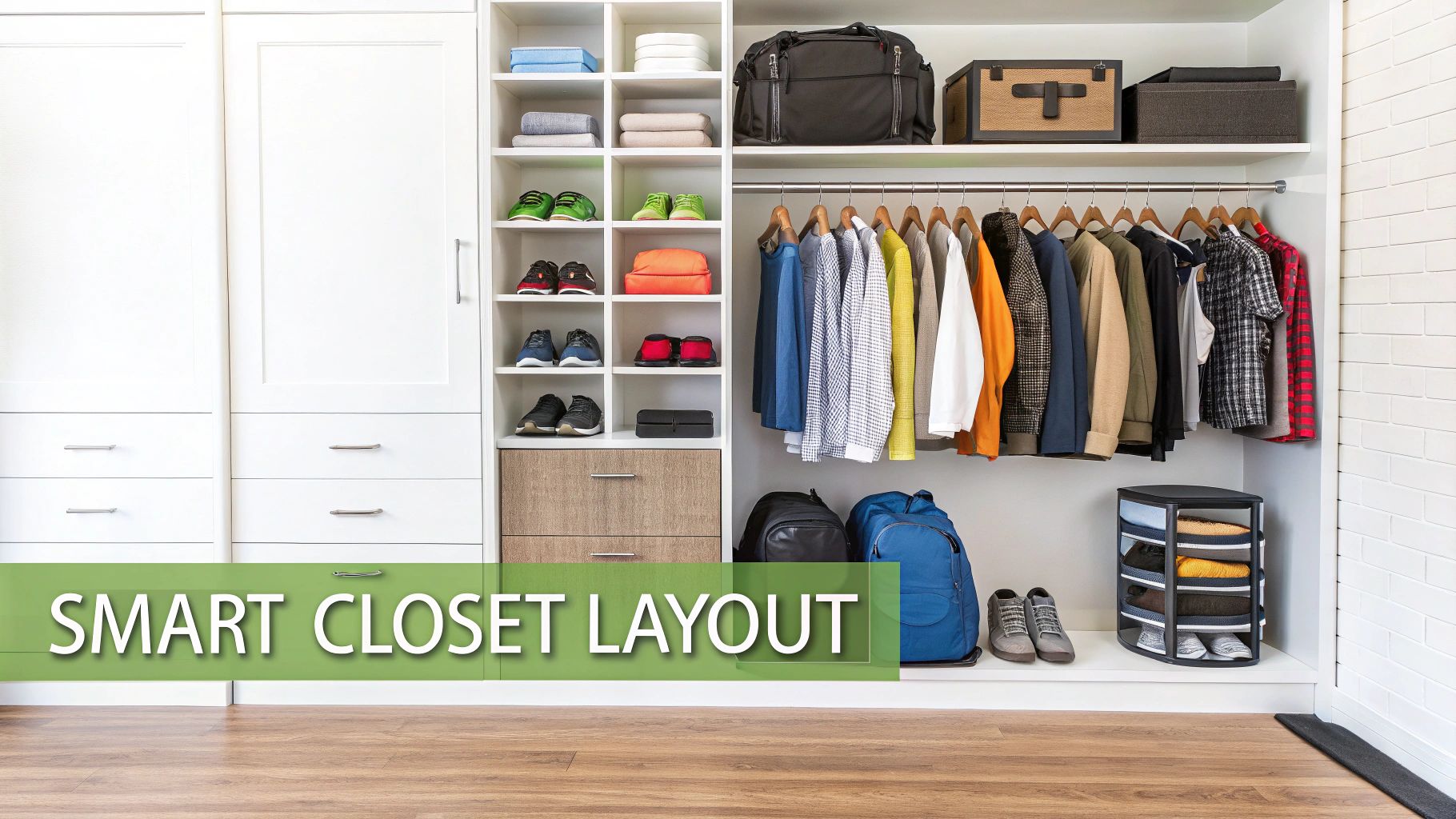
Alright, you’ve done the hard work of decluttering and have your new storage tools ready to go. Now for the fun part: turning that vision of a perfectly organized closet into your new reality. A great layout is more than just making things look pretty; it's about building an intuitive system that makes your daily routine feel effortless.
The secret to a truly functional closet is zoning. Think of your closet space like a city map, with different neighborhoods for different types of clothing. When you create these dedicated zones, you completely eliminate that frantic morning search for a specific shirt or pair of pants. Everything has its place, and you always know where that place is.
Getting this right involves a bit of understanding space planning, which is all about making sure every single inch of your closet is working for you, not against you.
Establish Your Closet Zones
First things first, let's map out your closet’s real estate. The easiest-to-reach areas—everything right at eye level—should be reserved for the clothes you wear all the time. This is your "prime real estate."
Your everyday work shirts, go-to jeans, and favorite sweaters should all live right here in this central hub. This simple shift makes getting dressed so much faster because your most-worn items are always front and center.
What about the less-used items? They get moved to the harder-to-reach spots. That top shelf that requires a step stool? That's the perfect home for off-season clothes, formalwear you only break out a couple of times a year, or sentimental items you want to hang onto.
Group and Arrange for Easy Access
With your zones defined, it's time to arrange everything within them. The goal is to make grabbing what you need completely thoughtless. Grouping similar items together is the key to creating a system that practically maintains itself.
Here are a few of my go-to methods for arranging clothes in a closet:
- Group by Type: This one is non-negotiable. Keep all your pants together, shirts together, dresses together, and so on. It makes building an outfit a breeze because you know exactly where to find each component.
- Organize by Color: Once you've grouped by type, arrange the items by color, like a rainbow from light to dark. Not only does this look amazing—like your own personal boutique—but it makes finding that specific navy blue blouse a two-second task.
- Separate by Function: Create mini-zones for your different life activities. Having a dedicated section for gym clothes means you can grab your workout gear without rummaging through your work attire.
When every item has a specific home, putting laundry away is no longer a chore. It's just a matter of returning things to their designated spot. This is how a closet stays organized with almost zero effort.
These small details are what separate a closet that's tidy for a week from one that stays organized for good. For a deeper dive into mapping out your space, our guide on how to design a closet has some great additional tips.
Maximize Vertical Space with Strategic Tools
Most people don't realize how much usable space they're wasting in their closet. Look up. Look down. That empty area above your top shelf or below your hanging clothes is prime organizational territory. This is where your new storage solutions, especially space-saving hangers, become layout game-changers.
When you use MORALVE tiered hangers to consolidate all your pants or skirts into one vertical column, you instantly free up a huge chunk of rod space. That new real estate can now be used for another category, like jackets or button-downs, making your prime zone even more powerful.
Here are a few other small upgrades that can make a massive difference in your closet layout:
- Add Lighting: Dark corners are where organized closets go to die. Stick-on, battery-powered LED lights can instantly illuminate those forgotten spots, making everything visible and easy to find.
- Install Hooks: The back of your closet door or an empty sliver of wall is perfect for hooks. They’re great for hanging your robe, planning tomorrow’s outfit, or stashing your most-used bags.
- Use Shelf Dividers: If you have long shelves, shelf dividers are a must. They keep your piles of folded sweaters from collapsing into each other, ensuring each stack stays neat and contained.
By combining smart zoning with logical grouping and the right tools, you’re not just organizing; you’re creating a dynamic closet system that works for you. This thoughtful approach is the final, crucial step in building a closet you'll love using every single day.
Keeping Your Newly Organized Closet in Shape
You did it. After all the sorting, planning, and installing, you're looking at a beautifully organized closet. Take a second to admire your work, because the real challenge is keeping it this way.
The trick to turning this one-time project into a permanent, stress-free system is building a few simple habits. Trust me, spending a few minutes each week on upkeep is far less painful than facing another massive clean-out in six months. Let's talk about how to make your new closet system last.
Make a Few Good Habits Stick
Long-term success isn't about being perfectly neat all the time—it's about consistency. When you weave a few small routines into your week, closet clutter never gets a chance to take over.
The single most powerful habit you can adopt is the ‘one-in, one-out’ rule. Every time a new shirt, pair of shoes, or jacket comes into your home, an old one has to go. It’s a simple trade that keeps your closet from overflowing and makes you think twice about what you buy.
Think of your organized closet as a living system, not a museum display. It needs small, regular check-ins to work properly. This is how you stop the slow creep of chaos and make sure your closet always serves you, not the other way around.
Another game-changer is the 10-minute weekly reset. Pick a time that works for you—Sunday evening is my personal favorite—to do a quick tidy. Put away the clothes that have piled up on "the chair," straighten your shoes, and refold any sweaters that have been knocked over in the closet. It's a tiny investment that pays off big time.
Master the Art of the Seasonal Swap
One of the biggest reasons closets get chaotic is trying to cram your entire wardrobe into one space year-round. A seasonal swap is a brilliant way to free up prime real estate and protect your clothes. You only have to do it twice a year.
Here’s how to do it right:
- Time the Transition: As the weather starts to turn, pull out everything from your closet you know you won't be touching for the next four to six months—heavy coats, wool sweaters, sundresses, you get the idea.
- Clean Everything First: Never store dirty clothes. Stains can set permanently over time, and even faint odors or body oils can attract pests.
- Use the Right Containers: I recommend breathable cotton garment bags for nice dresses or suits and clear, airtight bins for everything else. Steer clear of the plastic dry-cleaning bags; they trap moisture and can cause your whites to yellow.
- Store Smart: Put the bins on a high shelf in your closet, slide them under the bed, or tuck them away in a dry storage area. And for goodness sake, label every single bin. You'll thank yourself later.
Thinking Beyond the Closet
Let’s be honest, sometimes even the most organized closet isn't quite enough, especially if you're working with a small space. This is where a few freestanding pieces can be a lifesaver. A simple garment rack, for instance, is perfect for staging your outfits for the week or holding a "capsule" of your most-worn pieces to ease the burden on your main closet.
These kinds of solutions have become incredibly popular for a reason. In fact, the global market for garment racks hit USD 5.2 billion in 2023, largely because so many of us are looking for smart ways to manage space in smaller homes. They're genuinely some of the best clothing storage solutions for handling closet overflow. You can see just how market trends are shaping home organization if you're curious.
By building these habits, you'll find that organization stops being a "project" and becomes a simple, natural part of your routine.
Tackling Your Toughest Closet Questions
Even with a solid plan, a few tricky questions always pop up when you're deep into a closet overhaul. Getting past these final hurdles is what separates a decent closet refresh from a truly life-changing one. To help you nail the details, I’ve put together answers to some of the most common questions I hear about closet storage.
Think of this as your personal troubleshooting guide. Getting straight, practical advice for your specific closet challenges is the key to creating a system that actually sticks for the long haul.
How Can I Squeeze More Space Out of a Tiny Closet?
Living with a small closet feels like a constant puzzle, but the secret is almost always to look up. Most closets have a ton of wasted vertical space just waiting to be claimed. One of the easiest and most impactful changes you can make is installing a double-hang rod. Just like that, you’ve created a whole second level for shirts, skirts, and folded trousers.
That space above your top rod is gold, too. Adding a high shelf there gives you the perfect spot for neatly folded sweaters or bins filled with off-season accessories. And please, don't forget the back of the door—it's the most underused piece of real estate in any closet. An over-the-door organizer is a workhorse for holding shoes, scarves, belts, or even smaller handbags.
Honestly, the single biggest game-changer often comes down to your hangers. Ditching mismatched hangers for a uniform set of slim, velvet ones not only looks better but stops clothes from slipping. If you really want to maximize space, tiered hangers that let you stack multiple items vertically can shrink the space your clothes take up by as much as 80%.
What’s the Right Way to Store Sweaters So They Don’t Stretch Out?
This is such an important question because getting this wrong can completely ruin your favorite knits. The number one rule is simple: never hang heavy sweaters on a standard hanger. The weight of the garment will inevitably pull on the shoulder seams, creating those dreaded, pointy bumps.
Folding is always the best way to go. For the best visibility and access within your closet, try "file folding" them. You fold each sweater into a tidy rectangle and then line them up vertically in a drawer or on a shelf, just like files in a cabinet. This lets you see every single option at a glance without having to rummage through a messy stack.
If you're tight on shelf or drawer space, rolling your sweaters is another fantastic, space-saving option that also prevents deep creases. For long-term or off-season storage, pop them in breathable cotton bags with a cedar block or two. This keeps moths and moisture at bay while letting the natural fibers breathe.
How Often Do I Really Need to Declutter My Wardrobe?
Keeping your closet in check is a marathon, not a sprint. A big, thorough closet decluttering session is best done twice a year. The natural time for this is when you're swapping out your seasonal clothes, like moving from spring/summer into fall/winter. It’s the perfect moment to honestly assess what you wore in the last six months and what’s ready to go.
To keep things from getting out of control between those big purges, you need to build a few simple habits.
- Adopt the 'One-In, One-Out' Rule: This is non-negotiable for stopping closet clutter before it starts. Every time a new item comes into your closet, an old one has to leave—whether it's donated, sold, or tossed. It’s all about maintaining equilibrium.
- Do a 10-Minute Weekly Reset: Just set aside ten minutes every week to put your closet back in order. Hang up the clothes that have migrated to "the chair," refold sweaters on the shelves, and straighten your shoes. This tiny bit of effort keeps small messes from snowballing.
Plastic Bins vs. Fabric Bins: Which Is Better for Storing Clothes?
The plastic versus fabric debate really comes down to what you’re storing and where in your closet it’s going to live. They each have their own clear strengths.
Clear plastic bins are the undisputed champs for long-term storage, especially if you need to protect items from pests, dust, and moisture on a high closet shelf or in a storage area. The fact that they’re see-through is also a huge time-saver, letting you spot what you need without unstacking and opening every single box.
Fabric bins, on the other hand, are much more breathable. This makes them the superior choice for natural fibers like wool, cashmere, and linen, especially for seasonal items you’re storing inside your closet (think a high closet shelf or under the bed). They prevent moisture from getting trapped inside and have a softer, more stylish look that works great on open shelving.
Most of the time, the best closet storage solutions involve using both. Use plastic bins for deep storage or maximum protection and fabric ones for items that need to breathe or are stored in your main living spaces.
An organized closet does more than just look good—it simplifies your morning routine and brings a real sense of calm to your home. With the right strategy and tools, you can transform any closet, no matter the size. At MORALVE, we're passionate about helping you do just that with our innovative space-saving hangers, designed to make the most of every last inch.
Ready to take back your closet? Explore our collection of closet organization solutions at MORALVE and start your journey to a clutter-free life today.
Leave a comment