

Finding the Best Hangers for Dress Shirts and a Perfectly Organized Closet

The secret to keeping your dress shirts looking sharp and your closet flawlessly organized? It's not just about proper ironing or careful folding—it starts with the hanger. The best options are almost always wide-shouldered wooden or contoured velvet hangers, as these designs are built to support a shirt's natural shape and prevent dreaded shoulder puckers.
Getting this one simple thing right is the first real step toward a closet that feels organized and actually works for you, transforming a chaotic space into a functional wardrobe.
Your Guide to a Perfectly Organized Closet
There's nothing more frustrating than opening your closet in the morning only to find a mess of wrinkled, misshapen dress shirts. But you don't need a total wardrobe overhaul to fix it. The solution often comes down to one foundational tool: the right hanger. We're going to move beyond just thinking of hangers as hooks and show you why they're essential for both protecting your clothes and creating a truly organized closet.

Start thinking of your hangers as the framework that protects your clothing investment and brings order to your space. A great hanger preserves the crisp structure of a shirt, all the way from the collar down to the cuffs. It’s a small change with a massive impact on organization, turning a chaotic space into one that feels calm and orderly.
The Foundation of Wardrobe Care and Organization
The type of hanger you choose has a direct impact on the lifespan of your garments and the tidiness of your closet. Good support prevents fabric from stretching, while a uniform set of hangers creates visual harmony, making your wardrobe easier to navigate. This isn't just about storage; it's an active step in organizing your life.
So, what makes a great dress shirt hanger? It boils down to a few key things:
- Supportive Shoulder Shape: You want hangers with contoured or flared ends that mimic the shape of your own shoulders. This is what stops those unsightly bumps from forming.
- Appropriate Width: The hanger should extend right to the shoulder seam, not beyond it and not short of it. This distributes the shirt's weight evenly.
- Quality Material: Smooth wood is a classic for a reason, and non-slip velvet is fantastic for preventing silky fabrics from sliding off and ending up in a pile on the floor.
This push for better clothing care is why the global hanger market, valued at around USD 2.02 billion, is expected to climb to about USD 2.89 billion by 2032. People are realizing that quality storage is an investment in their wardrobe's longevity and their closet's organization.
An organized closet does more than just look good—it simplifies your daily routine. Using uniform hangers creates a sense of visual harmony, which instantly makes your closet feel more spacious and less cluttered.
If you're looking to take things a step further and get a handle on your entire closet, diving into an ultimate guide to closet organization systems can be a game-changer. And, of course, managing the hangers themselves is part of the process; our guide on how to properly store hangers offers some great, practical tips for keeping them tidy and accessible.
Why Wire Hangers Are Your Closet's Worst Enemy
Let’s be honest, we've all done it. You get your shirts back from the dry cleaner on those flimsy wire hangers and just hang them straight in the closet. It seems harmless enough, right? But using a cheap wire hanger for a quality dress shirt is the fastest way to undermine both your clothes and your closet's organization.
Those thin metal frames might be free, but they come at a cost. They’re one of the biggest culprits behind long-term garment damage and a major reason why even a tidy closet can look messy and disorganized.
The problem is baked right into their design. A wire hanger is just a thin, sharp line. All the weight of your shirt gets concentrated on two tiny points on the shoulders. Over time, that constant pressure stretches the fabric, creating those dreaded and often permanent shoulder bumps.
How a Simple Hanger Can Ruin a Good Shirt and a Tidy Closet
Think about the way a quality dress shirt is constructed; it’s meant to fit the natural shape of your shoulders. A wire hanger completely ignores that, putting stress on the fabric in all the wrong places and contributing to a cluttered look.
Here’s a breakdown of the damage:
- Shoulder Puckers: The thin wire forces the fabric into a pointed shape, leaving behind those ugly, stretched-out bumps.
- Strained Seams: Instead of being evenly supported, the shirt’s full weight pulls down on the shoulder seams, causing them to weaken and wear out far too soon.
- Collapsed Collars: Wire hangers offer zero support for the collar, which means it will eventually flatten out and lose that crisp, sharp look you want.
This isn’t something that happens overnight. A day or two probably won’t do much harm, but after weeks and months of hanging on a wire frame, the fit of your shirt will be permanently altered.
A proper dress shirt hanger is designed to act like a substitute for your own shoulders. It has a wide, contoured shape that spreads the weight of the shirt evenly. This is the secret to not just caring for your clothes, but also keeping your wardrobe looking sharp and organized. In fact, proper storage is the first step to preventing wrinkled clothes before they even start.
The best hangers for dress shirts don't just hold your clothes; they preserve them. By providing the correct structural support, they ensure your shirts look just as good coming out of the closet as they did when you first bought them.
This idea of preserving clothes is critical, especially in retail. The fashion and apparel retail segment holds a massive 62.12% market share, and in that world, how a shirt looks on the hanger can make or break a sale. High-quality hangers aren't a luxury; they're essential for protecting inventory. You can dig into more details about the importance of hangers in the fashion market on verifiedmarketresearch.com.
Once you see the kind of damage a bad hanger can do, it becomes clear that choosing the right one is a fundamental part of managing your wardrobe well.
Choosing The Right Hanger for Ultimate Closet Organization
Picking the right hanger feels like a small detail, but it’s one of the most important decisions you can make for your wardrobe's health and your closet's organization. It’s not just about hanging up a shirt; it’s about preserving its shape, protecting the fabric, and creating a neat, functional space. Think of a hanger as the foundation for your shirt. A good one provides stability, while a cheap one causes problems you'll notice every time you get dressed.
The big four you'll usually see are wood, velvet, plastic, and metal. Each has its own strengths and is built for different shirts, closet sizes, and organizational priorities. Let's break down what makes each one tick so you can build a closet that works for you.
This is exactly what happens when you use a flimsy wire hanger—it creates permanent shoulder bumps and puts a strain on the seams. You can see it clearly here:
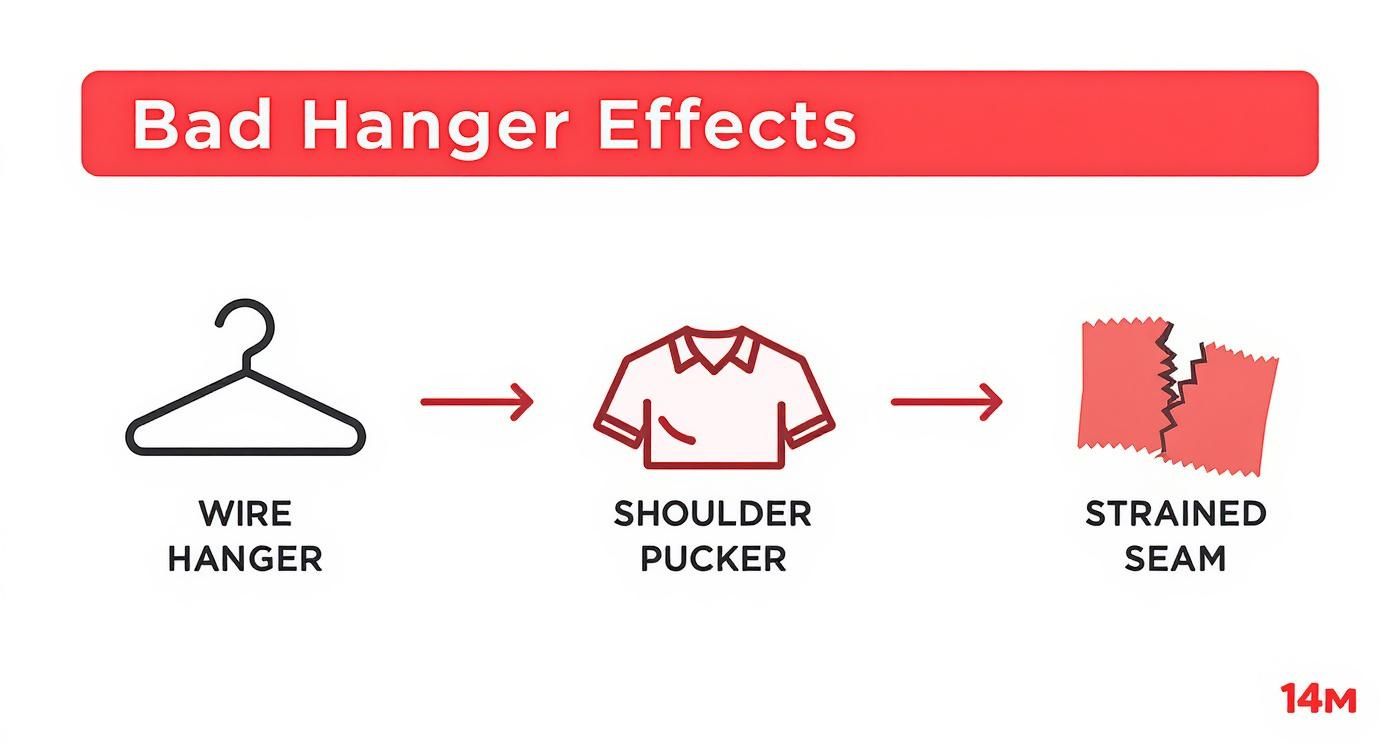
The bottom line is simple: a hanger without proper structure will eventually ruin the garment's natural shape, leading to a wardrobe that looks worn and a closet that feels messy.
Wood Hangers: The Gold Standard for a Boutique Closet
When it comes to pure, unadulterated support, nothing beats a classic wooden hanger. Their wide, contoured arms are intentionally shaped to mimic human shoulders, which lets the shirt's fabric hang naturally. This is the secret to avoiding ugly shoulder puckers and keeping a tailored shirt looking its best.
Wood hangers are especially great for elevating closet organization:
- Heavier Fabrics: Think oxford cloth or flannel that need serious support to prevent sagging.
- Long-Term Storage: Their solid build means they won't bend or break, safeguarding your best shirts for years.
- A Classic, Organized Look: A closet full of matching wooden hangers just looks incredible. It gives you that high-end, boutique vibe every single time you open the doors, making your wardrobe feel curated and calm.
Sure, they take up a bit more room, but the trade-off for superior support and visual appeal is well worth it for an organized space.
Velvet Hangers: The Space-Saving Organizational Tool
If you're fighting for every inch of closet space, velvet hangers are your best friend. Their incredibly thin profile lets you pack more shirts onto the rail without turning your closet into a cluttered mess. The soft, flocked surface also provides an amazing non-slip grip, perfect for silky fabrics that love to slide off and create clutter on the closet floor.
It's interesting to see how hanger preferences are shifting. While cheap plastic hangers still make up about 40% of the market, there's a growing appreciation for better materials. In Europe, for instance, high-quality and sustainable options like wood and velvet drive over 55% of market revenue.
A uniform set of hangers does more than just hold clothes; it creates visual harmony. This simple change can make your closet feel twice as organized, even before you start rearranging items.
Choosing the right hanger is only half the battle. You also need to make sure your closet rod can handle the weight. Having strong clothing rails is just as critical to preventing damage and keeping things in order. A great hanger on a flimsy rail is a recipe for disaster.
To make things even clearer, let's look at a side-by-side comparison of the most common materials.
Hanger Material Comparison for Dress Shirts
| Material | Pros for Dress Shirts | Cons for Dress Shirts | Best For |
|---|---|---|---|
| Wood | Excellent shoulder support prevents puckering. Durable and long-lasting. Creates a premium, organized look. | Bulky and takes up more closet space. Higher initial cost. | Heavier fabrics (oxford, flannel), tailored suits, and creating a high-end, organized closet aesthetic. |
| Velvet | Ultra-slim profile saves space. Non-slip surface grips silky fabrics perfectly. Lightweight. | Can snap under the weight of very heavy garments. The flocking can sometimes shed on clothes. | Lightweight shirts (silk, rayon), small closets, and anyone needing to maximize hanging space for better organization. |
| Plastic | Inexpensive and widely available. Comes in many shapes and colors. | Often lacks proper shoulder contouring, leading to bumps and a disorganized look. Can become brittle and break. | Budget-conscious needs or temporary storage. Not ideal for an organized, long-term wardrobe solution. |
| Metal | Very durable and strong. Slim profile helps save space. | Can rust over time. Lacks shoulder support, causing significant puckering (especially wire). Creates a messy look. | Not recommended for dress shirts. Better suited for dry cleaning transport or very heavy-duty items. |
Ultimately, the best hanger depends on balancing the needs of your clothes with the realities of your closet space. For most people, a smart combination of wood for sturdier items and velvet for everything else is a winning organizational strategy.
Matching Hangers to Shirts for a Streamlined Closet
Knowing the theory behind a good hanger is one thing, but actually putting it into practice is what turns a messy closet into a genuinely organized space. The real art is matching the right hanger not just to your shirt, but to the reality of your closet's dimensions. This is where you build a system that truly works for you, making your morning routine easier and your space calmer.
The goal here is to create harmony where every shirt has its proper place. When you choose hangers that fit both your shirts and your space, your closet stops being a storage box and starts feeling like a curated, organized wardrobe.
Aligning Hangers with Shirt Fabrics for Perfect Order
Different fabrics have different needs. A one-size-fits-all approach leads to stretched silks or unsupported oxfords, creating a visually chaotic closet. Thinking about the material is the first step toward a well-organized wardrobe.
It’s like trying to use a screwdriver to hammer a nail—you need the right tool for the job.
- For Heavy Fabrics (Oxford, Flannel, Denim): These shirts need serious support. A solid wooden hanger with wide, contoured shoulders is your best bet. It handles the weight and maintains the shirt's shape, contributing to a neat appearance.
- For Silky and Lightweight Fabrics (Silk, Rayon, Blends): The biggest organizational headache here is slippage. A slimline velvet hanger is the perfect fix. Its grippy surface holds fabric firmly, keeping shirts off the floor and on the rail where they belong.
- For Standard Cottons and Linens: Your everyday shirts are flexible. They'll do well on either quality contoured plastic or velvet hangers. Your decision here will likely come down to balancing support with your need for space.
The single biggest visual upgrade you can give your closet is uniformity. Switching to one consistent style of hanger instantly cuts through the visual clutter, making the space feel bigger, cleaner, and more like a high-end boutique.
This simple change makes finding what you’re looking for faster and way less frustrating, streamlining your entire morning.
Maximizing Your Closet Space Through Smart Hanger Choice
Choosing the right hangers is a secret weapon for closet organization. The physical profile of a hanger directly affects how much clothing you can actually fit on the rail. If you're tight on space, this is a total game-changer.
To get it right, take a minute to measure. Most standard closets have a depth of around 24 inches, which is just enough for clothes to hang without getting squished. Before you buy a whole new set of hangers, measure your closet's depth and the width of your widest shirt on its current hanger. This quick check ensures everything will hang freely and look tidy.
It's a small step that prevents major organizational headaches later. By marrying fabric-specific choices with a uniform, space-savvy design, you create an efficient and visually calming wardrobe that protects your investment and simplifies your life.
How Space-Saving Hangers Can Tame Your Closet
Let's be honest, a cluttered closet is a source of daily friction. When your dress shirts are jammed together so tightly you can barely see them, finding what you need feels like a chore. This is where space-saving hangers step in, turning that overflowing mess into a surprisingly efficient and organized space.

Picture the classic city apartment closet—that single rod packed so full that pulling out one shirt drags two of its neighbors with it. The clever design of space-saving hangers is the perfect antidote. They don't just hold your clothes; they reclaim the vertical and horizontal space you didn't even know you had, bringing instant order.
The Magic of an Ultra-Thin Profile
The most noticeable organizational change comes from the hanger's thickness. Those chunky wooden or plastic hangers are real space hogs. Making the switch to an ultra-slim design, like a velvet hanger, can give you immediate results. A typical velvet hanger is often just 0.2 inches thick, while a standard wooden one can easily be 0.5 inches or more.
It might not sound like a huge difference, but it adds up fast. Across a collection of 50 shirts, you could easily free up over a foot of rod space. That extra room isn't just for cramming more in; it gives your clothes breathing room, which helps prevent wrinkles and keeps your closet functional.
Here’s why these hangers are so effective for organization:
- They condense your wardrobe. Their slim profile lets you hang shirts closer together without crushing them.
- They create visual calm. A uniform set of matching slim hangers gets rid of the visual clutter, making your closet look instantly more organized.
- They stop clothes from slipping. The flocked velvet material grips fabric, preventing shirts from falling and creating a mess on the floor.
Unlocking Vertical Space with Smart Designs
But it's not just about being thin. The truly great space-saving hangers also make use of vertical stacking—a brilliant fix for closets that are tall but not very wide.
The concept is simple yet incredibly powerful: instead of one item per slot on the rod, you hang multiple items in a downward cascade. This can multiply your storage capacity without a single tool or complex installation.
Tiered or cascading hangers are the champions of this vertical approach. For instance, a single cascading hanger can hold five or six dress shirts in the same horizontal space that one standard hanger would occupy. This is perfect for grouping similar items together, like all your work shirts, letting you see all your options in one glance. You're essentially turning empty air into functional, organized storage.
This isn’t just about storing more clothes; it’s about creating a less stressful, more functional environment. For a deeper dive, our guide on the best space-saving hangers is packed with even more strategies to help you maximize every inch.
Got Questions About Dress Shirt Hangers? We’ve Got Answers.
Even after you've decided to organize your closet with new hangers, a few lingering questions can pop up. Let's clear up some of the most common ones so you can feel confident in your choice.
Are Wooden Hangers Genuinely Better for Dress Shirts?
In a word, yes—especially when it comes to structural support. A good wooden hanger is shaped to mimic your shoulders, which is the secret to preventing annoying puckers. For an organized closet, they also provide a uniform, high-end look that elevates the entire space.
Think of it as an investment. For heavier fabrics or shirts you plan to keep for years, a wooden hanger's refusal to bend is exactly what you need.
How Do I Know What Size Hanger to Buy?
It's all about the shoulder seam. The end of the hanger should line up perfectly with where the shoulder of the shirt meets the sleeve. Too wide, and you'll get stretched-out shoulders. Too narrow, and the shirt will slump forward, creating weird creases and a sloppy look in your closet.
A good rule of thumb: most men's shirts will be happy on a standard 17 to 18.5-inch hanger. If you wear smaller or slim-fit sizes, you'll probably get a better fit from a 15 to 16.5-inch hanger.
Can I Just Use Velvet Hangers for Everything?
For the most part, absolutely. Velvet hangers are fantastic organizational tools, particularly for slippery fabrics that create clutter when they fall. The grippy surface holds them in place, and you can't beat how much closet space their slim design frees up.
The only exception? For your heaviest shirts or structured coats that need serious, long-term shaping, a sturdy wooden hanger is still the champion.
How Do I Stop My Shirts from Sliding Off Plastic Hangers?
There's nothing more frustrating for an organized closet than finding a clean shirt crumpled on the floor. If you're using plastic hangers, look for ones that already have little rubber grips or notches on the shoulders.
If you already have a bunch of plain ones, you can easily hack them. Just wrap a rubber band tightly around each end, or even run a thin bead of hot glue along the top. This little DIY trick adds just enough friction to keep everything in its place.
Ready to put this knowledge into action? See how MORALVE's thoughtfully designed, space-saving hangers can bring order and efficiency to your closet. Explore our collection today!
Leave a comment