
The Best Way to Hang Sweaters and Organize Your Closet

The absolute best way to hang a sweater isn't to hang it at all—at least not in the traditional sense. You want to fold it over the hanger's bar, which distributes the weight evenly and avoids stretching out the shoulders. That simple trick is the key to creating an organized, damage-free closet for your knitwear.
But let's back up. The real question is whether you should be hanging or folding in the first place, and that all comes down to the sweater's material, its weight, and how much closet space you're working with. Getting this right is the first step to a truly organized wardrobe.
The Great Debate: Hanging vs. Folding Sweaters
Every sweater owner has stood in front of their closet, cozy knit in hand, wondering: hanger or drawer? There’s no one-size-fits-all answer here, and making the right call is the first real step in organizing your closet and keeping your favorite garments from getting ruined.
The decision really boils down to three things: the sweater's material, its weight, and the type of knit. A chunky, heavy cable-knit wool sweater has completely different needs than a delicate, lightweight cashmere blend. Getting this right is crucial for long-term closet management.
Know Your Knits
Heavy sweaters—think wool, thick cotton, or those chunky acrylic blends—are practically begging to be stretched out. Gravity is their worst enemy. When you hang one the old-fashioned way, the entire weight of the garment pulls down from the narrow shoulder seams. It's only a matter of time before they’re distorted with those awful hanger bumps, ruining the look of your closet.
Lighter sweaters, like those made from merino wool, thin cotton, or synthetic blends, can sometimes get away with being hung, but only if you use the right technique. Honestly, the safest bet for any knitwear is to avoid putting any stress on the shoulders.
The core principle of sweater organization is simple: support the weight, don't suspend it. Folding a sweater on a shelf is the gold standard because it puts zero stress on the fibers. When you absolutely have to hang one, your goal is to mimic the support of a flat surface as closely as possible.
Before you make a move, here’s a quick rundown of how to decide.
Quick Guide: Hang or Fold Your Sweaters?
This little cheat sheet will help you make the right call in seconds, forming the foundation of your closet organization strategy.
| Sweater Type / Material | Best Storage Method | Why It Works for Closet Organization |
|---|---|---|
| Chunky & Heavy Knits (e.g., Cable-Knit Wool) | Fold | These are too heavy to hang. Folding them on a shelf saves rail space for other items and prevents damage. |
| Medium-Weight Knits (e.g., Standard Wool, Cotton) | Fold or Hang (with folding method) | Folding is safest, but using the fold-over hang method allows you to neatly store them on a rail if shelf space is limited. |
| Lightweight & Delicate Knits (e.g., Cashmere, Merino) | Fold | Their delicate fibers can easily lose shape. Folding keeps them pristine and allows you to stack them neatly in drawers or on shelves. |
| Blends & Synthetics (e.g., Acrylic, Polyester) | Fold or Hang (with folding method) | These are generally more resilient. The fold-over hanging method is a great space-saving closet hack. |
At the end of the day, folding is almost always the safest choice. It completely eliminates the risk of stretching and keeps your sweaters looking their best season after season, contributing to a well-maintained wardrobe.
A Framework for Deciding
To make the right call every time, take a moment to assess each sweater individually.
- Heavyweight & Chunky Knits: Don't even think about it. These should always be folded. Their sheer weight makes them extremely vulnerable to stretching, no matter how clever you get with a hanger. For some great techniques, check out our guide on how to fold sweaters to save space.
- Medium-Weight Sweaters: This is where things get a bit more nuanced. Materials like standard wool or thicker cottons can be hung, but only if you use a specialized folding method over the hanger itself.
- Lightweight & Delicate Knits: Cashmere, fine-gauge merino, and silk blends are incredibly delicate. Even though they’re light, their fibers can still distort easily. Folding is your best bet, but the fold-and-drape hanging method is a good compromise if you're out of drawer space.
Understanding this balance is more important than ever when you think about how many clothes we all own. The global apparel market was valued at an astonishing USD 1.8 trillion and is only projected to grow. That’s a whole lot of garments that need proper care! You can learn more about these apparel market insights from GMI to see the bigger picture.
Why Your Choice of Hanger Actually Matters
Think a hanger is just a hanger? When it comes to your knitwear, that couldn’t be further from the truth. The wrong hanger can completely ruin the shape of your favorite sweater and create visual clutter in your closet.
Those flimsy wire hangers from the dry cleaner are the absolute worst culprits—they create those dreaded shoulder bumps and can even snag delicate fibers. Even a cheap plastic hanger will buckle under the weight of a heavy wool sweater, stretching it out over time. This is exactly why a little investment in the right hangers goes a long way for any organized closet.
Wooden Hangers: The Gold Standard for Structure
For your heavy-hitters—think chunky cable-knits and thick wool blends—nothing beats a solid wooden hanger. Look for ones with wide, contoured shoulders that mimic your own. This design distributes the garment’s weight evenly across the shoulder seams, preventing any sagging or stretching.
They’re a smart choice for closet organization:
- Built to Last: Quality wood won’t bend or warp, keeping your closet looking uniform and tidy.
- Maintains Shape: The curved design is crucial for keeping the shoulder profile intact.
- A Wise Investment: A uniform set of wooden hangers creates a clean, high-end look while protecting your clothes.
Velvet Hangers: The Space-Saving Grip
If you’re wrestling with a packed closet, slim velvet hangers are a game-changer. Their non-slip surface is perfect for keeping slinkier knits, like merino or rayon blends, from ending up in a pile on the floor.
The best part? They’re incredibly thin, which frees up a surprising amount of rail space. I’ve seen clients reclaim significant closet real estate just by making this one simple swap.
Key Insight
Switching to slim velvet hangers can boost your closet’s hanging capacity by up to 20%, instantly creating more room and a less cluttered look.
| Hanger Type | Average Cost | Closet Space | Ideal For |
|---|---|---|---|
| Wooden Contour | $5–$12 each | Moderate Bulk | Heavy Wool & Cotton |
| Non-Slip Velvet | $3–$6 each | Space-Saving | Light to Medium Knits |
| Padded Plush | $7–$15 each | Slightly Larger | Cashmere & Fine Knits |
Padded Hangers: The Ultimate Protection for Delicates
For your most precious pieces—cashmere, silk blends, or that heirloom sweater from your grandmother—you need to bring out the padded hangers. These plush hangers cradle delicate fibers, eliminating pressure points that could cause creases or snags.
Think of them as little pillows for your most treasured knitwear. Their soft, cushioned surface is the gentlest option available.
A Quick Comparison of Your Options
When you’re organizing, it really comes down to balancing cost with closet real estate. While prices can vary, buying in bulk will almost always bring the per-hanger cost down.
- Wooden hangers are the bulkiest, taking up about 1.5 inches of rod space each and often starting around $5.
- Velvet hangers are the slimmest, saving you up to 10% in width compared to standard plastic hangers, with a price point around $4 each.
- Padded hangers are the widest, needing about 2 inches per hanger, and typically run closer to $10.
Expert Tips for Organizing Your Sweater Zone
Once you have the right hangers, a little organization makes a huge difference. Try grouping your sweaters by color—it makes finding what you need in the morning so much faster and creates a visually appealing closet.
I also like to arrange them by weight, keeping the heavy, seasonal knits toward the back during warmer months and the lighter cardigans up front. If you have an adjustable closet system, creating layered tiers for different sweater types is a fantastic use of vertical space.
Making Your Closet More Efficient
Using a uniform style of hanger instantly makes your closet look sleeker and more organized. It also ensures consistent spacing between items, which allows air to circulate and prevents everything from getting crushed together.
Ultimately, creating a dedicated "sweater zone" with the right hangers and a logical system is a core part of smart closet management. For even more ideas on how to whip your wardrobe into shape, check out our guide on the best space-saving hangers from MORALVE.
Choosing how to hang your sweaters is all about finding that sweet spot between preserving your clothes and being efficient with your space. With the right hanger, you can do both.
The Secret to Hanging Sweaters: Mastering the Fold and Drape Method
If you've ever pulled a favorite sweater off a hanger and found those dreaded, pointy shoulder bumps, you know the frustration. It feels like you have to choose between a stretched-out sweater and a cluttered dresser. But there’s a much better way.
The solution isn't some expensive new hanger; it’s a simple folding technique that completely changes how a sweater interacts with a hanger. Sometimes called the "Savile Row Fold," this professional trick is the best way to hang sweaters because it gets rid of all the stress on the delicate shoulder seams and creates a compact, uniform look in your closet.
Instead of letting the full weight of the knit pull down from the shoulders, this method balances the weight evenly across the hanger's bar. The result? Your sweaters stay perfectly shaped, with no stretching or distortion. It’s a genuine game-changer for keeping your closet organized and your knits looking new.
This simple infographic shows you exactly how it’s done—laying, folding, and draping your way to damage-free storage.
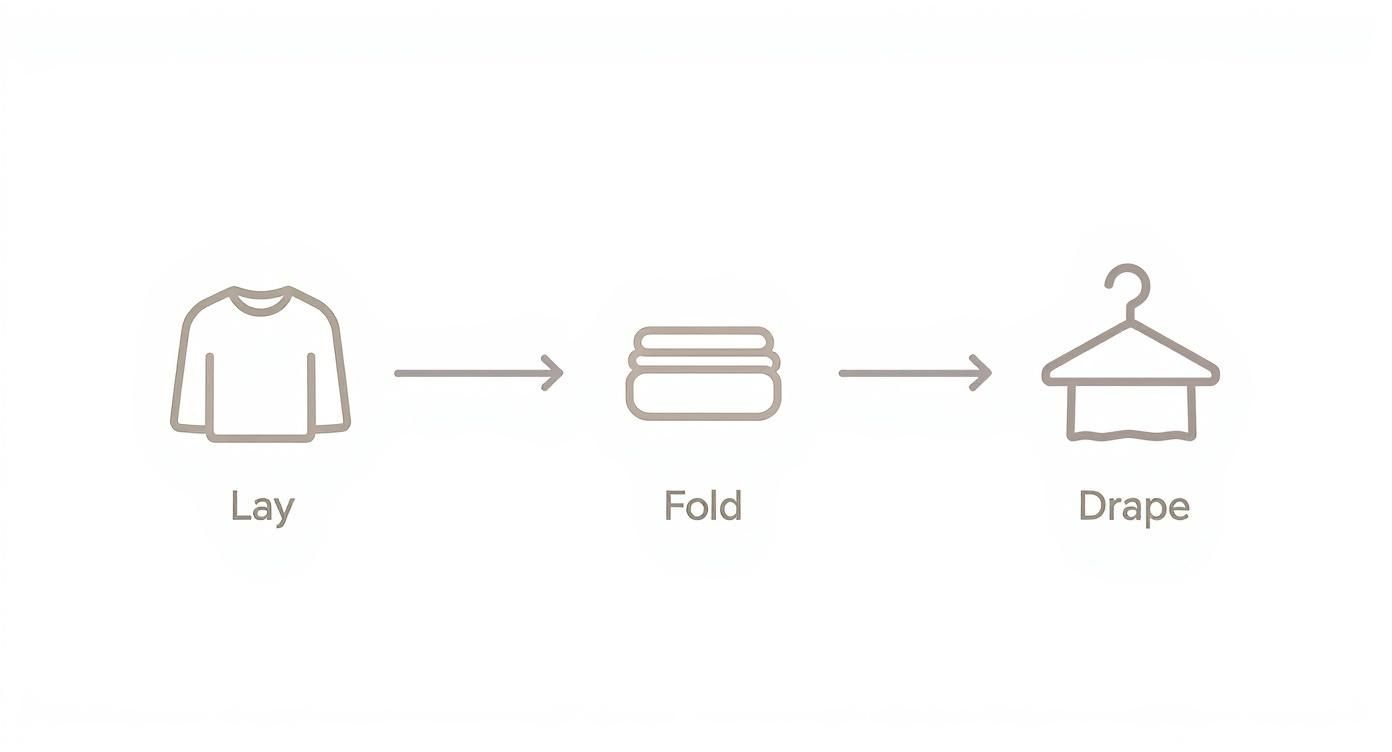
The real magic here is how you reposition the hanger. It stops being a suspension hook and becomes a support structure. By folding the sweater around the hanger, you completely neutralize gravity's damaging pull and create a neater, more compact shape on the rail.
Your Guide to the Perfect Sweater Fold
Ready to give it a shot? It looks more complicated than it is. Once you’ve done it a couple of times, the whole process takes less than a minute.
-
Start on a Flat Surface: Lay your sweater out on a clean, flat area, like your bed or a table. Give it a quick smooth with your hands to get rid of any major wrinkles.
-
Fold It in Half: Next, fold the sweater in half vertically. Just bring one sleeve over to meet the other, so the body becomes one long, narrow shape with the sleeves neatly stacked.
-
Place the Hanger: Now, lay your hanger on top of the folded sweater. The key is to nestle the hanger's hook right into the "armpit" area, where the sleeve connects to the body. The top of the hanger should point up toward the collar.
-
Drape the Sleeves: Take the aligned sleeves and fold them over one side of the hanger’s bar, letting them hang down.
-
Drape the Body: Finally, take the bottom half of the sweater and fold it over the other side of the hanger bar.
That's it! You've just created a tidy, balanced package that sits securely on the hanger with absolutely zero tension on the shoulders. It's a fantastic, space-saving way to keep your knits in the closet.
Pro Tip: If you're working with a slippery fabric like a merino or rayon blend, you can tuck the cuffs of the sleeves under the draped body of the sweater. This creates a soft "lock" that prevents anything from sliding off.
How to Adapt the Fold for Different Sweater Styles
This technique works for just about any knit, but a few small tweaks can make it even better for specific styles.
- For Cardigans: Before you start, button up at least two or three buttons in the middle. This gives the cardigan structure and stops the front panels from drooping or stretching out of shape.
- For Turtlenecks: The first thing you'll want to do is fold the turtleneck collar down flat against the sweater's chest. Once that's done, you can proceed with folding the sweater in half lengthwise like usual.
- For Heavy, Chunky Knits: With really heavy sweaters, just be mindful of keeping the draped sections as balanced as possible. While this method is a massive improvement over traditional hanging, the absolute safest bet for your heaviest, chunkiest pieces is still to fold them and store them on a shelf.
Smart Closet Organization for Your Sweaters
So, you’ve mastered the fold-and-drape method for hanging your sweaters. That's a huge win for keeping them in great shape, but the real magic happens when you build a smart, functional closet system around them. A well-organized closet isn't just about looking good; it's about simplifying your life and protecting the clothes you've invested in.
The best approach I've found is to create a dedicated "sweater zone." This gives your knits a specific home, making it a breeze to find what you're looking for and preventing them from getting squashed or lost in a sea of other clothes.
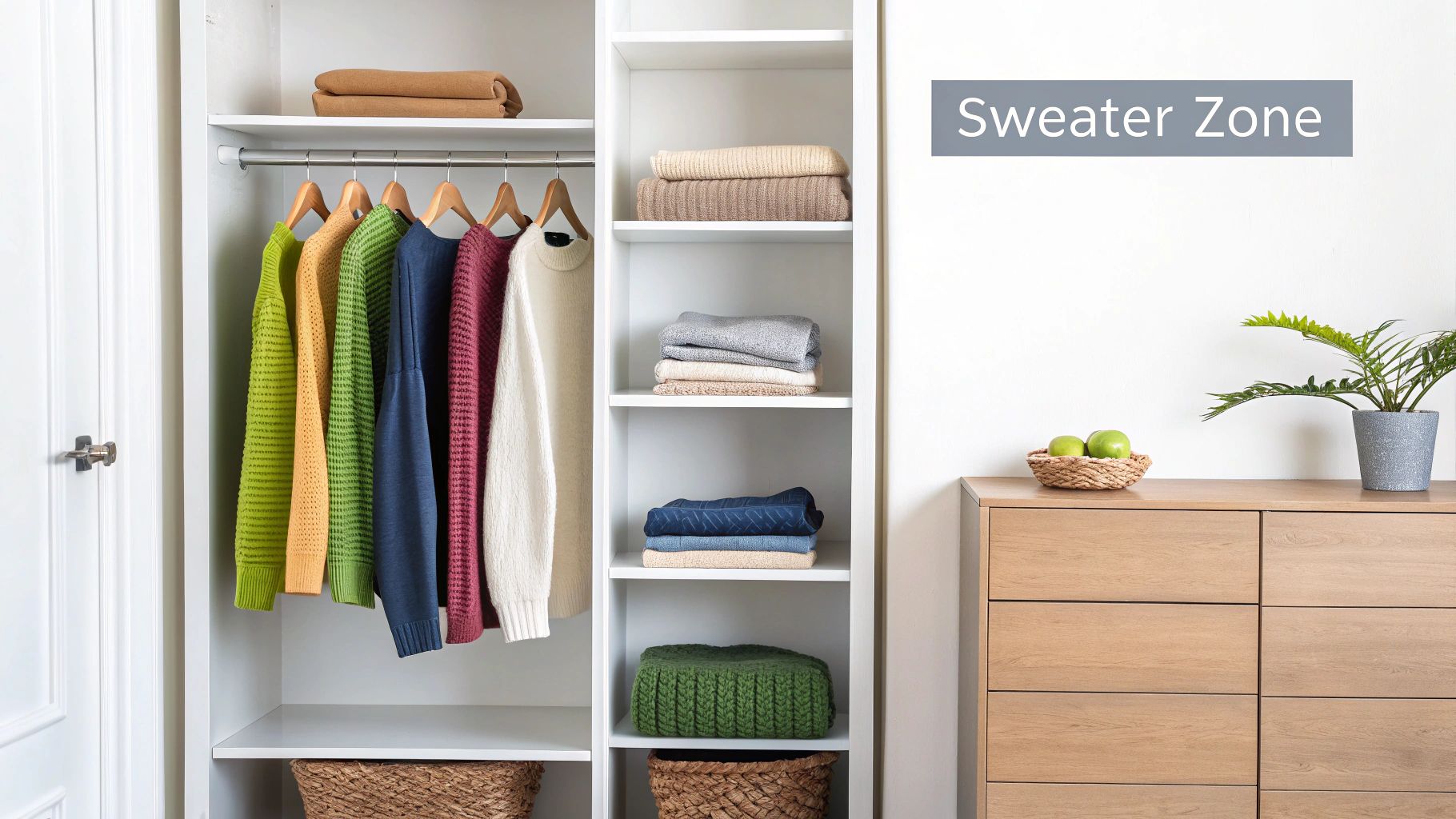
This idea of creating intentional systems is catching on everywhere. You can see it in the global closet organizer market, which is already valued at USD 11.15 billion and still climbing. People are finally realizing that good organization is worth the investment.
Arranging Your Sweater Collection
Once you have your sweater zone carved out, the next step is arranging them in a way that makes sense to you. How you sort them can seriously cut down on the "what to wear" debate you have with yourself every morning.
A few strategies have proven to be really effective for most people:
- By Color: This is my personal favorite. Grouping sweaters by color gives your closet a clean, boutique-like vibe. It also makes it incredibly easy to grab the exact shade you need to pull an outfit together.
- By Weight: Start with your lightest pieces—think fine-gauge merino wool or thin cardigans—and work your way to the heavy hitters like chunky cable-knits. This is great for grabbing something weather-appropriate in a hurry.
- By Season: A super practical method. Keep the sweaters for the current season front and center. Anything off-season can be shifted to the back or put into storage.
One of the biggest mistakes I see is people just mixing everything together. You end up digging through jackets and blouses just to find a single sweater. By giving your knits their own rod or section, you eliminate that daily struggle and stop heavier garments from crushing them.
Picking one of these systems will bring instant order to your closet. If you're looking to do a complete overhaul, you can find some fantastic actionable wardrobe design ideas that will help you make the most of every inch of space.
Maximizing Vertical Space
Let's be honest, most of us are short on closet space. The secret to hanging a decent sweater collection without jamming your closet rod is to start thinking vertically. This is where the right hangers can be a game-changer.
Specialty tiered hangers, like the ones from MORALVE, are perfect for this. They let you hang several sweaters—each one properly folded over its own bar—in the same vertical space that would normally hold just one. A single tiered hanger can easily store three or four sweaters in the footprint of a single traditional hanger.
This strategy is a lifesaver for small closets or for anyone who just really loves sweaters. By going vertical, you can double or even triple your storage capacity without making the space feel cluttered. Everything stays neat, visible, and ready to wear.
Prepping Your Sweaters for Seasonal Storage
When the weather turns warm, it's tempting to just shove your cozy knits to the back of the closet. But taking a little time to store them properly is one of the best things you can do to maintain an organized closet year-round. Leaving sweaters hanging for months on end isn't just bad for their shape—it’s an open invitation for dust and pests.
The absolute first step, before you even think about packing them away, is to make sure every single sweater is clean. Even if you only wore it once, invisible body oils can linger on the fabric, which is exactly what attracts moths.
A little prep work now saves a lot of heartbreak later.
- For delicate knits like cashmere or merino wool, always hand wash them in cold water with a gentle, wool-safe detergent.
- For sturdier cotton or synthetic blends, you can often get away with a machine wash. Just be sure to use the gentle cycle and pop the sweater in a mesh laundry bag to prevent it from snagging or stretching out.
- Always, always lay your sweaters flat to dry. Drape them over a clean towel or a mesh drying rack, gently reshaping the sleeves and seams. Keep them out of direct sunlight, which can cause colors to fade and damage the delicate fibers.
Pick the Right Storage Spot
Where you store your sweaters matters just as much as how you clean them. The key here is breathability.
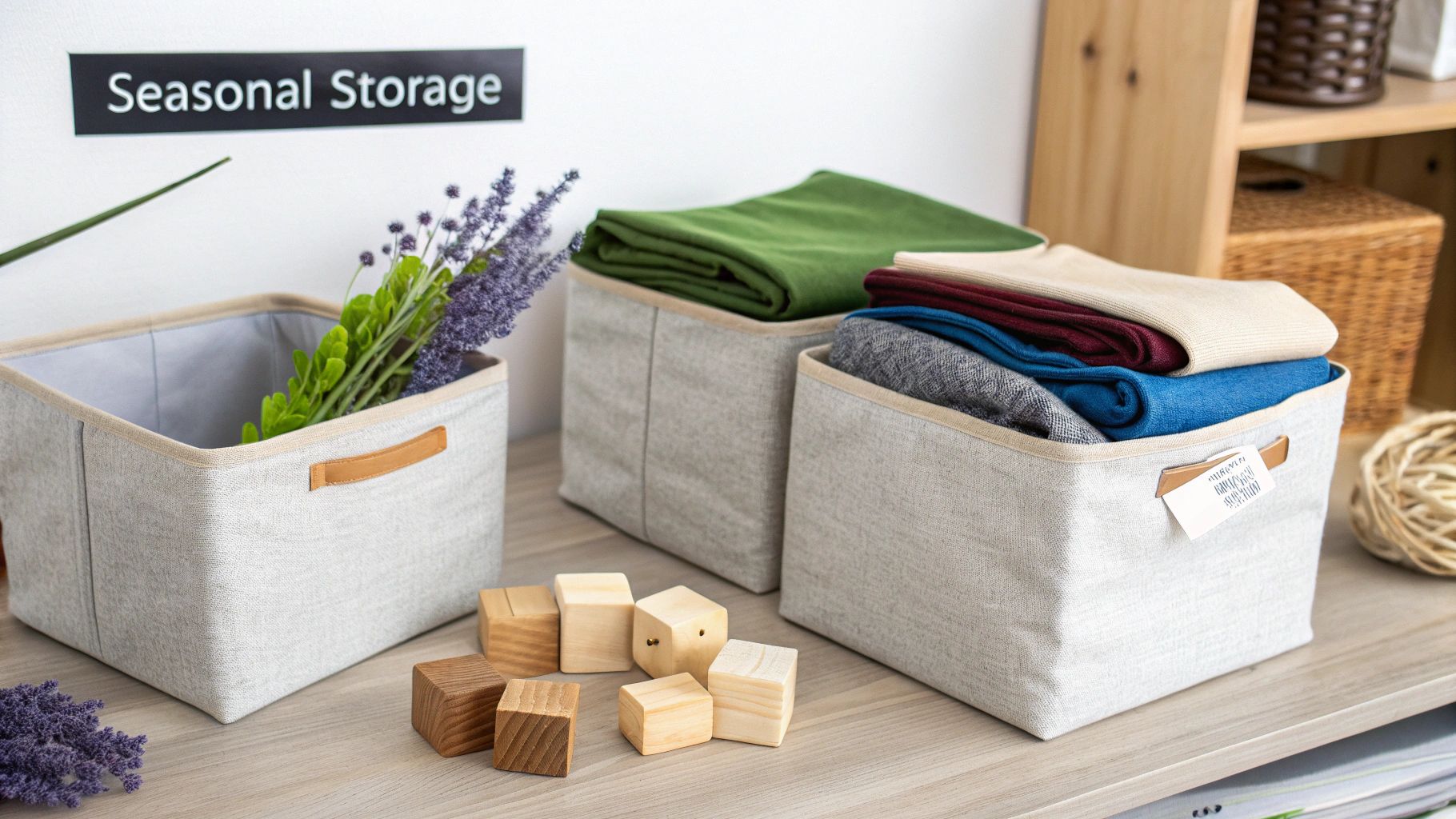
Steer clear of those airtight plastic bins. While they seem great for keeping dust out, they also trap moisture, which can lead to musty smells or even mildew—a sweater's worst enemy. Instead, opt for containers that allow for some air circulation.
- Canvas storage bags are a fantastic choice because they protect your sweaters from dust while still letting the fabric breathe.
- Stackable fabric drawers are another great option, especially if you're tight on space. They offer good ventilation and make it easy to grab what you need.
- A pro tip: place a sheet of acid-free tissue paper between the folds of your sweaters. This simple trick helps prevent deep-set creases from forming over the long months in storage.
For anyone trying to maximize their space, thinking about the best ways for storing belongings in packing boxes can make a huge difference.
Key Takeaway
Proper seasonal storage is your best defense against damage, pests, and musty odors. A little effort now ensures your favorite sweaters are fresh and ready to wear when the temperature drops.
Keep Moths at Bay
Nothing is more devastating than pulling out your favorite sweater to find it full of tiny holes. Since moths are drawn to those residual oils we talked about, a thorough cleaning is your first line of defense.
For extra protection, skip the harsh, smelly chemical mothballs. Natural deterrents work wonderfully and smell so much better.
Tuck a few cedar blocks or lavender sachets in with your sweaters. Moths can't stand the smell. Just remember that their scent fades over time, so it's a good idea to refresh them every season to keep them effective. It’s also wise to check on your stored knits every few months just to make sure everything is okay.
Pack and Label Like a Pro
Once your sweaters are clean, dry, and ready to go, it's time to pack them away. Fold them neatly and place them in your breathable containers. Avoid jamming the containers full—you want to leave a little room for air to circulate, which also prevents the fibers from getting crushed.
A well-organized closet is a happy closet. So, grab a marker and label each container with what's inside. "Winter Wool Sweaters" or "Fall Cardigans" will make it so much easier to find exactly what you're looking for next year. No more digging through mystery boxes!
Ultimately, the best way to "hang" your sweaters during the off-season is to not hang them at all. Folding them flat is the only way to preserve their shape and integrity long-term.
It's clear people love their knitwear. The global sweaters market is valued at USD 111.2 billion and is projected to skyrocket to USD 195.79 billion by 2031.
Taking these steps ensures your collection stays in pristine condition for seasons to come. For a deeper dive into off-season care, check out our complete guide on how to store winter clothes.
https://moralve.com/blogs/news/how-to-store-winter-clothes
Common Questions About Hanging Sweaters
Even the most seasoned knitwear lovers stumble over a few tricky details. It’s those small nuances—grain direction, fiber weight, hanger shape—that often make the difference between a sweater that’s ready to wear and one that’s stretched beyond repair. Below, you’ll find real-world answers drawn from years of hands-on closet management.
Does The Folding Method Work For Heavy Sweaters
When a sweater feels like you’re cradling a pillow stuffed with rocks, traditional hanging isn’t its friend. The fold-and-drape method shines here:
- It spreads the weight evenly across the hanger bar
- It keeps shoulder seams from creeping lower over time
- It cuts gravity out of the equation so fibers stay crisp
That said, if you’ve got a chunky wool or an oversized cable knit that rivals a pet in heft, your safest bet is a neat shelf fold. It’s simple: no hanging, no sagging. This not only protects the sweater but also frees up valuable rail space in your closet.
“If your sweater weighs more than your laptop, lay it flat. Folding provides total support, eliminating gravity from the equation entirely.”
How Can I Fix Sweater Shoulder Bumps
Those telltale lumps near the shoulder often come from years of skipping the right technique. But you can smooth them out:
- Lightly mist the bump with water or steam
- Gently coax the fabric back into shape with your fingers
- Lay the sweater flat and let it air dry
If the hump persists, a gentle hand wash will fully relax the fibers. Once it’s rinsed, press out excess water—never wring—and lay flat on a towel to finish air drying. You’ll be amazed at how quickly that bump disappears.
What Is The Best Way To Store Cardigans
Long cardigans and heavy knits present a unique challenge: the open front can stretch out faster than you realize. Here’s how I handle them for best closet organization:
- Fold Over The Hanger: Drape the middle section so the weight rests on the bar, not the shoulders
- Drawer Or Shelf Stash: For delicate or super-heavy cardigans, flat-fold in a low-traffic drawer
Hanging a cardigan by its shoulders invites stretching, which makes the front placket droop. Instead, keep it folded or folded-over. Your seams (and your silhouette) will thank you.
Ready to transform your closet into a perfectly organized space? The right tools make all the difference. Explore the collection of space-saving hangers from MORALVE and discover how to maximize your storage while protecting your clothes. Shop the collection at moralve.com
Leave a comment