
The Best Way to Hang Trousers for a Perfectly Organized Closet

When it comes to the best way to hang trousers, you really only need to know two main techniques: folding them over a hanger bar or using clips. It's a simple foundation for great closet organization.
For your dress pants, folding them is almost always the better choice. It respects the trouser's natural crease and overall shape. For everything else—your jeans, chinos, and other casual pants—clips get the job done quickly and securely.
Your Quick Guide to Crease-Free Trousers and an Organized Closet
Let's finally tackle that pile of trousers once and for all. A tidy closet doesn't just look good; it genuinely makes getting ready in the morning a whole lot easier. Hanging your pants the right way is a cornerstone of closet organization. It keeps them ready to wear and helps them last longer, which is the whole point of building a wardrobe you love.
The decision to fold or clip isn't just a random choice. It’s about taking care of the fabric and making the most of your closet space. Honestly, just adopting the right technique for each pair is a small tweak that delivers surprisingly big results for your entire organization system.
The Foundation of Closet Organization
A truly organized closet begins with how you handle each individual piece of clothing. Trousers can be especially tricky—they're bulky and can get messy fast if you don't have a system. The goal of a well-organized closet is to see every pair you own at a glance, making them easy to grab while protecting the fabric from wrinkles and strain. Once you get these two hanging methods down, you’ll have a solid foundation for a much better closet system.
Choosing the right hanging method is the first step in protecting your clothing investment. It prevents permanent creases, reduces fabric stress, and extends the life of your favorite trousers, making it a cornerstone of effective closet management.
Getting this first step right is a game-changer for keeping your closet orderly and your clothes in great shape. If you're looking for more tips on keeping your whole wardrobe looking sharp, you'll find some great advice in our guide on how to prevent wrinkled clothes.
Ultimately, the best method really hinges on what’s in your wardrobe—the fabrics you own and how much closet space you’re working with.
Hanging Methods at a Glance
To help you decide which technique works best for your closet setup, here’s a quick side-by-side comparison. Think of it as a cheat sheet for a perfectly organized wardrobe.
| Hanging Method | Best For | Pros | Cons |
|---|---|---|---|
| The Fold-Over | Dress pants, wool, linen, delicate fabrics | Prevents clip marks, helps maintain the trouser's natural crease, supports heavier fabrics evenly. | Can create a soft horizontal fold if left for extended periods, may not be ideal for very silky fabrics. |
| The Clip-Up | Jeans, chinos, corduroys, casual wear | Quick and easy, allows trousers to hang straight, excellent for preventing wrinkles on casual pants. | Can leave marks on delicate fabrics if clips are not padded, may cause waistband stretching on heavy pants over time. |
Take a look at your trousers and hangers, and you'll quickly see which approach makes the most sense for your collection and your closet organization goals.
Mastering the Fold for Every Trouser Type
Every pair of trousers in your closet is different, and how you hang them should be too. Getting the small details right is the secret to an organized wardrobe that makes your clothes last. This isn't just about cramming things into a closet; it’s about protecting the fabric's shape, feel, and the way it hangs when you wear it.
When it comes to your finer trousers—think wool, linen, or high-quality cotton—the classic fold-over-the-hanger move is a mistake. It almost always leaves a sharp horizontal crease right across the middle, completely ruining the clean line of the pants. There’s a much better way.
The Savile Row Fold for Dress Pants
There's a reason the world's best tailors use the Savile Row Fold. It's a classic technique designed specifically to prevent that ugly hanger crease. The trick is using the weight of the trousers themselves to keep them smooth and secure, ensuring they look pristine in your closet.
Here’s how you do it:
- Start by holding the trousers upside down by the cuffs. Make sure the leg seams and any pleats or creases are lined up perfectly.
- Slide one leg through the hanger’s opening, letting it hang down until the cuff is about halfway down the length of the other leg.
- Now, just fold the second leg over the first one, draping it across the hanger bar.
This clever interlocking fold creates a secure grip that stops the pants from slipping off, all without creating a hard crease. Gravity does the work for you, gently pulling out any minor wrinkles from the day's wear. While we're talking about hanging, it's interesting to see how professionals handle presentation in other contexts, like understanding how brands present tailored trousers in photos.
Handling Heavier and Delicate Fabrics
For your tougher pants like denim, corduroy, or heavy chinos, you don't need to get as fancy. A simple, clean fold over a sturdy wooden or felted hanger works just fine. These fabrics are built to last and can handle a straightforward fold without getting permanently creased. The main thing here is a hanger that can take the weight without bending, which keeps your closet looking uniform and tidy.
Delicate fabrics are another story entirely. Things like silk, rayon, or lightweight linen blends need a much softer touch. The Savile Row fold is still a great option, but the hanger itself is critical. You’ll want to use one with a smooth, snag-free surface—velvet or padded hangers are perfect because they provide a gentle grip without damaging the material. And whatever you do, avoid clip hangers for these fabrics. Even the padded ones can leave little dents in the fine weave.
This visual guide breaks down the two main approaches, showing you which method is right for which type of trouser.
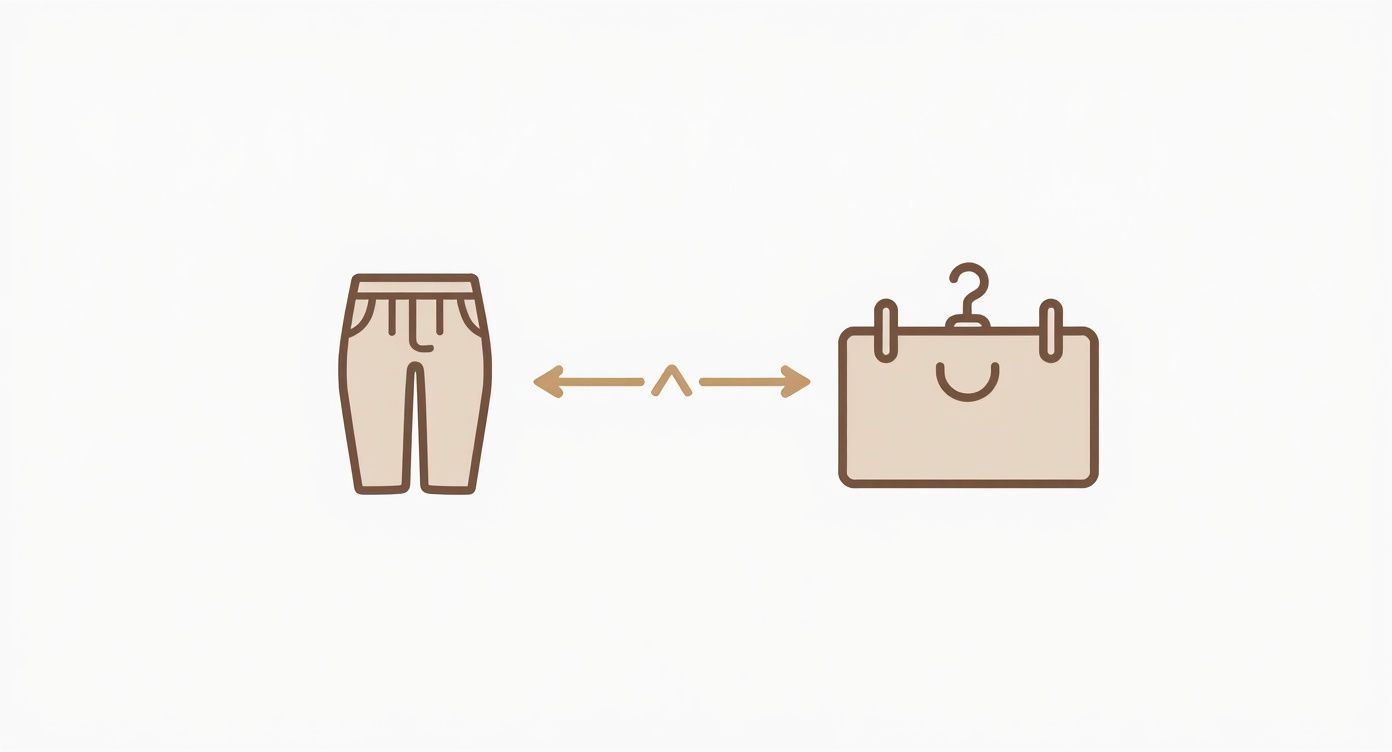
As you can see, the best method really depends on the garment's fabric and construction. Getting this right is a cornerstone of proper clothing care and closet organization.
At the end of the day, the core ideas of garment care haven’t changed much over time. One of the most tried-and-true methods involves hanging trousers from the waistband or hem. This keeps the crease lines perfectly aligned and avoids any new, unwanted folds. Professional clothing conservators even go a step further, sometimes adding cotton tapes to a waistband to loop over the hanger. This distributes the weight more evenly and puts less stress on the fabric itself.
The real secret is simply matching your hanging method to the fabric. A beautifully tailored wool suit needs a careful fold to protect its shape, while your favorite pair of jeans just needs strong, simple support. This personalized approach is what will make your wardrobe last for years to come.
Choosing Hangers That Protect Your Trousers
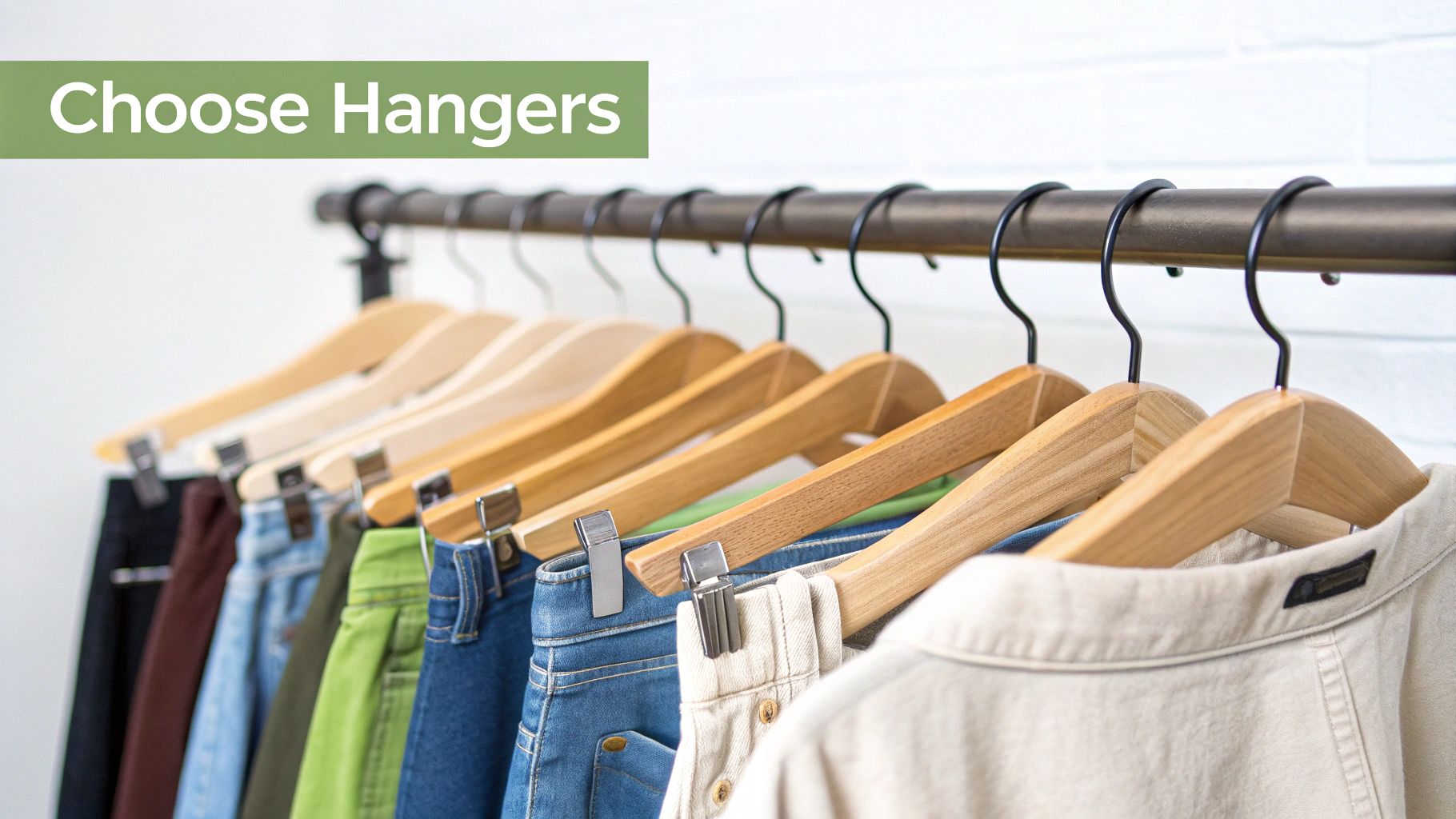
Picking the right hanger might seem like a small detail, but it’s one of the most important things you can do for your closet and your clothes. A good hanger is more than just a hook—it’s a support system that preserves the shape of your trousers. Honestly, creating an organized and functional closet starts with having the right tools for the job.
I like to think of my hanger collection as a toolkit. You wouldn't use a hammer for a screw, right? So why would you use a flimsy wire hanger for a heavy pair of jeans? Every type of hanger is designed to solve a specific problem, whether that's stopping slippery fabrics from ending up on the floor or squeezing more into a packed closet.
Why Hanger Material Matters
The material your hanger is made of has a huge impact on both your trousers and how your closet functions. Making the right choice here can save you a lot of headaches, from stretched-out waistbands to stubborn creases that just won't iron out.
Here’s a look at the most common types and what they do best for your closet system:
- Wood Hangers: These are the undisputed champions for heavy fabrics. Think denim, corduroy, or thick wool. Their solid construction prevents the waistband from sagging over time, and the wider shape helps air circulate around the fabric. They also create a high-end, uniform look in your closet.
- Velvet Hangers: The magic of velvet hangers is their non-slip grip. That soft, fuzzy texture is perfect for silky or lightweight trousers that always seem to want to slide off. Plus, they have an ultra-slim profile, which is a massive bonus for maximizing space in a crowded closet.
- Clip Hangers: When it comes to dress slacks or linen trousers, clip hangers are my go-to. They let the pants hang straight down, using gravity to pull out minor wrinkles naturally. Just make sure you get clips with soft rubber padding so they don’t leave little marks on the fabric.
The right hanger is a silent partner in clothing care. It works behind the scenes to maintain the garment's intended drape and structure, ensuring your trousers look as good as the day you bought them.
Comparing Trouser Hanger Types
With so many options out there, it can be tough to decide what to invest in for your closet. I've put together this quick comparison to break down the different materials and designs, helping you pick the perfect hanger for your clothes and your closet space.
| Hanger Type | Material | Best For | Space Efficiency |
|---|---|---|---|
| Wood | Solid Wood | Heavy fabrics like denim, wool, and corduroy | Low |
| Velvet | Plastic with velvet flocking | Silky, delicate, and lightweight fabrics | High |
| Clip | Metal or Plastic with clips | Dress pants, linen trousers, and skirts | Medium |
| Multi-Tier | Metal, Wood, or Plastic | All trouser types, especially for small closets | Very High |
Ultimately, the best choice depends on what’s in your wardrobe. Most of us benefit from having a mix of different types to handle everything from our work slacks to our weekend jeans.
Innovative Solutions for Maximizing Space
If you’re constantly fighting for closet space, you’ll be happy to know there are some brilliant hanger designs out there. These aren't your standard, single-pair hangers; they’re engineered to multiply your storage capacity without messing up your clothes.
Multi-pant hangers, like the ones from MORALVE, are a perfect example of this. These clever tiered designs let you hang several pairs of trousers vertically, which means they take up a fraction of the rod space. For anyone with a tiny closet or just a lot of pants, this is a total game-changer for organization.
We actually did a deep dive on this topic—you can find some great examples in our guide to space-saving hangers for clothes. By stacking your trousers on just a few compact hangers, you instantly free up so much room and create a closet that’s way easier to navigate. This vertical approach is the real secret to conquering closet chaos.
Building a Smarter Closet Organization System
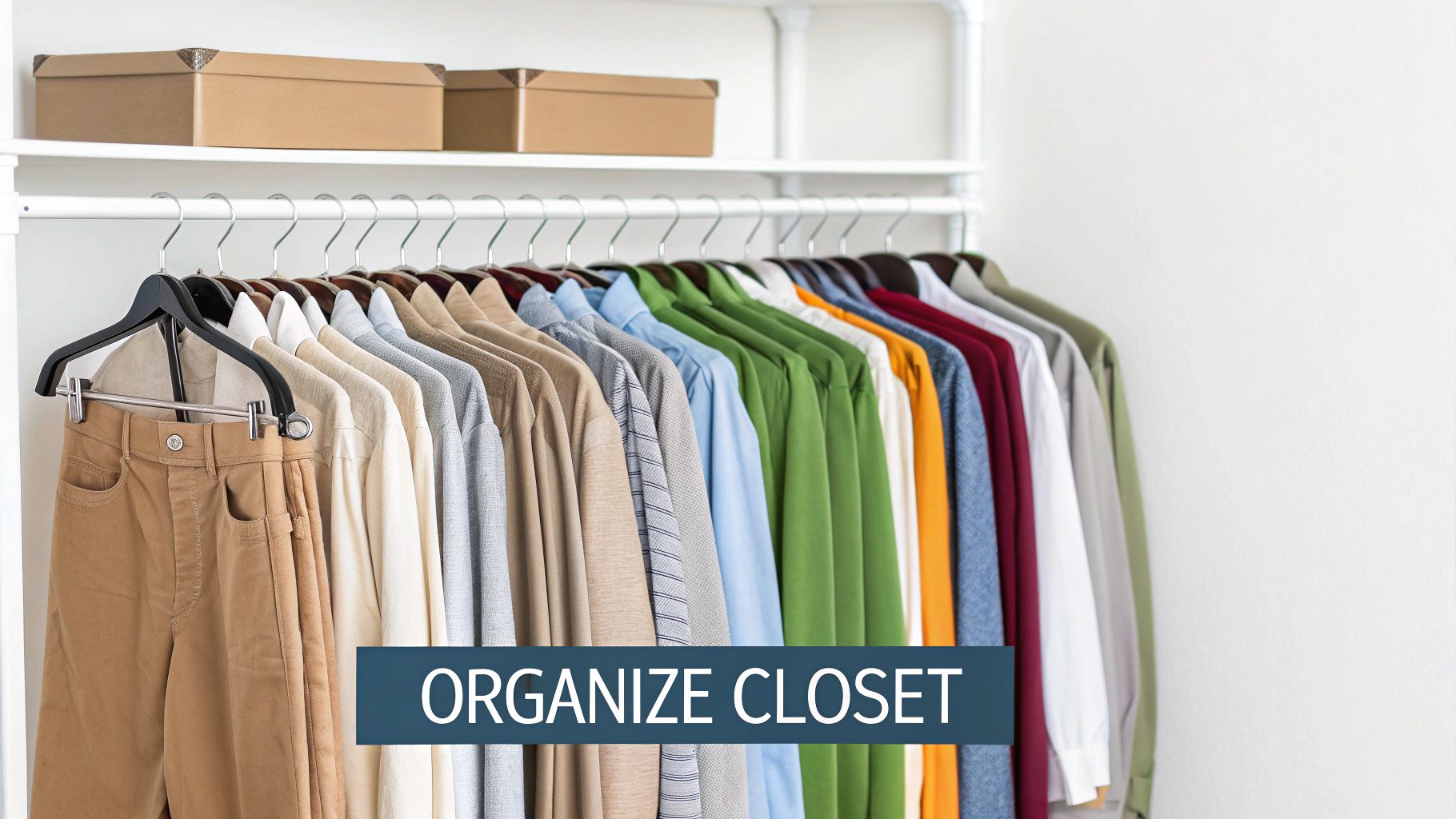
Now that you've mastered the art of hanging your trousers, it's time to build a system that actually works for you. This isn't just about lining things up neatly; it's about turning your closet into a functional, even calming, space that makes getting ready in the morning that much easier. A truly organized closet gives you back time and mental energy.
After all, knowing the right way to hang your pants doesn't help much if you can't find the pair you're looking for. The secret to taming the chaos is to create logical categories. I like to think of a closet as a personal library—when everything has a designated spot, finding what you need is quick and painless.
Grouping Strategies for an Effortless Closet
The first thing you need to do is decide on your primary organizing principle. Most people find success with one of two methods: sorting by type or sorting by color. There's no right or wrong answer here; it's all about what clicks with how you think and use your space.
-
Organize by Type: This is my go-to for pure practicality. You simply group all your work trousers in one spot, your casual chinos in another, then your jeans, formal wear, and so on. It's incredibly efficient. When you're dressing for a specific occasion, you know exactly which section to head to.
-
Organize by Color: If you're a more visual person, organizing by color can be a game-changer. Arranging your trousers in a gradient—say, from black to gray, then blues, tans, and onto brighter shades—is not only aesthetically pleasing but also makes outfit coordination feel second nature.
A systematic approach to closet organization does more than save space—it reduces decision fatigue. By creating clear, defined zones for your clothing, you eliminate the daily scramble and make getting dressed an intentional, stress-free activity.
Don't be afraid to mix and match these strategies, either. You could sort by type first (e.g., work vs. casual) and then arrange the pants within each of those sections by color. The ultimate goal is to land on a system you can stick with. For more inspiration on setting up your space, take a look at our guide on finding the perfect closet pants rack.
Using Tiered Hangers for Outfit Planning
Multi-pant hangers are champs at saving space, but I've found they have a secret superpower: outfit planning. Try using one to map out your entire work week. Spend a few minutes on Sunday evening picking out five pairs of trousers and hang one on each tier.
This little trick completely removes the "what should I wear?" guesswork from your weekday mornings. You can even hang the matching shirt nearby, and just like that, your wardrobe is on autopilot. To take this a step further and ensure your whole room feels just as organized, you might find some great tips in these effective bedroom decluttering strategies. When you build a smarter system, your closet stops being a source of stress and starts working for you.
Common Trouser Hanging Mistakes to Avoid
We’ve all been there—you grab the nearest flimsy wire hanger or just jam another pair of pants onto an already overflowing closet rod. It feels like a harmless shortcut at the moment, but these little habits are what cause long-term damage to your wardrobe and chaos in your closet. Knowing how to hang trousers isn't just about what to do, but what not to do.
A lot of common practices directly harm your clothes. Using the wrong hanger, for instance, can leave permanent dents in the fabric, creating those weird bumps that completely ruin the garment’s natural drape. And that lazy fold over a standard hanger bar? It’s the number one cause of that stubborn horizontal crease that’s nearly impossible to iron out. These small mistakes really do add up, slowly destroying the fit and finish of your favorite pairs.
Overcrowding Your Closet Space
One of the most damaging yet overlooked mistakes is simply packing way too much into one space. When your trousers are crammed together, air can't circulate. This traps moisture and odors, which is how you end up with musty-smelling clothes. In humid climates, it can even create an environment ripe for mildew.
Beyond just the health of the fabric, overcrowding makes any attempt at organization totally useless. Everything gets wrinkled, and you can’t even see what you own. You should really aim for at least an inch of space between each hanger. This lets your garments breathe and hang freely, a small change that makes a huge difference in both your closet's function and your clothing's longevity.
Ignoring the Lessons of the Past
Believe it or not, people have been trying to preserve the shape of trousers for centuries. Before the 19th century, high-waisted trousers were held up with suspenders, or braces. It was in the 1820s that tailor Albert Thurston commercialized modern suspenders, allowing trousers to hang perfectly from the shoulders and preserving their intended fit. This little bit of history shows that how we support our trousers has always been tied to their design. You can find more fascinating insights about the evolution of trouser support at hespokestyle.com.
The most significant mistake is treating all trousers the same. Heavy denim has different needs than delicate linen, and a structured suit trouser requires more care than a casual chino. Failing to adapt your hanging method to the specific fabric and weight is a surefire way to shorten the lifespan of your clothes.
Common Pitfalls to Sidestep
If you want to protect your wardrobe investment and maintain an organized closet, start by avoiding these all-too-common missteps. Just a few simple adjustments can dramatically improve the condition and appearance of your trousers.
- Using Weak, Flimsy Hangers: Those thin plastic or wire hangers are your enemy. They bend under the weight of heavier pants like jeans, causing the waistband to stretch out and lose its shape over time. They also create visual clutter in your closet.
- Clipping Delicate Fabrics: Using aggressive clips on materials like silk, satin, or fine wool can leave permanent indentations. Even worse, they can snag the delicate weave of the fabric, causing irreparable damage.
- Folding Heavy Trousers: While folding is great for dress pants, simply draping heavy denim or corduroys over a hanger bar is a bad idea. They often slip off, and if they don't, they'll develop a very pronounced crease that’s tough to remove.
- Ignoring the Waistband: Always fasten the top button and zip up the fly before you hang your trousers. This simple step helps them maintain their shape around the waist and hips, preventing any awkward bunching or stretching and helping them sit uniformly in your closet.
Got Questions About Hanging Trousers? We've Got Answers.
Even after you've got a solid plan for your closet, a few tricky questions always seem to pop up. Getting these little details right is what takes a closet from just "organized" to truly functional. Let's tackle some of the most common questions I hear about the best way to hang pants.
Answering these helps you fine-tune the general advice for what's actually in your wardrobe.
Should You Fold or Hang Jeans?
Look, folding jeans and sticking them in a drawer is totally fine. But if you ask me, hanging is the better way to go for a couple of big reasons. First, it stops those stubborn creases you get from folding, especially right at the knees. More importantly, when your jeans are hanging, you can see your entire collection at once, which makes grabbing the right pair so much easier.
A simple fold over a sturdy wooden hanger works great, or you can use clip hangers on the waistband. Either way, you've just freed up a ton of drawer space for things that actually belong there, like sweaters and t-shirts. This small change can have a big impact on your overall closet organization.
How Can You Stop Clip Hangers From Leaving Marks?
Ah, the dreaded clip marks. They're a super annoying side effect of an otherwise fantastic hanging method. The easiest fix is to find hangers with soft, rubber-padded clips. They get a good grip without sinking their teeth into the fabric.
But you don't have to throw out your current hangers! If you've got the standard metal clip kind, there's a simple DIY solution. Just tuck a small piece of folded felt, a cotton pad, or even a bit of thick cardstock between the clip and your pants. This little buffer cushions the pressure and prevents those frustrating indentations, which is especially helpful for fabrics like chinos or linen.
Is It Better to Hang Trousers From the Waistband or Cuffs?
This one really depends on the pants. For your dress pants—think wool, linen, or other delicate fabrics—hanging them from the cuffs is the professional standard. This method lets gravity work for you, gently pulling out any minor wrinkles from wearing them and keeping the leg line perfectly straight. It's the secret to maintaining that sharp, crisp crease.
On the other hand, for heavier pants like jeans, corduroys, or thick cotton chinos, it's smarter to hang them from the waistband. The waistband is built to take the garment's weight, so you don't have to worry about stretching or distorting the fabric at the cuffs over time.
The goal is always to let the trousers hang as naturally as possible. Let the fabric's weight and structure be your guide. You want to support the garment without putting any stress on it.
How Much Space Should You Leave Between Trousers?
Try to leave at least an inch of breathing room between each pair of pants on the rod. It might seem like a minor detail, but it’s huge for both the health of your clothes and the usability of your closet. That little bit of space lets air circulate, which stops clothes from getting musty and helps any lingering moisture (say, from steaming) evaporate.
Plus, it just makes life easier. You can actually see and grab the pair you want without wrestling with the ones next to it. A crowded closet rod is the fastest way to a wrinkled, messy wardrobe, which completely defeats the purpose of hanging everything so carefully.
Ready to conquer closet chaos and get your space back? The innovative, multi-tier hangers from MORALVE are designed to store your trousers vertically. This frees up an incredible amount of rod space while keeping your whole collection visible and wrinkle-free. Check out the collection and see how you can transform your closet at https://moralve.com.
Leave a comment