

The Best Way to Organize a Small Closet and Maximize Your Space

The secret to organizing a small closet isn't about wishing for a bigger space; it's about a simple, three-part method. First, you need to conduct a strategic purge of items you no longer wear. Then, it's all about intelligent space planning to make every single inch count. Finally, you have to bring in the right tools for the job to build a closet organization system that actually works.
This isn't just about tidying up. It's about turning a cramped, frustrating closet into a streamlined, functional part of your home that makes your daily routine so much easier.
Conquering Small Closet Chaos for Good
A jam-packed, messy closet can make getting ready feel like a chore. It's a common source of stress, turning the simple act of picking an outfit into a frantic rummage through a mountain of clothes. But a truly functional closet isn't about owning less; it’s about putting smart organization systems in place that work for you.
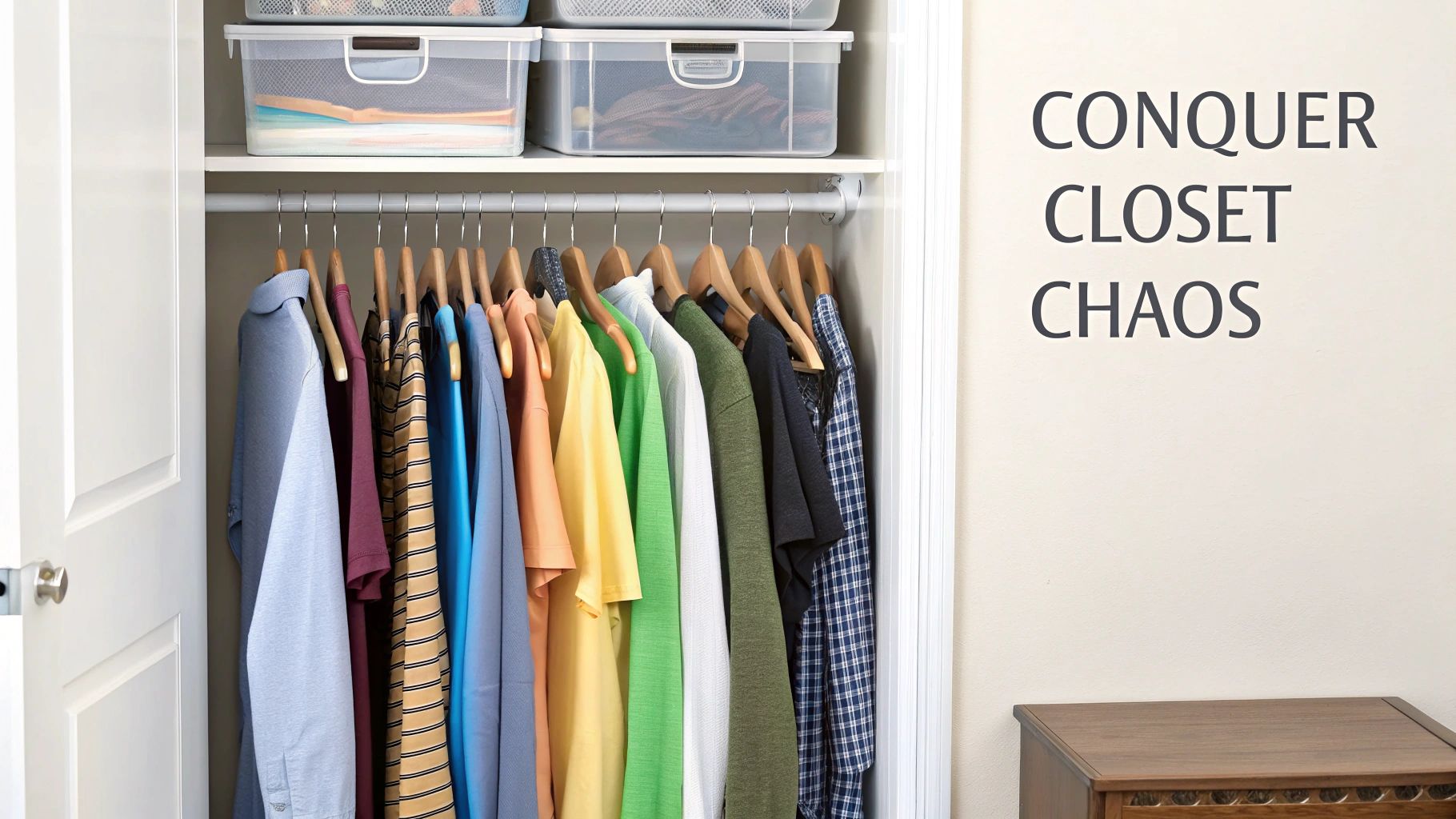
The good news? You don't have to figure it out alone. As more people live in smaller spaces, the demand for effective closet solutions has grown. This has pushed manufacturers to innovate, giving us amazing and affordable tools like modular shelving, stackable bins, and adjustable rods. It’s never been easier to get the gear you need to set your closet up for success.
Why a System Matters More Than Space
Getting your closet in order pays off in ways that go far beyond just looking nice. Think of it as an investment in your daily peace of mind, one that delivers real, tangible results.
- You'll save precious time. When you know exactly where everything is, your morning prep time gets a serious trim.
- You’ll reduce decision fatigue. A curated, visible wardrobe makes picking an outfit feel inspiring, not overwhelming.
- You’ll protect your clothing. Proper storage is key to preventing wrinkles, snags, and damage, which helps your favorite pieces last longer.
The real goal here is to create a space that feels calm and intentional. It’s about turning a source of daily friction into a corner of your home that genuinely supports and simplifies your lifestyle.
Before we jump into the step-by-step process, it helps to understand the core ideas we'll be working with. These principles are the foundation of any successful small closet organization project.
Core Principles for Small Closet Success
This table gives a quick overview of the fundamental concepts you'll use to transform your closet.
| Principle | Action | Benefit |
|---|---|---|
| Declutter Ruthlessly | Remove everything you don't love, wear, or need. | Frees up physical and mental space. |
| Maximize Vertically | Use tall shelves, stackable bins, and tiered hangers. | Taps into unused space most people ignore. |
| Categorize Logically | Group like items together (e.g., all shirts, all pants). | Makes finding items quick and intuitive. |
| Use Smart Tools | Invest in slim hangers, dividers, and clear containers. | Creates structure and boosts capacity. |
These simple ideas are powerful when put into practice. Mastering your small closet is really just about applying basic principles of efficiency to a very personal space.
For some broader inspiration on making the most of tight quarters, check out these fantastic interior design tips for small rooms to maximize tiny spaces.
Now, let's dive into the actionable steps to make this transformation a reality for you.
The Strategic Purge That Changes Everything
Before you even think about buying a single storage bin or a new set of hangers, we need to talk about the most crucial step: the purge. It's tempting to jump right into the fun part of organizing, but decluttering is the foundation. Without it, you're just shuffling clutter around.
The goal here isn't to get rid of half your wardrobe. It's about being brutally honest with yourself to create a collection of clothes you genuinely love, feel great in, and actually wear. This is how you create the breathing room your closet is practically begging for.
Mastering the Four-Box Method
The easiest way to tackle this is with the Four-Box Method. Forget making a giant, overwhelming pile on your bed. Just grab four boxes or bins and label them:
- Keep: These are your non-negotiables. The items you love, wear all the time, and that fit your life right now.
- Donate: Clothes in good shape that just don't serve you anymore. Someone else will be thrilled to give them a second life.
- Store: Think seasonal stuff, like that bulky winter parka, or sentimental pieces you can't bear to part with but don't need cluttering up prime closet real estate.
- Discard: For anything stained, torn, or just too worn out to donate.
Pick up each item, one by one, and decide which box it goes into. This simple system forces you to make a definitive choice for every single piece instead of just moving piles from one spot to another.
A cluttered closet is often a reflection of postponed decisions. The Four-Box Method helps you make those decisions quickly and efficiently, clearing the way for a more functional space.
Asking the Right Questions
Deciding what stays and what goes can be tough. We all have those "someday" items or pieces with sentimental value that cloud our judgment. To cut through the noise, ask yourself these direct questions as you hold up each piece of clothing.
- Does this fit me right now? Not five pounds from now, but today.
- If I saw this in a store today, would I buy it again? This one is a great gut check to see if your style has moved on.
- Have I worn this in the last year? If the answer is no, you have to ask yourself why you're really holding onto it.
- Does this align with my current lifestyle? That closet full of corporate wear might not make sense if you’ve been working from home for the past two years.
- Do I feel confident when I wear this? Your clothes should make you feel good. Period. Don't keep anything that doesn't.
Being honest with yourself here is the secret to unlocking your closet's real potential. If you need a bit more guidance on making these tough calls, our complete guide on how to declutter your closet has even more practical tips.
Once you’re done, you'll be left with a collection of clothes that truly belong in your life. This curated wardrobe is so much easier to manage, and it’s the perfect canvas for creating a smart, efficient closet system.
Creating Your Closet Blueprint
Alright, with your newly curated wardrobe ready to go, it's time to become a savvy space planner. This step is the secret sauce to organizing a small closet that stays organized. It stops you from making the classic mistake of buying a bunch of cute bins and organizers that don't actually fit your space or your stuff.
Before you shop, grab a tape measure and a notebook. And I mean really measure. Don't just get the basic height, width, and depth. Jot down the distance from the rod to the shelf above it, the clearance below your shortest hanging items, and the dimensions of any awkward corners. Trust me, knowing these specific numbers is the key to using every last inch of that closet.
This diagram is a great reminder of how to sort everything before you start planning where it will all live.
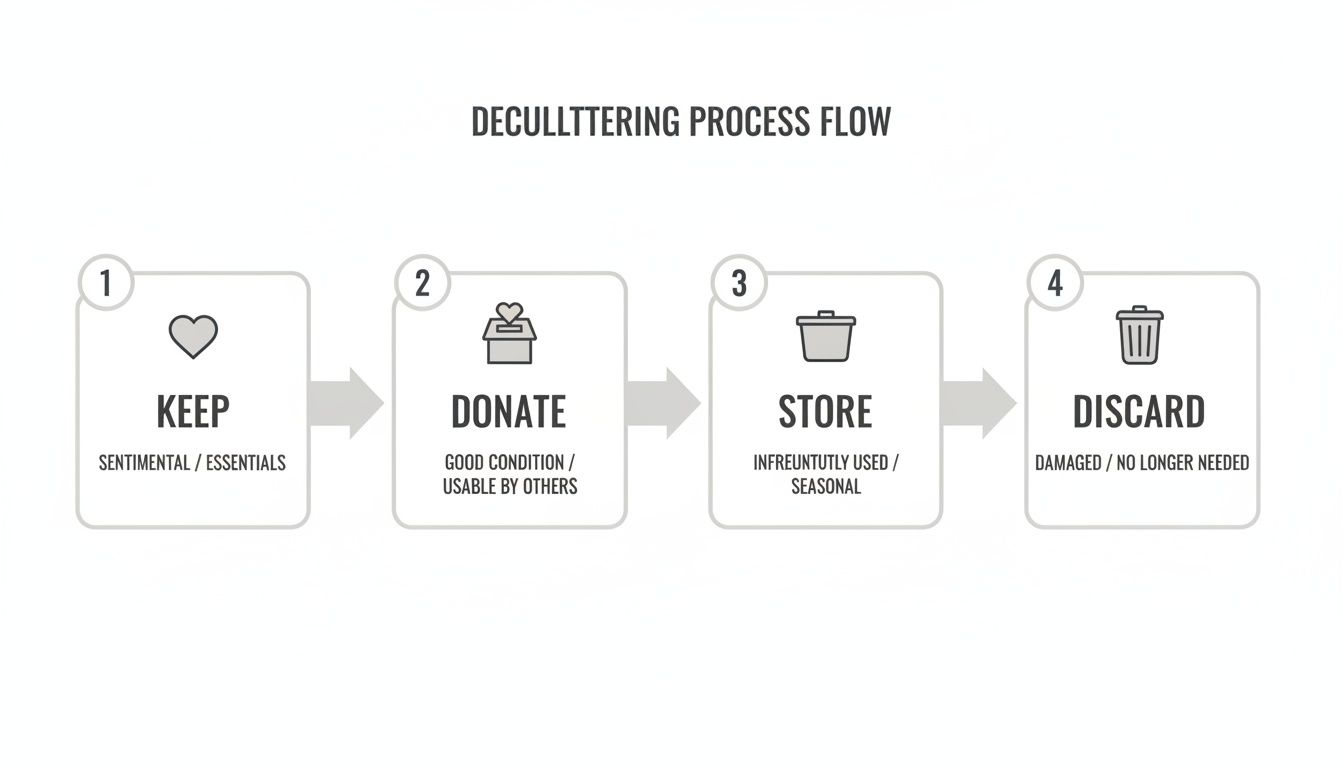
It helps you stay focused on finding a home only for the things you've decided to keep.
Mapping Out Your Closet Zones
Think of your closet like real estate. The most valuable spots are the easiest to reach—anything between your waist and eye level is your prime real estate. This is where you should plan to keep your everyday essentials, like your go-to work shirts, your favorite pair of jeans, and the shoes you wear most often.
The harder-to-reach areas, like the high top shelf or the back corners on the floor, are perfect for things you don't need all the time.
- Seasonal Items: Think bulky winter sweaters you won't touch all summer, or swimsuits in December.
- Special Occasion Wear: That cocktail dress or suit you only pull out a few times a year.
- Extras: Things like spare bedding or luggage that you only need occasionally.
Planning your closet with zones ensures your most-used items are always within arm's reach. This simple habit drastically cuts down the time you spend getting ready each morning.
When you give every area a specific job, you’re creating a system that just makes sense. It’s a foundational step that so many people skip. For a deeper dive into layout ideas, our guide on how to design a closet has some fantastic visual examples.
Planning for Different Clothing Types
Not all clothes hang the same way. Your plan needs to account for this. Take a look at your "Keep" pile and start sorting it into three distinct categories. This exercise will give you a crystal-clear picture of the types of storage solutions you'll need later.
The Three Main Categories
- Long-Hang Items: This is for your dresses, long coats, and jumpsuits. They need a clear, uninterrupted drop. You'll have to dedicate a part of your closet rod where they can hang without getting crumpled at the bottom.
- Short-Hang Items: We're talking shirts, blouses, skirts, and pants that you fold over a hanger. This is your golden opportunity. You can often add a second rod below the main one to create a double-hang section, literally doubling your hanging space in one move.
- Folded Items: Sweaters, t-shirts, and denim are usually better off folded. Storing them on shelves, in hanging fabric organizers, or in drawers not only saves precious rod space but also prevents knits from stretching out.
This blueprint you're creating is more than just a sketch—it's your future shopping list and assembly guide. It ensures every single thing you do from this point on is intentional and effective.
Choosing Smart Tools to Maximize Space
Now that you have a plan, it's time for the fun part: picking the right tools to bring your vision to life. Organizing a small closet isn't about running out and buying every container you see. It's about making smart, strategic choices that solve the specific problems you identified.
The right organizers are like secret weapons, creating usable space where it feels like there was none before.
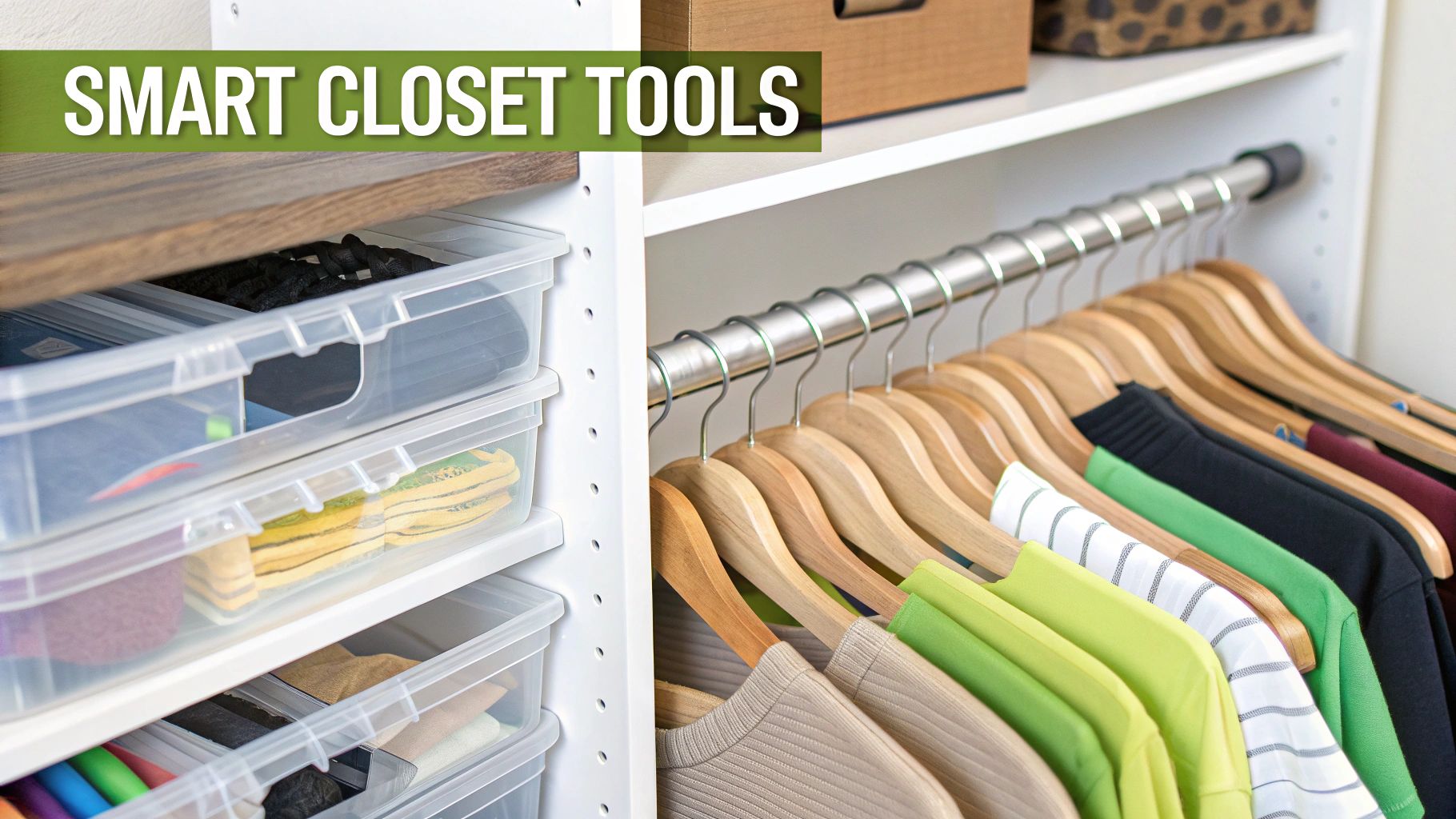
If you're going to make just one change, start with your hangers. A mismatched collection of bulky plastic, flimsy wire, and chunky wooden hangers can eat up a shocking amount of rod space. Simply switching to a uniform set of slim hangers will instantly give you more room and create a clean, boutique-like feel.
Hangers and Vertical Storage: The Foundation
Think of your closet rod as the most valuable real estate in your closet—you have to make every inch count. Velvet-flocked hangers are a fantastic starting point. Their ultra-thin design lets you fit more clothes, and the non-slip material means you won't find your favorite silk blouse puddled on the floor.
But a great closet strategy goes beyond just the hanging rod. You have to think vertically to truly conquer a small space. All that empty air below your shirts or above the top shelf is just wasted potential.
- Hanging Shelf Organizers: These are brilliant for creating instant shelves. Use them for bulky sweaters, folded jeans, or handbags that don't have a home.
- Shelf Dividers: Are you tired of those wobbly stacks of t-shirts toppling over? These simple dividers slide right onto your existing shelves, creating neat cubbies that keep everything perfectly contained.
By tackling both the horizontal hanging space with slim hangers and the vertical space with smart organizers, you're hitting the problem from two angles. This is the cornerstone of a truly efficient and beautiful closet.
For a closer look at how different hanger types can transform your closet's capacity, this guide on the best space-saving hangers is a fantastic resource.
Beyond the Rod: Unlocking Hidden Space
Once your rod is in top shape, it's time to look at the areas everyone forgets: the door and the floor. These spots are goldmines for storing accessories, shoes, and all the little things that create clutter. When you’re short on square footage, finding creative tips for overcoming space constraints can spark new ideas for these underused zones.
An over-the-door organizer is an absolute game-changer. Look for one with clear pockets—they’re perfect for shoes, belts, scarves, and clutches. You can see everything at a glance without sacrificing a single inch of shelf or floor space.
And speaking of the floor, don't let it become a shoe graveyard. A low-profile shoe rack is a good option, but stackable clear bins are even better. These bins are the unsung heroes of closet organization. They keep your items dust-free, and because they're see-through, you know exactly what’s inside without digging through everything.
With so many options, it can be tough to know where to start. This quick comparison can help you decide which tools will have the biggest impact on your specific closet needs.
Comparing High-Impact Closet Organizers
| Tool | Best For | Space-Saving Impact |
|---|---|---|
| Slim Velvet Hangers | Maximizing hanging rod space for shirts, dresses, and pants. | High - Can increase rod capacity by up to 50%. |
| Hanging Organizers | Folded items like sweaters, jeans, and handbags. | High - Utilizes empty vertical space effectively. |
| Over-the-Door Storage | Shoes, accessories, scarves, and small bags. | High - Adds significant storage with zero floor footprint. |
| Clear Stackable Bins | Off-season clothes, workout gear, and accessories. | Medium - Great for floor and high-shelf organization. |
| Shelf Dividers | Taming tall stacks of folded clothes on shelves. | Medium - Improves organization rather than adding raw space. |
Ultimately, the goal is to select multi-functional tools that work in harmony. A great set of slim hangers, a hanging organizer, an over-the-door solution, and a few clear bins can take a closet from chaotic and cramped to a picture of calm efficiency.
Putting Everything in Its Place
You’ve done the hard work of decluttering and planning. Now for the satisfying part: putting your new closet system together and seeing that vision come to life. The goal here is to build your closet with intention, making it a space that actually makes getting dressed easier.
First, organize everything by category. This is the golden rule. Before a single thing goes back into the closet, group all your like items together outside of it. Think piles: all your tops together, all your pants, your dresses, and so on. This gives you a final, clear visual of exactly what you’re working with.
Build Your Zones from the Floor Up
Start by placing the items that will live on the floor or in drawers. If you bought a small dresser or some stackable bins, get those in position first. This sets the foundation for your layout and clearly defines the hanging space you have left to work with.
A little trick I love is to arrange your clothes to mimic how you wear them. It sounds simple, but it's incredibly effective.
- Tops on Top: If you installed a double-hang rod, use the top one for shirts, blouses, and jackets.
- Bottoms on the Bottom: The lower rod is perfect for pants, skirts, and shorts.
This creates a natural flow that mirrors how you actually build an outfit. It just makes sense, cutting down on that morning brain-fog when you're trying to find something to wear.
With your foundation set, start hanging. Get your long-hang items—like dresses and coats—into their dedicated spot first, since they take up the most vertical real estate. After that, you can fill in the short-hang sections. For a pro-level touch, try arranging the clothes within each category by color, going from light to dark. It not only looks amazing but also makes finding that one specific navy top so much faster.
"A useful tip: stop hunting for empty hangers every laundry day. Create a dedicated spot in your closet—a small hook or just a section of the rod—just for your empties. When it's time to hang clean clothes, you can grab the whole bunch at once."
The Art of a Good Fold
Remember, not everything needs a hanger. In fact, things like sweaters, thick t-shirts, and sweatshirts do much better when folded. This saves a ton of hanging space and, more importantly, prevents your favorite knitwear from stretching out of shape.
This is where you can get clever. Instead of just stacking folded clothes in a drawer where you can only see the top one, try the file-folding method. You fold items into small, sturdy rectangles that can stand up on their own, just like files in a cabinet.
It’s a total game-changer. You can see every single item in the drawer at a glance. No more digging through a pile and creating a mess just to find one shirt.
Keeping Your Small Closet Organized for Good
Getting your closet organized is a fantastic feeling, but the real win is keeping it that way. It’s not about doing a massive overhaul every few months; it's about building small, simple habits that prevent the chaos from creeping back in.
The most effective strategy starts before you even hang something new up. Get into the habit of the ‘One-In, One-Out’ rule. If you buy a new pair of jeans, an old pair has to go. This single habit is your best defense against the slow, steady accumulation that turns a tidy closet into a cluttered mess.
Simple Maintenance Routines
You don't need to dedicate a whole Saturday to closet maintenance. Instead, it's about quick, consistent actions that keep everything in its place.
-
The 10-Minute Weekly Reset: That's all it takes. Once a week—maybe on Sunday evening—spend just ten minutes putting away the clothes that have piled up on a chair or the floor. Straighten your shoe rack, refold a few messy sweaters. This tiny time investment stops small messes from snowballing into a major project.
-
The Seasonal Swap: Twice a year, when you're switching out your summer and winter clothes, you have a golden opportunity. As you pack away the off-season items, take a quick look and pull out anything you didn't wear at all. This is the easiest time to decide if it's really worth storing for another six months.
Answering Your Toughest Small Closet Questions
Even with the best plan in hand, you're bound to hit a few snags. Let's walk through some of the most common questions about organizing a tiny closet. Getting organized often comes down to solving these specific, nagging problems.
One of the biggest culprits of closet chaos? Those big, bulky seasonal items. When every inch counts, a single puffy winter coat can feel like a monster taking over your entire hanging rod.
How Should I Handle Bulky Winter Coats?
Off-season storage is your best friend. A go-to solution is a set of vacuum-sealed storage bags. They can compress bulky jackets and comforters by up to 75%. Once they're flattened, they can easily slide onto that top shelf or under your bed, completely out of the way.
For the one or two coats you're actually using, keep them out of the closet entirely. A sturdy hook by the front door is the perfect spot. This keeps them accessible without hogging prime real estate.
Another question I hear all the time is about getting the most bang for your buck. If you've only got a small budget, where should you put your money to see the biggest difference?
The secret isn't buying a ton of little gadgets. It's about making smart, targeted upgrades. One or two key changes will always have a bigger impact than a dozen ineffective ones.
What Is the Single Best Purchase for a Small Closet?
If you only do one thing, do this: switch to a uniform set of slim hangers. I can't stress this enough. Those chunky plastic and mismatched wooden hangers are absolute space hogs.
Moving everything to thin velvet or streamlined metal hangers is a game-changer. You can instantly reclaim inches of rod space, which lets your clothes hang without being crushed together. It also creates that clean, boutique-like look that just feels calmer.
My Closet Only Has a Single Rod and Shelf. What Do I Do?
This is the classic builder-grade closet, and it's a great starting point because it's a blank canvas for vertical storage.
Your first move should be a hanging closet organizer. The fabric ones with built-in shelves are fantastic for creating an instant spot for folded sweaters, t-shirts, and jeans. Then, look down. The floor space under your hanging clothes is begging for a small set of drawers or a slim shoe rack. You’re essentially building in the varied storage that the closet is missing.
Ready to reclaim your closet space with tools designed for the job? MORALVE offers a complete line of innovative hangers made to maximize every single inch. Transform your closet today with MORALVE's smart organization solutions.
Leave a comment