
The Best Way to Organize a Closet for Good

The secret to organizing your closet isn't about having a huge walk-in space. It all boils down to a simple, three-part strategy: mastering vertical folding for drawers, swapping out old hangers for slim ones, and using dividers for smaller items. This trio of tactics creates a visual, easy-to-manage closet system that makes finding anything a breeze.
Your Quick Guide to an Organized Closet
Tired of that daily scramble to find something to wear in your closet? You're not alone. The average person actually wastes about 12 minutes a day just looking for clothes. That adds up! A well-organized closet isn't a luxury; it's a practical way to get that time back.
The most effective way to tackle closet chaos is to focus on three distinct zones:
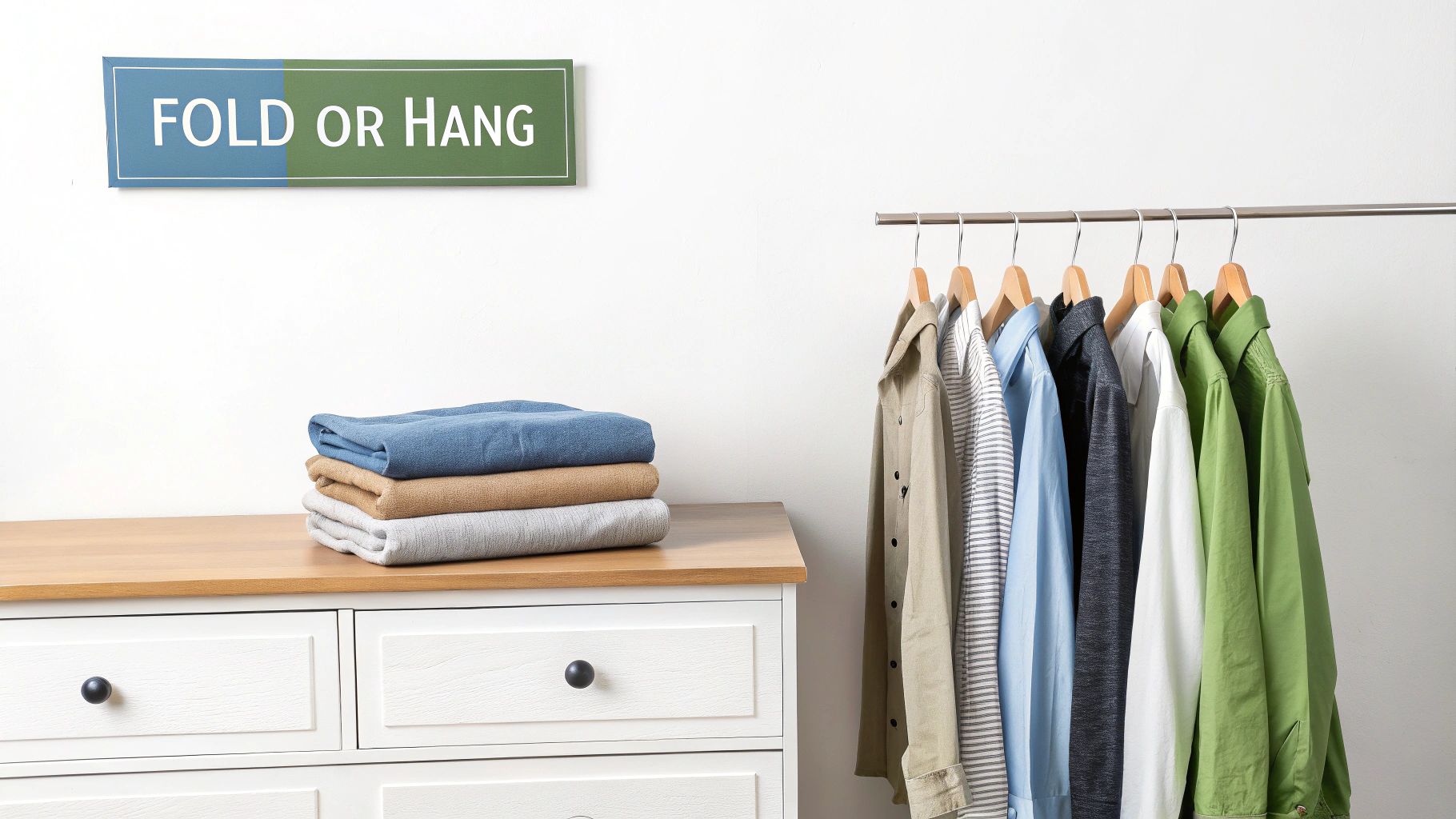
- Drawers and Shelves: This is where vertical folding becomes your best friend. Forget stacking shirts in piles where you can only ever see the one on top. Folding clothes to stand upright means you can see every single item at a glance, just like files in a filing cabinet.
- Hanging Space: Uniform, slim hangers are non-negotiable. Those bulky plastic and mismatched wire hangers are notorious space-wasters that can stretch and damage your clothes. Switching to a consistent style, like the space-saving hangers from MORALVE, can literally double your hanging capacity overnight.
- Small Items: Accessories, socks, and underwear are often the final frontier of closet clutter. Drawer dividers and small bins are perfect for taming this chaos. They give every single piece a designated home, so you're never digging for a matching sock again.
The Power of A Proven Method
Many of the best closet organization tactics today have roots in proven systems. For instance, the KonMari Method completely changed the game by popularizing vertical folding and the idea of organizing by category, not location within the closet.
As you can see, this isn't just about being tidy. It’s a philosophy that teaches you to be more intentional with your belongings, which is the key to creating a closet that stays organized for good.
Comparing Core Closet Organization Methods
Here's how vertical folding, slim hangers, and drawer organizers measure up against common closet organization challenges.
| Method | Space Efficiency | Visibility | Ease of Maintenance |
|---|---|---|---|
| Vertical Folding | High - fits more items in a drawer than stacking. | Excellent - you can see every item at once. | Moderate - requires consistent folding to maintain. |
| Slim Hangers | Excellent - can double hanging space on the rod. | Good - items are clearly displayed and accessible. | High - easy to hang and remove clothes. |
| Drawer Organizers | Good - prevents small items from becoming a jumble. | Excellent - creates a designated spot for everything. | High - keeps categories separate with minimal effort. |
Each method shines in different ways, but when you combine them, you create a comprehensive system that addresses every pain point in your closet.
Map Out Your Ideal Closet Space
Before you even think about moving a single shirt, let's talk strategy. A truly organized closet isn’t just neat—it's a system built around your actual life and your specific wardrobe. I've seen it time and time again: people get a burst of motivation, start folding and hanging, and then get frustrated because it doesn't stick. That's because they skipped the most important part: the plan.
First things first, get real about the space you have. Take a good, hard look at your closet's layout. Do you have tons of hanging space but barely any shelves? Are there awkward, unusable corners or a top shelf you can only reach with a stepladder? Knowing your closet's quirks—its strengths and weaknesses—is the foundation of a good plan.
For example, if you're blessed with vertical height but not much rod length, you could double your hanging space by adding a second rod. If your closet is one of those deep but narrow types, maybe pull-out drawers are the answer. This initial survey keeps you from wasting money on organizers that won't even fit or creating a system that just doesn't work with the space you've got.
Creating Functional Zones in Your Closet
Okay, now that you know your space, let's think about your clothes in terms of "zones." This is where you tailor the closet to your lifestyle, and honestly, it’s a game-changer. Don't just lump everything into "tops" and "bottoms." Think about how you actually get dressed every day.
A busy professional I once helped had a breakthrough when we zoned her closet like this:
- Work Attire: We put all her blazers, blouses, and work pants front and center on the main rod. It made getting ready on weekday mornings completely automatic.
- Weekend & Casual: T-shirts, jeans, and comfy sweaters all got their own easy-to-grab section.
- Workout Gear: We dedicated a single, accessible drawer for all her leggings and athletic tops. No more digging.
- Special Occasion: Those nice dresses and suits? We put them in garment bags at the back of the closet, safe and out of the way but still easy to find when needed.
Zoning your closet means you stop rummaging. You create an intuitive map where everything has a home, turning your closet from a chaotic storage box into a tool that makes your life easier.
Evaluate Your Wardrobe Realistically
With your zones mapped out, it's time to get honest about what you own. It’s a well-known fact that most people only wear about 20% of their clothes on a regular basis. This is your moment to decide what really earns its place in your newly planned closet space.
Here’s a rule I live by: if you haven't worn something in the last year, it's probably time to let it go. Free up that prime real estate for the clothes you genuinely love and wear.
This isn’t just about getting rid of stuff; it's about curating a wardrobe that actually fits your life right now. Having a smart closet layout makes this part so much clearer because you can physically see where you have five nearly identical black t-shirts or a total lack of good sweaters.
For a more detailed breakdown of creating that perfect layout, our guide on how to design a closet goes much deeper. Once you finish this planning stage, you’ll have a personal blueprint that sets you up for success.
Unlocking Your Closet Drawers with Vertical Folding
If you've ever had to dig through a mountain of t-shirts just to find the one you're looking for, you know the frustration of a cluttered drawer. The single biggest game-changer for drawer organization within your closet is a simple switch in technique: stop stacking your clothes and start filing them. This is the whole idea behind vertical folding.
Think of it like turning your drawers into a library for your wardrobe. Instead of a messy pile where only the top shirt is visible, you see the "spine" of every single item at a glance. By folding clothes into small, compact rectangles that can stand on their own, you arrange them one behind the other. It's hands-down the best way to organize clothes in drawers because you can see and grab exactly what you need, instantly.
This method isn't just a fleeting trend; professional organizers swear by it for good reason. It's been shown that folding clothes vertically can increase your drawer capacity by up to 30%. More than that, it can cut the time you spend rummaging for an outfit in half. In a survey involving over 3,000 households, a staggering 78% of people who switched to vertical folding reported feeling more organized and happier with their space. If you're curious, you can read more about the impact of organized living from these fashion industry insights on laticoleathers.com.
The T-Shirt Fold: Your Starting Point
Let’s tackle the biggest offender in most drawers—the humble t-shirt. Our goal is to create a neat little package that can stand up on its own.
- First, lay your shirt face-up on a flat surface and smooth it out.
- Imagine the shirt in three vertical columns. Fold one side in toward the center, then fold the sleeve back on itself. Do the exact same thing on the other side. You should now have one long rectangle.
- From here, fold the bottom of the rectangle up, leaving about an inch of space from the collar. Finally, fold this shape into thirds.
The finished product should be a compact bundle that can stand upright on its edge. Now all that's left is to line it up in your drawer!
Folding Beyond the T-Shirt
Don't stop at tees. You can use this same "file, don't pile" philosophy for almost everything else in your closet drawers.
- Jeans and Pants: Fold them in half lengthwise, bringing the legs together. Then, fold the legs into thirds to create a sturdy, stand-up packet. You'll never have to guess which pair of jeans you're grabbing again.
- Sweaters: The process is similar to t-shirts, but for bulkier knits, you'll want fewer folds at the end. The goal is a neat rectangle, not a thick, overstuffed brick.
- Socks and Underwear: Even these can be folded into tidy squares. This is much better than balling them up, which stretches out the elastic over time.
The real magic of vertical folding isn't just about saving space—it's about changing your relationship with your clothes. When you can actually see everything you own, you’re more likely to wear different outfits and less likely to buy something you already have.
Making this small change is more than just a quick tidying trick. It's a foundational step toward building a closet system that truly works for you. You'll eliminate those black holes where clothes go to be forgotten, ensuring every piece you own gets its moment.
Maximize Hanging Space with the Right Hangers
With your drawers sorted, it’s time to tackle the next frontier: your hanging space. That closet rod is some of the most valuable real estate in your bedroom, but it's often wasted with a jumble of bulky plastic, flimsy wire, and clunky wooden hangers. I’ve seen it time and time again—this is where the chaos truly lives.
Making a simple switch to a uniform, slim hanger system is one of the most impactful changes you can make to your closet, and the results are almost instant.
Just think about how much space those thick hangers steal. They create unnecessary bulk, cramming your clothes together so tightly you can barely see what you own. Slim velvet hangers, like the ones from MORALVE, are designed to reclaim that precious territory. Their slender profile lets you fit way more on the rod without it feeling overcrowded. Plus, the non-slip velvet texture is a lifesaver for silky blouses and wide-neck tops that always seem to end up on the floor.
Matching Hangers to Garments
Picking the right hanger goes beyond just looks; it's about taking care of your clothes. Different items have different needs, and the wrong hanger can easily lead to stretched-out necklines, dreaded shoulder bumps, or damage to delicate fabrics.
It’s all about a tailored approach to your closet rod:
- Blouses and Sweaters: Velvet hangers are your best friend here. Their gentle, non-slip surface grips the fabric without putting stress on the seams.
- Heavy Coats and Blazers: Don't skimp on support. Go for sturdy, contoured wooden or heavy-duty plastic hangers that can handle the weight and maintain the garment's shape.
- Skirts and Trousers: Hangers with clips or tiered bars are a must. They prevent those annoying creases and let you see all your options at a glance.
A uniform set of hangers does more than just save space—it creates a clean, cohesive look that feels like a high-end boutique. This visual calm makes scanning your wardrobe and pulling together an outfit so much easier. You’re turning a cluttered closet into a functional and genuinely inspiring space.
A Stylist’s Secret Weapon
I once heard a story from a fashion stylist who shared a brilliant tip for a client whose closet was literally overflowing. It was so packed she couldn't fit a single new item inside. The stylist’s first move wasn't to throw clothes out. Instead, she replaced every single mismatched hanger with a uniform set of slim, velvet ones.
By simply standardizing the hangers and using cascading hooks to group outfits together, the stylist tripled the client’s usable hanging space. The closet went from overstuffed to airy and organized in just one afternoon.
This simple trick isn't just for the pros. You can get the exact same result by investing in a quality set of hangers. If you need more ideas on how to pick the perfect ones for your wardrobe, take a look at our guide to the best space-saving hangers. It’s a small investment that delivers a huge return in organization and peace of mind.
Conquer Closet Clutter with Smart Storage Accessories
You've done the hard work—your hanging clothes are perfectly spaced, and your drawers are a masterclass in vertical folding. But what about the final frontier of closet chaos? I'm talking about the small stuff: socks, underwear, belts, and scarves that always seem to end up in a jumbled mess, no matter how hard you try.
The secret to taming these items for good is compartmentalization.
This is where smart storage accessories really shine. Think of drawer organizers, shelf dividers, and small bins as the framework for your closet. They give every single item a designated home. You'll never have to dig for a matching sock or untangle a knot of belts on a busy morning again.
Choosing Your Organizational Tools
The trick is to find accessories that are perfectly suited for both your stuff and your space. Look at what you're trying to contain. For example, I’ve found that a honeycomb-style drawer organizer is fantastic for rolling up socks and underwear. Each pair gets its own little pocket, so everything is visible and easy to grab.
If you're dealing with bulkier items on open closet shelves, like handbags or stacks of sweaters, shelf dividers are a total game-changer. These simple pieces just slide onto your existing shelves, creating sturdy, defined cubbies that stop those neat piles from toppling over. They bring instant structure and keep everything looking tidy.
Don’t just organize—categorize. It’s a small extra step that makes a huge difference. Group similar items together within your new system. For example, use one section of an organizer for athletic socks and another for dress socks. You'll find what you need in seconds.
Imagine taking that one chaotic "junk drawer" in your closet and turning it into a perfectly arranged accessory station. With a modular system of small, interlocking bins, you can create custom-sized compartments for everything from watches and ties to statement necklaces. It’s incredibly satisfying to transform a cluttered mess into a curated display.
Implementing Your System
Once you've picked out your tools, putting them in place is pretty simple, but a little strategy goes a long way. Before you buy a single thing, measure your drawers and shelves. Trust me, there’s nothing more frustrating than getting an organizer home and discovering it’s just a centimeter too wide.
Here are a few practical ways I’ve seen these accessories work wonders in a closet:
- Corral clutches and small bags: Use magazine files or shallow bins on a shelf. Lining them up vertically not only looks great but also protects their shape.
- Divide deep drawers: Adjustable drawer dividers are perfect for this. You can create long "lanes" for rolled-up scarves, leggings, or even t-shirts.
- Label everything: This is a lifesaver for any bins you store on high shelves. A simple label means you won't have to pull everything down just to find your winter gloves.
By adding these simple accessories to your closet, you’re not just tidying up for today. You're building a sustainable system that gets rid of those last pockets of clutter for good.
Simple Habits to Keep Your Closet Organized
Getting your closet organized is a great feeling, but the real win is keeping it that way. I've learned over the years that the secret to long-term closet organization isn't about one massive, exhausting overhaul. It's about building small, simple habits into your daily routine that stop clutter before it even starts.
One of the most powerful habits I recommend is the ‘one-minute reset’. It's exactly what it sounds like. Before you call it a day, just take sixty seconds to put things back in their proper homes. That jacket you threw on the chair? Hang it up. Shoes by the door? Back on the closet rack they go. This tiny daily commitment is your best defense against the dreaded closet avalanche.
The Power of a Weekly Check-In
To back up your daily reset, a quick weekly check-in can make all the difference. You only need five or ten minutes over the weekend for a mini-tidy. This is your chance to straighten out your hangers so they're all facing the same way or quickly refold a few t-shirts that have gone rogue in your drawer.
Think of it as light maintenance, not another major chore. You're just tweaking the closet system to make sure it's still running smoothly. It’s also the perfect time to toss anything you've noticed you aren't wearing into a donation bag.
Maintaining an organized closet is like tending a garden. It requires small, consistent efforts to flourish, not just one big push at the beginning of the season. Neglecting it allows weeds—or in this case, clutter—to quickly take over.
Implement a Seasonal Swap-Out System
If you're tight on closet space, the seasonal swap is a game-changer. A busy mom I know absolutely swears by this method to keep her family’s closets from bursting at the seams. Twice a year, she packs away all the off-season clothes and moves the current season's wardrobe front and center.
This simple rotation does two brilliant things at once:
- It instantly frees up valuable real estate in your main closet, making it so much easier to see what you have.
- It forces you to handle every single piece of clothing, which is the perfect opportunity to re-evaluate what you own. This is the best time to learn how to declutter your closet and finally part with things you no longer love.
By tucking away bulky winter coats in the summer and sundresses in the winter, you give the clothes you actually need room to breathe. Grab some labeled under-bed bins or a few breathable garment bags to keep everything protected while it's in storage. This purposeful habit keeps your closet relevant and makes getting dressed a source of calm, not stress.
Got Questions About Closet Organization? We’ve Got Answers.
Even the most organized person hits a snag when tackling a closet overhaul. It's totally normal. Let's walk through some of the questions I hear most often so you can get unstuck and find what works for you.
How Often Should I Really Be Decluttering My Closet?
I get this one a lot. While a massive purge feels great, the real secret is consistency. Think of it like this: a deep-dive declutter is best done twice a year. A perfect time for this is when you're swapping your summer and winter wardrobes. It's a natural moment to take stock of what you actually wore and what just collected dust.
But to keep things from getting out of hand again, try a quick 10-minute tidy-up once a week. It’s amazing how a little maintenance can prevent a future clutter avalanche.
What’s the Deal with Hangers for Delicate Clothes?
This is a big one. For anything like silk, satin, or delicate lace, you absolutely want to use padded or velvet hangers. Their soft, grippy surface is a lifesaver—it stops those frustrating snags and keeps straps from sliding off.
Whatever you do, please avoid thin wire and hard plastic hangers for these items. They’re notorious for creating those weird, permanent shoulder bumps and can even stretch the fabric over time.
A Quick Tip from Experience: Never, ever hang your heavy knit sweaters. I've seen too many beautiful sweaters ruined this way. The weight of the garment will pull it completely out of shape. The best way to store them is to fold them carefully and place them on a shelf or in a drawer.
My Closet Is Tiny. How Do I Make It Work?
When you’re short on space, you have to get creative and think vertically. Every single inch counts.
- Double Up: The easiest win is often adding a second closet rod. This instantly doubles your hanging space for things like shirts, skirts, and pants that you’ve folded over a hanger.
- Don't Forget the Door: An over-the-door organizer is a game-changer. It's the perfect spot for shoes, belts, or scarves, getting them up off the floor and out of the way.
- Switch to Slim Hangers: This might sound too simple, but swapping out bulky hangers for ultra-slim ones can genuinely give you back inches of rod space. Your closet will feel less cramped right away.
It's not about having a huge closet; it's about making the space you have work smarter. These little adjustments can make even the smallest closet feel surprisingly functional.
Ready to see what a difference the right hangers can make in your closet? The first step to a better closet is often the simplest. Check out the complete collection of space-saving hangers from MORALVE and see how a small change can create a massive improvement. Head over to moralve.com to get started.
Leave a comment