

The Best Way To Store Handbags In Your Closet

Let's be honest, the best way to store your handbags comes down to four simple, non-negotiable rules: clean them before you put them away, stuff them so they keep their shape, cover them to protect from dust and light, and pick a storage spot in your closet that doesn’t squish or stretch the straps. Get these fundamentals right, and you've discovered the secret to keeping your bags looking brand new for years.
Your Quick Guide To Perfect Handbag Storage
Properly storing your handbags is so much more than just a quick closet tidy-up; it's about protecting your investment. I’ve seen it time and again—skipping these basic steps can lead to permanent creases, faded color, and tarnished hardware. It's a painful lesson to learn.
When you consider that the global handbag industry was valued at a staggering USD 56.48 billion in 2024, it puts the value of each piece in your own collection into perspective. One of the easiest and most effective tools in your closet organization arsenal is the humble dust bag. A good one can trap up to 99% of damaging dust particles and helps prevent the kind of scratches that, according to industry stats, affect 70% of improperly stored leather goods. You can dive deeper into the handbag market's growth and trends over at Grand View Research.
A well-thought-out closet system doesn't just protect your bags; it makes getting ready in the morning so much smoother. The real goal is to create a space where every bag is visible, easy to grab, and safely stored. That means no more piles on the closet floor or cramming five bags onto a single hook, which is a fast track to stretched-out straps and misshapen bags.
Choosing Your Closet Storage Strategy
The perfect storage method really depends on two things: the types of bags you own and the closet space you're working with. If you're dealing with a smaller closet, thinking vertically is your best friend. There are some fantastic small closet storage solutions out there that can completely change the game without needing a full renovation.
To figure out what's best for your collection, this quick guide can point you in the right direction.
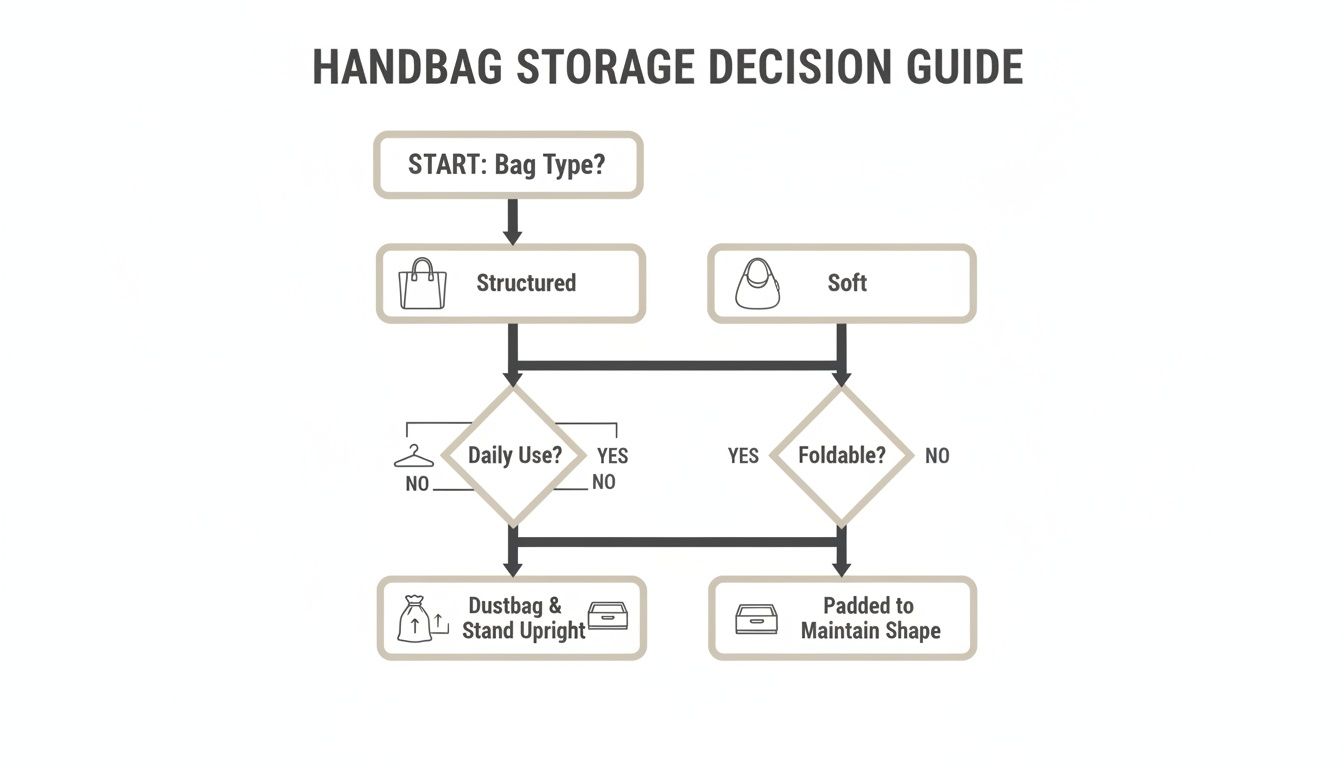
As you can see, structured bags do best when they can stand upright on a shelf, which helps them hold their shape. On the other hand, softer, more casual bags have a bit more flexibility and can be hung or even stored in bins within your closet. For most of us, the ultimate system is usually a mix of all three—a little shelving, some hanging solutions, and maybe a few boxes for those special occasion pieces.
To help you decide, here’s a quick breakdown of the most common closet storage methods.
Handbag Storage Methods At A Glance
| Storage Method | Best For | Pros | Cons |
|---|---|---|---|
| Shelving | Structured totes, satchels, and designer bags that need to maintain their shape. | Keeps bags upright, visible, and easily accessible. Prevents creasing. | Can take up significant closet space. Requires dust bags for protection. |
| Hanging | Lightweight bags, crossbody bags, and clutches with sturdy straps. | Space-efficient, especially with specialized hangers. Good visibility. | Can stretch or damage delicate or heavy straps over time. |
| Bins & Boxes | Soft, unstructured bags like hobos, fabric totes, or seasonal clutches. | Protects from dust and light. Great for long-term or seasonal storage. | Bags are less visible and accessible. Risk of misshaping if not stuffed. |
Ultimately, a combination of these methods tailored to your specific collection and closet space will give you the best results.
Giving Your Handbags a Pre-Storage Spa Day
Before you even think about putting a handbag away in the closet, there’s a little prep work that makes all the difference. Honestly, just tossing a bag into the closet without this quick routine is asking for trouble down the road. It’s a simple process, but it's the secret to keeping your collection looking brand new.
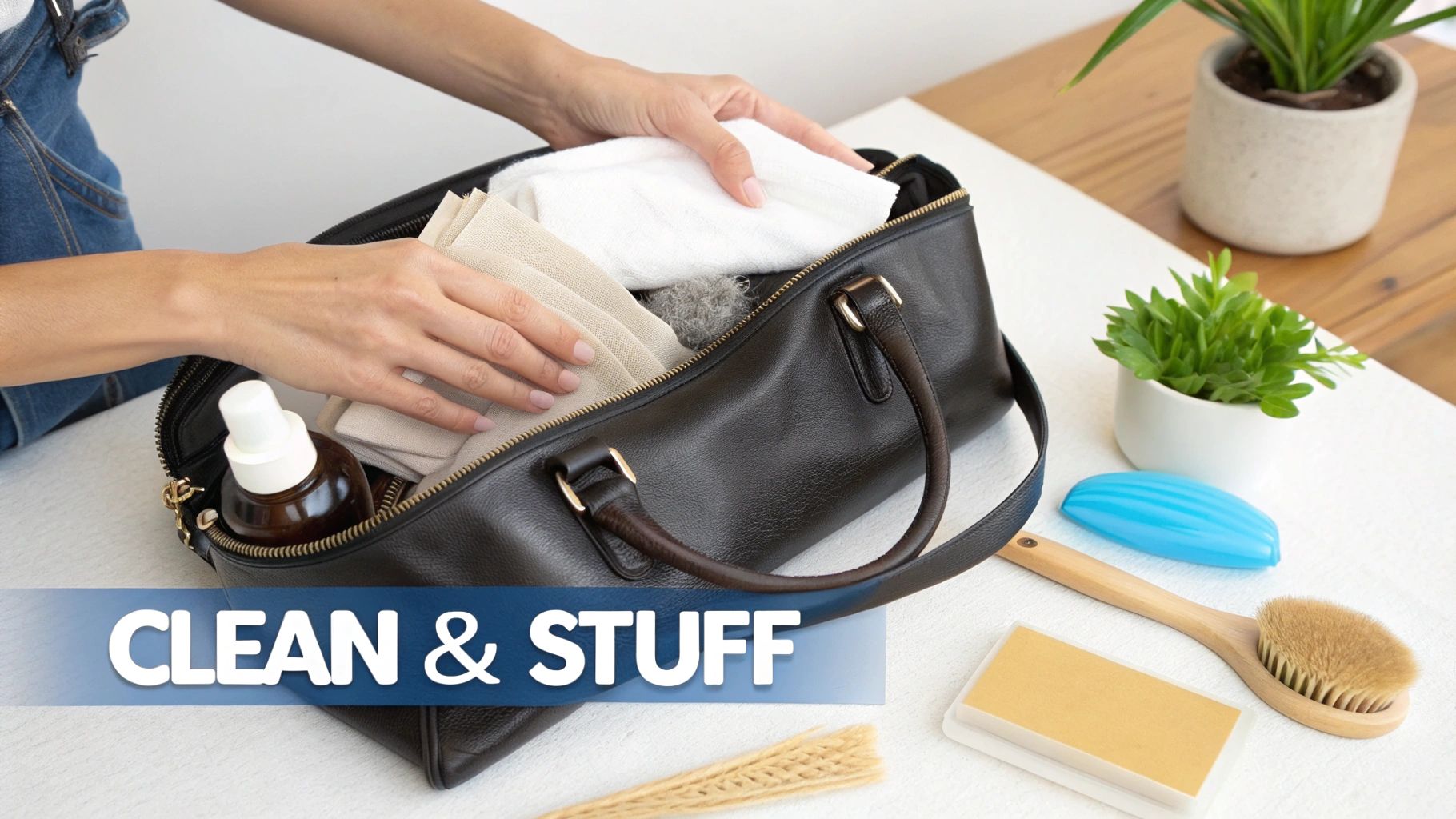
First things first: empty it out completely. And I mean completely. Check every last zip pocket and hidden compartment. You’d be surprised what you find—a rogue pen waiting to leak, a lipstick ready to melt, or old receipts that can transfer ink onto that beautiful lining. These little things cause big, permanent stains.
A Quick Clean-Up
Once it's empty, give it a gentle wipe-down. For my leather bags, I just use a soft, dry microfiber cloth to get the dust off. If I spot a small scuff, I’ll grab a proper leather cleaner. For canvas or fabric, a slightly damp cloth usually does the trick, but always, always check the care tag first to avoid surprise water spots.
This quick clean stops everyday grime and oils from working their way into the material, which is what causes that sad discoloration and wear over time. Think of it as putting your bag to bed clean so it's fresh and ready for you later.
The Secret to Keeping its Shape
Now for the most important part of closet storage: stuffing. If you leave a bag empty, it’s going to slouch, crease, and collapse on itself, leaving permanent wrinkles in the leather or fabric. The biggest mistake I see people make here is using newspaper. Don't do it! The ink bleeds and will stain the interior lining.
Instead, you want to use materials that support the bag’s natural shape without putting any stress on the seams.
- Acid-Free Tissue Paper: This is my go-to. It’s gentle, safe for any material, and won't cause discoloration over time.
- Purse Pillows or Shapers: If you have a few investment pieces, these are fantastic. They're basically custom-fit cushions that provide perfect support.
- Old T-shirts or Soft Scarves: An easy at-home solution! Just make sure they're clean and color-fast—a plain white cotton tee is a safe bet.
Proper stuffing is truly the cornerstone of handbag preservation. It's incredibly effective, preventing up to 90% of shape loss and helping absorb any sneaky moisture or odors. In fact, when leather collapses, it can actually shrink by 10-15% over time. You can dig deeper into the factors driving the handbag market at Straits Research.
The key is to support, not overfill. You want to add just enough stuffing so the bag stands up on its own, looking natural—not like it's about to burst.
Taking a few minutes for this pre-storage routine is a total game-changer. It protects your investment and ensures that the next time you reach for that favorite bag, it looks just as amazing as the day you put it away.
Smart Vertical Storage For Small Closets
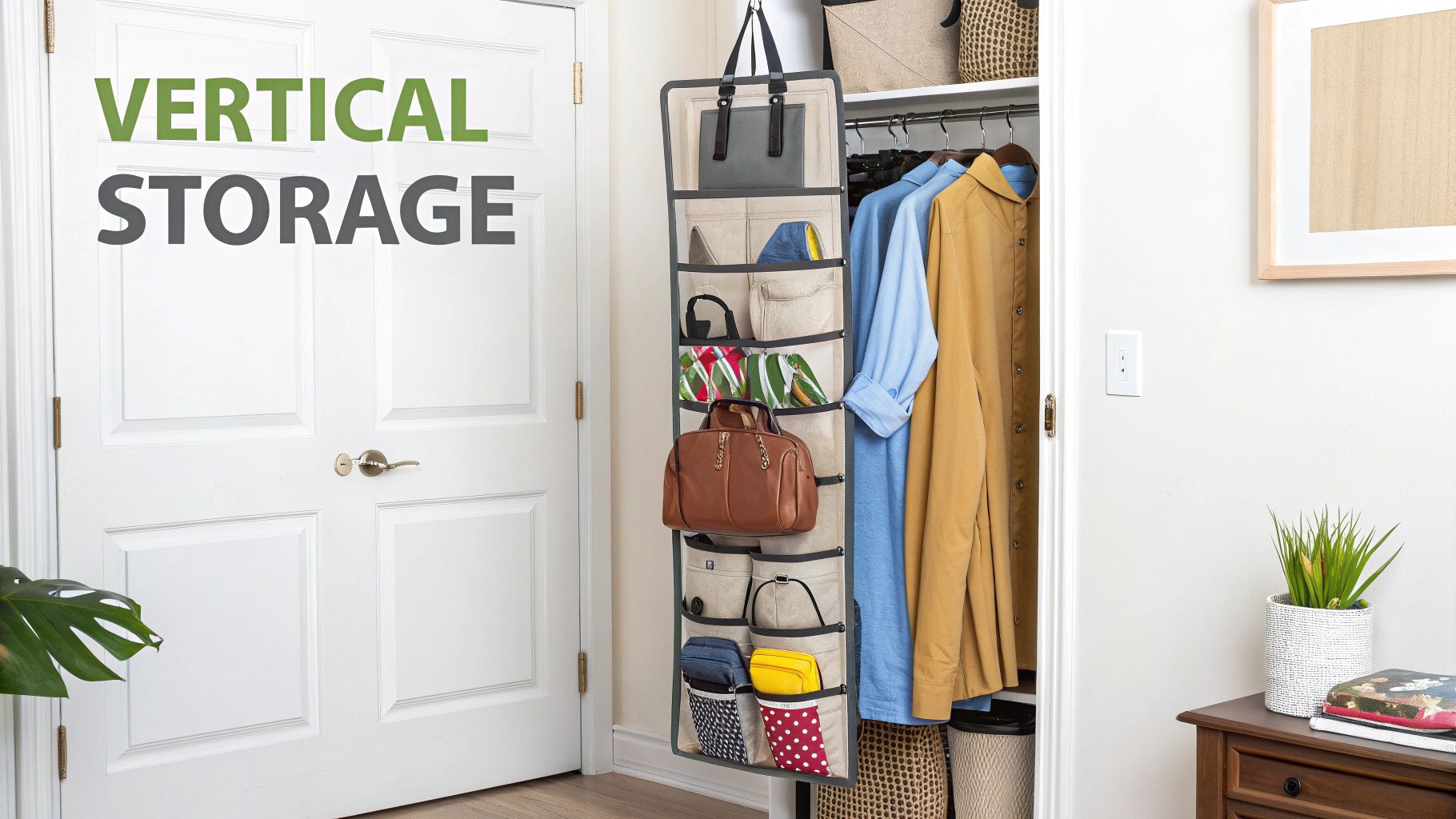
When your closet space is at a premium, every inch counts. If shelves are already overflowing, it’s time to look up. Thinking vertically is a total game-changer for organizing handbags, turning unused spots like the back of your door or an empty bit of closet rod into prime storage real estate.
The trick is to hang your bags correctly within the closet. Just throwing a heavy tote over a standard wire hanger is asking for trouble—you'll end up with stretched-out straps and warped handles. The real goal is to use tools specifically designed to support the bag's weight and shape without causing damage.
Choosing The Right Hanging Solutions
Not all hanging organizers are built the same. To do this right, you need to pick products that protect your bags’ structure while making the most of your limited closet space. Thankfully, some of the most effective solutions are also surprisingly simple.
Here are a few of my go-to solutions for tight closets:
- Over-the-Door Organizers: I love the ones with deep, supportive pockets. They’re fantastic for stashing smaller items like clutches, wallets, and lightweight crossbody bags where the straps aren't bearing any weight at all.
- Specialized S-Hooks: These are a must-have for the closet rod. Their wide, curved design cradles the bag's straps, distributing the weight evenly instead of putting it all on one sharp point. They're perfect for your everyday medium-weight bags with sturdy handles.
- Padded Hangers: For bags with more delicate straps, a soft, padded hanger is a great option. That bit of cushion prevents the creasing and stress that can permanently damage leather or fabric over time.
If you need more inspiration, there are tons of clever closet organizer ideas for purses out there that can help you picture the best setup for your own collection.
Which Bags Should You Hang?
Hanging storage is a fantastic space-saver for any closet, but it isn’t the right solution for every single bag. It’s crucial to know which bags can handle being hung and which ones can't to avoid causing any long-term damage. My personal rule of thumb is to look at two things: the bag's weight and how its straps are constructed.
Important Takeaway: Never hang your heaviest bags, especially if they have thin or delicate straps. Gravity is relentless, and the constant tension will eventually stretch, weaken, and even tear the material right at the seams. This is especially true for those big leather totes or bags with a lot of heavy hardware.
Ideal Candidates for Hanging:
- Lightweight clutches and wristlets
- Small crossbody bags with durable straps
- Casual fabric or canvas totes
Bags to Keep on a Shelf:
- Heavy, structured leather totes
- Bags with thin, delicate, or chain straps
- Vintage or precious bags that need full support
By being selective about what you hang, you can safely take back that vertical real estate. This strategy transforms cluttered corners into an organized display, making it a breeze to find the perfect bag without having to dig through a messy pile on your closet floor.
Designing The Perfect Handbag Shelf System
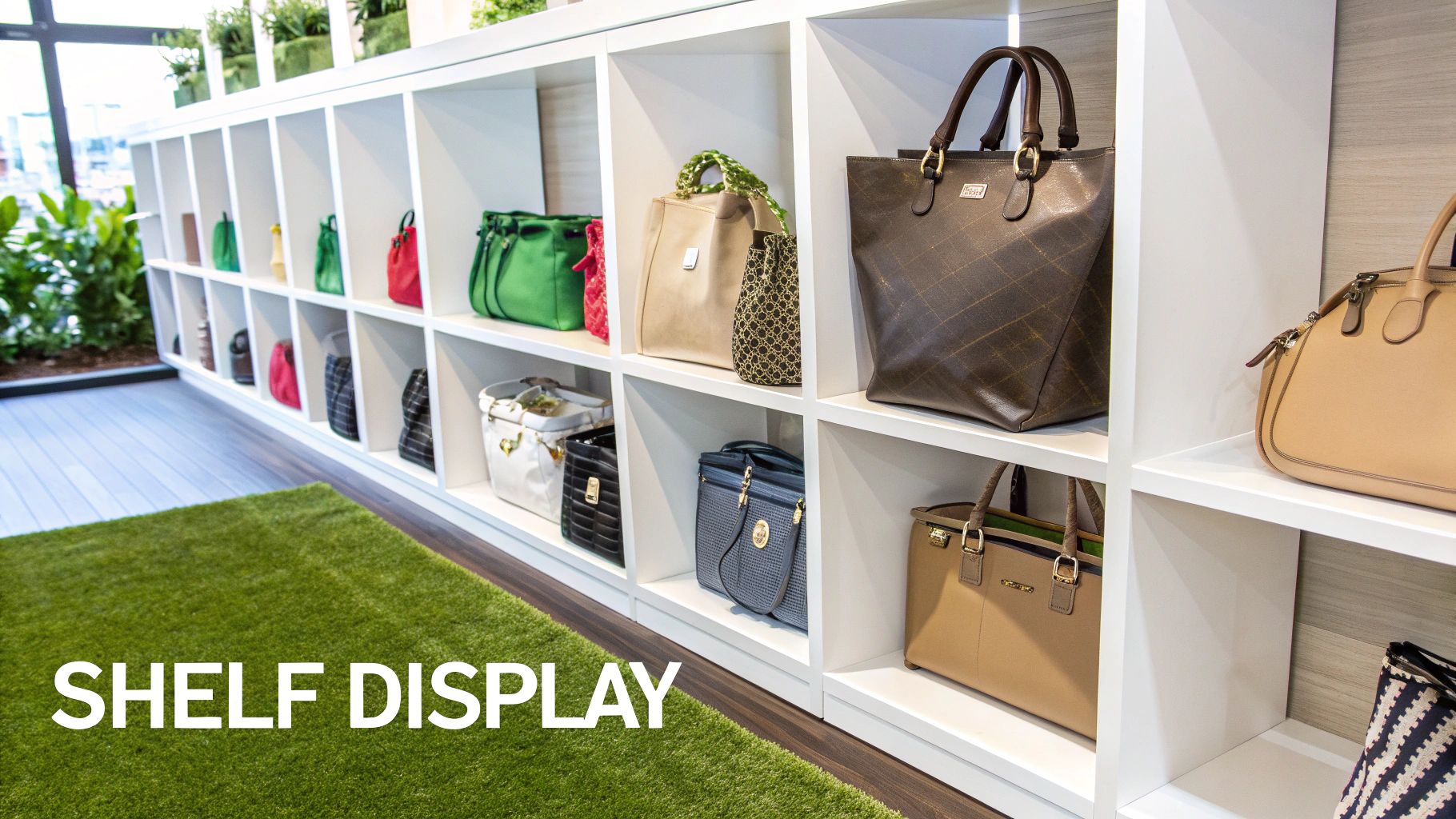
When it comes to the best way to store handbags, nothing beats a well-designed shelf in your closet. Shelving really is the gold standard because it lets your bags stand upright, which stops the awful crushing and creasing that happens when they're all tossed in a pile. This approach treats your bags like the investments they are, preserving their structure while keeping everything easy to see and grab.
Turning a plain closet shelf into a chic, boutique-style display isn't just for looks—it’s about smart function and long-term protection. A dedicated shelving system is the best defense against your bags slumping over, leaning on each other, and losing their shape over time.
Creating Dedicated Spaces For Each Bag
The secret to a truly effective closet shelf system is giving each handbag its own personal space. When you just line them up side-by-side, they almost always end up toppling over like a row of dominoes. But a few simple tools can completely change the game.
These organizers are a lifesaver for maintaining order and protecting your collection:
- Acrylic Shelf Dividers: These are fantastic. They’re clear, sturdy, and just slide right onto your existing shelves to create instant cubbies. Because they're see-through, you get a clean, organized look while each bag stands perfectly upright in its own spot.
- Cubby Organizers: If you want something a bit more structured, a cubby organizer unit is a great option. You can place it directly on a shelf or even on the closet floor. I find these are perfect for grouping smaller bags or clutches since they offer great support.
- Bookends: Don't underestimate the power of a good bookend! In a pinch, a couple of heavy, decorative bookends can work as stylish dividers to prop up larger bags and keep them from slouching.
By assigning each bag its own slot, you pretty much eliminate the risk of them getting squashed and losing their form. You can explore all sorts of shelving ideas for closets that work for any size space. And if you want to visualize a custom setup before you start buying things, an online home design planner can be a huge help for mapping out your closet layout.
Proper Spacing and Airflow
Once you have dividers set up, the next thing to think about is spacing. It’s so easy to cram too much onto one shelf, but that's a mistake that can lead to damage. Handbags need a little breathing room to prevent color from transferring between different leathers and to allow for proper air circulation in the closet.
My go-to rule is to leave at least an inch of space between each handbag. This simple habit helps keep hardware from scratching the bag next to it and makes sure air can move freely, which is key to preventing any musty smells.
Good spacing doesn't just protect your bags; it makes your life easier. When you can clearly see and grab the bag you want without having to untangle it from the herd, your morning routine becomes that much more enjoyable. Ultimately, a well-planned shelf system is the perfect blend of protection and accessibility.
Here’s a quick cheat sheet to keep your closet organization on track.
Handbag Closet Storage Do's And Don'ts
| Action | Do | Don't |
|---|---|---|
| Arrangement | Store bags upright with stuffing to maintain shape. | Pile bags on top of each other or in a bin. |
| Dividers | Use acrylic dividers or cubbies to create individual slots. | Let bags lean against each other, causing slumping. |
| Spacing | Leave at least 1 inch of space between bags for airflow. | Overcrowd the shelf, risking color transfer and scratches. |
| Visibility | Position bags with the front facing out for easy identification. | Hide smaller bags behind larger ones. |
| Weight | Place heavier, larger bags on lower, sturdier shelves. | Put heavy bags on flimsy shelves that could bow or break. |
Following these simple guidelines will turn your closet into a perfectly organized and protective home for your handbag collection.
Protecting Your Bags From the Elements
You’d think your closet is a safe space, but some of the biggest threats to your handbag collection are completely invisible. It’s not just about avoiding scuffs and creases; the actual environment inside your closet—light, temperature, and humidity—is a huge factor in the long-term health of your bags. If you want to get storage right, you have to get these under control first.
Even a little indirect sunlight sneaking through a window can cause irreversible harm over time. UV rays are brutal—they break down dyes, which leads to those sad, faded patches and discoloration. They can also make materials like leather incredibly brittle and prone to cracking. The best spot for your bags is always going to be somewhere dark within your closet, completely away from natural light.
The Hidden Threat of Humidity
While light damage happens slowly, humidity is a much faster, more destructive problem. Too much moisture in the air is an open invitation for mold and mildew, which can permanently stain and weaken leather, fabric, and even the stitching that holds your bag together. If you open your closet and get a whiff of that musty smell, consider it a major red flag.
It doesn't stop there. High humidity also causes metal hardware to tarnish and can even speed up the breakdown of the glues used to construct the bag. This is precisely why you should never, ever store valuable bags in places like basements or attics where temperature and moisture levels are all over the place.
Considering the luxury handbag market is on track to hit USD 35.83 billion by 2025, protecting these investments is serious business. In Europe, it's estimated that damp conditions cause mold on 20% of leather bags each year if they aren't cared for properly. This is why breathable storage is so critical. Storing a bag in a plastic bin inside a closet, for example, can trap up to 30% more moisture—a total disaster waiting to happen. You can get more insights on how market trends impact handbag care from Precedence Research.
Creating a Stable Closet Environment
Luckily, managing your closet's climate is easier than you might think. The goal is simple: keep the space cool, dark, and dry, with plenty of good air circulation. A few smart additions can make a massive difference.
Expert Tip: The sweet spot for storage is a relative humidity level between 40% and 50%. This is dry enough to stop mold in its tracks but not so dry that it will cause leather to dry out and crack.
Here are a few things that actually work to control moisture in your closet:
- Silica Gel Packets: Don't underestimate these little packets! Tossing a few inside each handbag or in the corners of your closet can absorb up to 40% of their weight in moisture. This alone can slash the risk of mold by as much as 85%.
- Renewable Dehumidifiers: If you live somewhere humid, a small, cordless dehumidifier is a game-changer for your closet. These little devices quietly pull moisture from the air and can be "recharged" and used over and over.
- Breathable Dust Bags: This is a non-negotiable. Always use the cotton or felt dust bags that came with your purse instead of plastic. They shield from dust but still let air move freely, preventing moisture from getting trapped right against the bag's surface.
By taking a few proactive steps to manage light and humidity, you’re creating a safe, stable environment that will preserve the color, structure, and integrity of your handbags for years to come.
Answering Your Top Handbag Storage Questions
Even with the best intentions, organizing a handbag collection in your closet can bring up some tricky questions. Let's be honest, figuring out the right way to store them often comes down to solving these specific little problems. Here are the answers to some of the most common questions I get, so you can feel confident you're protecting your bags from those sneaky hidden dangers.
Is It Better To Store Handbags In Their Original Boxes?
It’s completely understandable to think that keeping a bag in its original box is the ultimate form of preservation. It feels like you're keeping a collector's item pristine, right? But in reality, it's not a great long-term plan for closet storage.
Cardboard is a magnet for pests and can start to break down over time, especially if there's even a hint of humidity in your closet. The biggest issue, though, is that out of sight really is out of mind. When your beautiful bags are tucked away in boxes on a high shelf, you’re just not going to use them as often. A much better approach is to keep them in breathable cotton dust bags on an open shelf where you can see them.
How Often Should I Take My Handbags Out Of Storage?
Think of your handbags—especially the leather ones—like a fine wine. They really do need to breathe every once in a while. To keep leather from drying out and to stop structured bags from getting permanent creases, I always recommend pulling them out of their closet spot every few months.
Just let them air out for a day, give them a quick once-over for any issues like mildew or tarnished hardware, and then put them back. It’s a simple little ritual that not only keeps your bags in top shape but also helps you rediscover old favorites you might have forgotten about.
Can I Store Multiple Bags In One Dust Bag?
I know it’s tempting to double up to save a little space in your closet, but please, avoid putting more than one bag in a single dust bag. It’s one of the fastest and most avoidable ways to cause accidental damage.
Key Takeaway: Every handbag needs its own dedicated dust bag. This simple rule prevents color from transferring between dark and light leathers and stops buckles, zippers, and chains from scratching the bag right next to it.
Taking this one small step is the key to making sure every piece in your collection stays free from scuffs, scratches, and dye marks.
What Should I Do If My Closet Is Too Humid?
Humidity is public enemy number one for handbags. It creates the perfect breeding ground for mold and mildew that can completely ruin leather and fabric. If your closet feels a bit damp or has that musty smell, you need to tackle it immediately.
Your first move is to introduce something that will absorb all that extra moisture in the air.
- Silica Gel Packets: Don't underestimate these little packets! Tossing a few inside your bags and around your shelves can make a huge difference.
- Renewable Dehumidifiers: If you need a more powerful, permanent fix, investing in a small, cordless dehumidifier is a brilliant move for your entire wardrobe.
- Charcoal Bags: Activated charcoal is a fantastic natural option because it absorbs both moisture and odors, keeping your closet smelling fresh.
Also, make sure you aren't over-stuffing your closet. A little bit of airflow goes a very long way in stopping moisture from settling. And whatever you do, never, ever store your handbags in a damp basement or a hot attic—the fluctuating temperatures and humidity will cause damage that you just can't undo.
At MORALVE, we believe an organized closet is the first step to a streamlined life. Our innovative, space-saving solutions are designed to help you care for your cherished items, from clothing to accessories. Transform your space and give your collection the home it deserves. Discover the perfect hangers and organizers for your closet at https://moralve.com.
Leave a comment