

The Best Way to Store Scarves for an Organized Closet

Before you even think about buying a single hanger or storage bin, the most important thing you can do is get a handle on what you actually own. It sounds obvious, but this is the step everyone skips in their quest for a more organized closet.
Jumping straight into organizing without a plan is a recipe for disaster. You end up with a system that doesn't fit your collection, and a few weeks later, you're right back where you started: a cluttered closet. Taking a few minutes to audit your scarves lays the foundation for a closet storage system that will actually stick.
This isn't about a massive, overwhelming purge. Think of it more as mindful curation—getting to know your collection so you can store it properly within your closet space. The goal is simple: an organized, visible, and accessible scarf collection where every single piece is protected.
If sorting through everything feels like too much, our guide on how to declutter your closet has some great, simple steps to get you started without the stress.
Sort Everything Into Piles
First things first, gather all your scarves in one place. You’ll probably be surprised by how many have been hiding in different drawers and coat pockets! Once you have them all, start sorting them into a few logical piles to better plan your closet layout.
- By Material: This is non-negotiable. Group similar fabrics together, separating delicate silks and cashmeres from your bulky wools and sturdy cottons. A heavy, chunky knit can easily snag or stretch a fragile silk scarf if they're stored together in the same drawer or hanger.
- By Season: Make piles for winter, spring/summer, and anything you wear year-round. This simple sort makes seasonal rotation a breeze and frees up that prime real estate in your closet for what you're actually wearing now.
- By Frequency of Use: Be honest with yourself. Which scarves are your daily workhorses, and which ones only come out for special occasions? Your most-loved, most-worn pieces need to be the easiest to grab from your closet each morning.
A quick audit stops you from buying a one-size-fits-all organizer. Instead, you can build a closet storage system that's perfectly suited to your scarves, protecting delicate fabrics and making your favorites easy to find.
Take Stock of What You Have
Once everything is sorted, you'll have a crystal-clear inventory. Suddenly, you know exactly how many delicate scarves need to be gently hung on the closet rod versus how many chunky knits can be happily rolled in a drawer. This knowledge is your new superpower.
Choosing the right storage is what preserves the quality of the fabric over time. I’ve seen closet enthusiasts use shallow, divided drawers to meticulously lay out their scarves, preventing a single wrinkle or tangle. It might seem extreme, but it shows just how much the right organization matters. This initial step transforms that chaotic pile into a manageable part of your wardrobe.
Alright, you’ve sorted your scarves. Now for the fun part: figuring out the best way to store them inside your closet. The right method isn't just about being tidy—it's about protecting your scarves and making it easy to grab the perfect one on a busy morning. The three main techniques are hanging, folding, and rolling, and the best choice almost always boils down to the scarf’s fabric and your available closet space.
Let's be practical. Your delicate silk scarves need a completely different home than your chunky winter knits. If you jam a delicate pashmina onto a crowded closet rod, you’re just asking for snags, stretching, and wrinkles that will never come out.
Hanging Scarves for Wrinkle-Free Access
For anything made of silk, chiffon, satin, or other delicate, easily-creased materials, hanging is the only way to go. It's the gold standard for closet storage. Letting the fabric drape naturally uses gravity to your advantage, keeping it smooth and ready to wear. This is the VIP treatment for the pieces you want to keep looking brand new.
Here are a couple of my go-to closet hanging options:
- Velvet-Looped Hangers: These are a game-changer for closet organization. The soft, non-slip surface gently grips silky fabrics without a hint of snagging. Plus, the individual loops give each scarf its own space on the rod.
- Smooth Wooden or Padded Hangers: A simple, high-quality padded hanger is perfect for draping one or two special-occasion scarves. Just stay away from those thin metal or cheap plastic hangers. They create pressure points that can leave permanent marks.
The other big win for hanging? Visibility. When you can see your entire collection at a glance in your closet, you're so much more likely to actually wear those beautiful scarves you might otherwise forget are buried at the bottom of a drawer.
This visual decision tree really simplifies the process, helping you decide where a scarf should live in your closet based on its material, the season, and how often you reach for it.
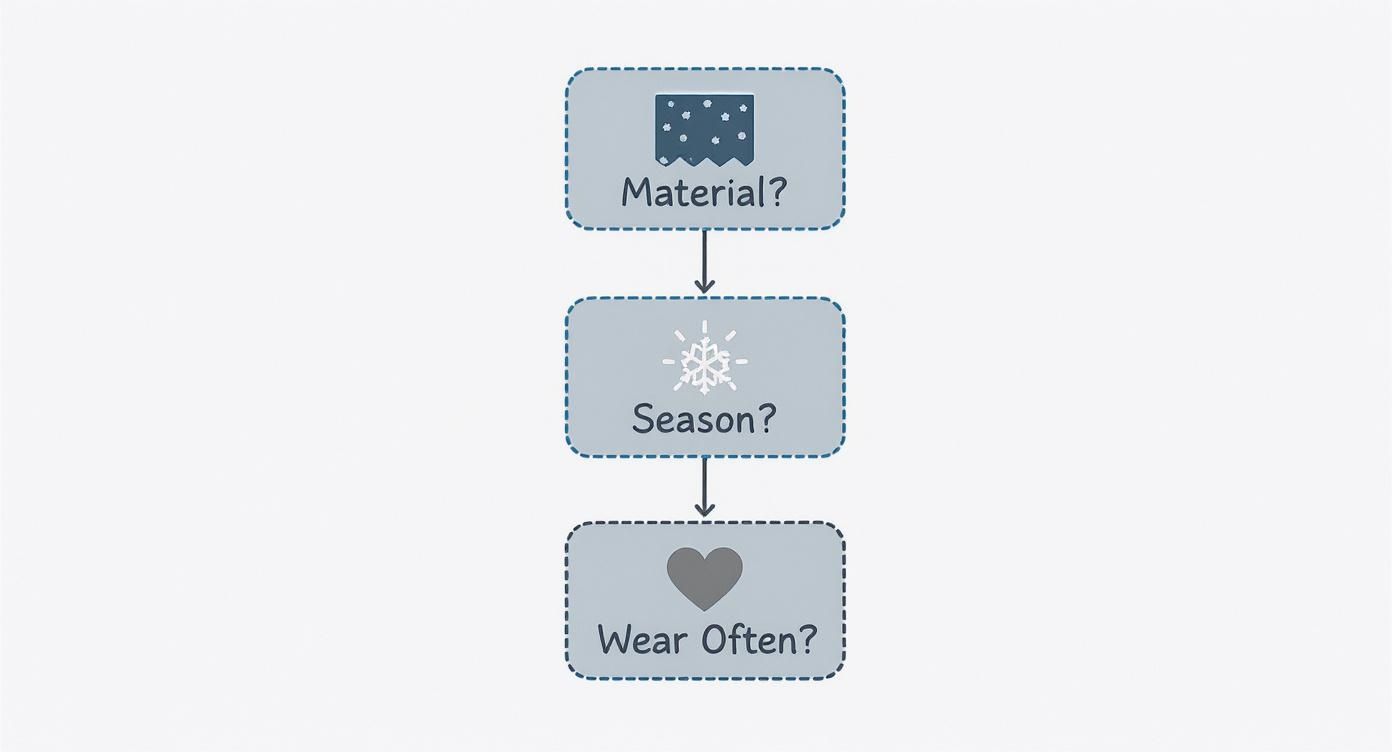
As the chart shows, hanging is a clear winner for delicate, frequently worn scarves. For your bulkier, seasonal items, though, it's time to think about drawers and bins to maximize closet space.
Folding and Rolling for Compact Organization
When it comes to your less delicate and bulkier scarves—think wool, cashmere, and heavy cotton knits—folding or rolling is your best friend. These methods are fantastic space-savers and are perfect for getting your closet drawers and shelves in order.
Rolling is my personal favorite for those big, chunky winter scarves. It turns them into neat little logs that you can arrange in a drawer or basket, which completely stops them from turning into a tangled mess on a closet shelf. This technique also helps minimize the hard creases you often get from folding.
Folding is great for medium-weight scarves like pashminas or cotton blends. The real trick here is to fold them loosely and then store them vertically in a drawer, just like files in a filing cabinet. This "file folding" method lets you see every single scarf at once, so you never have to dig through a pile in your closet to find the one you want.
It's not just us—everyone is realizing their scarves are valuable accessories worth protecting. The global scarf organizer market was valued at $512 million in 2024 and is projected to hit $845 million by 2033, with hanging solutions being the most popular for closet use. If you're curious, you can explore more market insights on scarf organizers and see just how big this trend is.
Scarf Storage Method Comparison
Feeling a bit overwhelmed by the options? This quick-glance table breaks down the most popular methods to help you decide what’s truly best for your collection and your closet space.
| Method | Best For | Pros | Cons |
|---|---|---|---|
| Hanging | Delicate fabrics (silk, chiffon, satin), frequent-use scarves | Prevents wrinkles, high visibility, protects fabric from snags | Can take up valuable closet rod space, not ideal for bulky knits |
| Folding | Medium-weight fabrics (pashminas, cotton), drawer storage | Space-efficient, good for stacking or file-folding, easy to see in drawers | Can create creases if folded too tightly or for too long |
| Rolling | Bulky fabrics (wool, cashmere), casual scarves | Minimizes creasing, very compact, great for bins and deep drawers | Can be time-consuming, scarves can unroll if not stored snugly |
| Bins/Baskets | Out-of-season scarves, very bulky winter wear | Keeps dust off, great for long-term closet storage, easy to stack on shelves | Low visibility (out of sight, out of mind), risk of overstuffing |
Ultimately, the best approach is often a combination of these methods. Hang your silks on the rod, roll your wools for the drawers, and you’ll have a closet system that works for you, not against you.
Maximizing Scarf Storage in a Small Closet
A small closet doesn't mean your scarf collection is doomed to a life of wrinkly chaos. With a little creative thinking, even the most compact space can become a model of efficiency. The real secret is to stop thinking horizontally and start thinking vertically to make the most of every inch.
When floor and shelf space are practically nonexistent, the key is to claim all that overlooked real estate in your closet. I'm talking about the back of your closet door, any bare wall space, and even the vertical gaps between your clothes on the rod.
Go Vertical with Smart Organizers
In a tiny closet, vertical storage is your absolute best friend. Instead of letting scarves eat up an entire drawer or shelf, these clever tools condense your collection into a small, totally manageable footprint on your closet rod or door.
Here are a few of my go-to solutions:
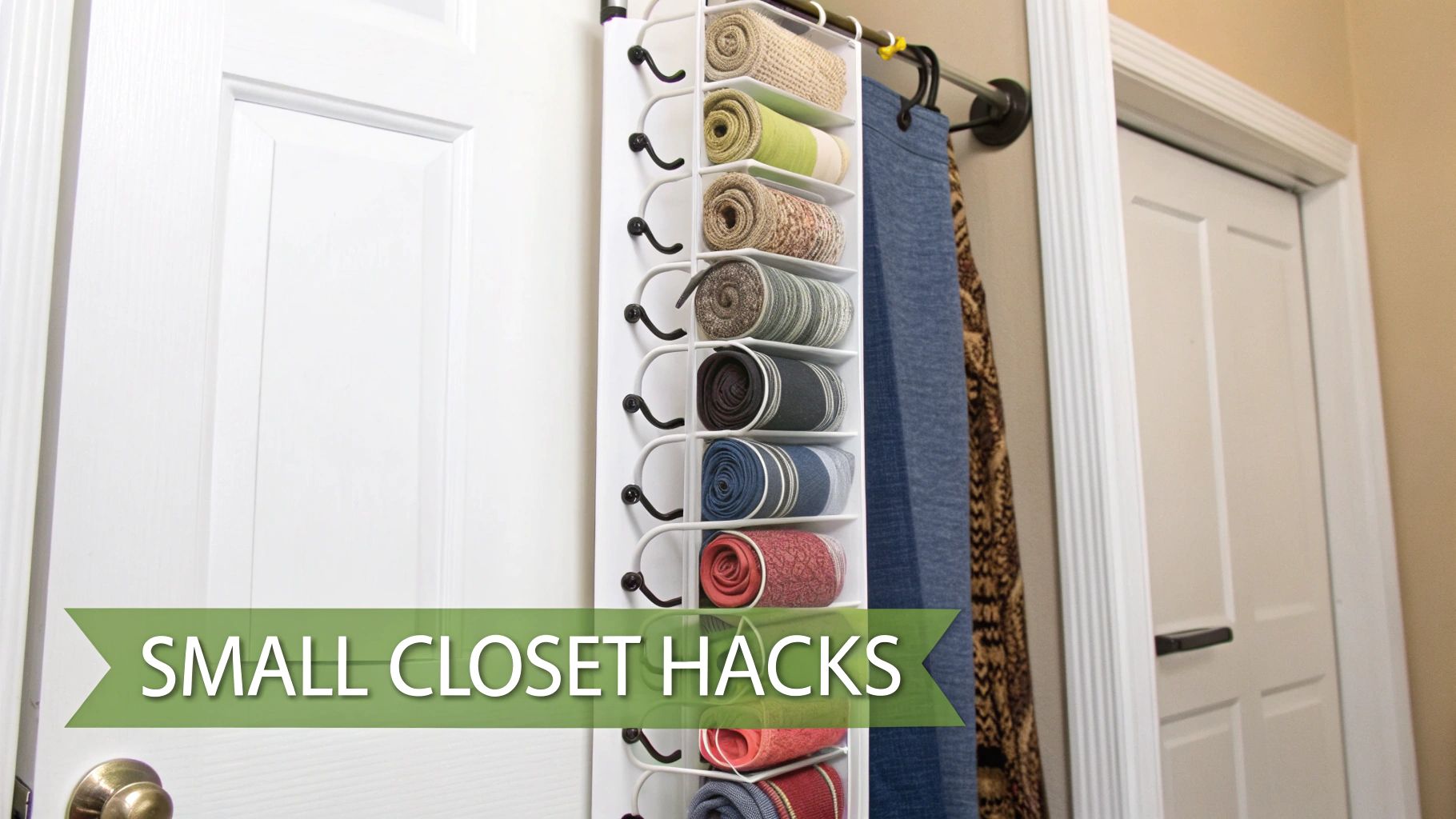
- Over-the-Door Organizers: A hanging shoe caddy with clear pockets is a brilliant hack for scarves. Just roll up individual scarves, tuck them into the pockets, and you can see everything at a glance while using zero closet space.
- Multi-Ring Hangers: These are a classic for a reason. A single hanger with multiple loops can hold 15-20 scarves but only takes up the same rod space as one bulky jacket. It's a game-changer for a crowded closet.
- Cascading Hangers: These are similar to the multi-ring options but feature a tiered design that lets you hang several scarves downward, truly making the most of that vertical drop inside your wardrobe.
The goal is to reclaim unused areas. Your closet door, for instance, is often just dead space. By adding an organizer, you instantly create a new storage zone without sacrificing an inch of your precious rod or shelf space.
Clever DIY and Repurposing Hacks
Getting your closet organized doesn't always mean buying a specialized product. Sometimes the best solutions are simple and creative. For those really struggling with limited space, exploring custom closet design ideas can also completely transform a small area into an incredibly efficient home for your accessories.
A simple tension rod can be installed between a wall and a shelf or inside a narrow closet nook. Just like that, you have an instant, dedicated rail for your scarves. You can drape them over the rod or use shower curtain rings to hang them individually, which makes them super easy to slide and select.
Repurposing items is another fantastic strategy. An old towel rack or even a decorative wall ladder can be mounted inside your closet to display and store your most-worn scarves. These methods don't just save space; they turn your collection into a functional piece of your closet's design.
By combining a few vertical organizers with some of these clever hacks, you really can conquer that closet clutter for good.
Protecting Your Scarves with Long-Term Care
https://www.youtube.com/embed/d3TpKITbGtA
Great closet organization is about more than just finding things easily day-to-day. It’s really about smart preservation that keeps your favorite pieces looking fantastic for years. When you shift your focus to long-term care, you ensure your scarves are in pristine condition the moment you pull them from the back of the closet.
The absolute first step, and the most crucial one, is to clean every single scarf before you put it away.
Even if a scarf looks spotless, things like body oils or perfume residue can linger. Over months in storage, these can attract pests or set into permanent, yellowed stains. A little effort now prevents a lot of disappointment later.
Create a Seasonal Rotation System
One of the simplest yet most effective closet strategies I've found is a seasonal rotation. When winter winds down, pack up your chunky wools and soft cashmeres. When summer ends, it's time to store the lightweight linens and silks. This system does two things: it protects your out-of-season scarves and, just as importantly, it frees up that prime, easy-to-reach real estate in your closet.
To get this right, you'll want a few key supplies for your long-term closet storage.
- Breathable Cotton Bags: Steer clear of plastic. It traps moisture, which can lead to musty smells or even mildew. Breathable cotton bags let natural fibers like wool and cashmere breathe, which is exactly what they need on a high closet shelf.
- Acid-Free Tissue Paper: When folding delicate scarves, especially silks, place a layer of this tissue between the folds. It’s a simple trick that prevents colors from bleeding onto each other and stops deep creases from setting in.
- Cedar Blocks or Sachets: These are your closet's best friends in the fight against moths. Moths are naturally drawn to fibers like wool, and cedar is a fantastic natural repellent, minus the harsh chemical smell of old-school mothballs.
This kind of careful storage is more important than you might think. The global scarves market was valued at over $23.59 billion in 2024, which just goes to show how many of these accessories we all love and collect. Protecting them is protecting a real investment in your wardrobe.
Shield Fabrics from Hidden Threats
Beyond pests, a few other culprits can cause damage over time in your closet. Sunlight is one of the worst offenders, capable of fading vibrant colors. Your storage spot should always be cool, dark, and dry—like a well-ventilated closet, not a damp basement or stuffy attic.
For those beautiful but sometimes tricky linen scarves, proper care is key to their longevity. For specific tips on washing and handling this fabric, it's worth consulting a detailed linen care guide.
The goal of long-term storage is to create a safe, stable environment within your closet. By using tools like breathable bags and cedar, you shield your collection from light, moisture, and pests, ensuring every scarf emerges from storage as beautiful as when it went in.
This seasonal mindset isn't just for scarves, either. Learning how to store winter clothes in general can completely transform your closet, giving you more space and better organization all year long.
Turning Your Scarf Collection into a Functional Display
Why hide your most beautiful scarves away in a drawer? Think of them as art. Instead of tucking away your favorite patterns and colors, let's make them a part of your closet or bedroom's decor. It’s the perfect blend of closet organization and personal style, turning simple storage into an inspiring, functional display.
This approach works especially well for the scarves you love and wear most often. By keeping them visible and within easy reach, you not only add a pop of color to your space but also make getting ready in the morning that much easier.

Create a Wall of Wearable Art
One of the best ways I've found to store scarves is by using vertical space outside the closet. A few simple tools can turn a blank wall into a stunning and practical scarf station. The trick is to pick methods that show off the scarves beautifully without causing any damage from stretching or snagging.
Here are a few stylish ideas that work:
- A Decorative Ladder: Leaning a bamboo or wooden ladder against a bedroom wall creates an instant, chic display. I love this because you can drape several scarves over each rung, showcasing different textures and colors while keeping them wrinkle-free.
- A Series of Hooks: Install a row of unique, decorative hooks near your closet. You can find them in countless styles, from minimalist wooden knobs to ornate metal designs. This method gives each scarf its own home, making it incredibly easy to just grab one and go.
- A Repurposed Towel Bar: A simple towel bar mounted on a wall or even the inside of your closet door is another fantastic option. It gives you a smooth, snag-free surface that’s perfect for draping your most-worn pieces.
The real beauty of a functional display is that it keeps your favorites top of mind. When your best pieces are visible, you’re far more likely to wear them and get more joy out of your collection.
Maintain Your New System with Good Habits
Creating a beautiful display is the fun part; keeping your closet organized takes a little discipline. The key to making any organization system stick is building simple habits around it. An organized closet doesn’t happen by magic—it’s the result of small, consistent actions.
To stop your newly organized closet from becoming a jumbled mess, try the 'one in, one out' rule. Whenever you buy a new scarf, choose one to store away for the season or donate. This simple habit is the best defense against the slow creep of clutter.
Also, make it a point to rotate what's on display. At the start of each season, swap out the scarves to match the weather and your current style. This keeps your closet and display wall looking fresh and ensures all your scarves get some time in the spotlight. It’s how you blend beautiful storage with your daily routine for a closet that stays organized for good.
Your Scarf Storage Questions Answered
Even with a solid plan, you're bound to run into a few tricky situations when organizing your scarf collection in your closet. What do you do with those impossibly bulky winter scarves? How do you keep delicate silks from getting permanent wrinkles? Let's tackle some of the most common scarf storage headaches.
How Can I Store Bulky Winter Scarves?
When it comes to chunky, oversized winter scarves, the name of the game is compression and containment. Their volume is the real enemy inside a packed closet, so the trick is to make them as small and tidy as possible. I always start by rolling them as tightly as I can into little logs.
Once they're rolled up, you can pack them snugly into a deep drawer or a fabric bin on a closet shelf. I’m also a big fan of "file folding" them into neat rectangles and lining them up vertically in a drawer. This way, you can see every single scarf at a glance and pull one out without messing up the entire stack.
Pro Tip: For off-season storage, vacuum-sealed bags are a game-changer. They shrink down those chunky knits to a fraction of their size and protect them from dust and moths, freeing up a ton of closet space.
What Is the Best Way to Store Silk Scarves?
With delicate fabrics like silk or satin, you have one main goal: avoid sharp creases at all costs. You want to let the fabric hang or rest as naturally as possible, otherwise you risk creating permanent fold lines in those beautiful fibers.
Here’s what works best for your closet:
- Padded or Velvet Hangers: The best method is to simply drape one or two silk scarves over a soft, non-slip hanger on your closet rod. It’s gentle and completely prevents snags and wrinkles.
- Scarf Rings: Those smooth, continuous rings are perfect for hanging on your closet rail. The silk just glides through without any pressure points, which really helps maintain its beautiful drape.
If you absolutely have to use a drawer, don't just fold your silk scarves flat. Instead, try gently rolling each one around a cardboard tube (like from paper towels) or loosely folding it with a sheet of acid-free tissue paper tucked inside. This creates a soft cushion that keeps hard creases from setting in.
My Scarves Always Slip Off Hangers—What Can I Do?
This is probably the most common frustration I hear, especially with silky or chiffon scarves. That slippery fabric just loves to slide right off a standard plastic or wire hanger in the closet. Luckily, the fix is incredibly simple.
The easiest and most effective solution is to switch to velvet-flocked hangers. That soft, grippy texture is just enough to hold even the most slippery fabrics securely in place on the closet rod. Dedicated scarf hangers with multiple fabric-covered loops are also fantastic because they’re designed specifically for this job.
Need a quick DIY fix for your closet? Just wrap a couple of rubber bands around the ends of a regular plastic hanger. It instantly creates a non-slip surface that will stop your scarves from making a run for it.
Ready to conquer your closet clutter for good? The innovative space-saving hangers from MORALVE are designed to maximize every inch of your closet. Discover the perfect solution for your wardrobe at the MORALVE website and transform your space today.
Leave a comment