

Best Way to Store Ties for Ultimate Closet Organization

When it comes to storing ties, you're generally looking at two camps: hanging or rolling. Honestly, hanging is the gold standard for keeping wrinkles at bay, especially if you've invested in delicate silk or wool ties. But if you're tight on closet real estate, rolling is a fantastic closet organization trick, particularly for ties made from more forgiving materials.
Finding Your Perfect Tie Storage Method
Figuring out the right system for your ties is the first real step toward a more organized closet. This isn't just about being tidy; your choice directly affects how long your ties last and how easy your morning routine is. A good system means no more frantic searching for the right tie—it's right there, pristine and ready to go as part of a well-ordered wardrobe.
The two tried-and-true methods, hanging and rolling, each have their perks within a closet organization plan. Letting your ties hang on a proper rack uses gravity to your advantage, gently smoothing out any minor creases from the day's wear. This is my go-to recommendation for anyone with a collection of high-quality silk, wool, or linen ties that can wrinkle if you just look at them wrong. Plus, a good rack allows air to circulate, which is key for keeping fabrics fresh within your closet.
This simple decision tree can help you figure out which way to go based on your closet setup.
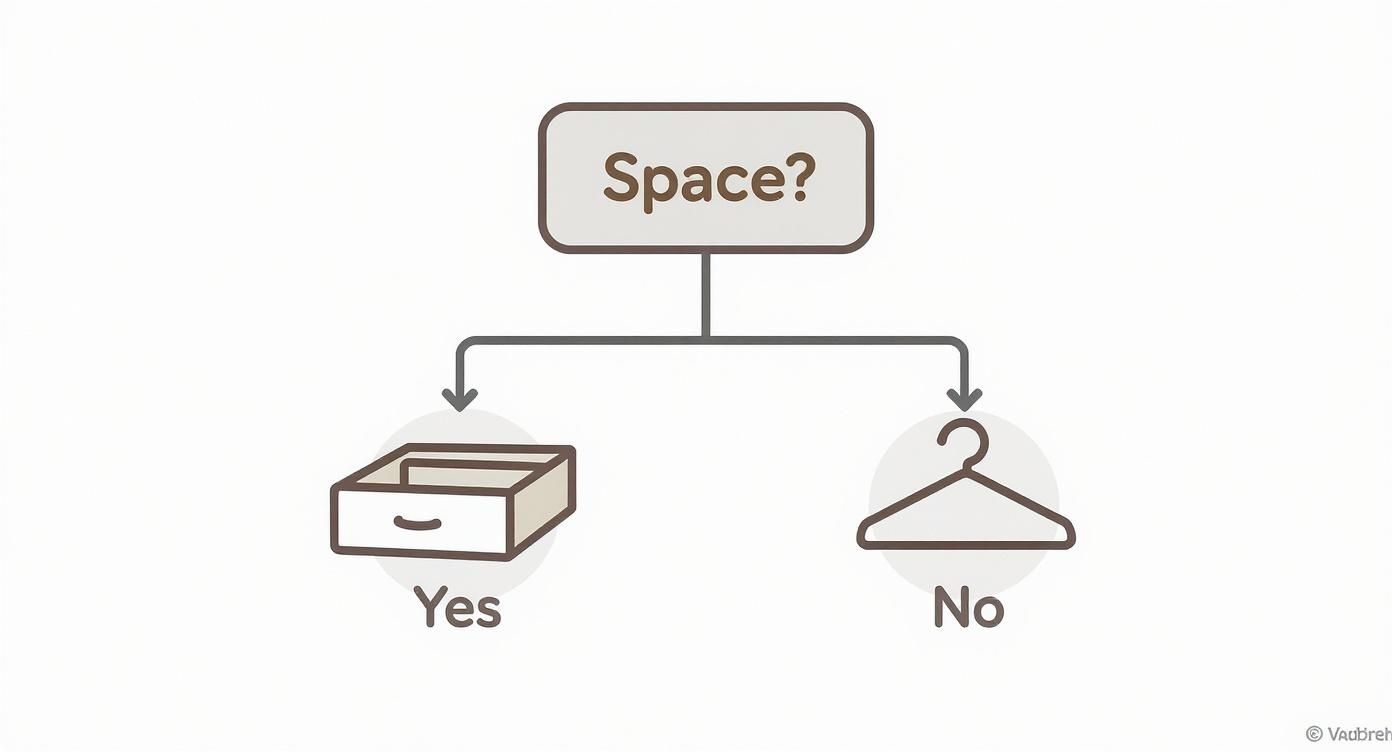
As you can see, the space you're working with in your closet is usually the biggest factor.
Hanging vs Rolling A Quick Comparison
To make the choice even clearer, let’s break down the pros and cons of each method side-by-side.
| Feature | Hanging Ties | Rolling or Folding Ties |
|---|---|---|
| Wrinkle Prevention | Excellent, especially for delicate fabrics like silk. | Good, but can cause creases if rolled too tightly. |
| Space Efficiency | Requires vertical closet space (rod or wall). | Excellent for drawers and tight closet spaces. |
| Best For | Silk, wool, linen, and expensive ties. | Knit, polyester, and travel-friendly ties. |
| Visibility | Easy to see the entire collection at a glance. | Good visibility in a shallow drawer with dividers. |
| Fabric Health | Allows fabric to breathe and recover its shape. | Can compress fibers over time if stored improperly. |
Ultimately, both methods work. Your choice depends on whether you prioritize pristine condition or maximum closet space.
Balancing Preservation And Practicality
On the other hand, rolling your ties is a lifesaver for anyone working with limited drawer or shelf space in their closet. It's especially effective for knit ties or more durable blends that aren't prone to stubborn wrinkles anyway. The trick is to roll them correctly—not too tight!—and you can fit a surprisingly large collection into a single drawer, all neatly arranged and visible.
It’s about more than just creases. A good storage system keeps everything orderly and safe from damage, which is a core principle of closet organization. It’s similar to using smart strategies for tangle-free organization to protect your jewelry.
At the end of the day, the best way to store ties is a blend of your personal preference, the types of ties you own, and the closet space you have. Take a look at your collection and your closet, and build a system that makes sense for you.
Why Hanging Ties Is the Gold Standard for Closet Organization
If you're serious about your neckwear collection, hanging them is the undisputed best method for long-term care and closet organization. Hanging uses gravity to do the hard work for you, gently pulling out the small wrinkles and creases that inevitably show up after a day of wear. This is especially important for delicate materials like silk or wool, which can hold onto those creases for good if they're folded or rolled the wrong way.

Unlike stuffing them in a drawer, hanging lets your ties breathe. Good air circulation is key to preventing moisture buildup and musty smells, keeping the fabric fresh and helping it last longer. A dedicated tie rack isn't just a fancy closet accessory; it’s a smart investment in protecting the shape and integrity of your collection.
Choosing the Right Hanging Solution
You’ve got a lot of options out there that integrate seamlessly into your closet. They range from simple multi-hook hangers that slip right over your closet rod to sophisticated motorized racks that rotate your collection at the touch of a button. The right choice really comes down to how much closet space you have and how many ties you own.
- Simple Tie Hangers: These are budget-friendly, don't take up much closet rod space, and are perfect if you have a smaller collection. My advice? Look for ones with non-slip grips to keep those slippery silk ties from ending up on the closet floor.
- Wall-Mounted Racks: A brilliant way to use that empty wall space inside your closet. They keep your ties on display and easy to grab without eating up precious rod space.
- Motorized Racks: For the true aficionado, these offer the ultimate convenience. Many even come with built-in lights to help you make the perfect selection as part of a high-end closet system.
No matter which style you pick, make sure there’s enough space between each hook. Crowding your ties together completely defeats the purpose by restricting airflow and causing them to wrinkle against each other.
A Smart Investment in Closet Organization
Think of a good tie rack as a core part of an organized closet. It's just like how using the best space-saving hangers can totally transform a jammed wardrobe—a dedicated spot for your ties brings order and visibility to your accessories. To see what I mean, you can check out our guide on the best space-saving hangers and see how the right tools make all the difference.
This isn't just my opinion; industry data backs it up. Consumer studies show that approximately 60-70% of tie owners who make storage a priority use dedicated racks. This approach simply works better at keeping ties flat and wrinkle-free than any other method.
A great tie rack does more than just hold your ties; it displays them as part of your overall closet design. Seeing your entire collection at a glance makes choosing the perfect one for your outfit effortless, streamlining your morning routine.
How to Organize Ties in a Drawer
Is your closet rod getting a little crowded? Don't overlook your drawers. When done right, a drawer can be the perfect spot to store your ties, transforming what could be a jumbled mess into a beautifully organized collection. The whole process starts with one simple but critical step: how you prep the tie itself.
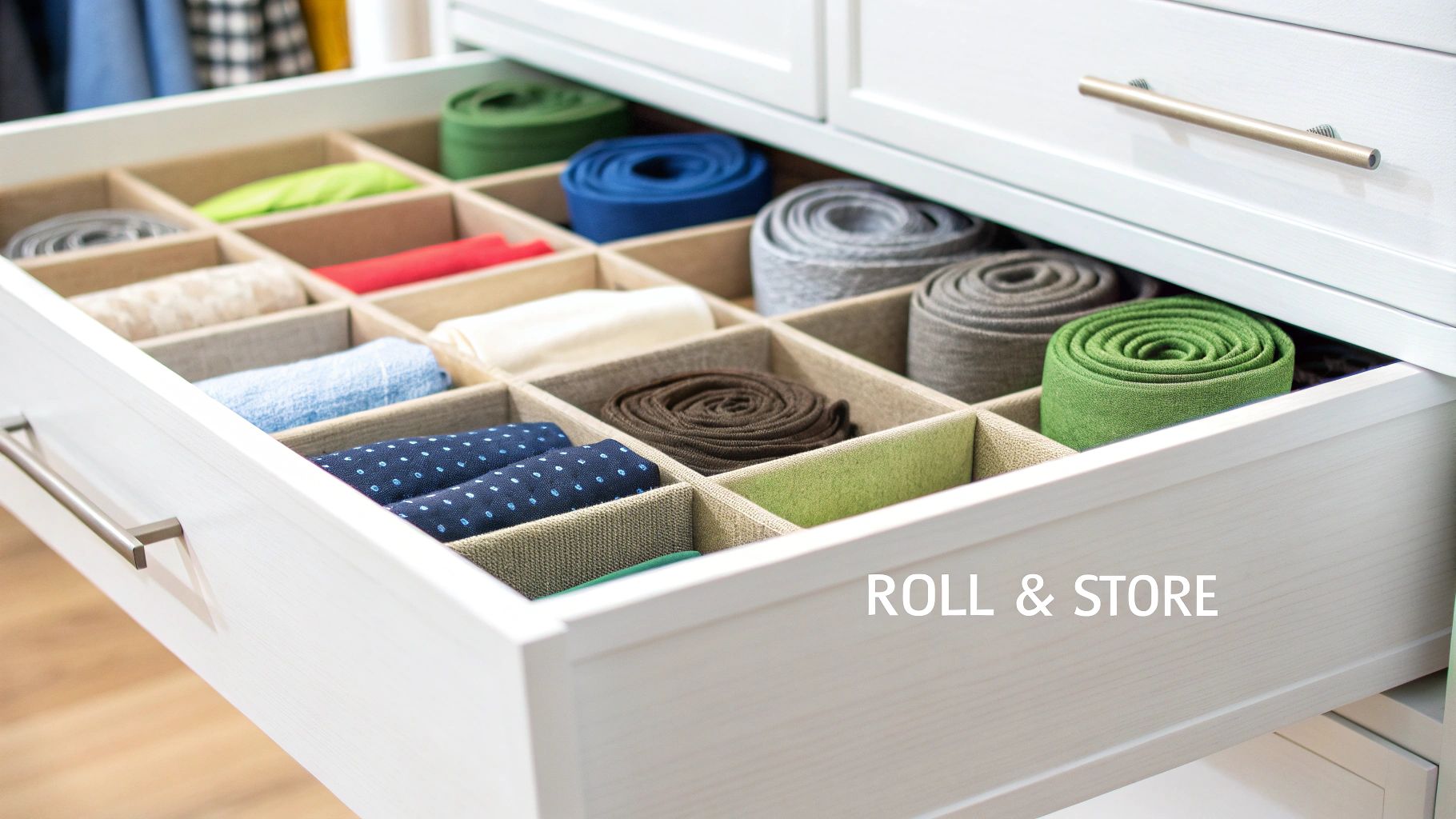
Here's where most people go wrong—they roll their ties way too tightly. A tight roll puts constant strain on the fabric, especially delicate materials like silk, and you'll end up with creases that are nearly impossible to get out.
The trick is to start from the narrow end and create a loose, gentle roll. You want it to hold its shape without squishing the fibers. This tiny change makes all the difference in keeping your ties looking crisp and ready to wear. If you’re a fan of closet organization, this concept is similar to what we cover in our guide on folding clothes to save space.
Using Dividers for a Curated Display
Now that your ties are neatly rolled, you need to keep them that way. Tossing them into an empty drawer is a recipe for chaos; they'll quickly unroll and get tangled. This is where drawer organizers become your best friend, creating a dedicated spot for every single tie within your closet or dresser.
You have a couple of great options here:
- Honeycomb Organizers: These are fantastic. They're usually plastic, affordable, and the interlocking grid gives you dozens of hexagonal cells. Each cell is the perfect size to cradle a rolled-up tie, keeping it separate and easy to see.
- Adjustable Dividers: If you want a more tailored setup, go for spring-loaded or customizable dividers. You can slide them around to create compartments that perfectly fit your collection, whether you have mostly standard-width ties or a mix of skinny ones.
The real goal here is to give every tie its own home. This keeps them neat, but more importantly, it protects them from getting snagged, crushed, or lost—a key principle for any organized closet.
Drawer storage isn't a new idea, but many people—about 25-30% of them—still just fold their ties and toss them in, which is a sure-fire way to get wrinkles. The good news is that with the home organizers market expected to top USD 12 billion by 2025, purpose-built inserts are easier to find than ever. You can learn more about this trend and its impact on home storage solutions.
Creative Tie Storage for Small Spaces
Living with a small closet doesn't mean your tie collection has to be a jumbled mess. When you're short on space, the secret is to stop thinking about the closet rod and start looking at all the unused real estate around you. Vertical space is your best friend in closet organization.
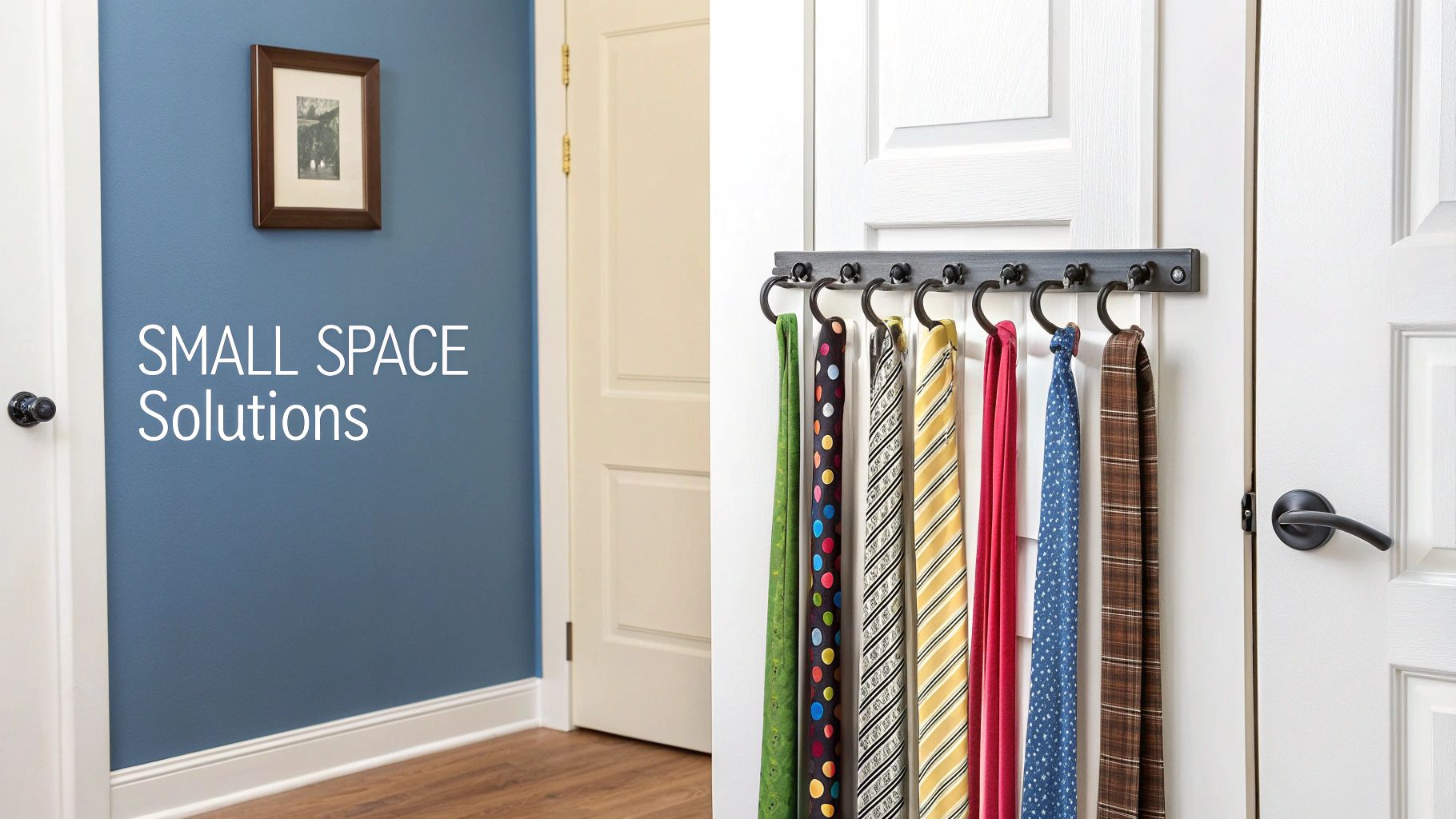
Take a look at the back of your closet door or that empty patch of wall next to your dresser. These spots are goldmines for clever storage that keeps your ties neat and accessible without eating up precious hanging space.
Maximize Your Vertical Space
Making a tight closet work is all about using every single inch. This is where wall-mounted and over-the-door solutions really shine, proving that even a tiny closet can handle a growing tie collection.
- Over-the-Door Hangers: These are a classic for a reason—they're incredibly simple and they just work. A good tie hanger that slips over your door can instantly create storage for dozens of ties, transforming a blank surface into a functional part of your wardrobe.
- Wall-Mounted Peg Systems: I'm a big fan of these because they can look like intentional closet decor. A minimalist pegboard or a few rows of sleek wall hooks can almost pass for functional art. You get to arrange the pegs exactly how you need them, creating a custom setup that’s both useful and easy on the eyes.
- DIY Projects: Sometimes, the best solution is the one you make yourself. A small piece of wood with some nice decorative knobs screwed in can be mounted on any sliver of open wall inside your closet. For more inspiration, our article on small closet storage solutions has some great ideas for maximizing a limited footprint.
No matter how small your closet is, you can absolutely keep your ties organized. The trick is spotting those overlooked spaces and finding a storage method that fits your collection and your style.
This move toward smarter, multi-functional storage isn't just a niche trend. As more people have leaned into closet minimalism, the demand for eco-friendly and space-saving home organizers has seen a surge of about 12% annually in major markets from 2020 to 2025. You can read more about these global shifts in wardrobe management.
Long-Term Tie Care and Travel Tips
https://www.youtube.com/embed/W1akejDQoIc
Getting your everyday ties organized in your closet is one thing, but what about the rest of your collection? And how do you keep them looking sharp when you're on the road? Without a solid plan for long-term storage and travel, all your careful organization can fall apart pretty quickly.
Storing Your Off-Season and Sentimental Ties
We all have ties we don't wear very often, whether it's a heavy wool tie for winter or that special one from a wedding. The key to preserving these is proper long-term storage, which frees up prime space in your main closet area.
First things first: make sure they are completely clean before you put them away. Any lingering dust or small stains can set in over time, attracting pests and causing permanent damage.
My go-to solution is a breathable garment bag. Avoid plastic at all costs—it traps moisture, which can lead to mildew and that awful musty smell. A fabric bag lets the air circulate, keeping your ties safe from dust and environmental damage. It’s like a safe little hibernation spot for the ties you're not using.
Keeping Ties Sharp on the Go
Traveling is probably the biggest enemy of a crisp, wrinkle-free tie. Tossing one into a packed suitcase is a surefire way to have it come out looking like a crumpled mess. Luckily, a few simple packing tricks can make all the difference.
One of the easiest and most effective methods I've found is the roll-and-tuck. Just roll your tie loosely, starting with the skinny end, and then tuck it securely inside one of the shoes you’re packing. The shoe works as a surprisingly sturdy, built-in case, protecting the tie from getting crushed.
A dedicated tie travel case is another excellent option. These compact cases are specifically designed to hold one or two ties flat or rolled, offering superior protection against wrinkles and snags. It’s a small investment that pays off every time you unpack.
Learning a few smart packing habits can make your whole trip smoother. For additional general travel tips, explore Singular Luggage's blog.
Common Questions About Storing Ties
Once you start organizing your ties, you'll probably run into a few specific questions. Let's tackle some of the most common ones I hear, so you can get your closet system just right.
Should I Untie My Tie After Each Use?
Yes, you really should. It might seem like a hassle, but leaving a tie knotted is the quickest way to wear it out. The fabric stays under constant strain, leading to deep-set creases and eventually distorting its shape for good.
Make it a habit to gently untie your tie as soon as you take it off. Let it hang over a chair for an hour or so to relax before you put it away in your closet.
What's the Best Material for a Tie Hanger?
You can't go wrong with wood, especially cedar. It's strong enough to hold a full collection without sagging, and its smooth surface won't snag delicate materials like silk—a common problem with cheap plastic or metal hangers.
Cedar offers a great side benefit: it naturally repels moths and absorbs moisture. This means your ties stay fresh and protected, not just neatly organized in your closet.
Can I Iron a Wrinkled Tie?
Please don't! An iron's direct, high heat is a recipe for disaster on most tie fabrics, especially silk. It can easily burn the material or leave behind a weird, shiny patch.
A garment steamer is the ideal tool for getting wrinkles out safely. No steamer? No problem. Just hang your tie in the bathroom while you take a hot shower. The steam from the shower—give it about 20-30 minutes—will gently relax the fibers and the wrinkles will simply fall out.
How Should I Store My Knit or Cashmere Ties?
With heavy ties made from knit wool or cashmere, rolling is the way to go. Hanging these ties can cause them to stretch and lose their shape over time due to their own weight.
Your best bet is to roll them—not too tightly—and place them in a drawer. Using simple drawer dividers will keep them from getting squashed and help them hold their shape perfectly until you're ready to wear them again.
Ready to get your closet organized for good? MORALVE has a whole lineup of smart, space-saving hangers and solutions built to protect your wardrobe and maximize every inch of space. See what works for you at https://moralve.com.
Leave a comment