

Best Ways to Organize Clothes in Closet for a Tidy Wardrobe

The best way to organize a closet isn't about just tidying up; it's about creating a system that actually works for you. This means starting with a ruthless declutter, sorting your clothes with a clear purpose, and then using smart tools like space-saving hangers to reclaim every last inch of your wardrobe. When you get it right, your closet stops being a source of stress and becomes a smooth, functional part of your daily routine.
Your Path to a Perfectly Organized Closet
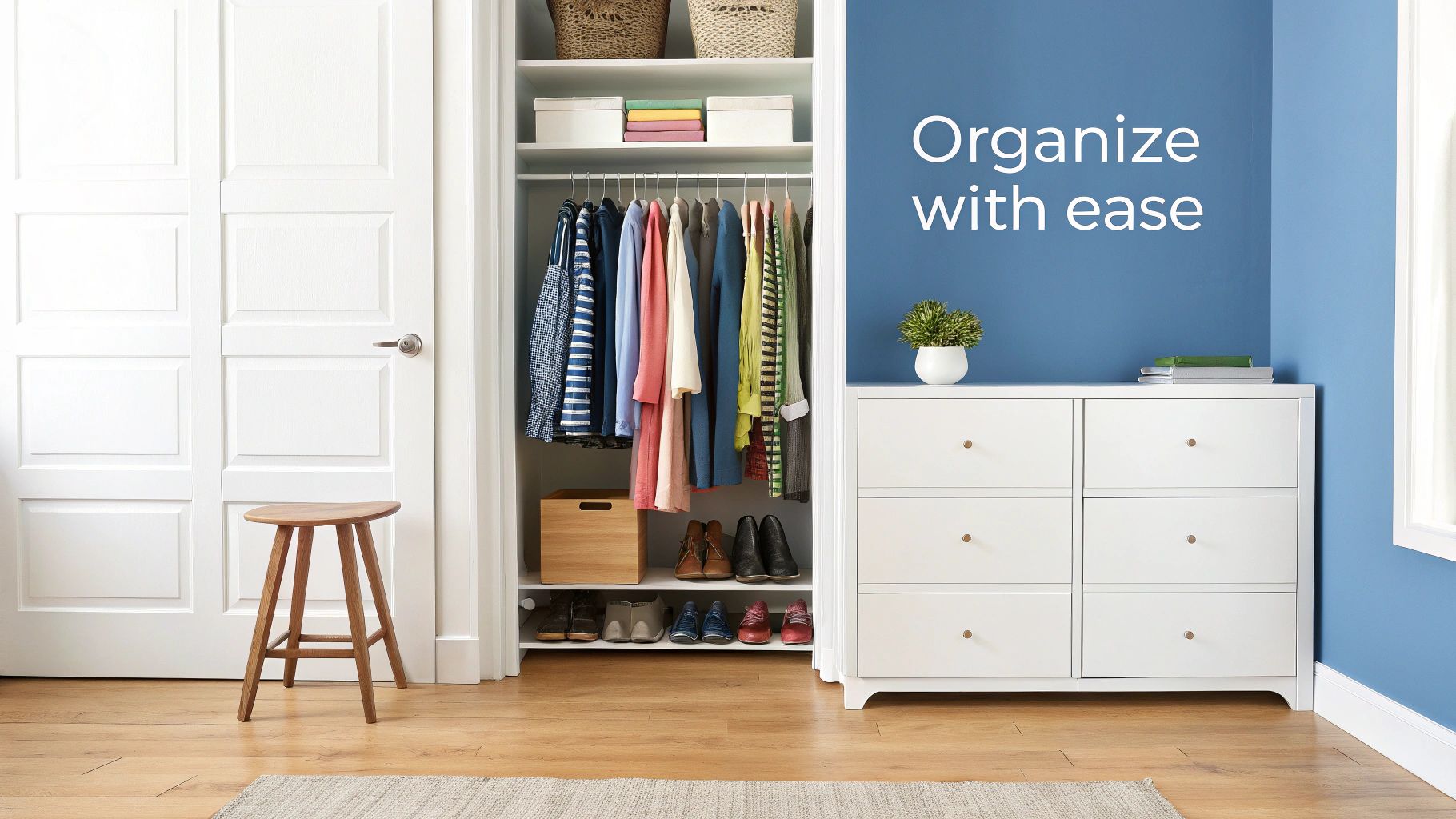
Let's be honest, a chaotic closet is a huge source of daily frustration. It's that classic "closet full of clothes, nothing to wear" feeling, which really just means you can't find or even see what you own. This guide is here to turn that daily struggle into a sense of calm and control.
We're going to walk through a real-world approach to closet organization that goes way beyond just straightening hangers. The goal is to build a truly functional and intuitive system for your clothes, right inside your closet.
This isn't about becoming a minimalist, unless you want to be. It's about making sure every piece you decide to keep is easy to find, put on, and enjoy. From a thorough decluttering session to clever storage solutions, you’ll see how an organized closet can save you precious time and even help you fall back in love with clothes you forgot you had. A well-ordered space means less time digging around and more time feeling great about what you're wearing.
Why Closet Organization Matters More Than Ever
With living spaces getting smaller and our lives getting busier, smart closet storage is no longer a luxury—it’s a necessity. This isn’t just a feeling; the numbers back it up. The global market for closet organizers has ballooned to $8.5 billion and is expected to hit a massive $15.2 billion by 2033.
What's driving this? People are looking for smarter ways to maximize their closet space, especially in smaller urban homes where every square foot counts. In fact, traditional hanging methods can waste up to 60% of your valuable vertical closet space. It's no wonder that innovative solutions are taking off—42% of people report being happier with modular systems that stack clothes vertically.
A truly organized closet is less about having a perfect-looking space and more about creating a system that works for your real life. It should reduce decision fatigue and simplify your morning routine.
You can dive deeper into these market trends over at MarketTrendsAnalysis.com.
This guide is all about creating that practical, real-life system for your closet. We’ll look at how specialized tools, especially the space-saving hangers from MORALVE, can completely change the game. By turning a cramped closet into an efficient, streamlined wardrobe, you can finally have a space that is both beautiful and incredibly functional. Just remember, closet organization is a skill you can learn, not a personality trait you're born with.
Declutter and Categorize Your Wardrobe
Before you even think about buying new organizers, the real work begins. Finding the best way to organize clothes in your closet starts with a clean slate, and that means you have to face the clutter head-on. The most effective way to do this is to pull every single item out. Yes, everything. Pile it all on your bed or a clear spot on the floor.
It’s going to look like a clothing explosion, and that's okay. Seeing the sheer volume of what you own is a necessary reality check. It’s the only way to get a truly honest look at what you actually wear versus what's just taking up precious closet space.
The Four-Pile Sorting Method
To tackle the mountain of clothes, you need a system. I swear by the simple four-pile method. Every piece of clothing must go into one of these four piles—no exceptions. This little bit of structure takes the guesswork out of the process and forces you to make a clear decision on each item.
- Keep: These are your go-to pieces. They fit you right now, you love wearing them, and they suit your current lifestyle. These will go back into the closet.
- Donate: Perfectly good clothes that just aren't you anymore. Maybe the fit is off, or your style has evolved. Someone else will love them.
- Store: This is for your off-season stuff, like heavy winter coats in July, or truly sentimental pieces you don't need in your daily closet.
- Discard: Be ruthless here. Anything stained, ripped, stretched out, or just plain worn beyond repair goes in this pile.
This part can be tough, I get it. It's hard to let go of things you spent good money on or items that hold memories. A question I always ask myself is, "If I saw this in a store today, would I buy it?" If the answer is a hard no, it’s time to say goodbye.
The real goal here isn’t just to get rid of stuff. It’s about curating a collection of clothes that you genuinely love and feel great in. That intentionality is what makes an organized closet actually stay organized.
If you're staring at the pile and just feel stuck, know that you're not alone. Sometimes you need a little outside guidance, and getting some real help with decluttering your overwhelmed home can provide the push you need to get started.
Find a Categorization System That Works for You
Once you’re left with only your "Keep" pile, it's time for the fun part: putting it all back in a way that makes sense. There's no single "right" way to do this; the best system is the one that clicks with how you think about getting dressed. The whole point is to make finding an outfit easy and intuitive. If you want to dig deeper into the sorting process, we have a complete guide on how to declutter your closet that breaks it all down.
Not sure where to start? Here are a few popular approaches for organizing clothes in a closet:
| Category Type | Best For... | Example |
|---|---|---|
| Garment Type | The most common and straightforward method. It's a classic for a reason. | All your T-shirts are in one spot, all your jeans in another, and so on. |
| Occasion | People who lead compartmentalized lives with very different dress codes. | You might have a section for work clothes, one for weekend wear, and another for formal events. |
| Color | Visual people who build outfits around a color palette. | Creates a beautiful rainbow effect, usually with items grouped by type first, then color. |
| Frequency of Use | Anyone looking to make their daily routine as efficient as possible. | Your everyday essentials are kept at eye level and within easy reach. The rarely-worn cocktail dress can go on a higher shelf. |
Feel free to mix and match these ideas! You could organize by garment type (all sweaters together) and then arrange that section by color, from light to dark. The perfect closet system for you is simply the one that stops the frantic morning search and makes getting dressed feel effortless.
Mastering Your Space with Smart Hanging and Folding
You've done the hard part—you've sorted through your wardrobe. But the real magic happens now. How you put your clothes back is just as important as what you decide to keep. Getting the hanging and folding methods right is the secret to a closet that not just looks tidy but actually works for you, day in and day out.
This is about more than just throwing things on hangers. We're going to get specific, looking at the best ways to handle everything from a structured blazer that needs good support to delicate knits that can easily stretch out of shape. The end goal? Making every single item easy to see, easy to grab, and well-cared for within your closet.
The Power of Strategic Hanging
Let's get one thing straight: not all hangers are created equal. The very first thing you should do is gather up all those flimsy wire hangers from the dry cleaner and get rid of them. Seriously. They're notorious for creating weird puckers in the shoulders and distorting the shape of your favorite tops.
Upgrading to a uniform set of sturdy hangers—whether slim velvet ones that grip clothing or classic smooth wood—makes an immediate visual impact inside your closet. It just looks calmer and more cohesive. Plus, your clothes won't constantly be slipping off onto the floor.
A great pro tip is to organize your hanging clothes in a way that makes sense for how you get dressed. Many people love a "double hang" system, where you install a second rod. You can hang tops, blouses, and jackets on the top rod, with pants and skirts hanging directly below. This creates a natural logic that makes pulling together an outfit almost effortless.
Here’s a small habit that pays off big time: keep all your empty hangers grouped together in your closet. When you take a shirt off to wear it, bring the hanger with it. Once the item is worn (and eventually washed), put the empty hanger back in its designated spot. No more frantic searching for a spare hanger when you're putting away clean laundry. It’s a simple fix that keeps things looking sharp.
Reclaim Your Closet with Specialized Hangers
This is where you can make some massive gains in your closet space. It's no surprise that manual, space-efficient solutions hold a dominant 79.42% of the market—they work. Smart hanging techniques alone can slash the time you spend looking for an outfit by 45%. Think about that: with most people spending around 17 minutes a day on that task, the time savings really add up.
This is especially crucial today, as closets in new homes have shrunk by an average of 20% since 2010. We have to be smarter with the space we've got. Specialized hangers are designed to do just that by tapping into the vertical space that usually goes to waste.
- Tiered Pant Hangers: Picture this: five pairs of pants hanging in the same horizontal space that a single pair used to take up. Tiered hangers, like the ones from MORALVE, let you hang trousers or jeans vertically, which can free up a shocking amount of rod space.
- Multi-Skirt Hangers: Skirts can be so awkward to hang. They often get squished and lost between other clothes. A multi-skirt hanger uses clips on a tiered bar to keep them organized, visible, and wrinkle-free.
- Tank Top and Camisole Organizers: Instead of giving each tank top its own precious hanger, a dedicated organizer can hold a dozen or more in one neat, vertical line. It's a perfect example of maximizing every last inch of closet space.
The following infographic gives you a sense of what the average person's closet looks like after a good decluttering session—how much they keep, donate, or toss.
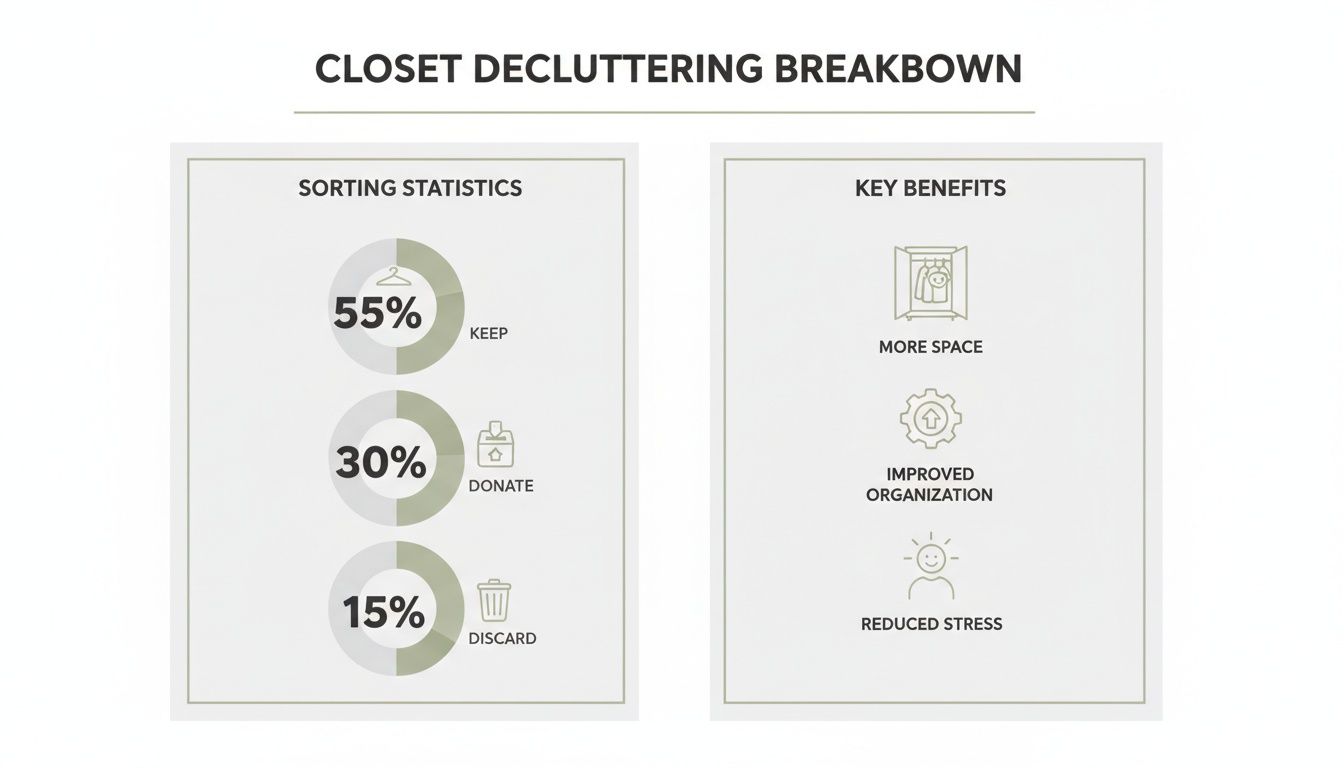
As you can see, we often hold onto a lot of stuff we don't need. Clearing that out first makes these smart hanging solutions even more effective.
Hanging Method Comparison Traditional vs MORALVE
To really see the difference, let’s compare standard hangers to MORALVE's space-saving designs. This table breaks down just how much more efficient your closet can become.
| Garment Type | Traditional Hanger Result | MORALVE Hanger Advantage | Space Saved |
|---|---|---|---|
| Pants/Trousers | 1 hanger per pair | 5 pairs on 1 hanger | Up to 80% |
| Skirts | 1-2 skirts per clip hanger | 4 skirts on 1 hanger | Up to 75% |
| Tank Tops/Camisoles | 1 hanger per top | 8 tops on 1 hanger | Up to 87% |
| General Tops/Blouses | 1 garment per hanger | 8 garments on 1 hanger (Magic Hanger) | Up to 87% |
The numbers don't lie. By switching to hangers designed for maximizing space, you can essentially multiply your closet's capacity without any construction.
The Art of a Perfect Fold
While hanging is ideal for many items, some things are just better off folded. Bulky sweaters, for example, will stretch and get those dreaded shoulder bumps on a hanger. T-shirts and most activewear also belong in a drawer or on a closet shelf. But let's be honest, a messy pile of folded clothes is just as chaotic as a jammed hanging rod.
The answer is the file-folding method. Instead of stacking clothes flat on top of one another, you fold them into neat little rectangles and arrange them vertically in a drawer or bin, just like files in a cabinet.
The real beauty of file-folding is visibility. You can see every single item in the drawer at a glance. No more digging to the bottom of a pile and messing up all your hard work just to find that one specific t-shirt.
This method is a game-changer for organizing clothes in drawers or on shelves:
- T-Shirts: Fold in the sides toward the middle, then fold the shirt in half or thirds to create a compact rectangle that can stand up on its own.
- Jeans and Trousers: Fold them in half lengthwise, then fold again into a neat packet. This works just as well for stacking them on a shelf.
- Sweatshirts and Sweaters: These are bulky, so a looser fold is better. The goal is to create a tidy shape that fits nicely in a drawer or storage bin without being crammed in.
If you want a more detailed walkthrough, be sure to check out our complete guide on folding clothes to save space. Getting this skill down is one of the best things you can do to organize your clothes, ensuring every item has a proper, easy-to-reach home within your closet.
Maximizing Every Unused Inch of Your Closet
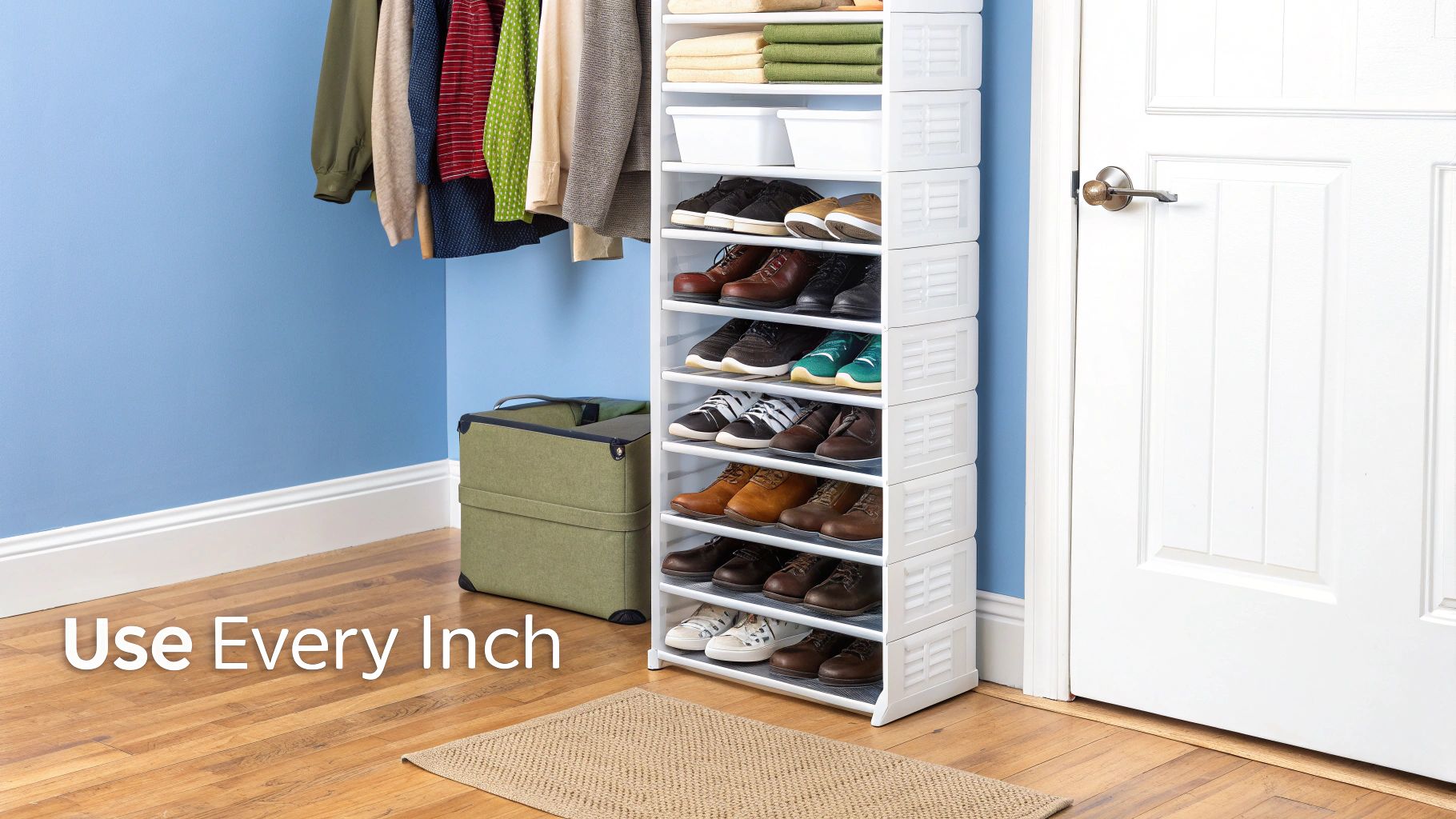
Getting a truly organized closet means looking beyond the main hanging rod. To really open things up, you have to start seeing your closet in three dimensions—top to bottom, front to back. The best tricks for organizing clothes often involve tapping into the hidden real estate you’re probably ignoring right now.
Think about it: the back of the door, that high upper shelf, even the floor. These areas usually turn into dumping grounds for random stuff, but with a little strategy, they can become some of the most functional parts of your entire closet system.
Unlocking Vertical Storage Potential
Vertical space is your closet's biggest secret weapon. Instead of letting single items hog prime real estate, think about how you can stack, tier, or layer your storage to make every inch count from floor to ceiling. This mindset shift is what separates a temporarily tidy closet from a permanently organized one.
One of the easiest wins here? The back of your closet door. An over-the-door organizer is a game-changer for items that always seem to create clutter.
- Shoes: Those pocket organizers are perfect for holding flats, sandals, or sneakers. They get them off the floor and make it easy to see what you have at a glance.
- Accessories: This is the perfect spot for scarves, belts, and hats. Say goodbye to that tangled mess in a drawer.
- Small Handbags: Clutches and smaller purses fit neatly into the pockets, which keeps them from getting squished or lost.
This one simple addition instantly clears your floor and puts an otherwise wasted surface to work.
Taming the Shelves and Floor
We’ve all seen it: the teetering towers of folded clothes on the closet shelves. And don't even get me started on the closet floor, which often becomes a graveyard for shoes and discarded bags. Bringing order to these zones is absolutely critical for closet organization.
Shelf dividers are a fantastic tool for this. They’re just simple C-shaped brackets that slide right onto your shelf, creating instant cubbies. These little guys keep your stacks of sweaters or jeans from toppling over into each other, creating clean, defined lines and letting you grab what you need without causing an avalanche.
When you organize your closet, the goal isn't just to make it look neat for a day. It's to build a system where every item has a logical, easy-to-access home. This turns tidying up from a major chore into a simple, subconscious habit.
For the floor, the trick is to contain, not just place. Instead of a jumbled pile of shoes, look into a modular or stacking shoe rack that can be configured to fit your specific space. For things like bulky sweaters or seasonal gear, some stylish fabric bins or baskets are perfect. They keep everything dust-free and contained while giving your closet a polished look. For a deeper dive, check out our article on effective space-saving clothing storage solutions.
Transforming Awkward and Unused Spaces
Every closet has its quirks—that weird corner, the sliver of wall space next to the door, or that super-high shelf you can barely reach. Stop seeing these as dead zones. They’re opportunities for creative storage.
Think about adding a few small hooks to an unused patch of wall for hanging purses, necklaces, or even planning tomorrow's outfit. That awkward corner could be the perfect home for a narrow set of drawers for socks and underwear, freeing up precious space elsewhere.
And that top shelf—the "attic" of the closet—is ideal for things you don't need often. Store your off-season clothes, extra bedding, or sentimental items in clearly labeled bins up there. When you give every nook and cranny a specific job, you ensure that not a single inch of your closet goes to waste.
Keeping Your Organized Closet That Way for Good
You did it. You wrestled the chaos into submission and now you have a beautifully organized closet. But let's be honest, the real victory isn't just getting it organized—it's keeping it that way. The secret isn't a massive overhaul every year; it's about weaving a few simple habits into your daily life so the clutter never gets a chance to creep back in.
Think of it this way: a few minutes of upkeep each week is infinitely better than another full-weekend closet project down the road. It all starts with being a little more mindful about the flow of clothes in and out of your closet.
One of the most effective habits I've ever adopted is the 'one-in, one-out' rule. It’s brilliantly simple. When a new shirt comes into your closet, an old one has to go. This single action is a powerful gatekeeper, preventing your closet from ever getting overstuffed and forcing you to constantly ask, "Do I still love and wear this?"
Master the Seasonal Swap
If you live anywhere with distinct seasons, a regular clothing swap-out is your best friend. Why let bulky sweaters hog precious closet space in July? This routine keeps your closet focused on what you actually need right now, making your day-to-day choices so much easier.
Before you pack anything away, make sure it’s clean. Stains can set in permanently over time, and even faint odors can attract unwanted pests while in storage.
- Prep for Hibernation: Always wash or dry-clean items based on their care labels before storing them.
- Choose Smart Storage: Breathable fabric bins or acid-free boxes are ideal. Steer clear of plastic bags or bins that can trap moisture, which often leads to musty smells or yellowing.
- Pick the Right Spot: A cool, dark, and dry place is perfect. Think under the bed, on a top closet shelf, or in a guest room closet—anywhere away from direct sunlight and humidity.
For those off-season pieces or sentimental items you're not ready to part with, using a storage unit for clothes can be a game-changer. It frees up prime real estate in your closet for the clothes you're actually wearing.
Build a Simple Upkeep Routine
Consistency is the name of the game. A quick "closet reset" once a week can work wonders. This isn't a deep clean; it’s a five-minute blitz to hang up the chair-drobe, put shoes back on the rack, and tidy up any messy stacks of folded clothes.
Remember that your closet system should evolve with you. The perfect closet for a corporate job might not make sense if you now work from home. Don't hesitate to shift things around. Re-categorize a section, adjust a shelf, or try a new folding method as your lifestyle and wardrobe change.
The most successful closet systems are flexible. Your wardrobe is a living collection, and your organization method should be able to grow and change with it.
This proactive approach really pays off. A disorganized closet wastes, on average, a shocking 25% of its potential space. By sticking to these simple habits, you’re not just keeping things tidy; you’re being more efficient. In fact, a recent study found that 56% of city dwellers reclaimed 2-3 square feet of living space after organizing their closets—a significant win when you consider that urban living spaces have shrunk by 15% in the last decade.
Your Closet Organization Questions Answered
Even the most perfectly planned closet system can hit a snag in the real world. Maybe you're trying to tame a tiny apartment closet, or perhaps you're sharing space with someone whose idea of "organized" is a little different than yours. Let's dig into some of the most common closet organization challenges I see and get them sorted out.
Think of this as the troubleshooting guide for your new setup. A little expert insight can help you fine-tune the system and make sure all that hard work you put in actually lasts.
How Can I Organize a Closet in a Small Apartment?
When you live in a small apartment, you learn to get creative with every single inch of space, and your closet is no exception. The biggest mental shift you need to make is to think vertically. Most closets have a surprising amount of dead air above and below the hanging rod—that’s your hidden real estate.
For instance, instead of letting five pairs of pants eat up a foot of precious rod space, a single multi-tiered hanger can stack them all in one spot. It’s a simple swap that can literally double your hanging room overnight. The back of your closet door is another goldmine; an over-the-door organizer is perfect for stashing shoes, belts, or scarves, getting them up off the floor and out of the way.
Another game-changer is switching to slim velvet hangers. They're much thinner than those chunky plastic or wood ones, and that small difference adds up, giving you a few extra inches of rod space you didn't know you had. And don't forget the floor! Use a dedicated shoe rack or bins to keep footwear contained, freeing up prime closet space for what you're actually wearing now.
In a small space, every organizer has to work twice as hard. Multi-functional tools aren't just a luxury; they're the key to making a cramped closet feel surprisingly spacious and easy to use.
What Is the Best Way to Share a Closet with a Partner?
Making a shared closet work comes down to one crucial thing: boundaries. If you want to keep the peace (and your sanity), you absolutely need to create clear, designated zones. The easiest way to start is to just divide the closet right down the middle—this is your half, that is their half. No negotiating.
A great visual trick is to use different colored hangers. It seems small, but it instantly shows whose stuff is whose and stops the slow creep of clothes into the wrong territory. Shelf dividers are another lifesaver for folded items, creating physical walls between your stack of sweaters and theirs.
It also helps to agree on a shared "one-in, one-out" rule to keep clutter from taking over. When one of you brings a new shirt home, an old one has to go. This simple pact prevents the closet from slowly getting overstuffed. And of course, in a shared space, smart tools like tiered hangers are even more important because they condense your items and free up more room for both of you to use.
My Closet Gets Messy Again After a Few Weeks. What Am I Doing Wrong?
I hear this all the time, and it almost always points back to a single problem: your system is fighting against your natural habits. A great organization system has to be effortless to maintain. If it's a pain to put something away, it’s just not going to happen.
First, let's talk about access. Are the things you wear constantly the absolute easiest to grab and put back? If you have to perform gymnastics to re-hang your go-to jacket, you’re far more likely to just toss it on a chair. Your everyday essentials need to be front, center, and at eye level in your closet.
Next, try building in a tiny bit of maintenance. A 5-minute "closet reset" every Sunday can feel like magic. Just take five minutes to re-hang the pile on the chair and straighten up any messy stacks of t-shirts. This quick tidying session stops a few stray items from turning into a full-blown disaster zone.
Finally, you might just have too much stuff. An overstuffed closet will always be a messy closet, no matter how clever your hangers are. If there's no breathing room between items, it’s a constant battle. Getting a little more ruthless with your decluttering might be the real solution you need.
Ready to conquer your closet and reclaim your space for good? The right tools make all the difference. At MORALVE, we design space-saving hangers that help you fit more into your closet while keeping everything neat and visible. Transform your wardrobe today by exploring our collection at https://moralve.com.
Leave a comment