
Closet Door Storage: Your Ultimate Guide to an Organized Closet

Think about your closet door for a moment. Most people see it as just a barrier to hide clutter, but it's actually prime, untapped real estate for organization. Making smart use of your closet door storage is an absolute game-changer for achieving a tidy space. By leveraging that vertical surface, you can transform a closet from cluttered chaos into a beautifully organized system.
Unlock Your Closet's Hidden Organizational Potential

It’s time to stop thinking of your closet door as a simple barrier. View it as a blank canvas, waiting to solve some of your biggest organizational headaches. It’s the perfect place to create a "grab-and-go" station for your daily essentials, which streamlines your morning routine by making it easy to find the right scarf or bag.
This shift in mindset is the secret to maximizing every inch of your home and creating order. It's a core principle of good organization that applies everywhere, not just the bedroom. In fact, you can find incredible inspiration by looking at smart kitchen storage solutions for small spaces—the same ideas about vertical storage and easy access work wonders for closet organization.
A Growing Trend in Home Organization
The demand for smarter storage isn't a passing fad; it’s a direct response to our need for more organized living spaces. As homes become more compact, especially in urban areas, we're all seeking clever, multifunctional products that help keep life feeling tidy and under control. This is exactly why the market for closet organization is booming.
The global closet organizers market is projected to soar from an estimated $4.03 billion in 2025 to $8.53 billion by 2035. This isn't just a number—it shows how many people are actively seeking out smart, space-saving solutions to make their daily lives easier and more organized.
This surge is great for companies like MORALVE that specialize in creating innovative hangers and compact systems designed for modern, organized living. It’s a clear sign that people are moving toward more practical and efficient homes.
Why Your Closet Door Is the Perfect Starting Point for Organization
If you're feeling overwhelmed by clutter, the closet door is the perfect place to start your organization journey. It’s a manageable project that delivers a quick, satisfying win without the need to overhaul your entire closet.
By simply moving a few categories of items—like belts, jewelry, or hats—to the door, you instantly create more space within the main closet. Suddenly, everything else is easier to see and access. If you need more inspiration for decluttering tight spots, our guide on small closet storage solutions is packed with ideas. This small change creates a huge ripple effect, often sparking the motivation to get the rest of your wardrobe in perfect order.
Finding the Perfect Storage for Your Closet Door
Let's be honest, picking the right closet door storage isn't a one-size-fits-all deal. What works for a heavy, solid wood door might be a disaster on a hollow-core one. The key to a system that truly helps you get organized—and won’t damage your door—is matching the solution to your door's construction and the items you need to store.
Before you add an organizer to your cart, you have to assess your door. A solid wood door can support more weight than the hollow-core doors found in most newer homes. A quick, gentle knock is usually all it takes to tell the difference. A hollow-core door will sound light and empty, while a solid one feels and sounds much denser.
Why does this matter for organization? It all comes down to weight. A solid door can confidently hold 20 pounds or more, especially with storage that screws directly into it. Try that with a hollow-core door, and you're asking for trouble. For those, you'll want to stick to lighter loads, usually under 15 pounds, to avoid damaging the door.
Get Your Measurements Right
Okay, time to grab your tape measure. There are two quick measurements that will save you from organizational frustration later: the door's thickness and the clearance above it.
- Door Thickness: Most over-the-door hangers are made for a standard interior door, which is 1 3/8 inches thick. If your door is different, the hooks might not fit or will be so loose that the organizer rattles every time you use it.
- Frame Clearance: This is the small gap between the top of the door and the frame when it's closed. You need enough room for the organizer's hooks to slip over without scraping paint or jamming the door.
A poorly fitting organizer is not just annoying; it can slowly damage your door and frame. A couple of minutes of measuring now prevents that headache down the road.
Match the Organizer to Your Organizational Needs
Once you know your door's specs, you can shop with confidence. The best choice is one that fits your door and helps you organize the items causing the most clutter. Take stock of your closet. Are you drowning in shoes? Is it a mess of scarves and belts? Or are accessories taking over your dresser?
The best closet door storage systems are the ones that solve a specific organizational problem. Don't just buy a generic organizer; pick one that’s perfectly suited for the items you use most often.
This targeted approach helps you get the most out of that unused space and integrates seamlessly into your larger organizational plan. If you're tackling the whole closet, our guide to the best closet organizer systems can help you create a truly cohesive and tidy space.
To help you visualize the options, here's a quick rundown of the most common solutions and what they're best for.
Closet Door Storage Options Compared
This table breaks down common closet door storage solutions, highlighting their best organizational uses, how easy they are to install, and what they can typically hold. It’s a great starting point for figuring out what will work best for your door and your clutter.
| Storage Solution | Best For | Installation | Typical Weight Limit |
|---|---|---|---|
| Over-the-Door Hooks | Coats, robes, bags, towels | No tools needed | 5–10 lbs |
| Fabric Pocket Organizer | Shoes, accessories, craft supplies | No tools needed | 10–15 lbs |
| Mounted Wire Racks | Pantry items, cleaning supplies, shoes | Requires screws/anchors | 15–30+ lbs |
| Pegboard System | Jewelry, craft supplies, belts, hats | Requires screws/anchors | Varies by installation |
Each of these has its place in an organized home. Simple hooks are fantastic for quick-grab items, while a mounted rack is a workhorse for a pantry or utility closet. Think about your daily routine and choose the one that makes your life easier and more organized.
Installing Your Organizer Like A Pro
You've picked out the perfect organizer, and now it’s time to install it. Going beyond the instruction manual with a few pro tips can be the difference between a wobbly, noisy organizer and a sturdy, silent one. This is where you ensure your new closet door storage isn't just functional but feels like a permanent part of your organized space.
This simple breakdown sums up the prep work, making sure you've checked all the boxes before grabbing your tools.
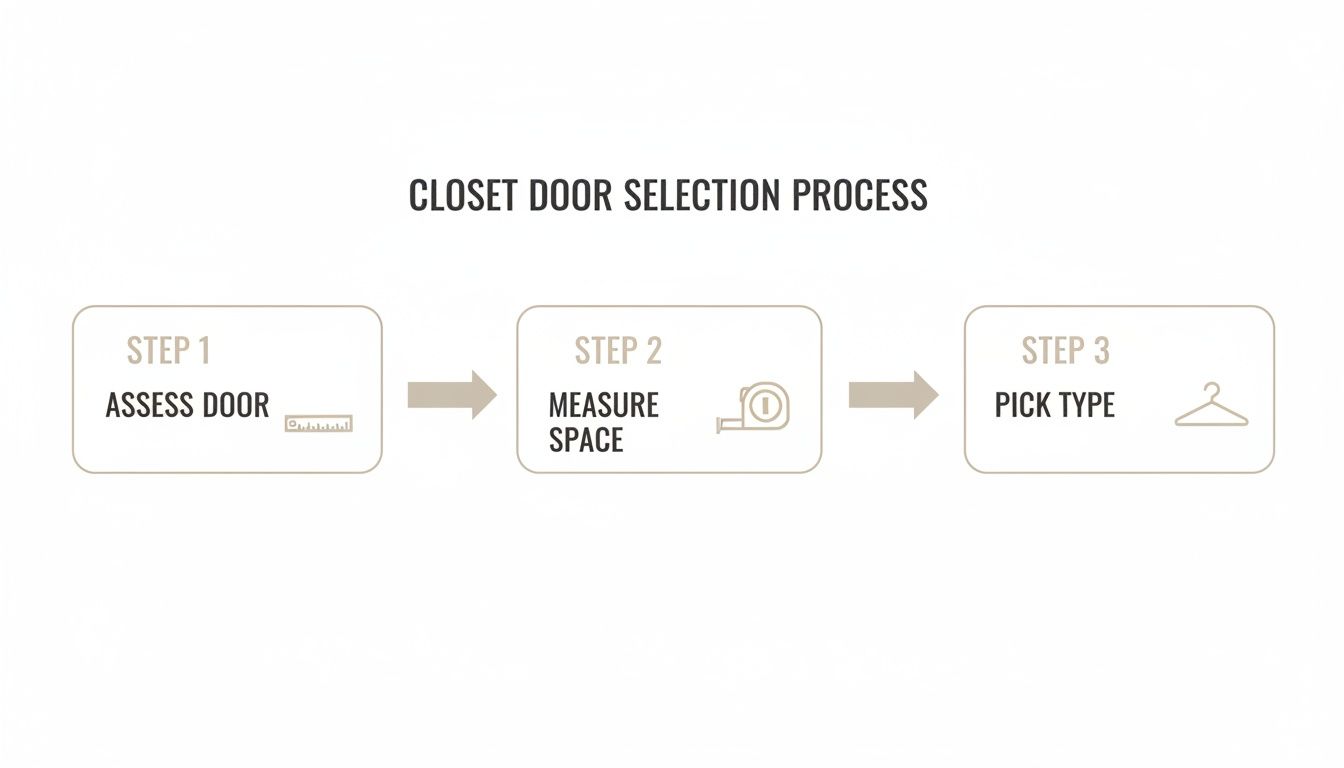
By taking the time to assess your door, measure the space, and pick the right type of organizer, you've already set yourself up for a successful and long-lasting installation.
Handling Over-the-Door Solutions
For simple over-the-door hangers, the biggest annoyances are often rattling noises and scratched paint. The fix is incredibly easy. Before you hang the organizer, stick small, self-adhesive felt or foam pads on any part that will touch the door's surface.
This tiny step makes a huge difference:
- It silences the rattle every time you open or shut the door, creating a more peaceful environment.
- It protects your door’s finish from scuffs and scratches, keeping it looking great.
Mounting on Hollow-Core Doors
Most modern homes have hollow-core doors, which require special attention when mounting anything. You can't just drive a screw in and hope for the best. The secret to a secure installation is using the right hollow-door anchors.
These anchors expand behind the door's thin surface, creating a surprisingly strong anchor point that distributes the weight. Skipping this is a recipe for disaster. A loaded organizer can easily rip the screws right out of the door, leaving you with damage and a disorganized mess. If you enjoy hands-on projects, exploring general DIY installation guides can build your confidence for tasks just like this one.
Best Practices for Solid Wood Doors
Solid wood doors are sturdy and can hold heavier loads, but you can split the wood if you're not careful. The solution is simple: always pre-drill pilot holes before putting in any screws.
Your pilot hole should be slightly smaller than the screw's diameter. This allows the screw to thread into the wood without forcing the fibers apart, giving you a clean, crack-free installation and a much stronger hold.
The most important rule of installation is to respect your door’s load limits. A standard hollow-core door can safely handle about 10-15 pounds. A solid-core door can often support 20-30 pounds. No matter the door type, always distribute the weight evenly to avoid straining the door hinges over time.
A properly installed system is the cornerstone of great closet organization. By focusing on these small but critical details, you’ll ensure your new closet door storage is safe, durable, and ready to make your daily routine smoother.
Organizing Your Door for Maximum Efficiency
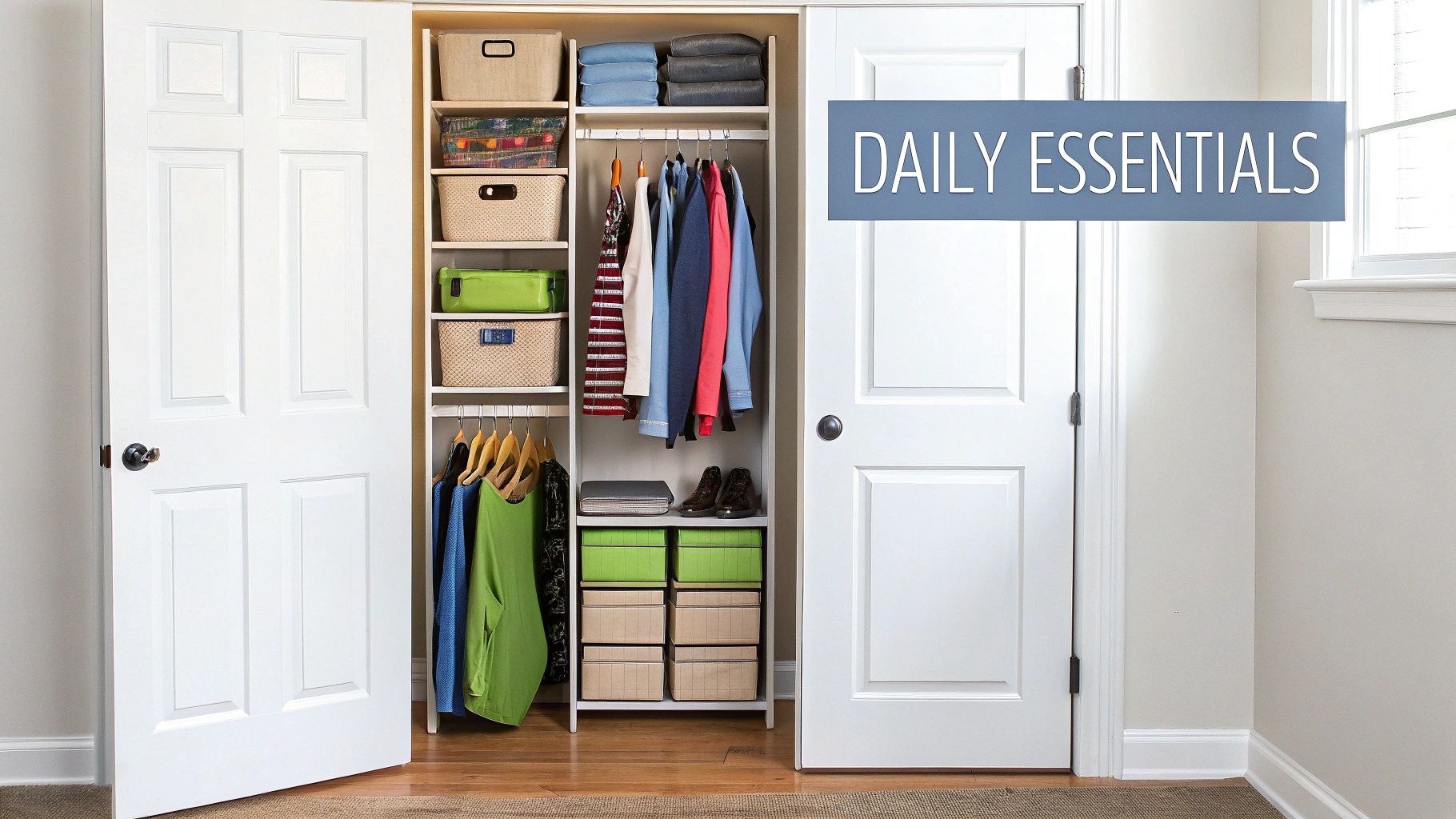
Alright, your new door storage is installed. That's a great start, but the real organizational magic happens next. It's time to turn that collection of hooks and pockets into a smart system that works for your life. This is where you go from just storing stuff to truly organizing it for daily efficiency.
Think of your closet door as the command center for your day. When set up right, it can completely streamline your morning routine. No more frantic searching for that specific belt or pair of sunglasses when you’re already running late.
Creating Functional Zones
The key to effective organization is to stop hanging things randomly and start thinking in terms of "zones." This strategy transforms your door from a chaotic catch-all into a purpose-driven tool. When you group similar items together, finding what you need becomes second nature.
Here are a few zoning ideas that work wonders for closet organization:
- The "Grab-and-Go" Station: Reserve a spot for everyday essentials like your watch, go-to jewelry, wallet, and keys. Everything you need to walk out the door, all in one place.
- A Jewelry Hub: Use small hooks or a dedicated organizer to sort earrings, bracelets, and necklaces. This simple step prevents tangles and makes accessorizing quick and painless.
- An Accessory Rack: Neatly arrange your scarves, ties, and belts so you can see every color and pattern at a glance. You'll likely find yourself using them more often.
Zoning isn't just about function; it creates a visually pleasing, orderly look that can have a surprisingly calming effect.
A pro tip for better organization is to think vertically. Keep the items you use most often right at eye level for easy access. Less-used or seasonal items, like winter gloves or sun hats, can go in the upper or lower pockets.
Integrating Door and Closet Storage
Now, let's talk about achieving total closet harmony. This happens when your door storage works with your main closet space. This is where specialized tools like MORALVE's multi-tier hangers truly shine. While the door handles your accessories, these hangers can tackle bulky items inside the closet.
By switching to multi-tier pant or skirt hangers, you can consolidate clothing and free up a shocking amount of rod space. Suddenly, your garments have room to breathe, stay less wrinkled, and your entire wardrobe becomes visible.
It’s no surprise that these smart, space-efficient solutions are becoming more popular. Market trends show that hanging organizers and accessory racks are some of the fastest-growing products in a global market expanding by 6.6%–8.0% each year. You can dig into the numbers in this closet organizers market report. This proves how essential coordinated systems are for modern, organized living.
Ultimately, by combining strategic closet door storage on the outside with innovative hangers on the inside, you create a single, cohesive organizational system. You're no longer just cramming things into a space; you're designing a wardrobe where every item has a logical, accessible home.
Common Mistakes and How to Avoid Them
Even the most brilliant closet door storage plan can go sideways if you fall into a few common traps. I’ve seen it happen time and again—a great organization project turns into a source of daily frustration. The good news? A little foresight is all you need to get it right the first time and maintain an organized space.
One of the most frequent blunders is simply overloading the organizer. It’s easy to cram every last pocket full, but pushing past the weight limit puts a ton of strain on your door hinges, eventually causing them to sag or pull out of the frame.
Ignoring Door Clearance and Bulk
Another classic organizational mistake is forgetting to account for how bulky items are. You hang a puffy winter coat on a hook, and suddenly, the closet door won't shut because it jams against the clothes inside.
To sidestep this, reserve your door space for flatter items that support an organized system.
- What works well: Scarves, belts, ties, flat shoes, and jewelry.
- What to avoid: Bulky winter coats, oversized bags, and chunky sweaters.
Before you commit, run a quick test. Put your bulkiest item in its spot and try to close the door. If you feel any resistance, that item needs a new home inside the closet.
The Annoying Rattle and Slide
There’s almost nothing more irritating than an organizer that clanks and slides every time you open the door. This is a common issue with over-the-door models that aren't perfectly snug. Beyond the noise, that constant movement can slowly scratch up your door's paint.
The fix is surprisingly simple. Grab some small, clear adhesive bumpers or felt pads and stick them wherever the organizer touches the door. This little cushion silences the noise and protects your door’s finish, maintaining a sense of calm.
It’s a tiny step that makes a massive difference in your day-to-day experience.
Forgetting to Distribute Weight Evenly
Finally, people often load organizers without a thought for balance. Piling all the heavy items at the top or on one side will make the whole unit tilt. This not only looks messy but puts uneven stress on the hooks or screws.
Think of it like packing a grocery bag: heavy items on the bottom. Place heavier items toward the bottom and center of the organizer, then fill in with lighter things. This simple habit keeps your closet door storage stable and secure, ensuring your organizational efforts pay off for the long haul.
Got Questions? We’ve Got Answers.
As you get ready to start this organization project, a few questions might come up. Let's walk through the most common ones so you can move forward with total confidence.
Will an Over-the-Door Organizer Actually Damage My Door?
That’s a great question, and the short answer is: not if you’re smart about it.
Most quality organizers come with protective padding. If yours doesn't, just stick a few self-adhesive felt pads on any spot where the organizer touches the door. It’s a simple fix that prevents scuffs and scratches.
Also, be mindful of the weight. Don't overload the organizer and avoid slamming the door. A little care goes a long way in keeping both your door and your storage system in perfect shape.
How Much Weight Can My Closet Door Realistically Hold?
This depends entirely on your door's construction. There’s a huge difference between a solid door and a hollow one.
A solid-core wood door can usually handle 20-30 pounds, especially if the storage is mounted securely. Your average hollow-core door is much lighter and not as strong. You’ll want to keep the total weight to a much safer 10-15 pounds.
Even with an over-the-door hanger that spreads the load, remember that all that weight is still pulling on the door's hinges. Always check the weight capacity listed on the organizer and, when in doubt, go lighter.
The golden rule for closet door storage is to never guess the weight limit. A quick check of your door type and the organizer’s specs prevents potential damage and keeps your system secure.
What are the Best Kinds of Things to Store on a Door?
The best items for door storage are relatively light, not too bulky, and are things you reach for often. This is your chance to get daily essentials or annoying clutter piles under control.
Think about things that get lost in drawers or that you need to grab on your way out.
- Accessories: This is the perfect spot for scarves, belts, ties, and hats. Small purses and clutches also work beautifully here.
- Small Essentials: Pocket organizers are a game-changer for socks, sunglasses, or even craft supplies.
- Toiletries: In a bathroom closet, shallow wire baskets are fantastic for corralling toiletries and freeing up counter space.
What should you avoid? Definitely skip heavy winter coats or a backpack loaded with books. Anything too bulky will keep the door from closing properly, and the weight will put too much strain on the hinges. Stick to lighter items to create a system that’s helpful, not a headache.
Ready to create a perfectly organized closet? MORALVE offers a range of innovative, space-saving hangers that work in harmony with your new door storage to maximize every inch of your wardrobe.
Explore our collection of multi-tier hangers and transform your closet today at https://moralve.com.
Leave a comment