

Master Your Small Space: Actionable Closet Organization Ideas for Apartments

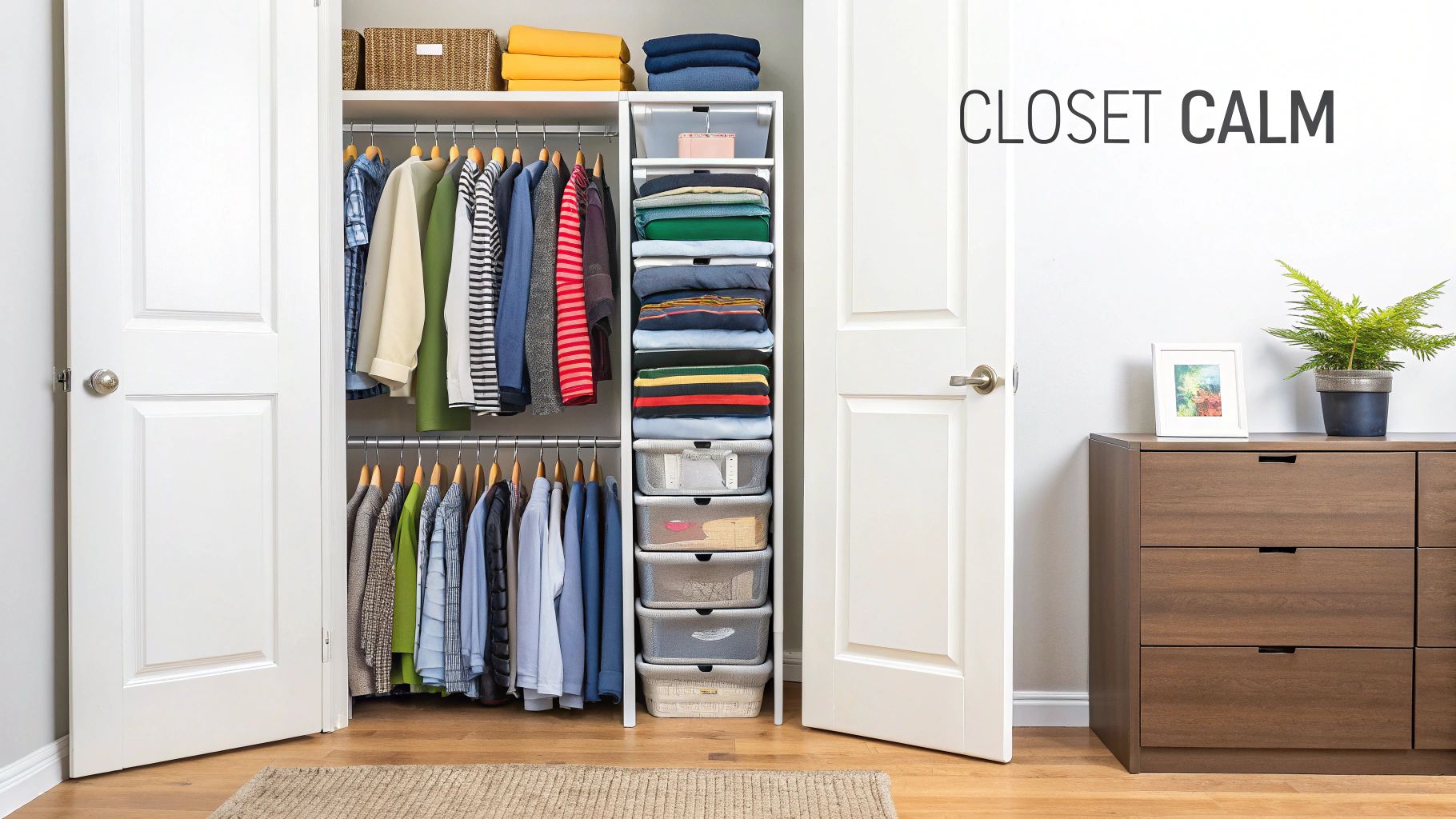
That feeling of staring into a cramped, overflowing apartment closet? We’ve all been there. But transforming that chaotic space into something truly functional and organized is more achievable than you might think. This isn't about generic advice that only works for massive walk-in closets; we're talking about real-world closet organization ideas apartment dwellers actually use to reclaim their space.
The Foundation For A Functional Closet
This guide breaks down the entire process into a manageable plan. We’ll start with the most important part—the prep work—before moving on to assessing your space, purging what you don’t need, and finally, building a system that actually sticks. This is more than just a quick tidy-up; it's about creating a foundation for lasting order.
It's no surprise that people are looking for better solutions. The global closet organizer market was recently valued at around USD 7.64 billion and is expected to climb to USD 8.25 billion by next year. This trend shows a major shift: more people are investing in smart organization systems instead of just basic storage. You can discover more insights about this growing market trend and see just how many homeowners are rethinking their spaces.
Shifting Your Perspective On Storage
Before you even think about buying a single bin or hanger, the most important step is to change how you see your closet. It’s not just a box to cram things into; it’s prime real estate in your apartment. Every single inch should have a purpose and, ideally, make your daily routine a little smoother.
The goal is to create a space that feels intentional, not just a place where forgotten clothes go to hide. This mental reset is the key to unlocking its true potential.
Thinking this way helps you make much smarter decisions about what to keep and how to store it. An organized closet can set the tone for your entire day, starting your morning with a sense of calm instead of chaos. The benefits go way beyond just having a tidy-looking space:
- Saves Time: When everything has a designated home, getting ready is faster and way less frustrating. No more digging for that one specific shirt.
- Reduces Stress: A cluttered environment often leads to a cluttered mind. Bringing order to your closet can genuinely promote a sense of clarity and peace.
- Saves Money: You’ll finally stop buying duplicate items just because you can't find what you already own. Plus, you'll be more thoughtful about any new clothes you bring home.
This guide will walk you through creating that exact system, step by step.
The Great Closet Clean-Out: Your First Step to Organization
Before you buy a single organizer or dream up a new layout, you have to do the hard part first: declutter. This is where the real magic happens, turning that overstuffed closet from a chaotic mess into a space that actually works for you. In a small apartment, every single item needs to earn its spot.
The best way to tackle this without getting completely overwhelmed is the Four-Box Method. Just grab four boxes (or make four piles) and label them: Keep, Donate, Store, and Discard. This simple system forces you to make a decision on every single piece, turning a potentially emotional task into a logical one.
Every Item Goes on Trial
Now, pick up each piece of clothing and be brutally honest with yourself. This isn't just about what fits; it's about what fits your life right now. Getting tough at this stage will save you so much frustration down the road.
Ask yourself these questions for every single garment:
- Does this fit the person I am today? It's so easy to hold onto clothes for a past version of ourselves or a future fantasy self. Let's focus on the real you.
- If I saw this in a store right now, would I buy it again? If the answer is a hard no, that’s your cue to let it go.
- Have I actually worn this in the last year? Be strict here. If it hasn't left the hanger in 12 months, it's just taking up prime real estate.
This process isn't always easy, but the goal is to build a wardrobe you truly love and use every day. If you need a deeper dive into this crucial first step, our guide on how to declutter your closet can walk you through it.
The point isn't just to get rid of stuff. It's to make intentional choices about what you keep, creating a curated collection that actually serves your lifestyle.
Get Smart with Seasonal Storage
One of the biggest culprits of closet chaos in an apartment is seasonal clothing. Those bulky winter coats and heavy sweaters can completely take over the space you need for your everyday outfits. The solution? Get them out of your main closet.
Here are a few clever ways to stash your off-season gear:
- Go under the bed: Low-profile, wheeled bins are perfect for sliding under your bed. They’re great for folded sweaters, jeans, and jackets, keeping them out of sight but still easy to grab.
- Use vacuum-sealed bags: These things are a lifesaver for puffy coats, comforters, and ski gear. They shrink bulky items down to a fraction of their original size, making them easy to tuck away.
- Think high: That top shelf in your closet is the perfect home for clearly labeled bins filled with things you only need a few months a year—think scarves, hats, gloves, and holiday-specific outfits.
Map Out Your New Closet Layout
With a freshly decluttered wardrobe, you can now shift into architect mode. This is the fun part where you get to design a blueprint for your closet before you buy a single hanger or bin. Think of it as creating a custom floor plan for your clothes, ensuring everything has a home.
First things first, grab a tape measure. You’ll need the width (wall to wall), the depth (back wall to the door), and the height (floor to ceiling). Jot down these numbers. If you have any existing shelves or rods, measure those too and note where they are. A simple sketch with these dimensions is going to be your best friend for the next steps.
Create Smart Zones for Your Stuff
The real secret to a closet that actually stays organized? Zoning. It’s a simple concept: you group similar items together so you automatically know where everything belongs. This strategy transforms a jumbled mess into a logical, easy-to-use system that will seriously cut down on your "what to wear" stress in the morning.
For a typical apartment closet, I usually recommend starting with these zones:
- Everyday Essentials: This is your prime real estate. Think work attire or your go-to casual outfits. Blouses, trousers, and favorite jeans should be front and center.
- Weekend & Casual: T-shirts, sweaters, and anything you reach for on your days off can live in the next most accessible spot.
- Special Occasion & Seasonal: That cocktail dress or heavy winter coat doesn't need to be in the way. Tuck these items toward the back or on a higher shelf.
- Shoes & Accessories: Give these their own dedicated space—whether it’s on the floor, on the door, or in hanging organizers—to prevent them from taking over.
This whole process of deciding what goes where is what the decluttering stage sets you up for. You’re essentially directing traffic for your wardrobe.
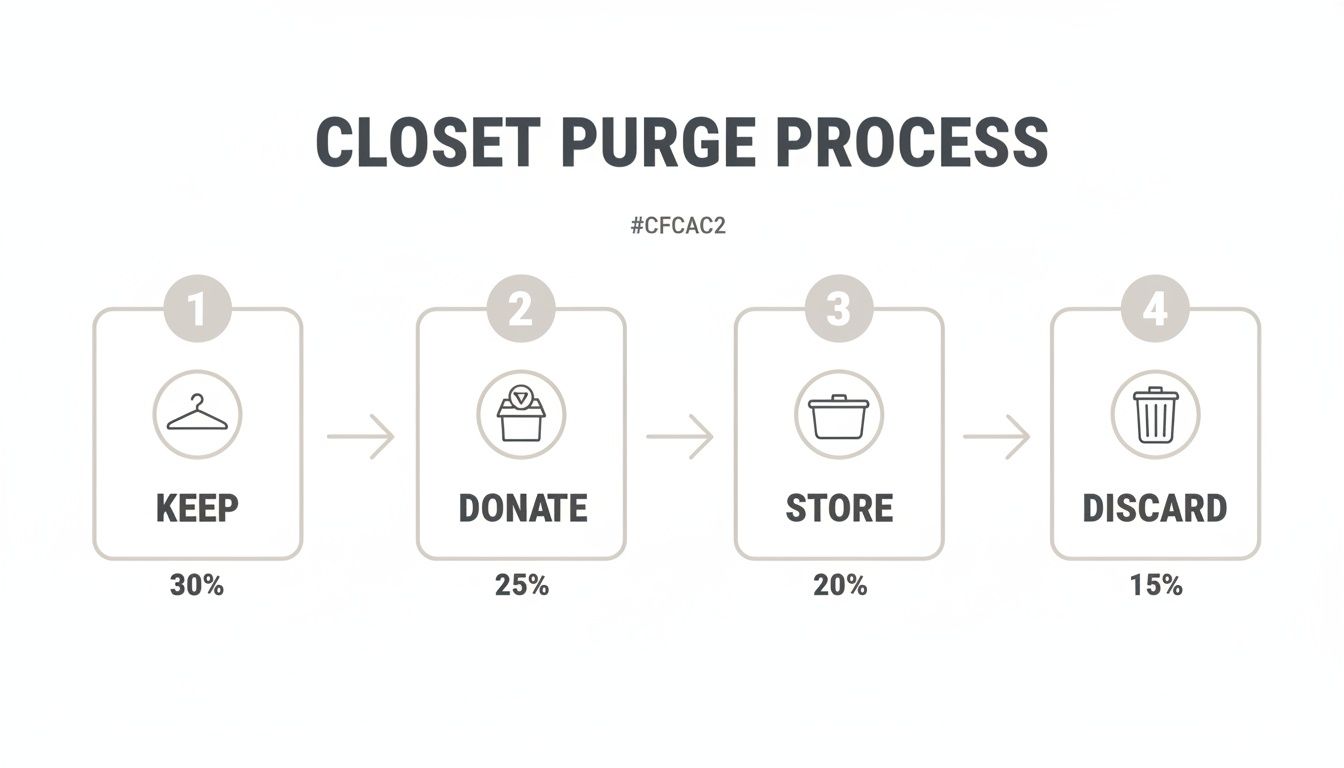
This flowchart perfectly breaks down the four main paths for every piece of clothing, helping you make quick, confident decisions.
Think Vertically: Use Every Last Inch
In a small apartment, the space between your clothes and the ceiling is pure gold. Most closets come with a single rod and one high shelf, which leaves a ton of wasted air. Your mission is to claim that empty space and effectively double your storage capacity without knocking down any walls.
A smart layout can make a tiny closet feel twice its size. The trick is to go vertical and make sure no space—from the floor right up to the ceiling—is left behind.
This isn't just a clever hack; it's a fundamental principle of modern organization. Once you have a clear vision, you can start looking at specific solutions. For a deep dive into planning from the ground up, our guide on how to design a closet is a great resource. And if you’re feeling ambitious, you can even explore options for building a personalized closet organizer for a truly custom fit.
To get you started, here is a simple blueprint for assigning zones in a typical apartment closet.
Apartment Closet Zoning Blueprint
This table offers a sample plan to help you assign categories to different areas of your closet based on accessibility and vertical space.
| Closet Zone | Best For | Example Items | Recommended Organizer |
|---|---|---|---|
| Prime Zone (Eye level, easy reach) | Daily wear, frequently used items | Work shirts, blouses, favorite jeans, everyday dresses | Standard hangers, tiered hangers |
| Upper Zone (Top shelf) | Off-season items, less-used accessories | Winter sweaters, formal hats, travel bags | Labeled fabric bins, storage boxes |
| Lower Zone (Below hanging clothes) | Shoes, folded items | Sneakers, heels, folded denim, gym wear | Shoe rack, stacking drawers, wire baskets |
| Back Wall / Corners | Bulky or special occasion wear | Winter coats, ski jackets, formal gowns | Garment bags, heavy-duty hangers |
| Door Space (Back of the door) | Accessories, small items | Scarves, belts, hats, jewelry, ties | Over-the-door hooks, pocket organizers |
With your measurements in hand and a solid plan for your zones, you’re finally ready to pick the tools that will bring this vision to life.
Choosing Your Space-Saving Toolkit
With a solid plan in hand, it's time to gather the tools that will bring it to life. The smartest closet organization ideas apartment dwellers rely on aren't complicated; they're about using simple, effective products in a strategic way. Think of this as building a custom toolkit designed to unlock every last inch of your closet.
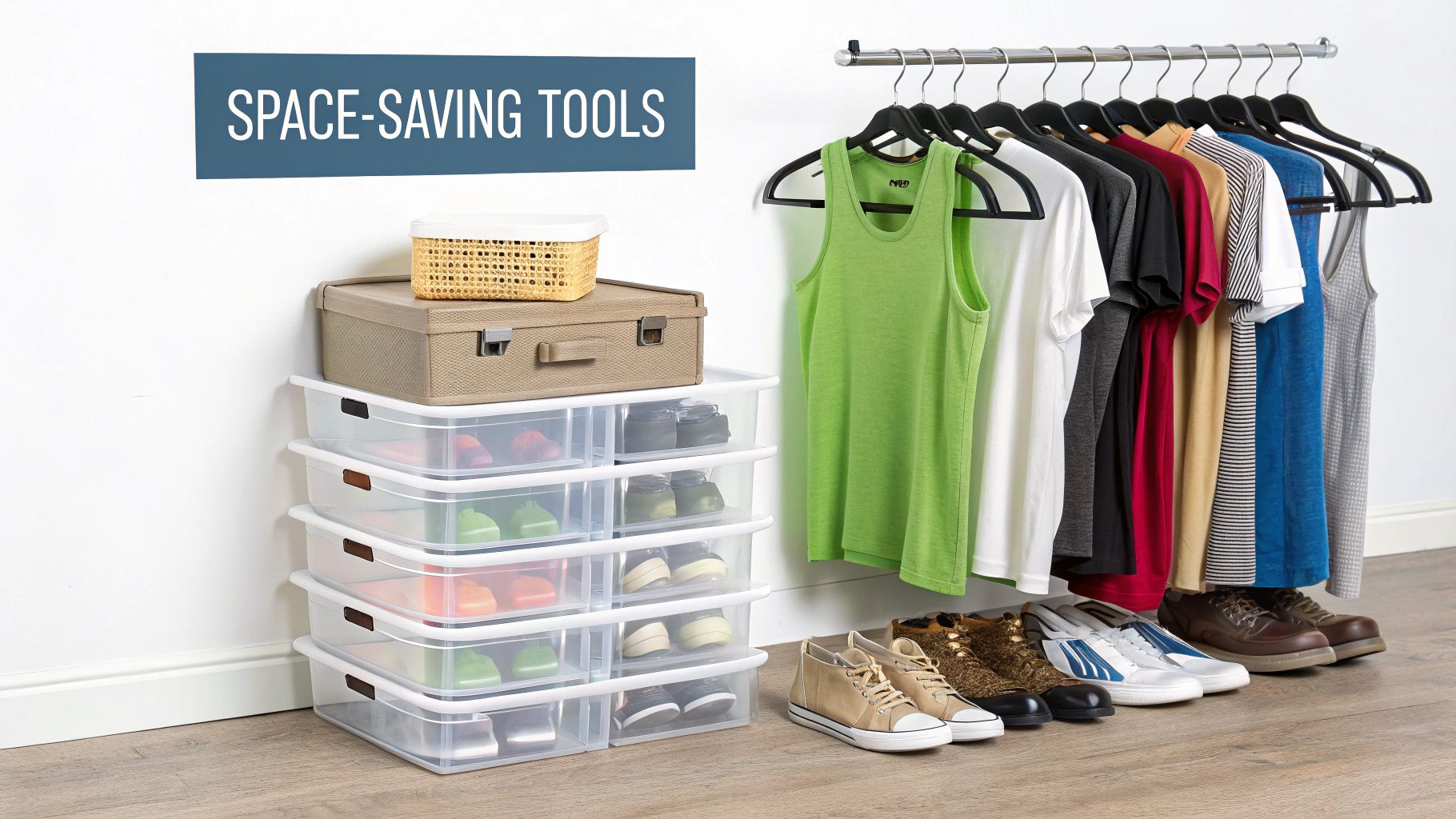
This is more than just a shopping trip for containers. You're investing in solutions that will literally multiply the space you have.
The Power Of The Right Hanger
If there's one thing that will make the biggest, most immediate difference, it's your hangers. I've seen it time and time again: a collection of mismatched, bulky plastic hangers can eat up up to 30% of your usable rod space. A simple swap is often all it takes to instantly reclaim a significant chunk of your closet.
Here’s what you should focus on:
- Ultra-Slim Velvet Hangers: These are non-negotiable in a small closet. Their super-thin profile means you can fit way more clothing on the rod, and the velvet grip keeps silky tops and wide-neck shirts from sliding onto the floor.
- Multi-Pant Hangers: A true vertical storage hero. Instead of five pairs of pants taking up a foot of rod space, a single one of these hangers can stack them all in the footprint of a single garment. It’s a game-changer.
- Tiered Skirt Hangers: These work on the same principle as the pant hangers but use clips to neatly arrange multiple skirts. They hang straight, stay wrinkle-free, and are easy to browse.
Figuring out which specialty hanger is best for your wardrobe can feel like a big decision. For a closer look at all the options, our guide on space-saving hangers for clothes breaks down the pros and cons of each style.
Beyond The Hanger Solutions
While hangers are a huge piece of the puzzle, a few other key items are needed to complete your toolkit. These are the workhorses that tackle classic apartment storage problems, like having no floor space or a glaring lack of built-in shelving.
The right toolkit isn’t about having the most organizers; it's about having the smartest ones. Each item should solve a specific problem, from reclaiming floor space to making items easier to find.
Effective clothing storage is a big deal. The global wardrobe market was valued at USD 31.5 billion and is projected to grow to USD 46.54 billion, which just goes to show how much people are looking for smart ways to manage their belongings.
Essential Organizers For Apartment Closets
Ready to round out your arsenal? Here are the must-have organizers that I’ve found deliver the biggest impact in the smallest spaces.
| Organizer Type | Why It Works | Best For |
|---|---|---|
| Over-the-Door Shoe Organizer | It puts the completely unused space on the back of your door to work, getting shoes or accessories off the floor for good. | Shoes, scarves, belts, and other small accessories. |
| Clear Stackable Bins | The see-through design means you know exactly what’s inside, so you don't have to rip open three boxes to find one sweater. | Folded sweaters, out-of-season clothes, purses, and hats. |
| Tank Top Organizers | This is a specialty hanger that holds a dozen camisoles or tank tops in one spot, saving them from a wadded-up mess in a drawer. | Tank tops, camisoles, scarves, and ties. |
| Fabric Storage Boxes | These are perfect for the top shelf. They look tidy, hide the visual clutter, and keep things you don't use often from getting dusty. | Seasonal items, extra bedding, or special occasion accessories. |
When you combine these tools with the zones you've already planned, you create a system that truly functions. For an even deeper dive into all the possibilities, this ultimate guide to closet organization systems is a great resource. Now, you’re finally ready to put it all together.
Putting Your Organization Plan Into Action
With your decluttered wardrobe and a smart layout in hand, you've reached the most satisfying part: bringing it all to life. This is where the vision you mapped out becomes a real, functional space you'll use every single day. The goal isn’t just to make it look neat for a day, but to build a system that’s second nature to maintain.
The first rule is powerful in its simplicity: group like with like. T-shirts go together, work trousers have their own section, and so on. This one habit instantly creates visual calm and makes finding anything a breeze. You’ll never have to hunt for that one black top buried among your dresses again.
Mastering The Art Of The Hang
Believe it or not, how you hang your clothes is just as important as where you hang them. The wrong hanger or technique can cause stretched necklines, dreaded shoulder bumps, and wrinkles, completely undermining your hard work. Let’s get it right from the start.
Here are a few pro tips for hanging common items:
- Heavy Sweaters: Never hang a chunky knit sweater by the shoulders. The weight will pull it completely out of shape. Instead, fold it in half lengthwise, lay the hanger hook in the armpit, and drape the body and sleeves over the hanger bar.
- Silky or Strappy Tops: Velvet hangers are your best friend for anything slippery. If you don't have those, you can also find specialty hangers with clips or hooks that hold delicate camisoles securely in place.
- Blazers and Jackets: Always use a sturdy, structured hanger that mimics the shape of your shoulders. A flimsy wire hanger will destroy the shape and padding of a good jacket over time.
One of the simplest but most impactful closet organization ideas apartment dwellers use is to face all your hangers in the same direction. It sounds almost silly, but trust me, this tiny detail creates a clean, uniform line that makes your closet feel less like a storage space and more like a personal boutique.
Activating Your Unused Spaces
Your hanging clothes are only one piece of the puzzle. Now it’s time to activate those awkward, forgotten zones and make every square inch count.
Don't let any space go to waste. The floor beneath your clothes and the high top shelf are prime real estate for smart storage. A well-organized closet uses every vertical and horizontal surface available.
That gap under your hanging clothes is the perfect spot for a slim shoe rack or a few stackable clear bins for folded sweaters and jeans. And that top shelf? Use labeled fabric bins to store your off-season wardrobe, seldom-used accessories, or guest linens. This keeps them dust-free and out of sight until needed, creating a truly complete storage system.
Keeping Your Closet Organized for Good
You’ve done it. You’ve decluttered, planned, and organized your apartment closet into a thing of beauty. But let's be honest, the real victory isn't just getting it organized—it's keeping it that way.
The final, and most crucial, part of this whole process is building simple habits that stop clutter from creeping back in. We're not talking about a huge, time-consuming effort here. It's all about weaving small, consistent routines into your daily life that protect all the hard work you just put in.
The most powerful habit you can adopt, especially in a small apartment, is the 'One In, One Out' rule. Think of it as a non-negotiable law for your closet. Every time you bring home a new shirt, a new pair of shoes, or a new dress, an old one has to go. This simple exchange prevents your closet from ever getting overstuffed again and makes you think twice about what you buy.
Create a Simple Maintenance Routine
To keep your closet from spiraling back into chaos, a little scheduled maintenance goes a long way. These quick check-ins are your defense against small messes snowballing into a full-blown reorganization project.
Here’s a practical schedule that actually works:
- The 10-Minute Weekly Tidy: Once a week, set a timer for just 10 minutes. Use that time to tackle the small stuff. Put away that pile of clothes that’s been living on "the chair," re-hang anything that’s fallen or been shoved back in, and quickly straighten out your shoes. It's a fast reset that keeps everything in its place.
- The Twice-a-Year Edit: A couple of times a year, usually when you’re swapping out your seasonal wardrobe, it’s time for a slightly deeper dive. Take everything out and give it a quick once-over. Do you still love it? Did you wear it at all last season? This is your chance to get rid of anything that’s just taking up space.
Keeping a closet organized is a marathon, not a sprint. A few minutes of upkeep each week will always beat a massive, soul-crushing clean-out every six months.
Making these small habits part of your routine is what will make your organized closet last. It shifts organization from a one-time project to a sustainable lifestyle choice, ensuring you can actually enjoy your calm, functional space for the long haul. This is what truly makes for the best closet organization ideas apartment living has to offer.
Frequently Asked Questions About Closet Organization
Even with a solid plan, you're bound to run into a few specific snags when you're deep in closet-organization mode. Let's walk through some of the most common questions people have when they're trying to make the most out of a small space. We'll cover everything from what to do when you're on a tight budget to how to handle those awkwardly shaped items.
These are the real-world challenges that come with apartment living, and luckily, they all have practical solutions.
How Can I Organize My Closet Without Spending a Ton of Money?
You absolutely don't need a huge budget to get your closet in order. In fact, the single most effective step—a thorough declutter—is completely free. After that, it’s all about being resourceful.
Start by looking at what you already have. Old shoeboxes are perfect for creating dividers in your drawers for socks, belts, or scarves. You can even use the little tabs from soda cans to hook two hangers together, instantly creating a cascading effect that saves a surprising amount of rod space. When you do decide to buy something, go for high-impact items like a set of uniform, slim velvet hangers. They make a massive difference for a small investment.
What's the Best Way to Store Shoes in a Cramped Closet?
Shoes are tough. They're bulky, and they can turn your closet floor into a disaster zone in no time. The secret is to get them off the floor entirely by thinking vertically.
- Over-the-Door Shoe Racks: This is a classic solution for a reason. A simple pocket organizer hanging on the back of your closet door can neatly store a dozen pairs of flats, sandals, or sneakers, using space that would otherwise be wasted.
- Clear, Stackable Boxes: If you have a bit of shelf space to work with, these are a game-changer. They keep your shoes protected from dust and, most importantly, let you see what’s inside at a glance. No more unstacking ten boxes to find the one pair you want.
- Under-the-Bed Storage: Don't forget about the space under your bed! A slim container on wheels is the perfect hiding spot for off-season boots or those heels you only wear for special occasions.
The goal is to give every single pair of shoes a home. When they have a designated spot—whether it's in a pocket on the door or in a neat little box—they can't create chaos.
How Often Should I Really Declutter My Closet?
An organized closet isn't a one-and-done deal. It needs a little bit of ongoing attention to stay that way. This is the part everyone forgets, which is exactly how clutter starts to creep back in.
The trick is to have a realistic schedule. Aim for a quick 10-minute tidy-up once a week. Just put stray items back, re-hang clothes properly, and straighten things out. Then, plan for a more serious decluttering session twice a year. A great time to do this is when you're swapping your seasonal wardrobe in the spring and fall. It's the perfect opportunity to pull out anything you haven't worn and keep your system running smoothly.
Ready to put these ideas into action with some seriously smart, space-saving tools? Check out the full collection of vertical hangers and other clever organizers at MORALVE to see just how much more you can fit into your closet. Start your transformation at https://moralve.com.
Leave a comment