

Closet Storage Organization Ideas for Any Space

Every great closet makeover starts with one simple, powerful truth: you have to know what you have before you can organize it. This isn't just about tidying up. It's about creating a personal blueprint for a calmer, more functional space that genuinely simplifies your daily routine.
Building Your Foundation for an Organized Closet
Let's be honest, an overflowing closet is usually a symptom of owning too much, not a lack of space. Before you even think about buying a single storage bin or a new set of hangers, the most critical first move is a "Closet Audit." This is where you get real with yourself and make intentional decisions about what you actually own, what you truly wear, and what's just taking up valuable real estate.
Skipping this initial phase is the number one reason closet systems fail. You need to build your new setup based on your real-life needs, not just wishful thinking. Think of it like pouring the foundation for a house—without it, even the most clever storage solutions will eventually get buried under clutter. A well-organized closet always begins with a well-edited wardrobe.
The Three Pillars of Closet Organization
The path to a perfectly organized closet is built on three core actions, and the order you do them in matters. This simple process is the key to getting it right from the start.
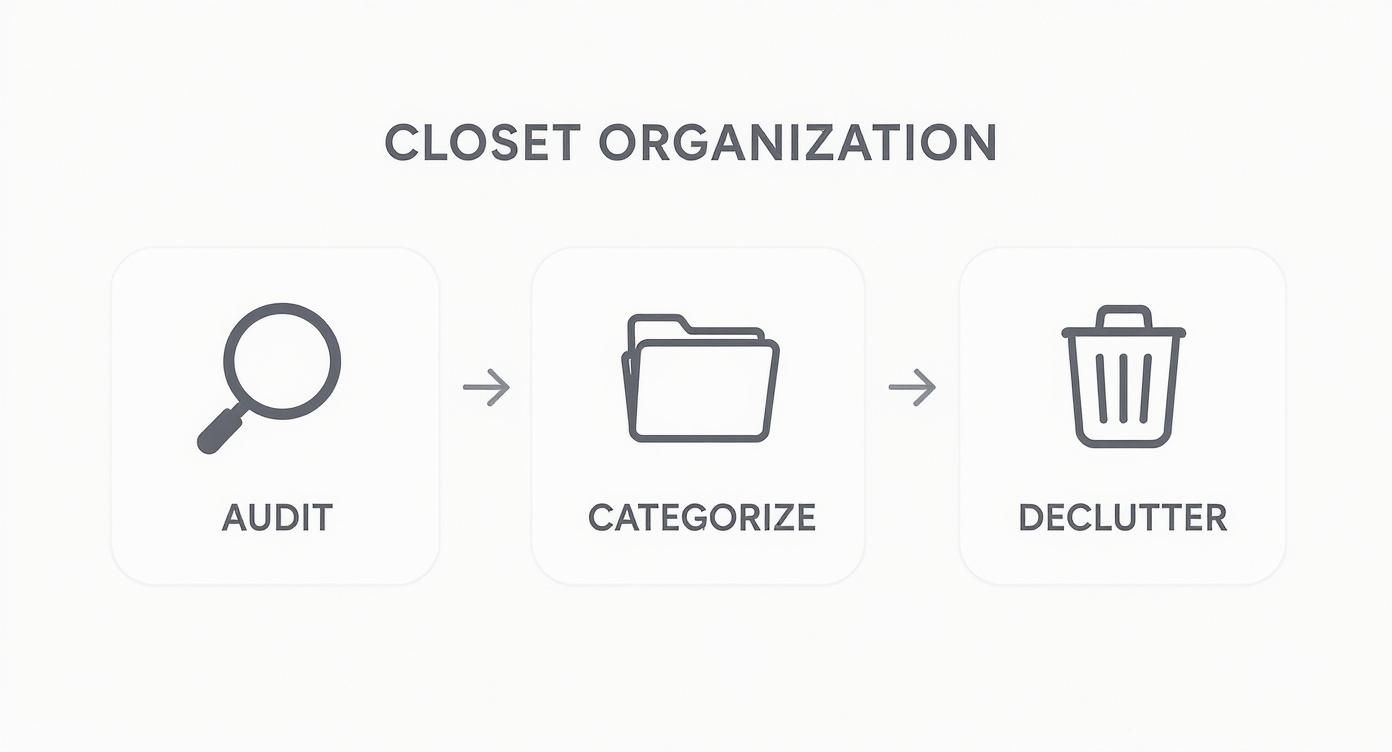
This visual shows you exactly why you can't effectively declutter without categorizing first, and you can't categorize until you’ve audited everything. Each step naturally builds on the one before it, helping you avoid the classic mistake of just reorganizing your clutter instead of actually getting rid of it.
Why a Closet Audit Is Your First, Non-Negotiable Step
I've seen it a hundred times: people skip the audit, rush out to buy containers, and wonder why their closet is a mess again a month later. It's a recipe for failure. An audit forces you to physically handle every single item, from that sweater you haven't worn in three years to the pants that no longer fit. This isn't just about sorting; it's about gaining total clarity.
The goal is to create a system where every item has a designated, logical home. This is impossible if you're working with items that don't belong there in the first place. A proper audit makes every subsequent step, from zoning to choosing storage, exponentially easier.
Once you have that complete picture of your wardrobe, you can finally make informed choices. You’ll know exactly how many sweaters need shelf space or precisely how much hanging room your dresses require. This approach transforms closet organization from a frustrating chore into a manageable project with a clear, achievable endpoint.
Your Definitive Guide to a Wardrobe Declutter
This is where the real work begins—and where you’ll see the most dramatic results. A beautifully organized closet is only possible when it’s filled with items you actually wear and love. Clearing out the excess isn't just about tidying up; it's about taking back your wardrobe from the chaos.
Let’s get beyond the usual vague advice. I'm going to walk you through a solid system for making those tough, stress-free decisions about what stays and what goes. The key is to stop shuffling things around and start making real choices.
The Four-Box System: Your Decluttering Blueprint
One of the most powerful closet organization ideas I’ve come across is the Four-Box System. It’s brilliant because it completely eliminates that paralyzing "maybe" pile that ends up all over your bedroom floor. Before you touch a single hanger, get four boxes or just designate four clear spots on the floor. Label them: Keep, Donate, Store, and Discard.
As you pull each and every item from your closet, you have to place it into one of these four categories. No cheating!
- Keep: This pile is only for clothes you adore, wear often, and that fit you well right now. Be brutally honest. If you haven't reached for it in the last year, it probably doesn't belong here.
- Donate: These are the items in good shape that you just don't wear anymore. That jacket that’s perfectly fine but not quite "you"? Someone else will love it.
- Store: This is for two specific things: off-season clothing (like your bulky ski gear in July) and truly sentimental pieces you can't bear to part with. The goal is to get these items out of your prime closet real estate.
- Discard: Anything stained, ripped, or just plain worn out goes here.
For those situations where you have too much to handle through standard trash or donation—think old furniture, massive bags of clothes, or bulky items—you might want to look into professional junk removal services. It's a practical way to clear out a large volume of clutter all at once. This system forces you to be intentional with every single piece of clothing.
Getting Over the Emotional Hurdles of Letting Go
Let’s be real: decluttering is as much an emotional exercise as a physical one. We hang onto clothes for so many reasons that have nothing to do with actually wearing them. Maybe you feel guilty about how much you spent on it, or it was a gift from someone special.
One of the biggest mental blocks is "just in case" thinking. We save things for imaginary future events that almost never happen. Here's a question I always ask my clients: If you had to wear this tomorrow, would you be excited? Or would you secretly wish you could buy something new? Your gut reaction tells you everything you need to know.
To make it easier, give yourself permission to let go. You can even thank the item for the role it played—whether it was teaching you that a certain style isn't for you or just bringing you a moment of joy when you bought it. Acknowledging its past purpose can give you the closure you need to move on. For more expert advice on this, our complete guide on how to declutter your closet has even more strategies.
Try the Reverse Hanger Trick
Okay, so you've edited your wardrobe down to the essentials. Now, how do you keep it that way? The Reverse Hanger Trick is a game-changer for understanding what you truly wear. It’s incredibly simple but so effective.
- Turn every hanger in your closet so the hook faces out, toward you (the "wrong" way).
- From now on, whenever you wear something, put it back in the closet with the hanger facing the correct way.
- In six months, or at the end of the season, take a look.
Any hangers still facing backward are holding clothes you haven’t touched. It's a clear, undeniable visual of what’s just taking up space. This removes all the emotion and guesswork from your next closet clean-out and is one of the best habits you can build for long-term organization.
Designing a Smarter Closet Layout
With your wardrobe edited down to only the items you truly love and wear, you’ve cleared the canvas. Now it’s time to become the architect of your own space. A genuinely organized closet isn't just tidy—it's intuitive. It makes your daily routine feel effortless instead of like a frustrating scavenger hunt.
This is where a bit of strategic space planning, a concept I call closet zoning, makes all the difference. Think of it like a well-designed city with different districts for different activities; your closet needs dedicated zones for different types of clothing. Honestly, this is one of the most effective closet storage organization ideas for keeping things in order for the long haul.
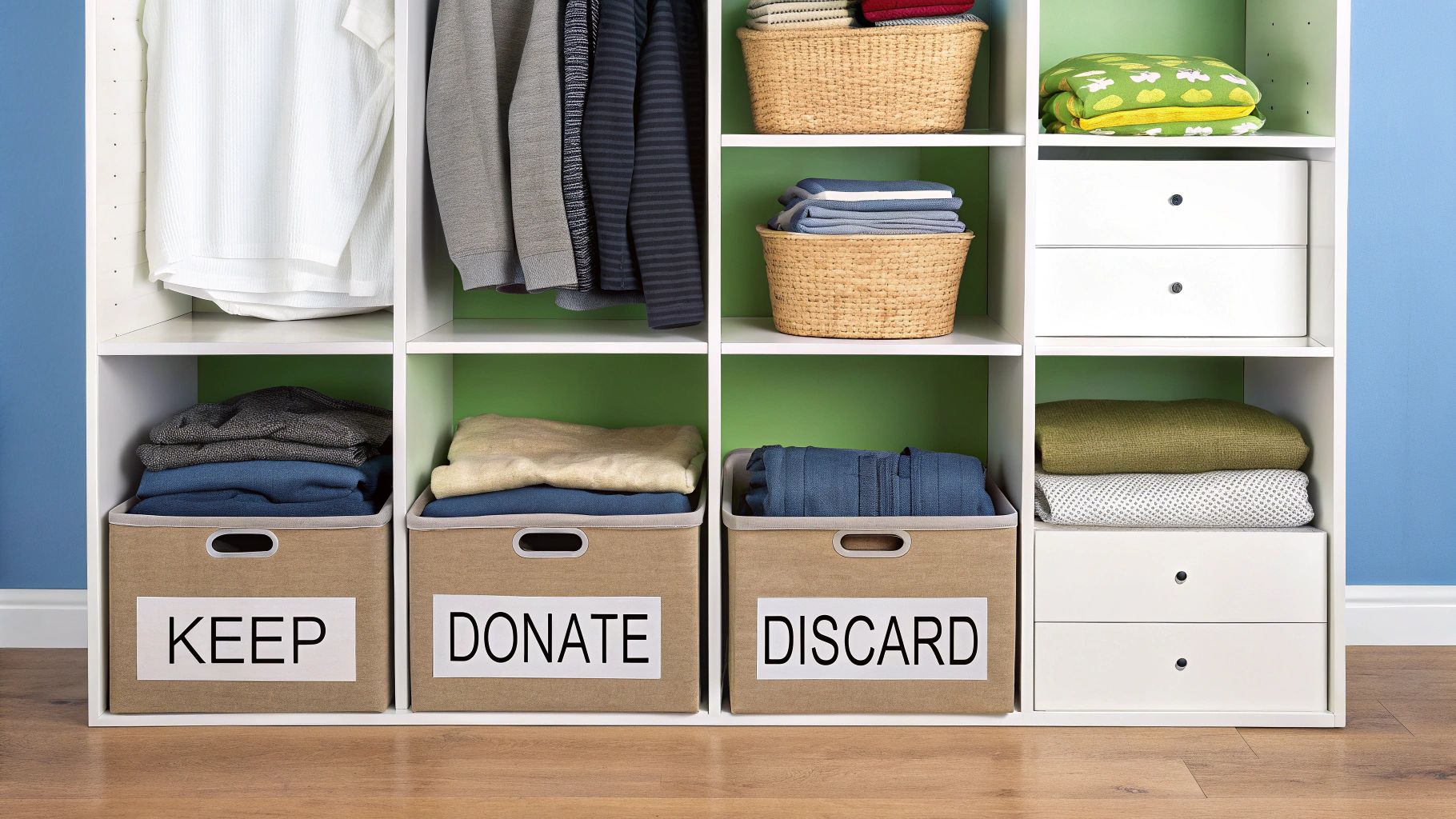
Mapping Your Closet Zones
The core idea behind zoning is simple: keep your most frequently used items in the most accessible places. This "prime real estate" is the area right in front of you, typically between your eye level and your waist. It just makes sense—the clothes you reach for every day, like your work shirts, favorite jeans, and go-to sweaters, should be front and center. No digging required.
Everything else can be organized into secondary zones based on how often you wear it:
- High-Traffic Zone (Prime Real Estate): This is for your daily drivers. Hang your everyday shirts, pants, and dresses here. Use any eye-level shelves for folded items you grab constantly, like t-shirts and activewear.
- Medium-Traffic Zone (Upper Shelves & Lower Drawers): This area is perfect for items you wear less often. Think seasonal clothing, like bulky sweaters in the summer or sundresses in the dead of winter. It’s also a great spot for formal wear or special occasion outfits that you don't need every week.
- Low-Traffic Zone (Top Shelf & Floor): Those hard-to-reach top shelves are ideal for things you only need a few times a year, like holiday-themed sweaters or sentimental pieces you want to store safely. The floor space can house shoes you wear often or stackable bins for accessories.
This thoughtful approach is catching on everywhere. The global closet organizers market, valued at around USD 4.2 billion in 2024, is expected to grow significantly, which tells you people are serious about creating personalized, efficient home storage.
Measure and Sketch Your Vision
Before you start installing shelves or buying organizers, grab a measuring tape. It sounds obvious, but getting your closet's exact dimensions—height, width, and depth—is absolutely crucial. Don't eyeball it. Precise numbers are your best friend when choosing storage solutions that actually fit.
Once you have your measurements, make a quick sketch. It doesn’t have to be a work of art. A simple drawing on a piece of paper helps you visualize where each zone will go and how much space you can give to hanging rods versus shelves. This little step can save you the massive headache of buying organizers that are an inch too wide. For more in-depth guidance on this, our full guide on how to design a closet from scratch is a great resource.
Sketching your layout forces you to think critically about flow. You’ll quickly see if your plan for double-hanging rods leaves enough room for your longest dresses or if your shoe rack will block access to your drawers. It's a five-minute task that can save you hours of work.
Maximizing Every Inch
With your zones planned out, the next goal is to maximize every single square inch. In my experience, vertical space is the most underused asset in any closet. If you have a single hanging rod with a ton of empty space underneath, you're missing out on a huge opportunity.
Consider these game-changing vertical strategies:
- Add a second hanging rod: This is the easiest way to instantly double your hanging space for shirts, skirts, and folded pants.
- Use shelf risers: These simple additions create a second level on a shelf, perfect for neatly stacking sweaters or organizing handbags without them toppling over.
- Think floor to ceiling: If your top shelf is a pain to reach, don't let it become a dead zone. Use it for long-term storage with clearly labeled bins.
For those with a bit more room to work with, a functional layout is everything. If you're tackling a larger space, these practical walk-in closet organization tips can help you create the wardrobe you've always wanted. By thoughtfully mapping out your closet, you build a system that isn't just clean—it's fundamentally easier to use and maintain day in and day out.
Choosing the Right Tools and Storage Solutions
Alright, you've cleared out the clutter and sketched out a plan for your closet. Now comes the really satisfying part: picking the tools and organizers that will bring it all together. The right gear does more than just hold your stuff; it builds a system that makes getting ready every day feel effortless.
This is where we get into the specifics. Forget generic bins for a moment. We're going to look at the exact solutions that tackle those common closet headaches, transforming a jumble of clothes into a calm, functional space.

The Single Most Impactful Change: Your Hangers
If you only do one thing, do this: switch to a single style of slimline hanger. I can't stress this enough. That mix of chunky plastic, flimsy wire, and bulky wooden hangers is creating visual noise and eating up a shocking amount of rod space. Making the switch is hands-down the fastest and most affordable way to make your closet look and feel twice as big.
Slim, velvet-coated hangers are an industry standard for good reason. Their ultra-thin design can instantly increase your hanging space by up to 50%. Plus, the non-slip surface means those silky blouses and wide-neck tops actually stay put, instead of ending up in a puddle on the floor. It's a small investment with a massive payoff in both looks and practicality.
Finding a Home for Everything Else
With your hanging clothes sorted, it’s time to find a designated spot for everything else. The two main goals here are containment and visibility. You should be able to see what you have without having to rummage through messy piles.
Here are a few workhorse items I always recommend:
- Clear, Stackable Bins: A game-changer for folded items like sweaters and jeans. Seeing the contents at a glance is key, and stacking them makes the most of your vertical shelf space.
- Fabric Drawer Dividers: Perfect for keeping socks, underwear, and other small items from turning into a jumbled mess inside your drawers.
- Over-the-Door Organizers: Don't forget the back of your closet door! It's one of the most underutilized spots. An organizer with clear pockets is a brilliant solution for shoes, scarves, or belts.
The trick is finding the right mix of these tools for your wardrobe. To see how different setups work, check out our guide to the best closet organizer systems to find a combination that fits your specific needs.
Solving Those Annoying Storage Dilemmas
Every closet has its problem children—the items that just refuse to stay tidy. A tangled nest of belts, a heap of handbags, an avalanche of scarves... sound familiar? The good news is there are specialized solutions designed to solve these exact problems.
Try installing a simple rack or dedicated hooks for belts and ties. A few S-hooks on your closet rod can neatly display your handbag collection, preventing straps from tangling and making it easy to grab the one you want. For scarves, a single multi-ring hanger can hold dozens without taking up much room at all.
By identifying your biggest storage pain points and finding a targeted solution, you eliminate those daily moments of frustration. It’s not just about being tidy; it’s about making your closet work for you, not against you.
Organization Hacks for Every Type of Closet
It’s an organizing truth: no two closets are the same. A brilliant idea for a sprawling walk-in will just create clutter in a tiny reach-in. The real secret is learning to adapt the core principles of organization to the space you actually have.
Let’s ditch the one-size-fits-all advice. Instead, we'll dive into specific, practical hacks tailored for your closet, whether you're dealing with a cramped corner or a room you can walk into. The right approach can turn frustrating limitations into your greatest organizational assets.
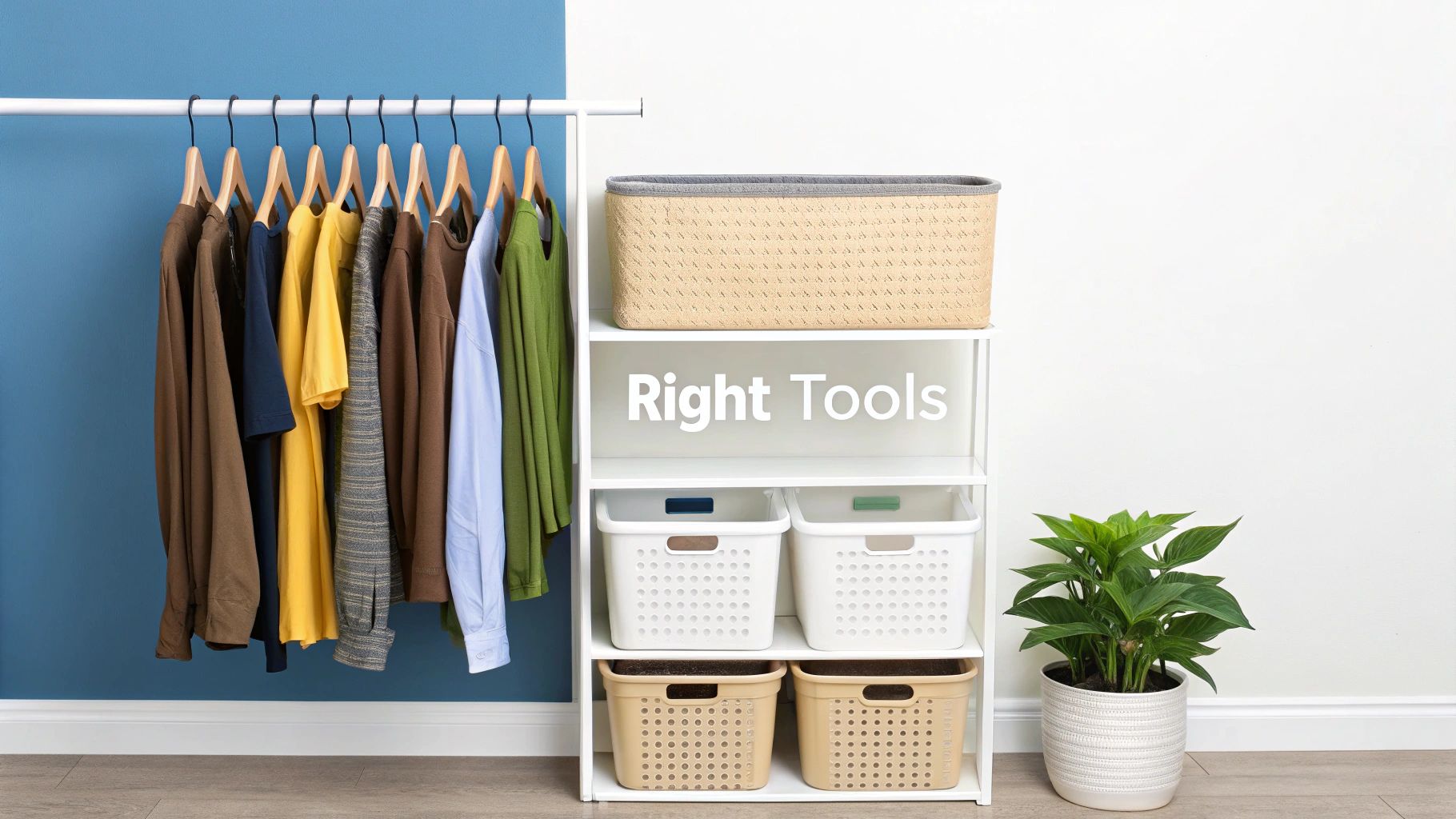
Maximizing Small Reach-In Closets
Ah, the small closet. It’s the biggest challenge, but it also delivers the most satisfying before-and-after. When floor space is practically non-existent, the only way to go is up. Vertical storage isn't just a suggestion here; it's a non-negotiable.
- Install a Double-Hang Rod: This is the single fastest way to double your hanging space for shirts, skirts, and pants. By adding a second rod below the first, you instantly put all that dead air to work.
- Use the Door: Don't forget about the back of the door! It's prime real estate. An over-the-door shoe organizer with clear pockets is a classic for a reason, but a simple rack of hooks works just as well for belts, scarves, and purses.
- Add Shelf Risers: We’ve all seen it—that one deep shelf with a teetering pile of sweaters. Shelf risers break that single shelf into two tiers, giving you shorter, more stable stacks where you can actually see what's in the back.
Creating a Boutique Feel in Walk-In Closets
A walk-in closet feels like a luxury until it becomes a chaotic dumping ground. The goal here isn't just to store things, but to create a refined, boutique-like experience where finding what you need feels effortless. Think of it as creating stations, not just shelves.
With more space comes the temptation to just fill it. The best walk-ins use distinct zones: one wall for hanging clothes, another for folded items in drawers, and maybe a third for shoes and accessories. This approach creates a natural flow and keeps the space from feeling overwhelming.
You could even add a small dresser or a set of drawers in the middle to create an "island" for accessories. Use simple dividers inside to neatly organize everything from jewelry to sunglasses. It’s this kind of targeted approach that turns a storage space into a personalized dressing room. It's no wonder that dedicated bedroom closet solutions are such a priority for homeowners. In the United States, they captured approximately 39.12% of the market in 2024. You can explore more data on home organization trends to see how the market is shifting.
Tackling Awkward and Tricky Spaces
Life isn't always a perfect square, and neither are closets. Many homes have strange layouts, from deep, narrow nooks to rooms with slanted ceilings that standard organizers just can't handle. These spots call for some creative problem-solving.
If you have a deep, tunnel-like closet, pull-out shelves or drawers are a complete game-changer. They let you use every inch of depth without losing things to the dark abyss in the back. Just slide the shelf out, and everything is right there.
For those slanted ceilings, like in an attic bedroom, you have to embrace the angles.
- Install tiered shelving that follows the slope. Use the tallest point for your longest shelves and taper them down as the ceiling gets lower.
- That low-clearance area under the slope is perfect for shoe racks or rolling storage bins that you can easily pull out.
- Fit a short tension rod in the taller section to hang shirts or skirts, creating a custom solution that fits the unique shape of the room.
Maintaining Your Organized Closet Long-Term
You’ve done the hard work and your closet looks amazing. But let's be honest, the real win isn't just getting it organized—it's keeping it that way. The secret to long-term closet sanity isn’t about massive, once-a-year cleanouts. It's all about building a few simple, sustainable habits that stop clutter before it even starts.
Think of it this way: you want to make tidiness the easiest option. When your system is simple and intuitive, you'll actually stick with it. It’s these small, consistent actions that make all the difference.
The "One-In, One-Out" Rule is a Game-Changer
If you adopt only one new habit, make it this one. The "one-in, one-out" rule is hands-down one of the most effective closet storage organization ideas for preventing that slow, creeping overflow of stuff. The concept is incredibly simple: every time a new item comes in, a similar item has to go out.
Just bought a new pair of sneakers? Great. Now pick a pair you don't wear anymore to donate. Found the perfect black blazer? It’s time to say goodbye to the one that never quite fit right. This single habit transforms you from a passive collector into an active curator of your wardrobe.
You'll find yourself shopping more intentionally, knowing that every new purchase requires a decision. Your closet stops being a storage unit and starts being a curated collection of pieces you truly love and wear.
Make the Seasonal Swap Your Secret Weapon
If you live somewhere with four distinct seasons, rotating your wardrobe is non-negotiable. Why let bulky winter coats hog precious space in July? Stashing your off-season clothes frees up so much room and makes finding what you need right now a breeze.
The trick is to have a smart, efficient system in place.
- Vacuum-Sealed Bags: These are lifesavers for puffy coats, ski gear, and chunky knits. They shrink everything down to a surprisingly small size, perfect for stashing on a high shelf or in the attic.
- Labeled Bins: For items you don’t want to squish, like structured blazers or delicate fabrics, grab some clear bins that can slide under your bed. A quick label means you'll know exactly what's inside without having to open a thing.
- Do a Quick Purge First: Before you pack anything away, give it a once-over. Did you even wear it last season? Does it have a stain you never got out? This is the perfect moment to weed out anything that doesn't deserve to take up space for another six months.
When you nail down this process, you'll find that your closet always feels relevant and easy to navigate, no matter the season.
Got Questions? We’ve Got Answers.
Over the years, I've heard just about every closet organization question you can imagine. Below, I’ve tackled a couple of the most common ones that come up time and time again.
How Do You Organize a Closet with Lots of Clothes?
The first, non-negotiable step is to declutter ruthlessly. You simply can't organize clutter.
Once you’ve pared down, think vertically. Most closets have a ton of wasted vertical real estate. Double-hang rods can instantly double your hanging space, and tall shelving units are perfect for sweaters and bins. I always recommend switching to slim velvet hangers—it’s amazing how much room you gain.
Finally, sort everything into clear categories. Group all your shirts, all your pants, etc., and then arrange them by color. This system makes finding what you need a breeze. And don't forget to store off-season items somewhere else, like under the bed or in a guest room closet.
What Is the Best Way to Organize a Small Closet?
When you’re dealing with a small closet, every inch is precious. The name of the game is maximizing the space you have.
Look for solutions that let you build up, not out.
- Adjustable shelving is fantastic because it can change as your needs do.
- Don't ignore the back of the door! Over-the-door organizers are a lifesaver for shoes, scarves, and belts.
- For folded items like sweaters or jeans, shelf dividers are your best friend. They keep those neat stacks from toppling over into a messy pile.
Ready to turn that closet chaos into a calm, organized space? Having the right tools is half the battle.
Explore the innovative, space-saving hanger solutions from MORALVE and see for yourself how simple it can be to get the most out of your closet. Kickstart your makeover by visiting the MORALVE website today.
Leave a comment