

Closet Storage Organizer: Transform Your Space with Smart Organization Tips

Let’s be honest, a messy closet is more than just a visual problem. It’s a source of daily friction, that low-grade stress that starts your morning off on the wrong foot as you dig for that one specific shirt. A dedicated closet storage organizer isn't just a purchase; it's the start of a system that gives you back your space, your time, and your sanity.
Transform Your Closet From Chaotic to Calm
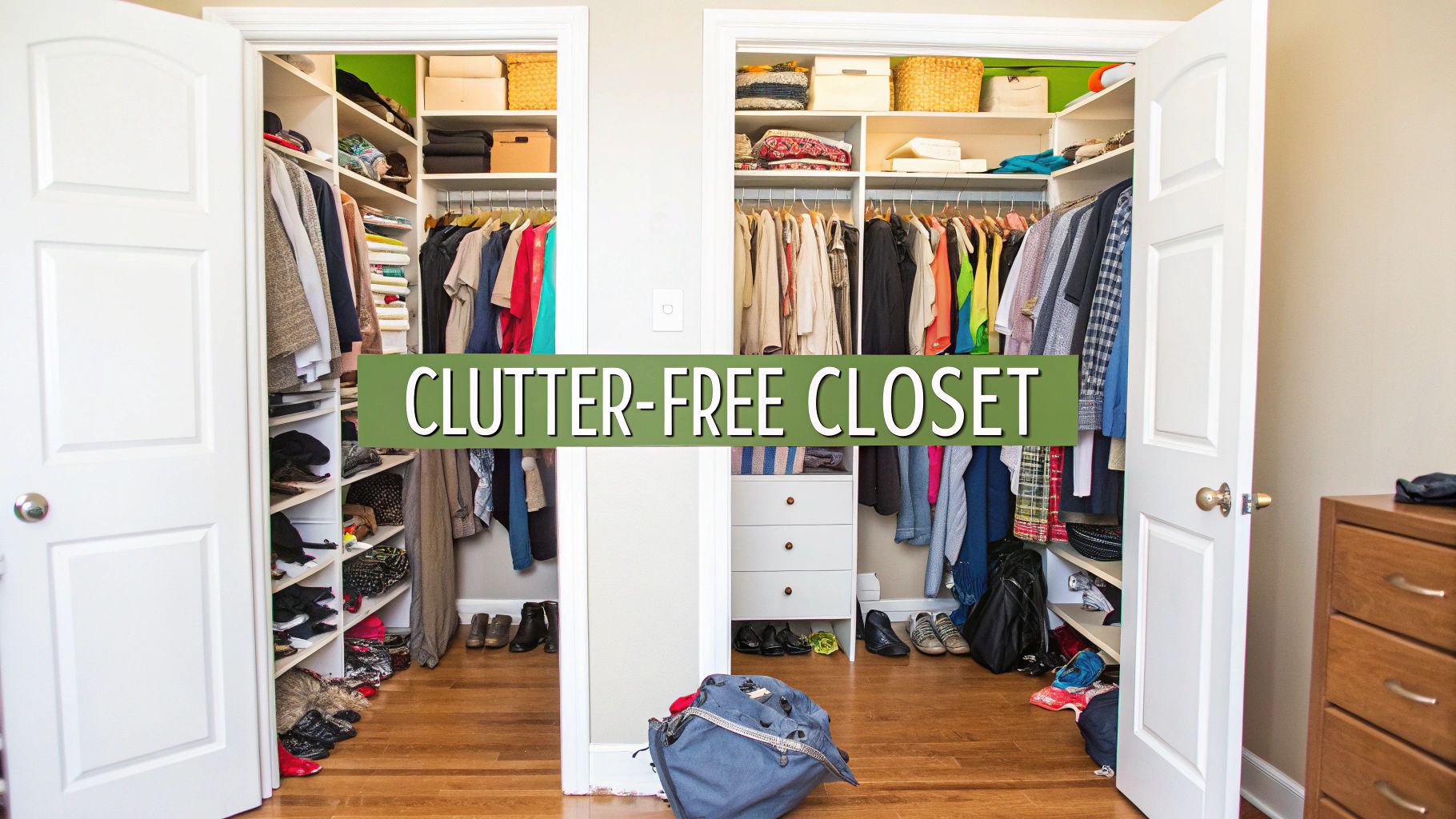
We've all been there: the morning scramble through a mountain of clothes, the frustration of finding a favorite sweater wrinkled and forgotten, and that nagging feeling that your own space is working against you. This guide is here to flip that script. We're going to reframe organization not as a dreaded chore, but as a genuine opportunity to create a calmer, more efficient start to your day.
This is about so much more than just tidying up. It’s about building an intentional system where everything has a home, making your routine feel effortless. Picture a closet where you can see every piece you own in a single glance. Getting dressed becomes inspiring again, not a stressful scavenger hunt.
Building a System That Lasts
Real, lasting closet organization doesn't happen by accident—it's designed with purpose. The secret is moving past temporary fixes and building a sustainable structure that works for you. You have to look at your closet as a complete ecosystem and understand how all the parts fit together. A great place to start is by exploring a personalized approach to home organization to get the foundational principles right.
I’ll walk you through the same practical, step-by-step approach professional organizers use to make sure you conquer the clutter for good.
Here's what we'll cover:
- Taking stock of your wardrobe to figure out what you actually own and need.
- Mapping out a smart layout that makes the most of every last inch.
- Picking the right tools (like hangers and bins) to solve your specific storage headaches.
- Creating simple habits to keep your new, organized closet looking great.
This guide is a real-world roadmap for transforming any closet—from a tiny apartment reach-in to a sprawling walk-in—into a space that feels both functional and peaceful. It’s about turning a point of stress into a source of calm.
It doesn’t matter if you're wrestling with a small space or just feel completely overwhelmed by the sheer volume of stuff. The core principles are the same. By the time you're done here, you won’t just have a cleaner closet; you’ll have a clear plan and the confidence to keep it that way.
First Things First: Assess Your Space and Declutter with Purpose
Before you even think about buying a new closet organizer, you have to get a clear, honest picture of your starting point. I’ve seen it time and time again: people jump straight to buying solutions without understanding their space or their wardrobe, and it almost always leads to frustration. The first real step is taking stock of what you actually own and the space you have to work with.
Think of this part as creating a clean slate. It’s not just about tidying up; it's about making deliberate choices that will define the kind of organization system you truly need. Skipping this groundwork is a common mistake that leads to new organizers not fitting the clothes—or the closet itself.

Master the Four-Box Method
Let's be honest, decluttering can feel completely overwhelming. A structured approach makes all the difference. This is where the four-box method comes in—it’s a simple, straightforward technique to help you make decisions about every single item you own. Just grab four boxes or clear four distinct piles on the floor and label them:
- Keep: These are your go-to items. You love them, you wear them regularly, and they fit you perfectly right now. They’re the foundation of your newly organized closet.
- Donate: This box is for clothes that are still in good shape but just don't serve you anymore. Maybe your style has evolved, they no longer fit, or you simply never reach for them.
- Store: Think seasonal. This is where you’ll put heavy winter coats, bulky sweaters, or summer-only gear. It’s also a good spot for sentimental pieces you can't bear to part with but don't need taking up prime closet real estate.
- Discard: This pile is for anything stained, damaged beyond repair, or just too worn out to donate. Be ruthless here; holding onto irreparable items is how clutter takes over.
This method forces you to handle each item and make a call, which is a great way to avoid that "I'll deal with this later" pile that never seems to go away. For a deeper dive, our guide on how to declutter your closet has even more expert tips to get you started.
Taking the time to declutter properly is the single most impactful thing you can do for your closet. An effective closet storage organizer can only manage the items you choose to keep; it can't make decisions for you.
Get to Know Your Real Inventory
Once you've sorted everything, it's time to really look at your 'Keep' pile. This isn't just a random assortment of clothes; it's your personal inventory, and it holds the key to the kind of storage you actually need.
Start categorizing. Do you have 30 bulky sweaters but only five dress shirts? That’s a huge clue that you need more shelving or deep drawers, not just a long hanging rod. On the flip side, a wardrobe packed with dresses, blazers, and blouses tells you that maximizing rod space—maybe with a double-hang system—should be your priority. Group all your pants, shirts, and skirts together to see the true volume of each category.
This analytical step is crucial. The closet organizer market is growing rapidly because more people are realizing that a generic setup doesn't work. With many people living in smaller homes, especially in urban areas, smart storage isn't just a nice-to-have; it's a necessity for a functional, stress-free living space.
Measure Twice, Organize Once
With your decluttered inventory in front of you, the final prep step is to measure your physical space. Don't just eyeball it. Grab a tape measure and get precise numbers—it will save you a world of headaches later.
Key Measurements to Take:
- Width: Measure from one side wall to the other at the back of the closet.
- Depth: Measure from the back wall to the inside of the door frame.
- Height: Get the full height from the floor to the ceiling.
- Obstacles: Make a note of any existing shelves, rods, or weird quirks like sloped ceilings or outlets, and measure their location and size.
These measurements are your blueprint. They tell you exactly which closet storage organizers will fit and how you can configure them. Knowing these details prevents that sinking feeling of ordering the perfect system, only to find it’s a couple of inches too wide. This groundwork ensures your path to an organized closet is built on strategy, not guesswork.
Designing Your Ideal Closet Layout
Okay, the hard part is over. Your closet is cleared out, and you've got your measurements. Now comes the fun part: playing closet architect. This is where you get to create a layout that's built around your life and your wardrobe, making your daily routine feel a whole lot smoother.
A great closet layout isn't about cramming as much as possible into a small space. It's about creating a system that feels intuitive and makes getting dressed effortless. Forget the one-size-fits-all templates; we're designing a space that's truly yours.
Embrace the Power of Zoning
One of the best tricks in closet organization is zoning. It's just a fancy word for creating dedicated "neighborhoods" in your closet for different parts of your life. By grouping similar items together, you stop the frantic morning search and create a logical flow.
Think about your week. What do you reach for most often? Start there.
- Work Attire: Put all your blazers, blouses, and work pants in one prime, easy-to-reach spot.
- Casual Wear: Give your jeans, t-shirts, and weekend sweaters their own dedicated section.
- Workout Gear: Group all your activewear so you can grab it and go without a second thought.
- Special Occasions: That formal dress or suit? It doesn't need front-row real estate. Tuck these items into a less-accessed corner.
This simple shift transforms your closet from a chaotic mess into your personal wardrobe command center. If you want to dive even deeper, our full guide on how to design a closet has even more strategic tips.
Maximize Every Vertical Inch
Look up. Now look down. See all that empty space above your closet rod and below your hanging clothes? That's wasted potential. Planning to use that vertical real estate is the secret to doubling your storage without knocking down a wall.
The easiest win here is installing double-hang rods. This simple addition instantly creates a second tier of hanging space, perfect for shirts, skirts, and folded trousers. It's a total game-changer, especially in smaller reach-in closets.
And what about that top shelf you can barely reach? Don't let it become a wasteland. It's the perfect spot for off-season storage. Pack away bulky winter coats or summer dresses in labeled bins. This keeps them protected and frees up prime space for the clothes you're wearing now. As you map things out, you can even find inspiration from smart alcove storage ideas to make the most of every little nook.
The goal is to make your closet work smarter, not harder. A great layout means less time searching and more time living. It ensures the items you use most are always within easy reach.
Sketch Your Vision
Before you buy a single hanger or shelf, grab a piece of paper and a pencil. Seriously. Sketching out your plan is a non-negotiable step. You don’t need to be an artist—a simple line drawing will do.
Map out where your zones will be. Draw in your double-hang rods, your shelves, and any drawers you're considering. This quick exercise is surprisingly effective at catching potential problems before they happen, like realizing a drawer won't be able to open all the way or that your bins are too wide for a shelf. It’s your chance to test-drive the layout and make sure it’s both practical and efficient.
Choosing the Right Closet Storage Organizer Tools
Okay, you've decluttered your wardrobe and have a solid plan for your closet's layout. Now for the fun part: picking the tools that bring it all to life. This is where your strategy gets real. Choosing the right closet storage organizer isn't about buying the most expensive system out there; it's about finding smart, specific tools that solve your storage headaches and squeeze every last inch of potential out of your space.
The demand for smarter home organization is exploding. As more of us live in smaller spaces, innovative closet organizers are becoming essential. This is about finding the right tools to create a functional system tailored to your life.
Specialized Hangers: The Secret Weapon of Organization
Standard plastic hangers get the job done, but they’re not doing you any favors when it comes to saving space. Specialized hangers, on the other hand, are designed to fix specific problems, from bulky pants to slippery tank tops. They can literally multiply your storage capacity without you having to knock down a single wall.
Think about this common scenario: a closet rod jammed with ten pairs of jeans, each on its own clunky hanger. That’s a lot of wasted real estate. A single MORALVE vertical pant hanger can hold five pairs in the same amount of space as one traditional hanger, instantly freeing up 80% of that rod space. It’s a simple change with a massive impact.
This little decision tree can help you figure out your closet's main purpose—is it for hanging clothes or shelving other items? Your answer will point you toward the right kind of organizers.
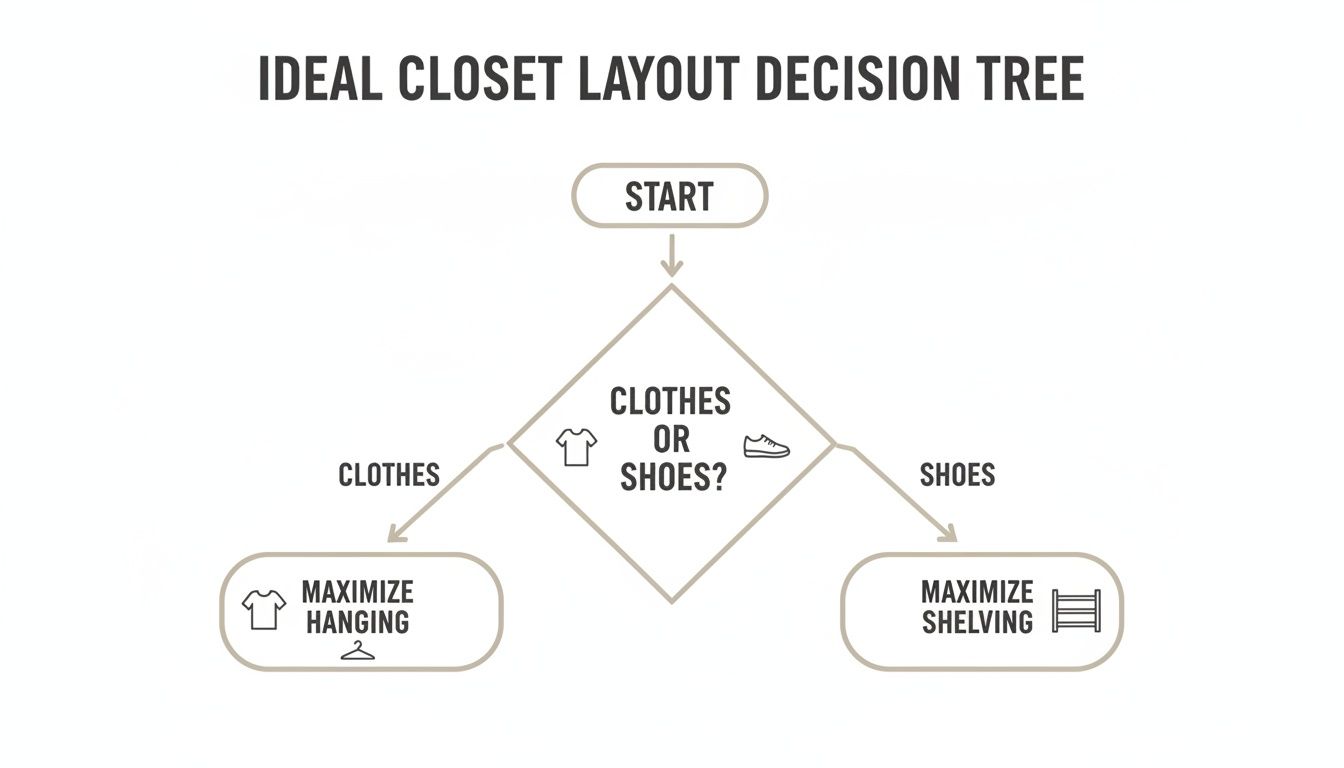
This helps you put your money where it matters most, ensuring you get tools that actually support the wardrobe you own.
Matching the Organizer to the Item
Not all clothes are the same, so why would we use the same hanger for everything? Using the right tool for the job is about more than just tidiness—it prevents damage, keeps your clothes visible, and makes getting ready in the morning so much smoother. It's time to ditch the one-size-fits-all approach.
Here’s how to solve some of the most frustrating storage challenges with the right gear:
- For Pants and Jeans: Traditional hangers either leave weird creases or can't handle the weight of heavy denim. Vertical pant hangers are a game-changer. They let you stack multiple pairs neatly, saving a ton of rod space while keeping your pants wrinkle-free and easy to grab.
- For Skirts: The worst thing is finding hanger marks on your favorite skirt because the clips were too harsh. The solution is to find skirt hangers with adjustable, cushioned clips. This lets you hang a delicate silk skirt just as securely as a heavy wool one without leaving a trace.
- For Tank Tops and Camisoles: We’ve all been there—these slippery little things always end up in a pile on the floor. A dedicated tank top hanger, with its multiple hooks or loops, is the answer. It can hold a dozen tops in one go, finally keeping them organized and off the ground.
The right closet storage organizer isn't just about storage—it's about preservation. By using tools designed for specific garments, you protect your clothing investment and make every item easier to find and wear.
Your Personal Buyer's Guide
With so many options, picking the best closet organizer systems can feel a bit overwhelming. I've put together this quick comparison to act as your personal buyer's guide, helping you match the perfect product to your specific storage problem.
Choosing Your Space-Saving Solution
This table compares key products to help you choose the best closet storage organizer for your specific needs, from pants to tank tops.
| Organizer Type | Best For | Key Benefit | Ideal Scenario |
|---|---|---|---|
| Vertical Pant Hangers | Jeans, trousers, slacks | Maximizes vertical space; holds multiple pairs on one hanger. | You have a large collection of pants and limited horizontal rod space. |
| Skirt Hangers | Skirts of all fabrics and styles | Prevents creases and marks with adjustable, cushioned clips. | Your wardrobe includes delicate or structured skirts you want to keep pristine. |
| Tank Top Hangers | Camisoles, tank tops, slips | Consolidates slippery items onto a single, secure hanger. | You're tired of finding your tank tops in a heap on the closet floor. |
| Slim Velvet Hangers | Blouses, dresses, shirts | Prevents slipping and has a thin profile to save space. | You want a uniform, streamlined look while maximizing hanging capacity. |
This breakdown should help you make smarter choices based on the clothes you actually own. Instead of buying a generic "closet in a box," you're hand-picking the tools that will build a closet that truly works for you.
Putting It All Together: Your New Closet Awaits
You've done the hard work—the decluttering, the planning, and picking out the perfect organizers. Now for the fun part: bringing your vision to life. This is where all that effort pays off, turning that once-chaotic space into a closet that actually works for you, not against you. The real transformation happens when you start building a system that fits seamlessly into your daily routine.
Before you jump in, a little prep work can save you a ton of headaches. Grab your basic tools—a tape measure, a level, a drill or screwdriver, and maybe a small step ladder. Make sure to clear the area around your closet so you have plenty of room to move without tripping over boxes or piles of clothes.
A Smooth and Steady Installation
The secret to a frustration-free setup is to work methodically. Always start with the big, foundational pieces of your new closet storage organizer system. If you're adding new shelving or closet rods, get those installed first. They create the core structure you'll build everything else around.
Once the main hardware is secure, you can start bringing in the specialized organizers. For example, if you have drawer units or shoe racks that sit on the floor, slide those into place next. Following a logical order like this means you won't be trying to awkwardly install a shelf over a mountain of hangers. It just makes the whole process smoother.
Making the New System Work for You
With everything installed, it's time to hang up your clothes. But don't just toss everything back in randomly. This is your chance to build new, smarter habits that will keep your closet looking amazing for years to come.
As you start placing your items, try incorporating these tried-and-true techniques:
- Fold your sweaters, don't hang them. This is a big one. Hanging heavy knits will stretch them out and create those dreaded "shoulder bumps." Fold them neatly on a shelf to keep them in perfect shape.
- Organize by how often you wear things. Your go-to pieces should be front and center, right at eye level. That fancy suit you only break out twice a year? It can be tucked away in a less prominent spot. This simple change saves you from hunting for your favorites every morning.
- Color-code your wardrobe. Grouping your clothes by color isn't just for looks—though it does look great! It gives you a quick visual inventory, making it so much faster to find what you're looking for and pull an outfit together. Honestly, the sense of calm it brings to a busy morning is a game-changer.
An organized closet is about more than just aesthetics; it’s about how it makes you feel. When you turn a source of daily stress into a peaceful, functional space, that positive feeling can set the tone for your entire day.
The "Before and After" Effect: From Clutter to Calm
Take a moment to remember what your closet looked like before. A tangled mess of clothes, shoes without a mate, and so much wasted space. Now, look at what you’ve created. Every item has its place. Your pants are hanging neatly on a single vertical hanger, your skirts are clipped and crease-free, and your favorite tops are all visible and easy to grab.
This isn't just a cosmetic fix; it's a genuine upgrade to your home and your daily life. The minutes you used to waste searching for an outfit can now be spent sipping your coffee. The low-grade stress of living with clutter is replaced by the quiet satisfaction of an orderly space. That's the real power of a great closet storage organizer system—it gives you back your time, your space, and a little piece of mind, every single day.
Keeping Your Closet Organized for the Long Haul
Getting your closet organized feels amazing, but the real win is keeping it that way. You've done the hard part—the planning, the decluttering, the installing of your shiny new closet storage organizer system. Now, the final piece of the puzzle is building a few simple habits that make maintenance practically effortless.
This isn't about being perfect. It's about creating a sustainable routine that stops the clutter from creeping back in. You’ve already given every item a home; now it’s just a matter of making sure everything gets back where it belongs.
Create Simple Rules You Can Actually Stick With
To prevent a future clutter avalanche, you need a few ground rules. The single most effective one I’ve seen is the "one in, one out" policy. Every time a new shirt or pair of shoes comes into your life, an old one has to go. This one habit is your best line of defense against the slow, steady accumulation that got you into this mess in the first place.
Another great rule of thumb is the 10-minute tidy-up. Before bed, just take a couple of minutes to put away the clothes you tried on or wore that day. This simple action single-handedly prevents the return of the dreaded "clothes chair" and lets you wake up to a calm, orderly space.
The Magic of the Five-Minute Weekly Reset
When it comes to staying organized, consistency beats intensity every time. You don't need to block out hours every weekend for a massive reorganization. Instead, just schedule a quick, five-minute reset once a week. I like to do mine on Sunday evening to start the week fresh.
Here’s what that quick reset looks like:
- Round up the stragglers: Grab that jacket from the back of the chair or those shoes by the door and put them away.
- Straighten up: Quickly refold that messy stack of t-shirts or straighten the sweaters on the shelf.
- Clear the floor: Make sure the closet floor is completely clear of any stray items.
This brief, consistent check-in is what stops a tiny mess from snowballing into a huge project. It’s the difference between minor upkeep and finding yourself right back at square one six months from now.
Do a Seasonal Refresh
Your wardrobe changes with the seasons, and your closet should, too. Twice a year, set aside an hour for a quick closet refresh. This is the perfect time to rotate your clothes—move those bulky winter coats to a less accessible spot and bring your breezy summer dresses to the front.
This seasonal swap is also a great opportunity for a mini-declutter. As you're handling each piece, ask yourself if you still love it and if you actually wore it last season. This regular check-in makes sure your closet only holds clothes you genuinely value, which makes staying organized feel almost second nature.
Your Top Closet Organization Questions, Answered
Taking on a closet overhaul always brings up a few questions. Trust me, I've heard them all. Getting these sorted out is the key to building a system that actually sticks. Let's tackle some of the most common ones I hear from people who are ready to get organized for good.
What’s the Best Way to Tackle a Small Closet?
When you're short on space, you have to think vertically. That's the secret. Most people just use the main hanging rod and forget about all the prime real estate above and below it.
A double-hang rod is a game-changer—it instantly creates a second tier for shirts, skirts, or folded pants. I also swear by over-the-door organizers for corralling shoes and accessories. But honestly, the most impactful thing you can do is a serious declutter. The less you have, the easier it is to organize, period.
How Often Should I Really Be Decluttering My Wardrobe?
Think maintenance, not marathon. A massive clean-out is great to do once or twice a year, especially when you're switching your clothes over for the season.
For the day-to-day, the "one in, one out" rule is your best friend. Anytime a new piece of clothing comes into your closet, an old one has to leave. Pair that with a quick 10-minute "reset" each weekend to put things back where they belong, and you'll keep the clutter from ever piling up again.
Do I Need an Expensive, Custom Closet System?
Absolutely not. The best closet system is the one that solves your problems, fits your space, and works with your budget. You can get incredible results by piecing together smart, affordable solutions that are targeted to your specific needs.
Don't get caught up in the idea that a higher price tag means better organization. Focus on functional tools that work for you—things like vertical hangers, simple drawer dividers, or basic shelving. Solving your actual storage headaches is where the real value is.
Ready to see what the right tools can do for your space? Take a look at the MORALVE collection of space-saving solutions and start building the organized, stress-free closet you deserve. Find your perfect organizer at https://moralve.com.
Leave a comment