
Design a Closet: Create a Stylish, Organized Space

Before you even think about picking out fancy shelves or new hangers, the most critical first step to design a closet is understanding what needs to go inside it. A truly great closet design isn't built on a Pinterest fantasy; it's built around the reality of your wardrobe. This initial organization groundwork is what makes the difference between a pretty space and a space that actually helps you stay organized every single day.
Start with a Realistic Wardrobe Audit
I've seen it a hundred times: people get excited and rush out to buy bins and organizers without a clear plan. The result? A closet that looks organized but doesn't actually fit their stuff. You end up with a system that fights you instead of helping you.
That’s why we start with a "wardrobe audit." Think of it as the foundation of your entire closet organization strategy. You're taking a detailed inventory of everything you own to make sure every design choice—from shelf height to rod length—is based on solid data, not guesswork.
Categorize and Conquer Your Collection
First things first: you have to take everything out. And I mean everything. Lay it all out on your bed or floor and start making piles based on category. This is the only way to get a true visual of the sheer volume you're dealing with and begin the organization process.
Your piles might look something like this:
- Tops: T-shirts, blouses, sweaters, tank tops
- Bottoms: Jeans, trousers, skirts, shorts
- Dresses & Jumpsuits: Casual sundresses, formal gowns, etc.
- Outerwear: Bulky winter coats, light jackets, blazers
- Accessories: Scarves, belts, hats, bags
- Footwear: Heels, boots, sneakers, sandals
As you sort, patterns for a better organization system will emerge immediately. You might realize you have an avalanche of t-shirts but only a handful of dress pants, or a shoe collection that could rival a small store. This is exactly the kind of insight you need to decide how much hanging space you'll need versus shelving or drawers.
This is also the perfect time for a ruthless clear-out. If you need a little guidance on what to keep, toss, or donate, check out our complete guide on how to declutter your closet.
From Piles to Purposeful Data
Once your clothes are sorted, it’s time to get specific. This doesn't have to be complicated—a simple count of the items in each category is all you need. Knowing you have 30 blouses that need to be hung versus 10 bulky sweaters that can be folded directly tells you how to balance rod space with shelving for optimal organization.
Here’s a great pro tip: measure the linear space your hanging clothes currently take up. Bunch all your hanging items together on the rod, press them gently so they're compact but not smashed, and measure the width. That number is your bare-minimum requirement for hanging space. It’s a simple step that can prevent you from designing a closet with one short rod when what you really need is a full double-hang system.
A closet designed around a hypothetical, "ideal" wardrobe will fail you every day. The most functional and satisfying closets are designed around the clothes you actually own and wear right now.
It’s no surprise that home organization has become such a huge movement. There’s deep satisfaction in creating a space that just works. The global market for closet organizers reflects this, valued at USD 4,033.3 million in 2025 and projected to soar to USD 8,529.7 million by 2035. We all crave that feeling of minimalist, well-ordered living.
Once you’ve done this audit, you'll have a clear, honest picture of your storage needs. This is the foundation that separates a frustrating, messy closet from a space that makes getting dressed feel calm and effortless. With this crucial data in hand, you're ready for the fun part: planning the layout.
Map Out a Smart Layout with Storage Zones
Now that you have a clear picture of what you own, you can design a highly organized layout. This is the fun part—translating that inventory into a physical blueprint for a closet that genuinely works for you. The aim here is to design a space that feels less like a jumbled storage unit and more like a personal boutique, where everything has its own logical spot.
The most effective way I've found to do this is through storage zoning. It’s a simple but game-changing concept for closet organization: you divide your closet into distinct areas based on what you wear and how often you wear it. Think of it like city planning for your wardrobe, ensuring your most-used items are in prime, downtown locations while the less-frequented pieces have a home in the suburbs.
The "Prime Real Estate" Principle
Look at your closet and think about accessibility. The space right in front of you—roughly between your eye level and your waist—is your "prime real estate." It's the easiest to see and reach, so it should be exclusively for the clothes you wear all the time.
For most of us, that means daily-wear shirts, pants, and favorite sweaters. Putting these items front and center makes getting ready in the morning feel smooth and effortless instead of a frantic search. Anything you wear less than once a week, like formalwear or out-of-season clothing, gets moved to the higher shelves or the back of the closet.
A well-zoned closet works on instinct. You shouldn't have to hunt for something; the layout should naturally guide you right to it. This saves you a surprising amount of time and mental energy every single day.
Creating Your Core Storage Zones
The real power of zoning is in grouping similar items together in a way that aligns with your daily routine. This simple approach is what turns closet chaos into a predictable, easy-to-manage organization system.
Here are the four essential zones to map out in your closet design:
- The Everyday Zone: This is your prime real estate, reserved for the work shirts, go-to jeans, and comfy tops you’re always reaching for. Double-hanging rods are a fantastic organization tool here, instantly creating two separate, easy-to-browse tiers for tops and bottoms.
- The Long-Hang Zone: Every closet needs a dedicated spot for items that can't be folded or hung on a short rod. This is home for your dresses, long coats, and jumpsuits. When planning your layout, look into solutions like maximizing space with hanging rod cabinets, which are great for keeping these longer garments protected and wrinkle-free.
- The Folded & Boxed Zone: Shelving is your best friend for bulky sweaters and denim that can get stretched out on hangers. This zone is also the perfect place for bins holding workout clothes, pajamas, or accessories. For more ideas, check out these different shelving ideas for closets to see what might work for your space.
- The Accessory & Shoe Zone: Don't let shoes, belts, and scarves become an afterthought pile on the floor. Give them their own home with angled shoe shelves, clear stackable boxes, or drawers with dividers for ultimate organization.
This visual shows the simple, foundational process that precedes mapping out your closet zones, moving from decluttering to inventory and measurement.

The key takeaway here is that a truly successful layout is built on the hard data you gathered from your wardrobe audit.
Sketching It All Out
Once you have your zones figured out, it's time to put pencil to paper (or use a simple design app). A basic sketch of your closet's dimensions is all you need to get started. Begin allocating space for each zone based on the numbers from your inventory.
If your audit showed that 60% of your wardrobe is hanging items, then it’s a no-brainer—60% of your new layout should feature hanging rods. If you discovered you have a massive shoe collection, make sure shoe storage is a prominent feature, not just squeezed in at the end.
This sketch is just your first draft, so don't be afraid to change it. You might realize a set of drawers is more practical than deep shelves, or that adding another short rod just for skirts makes more sense. This is the process that will help you create a truly personalized organization system that finally puts an end to the closet chaos.
Master Vertical Space in Small Closets
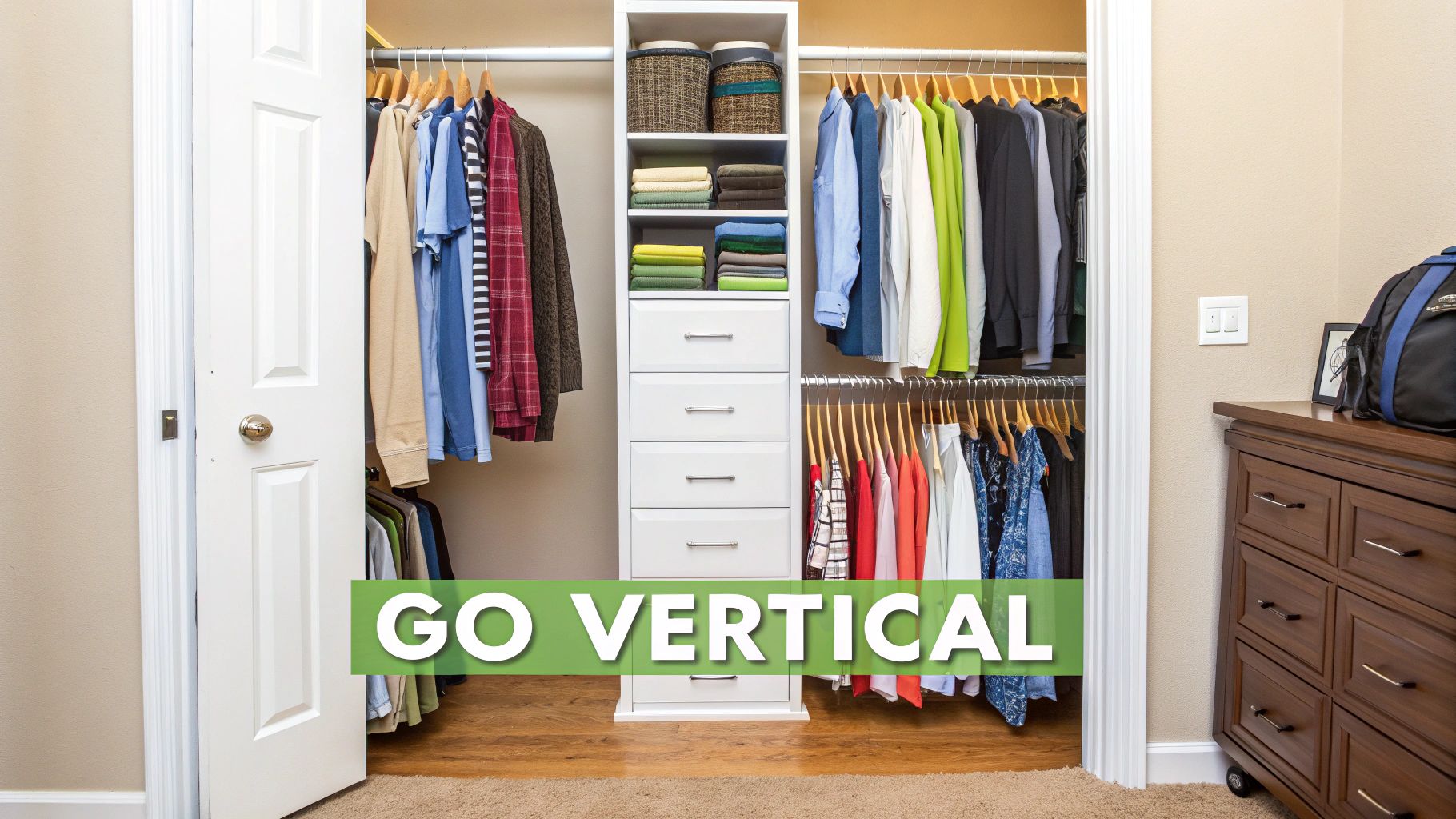
When you're designing a closet, especially a small one, the most powerful organization trick is to stop thinking horizontally and start looking up. Limited floor space doesn't have to mean limited storage. The real secret to making a small closet feel twice its size is to master its vertical real estate—all that untapped space between the top shelf and the ceiling, and even the back of your door.
This isn't just a clever trick; it's a core principle of good closet organization. The global market for closet organizers is booming, expected to jump from $7.64 billion to $8.25 billion in just one year. Why the surge? Urbanization is a huge driver. With over 56% of the world’s population now in cities, small apartments with tiny closets are the norm, demanding smarter ways to organize our stuff. You can dive deeper into these trends over at einpresswire.com.
Transform Your Hanging Space
Your closet rod is usually the first thing to get jammed, but it also holds the most potential for a vertical organization upgrade. Think about it: a traditional hanger uses a ton of horizontal space for just one item. This is where specialized, space-saving hangers become your new best friends.
Tiered pant hangers, for instance, are a complete game-changer. Instead of lining up five pairs of pants side-by-side, a product like MORALVE’s Pant Hangers lets you hang them vertically in the same space as a single hanger. Just like that, you've freed up a huge chunk of your rod for other things like jackets or dresses. It's a simple swap that can literally multiply your hanging capacity by five.
The same idea works for tops. Cascading or "waterfall" hangers let you hook multiple hangers together in a vertical chain, which is perfect for grouping tank tops, blouses, or even entire outfits while taking up a fraction of the space.
The goal isn't just to cram more stuff in; it's to build a system where you can actually see and get to everything. Vertical storage tools do both, turning a single, crowded layer of clothes into multiple, easy-to-scan tiers.
Beyond the Rod: More Vertical Solutions
Maximizing vertical space goes way beyond your hanging rod. Every bit of blank wall, every open shelf, and the back of your door are all organization opportunities waiting to be used.
-
Over-the-Door Organizers: Never let your door be dead space. A hanging shoe organizer can hold so much more than shoes—use the pockets for belts, scarves, rolled-up t-shirts, or clutches. It’s an incredibly easy way to add a ton of storage without drilling a single hole.
-
Tall, Narrow Shelving Units: If you have a little floor space to spare, resist the temptation to fill it with a wide, bulky dresser. Go for a tall, slender shelving tower instead. It draws the eye upward and gives you multiple levels for folded sweaters, jeans, or bins, all while keeping the floor feeling more open.
-
Stackable Bins and Boxes: Clear, stackable containers are your best friend for that top shelf. They let you safely stack items all the way to the ceiling, turning that hard-to-reach "dead zone" into a perfect home for seasonal items like winter hats, gloves, or swimsuits. Being clear means you can see what’s inside without pulling everything down.
A Real-World Vertical Makeover
Picture a standard reach-in closet: one rod, one shelf above it, and shoes piled on the floor. It feels chaotic and cramped, right?
Now, let’s apply these vertical organization strategies. First, we swap out all the chunky plastic hangers for slim, cascading ones, which instantly creates visual breathing room. We put all the pants on tiered hangers, shrinking them down to one small section of the rod.
Next, we add a narrow shelving unit on one side, running from floor to ceiling. This becomes the new home for all the folded sweaters and jeans that were once in a messy pile. Up on the top shelf, we use clear stackable boxes for off-season accessories. And finally, an over-the-door organizer now has all the shoes neatly contained and off the floor.
The result is a closet whose capacity has practically doubled. Everything is easy to find, and the space feels organized and intentional. That’s the power of thinking vertically. If you’re looking for more tips, our guide on how to make a small closet bigger has even more ideas.
Choose Your Materials and Lighting
A truly great closet is more than just a clever layout and some fancy hangers. The materials you pick and the lighting you install are what elevate it from a basic storage box into a space you genuinely enjoy using every day. These aren't just finishing touches; they're fundamental parts of the design that affect the mood, durability, and overall feel of your finished closet.
Think about it: the right finish can make a cramped closet feel more spacious, while your material choice determines how well the system holds up over time. But lighting? That’s the real game-changer. Good lighting is key to organization—it ensures no corner stays dark and no favorite sweater gets lost in the shadows.
Selecting the Right Closet System Materials
When you're designing a closet from scratch, the material you choose for shelves, drawers, and dividers is one of the biggest decisions you'll face. It has a huge impact on both the final cost and how long your setup will last. Each option has its own pros and cons.
-
Laminate/Melamine: This is easily the most popular choice, and for good reason—it’s very budget-friendly. It’s essentially a particleboard core wrapped in a tough, heat-sealed layer. It’s great at resisting scratches and stains, is a breeze to clean, and comes in tons of finishes, from classic white to surprisingly realistic wood grains.
-
Solid Wood: If you’re after a timeless, high-end feel, you can’t beat solid wood. It's incredibly strong, feels substantial, and can be stained or painted to match any decor. The downside? It's the priciest option and can sometimes warp in humid climates if it's not sealed properly.
-
Plywood: I often recommend high-quality plywood as a fantastic middle ground. It offers excellent strength and stability—often better than solid wood at resisting warping. It has a clean, modern look and can be painted or finished with a clear coat to show off the natural layers of wood along the edges.
-
Wire Shelving: As the most economical choice, wire systems are lightweight, super easy to install, and provide fantastic air circulation. However, small items can fall through the gaps, and it just doesn't have that polished, built-in look you get from other materials.
To really get a feel for how your choices will look together, I highly recommend creating a material board for interior design. It's a simple step that lets you see how textures and colors interact before you commit to buying anything.
The Power of Good Lighting
I can't stress this enough: lighting is the most overlooked part of closet design, yet it makes the biggest difference in how you use the space every single day. A single, dim bulb hanging from the ceiling just won't cut it. It creates shadows and makes it impossible to tell navy from black on a dark morning.
A well-lit closet feels less like a storage space and more like a personal boutique. You can see everything clearly, which not only makes finding things easier but also motivates you to keep it tidy. The best part is that adding great lighting is more affordable and accessible than ever.
A well-organized closet isn't just about what you store; it's about how you see it. Upgrading your lighting is the fastest way to upgrade your entire closet experience, making it feel more functional and luxurious.
Here are a few modern lighting solutions that can completely transform your space:
-
Integrated LED Strip Lighting: This is the gold standard for a reason. These thin, adhesive strips can be tucked under shelves, run along vertical panels, or even placed inside drawers. They cast an even, shadow-free glow that beautifully illuminates your entire wardrobe.
-
Motion-Activated Puck Lights: For a simple, no-wiring-needed fix, battery-powered LED puck lights are brilliant. Just stick them to the ceiling or under a shelf, and they pop on the moment you open the door, giving you targeted light exactly where you need it.
-
Backlit Hanging Rods: Want a touch of drama with your function? A lighted closet rod has an LED strip embedded right into it, shining down directly onto your clothes. This makes it incredibly easy to see every shirt, jacket, and dress, even when your closet is packed full.
Designing a Closet for Shared and Family Spaces
Creating an organized closet for one person can be a puzzle, but designing one for two or more often feels like a high-stakes negotiation. A shared closet is more than just a place to store clothes; it's a space you both interact with every single day. When it's poorly planned, it can become a source of constant, low-level friction. The secret to closet organization harmony is to stop thinking about sharing space and start thinking about dividing it strategically.
This isn't about just drawing a line down the middle. It’s about accepting that two people almost never have identical wardrobes. One of you might have a dozen long dresses and boots, while the other has a mountain of t-shirts and sneakers. A truly successful shared closet honors these differences, giving each person an organization system that actually works for them.
Establish Clear Zones and Boundaries
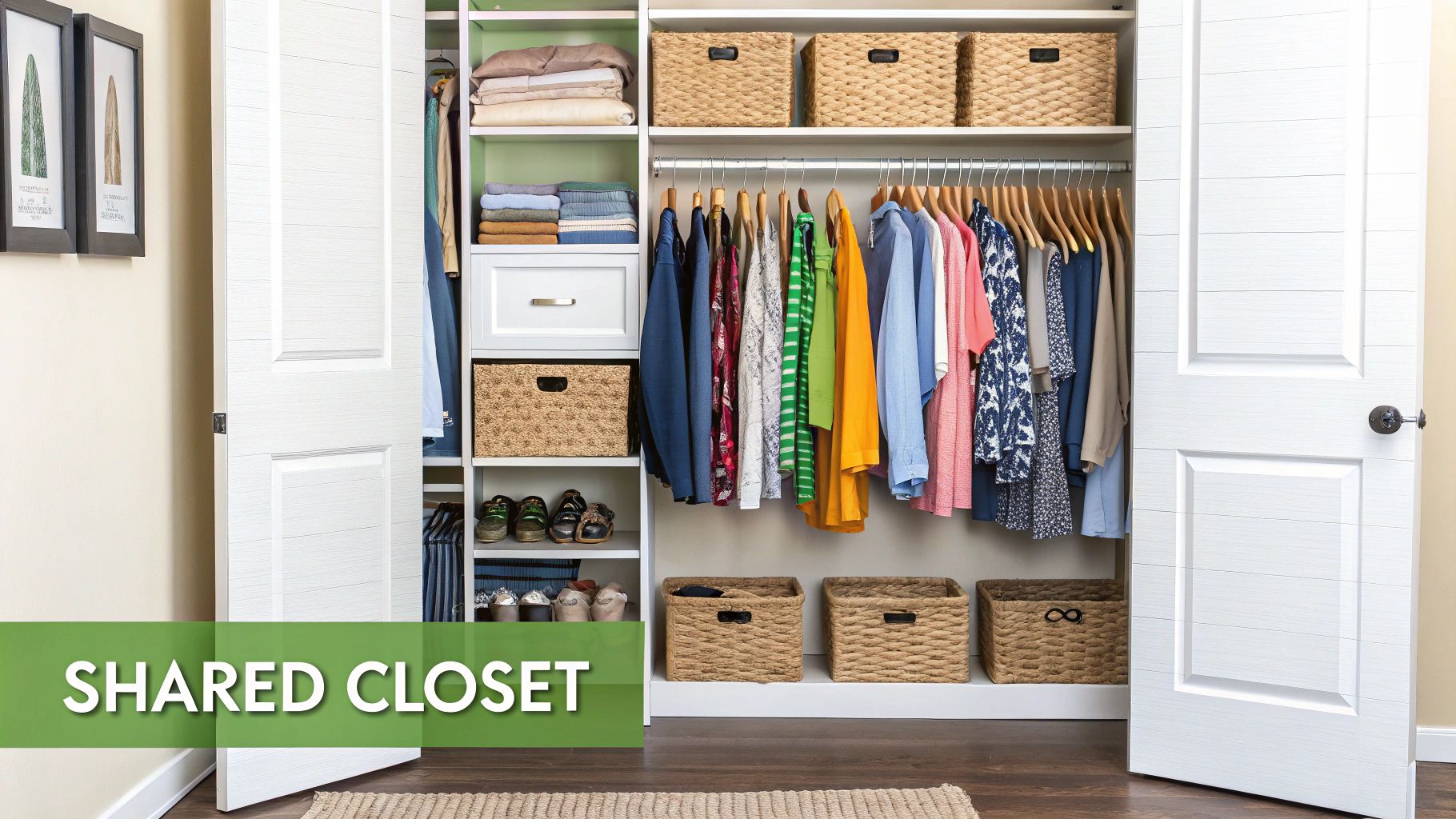
The first step toward closet peace? Create distinct, personal zones. Even in a tiny reach-in closet, this is totally achievable. A vertical tower of shelves or a bank of drawers placed in the center can act as a natural divider, creating an undeniable "yours" and "mine."
This simple division gives each person autonomy over their area. One partner can organize their shelves by color, while the other can stack everything in neat piles—no arguments needed. By giving everyone their own defined space, you put an end to the frustrating creep of one person's stuff into the other's territory.
Accommodate Different Wardrobes
With your zones established, it's time to customize each one for maximum organization. Don't fall into the trap of a perfectly symmetrical "his and hers" layout. Instead, sit down together and do a quick wardrobe audit for each person to figure out their real storage needs.
-
Analyze Hanging Needs: Does one person need more long-hang space for dresses and coats? Give them the side of the closet that can accommodate a taller rod. Is the other person's wardrobe mostly shirts and pants? A double-hang rod system will be a game-changer for them.
-
Compare Folded vs. Hanging Items: If someone has a huge sweater collection, their zone should be packed with deep, easy-to-access shelving. If the other prefers to hang almost everything, their section should maximize rod space above all else.
-
Address Shoe Storage: One partner’s minimalist shoe collection might fit neatly on a few shelves. The other's more extensive footwear family might need a dedicated shoe rack or even an over-the-door organizer.
This tailored approach means neither of you feels like you're trying to cram your clothes into a system built for someone else. This desire for personalization is driving a massive trend; the custom closet market was valued at USD 33,693.16 million and is on track to nearly double by 2035. It's clear that families, especially in North America, are opting for tailored systems. You can read more about these impressive market insights and their growth drivers to see just how popular this is becoming.
Design a Closet for Growing Kids
When you're designing a child's closet, you have to think about today and tomorrow. A system that’s perfect for a five-year-old will be completely useless for a teenager. The key to long-term organization is one word: adjustability.
Look for closet systems with components you can easily move and reconfigure. This lets you lower hanging rods so a small child can reach their own clothes, which is a great way to foster independence. As they grow taller, you can simply raise the rods and adjust the shelves to fit bigger clothes and different needs. It saves you from having to do a complete overhaul every few years.
A great family closet isn't a static design; it's a flexible framework that adapts as your family's needs change. Prioritizing adjustable components from the start is the smartest long-term investment you can make.
Maximize Every Inch with Smart Tools
In any shared closet, space is gold. This is where smart organizational tools become non-negotiable. Space-saving hangers are especially vital because they let each person get the most out of their zone without spilling over into their partner’s.
For instance, using MORALVE’s Pant Hangers can condense a whole section of trousers into a tiny footprint, immediately freeing up rod space for other things. In the same way, cascading clothing hangers can corral a large collection of shirts or tank tops. These tools give each person more breathing room within their own territory—the key to maintaining long-term harmony.
Putting It All Together: Your Top Closet Design Questions Answered
As you start to finalize your closet organization plan, you'll probably have a few nagging questions. It's completely normal. Getting these last few details right is what separates a decent closet from a truly functional one. Let's tackle the questions I hear most often from clients to make sure you're moving forward with total confidence.
What’s the Magic Number for Closet Depth?
For any closet with hanging clothes, the absolute minimum depth you should work with is 24 inches (61 cm). I can't stress this enough. This is the industry standard for a reason—it gives your clothes on a hanger enough room to breathe without getting squished against the back wall or caught in the door. It’s a small detail that makes a huge difference in keeping your clothes organized and wrinkle-free.
Now, if you have a section dedicated just to shelving for folded items like sweaters or denim, you have more flexibility. For those areas, you can easily get away with a depth of 12 to 15 inches.
How Much Hanging Space Do I Actually Need?
A good starting point is to aim for roughly 48 inches of rod space per person. This isn't just one long rod; it's a total measurement you can divide between single-hang areas for dresses and coats and double-hang sections for shirts and pants.
For a more precise estimate that's tailored to your wardrobe, here’s a pro tip: grab 10 hanging garments, push them together on the rod, and measure the width. This little exercise gives you a personal "inches-per-item" average. Just multiply that by the number of clothes you need to hang, and you'll have a much more accurate target.
Drawers vs. Shelves: Which Is Better?
Honestly, the best answer is both. A truly well-organized closet uses drawers and shelves for what they do best, because they serve very different functions. It's all about creating a system.
- Drawers are your best friend for smaller, foldable items that tend to become a jumbled mess on an open shelf. We're talking socks, underwear, workout clothes, and accessories.
- Open shelves are perfect for bulkier things like sweaters, sweatshirts, and neat stacks of jeans. They give you that "retail boutique" feel where you can see your options at a glance without digging around.
The real secret to great closet organization is a smart mix of drawers and shelving. When everything has a designated, logical place, keeping it tidy becomes almost effortless.
How Can I Get a High-End Closet on a Tight Budget?
A beautiful, functional closet doesn't have to break the bank. The very first step costs nothing: a ruthless decluttering session. After that, a fresh coat of bright paint can instantly make the space feel bigger and cleaner.
You can find plenty of affordable wire or laminate shelving systems at any big-box hardware store. But if you want the most bang for your buck, invest in quality organizers. Strategic tools like high-quality, space-saving hangers can literally double your hanging capacity for a tiny fraction of what a custom closet system would cost. It’s the single biggest impact you can make for the least amount of money.
Ready to conquer the clutter and reclaim your space? The innovative, space-saving hangers from MORALVE are the perfect first step in your closet transformation. Explore our collection and discover just how easy it is to create a wardrobe you'll love.
Leave a comment