

Your Guide to a Perfect Closet with Drop Front Shoe Box Organization

Tired of digging through a mountain of mismatched shoes at the bottom of your closet every morning? There's a better way. A drop-front shoe box is a clear, stackable container with a brilliant twist: a front-opening door. This simple feature is a game-changer for closet organization, letting you grab any pair you want without moving a single thing.
It's the secret to turning footwear chaos into a clean, accessible, and beautifully organized closet.
The Secret to a Clutter-Free Closet
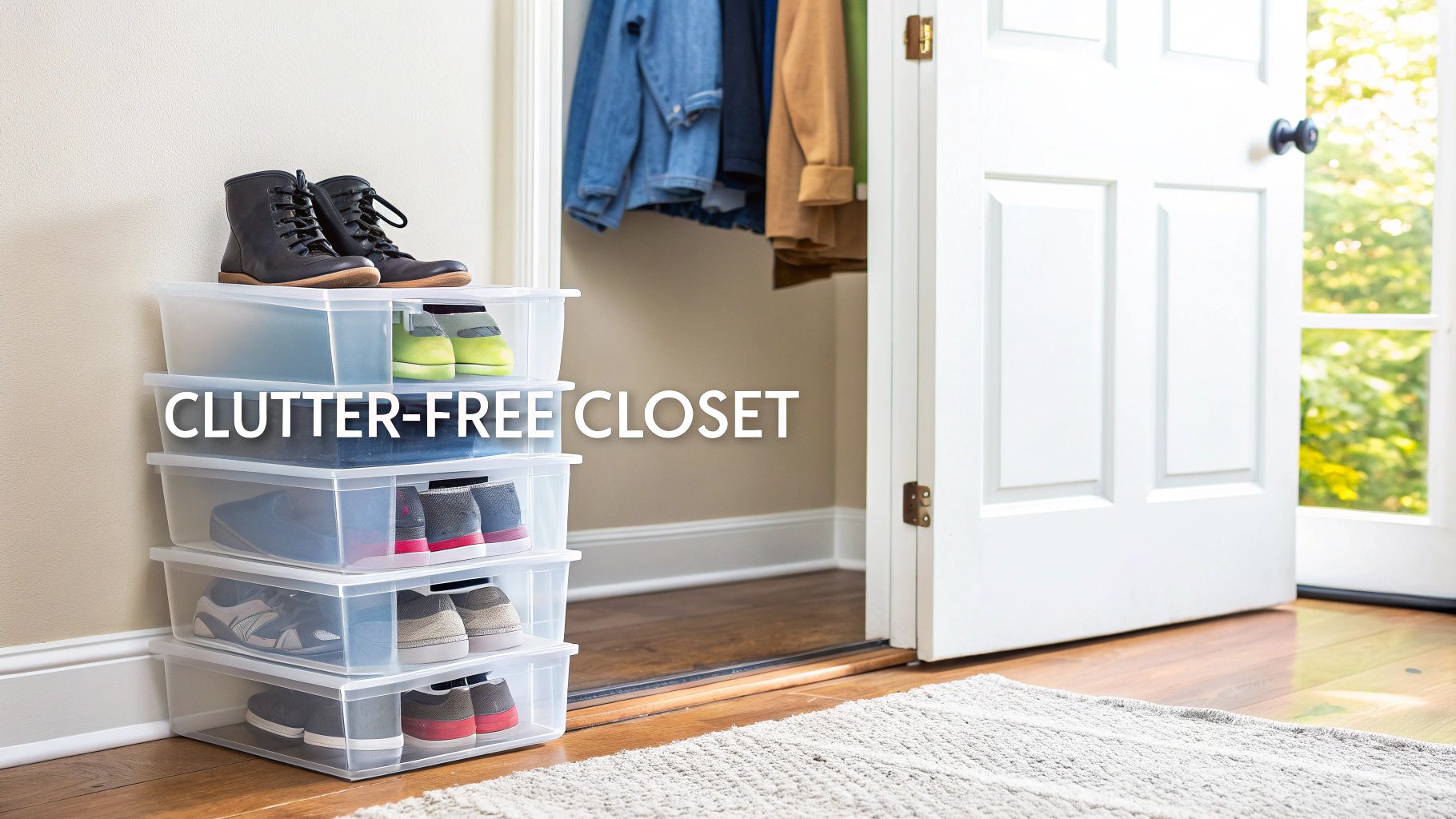
Let's be honest, traditional shoe storage is the enemy of an organized closet. Original cardboard boxes get flimsy and crushed, creating a messy pile. Stacking them means the pair you want is always at the very bottom, forcing you to topple the whole stack. It’s an exercise in frustration that undermines any attempt at keeping your closet tidy.
Think of it this way: a normal stack of shoeboxes is like a library where you have to take down an entire shelf of books just to get to one. A drop-front shoe box system, on the other hand, transforms your closet floor into a modern, functional shoe library. Everything is visible, protected, and instantly accessible.
Transforming Chaos into Order
This ingenious design is built around a few core features that work in harmony to bring much-needed calm to your closet space. Once you see how they come together, you’ll understand why they are a cornerstone of effective home organization. For more tips on getting started, check out our complete guide on how to declutter your closet.
Here are the key components that make drop-front shoe boxes so effective for closet organization:
- The Clear, Hinged Door: This is the magic. It lets you see your entire collection at a glance and access any pair with a simple pull. No more guessing games or messy searching.
- A Sturdy, Stackable Design: These boxes are built to lock together securely. You can confidently build a vertical "shoe wall," freeing up precious closet floor space for other items.
- Built-in Ventilation: Small, strategically placed holes allow air to circulate. This is crucial for preventing musty odors and keeping your shoes—and your closet—fresh.
An organized closet is more than just a tidy space—it's a tool that simplifies your daily routine. When everything is visible and easy to grab, you save time, reduce stress, and can actually enjoy the wardrobe you've built.
These features make it clear that a drop-front shoe box isn't just a container. It's a foundational system for transforming a cluttered closet into a functional and elegant part of your home.
Drop Front Shoe Box Features at a Glance
To quickly see why these organizers are so popular for closets, here’s a breakdown of their main features and the direct benefits they bring to your space.
| Feature | Benefit for Your Closet |
|---|---|
| Front-Opening Door | Access any pair of shoes instantly without unstacking anything. |
| Clear Visibility | See your entire collection at once, making it easy to pick the perfect pair. |
| Secure Stacking | Maximize vertical space by creating a stable "shoe wall." |
| Ventilation Holes | Prevent odor buildup and keep your footwear and closet fresh. |
| Dust Protection | Keep your shoes clean, scuff-free, and in pristine condition. |
These elements work together to create a storage solution that is as practical as it is visually appealing, making closet organization a simple and satisfying task.
Why Organized Closets Run on Drop-Front Boxes
Let's be honest, a messy closet is a frustrating way to start the day. Rummaging through a mountain of shoes on the floor just to find a matching pair isn't just inefficient; it's a daily dose of stress. This common headache points to a bigger problem: traditional storage methods make shoes inaccessible and unprotected. That's exactly where drop-front shoe boxes come in, transforming floor chaos into a clean, functional closet system.
The real magic is how they unlock your closet's vertical space. Instead of having shoes spread out across the entire floor, you can stack them neatly against a wall. Suddenly, you've created an organized shoe library and freed up a ton of real estate for laundry hampers, other storage, or just some much-needed breathing room. The entire closet feels bigger, calmer, and more deliberate.
Protecting Your Footwear Investment
Good closet organization is about more than just looking tidy—it’s about protecting your belongings. A drop-front shoe box system acts like a shield for your shoes. Your footwear is an investment, after all, and leaving it in a jumbled pile is a surefire way to get scuffs, dust, and crushing damage.
Think of it this way: an organized closet doesn't just look better; it preserves the value and lifespan of your wardrobe. Giving each pair its own protected space ensures they stay in great condition, ready to go whenever you are.
Each box is like a personal locker for a pair of shoes, keeping them safe from the daily grind of a busy closet. This is especially important for more delicate materials like suede, leather, or satin that can be easily ruined. With a proper setup, you're helping your favorite pairs last for years.
The Rise of Smart Storage
The shift toward smarter home organization isn't just a passing trend—it's a real change in how we view our living spaces. As homes get cozier, we're all looking for clever ways to maximize every square foot, especially in our closets. The numbers back this up, too.
The global market for drop-front stackable shoe boxes recently hit USD 1.12 billion, showing just how many people are looking for better storage. This boom highlights a growing need for closet efficiency, especially as real estate costs climb. You can dive deeper into this market trend over at dataintelo.com.
Creating That "Wow" Factor with a Shoe Wall
Finally, you can't ignore the visual appeal. A neatly arranged stack of clear boxes creates a stunning "shoe wall" that gives your closet the feel of a high-end boutique. But it's not just for show; it genuinely simplifies your daily routine.
When you can see your entire collection in a single glance, picking out the right pair becomes a breeze. It turns a chore into a quick, satisfying moment of choice. The clean, uniform lines bring a sense of order and peace, making your closet a space you can actually feel proud of.
How To Choose The Perfect Drop Front Shoe Box
Picking the right drop front shoe box is your first real step toward a closet you'll actually love. It’s easy to get overwhelmed by all the options, but if you focus on a few key things, you'll end up with a system that fits your shoes, your space, and your style. Let's break down the three big things to consider: size, material, and the design of the box itself.
First things first, get the sizing right. This is non-negotiable for a well-organized closet. Before you even think about clicking "buy," grab a tape measure and find the dimensions of your tallest and longest pairs of shoes. Your standard sneakers, loafers, and flats will likely fit just fine in a regular box. But for high-tops, stilettos, or larger sizes (usually men's 11 and up), you'll definitely need to look for extra-large versions to avoid cramming them in.
Finding The Right Fit And Material
The material of your shoe box is a bigger deal than you might think—it impacts everything from how clearly you can see your shoes to how sturdy your stack will be. Most boxes on the market are made from one of two types of plastic, and each has its pros and cons for closet organization.
- Polypropylene (PP): This is the softer, more flexible plastic. It's a great all-around choice that's budget-friendly and durable enough for the shoes you wear day in and day out.
- Hard Plastic (HIPS): Short for High Impact Polystyrene, this material is much more rigid and usually offers crystal-clear transparency. If you're a collector who wants to show off prized sneakers or designer heels as part of your closet's decor, this is the way to go.
Think about the look you're going for, too. The way you display your shoes says a lot. It's interesting to see how professional shoe brands use specific product photography equipment for shoe brands just to get the perfect shot. You can apply that same mindset to your closet.
Your closet should be a reflection of your personal style. Choosing a frame color—whether it’s a bright white, a sleek black, or a minimalist clear—helps tie the entire space together and turns simple storage into a design feature.
This decision tree can help you figure out what's most important to you, whether that's saving space, protecting your investment, or just making your closet look incredible.
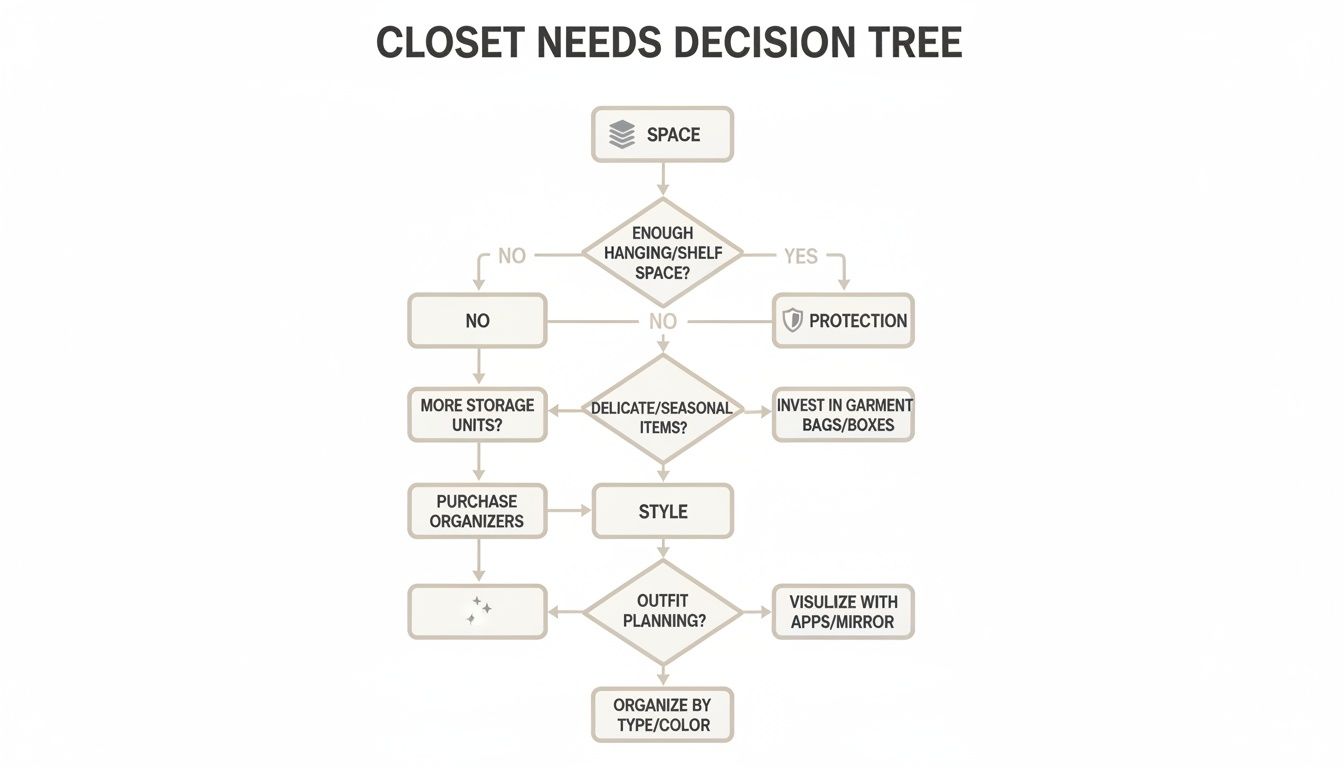
As the graphic shows, what you want to achieve with your closet—maximizing every inch, protecting valuable shoes, or creating a specific aesthetic—will point you toward the right box features.
Comparing Drop Front Shoe Box Materials And Sizes
To make things even clearer, here’s a quick comparison to help you choose the right shoe boxes for your specific shoe types and organization goals.
| Factor | Option A | Option B | Best For |
|---|---|---|---|
| Material | Polypropylene (PP) | Hard Plastic (HIPS) | Collectors or those prioritizing a premium display. |
| Transparency | Often slightly frosted or semi-clear. | Typically crystal-clear for perfect viewing. | Displaying high-end sneakers, heels, and prized pairs. |
| Durability | Flexible and resistant to cracking. | Rigid and strong, but can be more brittle. | Stacking tall shoe walls that need maximum stability. |
| Size | Standard (fits up to Men's 11) | Extra-Large (fits up to Men's 14) | Larger shoe sizes, high-tops, boots, and stilettos. |
| Cost | More budget-friendly. | A more premium investment. | Those organizing a large collection on a budget. |
Ultimately, many people end up using a mix of both. You might use standard PP boxes for your everyday shoes and a few XL HIPS boxes for your special-occasion pairs.
Assembly And Stability Considerations
Finally, pay attention to how the boxes are assembled and how they connect. A great drop front shoe box should be simple to put together, but the real magic is in the interlocking design. This is what lets you build a tall, stable stack without worrying about it all coming tumbling down inside your closet.
Solid connection points are the secret to creating that sturdy "shoe wall" you see in pictures. It means that as your collection grows, your organization system can grow right along with it, safely and securely. Taking the time to consider size, material, and stability now will pay off big time when you have a customized shoe storage solution that lasts for years.
A Step-by-Step Guide to Organizing Your Closet
Turning a chaotic closet into a perfectly organized space is one of the most satisfying projects you can tackle. And with a new set of drop-front shoe boxes, you’re already halfway there.
The secret isn’t just buying the boxes; it’s about having a clear process. Let's break down this seemingly huge task into a few simple, manageable steps that will give you immediate and lasting results for your closet.
First things first: The Great Shoe Sort. Before a single box gets built, you have to declutter. Pull every last pair of shoes out of your closet, from under the bed, everywhere—and make three piles: Keep, Donate, and Discard.
Get ruthless. If a pair is worn out, pinches your toes, or hasn't been worn in over a year, it's time for it to go. This initial purge is the most important part of the whole project, because it guarantees you’re only storing shoes you actually love and wear.
Assembling Your New System
With your shoe collection edited down to the essentials, it's time to build their new home. Putting together drop-front shoe boxes is usually pretty simple. For the first one, lay out all the pieces to see how they connect. Most of them just fold and click together.
Here’s a pro tip: set up a mini assembly line. Unfold all the main box bodies first. Then, attach all the back panels. Finally, pop all the front doors on. This batching method is way faster than building each box individually from start to finish. Just make sure you hear that satisfying "click" so you know each connection is secure and ready for stacking.
Strategic Sorting for Daily Ease
Now for the fun part. With your boxes built, you get to decide how to organize your shoes inside them. This is where you can really tailor your closet system to your life. Think about how you get ready in the morning and arrange your collection to make that process completely effortless.
Here are three of the most effective ways to sort shoes in your closet:
- By Frequency of Use: This is the most practical method. Put your everyday go-to shoes—the sneakers by the door, the work flats—right at eye level. The fancy heels or seasonal boots you only wear a few times a year can go on the higher or lower levels.
- By Type: Grouping like with like just makes sense. Create dedicated zones for heels, sandals, boots, and sneakers. It keeps your collection looking clean and makes finding the right type of shoe a breeze.
- By Color: If you want that jaw-dropping, boutique-closet look, arrange your shoes in a color gradient. It's not only gorgeous to look at but also incredibly functional when you're trying to find the perfect shade to match an outfit.
The best organization method is the one you'll actually maintain. Whether you prioritize speed, style, or aesthetics, choose a system that makes sense for your daily routine.
By following these simple steps—purging, assembling, and sorting—you'll transform that messy pile of footwear into a streamlined, accessible, and honestly, beautiful part of your closet.
Creating a Fully Optimized Closet System
A truly organized closet isn't just about having a neat shoe collection; it's a seamless system where every single item has its own place. The real magic happens when you integrate your new drop front shoe box setup with other clever storage solutions. This isn't just tidying up—it's intentional design that creates a closet that genuinely works for you, making the daily ritual of getting ready feel effortless.
At its heart, building a functional closet is all about smart space planning interior design. The idea is to make sure every item has a logical home. This means creating distinct "zones" for different parts of your wardrobe. When you start thinking like a designer, every inch of your closet gets a purpose, from the floor right up to the ceiling.
Establishing Your Closet Zones
First things first: map out your closet's real estate. The floor and lower shelves are the perfect spot for a clean, accessible stack of drop-front shoe boxes. This grounds your closet visually and keeps your footwear both visible and protected. It creates a solid, uniform base that the rest of your organization can build on.
Once your shoes are neatly arranged below, the closet rod above becomes prime territory for your clothes. This is where you can bring in other space-saving tools to really complete the system.
Think of a well-zoned closet like a well-organized kitchen. You keep your pots near the stove and your plates near the dishwasher for a reason. Your closet should work the same way, with your most-used items in the most accessible spots.
This zoning strategy is your best defense against clutter creeping back in, and it makes your daily routine so much smoother.
Combining Vertical and Hanging Storage
The true power of this system comes from pairing vertical shoe storage with efficient hanging storage. While your drop-front shoe boxes have the closet floor covered, space-saving hangers can seriously multiply the capacity of your closet rod.
Here are a few combinations that work wonders for closet efficiency:
- Shoe Boxes + Tiered Pant Hangers: Stack your shoes neatly below while hanging multiple pairs of pants on a single, tiered hanger above. This is a brilliant tactic that frees up both floor and rod space at the same time.
- Shoe Boxes + Slim Velvet Hangers: The sleek, uniform look of slim hangers perfectly complements the clean lines of your shoe boxes. This creates a cohesive, high-end look while also keeping your clothes from slipping onto the floor.
- Shoe Boxes + MORALVE Tank Top Hangers: Don't let smaller garments get lost in the shuffle. Specialized hangers for things like tank tops or camisoles keep them organized and easy to find.
By bringing these elements together, you create a perfectly balanced closet where everything is easy to see and grab. For a more detailed walkthrough on setting this up, check out our guide on how to design a closet from scratch.
Keeping Your Shoe Collection Looking Great
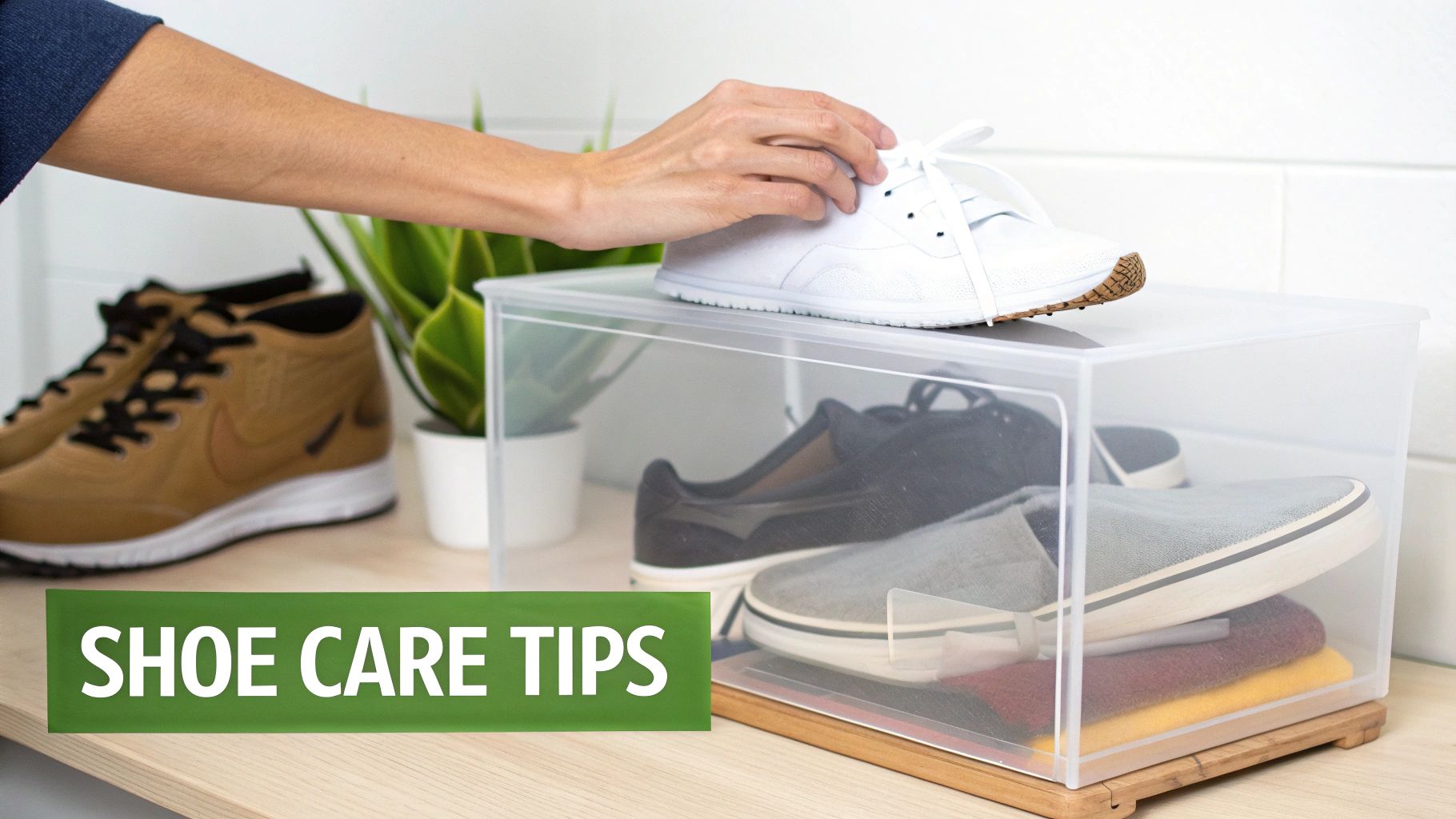
Let's be honest: an organized closet isn't a "one-and-done" project. It's an ongoing habit. To make sure your new system sticks, a little bit of upkeep is all you need. This not only protects your investment in your shoes but also maintains that amazing, tidy closet you worked so hard for.
The good news? Maintaining a stack of drop-front shoe boxes is incredibly easy. To keep them looking crystal-clear, just wipe down the plastic doors and frames with a soft, damp cloth every now and then. A quick dusting is all it takes to prevent buildup and keep your shoe wall looking sharp.
Best Practices for Long-Term Shoe Care
Beyond just cleaning the boxes, what you do before you put your shoes away is what really matters for their longevity. The golden rule for a healthy closet is simple: always store shoes clean and dry. Tossing dirty or damp shoes into a box is a recipe for trapped moisture, which can lead to mildew and funky odors. That completely defeats the purpose of having a protective system in the first place.
While the ventilation holes in drop-front boxes do a great job of promoting airflow and preventing that musty smell, you can take things a step further.
- Cedar Inserts: For your leather dress shoes or boots, slide in some cedar shoe trees. They're fantastic for absorbing any leftover moisture and, just as importantly, helping the shoes hold their proper shape.
- Charcoal Deodorizers: Got a pair of gym sneakers that have seen better days? A small activated charcoal bag tossed inside will work wonders to absorb tough odors.
- A Quick Clean-Up: Before you put any pair away, give them a quick brush-off to knock away loose dirt and debris from the day.
Think of each box as a mini-environment for your shoes. A clean, dry, and well-ventilated space ensures that every pair remains in ready-to-wear condition for years to come.
These small habits make a massive difference in the long run. By taking these extra little steps, you’re not just organizing your footwear—you’re actively preserving your entire closet's freshness and order.
For even more great ideas, check out our detailed guide on how to organize shoes in a closet.
Got Questions About Drop-Front Boxes? We've Got Answers.
Diving into a big closet organization project always brings up a few questions. To help you get started on the right foot, we’ve put together answers to the things people ask most about using a drop-front shoe box system. Getting these details sorted out first will make sure you build the perfect setup from day one.
How High Can You Actually Stack These Things?
This is probably the number one question we hear, and the answer really comes down to quality. You get what you pay for. Sturdy, well-made containers with a solid interlocking design can easily and safely be stacked 10 to 12 units high.
For the most stable setup, just follow a couple of golden rules for your closet. Always put your heaviest shoes (think boots and chunky platforms) in the bottom boxes. And make sure your stack is on a completely flat, level surface. If you're planning on going really high, it's not a bad idea to grab a couple of L-brackets from the hardware store to secure the top of the stack to the wall. It’s a simple step for some extra peace of mind.
Will My High Heels and High-Tops Fit?
This is a big one. After all, not all shoes are the same size. Your standard boxes are usually a perfect home for sneakers, flats, sandals, and loafers. But they can definitely come up short when you're dealing with bulkier footwear, which can throw off your whole closet system.
If you have a collection of stilettos, chunky ankle boots, or high-top sneakers, you'll want to look specifically for boxes labeled "large" or "extra-large." Before you buy anything, take a minute to measure your tallest and longest pairs of shoes, then compare those numbers to the internal dimensions the manufacturer provides. This little bit of prep work saves a lot of headaches later.
Are Drop-Front Shoe Boxes Really Worth the Money?
In a word: absolutely. Especially if you genuinely care about protecting your shoes and creating a closet that actually works for you. Sure, the upfront cost is more than a pile of flimsy cardboard boxes, but the payoff is a long-term solution to closet chaos.
They keep your shoes safe from dust and prevent them from getting crushed. They also give you that instant, at-a-glance view of your collection that saves you a surprising amount of time every single morning. Plus, nothing else maximizes that vertical closet space quite like they do.
This isn't just a niche trend, either. All over the world, people are catching on. The Asia Pacific region, for example, has seen a huge jump in clear shoe box sales, especially in crowded cities where every square inch of closet space matters. Market data even points to a 6.4% compound annual growth rate in that market, driven by people who need smart, stackable storage. You can dig into the numbers and learn more about this market growth on growthmarketreports.com.
Think of them less as a purchase and more as a one-time investment in a permanent solution to closet chaos. They bring order, protection, and a clean aesthetic that you'll appreciate for years to come.
When it comes down to it, they’re a durable, elegant solution that completely elevates your closet organization, making them a fantastic addition to any home.
Ready to take your closet from cluttered to curated? It all starts with having the right tools for the job. At MORALVE, we design innovative organization solutions that help you make the most of every last inch of space.
Explore our collection of space-saving hangers and start building your dream closet today!
Leave a comment