

Easy Closet Organization Ideas to Transform Your Space

Staring into a cluttered closet can feel like a losing battle, and it's a frustration most of us know all too well. But getting that serene, functional space you see in magazines is actually more achievable than you might think. The secret to easy closet organization ideas isn't some complex, expensive system. It’s about three simple things: being ruthless with decluttering, using your vertical space wisely, and making sure every single item has a home.
That’s it. That’s the foundation that turns a chaotic mess into a calm, workable wardrobe.
Your Path to an Effortlessly Organized Closet
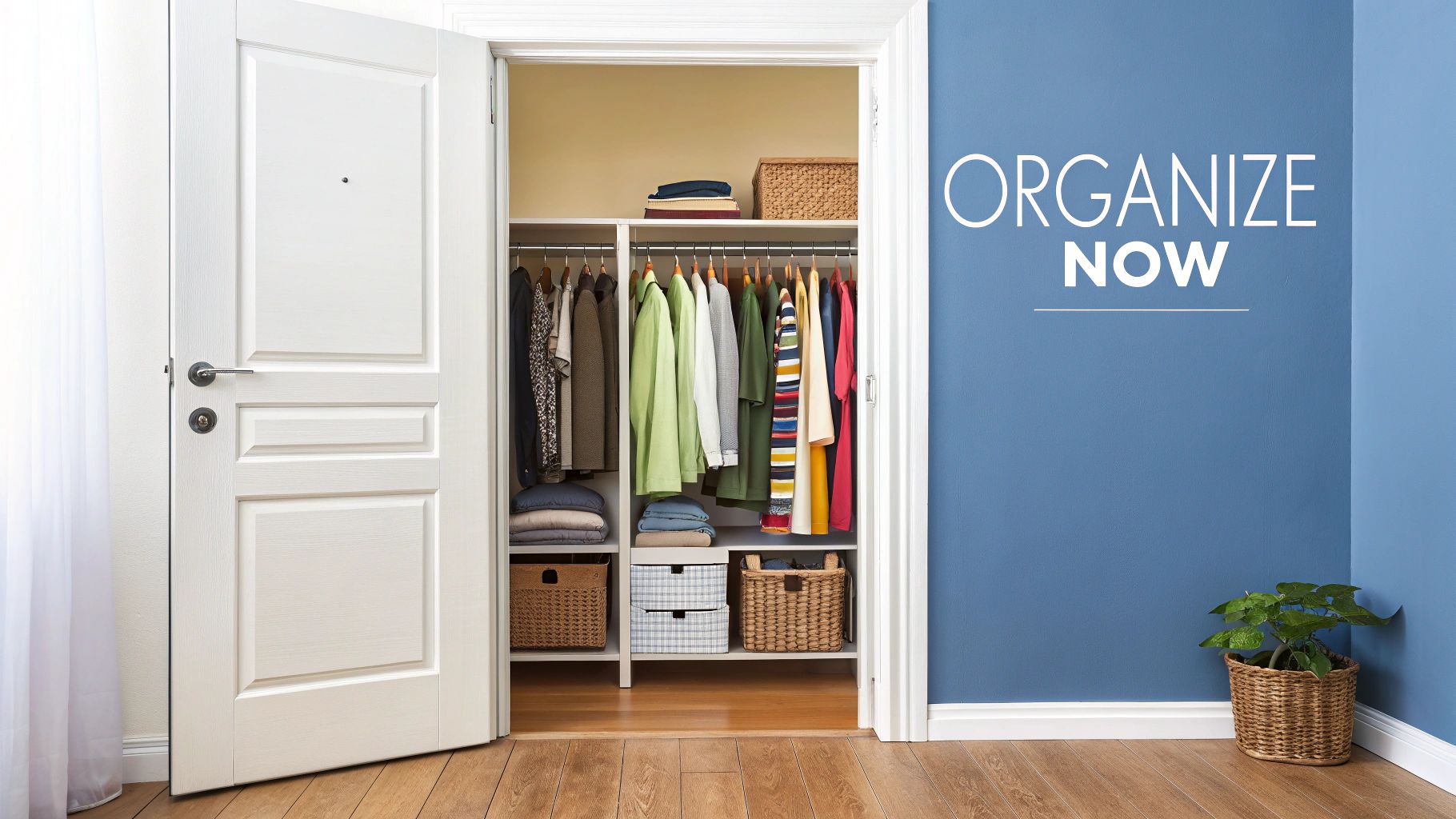
Let's be honest, wrestling with a disorganized closet is just plain draining. You know the drill—you’re digging for that one specific sweater and end up pulling out three things you forgot you even owned. Or you’re trying to jam a drawer shut that’s overflowing with clothes. It’s a frustrating cycle that adds a layer of stress to your morning you just don’t need.
The good news? You don't need a huge budget or a professional organizer to reclaim this space. This guide is all about practical, real-world strategies that work whether you've got a spacious walk-in or a tiny apartment nook.
Setting The Stage For Success
Before you even think about folding methods or buying a single new hanger, the real first step is a mental one. Lasting organization isn't about creating a "perfect" closet that's impossible to maintain. It's about building a functional, sustainable system that genuinely fits your life and makes tidiness feel easy.
This desire for more functional living spaces is more than just a trend. The market for closet organizers was valued at roughly USD 4.03 billion in 2025 and is expected to more than double to USD 8.53 billion by 2035. That's a massive jump, and it shows that more and more people are realizing an organized space helps create a clearer mind. You can dig into more of the data behind this growing market over at Future Market Insights.
The Core Principles Of An Organized Closet
Forget the generic advice you’ve heard a hundred times. We're going to walk through a simple, four-phase framework that actually works. Each phase builds on the one before it, taking you from that initial feeling of being overwhelmed to a system you can actually stick with.
This whole process is built on a few foundational pillars that we'll cover in detail:
- Purging with Purpose: It all starts here. We’ll edit your wardrobe down to the items you actually love and wear. This isn't just about tossing stuff out; it's about curating a collection that feels like you, right now.
- Strategic Storage Solutions: Next, we'll get clever about maximizing every inch of space. This is where you learn how to unlock the hidden potential in your closet, especially by thinking vertically.
- Customized Layouts: No two closets are the same. We’ll look at specific strategies for different setups—from small reach-ins to sprawling family closets—so the advice fits your exact situation.
- Sustainable Habits: Finally, we’ll talk about how to make it last. The goal is to build simple routines that keep the clutter from creeping back in, so you're not doing this all over again in six months.
To make this crystal clear, here’s a quick overview of the game plan.
Your 4-Phase Closet Organization Blueprint
| Phase | Key Action | Goal |
|---|---|---|
| 1. The Great Purge | Edit your wardrobe down to essentials. | Keep only what you love, use, and need. |
| 2. Maximize Space | Implement smart storage solutions. | Give every single item a designated home. |
| 3. Organize & Arrange | Group like items and create zones. | Make finding and putting away items intuitive. |
| 4. Maintain & Refine | Build simple, consistent habits. | Keep the closet tidy with minimal daily effort. |
This blueprint is your roadmap. By tackling the project in this order, you’re setting yourself up for success.
This guide provides a clear path forward. By focusing on decluttering first, then organizing, and finally maintaining, you create a closet that not only looks great but also genuinely simplifies your daily life.
Ultimately, this is about creating a closet that brings you a sense of calm, not chaos. With the right approach, you can build a system that works for you, making it easy to find what you need and even easier to put things away. Let's get started.
Curating Your Wardrobe with Purpose
Before you even think about buying new bins or fancy hangers, the most powerful thing you can do is edit what you already own. An organized closet full of clothes you don’t wear isn’t truly organized—it’s just well-arranged clutter. The real magic happens when you curate a wardrobe that actually works for you.
The point isn't just to toss things out. It's about making deliberate choices that clear up both physical and mental space. That's why understanding the importance of decluttering is the non-negotiable first step toward creating a closet you love.
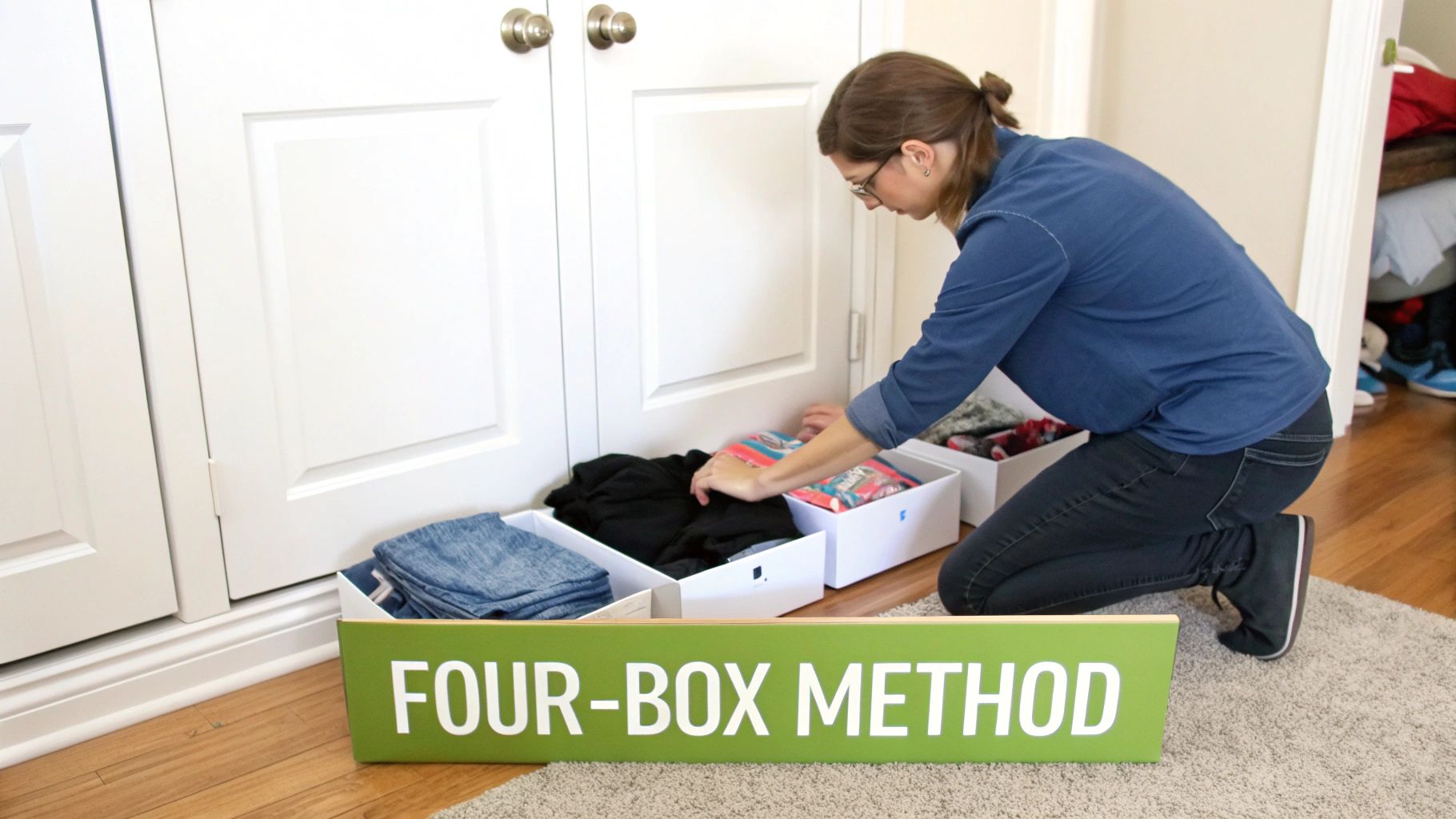
The Four-Box Method
To keep the process from feeling like a monumental task, I always recommend the Four-Box Method. It's simple and incredibly effective. Just get four containers (boxes, bags, or even just designated piles on the floor) and label them: Keep, Donate/Sell, Toss, and Relocate.
As you pull every single item out of your closet, you'll make a quick decision and place it in one of those four categories. This forces you to physically handle each piece and make a call, which stops you from just shuffling things from one side of the closet to the other. It’s one of the most easy closet organization ideas because it gives you a clear, actionable system to follow.
Key Questions To Ask Yourself
As you sort through everything, you have to be honest. It can be tough to let things go, but a functional closet requires a bit of tough love. Hold up each item and ask yourself these questions:
- Does this fit my body right now? We all have those "someday" clothes. The reality is, they often just take up space and create guilt. Dress the body you have today.
- Have I worn this in the last year? Be real. If it hasn't made an appearance in 12 months (with an exception for special occasion wear), it’s probably time to part ways.
- Does this fit my current lifestyle? Maybe you used to work in a formal office but now you're remote. If those blazers are just collecting dust, it might be time to let them go to someone who will actually use them.
This whole exercise is about building a collection of clothes you genuinely feel good in. If you want to dive deeper, our complete guide on how to declutter your closet has even more tips to help you through it.
Making decisive choices about what stays and what goes is the foundation of a truly organized space. It's not about deprivation; it's about making room for the things that bring you joy and confidence.
Letting go can feel emotional—clothes are tied to memories and past versions of ourselves. Acknowledge that, thank the item for its service, and then let it move on. This simple shift in mindset turns a chore into an act of self-care. Once you’re done, you're left with only the pieces that have truly earned their spot in your new space.
Unlocking Hidden Space with Smart Storage Tools
Once you’ve curated your wardrobe down to the pieces you truly love, the real fun begins. Now, we put it all back, but this time, we’re going to be strategic. It's all about using the right tools to make every last inch of your closet work for you—no expensive custom built-ins needed.
This focus on smarter home storage isn't just a fleeting trend. The global market for closet organizers was valued at roughly USD 12.5 billion in 2023 and is expected to climb to nearly USD 19.8 billion by 2032. That's a huge jump, and it tells us that people everywhere are realizing how much a functional, tidy space can improve their daily lives. You can see more on this expanding market at Dataintelo.
Go Vertical with Tiered Hangers
If there’s one secret weapon that delivers the most dramatic results, it’s rethinking your hangers. Those bulky plastic or wire hangers you’ve been using since college? They’re space hogs. Switching to a uniform set of slim hangers will instantly give you back a shocking amount of rod space.
Take tiered hangers, for instance. They are an absolute game-changer for pants and skirts. Instead of hanging five pairs of pants side-by-side, a single tiered hanger lets you store them vertically. Just like that, you've condensed the space of five hangers into one. It’s a simple swap that can make a cramped closet feel twice as big. For a deeper look, check out our guide on how space-saving hangers for clothes can completely transform your closet's capacity.
Embrace the Power of Bins and Dividers
Let's be honest: shelves and drawers often become chaotic dumping grounds for folded clothes and accessories. This is where the magic of clear bins and simple dividers comes in, turning those messy piles into orderly, easy-to-find categories.
The goal is to give every single item a logical, visible home. When you can see what you have, you're far more likely to use it and, more importantly, put it back where it belongs.
When you're looking to really maximize shelf space, consider embracing clear storage bins with lids. These are perfect for things you don’t need every day, like seasonal scarves or special-occasion clutches.
And for your drawers, dividers are non-negotiable. They create a simple grid system that stops socks, underwear, and t-shirts from devolving into one giant, jumbled mess.
Smart Solutions for Different Items
Not everything in your closet should be stored the same way. The key to a truly organized system is matching the right tool to the right item—it's a core part of these easy closet organization ideas.
- Sweaters: Whatever you do, don't hang your heavy knit sweaters. The weight will stretch out the shoulders over time, leaving you with those dreaded hanger bumps. Fold them neatly and stack them on a shelf. To keep the stacks from toppling over, use acrylic shelf dividers.
- Accessories: Over-the-door organizers with clear pockets are fantastic. This is the perfect spot for belts, small handbags, and scarves, keeping them visible and off your precious shelf or floor space.
- Shoes: If your closet floor is disappearing under a pile of shoes, a hanging shoe organizer is your best friend. For shoes you want to protect, clear, drop-front shoe boxes are a great investment. They’re stackable and keep dust away while still letting you see exactly what’s inside.
By bringing these tools into your closet, you're doing more than just tidying up. You're building a functional, intuitive system that makes getting dressed every morning completely effortless.
Making Your Closet Layout Work for You
Let’s be honest, closets are not one-size-fits-all. What works for a spacious walk-in will be a disaster in a tiny apartment closet. That’s why the secret to a genuinely organized space isn't just about buying bins; it's about customizing the layout to fit your life and the closet you actually have.
A functional closet is designed around your habits. Before you start hanging things up, it pays to think about the big picture. For a complete walkthrough on planning a space that works from the ground up, our guide on how to design a closet is a great place to start. It’ll get you thinking about the essentials before you get lost in the details.
Taming the Tiny Apartment Closet
When you’re working with a small closet, every single inch is precious real estate. The biggest mistake I see is wasted vertical space. An easy, game-changing fix? Add a second tension rod below the main one. Just like that, you've doubled your hanging space for shirts, skirts, and pants. It's one of the most effective easy closet organization ideas you can implement in minutes.
And don't overlook the door! An over-the-door shoe organizer is a small-space hero. Forget shoes—use those pockets for belts, scarves, sunglasses, and all the little accessories that end up in a chaotic pile.
This flowchart can help you quickly figure out where to focus your efforts, whether it's reclaiming hanging space or sorting out your drawers.
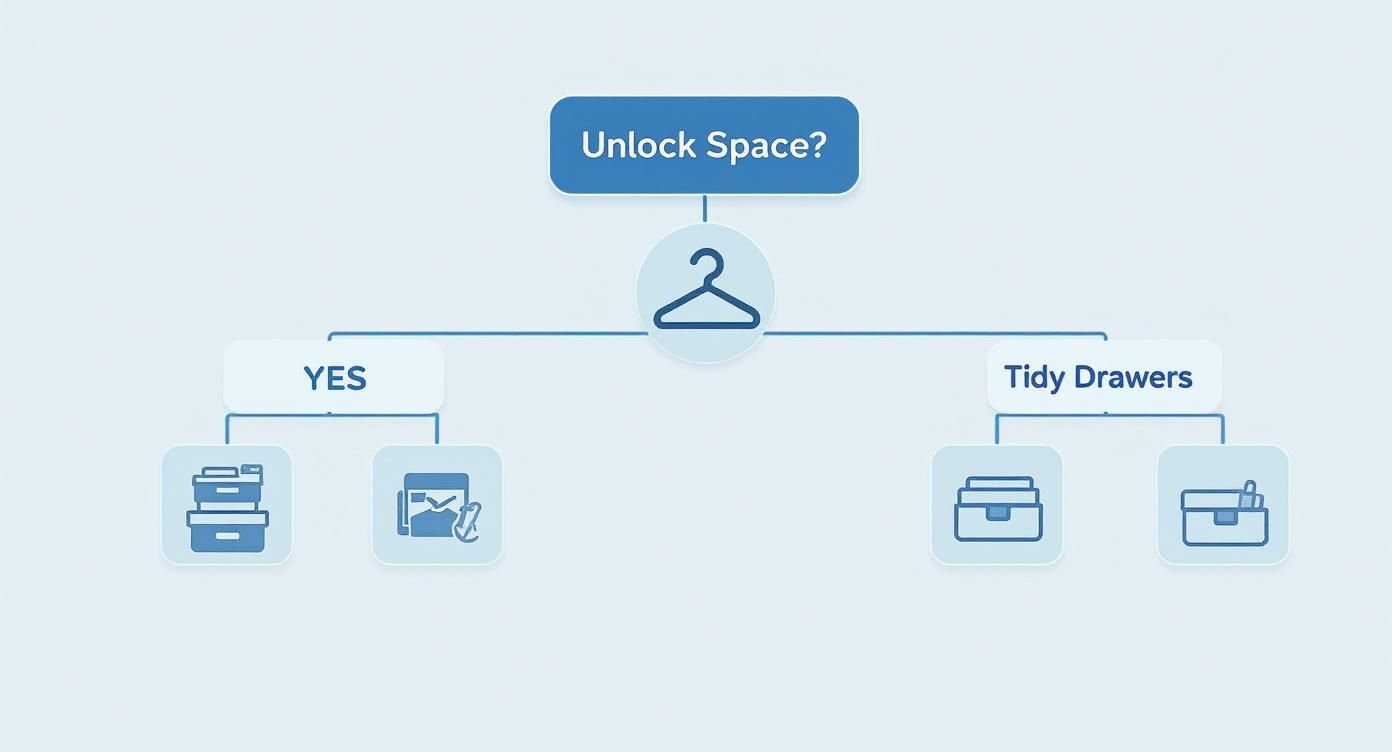
As you can see, once you identify your main goal, the path to a targeted solution becomes much clearer.
Navigating the Shared Closet
Sharing a closet can quickly turn into a battleground if there are no clear boundaries. To keep the peace (and your sanity), the best approach is to create distinct zones. It’s as simple as visually dividing the space right down the middle. You get one side, they get the other. This prevents the slow creep of clothes into each other's territory.
For shelves, pop in some simple shelf dividers to create clear partitions. The same goes for drawers—assign them. This cuts down on daily frustration because everyone knows exactly where their stuff belongs and who’s responsible for which mess.
The key to a happy shared closet isn't more space; it's clear, respected boundaries. When each person has a designated zone, staying tidy becomes a manageable team effort.
Mastering the Seasonal Wardrobe Swap
If you live anywhere with actual seasons, keeping your entire wardrobe in your closet year-round is a recipe for chaos. A seasonal swap-out is non-negotiable. It keeps your closet feeling fresh and functional by only housing what you currently need.
The goal is to store your off-season clothes properly so they’re protected and out of the way.
- Under-Bed Storage: Low-profile fabric bins with clear lids are perfect for this. They slide right under the bed, keeping sweaters and heavy pants dust-free but still within reach.
- Vacuum-Sealed Bags: These are a lifesaver for bulky winter coats and comforters. They can shrink items by up to 75%, meaning you can stash them on a high shelf without sacrificing your entire closet.
Closet Solution Comparison
To help you match the right strategy to your space, I've put together a quick comparison of common closet challenges and the best ways to tackle them.
| Closet Type | Primary Challenge | Top Solution Idea | Key Tool |
|---|---|---|---|
| Small Apartment | Lack of vertical space | Install a second tension rod to double hanging room | Tension Rod |
| Shared Closet | No personal boundaries | Create distinct "zones" for each person | Shelf Dividers |
| Seasonal Wardrobe | Overstuffed with off-season items | Store unused clothing in vacuum-sealed bags | Vacuum-Sealed Bags |
| Kids' Closet | Items are hard to reach | Lower rods and use open, accessible bins | Adjustable Rods |
By picking the right solution for your specific closet type, you’re not just cleaning up—you’re creating a system that makes your daily routine feel a whole lot easier.
Building Habits That Keep Your Closet Organized
So, you’ve done the hard work. You’ve purged, sorted, and created a closet that finally feels right. But let’s be honest, the real victory isn't just getting it organized—it's keeping it that way.
An organized closet is only as good as the daily habits that support it. This is where small, consistent routines make all the difference, turning maintenance from a daunting chore into a series of easy, almost automatic actions. The goal is to stop clutter before it even starts.
It's all about building a simple system that becomes part of your everyday life. This shift toward efficient home management is a big reason why the global closet organizer market was valued at around USD 8.25 billion in early 2025. People are tired of quick fixes and are looking for solutions that last. If you're curious about the industry's growth, you can dive into the full report from Reanin.
The One-In, One-Out Rule
If you adopt only one habit from this guide, make it this one. The "one-in, one-out" rule is brilliantly simple: for every new item you bring home, a similar item has to go.
Bought a new sweater? Great. Now, pick an old one to donate or sell. This isn't about denying yourself new things; it's about being more intentional with your purchases. It forces you to evaluate what you already own and decide what truly earns its place, ensuring your wardrobe evolves without overflowing.
The 10-Minute Weekly Reset
Life gets busy, and things get messy. A shirt ends up on the "chair-drobe," or shoes get kicked off by the door instead of put away. The trick is to tackle this minor drift before it turns into a major disaster.
Set aside just 10 minutes every Sunday evening for a quick closet reset. This isn't a deep clean; it’s a quick-and-dirty tidy-up to put everything back where it belongs.
Here’s what that looks like:
- Hang up any clothes draped over furniture.
- Put away shoes, bags, and belts.
- Straighten out any stacks of folded clothes that look wobbly.
This small time commitment is one of the most effective and easy closet organization ideas you can implement. It’s a simple reset button that prepares your space—and your mind—for the week ahead.
The Twice-Yearly Seasonal Refresh
About twice a year, usually as the weather turns, it's a good idea to schedule a slightly bigger check-in. Think of this as a mini-audit of your wardrobe system.
This is your chance to store off-season items and, more importantly, take a quick look at what you have. Go through your current season's clothes and pull out anything you haven't worn. Did that jacket ever leave the hanger? These are prime candidates for your donation pile.
By building these simple habits into your routine, you’ll find that keeping your closet organized becomes second nature, not a chore you have to dread.
Your Top Closet Questions, Answered
Even with a solid plan, a few nagging questions can bring any closet project to a screeching halt. Getting those sorted out is the key to moving forward and actually getting the job done. Let's tackle some of the most common hurdles I see people run into.
Think of this as a quick-reference guide for those moments you feel stuck. From a tight budget to an even tighter schedule, there’s always a practical way forward.
How Can I Organize My Closet With No Money?
Believe it or not, a zero-dollar budget can be a huge advantage—it forces you to be resourceful. The single most impactful thing you can do costs absolutely nothing: a ruthless decluttering session. Just pulling out everything you don’t wear, need, or love will immediately create breathing room and a sense of order.
Next, it’s time to shop your own home. Old shoeboxes are perfect for creating drawer dividers for socks, underwear, or rolled-up belts. Got a bunch of soda cans? Pop the tabs off and loop one over a hanger’s neck; you’ve just created a hook to hang a second hanger, instantly doubling your space for lightweight tops or camisoles.
The secret to a no-cost organization isn't buying new things; it's about seeing the potential in what you already have. It’s pure ingenuity.
Don’t underestimate the power of a good folding technique, either. Learning to file-fold your shirts and sweaters so they stand upright in a drawer is a game-changer. You can see everything at a glance, and it packs your clothes in much more efficiently than stacking ever could.
What Is The Fastest Way To Organize A Messy Closet?
When you’re staring down a mountain of clothes and only have an hour, you need a high-impact strategy. I call it the "closet blitz." The first rule is non-negotiable: take everything out. And I mean everything. Pile it all on your bed. This gives you a blank canvas and forces you to be intentional about what goes back in.
Now, work fast and trust your gut. Create three piles: Keep, Donate, and Trash. Don't spend more than a few seconds on each item. If it's a "maybe," it's a "no" for now. Once you have your "Keep" pile, hang or fold items by broad category—all pants together, all dresses together. Forget about color-coding for now; the goal is speed and basic order.
Grab any empty bins or baskets you have to quickly wrangle accessories like scarves and belts. The final, crucial step? Bag up the "Donate" and "Trash" piles and get them out of the room immediately—put them by the door or in your car. This provides that satisfying sense of a total reset.
How Do Professional Organizers Arrange Closets?
A good professional organizer starts with a conversation, not a container. They want to understand your daily routine, what you reach for most often, and what drives you crazy about your current setup. Their first hands-on task is always to guide you through the decluttering process, helping you make those tough decisions.
With a streamlined wardrobe, the real design work begins. They categorize everything that’s left—by function, season, or type of clothing. Then, they create dedicated "zones" within the closet. Your everyday work shirts and go-to jeans? They'll be placed at eye-level, right in the prime real estate. Formal wear or out-of-season items get stored up high or down low.
They bring in tools that do the heavy lifting, like a full set of matching slim hangers to instantly create more rod space or clear bins so you can see what’s inside without pulling everything out. The final touch that makes it all stick is labeling. It sounds simple, but labels turn a one-time project into a system you can actually maintain long after they’ve left.
Ready to put these easy closet organization ideas into action with tools built to make the most of your space? The right hangers truly are the foundation of a great closet. See how MORALVE can help you build your dream setup by exploring our space-saving solutions at https://moralve.com.
Leave a comment