

How to Arrange Clothes by Color and Love Your Closet

Opening your closet should feel like a breath of fresh air, not a chore. The secret? Arranging your clothes by color. It’s a simple concept: you group similar items, pick a color flow that works for you—like the classic rainbow or a sleek light-to-dark gradient—and then apply it to each section of your wardrobe. This one change can completely transform a chaotic closet into a visually stunning, incredibly functional space that makes getting dressed every morning faster and, dare I say, fun.
Why a Color-Coded Closet Changes Everything
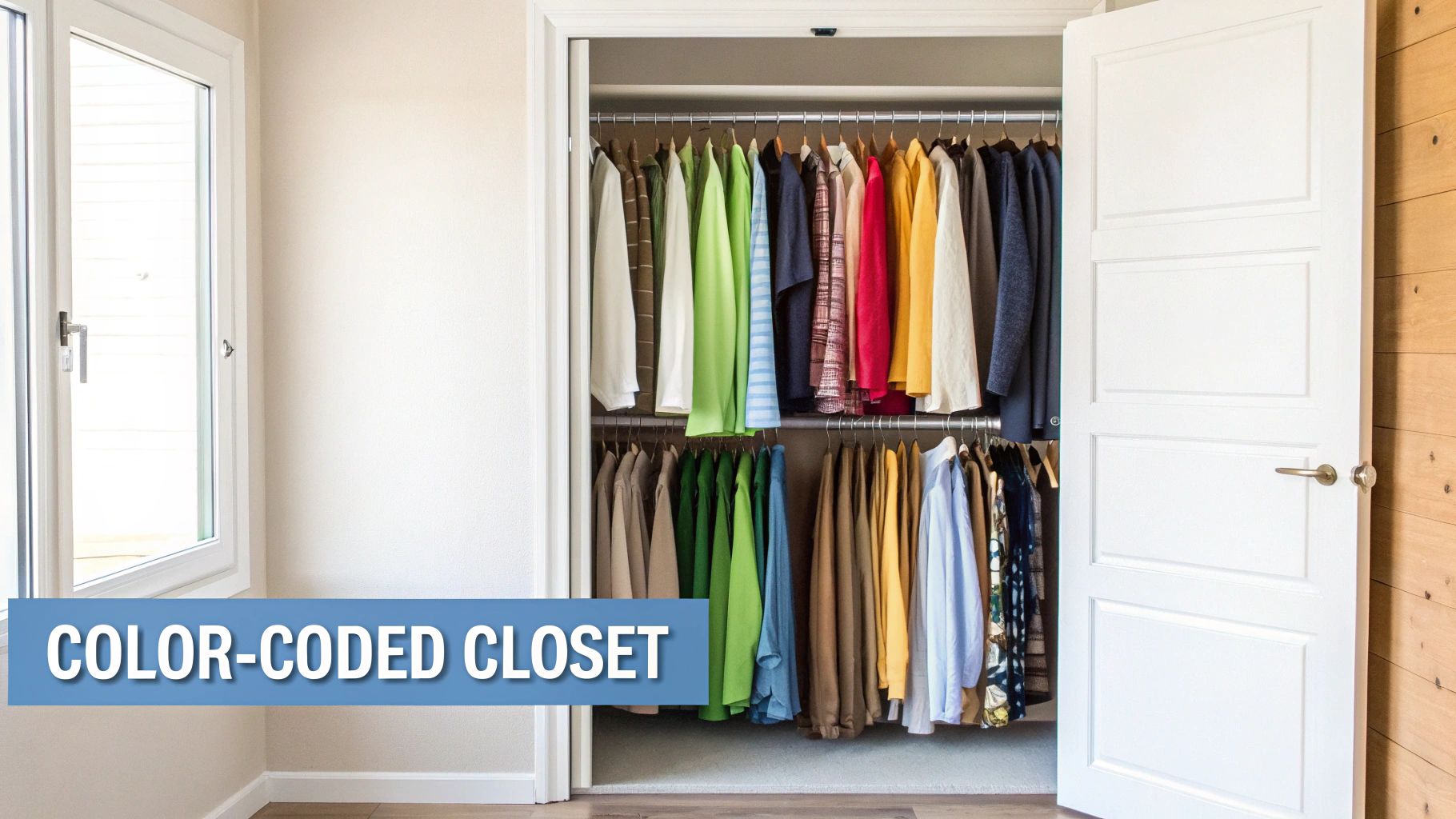
Let's be clear: organizing your closet by color is about so much more than just making it look pretty. It's a game-changing strategy that overhauls how you see and use your wardrobe. A cluttered, jumbled closet can be a real source of daily stress, turning the simple task of picking an outfit into a frustrating hunt. By putting a color system in place, you introduce an immediate sense of order and calm to your personal space.
The Immediate Visual Impact
The first thing you'll notice is the incredible visual appeal. A closet that flows through a smooth color gradient feels less like a storage space and more like a personal boutique. It’s instantly calming. This isn't just a hunch; it's a technique that works so well that high-end shops have been using similar retail clothing display ideas for years to create an atmosphere that feels curated and inviting.
There's a real psychological benefit, too. Research has found that 71% of consumers who organize their clothes by color report feeling more confident and satisfied with what they wear. When you can see everything in your closet clearly and visualize outfits effortlessly, that sense of control translates into confidence.
Practical Benefits of a Coordinated Closet
Looks aside, a color-coded closet is just plain practical. It simplifies your morning routine in some very tangible ways.
- Find Things Instantly: No more digging through your closet for that one specific navy blouse. You'll know exactly which section to go to, letting you pull together an outfit in a fraction of the time.
- See What You Really Own: It becomes glaringly obvious when you have five nearly identical gray sweaters. This system helps you see wardrobe gaps and duplicates, so you stop buying things you don't need.
- Spark New Outfit Ideas: When all your green tops are hanging next to each other, you might suddenly realize one would look amazing with those tan trousers you'd forgotten about. A well-organized closet encourages you to mix and match in new ways.
A survey found that 42% of people who color-code their closets spend less time getting ready in the morning. On average, they save 12 minutes a day. That adds up to over an hour a week you get back.
At the end of the day, arranging your clothes by color is about creating a closet system that serves you. It's a small investment of time that pays off every single day by making your closet a space that genuinely helps you start your day feeling put-together and inspired.
Your Pre-Organization Decluttering Playbook
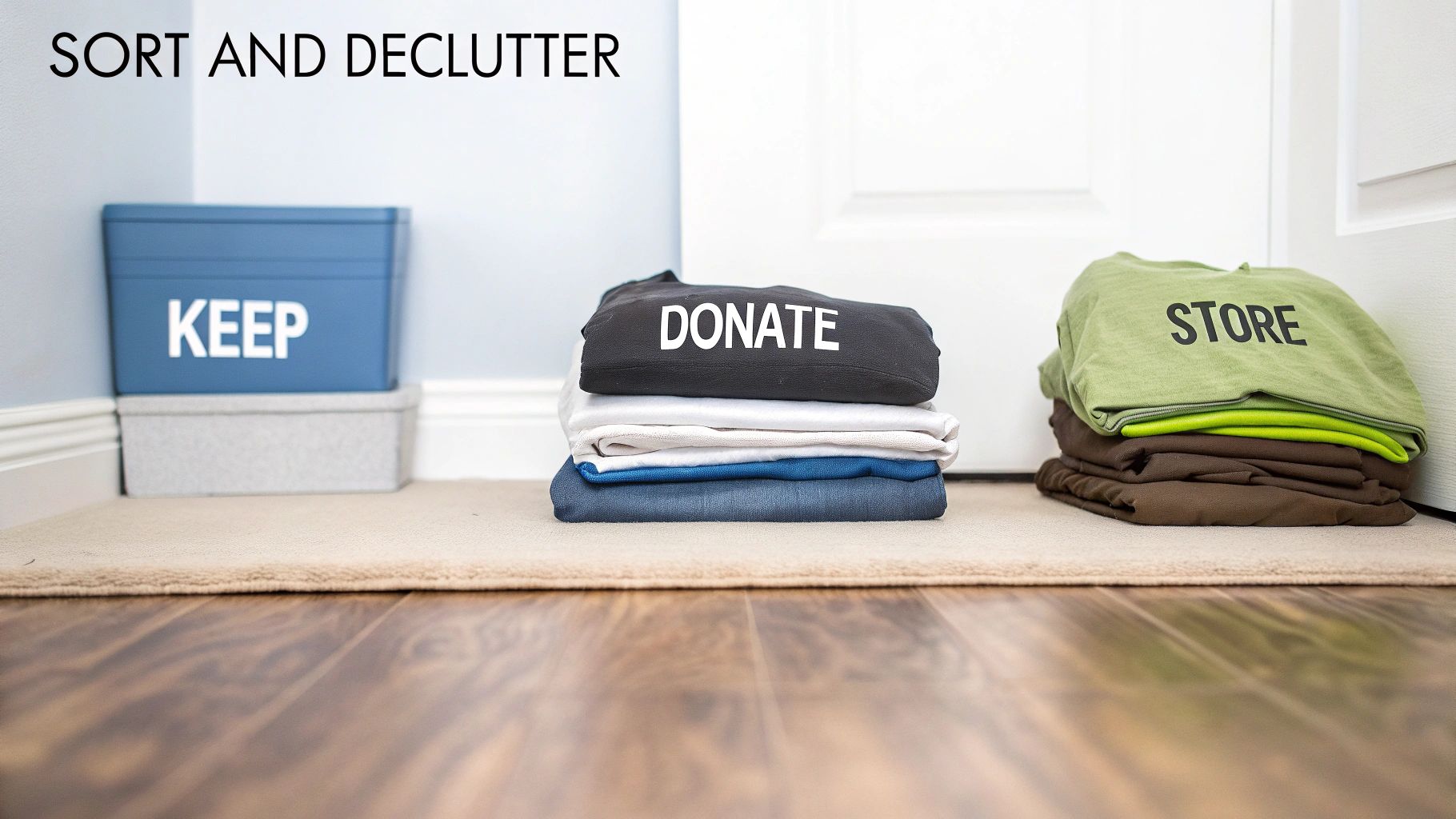
Before you can even think about that beautifully color-coded closet, you have to get real with what you actually own. This first step is non-negotiable. Without it, you’re just rearranging clutter. The only way to start is to take everything out of your closet. Yes, every last piece.
Emptying the space entirely gives you a much-needed fresh perspective and forces you to physically touch every single item. Piling it all on your bed might look like a clothing explosion, but it’s a powerful visual. It’s a sobering reminder of just how much we accumulate, especially when you consider the global apparel market is valued at a staggering $1.84 trillion.
Creating Your Sorting Stations
The secret to a successful closet declutter is making quick, decisive choices without getting bogged down. The best way to do this is to set up three distinct zones—use boxes, laundry baskets, or just clear spots on the floor.
- Keep: This pile is only for items you genuinely love, wear often, and that fit you well right now. These are the items that deserve a place in your newly organized closet.
- Donate/Sell: These are the pieces that are still in good shape but no longer serve you. Maybe your style has evolved, or it was an impulse buy that never felt quite right. Give it a new life with someone else.
- Store: This is for off-season or sentimental garments. We’re talking about that bulky ski jacket in July or a bridesmaid dress you just can’t part with. These items are important, but they don't need to take up prime real estate in your everyday closet.
This simple system keeps you from just shuffling things from one side of the closet to the other. If you find yourself struggling with these decisions, our complete guide on how to declutter your closet can walk you through it.
Navigating Sentimental Items
Let’s be honest, the sentimental stuff is the hardest. That faded concert t-shirt or the sweater from a special occasion can feel impossible to let go of, even if you never wear them. It’s important to ask yourself if the memory is truly tied to the item itself or if you can hold onto the feeling without sacrificing precious closet space.
Pro Tip: If a piece is too meaningful to donate but too impractical to hang in your main closet, create a dedicated memory box. This lets you safely store those cherished items without letting them disrupt the beautiful, functional wardrobe you're building.
Think of this prep work as curating a collection for your closet that reflects who you are today, not who you were five years ago. By clearing out what no longer fits your life, you create the foundation for a color-coded closet that’s not just visually stunning but also incredibly easy to maintain.
Choosing the Right Color System for Your Wardrobe
Alright, you’ve done the hard work of decluttering. Now for the fun part: deciding how to arrange everything in your closet. There’s no single "right" way to organize clothes by color—the best system is the one that makes sense for your clothes and your morning routine.
What works for a closet packed with bright, playful pieces won't be the best fit for someone with a wardrobe full of sophisticated neutrals. Think of this as styling your own personal boutique. You want a system that not only looks incredible but also makes getting dressed feel effortless. Let's walk through the three main methods I recommend to clients.
The Classic ROYGBIV Rainbow
This is the one everyone thinks of first, and for good reason—it’s visually stunning. Following the classic rainbow order (red, orange, yellow, green, blue, indigo, violet) creates a beautiful gradient that’s just plain joyful to look at every morning when you open your closet doors.
If your wardrobe is a sea of color, this is hands-down the way to go. You simply hang your clothes following that sequence. I usually tell people to tuck their pinks in after the reds, and then finish the whole lineup with the neutrals: white, gray, and finally, black.
- Best For: Anyone with a closet bursting with a wide variety of colors.
- Pros: It's incredibly intuitive and makes finding a specific shade a breeze. You’ll know exactly where your greens end and your blues begin.
- Cons: If your wardrobe is 90% black, white, and gray, this system can feel a little underwhelming. You'll end up with massive blocks of neutrals in your closet and just a few tiny slivers of color.
When your closet is a visual rainbow, it does more than just look pretty. Seeing all your color options laid out so clearly can spark creative outfit ideas you might have otherwise missed.
The Light-to-Dark Gradient
For a more serene, high-end boutique vibe, organizing your clothes from light to dark is a fantastic option. This method feels calm, clean, and incredibly sophisticated, especially if you have a lot of neutrals or multiple shades of the same few colors.
You'll start with your crisp whites and creams, then flow into progressively darker tones. Think tans, then grays, and then move into your color groups, arranging each one from its lightest version to its darkest. For example, all your blue items would be grouped together in the closet, but they’d be ordered from pale sky blue all the way to deep navy. This is my personal favorite for creating a really polished look.
The Hybrid Neutrals-First System
Let's be realistic: most of us build our wardrobes around a core of neutral staples. The hybrid system is often the most practical approach because it reflects how we actually get dressed. It's a "best of both worlds" solution for closet organization.
Here's how it works:
- Core Neutrals: First, you group all your whites, beiges, grays, and blacks together. I like to arrange these from light to dark within their own section for extra order.
- Accent Colors: After the neutrals, you arrange the rest of your colorful pieces in rainbow (ROYGBIV) order.
This setup is brilliant because it keeps your everyday workhorses—the black pants, white tees, and gray sweaters—in one easy-to-find spot in your closet. When you need to add a pop of color, you just move to the next section. It's a pragmatic system that just clicks with how most people build an outfit.
Comparing Color Organization Methods
Choosing the right system can feel like a big decision, but it's really about aligning the method with your wardrobe's personality. This table breaks down the three approaches to help you see at a glance which one might be the best starting point for your closet.
| Method | Best For | Pros | Cons |
|---|---|---|---|
| ROYGBIV Rainbow | Colorful, diverse wardrobes. | Visually stunning, makes finding specific colors easy. | Less effective for neutral-heavy closets. |
| Light-to-Dark | Neutral-heavy or monochromatic wardrobes. | Creates a sophisticated, boutique look; great for tonal dressing. | Can be harder to distinguish between distinct colors. |
| Neutrals-First Hybrid | Most typical wardrobes with a mix of basics and color. | Highly practical, keeps everyday essentials accessible. | Less visually dramatic than a full rainbow. |
Ultimately, don't be afraid to experiment. What works for you today might change as your style evolves. The goal is to create a closet system that simplifies your life and brings a little bit of joy and order to your daily routine.
Bringing Your Color-Coded Closet to Life
Okay, you've decided on a color system and cleared out the clutter. Now for the fun part. This is where you take that curated pile of clothes and transform your closet into a space that’s not just organized, but genuinely inspiring to look at. The secret to avoiding a total overwhelm is to work methodically, one category at a time.
First things first, sort everything into big, manageable groups. Put all your shirts in one pile, all your pants in another, sweaters in a third, and so on. This initial sort is a game-changer because it narrows your focus. Instead of bouncing between a dress and a t-shirt, you can concentrate on arranging just one type of garment at a time.
First, Sort by Category. Then, by Color.
With your clothes grouped by type, pick one category to dive into. Let's start with your shirts. Take that pile and apply the color system you chose—whether it's the full rainbow, a simple light-to-dark gradient, or your own hybrid version. Arrange them, hang them back in their spot in the closet, and admire your work.
Then, just rinse and repeat. Move on to your pants, then skirts, then jackets. By creating these little "micro-systems" within your closet, you're building a wardrobe that's both beautiful and incredibly functional. When you need a blue top, you’ll instinctively go to the shirt section and find the blue subsection in seconds.
This flowchart breaks down how the different methods look in practice, helping you visualize the end result in your own closet.
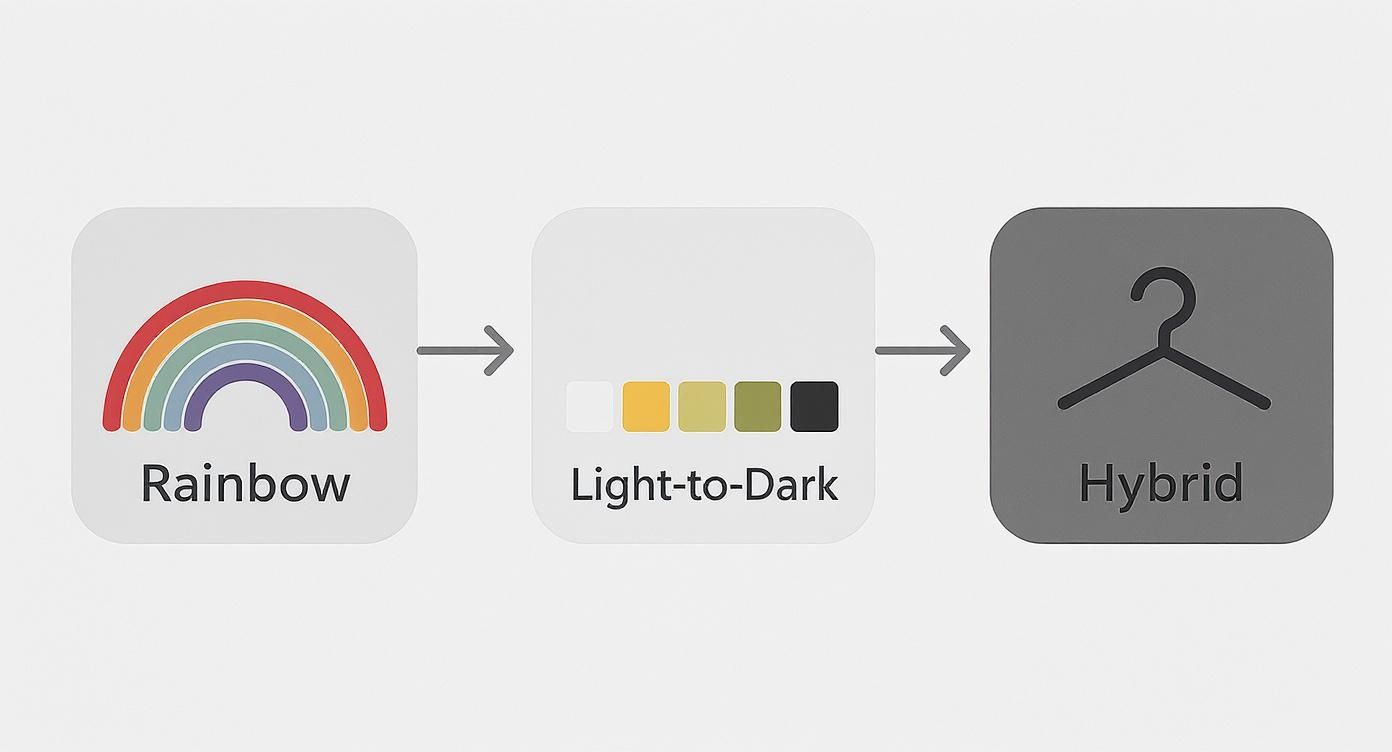
As you can see, no matter which path you choose, the key is applying it consistently within each clothing category to keep things looking sharp.
What About Patterns and Multi-Colored Items?
Ah, the prints and multi-colored pieces. They can feel like they're designed to throw a wrench in your perfectly organized closet, but don't let them. There are a couple of really simple ways to handle them.
- Go with the dominant color. Just eyeball the item and see which color stands out the most. That floral blouse with a dark navy background? It goes right in with your other navy items. This is usually the easiest and most practical approach.
- Create a separate "patterns" section. If you have a serious love for prints, stripes, and florals, give them their own home. I like to tuck this section at the very end of the color spectrum, usually right after black. This keeps the solid color blocks in your closet looking clean and uninterrupted.
My Pro Tip: For those truly wild, multi-colored pieces where no single color dominates, I create a tiny "statement" section. It keeps them from looking out of place and makes them easy to grab when you want to build an outfit around one of them.
Why Your Hangers Matter (A Lot)
Don't underestimate the power of your hangers. Mismatched, bulky plastic ones can create visual noise and steal precious rod space. Switching to a single style of slim hanger is one of the fastest ways to make your closet look polished and feel more spacious.
Velvet non-slip hangers are a fantastic choice. Clothes actually stay on them, and their ultra-thin profile can seriously increase how much you can hang. For some items, specialized hangers make an even bigger difference. It's worth looking into different types of space-saving hangers for clothes to see how you can maximize every inch, especially if you're working with a smaller closet.
Don't Forget the Accessories
Your closet organization system isn't complete until the accessories are on board. Extending your color logic to scarves, belts, and handbags is what takes your closet from organized to truly curated.
- Scarves: Fold or roll them and arrange by color in a drawer with dividers. A hanging scarf organizer also works wonders.
- Belts: A simple belt rack is great, or you can roll them and line them up by color (browns, blacks, brights) in a shallow drawer.
- Handbags: If you have shelves, line them up by color. If not, specialty handbag hooks can keep them organized and visible without taking up shelf space.
When you apply your color system to everything in your closet, you create a cohesive space that makes getting dressed feel less like a chore and more like a creative part of your day.
Alright, you’ve put in the work. The closet looks amazing—a beautiful, color-coded masterpiece. The real trick, though, isn't just getting it organized; it's keeping it that way. Let's be honest, without a few simple habits, that pristine setup can quickly devolve back into a chaotic mess.
The secret is to make maintenance a part of your everyday routine. This isn't about another weekend-long overhaul. It's about small, consistent actions that stop clutter before it even starts. Think of it less as a chore and more as a way to protect your newfound closet peace.
https://www.youtube.com/embed/X-aQUn--ijg
Weave Maintenance Into Your Routine
To keep your closet from overflowing again, embrace the one-in, one-out rule. This is your secret weapon against clutter creep. Every time a new shirt or pair of jeans comes in, an old one has to go. This simple habit single-handedly prevents your wardrobe from expanding beyond its limits.
Another game-changer is the five-minute weekly tidy-up. Seriously, that's all it takes. Once a week, set a timer and just...straighten up.
- Put stray clothes back on their proper hangers.
- Line up your shoes neatly.
- Tuck away any accessories that have been left out.
This tiny time commitment works wonders. It nips small messes in the bud before they can turn into a full-blown disaster, keeping your color-coded closet looking sharp.
Make Seasonal Swaps Painless
Switching out your seasonal wardrobe doesn't have to be a dreaded, all-day event. Instead of a complete closet teardown, think of it as a quick rotation. When the weather changes, spend just 30 minutes moving your off-season clothes to a less-prime spot, like the top shelf or the back of the closet.
This is also the perfect time for a quick gut-check. As you pack away your winter sweaters, ask yourself if you actually wore them. If that bulky coat sat untouched all season, maybe it's time to donate it instead of just storing it for another year. This keeps your closet filled only with clothes you truly wear and love.
By making these small habits part of your life, you're building a system that lasts. This isn't just about organizing clothes; it's about creating a sustainable process that keeps your closet a source of calm, not stress. You'll never have to face a massive reorganization project again.
Keeping things in order over the long haul is all about strategy. Interestingly, some of the best advice comes from the digital world, where the principles of maintaining an organized system are just as crucial. The end goal is a closet that serves you well every single day, not just for the week after a big clean-out.
A Few Lingering Questions About Color-Coding
Even with the best game plan, you're bound to run into a few tricky situations when color-coding your closet. Let's tackle some of the most common questions I hear, because getting these details right is what makes the system truly last.
The biggest puzzle for most people? Those patterned, multi-colored pieces. It’s almost like they were designed to break up your beautiful, seamless color flow.
My advice is simple: just go with the item's most dominant color. That floral dress with the navy blue background? It belongs right in your blue section. This approach keeps things looking clean and makes it way easier to grab what you need when you're putting an outfit together.
What About Clothes in Drawers?
While a color-coded rail of hanging clothes has that big "wow" factor, don't sleep on doing the same for your folded items. Applying a color system to the t-shirts, sweaters, or jeans in your drawers is a total game-changer, especially if you’re a fan of file-folding.
When you file-fold everything and line it up by color from front to back, you get a bird's-eye view of your entire collection. No more digging through messy stacks just to find that one gray t-shirt. It's right there waiting for you.
A quick pro-tip: for small things like socks and underwear, don't overthink it. Simple drawer dividers are far more practical than trying to color-code every pair. The goal here is function, and just keeping categories separate is usually enough.
Keeping Your Closet Organized Year-Round
Look, a big closet reorganization is a project. But the goal is to only have to do it once a year, not every other weekend. The secret to avoiding another closet catastrophe is just a little bit of ongoing maintenance. It's all about protecting the time and effort you just put in.
Get into the habit of putting clothes back in their proper color spot right away. If that feels like too much, a quick five-minute "reset" at the end of the week will work wonders to keep everything from sliding back into chaos.
I also find that a seasonal wardrobe swap is the perfect time for a mini-refresh. As you’re packing away heavy coats or pulling out summer dresses, take a minute to pull out anything you didn't wear that season. This keeps your closet filled only with clothes you actually love and use, which makes your whole color system work even better.
Ready to build that dream closet you've been pinning? MORALVE has a whole collection of space-saving hangers built to squeeze the most out of every last inch of your wardrobe. From pants to tops, our smart designs will help you create and maintain a space that’s beautiful, functional, and finally clutter-free. You can explore the full collection on our website and take that first step toward a more organized life.
Leave a comment