

How to Fold Clothes for Travel Like a Pro: It Starts in Your Closet

The secret to folding clothes for travel isn’t a last-minute trick you pull off an hour before leaving for the airport. It's a system that starts in a well-organized closet. The best packers I know have one thing in common: a tidy wardrobe that makes it easy to grab wrinkle-resistant fabrics and versatile pieces from the get-go. This simple shift in mindset turns packing from a frantic chore into a calm, streamlined process, proving that great trips begin before you even open your suitcase.
Smart Packing Starts with Closet Organization
Think of an organized closet as the launchpad for any successful trip. When your wardrobe is a chaotic mess, it’s tough to see what you actually own, leading to last-minute panic where you just start throwing things into a bag. This is a surefire recipe for overpacking. By getting your closet in order first, you’re not just saving time—you’re setting yourself up for smarter travel by making strategic choices long before you pack.
It all boils down to visibility and accessibility. If you can't see it, you're not going to pack it. Simple adjustments, like switching to uniform space-saving hangers, can be a game-changer. They don't just magically create more room; they create a clean, consistent line of sight, letting you scan your options and mentally build outfits in seconds. For a full walkthrough on getting your space in order, our guide on how to declutter your closet has some great, actionable steps.
Pre-Sort Your Wardrobe for Easy Trips
One of the best habits for effortless packing is pre-sorting your clothes with travel in mind. Try grouping fabrics that travel well—think merino wool, knits, and most synthetics—in one area. Keep items that need more careful handling, like structured blazers or linen shirts, in their own section. This bit of organization means that when it’s time to pack, half the work of selecting and folding is already done.
The real goal here is to create a "capsule" section within your closet filled with your go-to travel pieces. It’s like having a personal, curated collection that's always ready for your next adventure.
This strategy changes how you even think about your clothes. Before a trip, you can quickly decide what gets rolled tightly to save space and what needs to be folded flat to protect its shape. This kind of planning is what separates a frustrating packing session from a seamless one. Once you nail this system, you might find this comprehensive guide on how to pack light while traveling useful for taking your efficiency to the next level.
The explosive growth of travel accessories really proves that people are craving smarter ways to pack. The market for these gadgets and organizers is projected to hit an incredible $108.78 billion by 2035. This huge demand is driven by travelers who want to maximize every inch of their luggage, and it all comes back to knowing how to fold clothes effectively—a skill that starts right in your own closet.
Mastering the Ranger Roll for Everyday Items
Once your closet is organized, you can easily identify the items perfect for the 'Ranger Roll'—a complete game-changer for packing everyday clothes like t-shirts, jeans, and knitwear. This military-style technique transforms your clothes into tight, compact cylinders, which not only saves a shocking amount of space but also helps prevent the deep-set creases you get from traditional folding.
You're no longer just placing clothes in a bag; you're strategically engineering the space. Instead of a jumbled pile you have to dig through, you get a neat, organized grid of your clothing options. You can see everything at a glance and grab what you need without turning your suitcase into a mess—mirroring the easy accessibility of a tidy closet.
Of course, great packing starts before you even roll the first shirt. It's all about a little prep work.
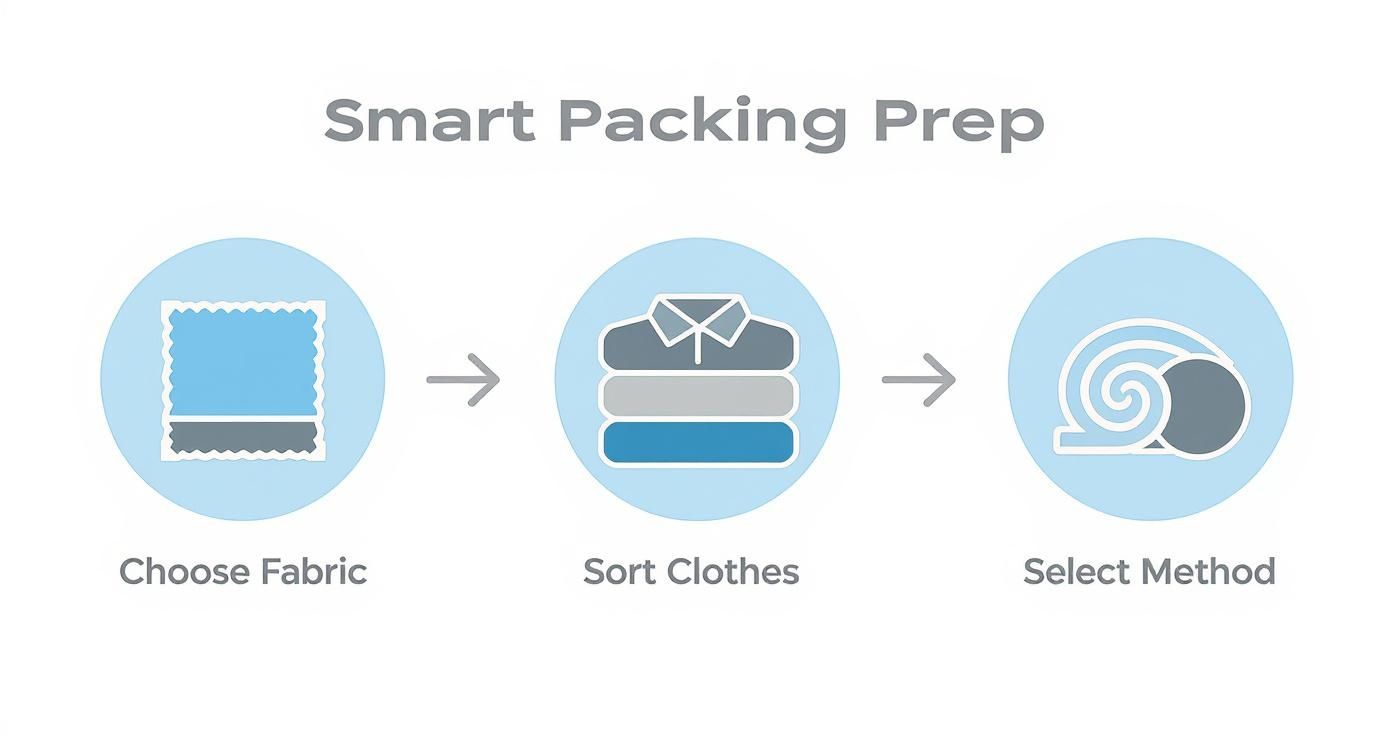
This simple flow—choosing the right fabrics from your organized closet, getting them sorted, and then picking the best folding method—is the key to a stress-free suitcase.
The Ranger Roll Technique Explained
So, how do you actually do it? The whole idea behind the Ranger Roll is to create a secure, self-contained bundle that won't come undone.
Let's take a t-shirt. First, lay it flat. Then, fold the bottom hem up and inside-out to create a little cuff, maybe a couple of inches wide. Fold the sleeves in to make a clean rectangle, then roll the shirt as tightly as you can, starting from the collar and working your way down. Once you get to the end, you just pull that cuff you made over the entire roll to lock it in place.
What you're left with is a compact 'clothing sausage' that's firm and won't unravel.
- For T-Shirts and Tops: This method is perfect. It keeps them tightly bound, and you can line them up neatly in a packing cube or right in your suitcase.
- For Jeans and Pants: The process is almost identical. You'll create a cuff at the waistband, fold one leg over the other to make a single column, and then roll tightly from the ankles up. The waistband cuff then wraps around the finished roll, giving you maximum compression.
This technique has become a go-to for savvy travelers, and for good reason. It’s also known as the 'Army Roll,' and it's so effective because it forces all the excess air out and creates uniform shapes that are incredibly easy to stack or arrange. It's no surprise that tutorials for it get millions of views. It's one of the best ways to fit more into a smaller bag, which can save you from those dreaded checked bag fees. If you're a visual learner, you can watch a detailed demonstration on YouTube to see it in action.
Is Rolling Always the Right Move?
While the Ranger Roll is my go-to for most of my travel wardrobe, it's not a silver bullet for every single item. The success of the roll really comes down to the fabric, a choice you make back at your closet.
Cottons, synthetics (like your polyester and nylon activewear), and most knits are prime candidates for rolling. These fabrics are pliable and bounce back easily, so they can be compressed tightly without holding onto wrinkles.
On the other hand, you want to avoid rolling anything too stiff or prone to creasing. Think linen, freshly starched dress shirts, or structured blazers. Forcing those into a tight roll is a recipe for stubborn wrinkles. If an item is carefully hung in your wardrobe, it likely needs to be carefully folded for travel.
Choosing Between Rolling and Folding Your Clothes
Deciding whether to roll or flat-fold can feel like a puzzle, but your closet organization provides the clues. Certain items just travel better one way or the other. This little cheat sheet breaks down what I do for common travel items.
| Clothing Item | Best Method | Why It Works | Pro Tip |
|---|---|---|---|
| T-Shirts & Casual Tops | Rolling | Creates compact, uniform logs that fit perfectly into small spaces and resist wrinkling. | Use the Ranger Roll to lock the roll in place so it doesn’t unravel in your bag. |
| Jeans & Casual Pants | Rolling | Heavy fabrics like denim compress surprisingly well, saving a significant amount of space. | Roll from the bottom cuff up toward the waistband for the tightest possible bundle. |
| Dress Shirts & Blouses | Folding | Preserves the collar structure and minimizes sharp creases on delicate or starched fabrics. | Place a piece of tissue paper inside the fold to act as a buffer against wrinkles. |
| Sweaters & Knitwear | Rolling | Squeezes air out of bulky knits. The fabric's natural stretch helps wrinkles fall out easily. | Roll loosely to avoid stretching the fabric. Don't pull it too tight. |
| Dresses & Skirts | Depends | Roll casual jersey or cotton dresses. Fold structured or formal dresses to protect their shape. | For long dresses, fold in half first, then roll to create a more manageable size. |
| Blazers & Jackets | Folding | Protects the shoulders' structure and prevents damage to lapels and padding. | Fold it inside-out with the arms tucked in to protect the outer fabric from snags. |
Ultimately, the best approach is often a hybrid one. I almost always roll my casual wear and knits, but I'll carefully fold a blazer or a nice button-down shirt. By matching the technique to the fabric and the item's structure—knowledge gained from a well-managed wardrobe—you can be confident that everything will arrive looking its best.
Folding Techniques for Bulky and Delicate Garments
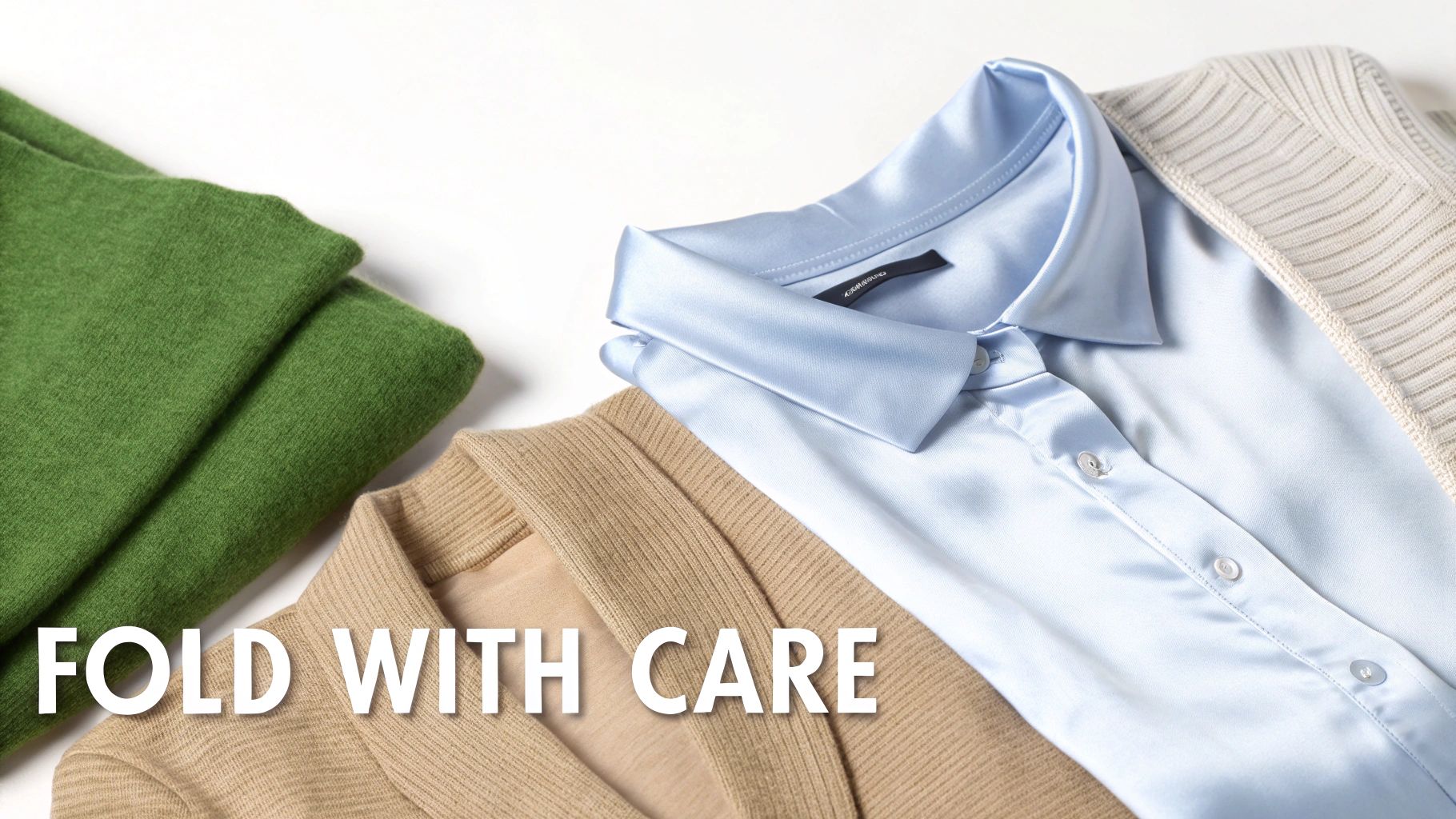
While rolling is my go-to for most casual clothes, it’s definitely not a one-size-fits-all solution. Some items just don't do well being scrunched into a tight cylinder. For anything delicate like silk, or structured like a blazer, a careful fold is the only way to make sure it arrives ready to wear. These are the pieces you handle with care in your closet, and travel should be no different.
Think about packing for a work trip. You can’t just roll up a crisp dress shirt and hope for the best. A proper fold is what protects the collar and keeps that front placket looking sharp. The same goes for a destination wedding—a carefully folded suit jacket will look pristine, but a rolled one will be a crumpled disaster.
Protecting Your Formal and Delicate Wear
For clothes that crease just by looking at them or have a particular shape to maintain, a gentle, flat fold is your best bet. The idea is to make as few folds as possible and to have those folds fall along natural seams where they won't be as obvious.
- Dress Shirts and Blouses: First, button the shirt all the way up. Lay it on a flat surface, face-down. Fold each sleeve across the back toward the center, creating a clean rectangle. From there, just fold the bottom half up to the collar. It should be a neat, flat package.
- Suit Jackets and Blazers: These require a clever little trick. Pop one shoulder of the jacket inside-out, then neatly tuck the other shoulder (which is still right-side-out) into it. This cushions the outer fabric and protects the shape of the lapels. Fold it in half lengthwise, and you can lay it right on top of everything else in your suitcase.
- Delicate Fabrics (Silk, Satin): Lay the item out flat and place a sheet of acid-free tissue paper over it. Then, fold the garment around the paper. This simple step provides a soft buffer that stops sharp creases from forming and reduces friction that can snag the fabric.
My rule of thumb is simple: if it has structure (like padded shoulders or a stiff collar) or is made from a high-maintenance fabric, it gets folded, not rolled. There are no exceptions.
Taking a few extra minutes to fold these pieces correctly ensures your most important outfits survive the trip looking just as good as they did hanging in your closet.
Taming Bulky Sweaters and Coats
Heavy sweaters and winter coats are the worst offenders when it comes to hogging suitcase space. A smart folding technique can make them surprisingly compact without stretching out the knit. This starts by selecting only the essential bulky items from your well-organized winter section.
The secret is to avoid folding them into a tight, dense square. Instead, I always think in thirds. Lay your sweater face-down, fold the arms in to make a rectangle, and then fold it into thirds from the bottom up. This makes a flatter, more pliable shape that distributes the bulk evenly. If you want a more detailed look at this method, check out our guide on how to fold sweaters to save space.
For something really big, like a parka, the best strategy is usually just to wear it on the plane. If that's not practical, a vacuum compression bag can be a lifesaver. A word of caution, though: while they save a ton of room, they can also cause serious wrinkles if things are left compressed for too long.
Using Packing Cubes for Flawless Organization
If you're not using packing cubes, you're missing a key tool for extending your closet's organization to your suitcase. They are the absolute non-negotiable for turning a chaotic suitcase into a tidy, portable closet. The real magic happens when you use them strategically to replicate your closet's system.
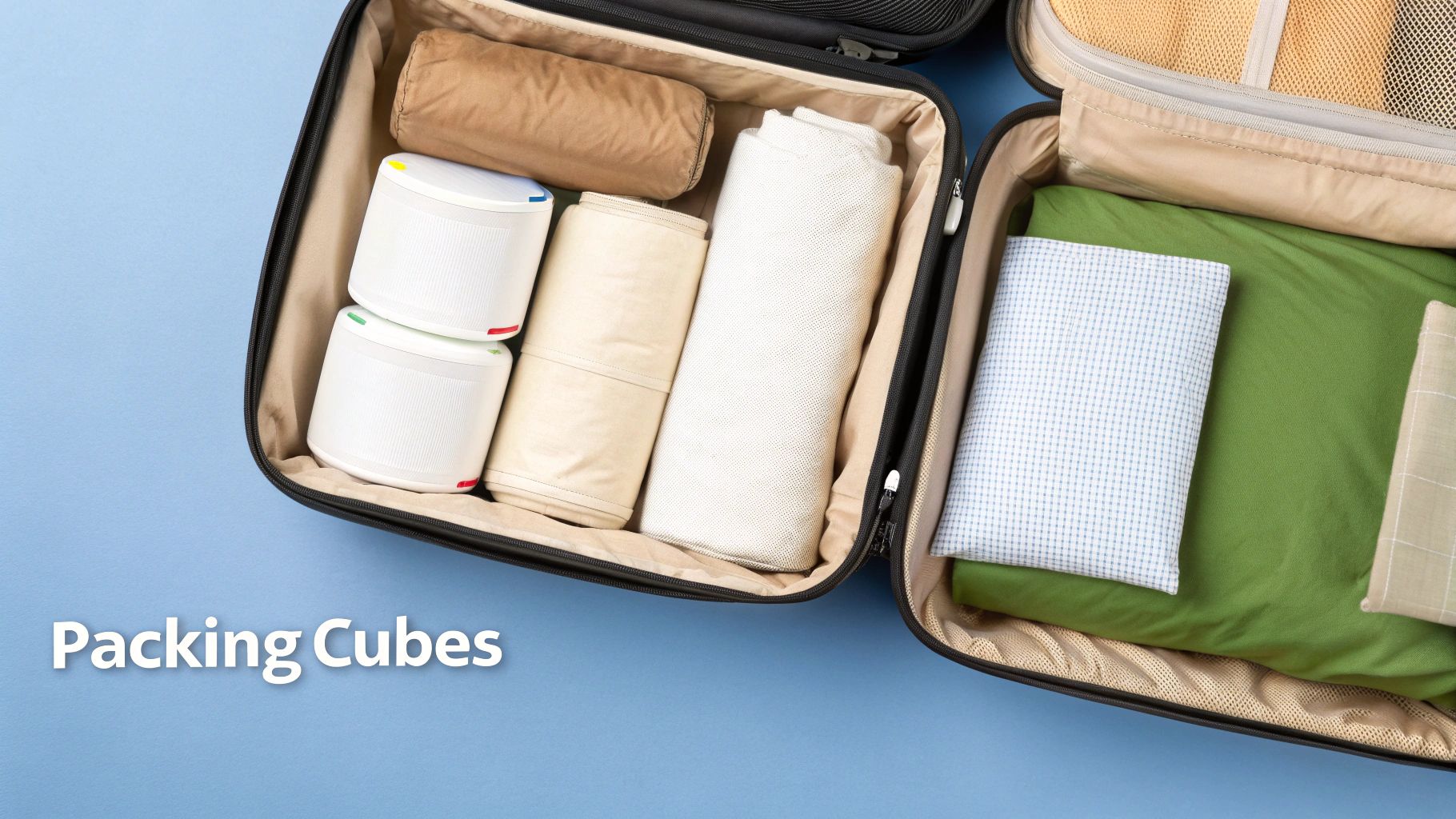
Think of them as modular drawers for your luggage. This simple shift in mindset changes everything. I typically use one cube for all my tops, another for bottoms, and a small one for socks and underwear—just as I'd separate these items in my dresser. No more digging through a mountain of t-shirts just to find a clean pair of pants.
Combining Methods for Maximum Space
To really get the most out of your cubes, you’ll want to mix and match your folding techniques based on the categories you've already established in your closet. The Ranger Roll is perfect for things like t-shirts, workout clothes, and knitwear. When you line up these tightly rolled items like little logs inside a cube, you can see everything at a glance and use every last inch of space.
For items that wrinkle more easily, like a button-down shirt or linen trousers, stick with a neat, flat fold. I usually place these folded pieces right on top of the rolled clothes inside the same cube. This approach protects them from getting crushed while still letting the cube do its job of keeping everything contained.
Standard Cubes vs. Compression Cubes
It's also important to know that not all packing cubes are the same. Picking the right type for the job makes a huge difference.
- Standard Cubes: These are your go-to for general organization. They're perfect for grouping items by category, just like closet shelf dividers.
- Compression Cubes: This is where the real space-saving happens. These cubes have a second zipper that cinches everything down, squeezing out excess air. They are a game-changer for bulky items like sweaters, puffy jackets, and jeans.
On any given trip, you'll find a mix of both in my suitcase. I use standard cubes for my daily outfits and reserve a compression cube for that bulky fleece or my winter sweaters.
Think of packing cubes as the bridge between your organized closet at home and your temporary one on the road. They maintain the order you've established, making your travel experience smoother from start to finish.
This push for smarter travel isn't just a niche trend. With 74% of people planning multiple domestic trips a year, the demand for good packing gear has skyrocketed. The travel accessories market, valued at a whopping $57.5 billion, is expected to nearly double, all because travelers are looking for better ways to pack. You can dive deeper into these travel market trends to see just how big the movement is.
Advanced Cube Strategies
Once you've got the basics down, you can start getting creative. One of my favorite pro-level moves is creating "outfit cubes," a direct extension of planning outfits from your closet. I'll pack a complete outfit for a specific day or event in one cube. It completely removes the "what should I wear?" guesswork when I arrive.
Another trick I swear by is dedicating one empty cube for dirty laundry. It keeps clean and dirty clothes separate—the ultimate organizational challenge on the road—and makes unpacking for laundry day at home an absolute breeze. Your suitcase is no longer just a box; it's a highly efficient, mobile wardrobe.
How to Pack Your Suitcase for Perfect Balance
You’ve done the hard work of organizing your closet, selecting the right items, and folding them perfectly into packing cubes. Now for the final puzzle: actually packing the suitcase. How you load your bag is just as critical as how you folded the clothes, impacting your bag’s stability and ensuring everything stays as neat as it was in your closet.
A well-balanced suitcase is a lifesaver on travel day. No more tipping over at the worst possible moment. No more wrestling a lopsided bag through the airport. The goal here is to create a dense, stable block of belongings that won’t shift around, maintaining the order you worked so hard to create.
Building Your Foundation
The first rule of smart packing is all about physics: heavy items go on the bottom, down by the wheels. This simple move lowers the suitcase's center of gravity, making it incredibly stable and far less likely to topple over.
Think of it like building a pyramid. Your heaviest, bulkiest items—shoes, toiletry bags, maybe a hairdryer—form that solid base. This is also the perfect spot for any liquids, as keeping them contained at the bottom minimizes the damage if a dreaded leak happens.
Playing Tetris with Your Packing Cubes
Once your heavy foundation is set, it's time for the packing cubes. This is where you can really get strategic and make the most of every square inch. Don't just throw them in; arrange them like you're playing a game of Tetris to create a solid, interlocked layer that mirrors the neat sections of your closet.
- Large cubes holding things like pants or sweaters usually fit best laid flat across the bottom.
- Medium cubes with your shirts can often be slotted in on their sides, filling in the gaps perfectly.
- Small cubes are your secret weapon. Use them for underwear and socks, tucking them into any awkward empty corners.
The whole point is to eliminate dead air. Any empty space allows your belongings to shift, which is a one-way ticket to wrinkles and chaos. Fill every last nook with rolled-up belts, extra socks, or a scarf to create a single, tightly packed unit.
A tightly packed suitcase isn't about cramming; it's about intelligent arrangement. When every item has a place and supports its neighbors, your clothes are cushioned and protected from the bumps and tumbles of travel.
Layering for Access and Protection
The final items to go into your suitcase should be the ones that are either delicate or that you'll need to grab first.
Lay your most fragile, wrinkle-prone pieces—like a blazer or a silk dress you folded carefully—right on top of the firm, flat surface created by your packing cubes. This keeps them smooth and prevents them from getting crushed by everything else.
Finally, the very last things you pack should be whatever you'll need as soon as you arrive. Think pajamas, a fresh shirt, or a light jacket. This bit of planning means you won't have to rip your perfectly organized suitcase apart after a long day of travel just to find one thing. It's a strategy that doesn't just save space, it saves your sanity.
Common Questions About Folding Clothes for Travel
Even the most seasoned travelers run into packing puzzles. Mastering how to fold clothes for travel is a skill that sharpens with every trip, especially when you’re dealing with tricky items like bulky winter gear or formal wear.
Let's dive into some of the questions I hear all the time. The answers often connect smart packing strategies back to the good habits you build in your own closet.
Does Rolling Clothes Actually Prevent Wrinkles Better Than Folding?
For many everyday fabrics—think cotton t-shirts, knits, and most synthetics—rolling is hands-down the winner for preventing hard creases. Rolling avoids creating those sharp, set-in folds that turn into deep wrinkles after a few hours in a suitcase. If you already group your clothes by fabric type in your closet, you’ll have a much easier time grabbing all the "roll-friendly" items at once.
However, rolling isn't a one-size-fits-all solution. For structured pieces like blazers or easily-mussed fabrics like linen, a careful flat fold is the way to go. These are the items you’d hang carefully at home, not cram into a drawer. The real trick is matching the packing method to the garment, just like you would in your closet.
How Do I Fold Bulky Items Like Hoodies for a Carry-On?
When it comes to bulky clothes, the name of the game is compression.
Start by folding the arms over the chest to make a neat rectangle. Next, fold the whole thing in half lengthwise. Now, starting from the bottom, roll it up as tightly as you can. For hoodies, you get a bonus feature: you can tuck the entire rolled-up bundle into the hood to keep it from unravelling.
My favorite space-saving hack? Just wear your bulkiest item on the plane. It frees up a massive amount of luggage space, no special folding required.
If you’re trying to pack multiple bulky sweaters, take a moment to decide which ones you really need. This decision is a lot easier when your closet is organized enough to see all your options laid out clearly.
Are Packing Cubes Really Worth It for a Short Trip?
100% yes. Even for a quick weekend trip, packing cubes are a game-changer. They aren't just about saving space; they're about staying organized. Think of them as portable drawers that let you group outfits together or keep dirty clothes separate from clean ones—just like you’d use dividers in your closet at home.
For a short trip, I love making "outfit cubes" with everything I need for each day. This means no more digging through the entire suitcase just to find a pair of socks. It's a lifesaver when you're living out of your bag for a few days.
What Is the Best Way to Pack Shoes Without Wasting Space?
To pack shoes like a pro, always place them heel-to-toe along the outer edges of your suitcase. Putting them near the wheels helps with the bag's balance. I always make sure to pop them in shoe bags or even just disposable shower caps to keep the soles from getting everything else dirty.
The real expert move is to treat your shoes like small containers. Stuff them with socks, underwear, or charging cables to use up every last inch of space. For more tips on keeping your clothes in great shape on the road, check out our guide on how to prevent wrinkled clothes.
An organized suitcase really starts with an organized closet. At MORALVE, we design innovative, space-saving hangers and tools to help you build that solid foundation at home. When your closet is sorted, packing for your next trip becomes so much easier. Shop our collection today and turn your closet into the perfect launchpad for your next adventure.
Leave a comment