

How to Organize Clothes in a Small Closet From Chaos to Calm

The real secret to conquering a small closet isn't a magical organizer; it’s about strategically organizing what you truly love and wear. The journey begins with a focused declutter, clearing out the excess so you can implement a system that lasts.
Step 1: The Great Closet Clean-Out
Before you can organize, you have to simplify. A closet overflowing with clothes is impossible to manage, no matter how many bins you buy. The first and most important step is to edit your wardrobe down to the items you actually wear and love. This creates the physical and mental space needed to build a functional system.
The goal isn't just to make room. It's to build a wardrobe that works for your life right now. When every single piece in your closet is something you'd be excited to put on, getting dressed is a breeze. Think of this initial purge as the foundation for a closet that stays organized for good.
Sorting with the Four-Box Method
Let's get practical. Grab four boxes or designate four spots on your floor. Label them: Keep, Donate, Store, and Toss. This method forces a decision for every single item, preventing the paralyzing "I'll-decide-later" pile from forming.
Pick up each piece of clothing and be brutally honest. This isn't just tidying up; it's about being intentional with your space. For a deep dive into this strategy, you can find more guidance in our post on how to declutter your closet.
To get you started, here's a quick reference for the initial sorting phase.
Your Quick Start Decluttering Guide
| Phase | Action Item | Goal |
|---|---|---|
| Preparation | Set aside a few hours and gather your four boxes/bags. | Create a dedicated, focused environment to work in without distractions. |
| Execution | Take everything out of the closet. Handle each item individually. | Force a conscious decision on every single piece of clothing. |
| Sorting | Place each item into one of the four categories: Keep, Donate, Store, or Toss. | Eliminate indecision and clear the clutter quickly and efficiently. |
| Finalization | Immediately remove the Donate, Store, and Toss boxes from the room. | Prevent second-guessing and solidify the progress you've made. |
Once you’ve sorted everything, don’t let those bags linger! Take the donations to a drop-off center and put the seasonal items into storage right away.
Questions to Ask Yourself
Struggling to decide what to keep? Asking a few direct questions can make the choice clear. For every piece of clothing, ask:
- If I saw this in a store today, would I buy it? This test bypasses nostalgia and zeroes in on your current taste.
- Have I worn this in the last year? Be honest. If the answer is no (and it's not a special-occasion outfit), it's probably time to let it go.
- Does this fit my body and my life right now? Stop saving clothes for a "someday" version of yourself. Your wardrobe should serve the person you are today.
As living spaces shrink, the need for smart, efficient storage solutions has exploded. This makes decluttering and organizing less of a weekend chore and more of a modern-day necessity for a functional home.
The closet organizer market is a perfect example of this shift. It's now valued at around $7.64 billion worldwide, driven by the demand for better ways to manage belongings in less space.
By taking this purposeful approach, you're not just getting rid of clutter; you're curating a collection of clothes that makes you feel good. This initial edit is what creates the breathing room you need to finally organize your small closet for good.
Mapping Your Space for Maximum Storage
Now that your closet is completely empty, you have a blank canvas. This is the moment to think like a space planner. Before you put anything back, you need to understand the real estate you’re working with. This planning stage is the secret to a closet that actually works and saves you from buying organizers that don't fit.
Fight the temptation to start throwing things back in. Grab a tape measure and a notepad. A few minutes of measuring now will save you hours of frustration later. You're creating a blueprint for your new, perfectly organized closet.
Measure Everything That Matters
To get this right, you need exact numbers. Precision is your best friend here.
- Width: Measure from one inside wall to the other.
- Height: Go from the floor to the ceiling. Then, measure from the floor to any existing shelves or rods.
- Depth: Measure from the back wall to the inside of the door frame.
- Fixtures: Jot down the placement of the current closet rod, shelves, or any built-in features.
These measurements are the foundation for every organizational decision you make. They’ll tell you if you can fit a double-rod system or if those drawers you saw online will block the door.
Create Smart Closet Zones
Think about how you use your clothes. Not every item deserves prime, front-and-center placement. Zoning your closet means giving different areas a specific job, which is a game-changer when you're figuring out how to organize clothes in a small closet.
The clothes you wear all the time—your go-to work shirts, favorite jeans, and everyday jacket—should live in the most accessible spot, usually right in the middle at eye level. Items you use less often, like formalwear or off-season shoes, can be stored on a high shelf or in a less-convenient corner. This simple strategy makes your daily routine much smoother.
The visual below illustrates the prep work that makes this kind of strategic planning possible.
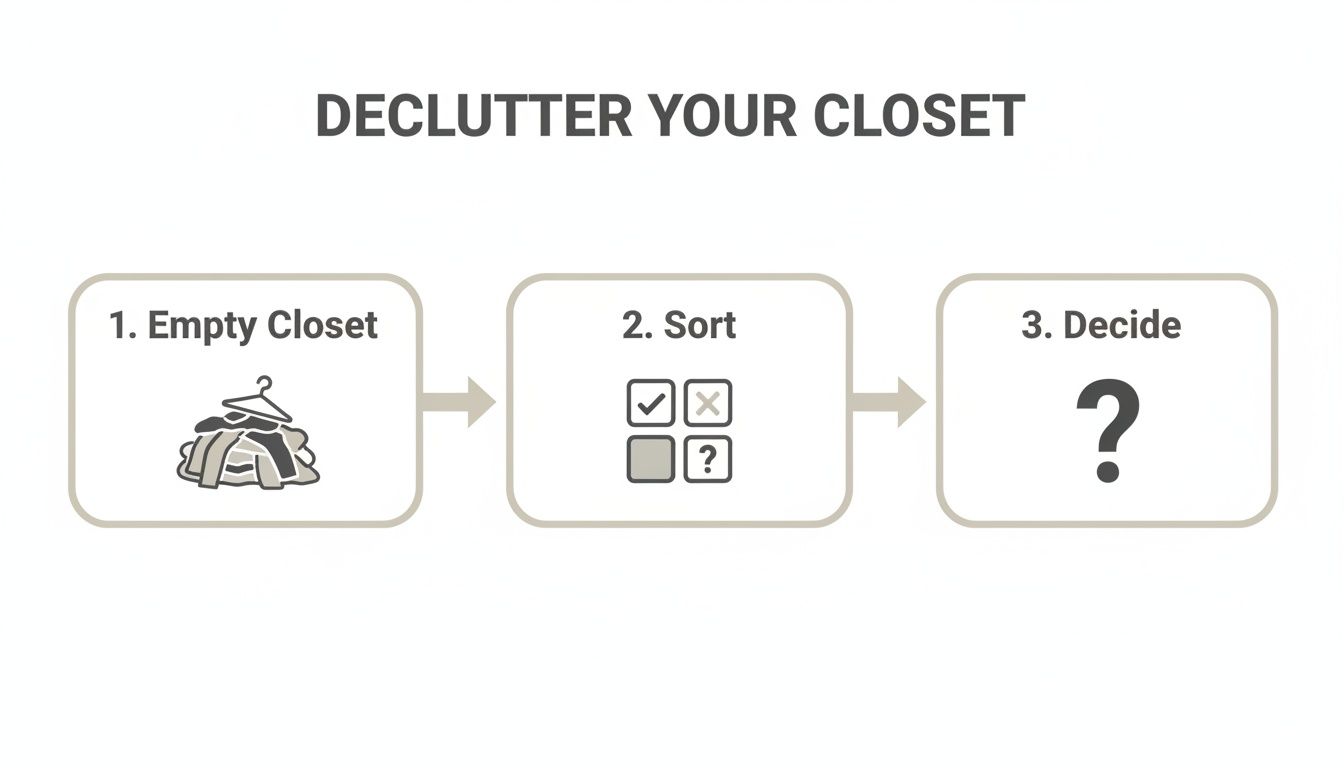
This process of emptying, sorting, and deciding is the crucial groundwork you need to do before you can truly map out your newly cleared space.
Choosing Your Layout
With your measurements and zones mapped out, you can decide on a layout. For most small closets, a double-rod setup is a no-brainer—it instantly doubles your hanging space for shirts, skirts, and folded pants.
A single rod is often a massive waste of vertical space. Unless your wardrobe consists entirely of long dresses and coats, adding a second rod is one of the most impactful changes you can make.
But what if your wardrobe is mostly long dresses? In that case, a single rod with targeted shelving on one side might be a smarter move. As you plan how to squeeze the most function out of every inch, you might find some more practical tips for organizing your small wardrobe helpful. The goal is to tailor the layout to your clothes, not the other way around.
The Art of Hanging and Folding Clothes
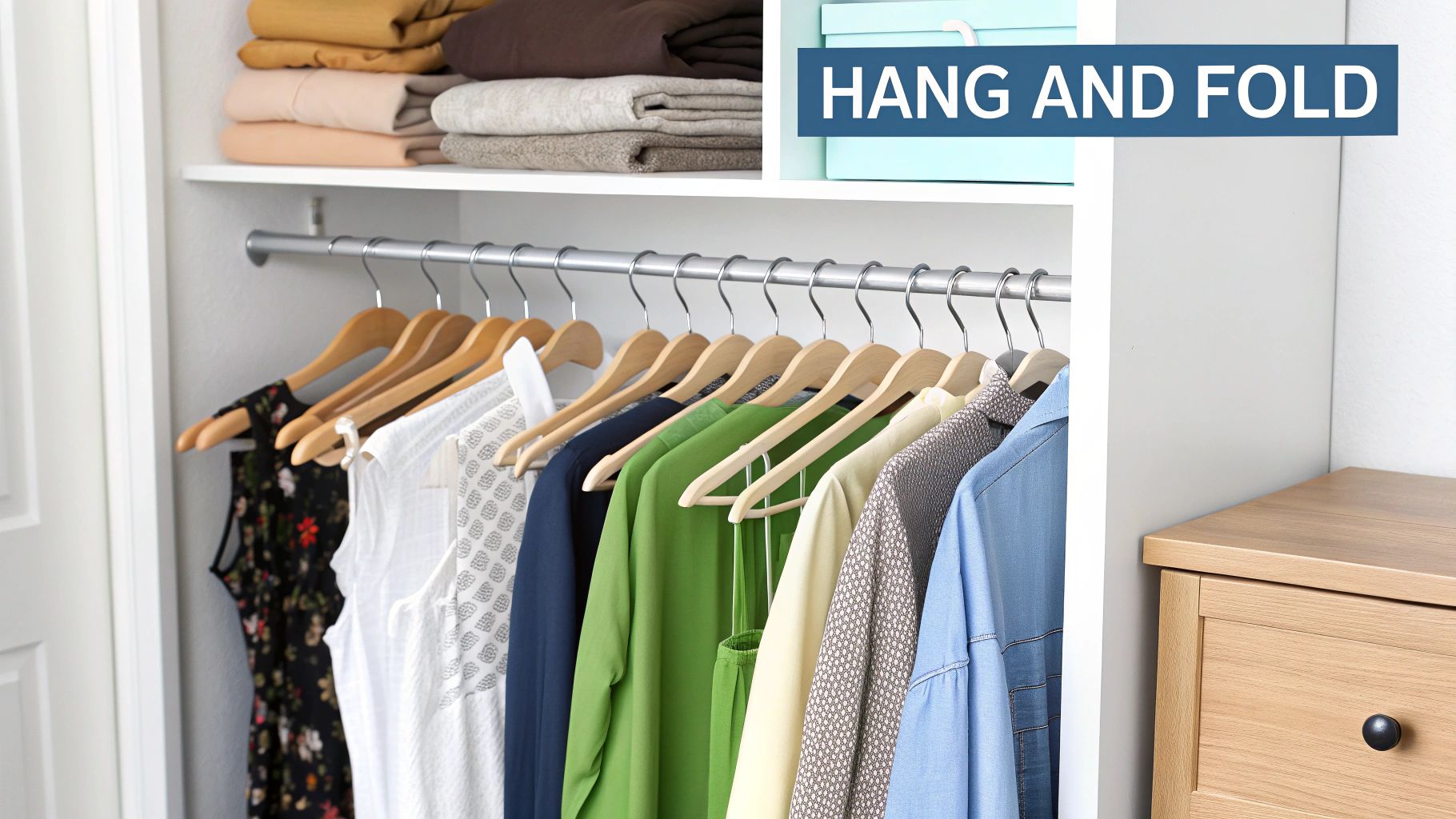
Now for the visual transformation. How you hang and fold your clothes makes the real difference between a chaotic mess and a calm, functional space. It's less about having a huge closet and more about using the right techniques for what you own.
Let's start with what's on the rod. The easiest first step is to group like items together. Put all your blouses in one spot, followed by dresses, then jackets. You can even color-code within each category for a boutique-like feel. This simple change instantly creates a sense of order and makes finding what you need much faster.
Master Your Hanging Space
One of the biggest space-wasters in a small closet is a random collection of chunky hangers. Those thick wooden or plastic ones might seem sturdy, but they eat up valuable real estate.
Switching to a uniform set of slim, non-slip velvet hangers is one of the most impactful changes you can make. This one move can magically create more room on your rod, letting you hang more clothes without that crammed-in feeling.
You can also get strategic with specialty hangers:
- Tiered Hangers: A total game-changer for pants and skirts. Instead of one hanger per item, you can hang four or five pairs vertically in the space of just one.
- Tank Top Hangers: A single hanger with multiple hooks can hold your entire collection of camis and tank tops, freeing up rod space for bulkier items like jackets and sweaters.
When you choose your hangers wisely, you’re not just storing clothes—you’re actively engineering more space. It’s all about making every inch of that closet rod work smarter for you.
It's no surprise people are looking for these solutions. The closet organizer market alone was valued at $4.2 billion and is expected to hit nearly $7.5 billion by 2033, showing a clear demand for smarter storage. You can read more about this trend over at marketresearch.com.
Perfect Your Folding Technique
Not everything should be hung. Heavy knit sweaters, for example, will stretch out and get shoulder bumps. Jeans, t-shirts, and workout gear are all better off folded.
But don't just create messy stacks that topple over. The best method for drawers and shelves is file folding. This is where you fold items into compact, rectangular parcels that stand up on their own, like files in a filing cabinet.
With file folding, you can see everything in your drawer at a single glance. No more digging to the bottom of a pile for that one gray t-shirt. This is a core technique for organizing a small closet because it truly maximizes shelf and drawer space. If you're new to it, we have a great tutorial on folding clothes to save space that walks you through it.
Tapping Into Vertical and Over-The-Door Space
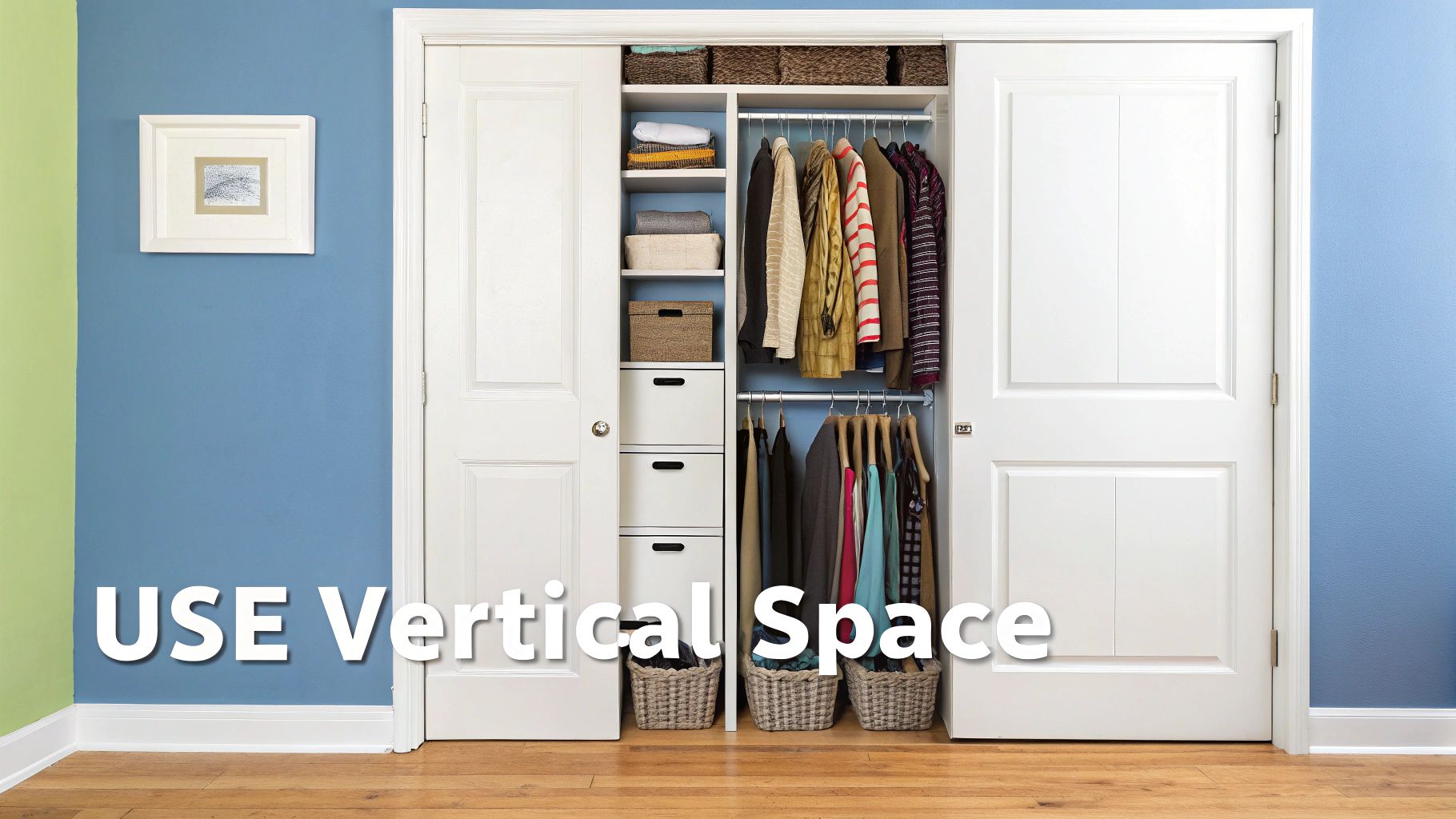
Once your hanging and folding game is strong, it’s time to claim the hidden real estate in your closet: the empty air above your clothes and the back of the closet door.
We tend to think horizontally, but small closets demand we think vertically. That dead space on the floor or the huge gap between your top shelf and the ceiling are just waiting for a purpose. Instead of letting shoes and bags pile up on the floor, bring in a set of slim, stackable drawers to turn a messy floor into a neat, functional column of storage.
Think Vertically: Hanging Organizers and Smart Shelving
One of the quickest wins for vertical space is a hanging shelf organizer. These fabric cubbies hang right from your closet rod, instantly giving you a tower of shelves for items that don’t hang well. No drills, no fuss.
- Sweaters & Jeans: Keep heavy knits from stretching out and your denim stacks from toppling over.
- Accessories: Perfect for corralling handbags, clutches, scarves, and hats so they’re visible and easy to grab.
- Shoes: Some are built specifically for shoes, getting them off the floor and keeping pairs together.
The real mindset shift is to build up, not out. Drawing your storage upward frees up the floor and makes the entire closet feel more open and accessible. It’s a simple change in perspective that can honestly double your usable space.
For a more permanent solution, adding extra shelves can be a game-changer. You can find more inspiration and practical ideas for shelving ideas for closets that can be adapted to any size space.
Don't Let Your Door Be a Blank Slate
The back of the closet door is the most underutilized real estate in any bedroom. An over-the-door organizer is non-negotiable if you’re serious about learning how to organize clothes in a small closet.
Don't just think shoes! A clear pocket organizer is incredibly versatile. Use it for:
- Belts and scarves
- Socks and underwear
- Rolled-up tank tops or leggings
- Sunglasses and other small accessories
This multi-functional thinking is why the global closet organizer market is now worth $12.5 billion. People know that smarter, not bigger, is the answer to small-space living. You can dig into more stats about the closet organizer market at Dataintelo.
When deciding how to use these two valuable spots, it helps to compare them side-by-side.
Maximizing Vertical vs Door Space
| Storage Type | Best For... | Example Products | Pro Tip |
|---|---|---|---|
| Vertical Organizers | Bulky or folded items like sweaters, jeans, handbags, and t-shirts. | Fabric hanging shelves, stackable drawers, shelf dividers. | Use dividers on high shelves to keep sweater stacks from falling over. |
| Over-the-Door Storage | Small, grab-and-go items like accessories, shoes, belts, and underwear. | Clear pocket organizers, hanging shoe racks, hook racks. | Opt for clear pockets so you can see everything at a glance without digging. |
Ultimately, the best approach is to use both. Combining vertical organizers for your bulkier clothing with an over-the-door unit for all the little things creates a complete system that leaves no space wasted.
A Seasonal Rotation Is Your Secret Weapon
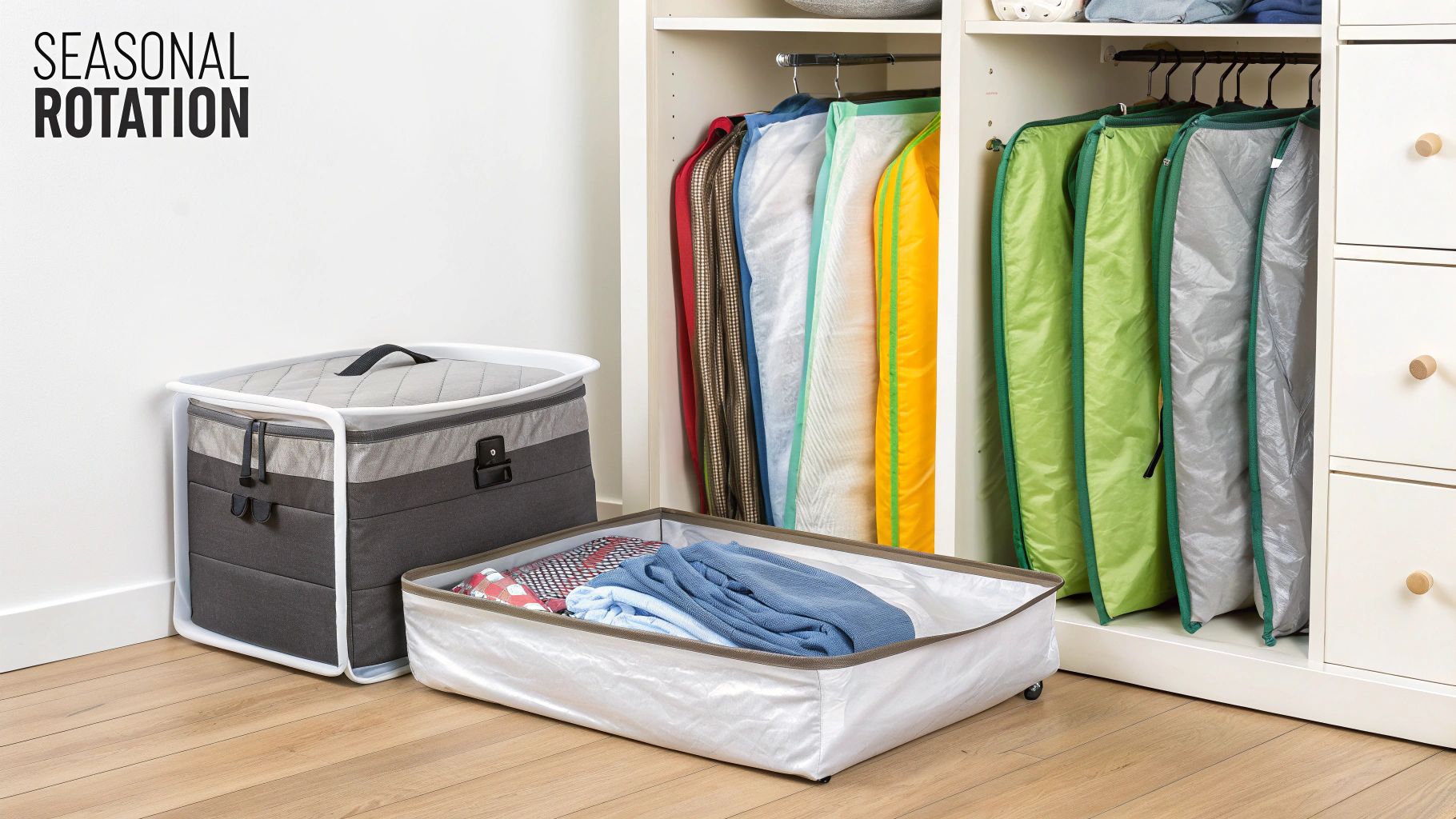
Here’s a game-changing tip: stop treating your small closet like a year-round archive for every piece of clothing you own. A truly organized, functional closet only holds what you need right now.
By rotating your wardrobe with the seasons, you can instantly free up a shocking amount of space. It’s a simple trick that makes your closet feel twice as big. This is all about packing away off-season items to give your current clothes some much-needed breathing room. Think of it as a twice-a-year closet reset.
The Seasonal Swap-Out
First, pull out everything that’s obviously out of season. Your bulky wool sweaters have no business taking up prime real estate in July, and those linen shorts can go into hibernation for the winter.
Before you stash anything, give each item a quick inspection. Do you still love it? Did you wear it last season? If the answer is no, this is the perfect moment to put it in the donation pile instead of letting it take up storage space for another six months.
Once you have your keepers, make sure everything is clean. Storing clothes with lingering oils or sweat can attract pests and cause stains to set permanently. A quick wash ensures your clothes are fresh and ready to go when the weather turns.
Smart Storage Solutions
How you store off-season clothes matters. You want to protect them from dust, moisture, and getting misshapen.
Here are a few go-to solutions:
- Breathable Garment Bags: These are perfect for items like wool coats, blazers, or nice dresses. Unlike plastic, they let air circulate, which prevents a musty smell.
- Under-Bed Bins: This is prime, often-forgotten real estate. Low-profile containers, especially those with wheels, are fantastic for folded items like sweaters, jeans, and t-shirts.
- Vacuum-Sealed Bags: For your puffiest winter jackets and comforters, these are magic. They shrink bulky items to a fraction of their original size, making them easy to tuck away on a high shelf or in the back of another closet.
Storing your off-season wardrobe isn't just about hiding it away; it's about preserving your clothes. The right containers mean the difference between pulling out fresh, ready-to-wear items and discovering a musty, wrinkled mess next season.
Once everything is packed up, find a good hiding spot. The top shelf of your closet, under the bed, or even inside an empty suitcase are all fair game. This simple habit keeps your closet feeling spacious, relevant, and perfectly curated for the season you're in.
Keeping Your Small Closet Organized for Good
You’ve done the hard part: you’ve purged, planned, and organized your way to a beautiful closet. But the real victory isn't the big overhaul. It's the small, consistent habits you build afterward that keep the chaos from creeping back in.
Without a simple maintenance plan, even the most perfect system will unravel. This isn’t about blocking off weekends for another massive reorganization. It's about weaving tiny actions into your routine so your hard work sticks.
The 5-Minute Daily Tidy
Think of this as your closet's nightly reset button. It takes less time than scrolling through your phone before bed but makes a huge difference in preventing the slow pile-up of clutter. The goal is to leave the space ready for a stress-free morning.
This isn’t a chore; it’s a quick checklist to stop small messes from snowballing:
- The One-Touch Rule: As soon as you take something off, it has only two destinations: back on its hanger or into the laundry hamper. This single rule is the best way to kill the dreaded "chairdrobe."
- Straighten Your Shoes: Kick off your shoes and line them up. It’s a simple visual trick that makes the whole closet floor look instantly put together.
- Close Up Shop: Shut any drawers or cabinet doors you opened. It mentally signals that everything is in its place and the day is done.
These simple habits stop disorganization in its tracks, which is the key to mastering how to organize clothes in a small closet for the long haul.
The 15-Minute Weekly Reset
Set aside just 15 minutes once a week—perhaps on a Sunday evening—for a slightly deeper tune-up. This is your chance to catch anything that got missed during the daily tidy and get ahead of the game for the week to come.
Maintenance isn't about perfection; it’s about consistency. A short, focused weekly reset is far more effective than a massive re-organization project every six months. It keeps your system working for you, not against you.
Your weekly reset is just a few quick hits to keep everything running smoothly:
- Fix Messy Stacks: Quickly refold any t-shirt or sweater piles that got rummaged through and lost their crisp shape.
- Clear the Floor: Do a quick scan for anything that doesn’t belong on the floor—a dropped sock, a belt that missed its hook, you know the drill.
- Plan Your Outfits: Glance at your calendar for the week ahead and pull a few potential outfits. Hanging them in a dedicated spot can be a lifesaver on hectic mornings.
By building these small routines, you shift closet organization from a dreaded project into a simple, sustainable habit. You’ve already created a calm, functional space—now you have the playbook to keep it that way.
Your Small Closet Questions, Answered
Even with a solid game plan, organizing a small closet can bring up a few tricky questions. Let’s tackle some of the most common hurdles you might face when you're figuring out how to get your small closet in order.
What Are The Best Hangers for a Small Closet?
This is the easiest win you'll get. Hands down, switch to a matching set of slim, non-slip velvet hangers. They are a game-changer. Compared to chunky plastic or wood hangers, these take up a fraction of the rod space. The difference is immediate.
Plus, the velvet texture grips your clothes, so no more finding that silk blouse in a puddle on the closet floor. For pants and skirts, I always recommend tiered or S-shaped hangers. You can hang multiple items in the same vertical space as a single regular hanger, which is a massive space-saver.
How Can I Store Shoes and Accessories Without Creating a Mess?
The secret here is to look up, down, and behind you. Most people completely forget about vertical space and the back of the closet door. An over-the-door shoe organizer is a classic for a reason—it keeps shoes off the floor, visible, and easy to grab without taking up any prime real estate.
When it comes to accessories, the goal is to contain and conquer.
- Clear, stackable bins are your best friend for things like clutches or wallets on that high-up shelf.
- Simple stick-on hooks on an empty bit of wall are perfect for scarves, belts, and necklaces.
- A small, decorative tray on a shelf is great for things you grab every day, like your watch or favorite earrings.
The golden rule for a small closet is that every single item needs a home. If it doesn't have a designated spot, it’s not organized—it's just waiting to become clutter again. Using vertical space and containers is how you stop small items from staging a hostile takeover.
My Closet Has No Shelves, Just a Single Rod. What Should I Do?
Think of a closet with just one rod as a blank canvas, not a limitation. Your first move should be to get a hanging organizer. These fabric shelves hang right from the rod and instantly give you cubbies for folded items like sweaters and jeans.
Next, consider a double-hang closet rod. This simple addition instantly doubles your hanging space for shorter clothes like shirts, blouses, and folded pants. For the floor, don't let that space go to waste. A set of slim drawers or a few nice-looking bins can create the "shelving" you're missing, perfect for shoes or off-season storage.
Ready to finally reclaim your closet? Having the right tools isn't just helpful—it's everything. Check out the complete collection of space-saving hangers from MORALVE and see for yourself how you can maximize every last inch.
You can start your organization journey over at moralve.com.
Leave a comment