
How to Organize Clothes Without a Dresser: Master Your Closet

Rethinking how you store your clothes without a dresser isn't just about saving space—it's about creating a system that actually works with your life and your wardrobe. The real secret is to stop thinking horizontally and start looking up. By using your closet and vertical space to its full potential, you can build a more open, streamlined room that feels bigger and works smarter.
Moving Beyond the Bulky Dresser
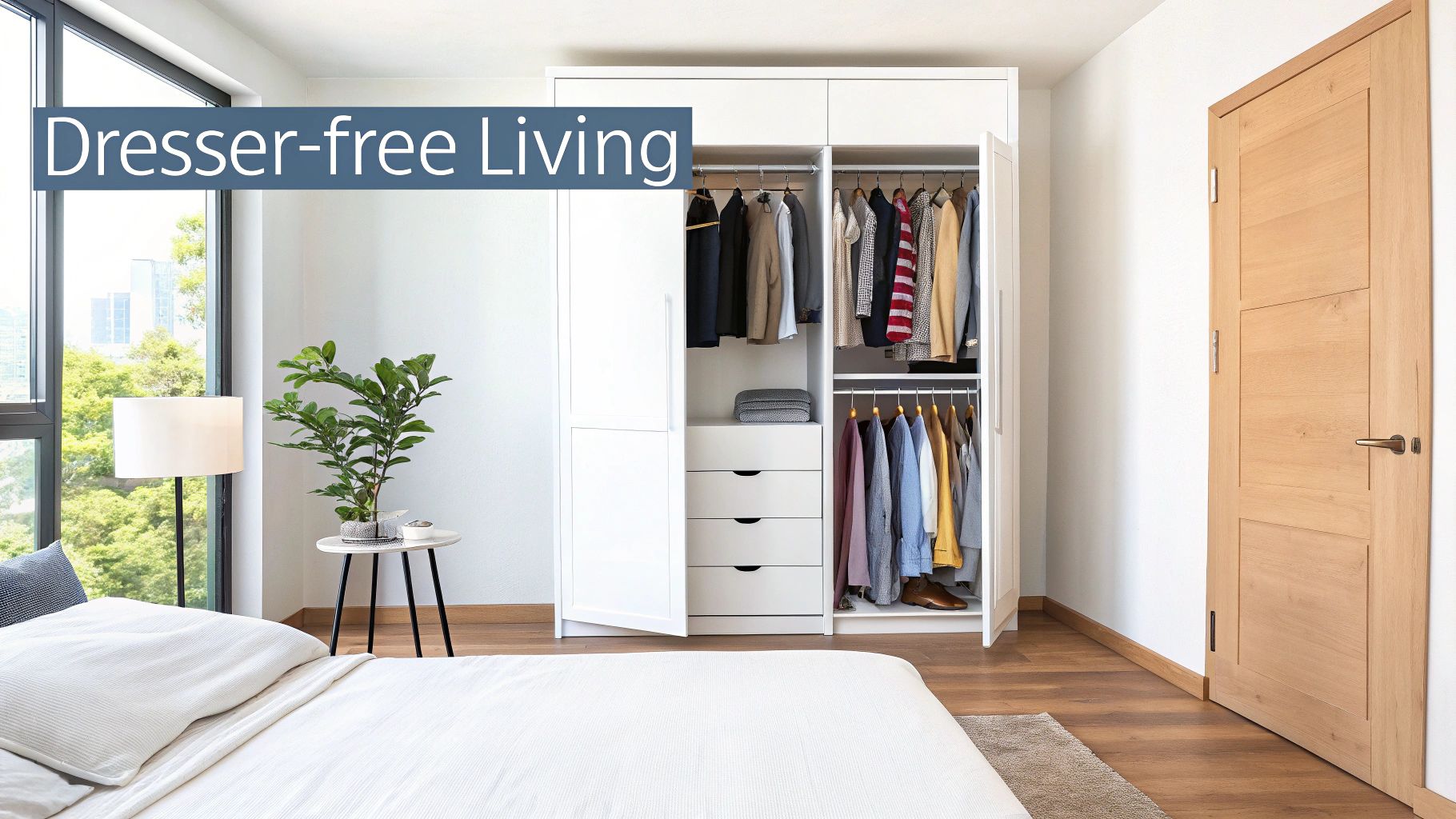
Let's be honest: the traditional dresser is a space hog. It's often the bulkiest piece of furniture in the bedroom, and getting rid of it is one of the quickest ways to reclaim precious floor space and make a room feel less cramped. By focusing on maximizing your closet, you can consolidate all your clothing into one central, organized hub.
This shift away from clunky furniture is more than just a passing trend. It's a fundamental change in how we think about our living spaces. The global closet organizer market jumped from $7.64 billion to $8.25 billion in just one year, which shows just how many people are looking for smarter, more flexible storage.
Embracing a Closet-Centric Approach
Going dresser-free forces you to get creative within your closet. Instead of stuffing everything into drawers scattered around your room, you get to design a storage setup that perfectly matches what you own, all in one place. Think of it as a custom-built system for your clothes.
A well-organized closet can become the centerpiece of your new setup, giving you hanging space, shelves, and cubbies all in one. Even a small closet can be transformed. You might add a narrow garment rack inside for extra layers of hanging space, proving you don't need a lot of room to be organized.
The goal is to build a system that works for you, not one you have to work around. A well-organized, dresser-free setup makes your daily routine smoother and your living space more serene and intentional.
Let's break down exactly what you gain by ditching the dresser.
Core Benefits of Organizing Clothes Without a Dresser
The table below highlights the main advantages you'll notice right away when you switch to a more modern, flexible clothing storage system centered on your closet.
| Benefit | Impact on Your Space and Routine |
|---|---|
| Increased Floor Space | By removing a bulky dresser, your room instantly feels larger, more open, and less cluttered. |
| Improved Visibility | A maximized closet lets you see your entire wardrobe at a glance—no more forgetting about clothes buried in a deep drawer. |
| Customizable Solutions | You can mix and match storage options within your closet to perfectly fit your collection, whether you have tons of shoes, sweaters, or hanging clothes. |
Ultimately, this approach is all about creating an efficient, personalized space that makes getting dressed every day simpler and more enjoyable.
The Foundation: A Purposeful Wardrobe Edit
Before you even think about buying a single storage bin or a new set of hangers, the absolute first step is a good, honest wardrobe edit. This isn't about forcing yourself into minimalism or tossing out clothes you genuinely love. It's about being intentional and creating a collection of clothes that actually works for you. Trust me, any closet organization system you choose will be a thousand times more effective if you do this first.
The best way to start is to just pull everything out. Everything. Create three piles on your bed or floor: Keep, Donate/Sell, and the dreaded Unsure pile. Seeing it all laid out is an eye-opener; it forces you to face just how much you actually own.
It's a common problem. The average person has a closet full of clothes, but did you know that we tend to wear only 20% of our clothes about 80% of the time? That imbalance is precisely where the opportunity lies. You’re not just clearing space; you’re making your daily life easier.
Making Honest Assessments
Let's talk about that "Unsure" pile, because it's usually the biggest roadblock. It’s filled with all the "what if" and "someday" items. To get through it, you have to be direct with yourself.
Ask pointed questions for each piece. Does this fit you right now, not "when I lose five pounds"? Have you actually worn it in the last year? Does it match your current lifestyle, or the one you had five years ago?
If an item is purely sentimental but you’ll never wear it again, consider taking a nice photo of it and letting the physical object go. For that shirt that’s needed a button sewn on for six months… be realistic. If you haven't fixed it by now, you probably won't.
Think of this editing phase as creating the blueprint for your new closet setup. It's how you'll discover your real clothing ratio—maybe you realize you have way more hanging blouses than foldable sweaters. This kind of insight is gold when you start choosing closet storage solutions.
As you get started, it helps to have a game plan. You can find some great strategies for decluttering your belongings that can make the whole process feel less overwhelming.
From Piles to Purpose
Once you've made your decisions, bag up the donate/sell items immediately and get them out of the room. Now, turn your attention to the "Keep" pile. This is your core wardrobe.
As you start putting these items back into the closet, begin categorizing them. Don’t just hang things randomly. Put all your work tops together, group your casual t-shirts, and give your workout gear its own zone.
This simple act of grouping creates a functional system right away, even before you've added any new tools. It makes finding what you need infinitely faster and sets the stage for a truly organized closet. For a more detailed walkthrough, our complete guide on how to declutter your closet breaks it down even further.
Taking this step seriously is what separates managing clutter from truly getting organized.
Make Your Closet the Main Hub
Now that your wardrobe is pared down to the pieces you actually love and wear, it's time to turn your closet into a powerhouse of organization. Let's be honest, that standard single rod with a shelf high above it just wasn't designed to hold everything. But with a few smart moves, we can transform it into a seriously efficient space that makes getting dressed a breeze. This is where the magic really happens when you're learning how to organize clothes without a dresser.
The single biggest impact you can make? Double your hanging space. Seriously, this is a game-changer. Installing a second closet rod allows you to separate your clothes by length, instantly maximizing all that empty air. Think about it: all your shirts, blouses, and jackets on the top rod, with your pants and skirts hanging neatly right below them. It’s such a simple fix, but it makes an enormous difference.
Maximize Every Inch of Hanging Space
Once you have more rod space, the type of hangers you use suddenly becomes incredibly important. Those chunky plastic or thick wooden hangers? They’re secretly eating up a ton of valuable real estate.
Making the switch to slim, non-slip velvet hangers is one of the easiest and most satisfying closet upgrades you can make. They're so much thinner, letting you fit more clothes without that jammed-in feeling. Plus, the velvet grip means your silky tops and wide-neck shirts actually stay put instead of ending up in a sad pile on the floor.
A well-organized closet isn't just about fitting more stuff in; it's about building a system that cuts down on the daily "what do I wear?" chaos. When everything is visible and has a home, your morning routine gets a whole lot calmer.
This whole process starts with that initial sort-through of your clothes. The decision-making can feel overwhelming, but this simple visual breaks it down.
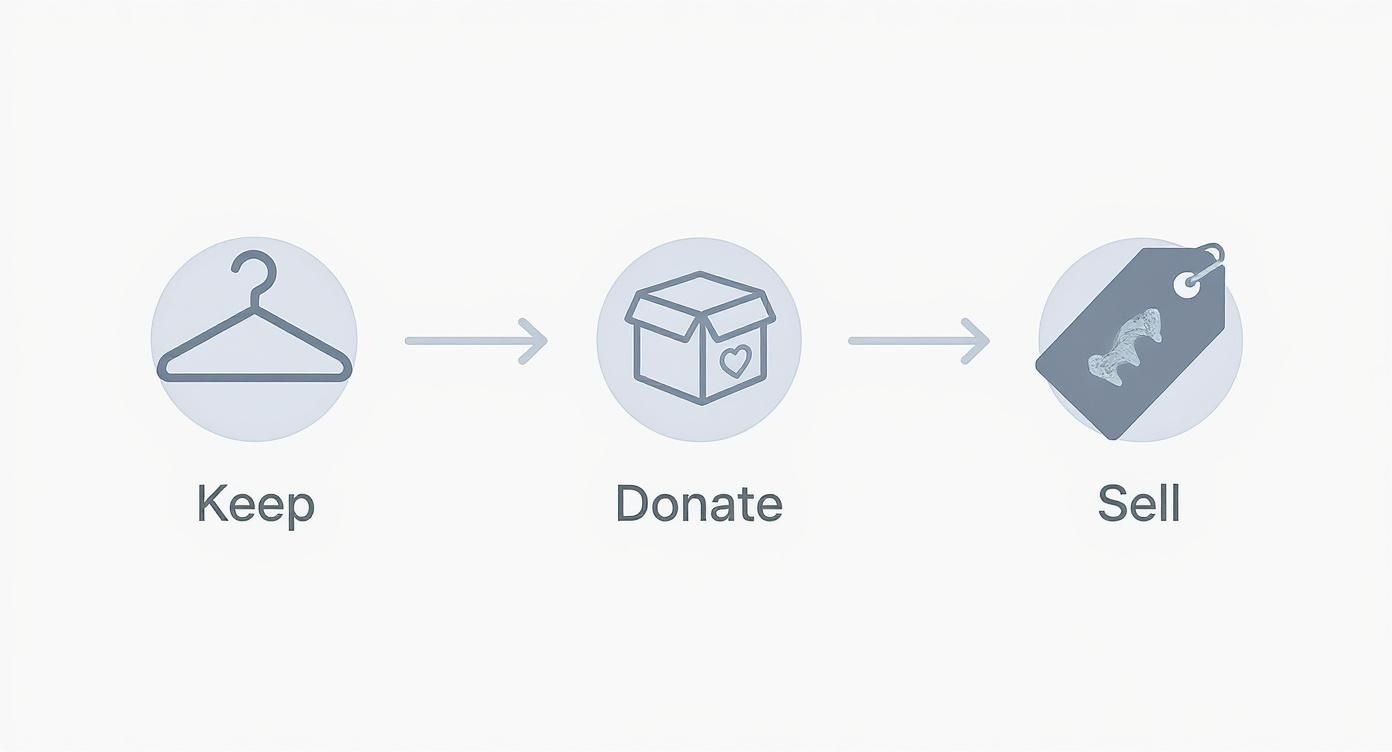
Seeing it laid out like this really simplifies things, giving you three clear paths for every single item you pick up.
Create Zones for Your Folded Clothes
Of course, not everything belongs on a hanger. For all your folded items—think sweaters, jeans, and your t-shirt collection—hanging fabric shelves are an absolute lifesaver. These organizers clip right onto your closet rod, creating a stack of cubbies that act like a floating set of drawers.
Using these prevents your knit sweaters from getting those dreaded shoulder bumps from hangers and stops your jeans from turning into a wobbly, messy pile on that top shelf. But more importantly, they help you create dedicated zones right inside your closet.
Here's how you can think about it:
- Workwear Zone: Group all your professional clothes together. Hang your blouses, blazers, and trousers in one section, and use the cubbies in a nearby hanging organizer for your work sweaters.
- Casual & Weekend Zone: This is home base for your everyday t-shirts, jeans, and comfy tops. Having them all in one spot makes grabbing a quick outfit for running errands effortless.
- Activewear Zone: Give your gym clothes and loungewear their own space in a hanging shelf or a dedicated bin. This keeps them separate from your daily outfits and ready for your next workout.
When you start creating logical zones like this, you’re doing more than just tidying up—you're building a system that actually fits your life. Your closet stops being a chaotic storage unit and becomes the command center for your entire wardrobe.
Use Vertical Space with Smart Shelving
When you're trying to figure out how to organize clothes without a dresser, your closet's vertical space is your greatest asset. Floor space is always at a premium, but most of us have empty wall space inside our closets that’s just sitting there, completely unused. The secret is to start thinking up, not out.
This is the best way to create a home for all your folded items—the t-shirts, sweaters, and jeans that you'd normally shove into drawers. By getting clever with shelving inside your closet, you can transform it into a functional, stylish hub that feels completely intentional.
Customizable Cube Organizers
I'm a huge fan of modular cube organizers, especially for walk-in or deeper closets. Think of them as LEGOs for your wardrobe. These units are incredibly versatile; you can stack them on the floor of your closet or on a deep shelf. They instantly create little cubbies that are perfect for sorting clothes.
Assigning a purpose to each cube makes finding things a breeze. Here’s a simple system I like:
- Top Cubes: Use these for neatly folded sweaters or hoodies.
- Middle Cubes: Perfect for everyday t-shirts and gym clothes.
- Bottom Cubes: A great spot for jeans, shorts, or even a few pairs of shoes.
The beauty of this setup is that your clothes stay visible and don't end up in a crumpled mess. You can pull one shirt out without toppling the whole stack. For more ideas on this, you can explore some smart storage solutions for maximizing space that can really transform a room.
Wall-Mounted Shelves for a Modern Look
If your closet has the wall space, installing additional wall-mounted shelves can completely revolutionize its capacity. You can add shelves above your existing rod or along a bare side wall. A few floating shelves can actually turn your clothing storage into a design element.
Just picture it: a tidy stack of your favorite colorful sweaters or a perfectly aligned row of denim on a minimalist shelf right inside your closet. It keeps your most-worn items easy to grab and adds a really polished touch.
By thinking vertically, you're not just storing your clothes—you're curating them. An organized closet system encourages you to stay tidy because everything has a designated place, turning a practical necessity into a point of pride.
Renter-Friendly Freestanding Solutions
But what if you can't drill into the walls? Don't worry, you're not out of options. You can place freestanding shelving units, sometimes called étagères or simple bookcases, directly inside a walk-in closet to act as a dresser substitute. They give you multiple tiers for folded clothes, accessories, and storage bins without any installation. To get a better sense of what could work for your closet, take a look at these creative shelving ideas for closets.
4. Unlock Hidden Storage Opportunities
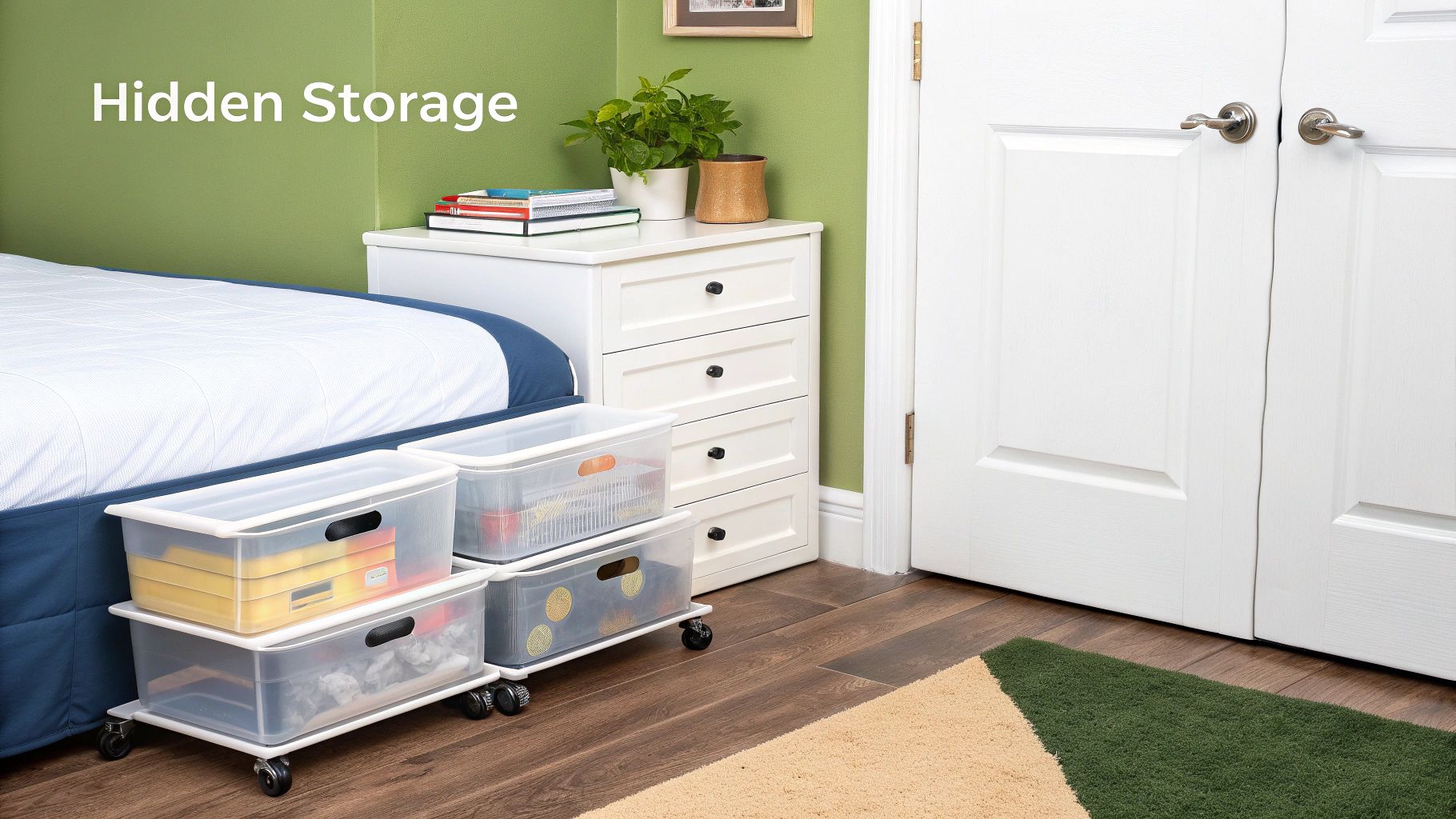
Alright, your closet is now pulling its weight. The next step is to get creative and claim those forgotten spaces that most people ignore. When you’re trying to figure out how to organize clothes without a dresser, two of the most valuable pieces of real estate are hiding in plain sight: under your bed and on the back of your closet door.
These spots are absolute gold for smart storage. They let you tuck away seasonal items or things you don't wear often, which keeps your main closet clear for the clothes you actually need every day. It's a simple, strategic move that makes a huge difference.
And there's a bigger picture here. Taking the time to organize your wardrobe properly is a surprisingly effective way to live more sustainably. Did you know the global fashion industry is responsible for a staggering 92 million tonnes of textile waste each year? When you can see everything you own, you’re far less likely to buy duplicates or forget about great pieces you already have. If you're curious, you can dig into more fashion waste statistics and facts.
Make the Most of Under-Bed Space
Think of the space under your bed as your personal storage unit. It's the absolute best place for bulky items and off-season clothes—heavy coats, chunky sweaters, extra blankets—that would otherwise clog up your prime closet space.
Getting the right containers is what makes this strategy work. Here’s a quick rundown of what I’ve found most effective:
- Wheeled Drawers: These are a game-changer if you need to get to your stuff fairly often. I love them for shoes, gym clothes, or even extra jeans. They just slide right out, basically acting like a set of invisible, low-profile drawers.
- Zippered Fabric Bags: For things you only need a few times a year, breathable fabric bags are perfect. Pro tip: find bags with a clear vinyl top. It saves you from having to unzip five different bags just to find that one holiday sweater.
- Vacuum-Sealed Bags: If you're serious about saving space, nothing beats vacuum bags. They're incredible for puffy winter jackets and thick comforters, shrinking them down to a surprisingly small size.
Treat your under-bed storage like a personal archive for your wardrobe. By stashing less-used items there, you instantly create more breathing room in your main closet, which makes getting dressed every morning so much less chaotic.
Go Beyond the Basic Door Hook
That single hook on the back of your door? It can do so much more. Over-the-door organizers have come a long way, and they offer an incredible amount of storage for all the small things that tend to create clutter.
I always recommend looking for organizers with a ton of clear pockets and hanging them on the inside of your closet door. They are the perfect solution for socks, underwear, scarves, belts, and other accessories. Getting these little items organized here frees up an entire shelf or cubby inside your closet for folded t-shirts or pants. Plus, you can see everything at a glance, which means no more digging through a messy bin to find a matching pair of socks.
Keeping Your New System From Falling Apart
You’ve done the hard work. You’ve sorted, hung, and folded everything into a closet system that actually makes sense for your space. But let's be honest, the real challenge isn't getting organized; it's staying organized.
The secret isn't some complicated routine. It's about building a few small habits that stop the clutter from creeping back in. Over time, these become second nature.
One of the best habits you can adopt right now is the 'one-in, one-out' rule. It’s incredibly simple: every time you buy a new piece of clothing, an old one has to leave. This single rule is a game-changer for preventing your closet from getting overstuffed again.
The 10-Minute Weekly Tidy-Up
You don't need to spend hours reorganizing every month. Just set aside 10 minutes once a week—maybe on Sunday night before the new week kicks off—for a quick closet reset. Think of it as maintenance, not a major overhaul.
- Handle the "Chairdrobe": We all have that one chair where clothes end up. Grab anything that's landed there and put it back in its proper home inside the closet.
- Straighten the Stacks: Quickly refold any sweaters or tees on your closet shelves that have gotten a bit messy.
- Clear the Floor: Make sure shoes are put away and nothing is cluttering up your closet floor space.
Don't forget the seasonal swap! Twice a year, take the time to move off-season items into under-bed storage. Getting bulky winter coats out of sight in the summer makes a massive difference in how accessible your everyday clothes are.
This little bit of upkeep is what turns your one-time organizing project into a long-term solution. It's how you keep your space feeling calm and under control for good.
Got Questions About Going Dresser-Free?
Taking the leap to a dresser-free bedroom definitely brings up some questions. I get it. The two biggest concerns I hear are always the same: "Won't all my clothes get wrinkled?" and "What on earth do I do with my socks and underwear?"
Let's break those down, because the solutions are surprisingly simple and closet-focused.
"But What About Wrinkles?"
This is a totally valid fear. The last thing you want is to trade a bulky dresser for a pile of creased clothes. But here’s the thing: for many items, hanging is actually better at preventing wrinkles. Anything remotely prone to creasing—think blouses, dress shirts, slacks, or linen fabrics—should be on a hanger anyway.
For everything else, like t-shirts, sweaters, and jeans, the trick is all in how you store them inside your closet. The enemy of a smooth t-shirt isn't the shelf, it's overstuffing. As long as you give your folded items a little breathing room in their designated cube or bin, they’ll stay looking great.
"Where Do I Put All the Small Stuff?"
Ah, the classic sock-and-underwear dilemma. Without drawers, where do these little items go? This is where your closet organization system truly shines. Small fabric bins or drawer dividers are your best friends here.
You can pop these organizers onto a closet shelf or tuck them inside a larger cube from a shelving unit. Suddenly, you have dedicated, contained spots for everything. An over-the-door organizer with clear pockets is also a perfect home for these small essentials.
The real secret to any great organizing system is giving every single item a specific "home" within your closet. When your socks have their own bin and your t-shirts have their own cubby, you've defeated the chaos before it can even start. Finding what you need—and putting it away later—becomes just as effortless as opening a drawer.
Ultimately, figuring out how to organize clothes without a dresser is all about building a system that works for your space and your wardrobe. The result is often more flexible, visible, and space-efficient than a traditional, clunky piece of furniture.
Ready to transform your closet and reclaim your space? The innovative space-saving hangers from MORALVE are designed to help you organize your wardrobe with ease. Discover the perfect solution for your closet today!
Leave a comment