
A Realistic Guide on How to Organize Kids Clothes in a Closet

Let’s be honest—organizing kids' clothes is less about creating a picture-perfect closet and more about building a system that can survive the beautiful chaos of childhood. The secret isn't a one-time, massive overhaul. It's about creating a living, breathing closet system that flexes with growth spurts and changing seasons.
The goal is to turn that closet from a black hole of mismatched socks and too-small pants into a functional space that actually makes your mornings easier.
Building a Realistic Kids Closet Organization System
Before you even think about buying new hangers or bins, take a moment to appreciate why your kid’s closet is the way it is. Unlike our own wardrobes, a child’s closet is in constant motion. They shoot up in size, seasons flip, and bags of hand-me-downs seem to appear out of thin air.
The trick is to stop fighting this natural flow and start working with it. Forget about a rigid, color-coded masterpiece that no one can maintain. The best closet systems are simple enough for you and your child to keep up with. A closet that’s too complicated is just a future mess waiting to happen.
Identifying the Core Closet Challenges
So, what are we really up against? Every parent faces the same hurdles that can turn a tidy closet into a disaster zone in a matter of weeks.
- Sudden Growth Spurts: It feels like it happens overnight, doesn't it? Suddenly, every pair of pants is an inch too short. Your closet system needs an immediate, designated spot for clothes that are now too small.
- The Influx of Hand-Me-Downs & Gifts: Generous friends and family are wonderful, but their gifts often create a storage puzzle. You’re left with clothes that are the wrong size or for the wrong season, and they need a temporary home within your closet system.
- The Seasonal Swap: Puffy winter coats have no business taking up precious closet space in July. You need a simple, efficient way to store off-season gear without it taking over the main hanging area.
This infographic breaks down a simple, three-part cycle that helps you tackle these closet challenges head-on.
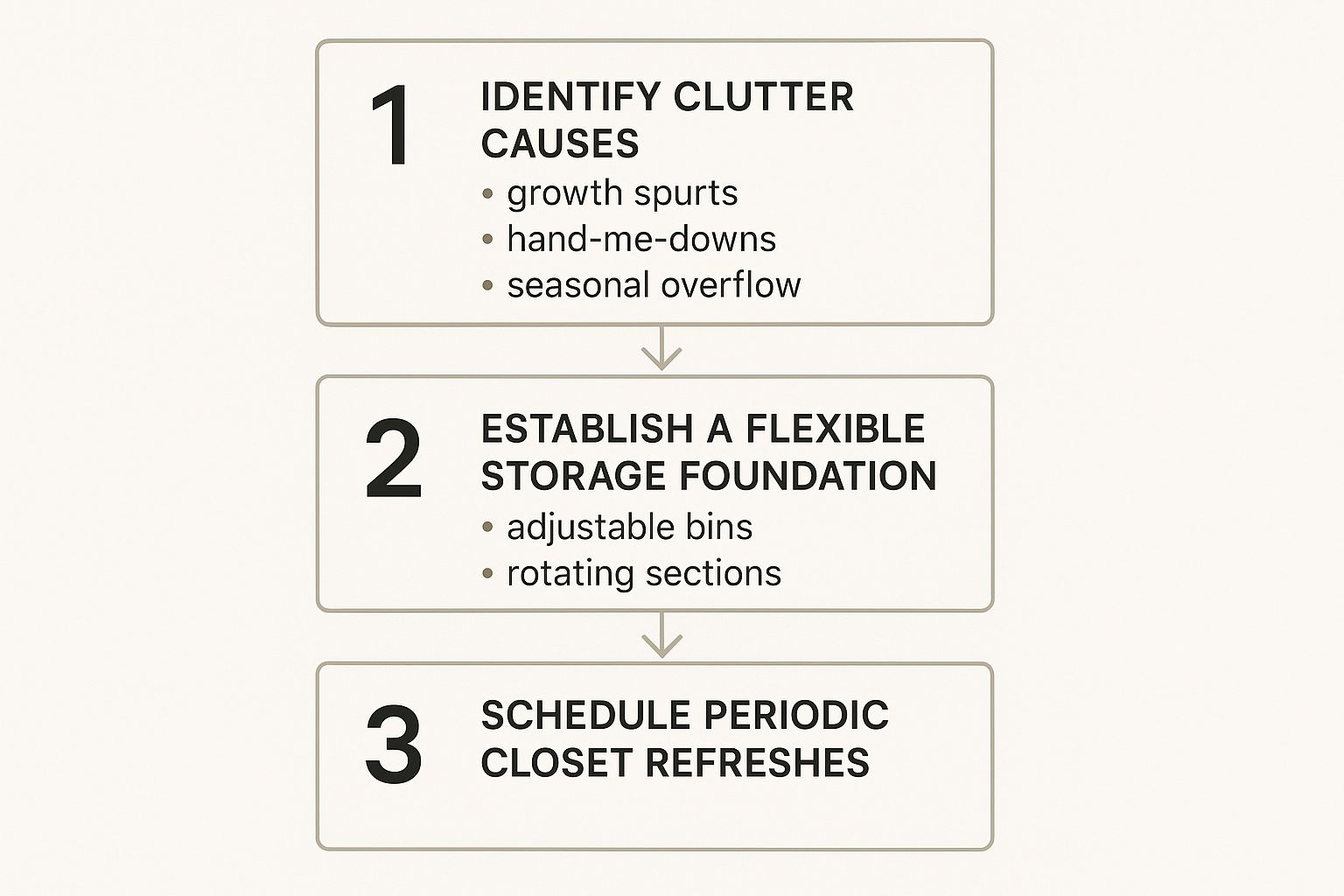
As you can see, it’s all about a continuous loop: identifying the problem areas in the closet, using smart storage solutions, and making quick, regular check-ins a habit.
At the heart of this approach are four key ideas that I’ve found make all the difference. Think of them as the foundation for a closet that actually works long-term.
The Four Pillars of a Functional Kids Closet
| Pillar | Core Principle | Why It Matters for Kids |
|---|---|---|
| Accessibility | Keep daily-use items at your child's eye and reach level within the closet. | Promotes independence and makes it easier for them to help put clothes away (or at least try!). |
| Flexibility | Use modular or adjustable closet storage that can change as they grow. | A system that works for a toddler won't work for a seven-year-old. Flexibility avoids a complete closet redo every year. |
| Visibility | "Out of sight, out of mind" is a universal truth. Use clear bins or open shelves inside the closet. | Kids are more likely to wear what they can see. It also stops you from buying duplicate items. |
| Simplicity | Fewer categories and simple rules are easier for everyone to follow within the closet space. | Overly complex systems are the first to fail. Think "shirts here, pants there"—not ten different sub-folders. |
By keeping these four principles in mind, you’re not just organizing the closet for today; you’re building a framework that will adapt and serve your family well for years.
The Economic Reality of Kids Wardrobes
The sheer volume of clothes we’re dealing with is a huge part of the closet challenge. The global kids' clothing market was valued at around USD 272.34 billion in 2025 and is only expected to keep growing. That number represents a mountain of tiny t-shirts and leggings flowing through our homes and closets.
A huge chunk of that market—an estimated 25.9% share—is made up of tops like t-shirts, which are the backbone of any kid's wardrobe. As parents increasingly look for durable, high-quality fabrics, it becomes even more important to manage these clothes well within the closet to preserve their value for hand-me-downs or resale. You can discover more insights about kids clothing market trends and see how they influence the way we approach organizing at home.
The Great Closet Sort: A Practical Decluttering Method
Alright, this is where the real work begins, and let's be honest, it's often the most daunting part. Staring into a child's cluttered closet can feel completely overwhelming, but you can absolutely turn that chaos into order with a solid plan. First things first: pull everything out of the closet. And I mean everything—every shirt, every mismatched sock, every forgotten Halloween costume. Pile it all on the bed or the floor so you can see exactly what you're up against.
Don't panic when you see the mountain of clothes. That initial shock is actually a powerful motivator. It forces you to confront the reality of how much stuff your child has versus how much they actually wear, which makes it so much easier to let things go.
A Sorting System That Actually Works for Kids
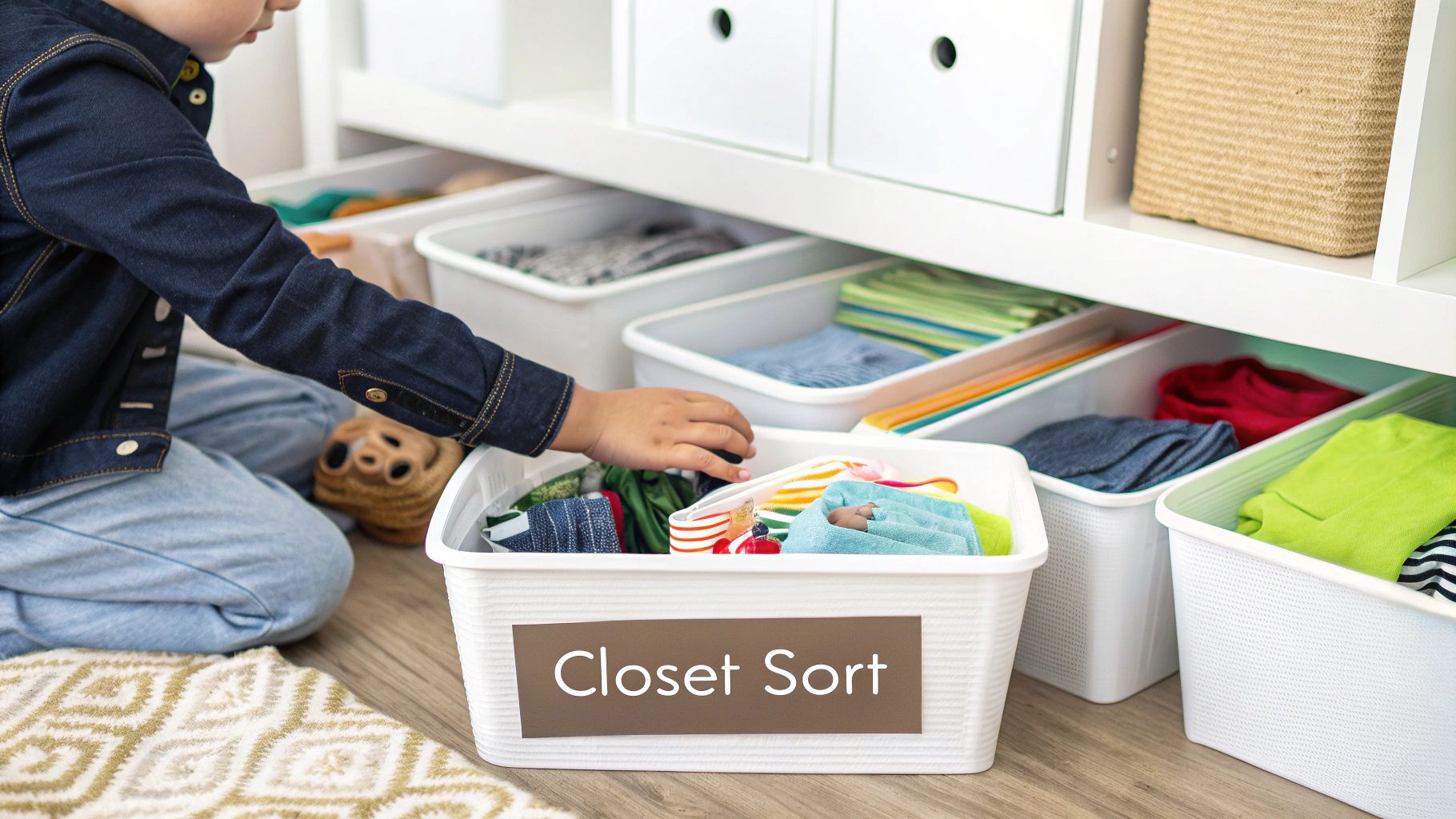
Forget the simple "keep" and "toss" piles. A child's wardrobe is a constantly revolving door of sizes and seasons, so your closet sorting needs a more nuanced approach. I’ve found that a four-bin system is the most effective way to tackle this because it covers every possible scenario for each piece of clothing.
Grab four large bins, laundry baskets, or just create four distinct piles on the floor. Label them clearly:
- Keep in Closet: This is for clothes that fit right now, are in good shape, and are right for the current season. Be brutally honest here. If your kid hasn't worn it in months, it probably doesn't belong.
- Store for Later: Here’s where you put clothes that are too big (like hand-me-downs or savvy sale finds) and anything that's off-season. This is the key to keeping the active closet lean and manageable.
- Donate or Hand Down: For all the items that are still in great condition but have been outgrown. This pile is destined to bless another family, whether it's a friend with a younger child, a cousin, or a local charity.
- Repurpose or Discard: This pile is for the clothes that have lived a full life. Think stubborn stains, unfixable rips, or items just too worn out to pass on. These can become future cleaning rags or be sent to a textile recycling program.
This method pretty much eliminates the decision paralysis that comes with a simple keep-or-toss choice. It gives every single item a clear, logical next step.
Making Quick Decisions Without the Guilt
Sorting kids' clothes can be surprisingly emotional. That tiny newborn onesie or the dress from their first birthday photo shoot can feel impossible to part with. Here’s a little trick I learned to move through the process quickly and with less emotional baggage.
Before you even start sorting the main pile, create a small "Memory Box." Give yourself permission to pick five to ten truly sentimental items. Place them in the box, close the lid, and put it away somewhere other than the daily closet. By honoring those special memories first, you free yourself up to be much more objective with everything else.
Next, get the kids involved—but do it strategically. Asking a five-year-old, "Do you want to keep this?" is a recipe for keeping everything. Instead, give them controlled choices. For example, "We have space in your closet for three of your five red shirts. Which are your absolute favorites?" This empowers them and subtly teaches a valuable lesson about letting go.
Key Takeaway: The goal isn't just to clear out space in the closet. It's to curate a wardrobe of items your child genuinely loves and feels comfortable wearing. If something is itchy, tight, or just not their style, it's clutter, no matter how new it is.
This sorting process is the foundation for any successful closet organization. If you're on a roll and tackling other closets in your home, you can apply these same principles everywhere. For more expert tips, check out this fantastic guide on how to declutter your closet for a broader perspective.
Handling the Never-Ending Influx
So, what about the constant stream of new clothes? Gifts from well-meaning grandparents and those little impulse buys can quickly undo all your hard work. My non-negotiable rule for the closet is simple: one in, one out. Before a new item gets a hanger, an old one has to leave.
When a bag of hand-me-downs arrives at your door, sort it right away with your four-bin system. Don’t let it become a permanent fixture in the corner of the room. Anything that fits and is needed goes into the closet; the rest is immediately routed to the "Store for Later" or "Donate" bins. This proactive approach is the real secret to preventing closet clutter from ever taking over again.
Setting Up a Smart and Functional Kids Closet
Once you’ve cleared out the clutter, you’re left with the good stuff—the clothes your child actually loves and wears. This is your chance to rethink the closet itself. It's time to transform it from a chaotic catch-all into a smart, functional system that streamlines your mornings and helps your child learn a little independence.
A great closet design isn't about shelling out for expensive custom built-ins. It's all about using the right tools to maximize every single inch of space you already have. The goal here is to create a closet setup that works for your child right now but can easily adapt as they grow.
Maximize Vertical Closet Space
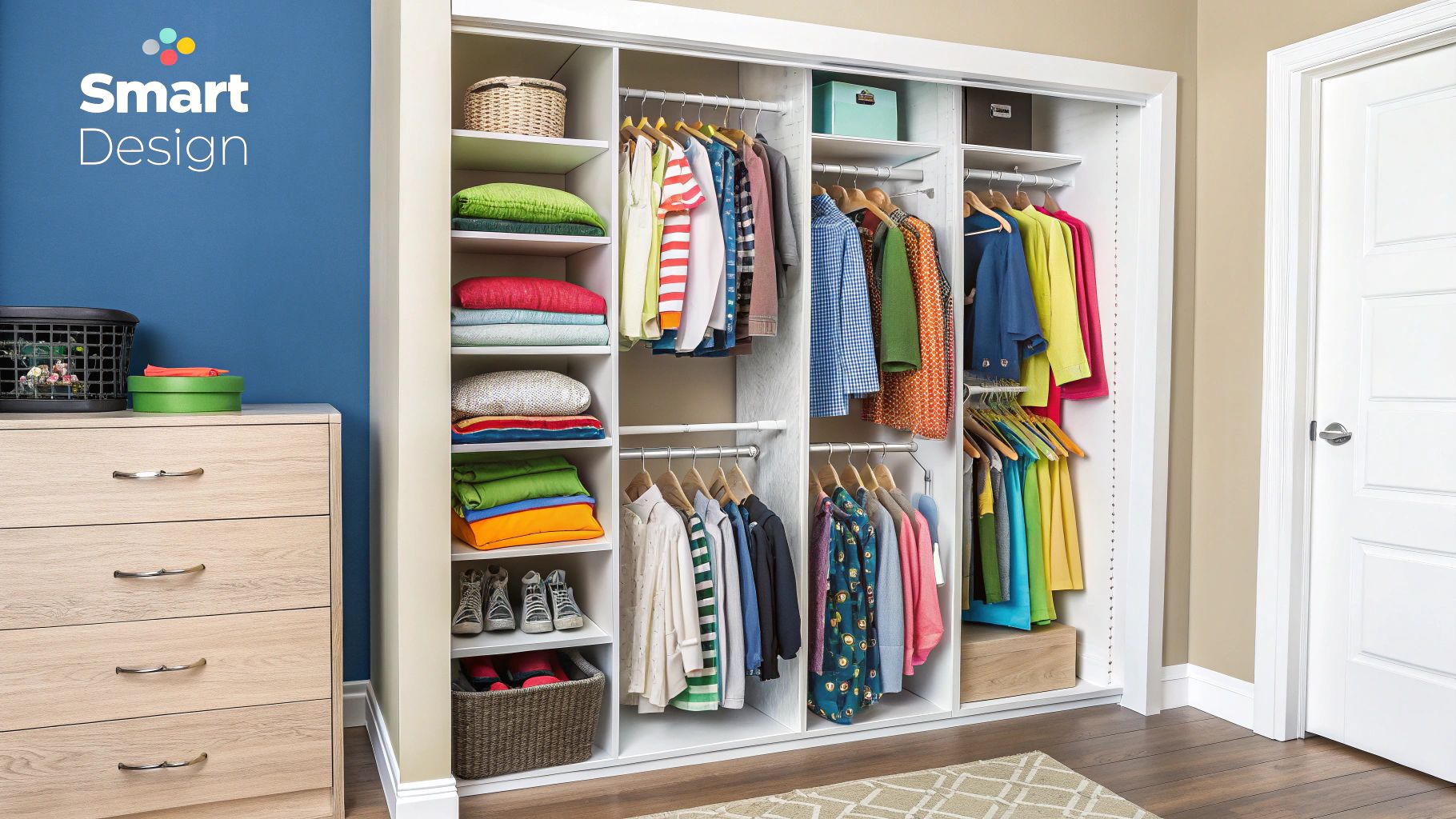
Let’s be honest, most standard closets are horribly inefficient. They usually have one high rod and a deep, awkward shelf way up top. For tiny kids' clothes, this design is a massive waste of potential. The secret to unlocking all that unused closet space is to start thinking vertically.
One of the easiest and most impactful changes you can make is installing a double hanging rod. Children’s clothes are short, which means a single rod leaves a huge, empty gap of air below. Adding a second rod instantly doubles your hanging capacity without taking up any more floor space. I like to use the top rod for out-of-season jackets or dressier outfits, keeping the bottom rod low enough for my kids to pick out their own shirts.
Adjustable shelves are another game-changer. Instead of one fixed shelf, a system with adjustable brackets lets you tweak the height and number of shelves as your child's needs change—from storing bulky diaper boxes to neatly folded sweaters for a growing tween.
The Power of Smart Closet Zoning
Zoning is just a simple way of giving every area in the closet a specific job. This creates a logical map that helps everyone—including your child—know exactly where things belong. Think of it as creating little "neighborhoods" for different types of clothing within the closet.
Here are a few zoning ideas I’ve used that really work:
- School vs. Play: Designate one side of the closet for school uniforms or weekday outfits and the other for weekend and play clothes. This simple split can shave precious minutes off a hectic morning routine.
- Daily Access Zone: Put everyday items like t-shirts, pants, and underwear in the most accessible closet spots—low shelves, drawers, or hanging rods that your child can easily reach on their own.
- Top Shelf Territory: Reserve those high, hard-to-reach shelves for things you control, like sentimental keepsakes, off-season gear, or extra bedding.
This systematic approach is more important than ever. By 2024, the global children's clothing market had already hit a value of around USD 210.9 billion, and it's projected to nearly double by 2034. That means more clothes, more options, and a greater need for smart closet storage. An organized system helps you manage this growing inventory without the overwhelm. If you're curious about these trends, you can explore the full findings on children's apparel.
A zoned closet empowers your child. When they know exactly where their superhero t-shirts live, they're far more likely to put them away themselves. It’s a foundational step in teaching them how to care for their own belongings.
For a deeper dive into making the most of your space, our guide on how to design a closet offers fantastic principles you can adapt for any closet in your house.
Choosing the Right Tools for the Closet
The right organizational tools can absolutely make or break your closet system. It’s tempting to grab every cute bin and basket you see, but it’s much smarter to choose a few key items that serve a specific purpose within the closet.
To help you get started, I've put together a quick comparison of the essentials that have made the biggest difference in keeping my kids' closets in check.
Essential Tools for Your Kids Closet Makeover
| Organizational Tool | Best Used For | Pro Tip | Budget-Friendly Option |
|---|---|---|---|
| Slim Velvet Hangers | Maximizing hanging space and preventing clothes from slipping off the rod. | Use different colors to categorize clothes by type (e.g., green for shirts, blue for pants). | Any matching set of thin plastic hangers will still save space over bulky ones. |
| Double Hanging Rod | Instantly doubling the usable hanging space for short kids' clothes. | Install an adjustable tension rod for a no-drill, temporary solution in a rental. | A hanging closet organizer with shelves can achieve a similar vertical division. |
| Fabric Drawer Dividers | Separating small items like socks, underwear, and accessories within a closet drawer. | Roll clothes instead of folding them to see everything at a glance. | Shoeboxes or small cardboard boxes work perfectly as DIY dividers. |
| Clear Labeled Bins | Storing out-of-season clothes, shoes, or sentimental items on closet shelves. | A picture label on the outside of the bin helps pre-readers identify contents. | Repurpose clear plastic food containers for smaller items like hair ties or belts. |
Picking the right tools isn't about spending a lot of money; it's about being strategic. Even a few smart additions can completely change the way the closet functions.
One of the most powerful tools isn't fancy at all: the "Too Small" bin. Place a dedicated, clearly labeled basket right inside the closet. The moment you or your child realize a shirt is too tight or pants are too short, it goes straight into the bin. No exceptions. This simple habit turns decluttering from a dreaded seasonal project into a continuous, manageable task. Once the bin is full, you can sort it for donation or storage, preventing outgrown items from ever creeping back into the active wardrobe.
Smart Storage Solutions for Off-Season Clothes
Let's be honest: a child's closet works best when it only holds what they can actually wear right now. Everything else—the bulky winter coats in July, the bag of hand-me-downs for next year, and those sweet sentimental outfits you can't bear to part with—needs a new home. Getting those items out of the primary closet is the real secret to creating a calm, functional space that makes the morning routine so much easier.
This isn't just about cramming things into a box in the attic. It’s about setting up a smart secondary storage system that supports your main closet. A good system protects the clothes, keeps you from accidentally re-buying things you already have, and turns the dreaded seasonal clothing swap into a quick, painless task.
Choosing the Right Storage Method
The container you pick can make all the difference in keeping clothes in great shape and making them easy to find later. I’ve learned that having a couple of different options on hand is the best approach, since different items have different needs.
- Clear, Airtight Bins: These are the absolute workhorses of off-season storage. Being able to see what’s inside at a glance is a lifesaver—no more opening ten identical boxes to find one specific sweater. Look for ones with airtight lids to protect everything from dust, moisture, and pests.
- Vacuum-Sealed Bags: If you're dealing with puffy snowsuits, winter jackets, or extra blankets, these are a revelation. They can shrink down bulky items by up to 75%, which frees up an incredible amount of closet or storage space. Just a heads-up: they can cause some serious wrinkles, so they’re better for durable outerwear than for delicate fabrics.
Pro Tip: Before you store anything, make sure it’s completely clean and dry. I’ve seen tiny, hidden food stains attract pests or become permanent over time, and even a little bit of moisture can lead to mildew. It’s worth the extra laundry load!
This kind of organized approach is becoming more crucial than ever. The global kids' apparel market is expected to jump from USD 211.57 billion in 2024 to nearly USD 366.72 billion by 2032. That massive growth means families are dealing with a much faster turnover of clothes, making a solid storage system to support the main closet a true necessity. You can read the full research about the kids apparel market to see just how quickly things are changing.
A Foolproof Labeling System
A great storage bin is useless if you have no idea what's inside. A clear, consistent labeling system is your best friend here, and trust me, vague labels like "Kids Clothes" are not going to help you six months from now. You have to get specific.
Your labels should always include three key things:
- Child's Name: Absolutely essential if you have more than one kid.
- Clothing Size: Be precise, like "Size 4T" or "Girls 6-7."
- Season/Type: Think "Winter - Sweaters & Coats" or "Summer - Shorts & Swim."
With that level of detail, you can grab the exact bin you need in seconds. For little ones who can't read yet, I love taping a quick photo of the contents to the outside of the bin—it’s a simple visual cue that works wonders.
Finding the Best Storage Spots
Okay, so where do all these perfectly organized bins go? You want to find spots that are out of the way but still reasonably accessible. The last thing you want is for the seasonal swap to feel like an archaeological dig.
- Under the Bed: This is prime real estate that so often goes to waste. Low-profile storage containers, especially those with wheels, are perfect for sliding in and out.
- Top of Closets: That high shelf in your kid's closet or a guest room closet is ideal for stashing things you only need twice a year.
- Basements or Attics: If you’re using these spaces, be sure your containers are completely waterproof and airtight. You need to protect your stash from temperature swings and any potential moisture.
Putting these strategies into practice creates a powerful system that keeps your main closet organized and stress-free. For even more ideas on how to make the most of every square inch, check out our complete guide on space-saving clothing storage for the whole family.
Keeping the Closet Organized for Good
You’ve done the hard work and the closet looks amazing. That's a huge win! But the real victory is keeping it that way. The secret isn't a massive clean-out every few months; it's about weaving small, easy habits into your daily life so closet clutter never gets a chance to creep back in. This isn’t about adding more chores to your list—it’s about creating a simple system that becomes second nature for everyone in the family.
The goal here is to trade those dreaded marathon-cleaning sessions for a rhythm of quick, consistent closet maintenance. Trust me, a few minutes a week feels a lot better than dedicating an entire Saturday to the project.
Get Your Kids on the Team
One of the best things you can do is to stop being the only one managing the closet. When you get your kids involved, you not only lighten your own load but also teach them valuable life skills. They learn how to take care of their things and feel a sense of responsibility. The trick is to give them tasks that are just right for their age.
You can start way earlier than you might think. Even a toddler can toss dirty clothes into a hamper or put their shoes into a specific basket inside the closet. As they get older, their jobs can grow with them.
- Ages 2-3: Can help put dirty clothes in the hamper and learn to place socks in a low, easy-to-reach closet drawer.
- Ages 4-5: Can put their own folded clothes away in labeled bins or low drawers. Picture labels are a game-changer for kids who can't read yet!
- Ages 6-8: Are ready to learn how to fold simple things like t-shirts and pants, and they can definitely start hanging items on kid-friendly hangers in their own closet.
When kids are active participants, the closet becomes a shared space they actually care about. These little habits build a foundation for staying organized that will serve them well for years to come.
The Power of a Simple Closet Maintenance Routine
To make this all feel totally effortless, you just need to tack a few small tasks onto your existing routines. A little checklist can keep your closet on track without ever feeling like a burden. Think of it as a quick closet reset you do regularly.
Your Weekly Closet Reset (5-10 Minutes)
- Quick Tidy: Spend five minutes re-hanging clothes that have slipped off hangers or re-folding anything that got messed up during the morning rush.
- Empty the "Too Small" Bin: Is the outgrown bin in the closet getting full? Now’s the time to move those items into storage or your donation bag.
- Floor Check: Do a quick scan for stray socks, shoes, or forgotten toys that have found their way onto the closet floor.
Your Monthly Closet Check-In (15-20 Minutes)
- Spot Check for Fit: While you're putting away laundry, grab an item or two and see how they fit. Are those pants starting to look like capris? Time to move them to the "Too Small" bin.
- Seasonal Scan: Take a quick look at what's hanging in the closet. Is a heavy wool sweater still taking up prime real estate in July? Move it to your off-season storage.
- Wipe Down: Give the closet shelves and drawers a quick wipe to keep things fresh and dust-free.
This proactive approach stops tiny messes from turning into a full-blown closet disaster. It’s how you make organizing kids' clothes a sustainable, low-effort habit.
Make Laundry Day and New Clothes Work for Your Closet
Your laundry routine is the perfect built-in opportunity to maintain closet order. Instead of letting clean clothes sit in a basket (we've all been there), make putting them away immediately part of the process. This is your chance to reinforce the whole closet system.
Laundry Day Pro Tip: As you fold clothes, sort them into categories—all the shirts in one pile, pants in another, pajamas in a third. This makes it super fast for you or your child to put everything back in its proper home in the closet without a second thought.
Finally, to handle the constant influx of new clothes from birthdays and shopping trips, live by the "one in, one out" rule. Before that new shirt finds a home in the closet, an old one has to go. This simple principle is your best defense against an overstuffed closet and ensures your system stays perfectly balanced.
Common Questions About Organizing Kids Clothes
Even when you've got a great system humming along, kids' clothes have a way of throwing you a curveball. You're not just organizing stuff; you're managing the ever-changing wardrobe of a tiny, growing human. A well-organized closet is your best tool for managing this unique challenge.
Let's dig into some of the most common questions and hurdles I hear from parents. Think of this as your troubleshooting guide to keeping that closet under control.
How Often Should I Declutter a Kids Closet?
This is the big one, isn't it? My go-to strategy is a two-part approach. Plan for a major, full-closet clear-out twice a year. The easiest way to remember is to tie it to the seasons—do one big sort in the spring and another in the fall as you're swapping out warm-weather and cold-weather clothes anyway. This is your chance for a total reset of the closet.
But the real magic isn't in those big purges. It's in the day-to-day maintenance.
The single most effective tool you can have is a dedicated "Too Small" bin right there in the closet. The second you're dressing your child and realize those pants are suddenly capris, toss them in. Don't put it back in the drawer. This one simple habit stops the closet clutter before it even starts, turning a dreaded chore into a simple, ongoing process.
Once that bin is full, you're ready to decide what gets stored for a younger sibling, donated, or passed on to a friend. This "micro-decluttering" is the secret to staying on top of the closet all year long.
What Is the Best Way to Organize Baby Clothes?
Oh, the tiny clothes! They're adorable, but they are notoriously difficult to organize. Traditional hangers are pretty useless for onesies and sleepers, and you usually have mountains of them. For infants, your best friends for closet organization are drawers and hanging cubby organizers.
Forget hanging most things. The better strategy is to use closet space for folded items and accessories:
- Drawer Dividers are Non-Negotiable: Seriously, these are essential if you have a dresser inside the closet. They create neat, manageable rows and stop everything from collapsing into a jumbled mess. You can easily separate items by type—onesies here, pants there, sleepers in the back.
- File, Don't Stack: This is a game-changer. When you fold clothes and "file" them vertically (like papers in a filing cabinet), you can see every single item at a glance. No more digging through a stack to find that one specific outfit you were looking for.
- Use Vertical Closet Space Wisely: Since you won't be hanging much, a hanging shelf or cubby organizer becomes prime real estate in a baby's closet. It's the perfect spot for shoes, hats, swaddles, and other accessories that would otherwise get lost.
When Can Kids Help Organize Their Own Closet?
Kids can start helping out much earlier than most people think! The trick is to give them age-appropriate jobs that empower them without feeling like a chore. Getting them involved in their own closet doesn't just lighten your load; it teaches them huge life skills about taking care of their things.
Here’s a rough guide based on my experience:
- Toddlers (Ages 2-3): They are surprisingly good helpers. Keep it simple: they can put their dirty clothes in the hamper or toss their shoes into a low basket on the closet floor.
- Preschoolers (Ages 4-5): Now they can start putting their own folded laundry away into low closet drawers. I love using picture labels (a drawing of a shirt, a sock, etc.) on the drawers for pre-readers. It makes it a fun matching game.
- Early Elementary (Ages 6-8): By this age, they're perfectly capable of learning to fold simple things like t-shirts and even hang clothes on kid-friendly hangers in their closet. It just needs to become part of their routine, like brushing their teeth.
How Do I Handle Sentimental Clothes?
It’s completely normal to get attached to certain outfits. That "coming home from the hospital" sleeper, the frilly first birthday dress, a favorite holiday sweater—these pieces hold memories. Don't feel guilty about wanting to keep them.
The key is to separate these special items from the functional, everyday wardrobe in the closet.
Create a designated "Memory Box." Be picky and choose only the few items that truly pull at your heartstrings. Once they're in the box, store it somewhere safe, outside the daily closet. This way, you get to cherish the memory without it cluttering up the closet you use every day. Another trick? For outfits that are cute but not quite keepsake-worthy, take a great photo of your child wearing it before you pass it along. You keep the memory, not the item.
Ready to reclaim your closet space and build a system that finally works for your family? The right tools can make a world of difference. At MORALVE, we design space-saving hangers that help you maximize every inch of your closet, keeping clothes neat, visible, and easy to manage.
Discover our full range of innovative organization solutions and start building a smarter, more functional closet today at https://moralve.com.
Leave a comment