

How to Store Clothes for a Tidy Closet

Before you can even think about organizing your closet, you have to get real about what’s actually in it. A truly efficient closet system starts with a strategic clean-out, not just new hangers. You’re building a foundation for a closet that actually works for you every single day.
Build Your Foundation for an Organized Closet
I’ve seen it a hundred times: people buy all the fancy organizers, but they’re still trying to cram a bursting wardrobe into a tiny space. It just doesn’t work. The real secret to successful closet organization is making conscious, sometimes tough, decisions about what you keep.
The goal isn't just a tidy closet; it's a space filled only with clothes you genuinely love and feel great wearing. This initial purge is often the hardest part, I get it. We all hang onto things for sentimental reasons, for those "just in case" moments, or with the hope we'll fit back into them someday. Pushing past those mental blocks is where the magic happens.
The Four-Box Method for Decisive Decluttering
To make this less overwhelming, I swear by a simple system: the Four-Box Method. Just grab four empty boxes, bins, or even trash bags and label them.
- Keep: This is for the good stuff—the clothes you wear all the time, that fit you perfectly, and are in great shape. These are your everyday heroes that belong in your closet.
- Donate: Perfect for items that are still wearable but just aren't you anymore. Maybe the style is wrong, or the fit is off. Let someone else love them.
- Store: Think seasonal. Heavy winter coats don't need to take up prime real estate in July. This box is for off-season gear that you'll pack away, freeing up valuable closet space.
- Recycle/Toss: For the clothes that have lived a full life. Anything stained, torn, or too worn out to donate goes here. Look into textile recycling programs in your area!
Don't try to tackle the whole closet at once—you'll burn out. Go section by section. As you handle each piece of clothing, ask yourself the tough questions. Have I worn this in the past year? Do I feel confident in it? If not, it's time for it to go into one of the other boxes. For a more detailed walkthrough, you can check out our complete guide on how to declutter your closet.
The biggest mental trap is thinking, "I might wear it someday." A better way to frame it is to ask yourself: "If I saw this in a store right now, would I buy it?" If the answer is a hard no, it's time to let it go.
This isn’t just a personal quest for a better closet; it’s part of a massive trend. The global market for wardrobe and storage organizers is already worth around $15 billion and climbing. It’s all driven by our collective desire for more organized, functional living spaces.
By clearing out the clutter, you’re not just tidying up. You're setting the stage for a simpler, less stressful morning routine every single day.
Choosing the Right Closet Organization Tools
Once your closet is decluttered and breathing again, it's time to bring in the right gear. This is where you transform the space from just a place where clothes live into a truly functional, streamlined system. And don't worry, this isn't about a huge budget—a few smart choices can completely change the game.
Honestly, the single most impactful thing you can do for your closet's appearance is get matching hangers. That jumble of plastic and wire hangers from the dry cleaner? It creates visual noise and, frankly, isn't great for your clothes. Switching to a single, uniform style instantly makes your closet look and feel more organized and intentional.
Maximize Your Closet Space with Smart Hangers
The type of hanger you choose really comes down to what's in your wardrobe. For most of us trying to maximize our closet space, slim velvet hangers are a lifesaver. Their fuzzy, non-slip texture is perfect for keeping slinky tops and wide-neck dresses from sliding onto the floor, and their ultra-thin design can practically double your hanging space.
But for your heavier hitters—like winter coats, structured blazers, or suits—you need to bring in the big guns. Sturdy wooden hangers provide the support those garments need to keep their shape and prevent weird shoulder bumps from forming. They're bulkier, sure, but they’re essential for protecting those investment pieces. If you're stuck on what to use for which item, our guide on how to store hangers has some great pointers.
To help you decide which hangers are best for your closet, here’s a quick comparison of the most common types.
Hanger Type Comparison for Optimal Closet Organization
| Hanger Type | Best For | Space Efficiency | Pros | Cons |
|---|---|---|---|---|
| Slim Velvet | Silky blouses, dresses, lightweight shirts, pants | High | Non-slip grip, ultra-thin profile saves maximum space | Can't support heavy items, may snap under pressure |
| Wooden | Coats, suits, blazers, heavy jackets | Low | Very sturdy, maintains garment shape, looks premium | Bulky and heavy, takes up significant closet space |
| Plastic Tubular | Everyday t-shirts, casual shirts | Medium | Inexpensive, lightweight, comes in various colors | Can be slippery, may cause shoulder bumps over time |
| Wire | Temporary use (e.g., from dry cleaners) | High | Very cheap and thin | Flimsy, easily bends, can rust and damage clothes |
Choosing the right mix based on your clothes is key to a closet that works for you, not against you.
This infographic can help you visualize the decluttering process that clears the way for a better system.
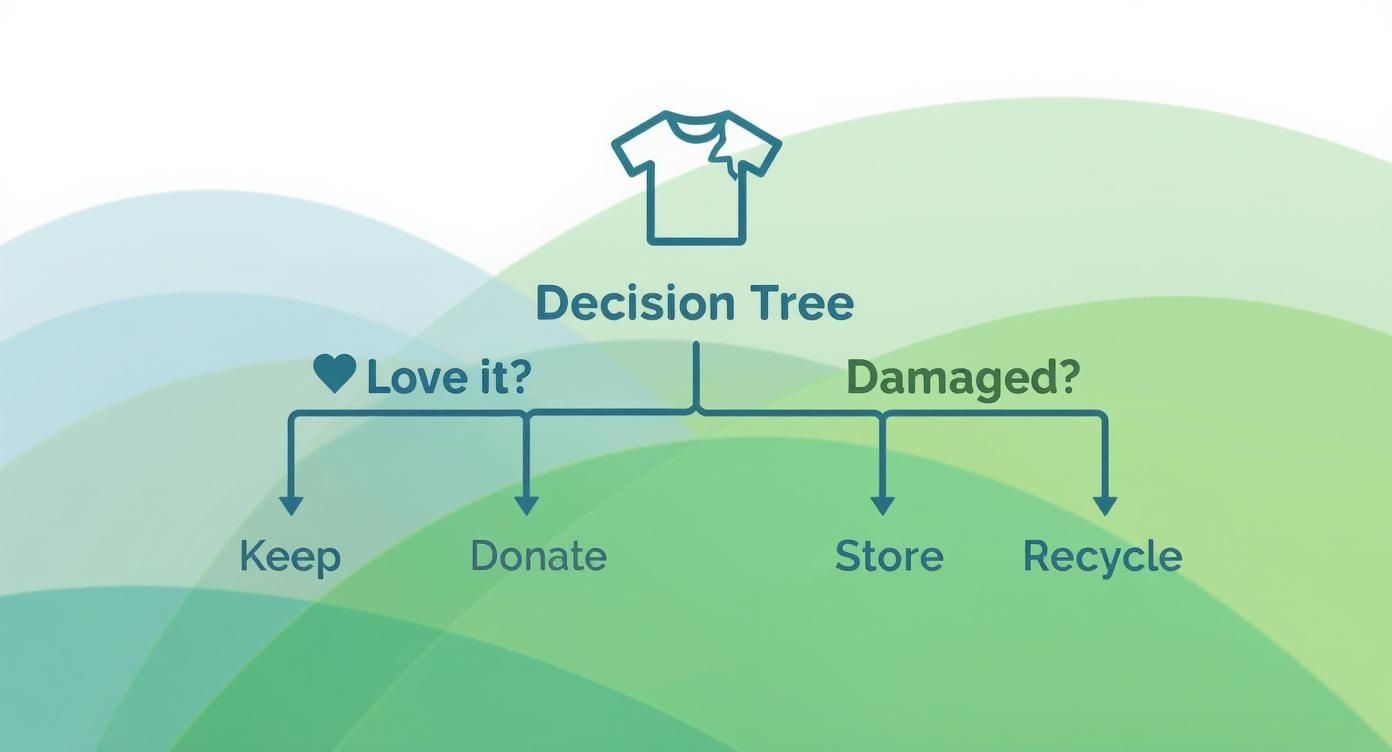
It’s a great reminder that before you start organizing, every single item needs a clear purpose: keep, store away, or donate.
Go Beyond the Hanger Rail
Great closet organization is about more than just the main hanging rod. Drawer dividers, for instance, are the unsung heroes of a tidy wardrobe. Use them to section off space for socks, underwear, and accessories. You'll go from a chaotic jumble to a neat grid where you can find exactly what you need in seconds.
- Drawer Dividers: Perfect for creating custom compartments for small items.
- Clear Bins: A fantastic solution for sweaters or scarves you want to store on a closet shelf. Being able to see what's inside saves you from having to tear everything apart looking for one specific item.
- Over-the-Door Organizers: Don't forget about vertical space! These are brilliant for shoes, belts, or handbags, getting them up off the floor and maximizing every inch of your closet.
You could even add a simple garment rack for extra capacity. This is a growing trend, especially for people in smaller living spaces. In fact, the garment racks market was valued at a whopping $5.2 billion in 2023 and is only expected to get bigger.
The right tools do more than just hold your clothes; they create a sustainable system. When everything has a designated home, your daily routine becomes simpler, and keeping your closet tidy for the long haul feels effortless.
The Fold Versus Hang Decision
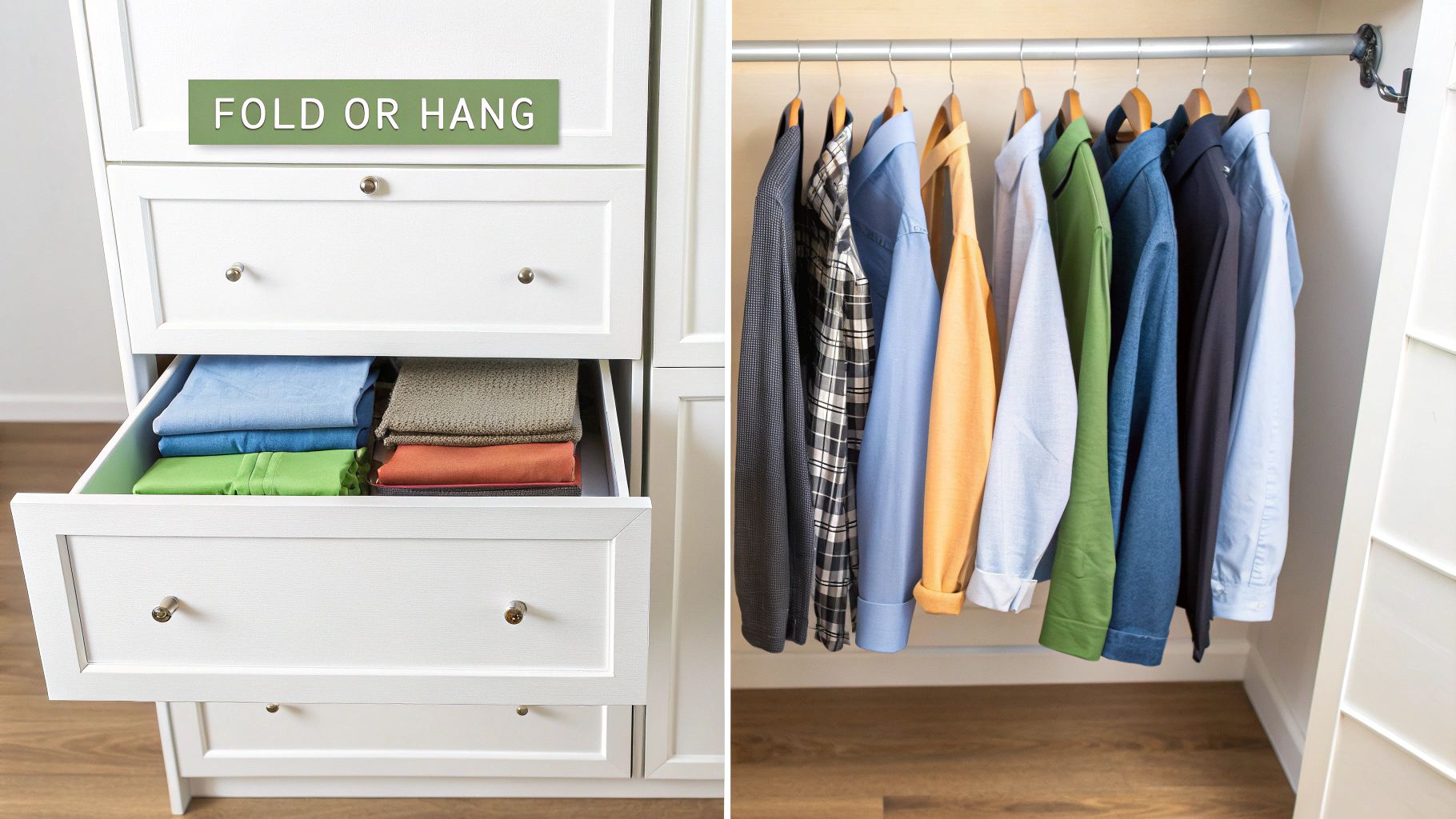
How you put your clothes away is just as important as the hangers and bins you use. The choice to fold an item or hang it up might seem small, but it's a cornerstone of good closet management. Get it right, and you’ll not only protect your clothes but also make your mornings run a whole lot smoother.
The rule of thumb I always follow is pretty straightforward: hang anything that wrinkles easily or has structure, and fold anything that can stretch out or is bulky. If you can just get that part down, you're already halfway to a more functional wardrobe.
What to Hang for a Wrinkle-Free Wardrobe
Some clothes just belong on a hanger. Gravity works in your favor with these pieces, keeping them crisp, smooth, and ready to go at a moment's notice.
- Blazers and Jackets: These absolutely need to be hung to keep their shoulders and overall shape intact. I can't stress this enough—use a sturdy wooden hanger for these.
- Dresses and Skirts: Hanging is the only way to avoid those deep-set creases that are a nightmare to iron out, especially with fabrics like linen or rayon.
- Blouses: Delicate materials like silk, satin, and chiffon will get hopelessly creased if you fold them. Pop them on slim velvet hangers to keep them from sliding onto the floor.
- Dress Pants and Trousers: To keep that sharp center crease, hang your trousers by the cuff or fold them over a dedicated pants hanger.
Once you have your hanging items sorted, take it one step further with closet organization. I always group mine by category first (all dresses together, all jackets together) and then arrange them by color. It creates a beautiful visual flow that makes finding exactly what you're looking for incredibly easy.
When Folding Is Your Best Friend
On the flip side, hangers can be a total disaster for some garments, causing permanent stretching and damage. These items are much happier being folded neatly on a shelf or tucked into a drawer.
Knit sweaters are the number one offender. If you hang a heavy wool or cashmere sweater, you’re practically begging for those dreaded shoulder bumps and a stretched-out neckline. T-shirts, leggings, and most of your casual knits should also join the folded pile.
Don't just cram them into a drawer and call it a day. The real game-changer is file folding. When you fold clothes into tidy rectangles and store them vertically—like files in a cabinet—you can see every single item at a glance. No more digging for your favorite tee.
This isn't just about looking good; it's about adding real value. In fact, 97% of realtors report that closet space is a higher priority for homebuyers than an attic or basement. That shows you just how much we crave well-organized, accessible wardrobes.
Mastering a few folding methods can completely transform your drawers. To get started, check out our guide on folding clothes to save space, which walks you through the file-folding technique. It's a small habit that delivers huge results, turning messy drawers into a streamlined system.
Making the Seasonal Wardrobe Swap Work for You
Let's be real: a closet that's truly functional is one that serves you right now. That means your bulky winter parkas shouldn't be hogging prime real estate next to your breezy summer dresses in the middle of July. Getting the hang of the seasonal wardrobe swap is a game-changer for keeping your daily closet organized, accessible, and free of clutter.
This is more than just stuffing last season's clothes into a box and hoping for the best. It’s a smart process that protects your clothes so they look great when you pull them out again next year. The absolute most important rule? Wash everything before you store it. Seriously, everything. Even if a shirt looks clean, invisible body oils or tiny food specks can attract pests and set into stubborn stains over time. And make sure every single piece is bone dry before it gets packed away, or you'll be dealing with mildew.
Smart Storage for Your Off-Season Pieces
Once everything is freshly laundered, it's time to pick the right home for your off-season garments. Your goal is to shield them from dust, moisture, and pests without causing any damage to the fabric itself.
-
Breathable Garment Bags: These are your best bet for anything with structure, like suits or delicate dresses, especially if storing them in a guest closet. They let air circulate, which is key for preventing that musty smell.
-
Clear Plastic Bins with Lids: I swear by these for folded items like sweaters, jeans, and t-shirts. They stack beautifully, keep critters out, and you can see exactly what's inside. Just don't get the completely airtight kind; fabrics need a little room to breathe.
-
Vacuum-Sealed Bags: These are incredible space-savers, but you have to use them wisely. They are absolutely brilliant for squishing down puffy coats, ski gear, and thick blankets. But be careful—I wouldn't recommend them for delicate natural fibers like high-quality wool or down, as the intense compression can crush the fibers.
My personal system? I use vacuum bags for my synthetic puffer jackets and bulky ski pants since they can handle being compressed. For my nice cashmere and merino wool sweaters, I stick to breathable bins to make sure they keep their shape and softness.
Don't forget to look down! That space under your bed is pure gold. Low-profile bins and compressed vacuum bags slide right under, keeping your off-season wardrobe completely out of sight but still easy to get to when that first cold snap hits unexpectedly.
To help you choose the best option, here's a quick guide to matching your clothing with the right storage solution.
Seasonal Storage Solutions Guide
| Clothing Item Type | Recommended Storage Container | Preparation Tip | Best Storage Location |
|---|---|---|---|
| Wool & Cashmere Sweaters | Breathable fabric bins or clear plastic bins (not airtight) | Fold gently with acid-free tissue paper between layers to prevent snags. | A cool, dark, and dry closet shelf or under a bed. |
| Heavy Coats & Parkas | Vacuum-sealed bags (for synthetics) or breathable garment bags | Empty all pockets and zip all zippers. Let it air out before storing. | Back of a secondary closet, hanging high, or under the bed if compressed. |
| Boots & Leather Shoes | Original shoe boxes or clear shoe bins with cedar shoe trees | Clean and condition leather thoroughly. Stuff with paper to maintain shape. | Bottom of a closet or on a low shelf where they won't be crushed. |
| Summer Dresses & Linens | Rolling rack with a fabric cover or breathable garment bags | Avoid folding delicate fabrics. Roll if necessary, but hanging is best. | A guest room closet or a dry, temperature-controlled storage area. |
Choosing the right container and location is half the battle won in keeping your clothes looking brand new season after season.
A Painless Checklist for the Seasonal Switch
Swapping your wardrobe twice a year can feel like a huge chore, but having a simple system makes it so much easier. Think of it as a biannual refresh that keeps your daily closet feeling curated and under control.
Here’s a simple rundown:
- Prep and Clean: First things first, wash and thoroughly dry every single out-of-season item. This is also the perfect time to mend that loose button or stitch a small tear—don't put it off!
- Pack Like a Pro: Try rolling clothes instead of folding them flat; it really helps minimize those hard-to-iron-out creases. When using bins, always put the heavier items on the bottom.
- Add Some Protection: Toss in a few cedar blocks or lavender sachets. They’re a great natural way to repel moths and keep your clothes from smelling stale.
- Label Everything: This is the step you’ll thank yourself for later. Grab a marker and clearly label each bin or bag (e.g., “Winter Sweaters & Hats” or “Summer Tanks & Shorts”). Trust me, it saves a massive headache down the line.
By making this a regular ritual, you’re not just putting clothes away. You’re taking care of your investment and setting your future self up for a beautifully organized, stress-free closet, no matter what the weather is doing outside.
Smart Closet Storage for Accessories
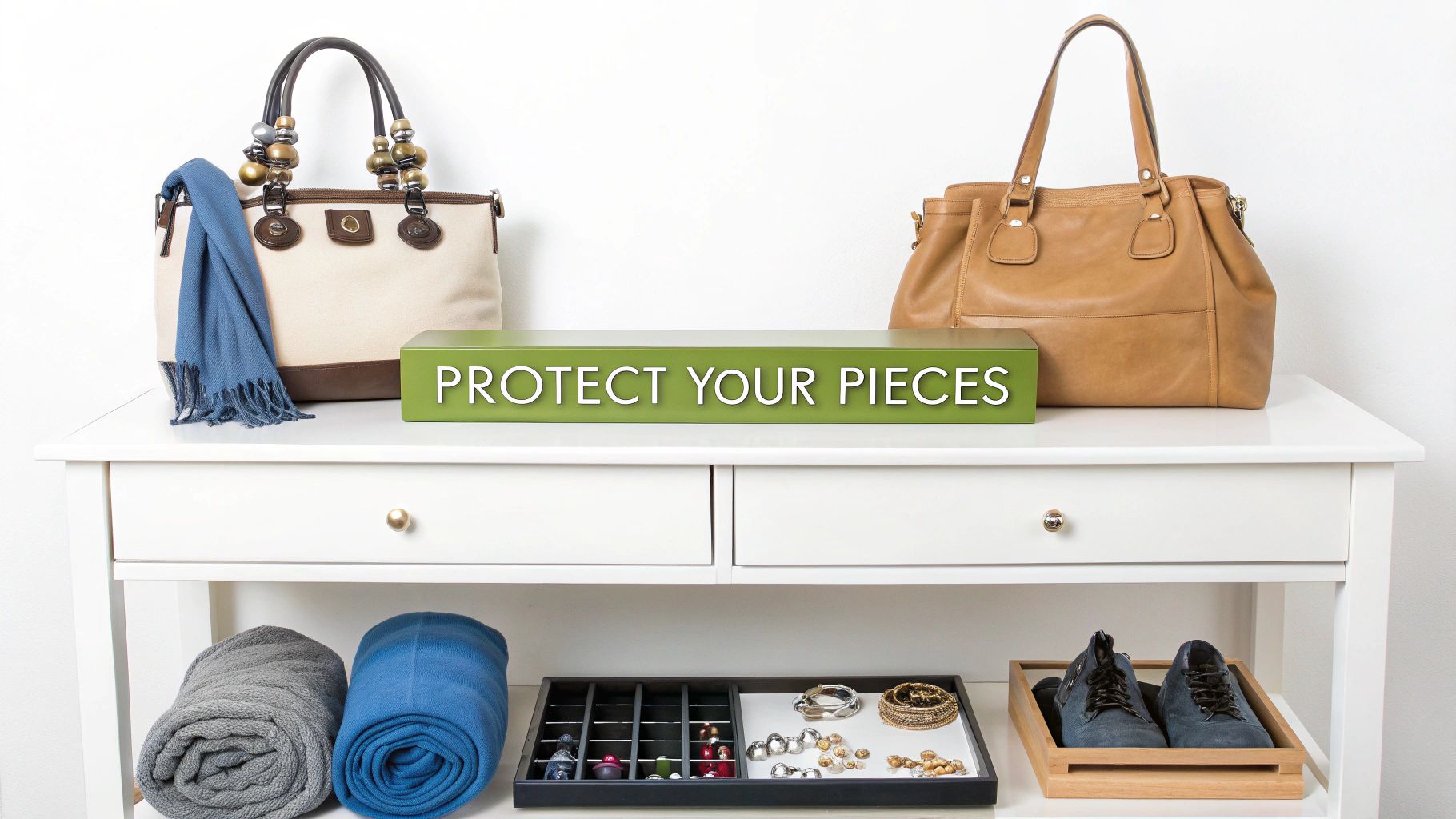
Alright, with your everyday clothes sorted, it's time to tackle the items that tend to create the most closet clutter. I'm talking about accessories and those special pieces that often get shoved into corners or tangled in drawers. Finding a dedicated spot for every belt, bag, and blazer is what really ties the whole closet organization project together.
These aren't just any clothes, either. Many of them need a bit more thought to keep them looking their best. You can't just toss a formal gown or a delicate knit into a bin and hope for the best. A little extra care here goes a long way in protecting your investment and making sure your favorite pieces are ready to go when you are.
Organizing Your Closet Accessories
Accessories might be small, but they can create big messes. The good news is that with a few simple tools, you can transform that jumble into an organized, easy-to-use collection. It makes pulling an outfit together so much faster.
- Handbags: The key here is helping them keep their shape. Before you put them away, always stuff your handbags with old t-shirts or acid-free paper. And whatever you do, don't hang them by their straps—that's a surefire way to cause stretching and damage. It’s much better to line them up neatly on a shelf or use cubby organizers.
- Belts & Scarves: Drawer inserts with little compartments are a fantastic solution for rolled-up belts and scarves. If you prefer to hang them, a simple multi-hook hanger works wonders. I've even installed a small tension rod on an unused closet wall to keep scarves visible and tangle-free.
These small changes honestly make a world of difference. No more frantic searching for that one specific belt you need.
The goal is to make every item in your closet easy to see and access. When you can quickly find what you're looking for, you're more likely to wear what you own and feel less stressed getting ready.
Caring for Delicate and Formal Items
Some clothes demand a bit more respect than just a spot on a hanger. Delicate fabrics, expensive suits, and formal dresses need the right environment to stay pristine.
I've learned this the hard way: delicate knits like cashmere and angora should always be folded, never hung. A hanger will stretch them out of shape permanently. I like to place a sheet of acid-free tissue paper between folds to prevent any snagging. For things like fine lace or silk, gently rolling them is often a better bet than folding, as it helps avoid those hard-to-remove creases.
When it comes to formalwear—think suits, tuxedos, and evening gowns—breathable garment bags are non-negotiable. They shield your valuable items from dust and light but still let air circulate, which is key to preventing that stuffy, stored-away smell. Just be sure to ditch the plastic bag from the dry cleaner; it traps moisture and can lead to yellowing over time.
Finally, a word on shoes and jewelry. An open shoe rack is perfect for the pairs you wear all the time because it lets them air out. For shoes you wear less often, clear boxes are great for keeping them dust-free while letting you see what's inside. For jewelry, small trays or drawer dividers are a lifesaver for stopping necklaces from becoming a tangled mess and making sure earring pairs stay together.
Making Your Organized Closet Last
Getting your closet organized feels fantastic, but let's be honest—keeping it that way is the real test. The secret isn't about doing massive, exhausting clean-outs every few months. It's about building small, simple habits that make tidiness a part of your daily life, almost on autopilot.
The single best habit you can adopt is the "one in, one out" rule. It’s incredibly simple: every time a new piece of clothing comes into your closet, an old one has to leave. This one practice is a game-changer for preventing that slow, creeping clutter that happens when new purchases pile up.
Create Simple Closet Maintenance Habits
Another trick I swear by is the "five-minute reset." Pick a time once a week—Sunday evening is great for this—and set a timer for just five minutes. Use that time to put away any clothes that have piled up, straighten your shoes, and re-hang anything that’s been knocked off its hanger. It’s amazing what you can accomplish in such a short time.
Here are a few other quick habits that make a huge difference:
- Quick Seasonal Edit: You don't need to do a huge seasonal swap all at once. As the weather starts to change, just take a quick look through your closet for items you know you didn't touch last season. It's the perfect time to decide if they really earn their keep.
- Reset Before Bed: This one takes less than 60 seconds. Before you get into bed, either hang up the clothes you wore that day or toss them in the laundry hamper. This simple act is the ultimate cure for the infamous "clothes chair."
Maintaining an organized closet isn’t about perfection. It’s about building small, consistent habits that prevent chaos from creeping back in, keeping your space functional and stress-free for good.
Closet Organization Questions Answered
Even with the best game plan, you're bound to run into a few tricky situations when organizing your clothes. I've been there. Getting the little details right is what separates a closet that looks good for a week from one that stays organized for good.
Here are some of the most common questions I get asked, along with the solutions I've found work best.
What Are the Best Bins for Storing Clothes in a Closet?
This is a classic debate: plastic or fabric? For items you're storing on a closet shelf, the choice matters.
Breathable fabric bins are my top choice for inside the closet. They're perfect for neatly storing folded sweaters or accessories on a high shelf. They allow for some air circulation, which is key to preventing that musty smell, and they often look much nicer. For long-term storage in a spot like a basement or attic, however, you'd want airtight plastic bins to protect against moisture and pests.
How Do I Stop Hangers from Ruining My Sweaters?
Ah, the dreaded shoulder bump. It's the absolute worst when you pull out a favorite knit, only to find it's been stretched into a weird, pointy shape. The best way to avoid this is simple: always fold your heavy knits. Don't hang them if you can help it.
If you absolutely must hang a sweater, try this little trick I learned years ago: Fold the sweater in half vertically. Place the hanger hook in the armpit, then drape the sleeves and the body of the sweater over the hanger's arms. This takes the weight off the shoulders entirely. No more bumps.
How Can I Keep My Shoes Organized in My Closet?
Shoes need a strategy, too! For the pairs you wear all the time, an open shoe rack at the bottom of your closet is perfect. It gives them a chance to breathe and dry out between wears.
For shoes you're storing away for the season, or your nicer pairs, you need a bit more protection.
- Clear Shoe Boxes: These are a game-changer. They keep the dust off while letting you see exactly what you have at a glance. No more digging through a pile of cardboard boxes.
- Boot Shapers: Don't let your tall boots slump over and get permanent creases. Invest in some proper boot shapers. In a pinch, a couple of rolled-up magazines will do the trick, too.
Ready to take your closet from cluttered to curated? Having the right tools is half the battle. Check out the clever space-saving hangers from MORALVE and see for yourself how easy it is to make the most of your space.
Head over to the MORALVE website to get started.
Leave a comment