
How to Store Clothing for a Perfectly Organized Closet

Keeping your clothes in great shape is about more than just a tidy space. It's about creating a closet system that protects your garments, helping them last longer while making your daily routine easier. The secret to smart clothing storage isn't complicated—it all boils down to starting with clean clothes, finding the right environment, and organizing your closet in a way that fits your real life.
Build Your Foundation for Better Closet Organization
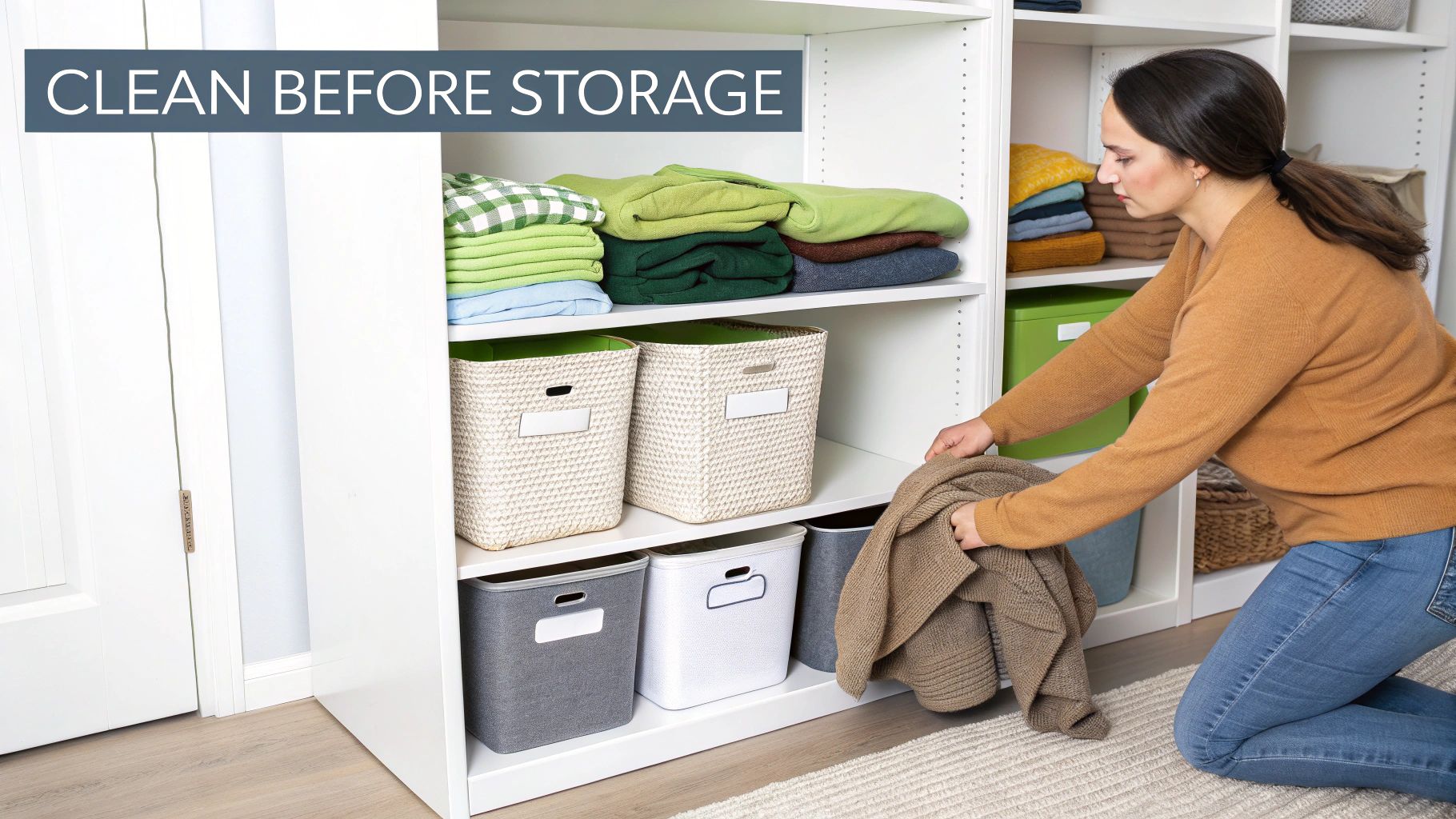
Before you even think about rearranging hangers, the real work begins with a bit of prep. This groundwork is what stops damage before it starts and helps you build a closet that truly works for you, not against you. Skipping these steps is like building a house without a solid foundation; it might look fine for a little while, but it won't stand the test of time.
This isn't just about a one-off spring clean. It's about developing simple habits that will preserve your wardrobe for years. By focusing on a few core principles, you can set up a storage system that's as protective as it is practical for everyday use.
Start with Spotless Clothes
If you take away only one piece of advice, let it be this: only store clean items. It’s the golden rule of clothing care and closet organization. A shirt or pair of pants might look clean after one wear, but invisible body oils, tiny food specks, and deodorant residue are a magnet for pests like moths and silverfish.
Over time, these unseen residues can also oxidize and set, creating those stubborn yellowed stains that are nearly impossible to get out later. Think of it this way—putting a worn garment back in the closet is rolling out the welcome mat for damage. Always wash or dry-clean everything before it gets hung up. It's a non-negotiable for a healthy closet.
The 'Cool, Dark, and Dry' Mantra
Your clothes have three main enemies: heat, light, and moisture. When they team up, you get a perfect storm for mildew, weakened fabric, and faded colors. This is exactly why a damp basement or a sweltering, sun-filled attic is the absolute worst place for long-term storage, and why even a closet needs the right conditions.
The ideal storage environment is consistently cool, dark, and dry. This trifecta prevents mold from growing, stops sunlight from bleaching your favorite pieces, and keeps delicate fibers from turning brittle.
Your main bedroom closet is usually a safe bet, as long as it gets decent air circulation. Ensure it's not overstuffed, which can trap humidity and lead to musty smells. Proper conditions are the first step to preserving the clothes you wear every day.
Categorize for Your Real Life
A closet that looks perfect but doesn't fit your daily routine is basically useless. Instead of just organizing by color or type, try a more practical approach based on how often you actually wear things. This is how you create a system that makes getting dressed feel effortless.
Start by sorting your clothes into three straightforward piles:
- Frequently Worn: These are your everyday workhorses—the go-to jeans, the work blouses, the jacket you always grab. They deserve the most accessible, prime-real-estate spots in your closet.
- Occasionally Worn: Think formal wear, that special occasion dress, or pieces you love but don't need every week. These can go in slightly less convenient spots, like a higher shelf or the back of the closet.
- Off-Season Items: Heavy winter coats in the middle of summer or sundresses in deep winter. These should be packed away entirely, freeing up precious closet space for the clothes you’re wearing right now.
This simple sorting method instantly declutters your closet and streamlines your morning routine, setting the stage for a space that stays organized for good.
Rethink Your Everyday Closet Organization
Turning your closet from a chaotic mess into a functional, stress-free space isn't about some massive, one-time overhaul. It’s really about adopting smarter habits and using the right techniques for how you store your clothes day-to-day. Let's get past the generic advice and dig into what actually works to keep your main closet tidy.
The foundation of any well-organized closet starts with a simple but critical decision: what gets hung up, and what gets folded? Getting this right can single-handedly extend the life of your favorite clothes.
To Hang or to Fold That Is the Question
Trust me, not everything belongs on a hanger. Hanging the wrong items can lead to permanent damage—think stretched-out shoulders on your favorite sweater or warped seams on a knit dress. Learning what goes where is a non-negotiable skill for anyone who wants their clothes to last.
Here's a quick cheat sheet I always follow:
- Always Hang These: Anything delicate or structured. Blouses, dresses, blazers, and jackets are no-brainers. The same goes for trousers made from linen, silk, or other fabrics that wrinkle just by looking at them. A good hanger maintains their shape and keeps them ready to wear.
- Always Fold These: Heavy knit sweaters, cashmere, and even most of your basic t-shirts will be much happier folded in a drawer. The weight of a chunky knit will cause it to sag and lose its shape on a hanger over time. It’s a sad, preventable end for a cozy favorite.
This simple sorting method does more than just protect your clothes. It instantly creates a closet that’s more logical and easier on the eyes, which makes finding what you're looking for so much faster. Even how you manage your empty hangers can make a huge impact, which is why having a system for them is a game-changer. For a deeper dive, check out our complete guide on how to store hangers.
Maximize Space with the Right Tools
Okay, so you’ve sorted your hang-ables from your fold-ables. Now what? The next step is to make every inch of that closet rod count. A jam-packed rod where you can’t see what you own is frustrating and can actually damage your clothes from constant friction. This is where a few smart organization tools can make all the difference.
A fascinating study revealed that the average person only wears about 20% of their clothes on a regular basis. A well-organized closet brings that core wardrobe to the forefront, cutting down on decision fatigue and helping you wear more of what you love.
Instead of sticking to the old "one hanger, one item" rule, it's time to think vertically. Multi-pant hangers are a perfect example—they let you hang five pairs of pants in the same vertical space as one. That’s a huge amount of rod space instantly freed up. Tiered hangers for skirts or even shirts work the same magic, consolidating your wardrobe while improving airflow and visibility.
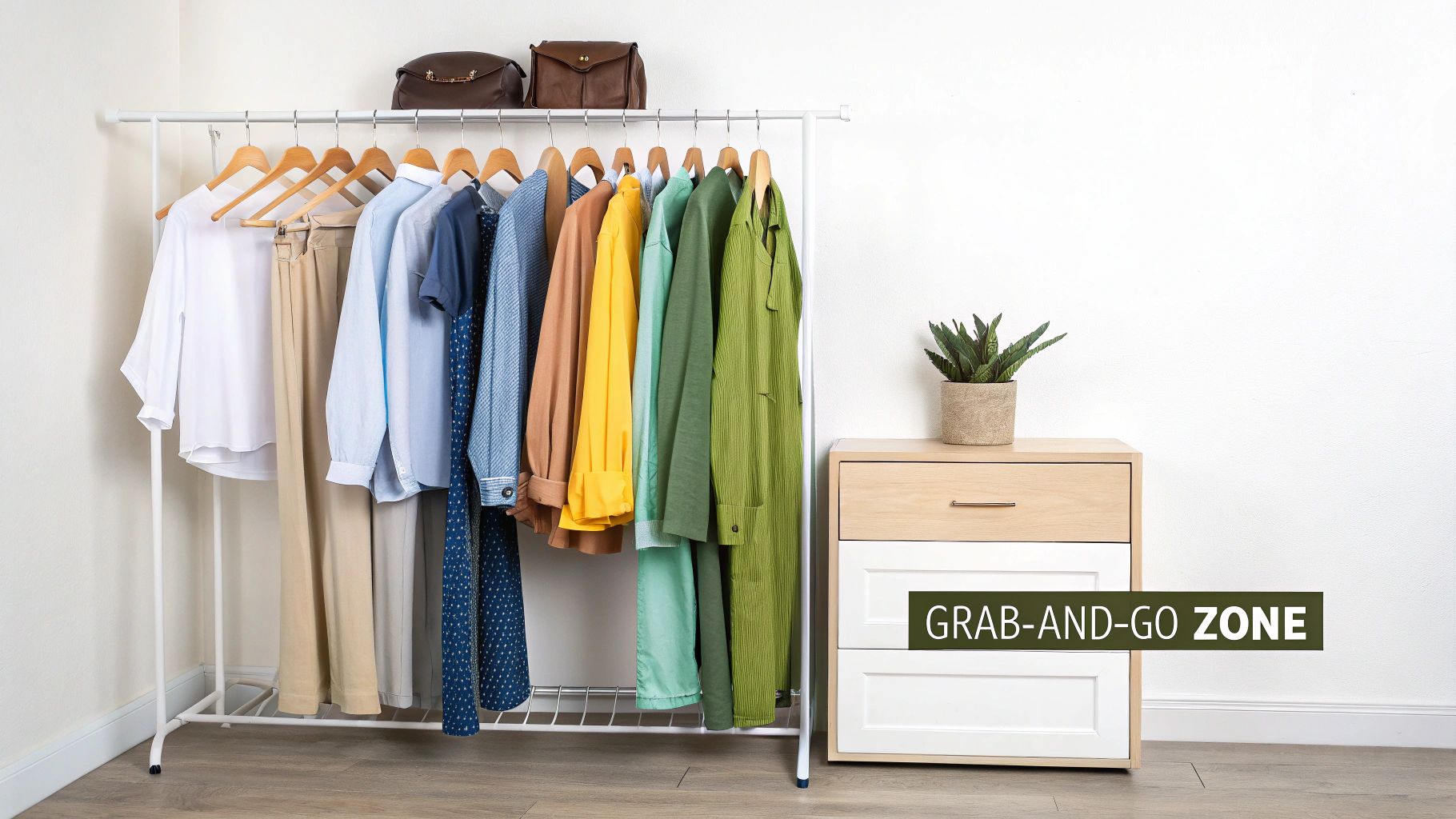
Picture this: you could create a "grab-and-go" section for your entire work week. Using space-saving hangers, you can group five complete outfits together in one compact spot. That little tweak transforms a frantic morning scramble into a simple, two-second choice. It’s proof that with the right tools, you're not just storing clothes—you're building a system that actually makes your life easier.
Master Your Drawers and Shelves
A truly organized closet is more than just a well-arranged hanging rod. Let's be honest, your drawers and shelves are where the real battle is fought. They have a knack for becoming cluttered catch-alls, but with a little strategy, you can turn them into prime real estate for an orderly wardrobe.
The whole point is to see what you own in a single glance. Think about it: when you're digging through a jumbled pile of t-shirts just to find the one you want, you're not just wasting time. You're also forgetting about great clothes you own, which is why you end up wearing the same five things on rotation. This is where mastering a few folding techniques can be a game-changer for your closet's efficiency.
Optimize with Smarter Folding
How you fold your clothes makes a world of difference. It's not just about cramming things in; it’s about protecting the fabric, saving space, and making everything easy to find. Different garments need different approaches.
One of the most effective methods I’ve found is file folding. Instead of the traditional stacking method where you can only see the top shirt, you fold items into neat little rectangles that stand up on their own. Lined up vertically like files in a cabinet, you can see every single t-shirt at once. No more digging to get that one from the bottom of the pile.
Pro Tip: When it comes to delicate knits like cashmere or merino wool, be gentle. A loose fold is key to preventing stretching and deep-set creases. Just fold the arms in, then fold the body in half. Never, ever cram them into a tight drawer—that’s a surefire way to damage the fibers.
For things like activewear and other synthetic fabrics, rolling is your best friend. Tightly rolled leggings, sports bras, and tank tops can be packed into a drawer with surprising efficiency, making the most of every last inch. If you want to dive deeper, we have a whole guide on folding clothes to save space.
Create Order with Dividers
Once you’ve got the folding down, the next step is to create some boundaries. Without them, even the most perfectly folded clothes will eventually slide into a chaotic mess. Drawer dividers are a simple, inexpensive tool that makes a massive difference in keeping things tidy.
Use them to create dedicated compartments for specific categories. It’s all about giving everything a home.
- Socks: I like to separate them by type—athletic, dress, and casual. It makes grabbing the right pair in the morning so much faster.
- Underwear: Give different styles their own designated sections.
- Accessories: Create smaller zones for rolled-up belts, scarves, and other odds and ends.
This system isn’t just about getting organized once; it’s about staying organized. When every item has a specific place to go, putting things away correctly becomes second nature, and your drawers will stay neat long after the initial overhaul.
Seasonal Storage That Protects Your Clothes
Switching out your wardrobe with the seasons isn't just a chore—it’s one of the best ways to keep your main closet organized and protect the clothes you aren't wearing. Think of it as a strategic move. By properly storing off-season pieces, you're not only freeing up valuable closet space but also making sure your favorite items are in perfect condition when you need them again. This is how you make quality garments last for years.
The whole process starts with picking the right storage containers. It's tempting to grab those clear plastic bins, but they can be a real problem for natural fibers, often trapping moisture that leads to yellowing over time. For materials like wool, cashmere, and even silk, your best friends are breathable fabric storage bags. They let air circulate, which is exactly what those fabrics need.
Selecting the Best Storage Containers
Not every storage solution works for every piece of clothing. For more structured items like blazers, winter coats, or formal dresses, specialized suit and dress covers are a lifesaver. They keep the dust off without trapping moisture, helping garments maintain their shape.
What about those vacuum-sealed bags? They're brilliant for saving space, but you have to use them wisely. They’re perfect for bulky, synthetic items—think ski jackets or puffy vests. However, you should never use them on natural fibers like down or wool. The intense compression will crush the delicate fibers, permanently ruining their loft and texture.
One of the biggest mistakes I see people make is storing clothes without washing them first. An item might look clean, but microscopic body oils and sweat can oxidize over months in storage. This leads to those mysterious yellow stains that are nearly impossible to get out and can even attract pests.
This quick visual guide is a great reminder of the best folding techniques for different items before you pack them away.
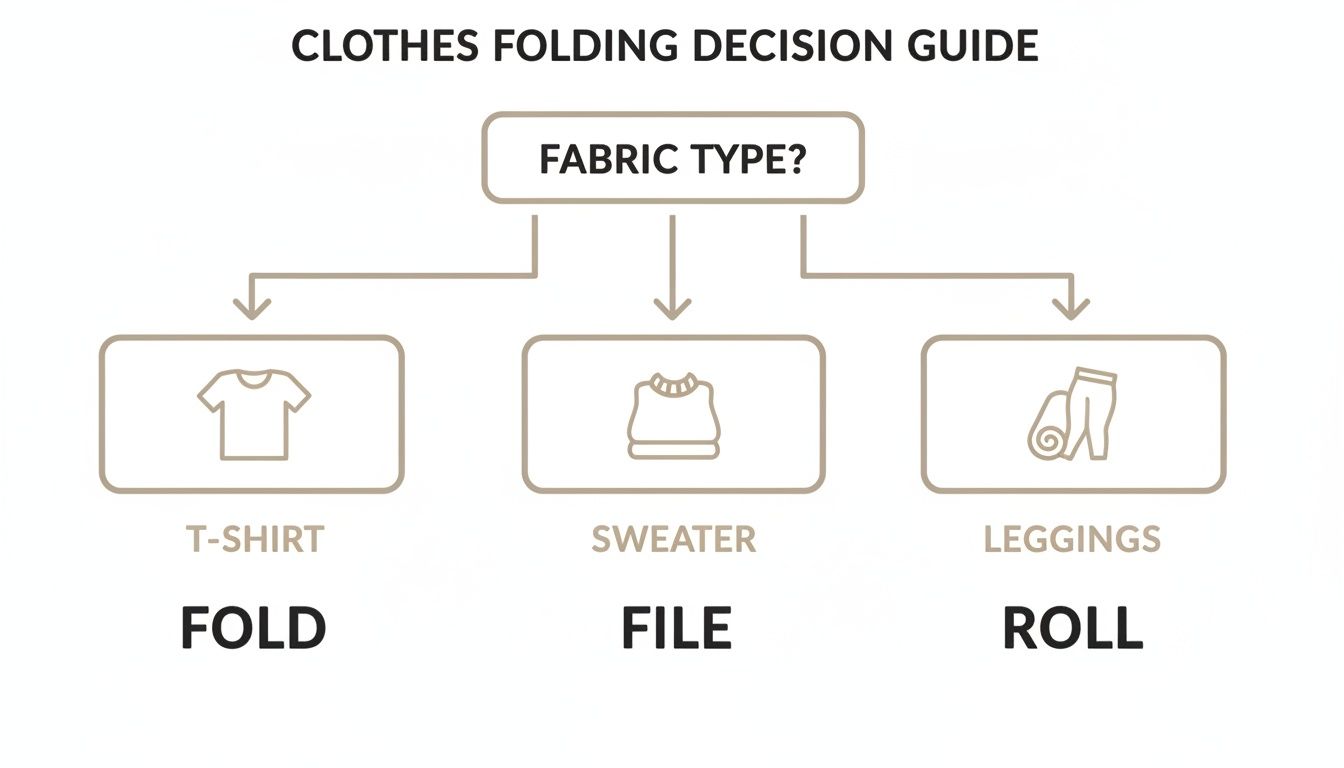
As you can see, file folding is fantastic for sweaters because it prevents stretching, while rolling is a game-changer for leggings and other casual wear, letting you pack more into a small space.
Pest and Mildew Prevention
Okay, so your clothes are clean and neatly folded for storage. Now it's time to play defense. Moths and other pests are drawn to natural fibers, especially if there's any lingering scent of food, perfume, or perspiration. A clean garment is your first line of defense, but a good repellent is your backup.
Forget those pungent, chemical-filled mothballs. Natural alternatives work just as well and won't leave your clothes smelling like a time capsule. Cedar is a classic for a reason—its aromatic oils are a natural moth deterrent.
- Cedar Blocks or Balls: Simply toss a few into your storage bins or bags.
- Lavender Sachets: These smell wonderful and do an excellent job of keeping pests away.
- Rosemary or Thyme Bundles: Dried herbs are another easy, effective option.
Just remember to refresh these natural repellents every six months or so to make sure they're still doing their job. A little prevention ensures your off-season clothes are ready to wear the moment you need them again, making the seasonal swap smooth and satisfying.
Clever Solutions for Small Closets
Living with a small closet can feel like a daily game of Tetris, but it doesn’t have to be a source of constant frustration. Conquering a cramped closet isn't about wishing for more space; it's about getting smarter with the space you already have. With a few strategic moves and the right tools, you can transform that tiny closet into a surprisingly efficient and organized space.
Your hangers are the single biggest opportunity for a quick win. Think about it: those bulky plastic or thick wooden hangers are absolute space hogs. By simply swapping them out for a uniform set of slim, velvet-lined hangers, you can instantly reclaim a significant chunk of your hanging rod—I’ve seen people gain as much as 30% more space overnight. Plus, the non-slip grip means your clothes actually stay on the hanger instead of slithering onto the floor.
Go Vertical to Double Your Space
When you can't build outwards, you have to build upwards. Most closets have a surprising amount of dead air—that forgotten zone above the rod and below your hemlines. Tapping into this vertical real estate is the secret weapon for anyone struggling with a small closet. It’s like adding an extension without calling a contractor.
An incredibly simple and effective trick is to install a second tension rod. Set one rod high for your dresses, coats, and longer items, then pop a second one in below it for shirts, skirts, and folded trousers. Just like that, you've doubled your hanging capacity.
A small closet doesn't have to be a disorganized one. The key is to utilize every surface—rods, shelves, doors, and even the floor—to create a functional storage system that fits your lifestyle and your space.
Another fantastic way to think vertically is with specialized hangers. This is where multi-level solutions, like MORALVE's space-saving hangers, really shine. They let you hang several pairs of pants or skirts in the same vertical footprint that one would normally take up. This not only frees up precious rod space but also keeps everything visible and less wrinkled from being squished together.
Use Every Nook and Cranny
The hanging rod gets all the attention, but your closet has other hidden gems just waiting to be put to work. The back of the closet door, for example, is prime real estate. An over-the-door organizer is perfect for corralling shoes, scarves, belts, and other accessories that tend to create chaos.
And don't overlook the floor! Instead of letting a jumble of shoes pile up, slide in a low-profile shoe rack or use clear, stackable boxes. That high shelf that often becomes a graveyard for forgotten items? Tame it with labeled fabric bins for out-of-season hats or special occasion accessories. When you give everything a dedicated home, you’ll find that keeping your small closet tidy feels less like a chore and more like second nature.
Your Top Clothing Storage Questions Answered
Even when you have a solid plan, questions always come up in the middle of a big closet clean-out. Getting clothing storage right often comes down to knowing how to handle these little details. Let’s tackle some of the most common questions I get asked, so you can fine-tune your closet system and keep your clothes looking great.
Think of this as your quick-reference guide for those tricky “what if” moments. Nailing these specifics is what truly transforms a temporarily tidy closet into one that stays organized for good.
What Is the Biggest Mistake People Make When Storing Clothing?
The single worst thing you can do is store clothes without washing them first. This is especially true for items you’re putting away for the season. Even if a shirt or sweater looks clean, invisible body oils, sweat, and tiny food particles are still there. Over time, these residues oxidize, attracting pests like moths and creating those dreaded yellow stains that are almost impossible to get out later.
Another huge mistake is grabbing the wrong kind of container.
I see this all the time: people use airtight plastic bins for natural fibers like wool, cashmere, or silk. These materials need to breathe. Sealing them in plastic traps moisture and can lead to mildew, musty smells, and fabric yellowing.
For delicate items, always reach for breathable fabric bags or canvas bins. It makes a world of difference in keeping them fresh.
How Do I Keep Sweaters from Getting Stretched Out on Hangers?
Honestly? The absolute best way to store sweaters, especially the heavy, chunky ones, is to fold them. Just fold them. Stashing them neatly on a shelf or in a drawer completely eliminates the risk of gravity pulling them out of shape. Hanging a knit sweater is practically asking for those sad, stretched-out shoulders and pointy hanger bumps.
But I get it—sometimes shelf space is tight and you have to hang a few. If that’s your reality, there’s a specific folding trick that works wonders to minimize the damage:
- First, fold the sweater in half vertically, so the sleeves are lined up together.
- Next, place the hanger hook right in the "armpit" of the folded sweater.
- Finally, drape the body of the sweater over one arm of the hanger and the sleeves over the other.
This technique distributes the weight evenly across the hanger bar instead of concentrating all that stress on the delicate shoulder seams. It's a game-changer.
Are Vacuum-Sealed Bags a Good Idea for All Clothes?
Vacuum-sealed bags are incredible for saving space, but you have to use them strategically. They are perfect for compressing bulky, durable items. Think ski jackets, comforters, pillows, and clothes made from tough synthetic fabrics. Sucking the air out of these can free up a truly shocking amount of closet real estate.
However, you should never use them for your delicate, natural-fiber clothing. Keep them far away from:
- Wool
- Cashmere
- Silk
- Anything filled with down, like coats or duvets
The intense compression will crush the natural loft and texture of these fibers, potentially damaging them for good and ruining their ability to keep you warm. For these pieces, stick with breathable storage that gives them room to live.
Ready to conquer closet clutter for good? The right tools make all the difference. MORALVE offers a range of space-saving hangers designed to maximize every inch of your closet, keeping your clothes visible, protected, and perfectly organized. Explore our innovative solutions and transform your space.
Leave a comment