

Smart Closet Organization Ideas for Small Spaces

Let’s be honest, creating more space in a small closet doesn't start with a trip to the container store. It begins with a good, old-fashioned closet purge. The goal isn't just to tidy up; it's to make strategic decisions about what truly deserves to be there, transforming a chaotic mess into an organized, functional wardrobe that works for you.
Conquering Closet Clutter Once and for All
We’ve all been there—staring into a closet packed to the brim, yet feeling like you have absolutely nothing to wear. That overwhelming feeling is a sure sign it's time for a reset. Before you even think about new hangers or bins, the first step in any small closet organization project is to reclaim the space you already have by deciding what stays and what goes.
This isn't just about cleaning. It’s about shifting your mindset from closet-induced stress to feeling empowered by a streamlined collection of clothes you genuinely love.
A Simple Framework for Decluttering Your Closet
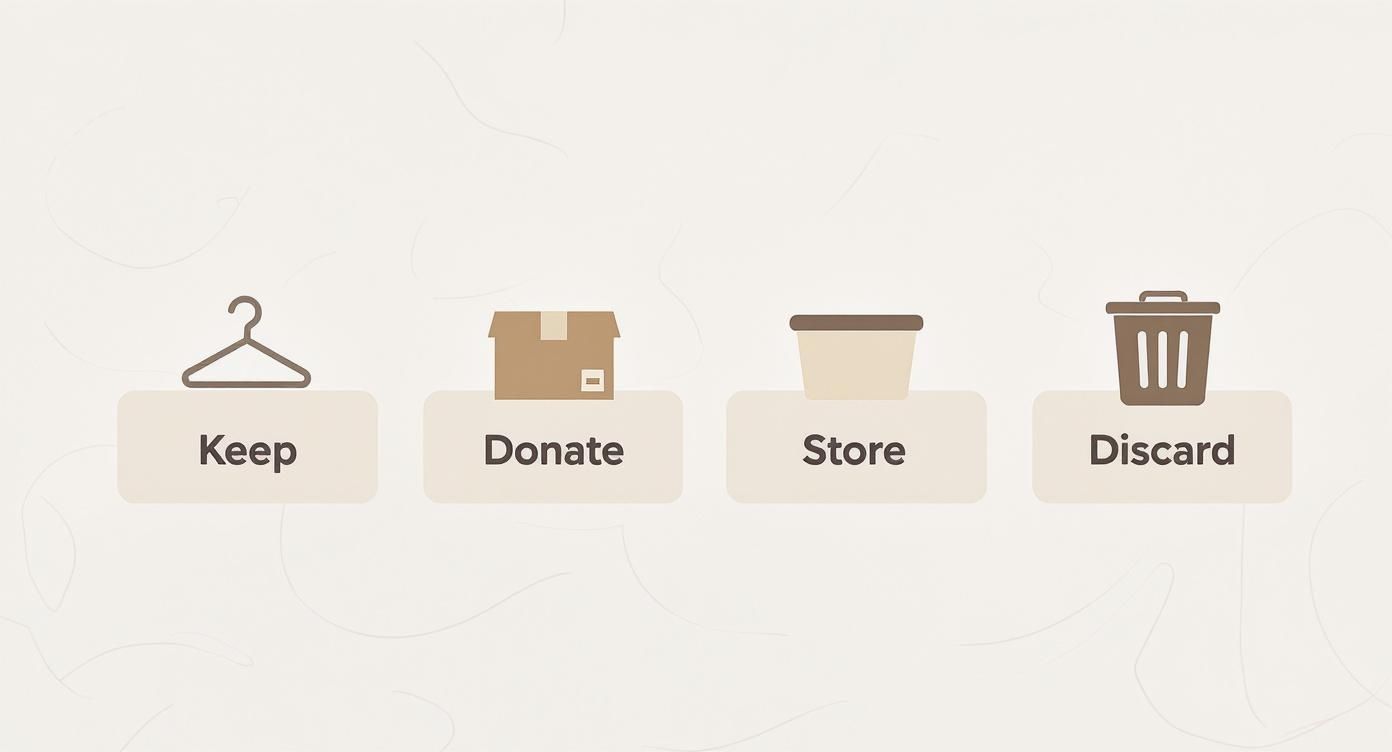
One of the most effective approaches is the 'Four-Box Method'. It’s a practical guide to help you make decisions without getting bogged down. Just grab four boxes or make four piles and sort every single thing from your closet into one of them.
- Keep: This pile is for the clothes you love, wear regularly, and that fit your current lifestyle.
- Donate: Anything in good condition that you no longer wear can go here. Let someone else get some use out of it.
- Store: Think seasonal items like heavy winter coats or sentimental pieces you can’t part with but don’t need in your daily closet rotation.
- Discard: For items that are stained, torn, or simply worn out. It's time to let them go.
This simple system forces you to handle each item one by one, making the whole process feel much more focused and less emotional. For a deeper dive, check out our guide on how to declutter your closet for more tips.
Curating Your Wardrobe and Letting Go
The hardest part? Parting with things that have memories attached but serve no practical purpose in your closet anymore. Ask yourself whether the memory is tied to the item itself or if it lives in your heart. Sometimes, snapping a photo of an old concert t-shirt is all you need to preserve the feeling without sacrificing precious closet real estate.
This idea of living with less is a key principle of small space organization. As homes get smaller, people are getting smarter about their storage. It's a global shift, pointing toward a more minimalist and sustainable way of managing our belongings, starting with the closet.
By curating a wardrobe that fits your life right now, you create a closet that is not only organized but also a true reflection of your personal style. Every item you keep should earn its spot.
Creating Your Closet Organization Blueprint
A truly organized closet starts with a smart plan, not just good intentions. Before you buy a single organizer, sketch out a simple blueprint. I've seen it time and time again—people waste money on storage solutions that don't fit their closet or, more importantly, their wardrobe. This planning phase prevents all that.
First, you need to know exactly what you're working with. Grab a tape measure and get the dimensions of your closet: width, depth, and height. Be precise. Don't forget to measure around tricky corners or note any built-in obstructions. Having these exact numbers is the difference between a perfect fit and a frustrating trip back to the store.
Taking Inventory of Your Wardrobe
With your measurements written down, it’s time to figure out what needs to live in this space. This isn't just about counting clothes; it's about understanding the type of storage your wardrobe requires. Group your clothes into practical categories to get a clear picture.
- Long-Hang Items: Dresses, long coats, and jumpsuits. These need uninterrupted vertical space.
- Short-Hang Items: This is your everyday stuff—shirts, blouses, jackets, and skirts.
- Folded Items: Sweaters, jeans, and most t-shirts are usually better suited for shelves or drawers.
- Accessories & Shoes: Belts, scarves, bags, and footwear each need a dedicated spot.
Laying everything out like this helps you see how your decluttered wardrobe can be sorted. It’s a simple but powerful exercise that shows you what kind of storage solutions will actually work for your specific collection of clothes.
This basic sorting framework makes it so much easier to visualize where everything will go before you start rearranging. You’ll immediately see whether you’re short on hanging space or desperately need more shelves.
Taking inventory turns vague ideas into a concrete action plan. You'll know exactly what you need—say, 70% short-hang space and 30% long-hang—before you even start shopping for organizers.
This isn’t just about making things look tidy; it’s about designing a closet system that works for your real life.
For example, if you have a huge collection of bulky sweaters, you’ll know to prioritize shelf dividers or a hanging sweater organizer. If you only own two long dresses, you can dedicate most of your vertical rod to double-hanging shorter items. Just like that, you've doubled your hanging capacity. This blueprint becomes your personal roadmap to a closet that’s not just organized, but genuinely easy to use every single day.
Choosing the Right Tools to Maximize Closet Space
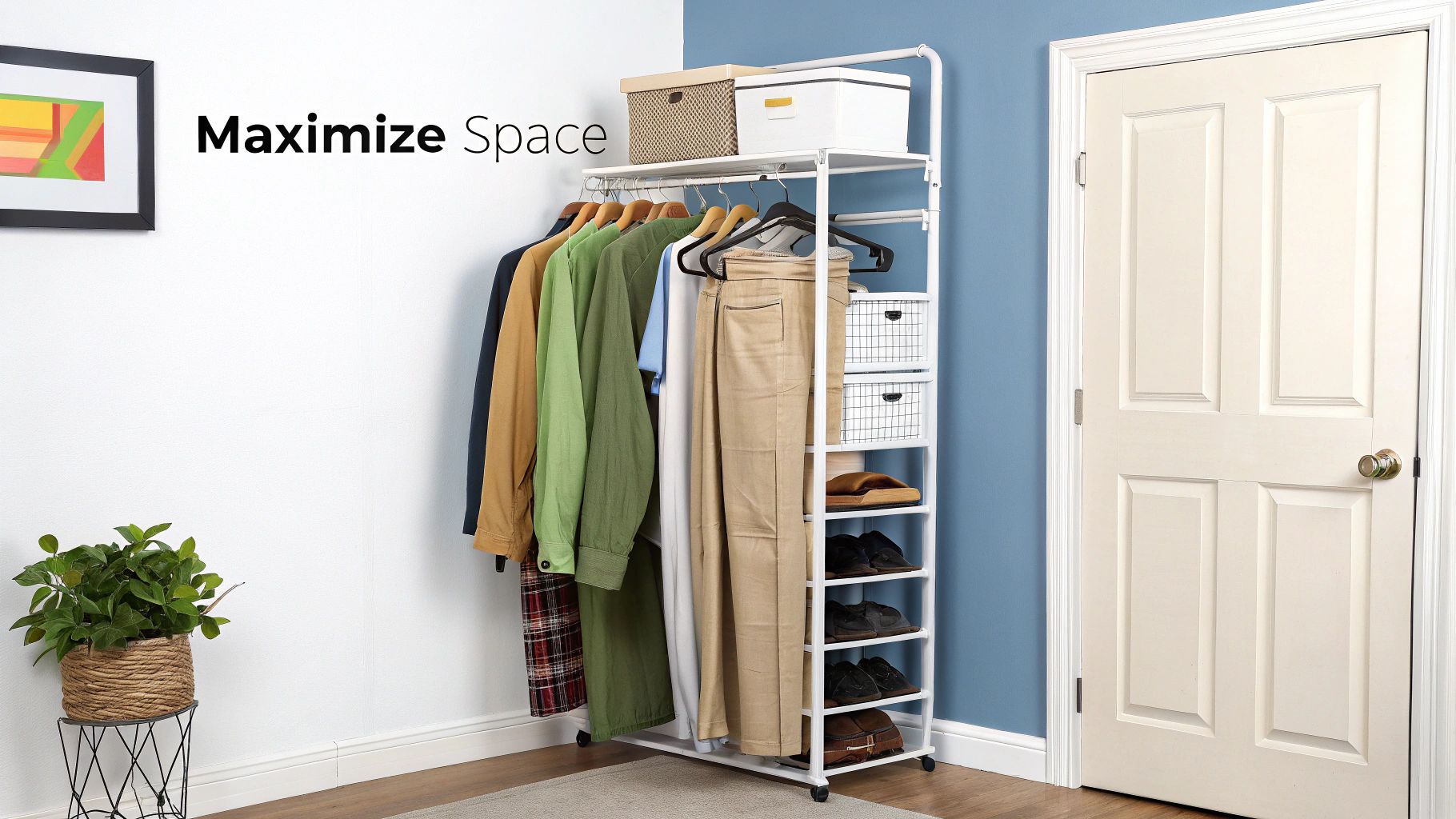
Now that you have a solid plan, it’s time for the fun part: picking the tools that will bring your organized closet to life. The right products can genuinely double your closet's capacity, turning a chaotic mess into a streamlined wardrobe. This isn’t about buying every organizer on the market; it’s about strategically choosing a few key items that solve your specific storage headaches.
One of the biggest impacts comes from your hangers. Those bulky, mismatched plastic hangers are space vampires. Making the switch to a uniform set of ultra-slim velvet hangers is one of the fastest ways to see a change. Their slender profile can instantly free up an incredible 25-50% more space on your closet rod.
Go Vertical to Reclaim Unused Closet Space
In any small closet, thinking vertically is non-negotiable. Instead of letting things pile up on the floor or cramming them onto one high shelf, look up! Tiered hangers, for example, are a game-changer for pants and skirts, letting you hang five items in the same sliver of space as one.
Another workhorse for vertical storage is a simple hanging shelf organizer. These fabric shelves are perfect for bulky items that don’t hang well, like sweaters, jeans, or handbags. They essentially create an instant set of cubbies without you having to pick up a single power tool.
Here are a few vertical superstars for your closet:
- Hanging Shelves: Ideal for folded sweaters, t-shirts, and even purses.
- Shelf Dividers: These clip onto existing shelves to keep your neat stacks of clothes from toppling over.
- Tiered Hangers: A simple trick to group similar items like trousers or skirts, which slashes the horizontal space they eat up on the rod.
Tap Into Hidden Storage Opportunities
Every closet has hidden storage spots just waiting to be discovered. The back of the closet door is a perfect example of prime, underused real estate. A simple over-the-door organizer with clear pockets or hooks can become your secret weapon for corralling shoes, belts, scarves, and other accessories that create clutter elsewhere.
This move toward smarter, multi-functional tools is a huge trend in home organization. In fact, the global market for home organization products is booming, projected to hit around USD 16.5 billion by 2030. People are craving clever solutions that do more with less in smaller homes.
Pro Tip: Combining just two or three of these tools—like swapping to slim hangers and adding an over-the-door shoe rack—can completely reinvent your closet's capacity without needing a full renovation.
To help you decide, I’ve put together a quick comparison of some of the most effective closet organizers.
Essential Closet Organizers Comparison
This table breaks down the top space-saving tools to help you choose the best options for your specific closet needs and wardrobe type.
| Organizer Type | Best For | Key Benefit | Pro Tip |
|---|---|---|---|
| Slim Velvet Hangers | All hanging clothes, especially blouses and dresses. | Instantly frees up rod space and prevents slipping. | Buy more than you think you need—you'll always find a use for them! |
| Tiered Hangers | Trousers, skirts, shorts, and scarves. | Hangs 4-5 items in the vertical space of one. | Use one hanger per category (e.g., all work pants on one) for easy grabbing. |
| Hanging Shelf Organizer | Bulky sweaters, jeans, and handbags. | Creates instant shelving without any drilling. | Place heavier items on the bottom shelves to maintain balance. |
| Over-the-Door Organizer | Shoes, accessories, belts, and cleaning supplies. | Utilizes completely unused door space. | Opt for clear pockets so you can see everything at a glance. |
| Shelf Dividers | Folded clothes, linens, and purses on shelves. | Keeps stacks neat and prevents them from falling over. | Measure your shelf thickness before buying to ensure a snug fit. |
Ultimately, the goal is to create a system that works for you.
Choosing the best closet organizer systems really comes down to what you own and the space you have. For more inspiration, it can be helpful to see how these same principles work in other small rooms; checking out creative storage ideas for small children's bedrooms often sparks some brilliant ideas you can adapt for your own closet. By investing in the right tools, you’re not just getting organized—you’re creating a smarter, more functional space that makes getting ready every day a little bit easier.
Designing a Closet Layout for Real Life
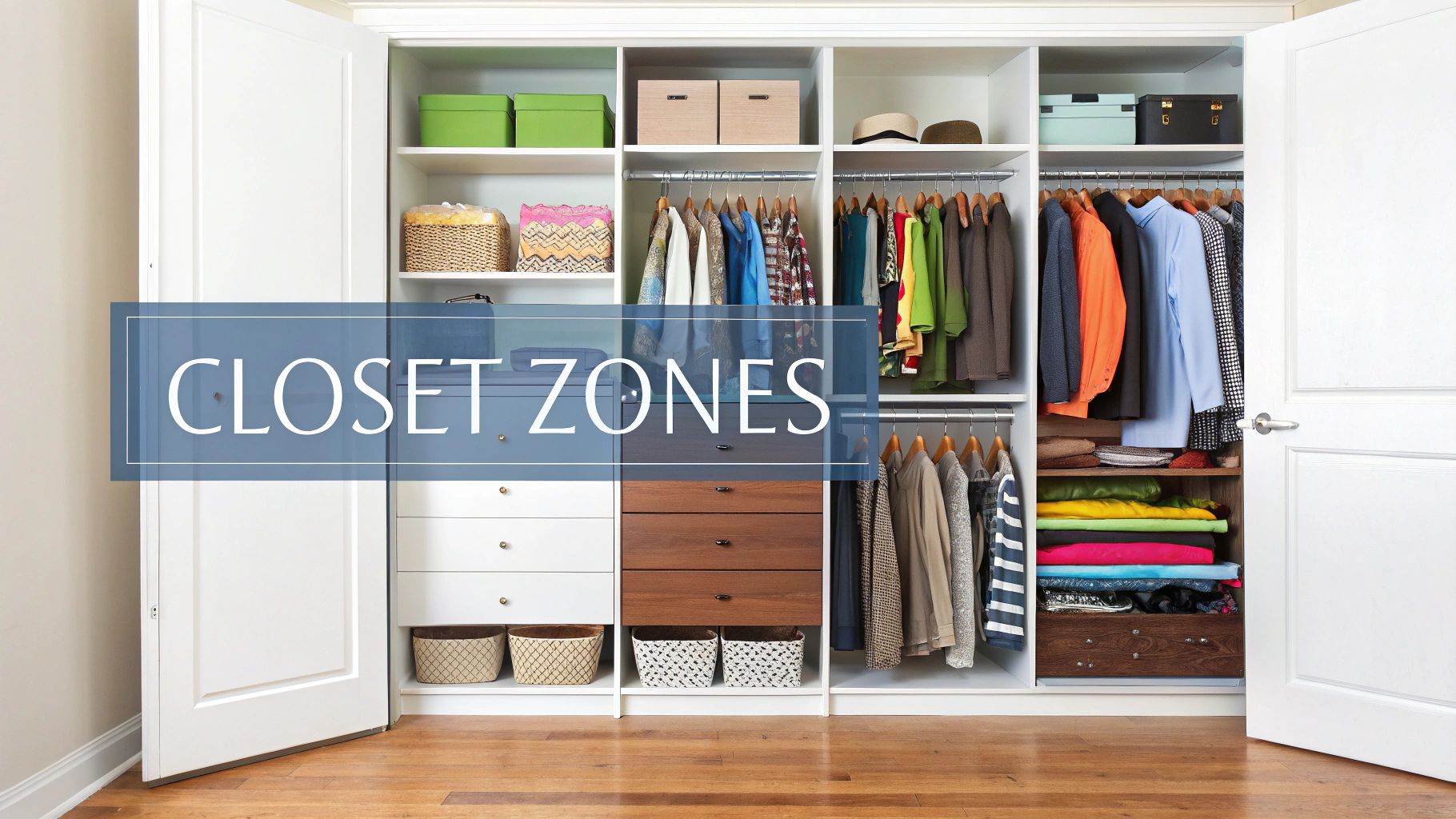
An organized closet is one thing, but a closet that stays organized is a different beast entirely. The real secret isn't just about having a tidy space; it's about creating a layout that fits your daily life like a glove. It means moving past that single hanging rod and top shelf to build an intuitive system where everything has a home that just makes sense.
The most effective way to do this is by thinking of the closet in 'zones'. Treat your closet like prime real estate—the spots that are easiest to see and reach are your most valuable. That's exactly where your most-worn items should live.
Arranging Your Closet Zones
Zoning is a simple way of grouping items based on how often you actually wear them. Your go-to work blouses, favorite pair of jeans, and everyday sneakers? They belong front and center. The things you pull out less often can be tucked away higher up or in the back.
Here's how to break it down:
- Prime Zone (Eye to Hip Level): This is for your daily drivers. Hang your work shirts, frequently worn sweaters, and everyday pants here. If you've got drawers, this is the perfect spot for t-shirts and undergarments.
- Secondary Zone (High Shelves and Floor): Use this space for things you reach for weekly but not daily, like date-night outfits, seasonal sweaters, or your handbag collection.
- Deep Storage (Topmost Shelves or Back Corners): Reserve these harder-to-reach areas for things you rarely need—out-of-season clothing, sentimental pieces, or extra bedding.
This kind of strategic placement makes getting ready faster and cleanup almost automatic because you're no longer digging through winter coats to find your favorite summer t-shirt. The same principles apply everywhere, from closets to gardens; you can even find clever strategies for growing pumpkins in small spaces, which shows just how universal this idea of smart zoning is.
Practical Layout Ideas for Real Routines
Once you've got the zoning concept down, you can customize your closet for your specific lifestyle. For example, why not create a dedicated "workout zone" with all your athletic wear, socks, and sneakers grouped together? If you wear a uniform for work, give those items their own section for easy grab-and-go mornings.
A closet designed around your life feels less like storage and more like a personal assistant. It anticipates your needs and makes your daily routine simpler and more efficient.
For drawers, one of the most powerful techniques is file-folding. Instead of stacking shirts on top of each other, fold them into neat little rectangles and arrange them vertically, just like files in a cabinet. This lets you see everything you own in a single glance and finally puts an end to the messy rummaging that topples your neat stacks.
This mindful approach to small-space living is becoming more and more common. The global tiny homes market is projected to reach USD 12.45 billion by 2032, with a big chunk of that being mobile homes that demand maximum efficiency from every single inch. It's a trend that highlights a broader desire for smarter, more intentional living—a principle that can start right in your own closet.
Ultimately, a well-designed layout is the foundation of a truly functional closet. When you combine smart zoning with practical techniques, you build a system that’s incredibly easy to maintain. For even more ways to elevate your setup, check out our guide on shelving ideas for closets to take your organization to the next level.
Keeping Your Closet Organized for Good
Let’s be honest—the real win isn’t just getting your closet organized. It's keeping it that way. The initial overhaul feels great, but the true victory is making sure that mountain of clutter never comes creeping back. This isn’t about scheduling another massive weekend clean-out. It’s about weaving a few small, almost effortless habits into your daily life.
Think of it as creating simple systems that work with you, not against you. When you frame it as a series of tiny actions, you get to enjoy that calm, organized space without the stress of another big project looming over you.
Adopt the One-In, One-Out Rule
If you want one dead-simple trick to prevent closet overflow, this is it: the ‘one-in, one-out’ rule. The concept is as easy as it sounds. Every time you bring home a new shirt, an old one has to go. Snagged a new pair of boots? It's time to say goodbye to a pair you haven't worn in ages.
This little habit does more than just maintain equilibrium in your closet. It completely changes how you shop. Suddenly, you're not just buying a new sweater; you're deciding if you love it enough to replace one you already own. It’s the ultimate defense against those impulse buys that slowly but surely reclaim your space.
The 10-Minute Weekly Reset
Consistency beats intensity every time, especially with closet organization. Forget waiting until your closet is a disaster zone again. Just set aside 10 minutes once a week—maybe on a Sunday evening—for a quick closet tidy-up. This is one of the most effective habits for small spaces because it nips clutter in the bud.
You'd be surprised what you can get done in just 10 minutes:
- Round up the strays. Grab that jacket from the back of a chair and hang it up properly.
- Straighten the shoe pile. A quick line-up on the rack makes a world of difference.
- Fix folded stacks. Re-fold any toppled piles of sweaters or t-shirts.
- Quick wipe-down. A fast pass over the shelves keeps things feeling fresh and clean.
This simple weekly ritual is a tiny investment that prevents the slow, frustrating slide back into chaos.
An organized space is a reflection of ongoing habits, not a one-time event. By integrating small, consistent actions into your routine, you transform maintenance from a chore into a seamless part of your life.
Master the Seasonal Swap
For anyone working with a small closet, rotating your clothes by season is a game-changer. It’s not a chore; it’s a strategy. Twice a year, set aside an hour or so to pack away what you won’t be wearing. Bulky winter sweaters and heavy coats can go into bins under the bed, freeing up that precious rod space for your warm-weather essentials.
This is also the perfect time for a mini-declutter session. As you’re packing things away, ask yourself if you genuinely look forward to wearing that item again in six months. If the answer is no, it’s the perfect moment to add it to the donation pile. These simple routines ensure your closet stays functional, relevant, and beautifully organized all year long.
Answering Your Toughest Small Closet Questions
Even with a solid plan, you're bound to hit a snag or two when organizing a small closet. Maybe it's a weird, slanted ceiling, a shoe collection that seems to multiply overnight, or a budget that’s stretched thin. Don’t worry, these are the challenges everyone faces. Let's walk through some of the most common questions and find some practical answers that actually work.
My goal here is to help you troubleshoot these little roadblocks so you can fine-tune your closet into a system that feels like it was made just for you.
"My Shoe Collection Is Out of Control. Where Do I Put Them All?"
I get this one a lot. When you've got zero floor space to spare, you have to think vertically. The undisputed champion for small closets is the classic over-the-door shoe organizer. It’s a game-changer, instantly creating a home for 12-24 pairs of shoes without taking up a single inch of precious floor space.
If you have heels or boots you want to keep in better shape, I’m a big fan of clear, stackable shoe boxes. You can see exactly what's inside, they keep the dust off, and you can stack them neatly on that high, hard-to-reach shelf. The main takeaway is simple: get your shoes off the floor. That little patch of carpet is the most valuable real estate in your closet.
"What Can I Do About My Awkwardly Shaped Closet?"
Slanted ceilings, deep and narrow nooks, super shallow depths... these can feel like a curse. But instead of fighting the weird layout, my advice is always to work with it. That skinny, recessed corner? It's the perfect spot to install a few small tension rods, one above the other. Just like that, you've got a custom-built "tower" for hanging scarves, ties, or belts.
For those slanted walls where a standard rod is a no-go, try installing a series of cool-looking hooks or even a pegboard. This gives you a custom wall for hanging handbags, hats, or necklaces. It's all about shifting your perspective—those odd spots aren't problems; they're opportunities for clever, personalized storage.
Think of your closet's unique quirks as a design challenge. The most effective solutions often come from tailoring storage to the space you have, not the space you wish you had.
"Is It Possible to Get Organized on a Shoestring Budget?"
Yes, absolutely! You don't need to drop a fortune on a custom closet system to bring some order to the chaos. Honestly, some of the smartest organizing tools for small spaces are also the cheapest. The trick is to focus on low-cost items that deliver a big impact.
The single best investment you can make is a uniform set of slim hangers. It often costs less than a new pair of jeans but will magically create a surprising amount of space. After that, look for other simple, budget-friendly fixes:
- Tension Rods: For less than $20, you can pop one in under your existing rod to double your hanging space for pants or skirts.
- Shelf Dividers: These cheap little clips are amazing for keeping stacks of sweaters or t-shirts from falling over.
- DIY Tricks: Don't underestimate what you already have. You can cut down old shoeboxes to create custom drawer dividers for free.
With just a little creativity, you can pull off a beautifully organized closet without draining your wallet. It’s all about function, not fancy fixtures.
Ready to reclaim your closet space with tools that truly work? At MORALVE, we design space-saving hangers that instantly maximize your storage and bring order to any closet, big or small. Discover our full collection and start your organization journey today at moralve.com.
Leave a comment