
7 Smart Narrow Closet Ideas to Maximize Your Space and Organization

A narrow closet can feel like a daily puzzle with no solution. Limited width, awkward depth, and a single, inefficient rod often turn the simple act of getting dressed into a frustrating chore. But what if that slim space held untapped potential for perfect organization? This guide moves beyond generic advice to reveal specific, actionable narrow closet ideas designed to conquer clutter and radically maximize every square inch. We are not just talking about decluttering; we are exploring a complete strategic overhaul of your closet's organization system.
This curated list will explore innovative systems, from vertical hanging solutions that double your capacity to clever modular inserts that create custom-fit compartments. You'll learn how to implement pull-out mechanisms for easy access and utilize overlooked vertical space with smart shelving. A key player in this transformation is choosing the right organizational tools. We'll highlight how specialized hangers, like those from MORALVE, are not just accessories but foundational elements for creating a functional and visually calming wardrobe. Prepare to rethink what's possible and turn your narrow closet from a challenge into a highly efficient and organized storage asset.
1. Vertical Double-Hang Rod System
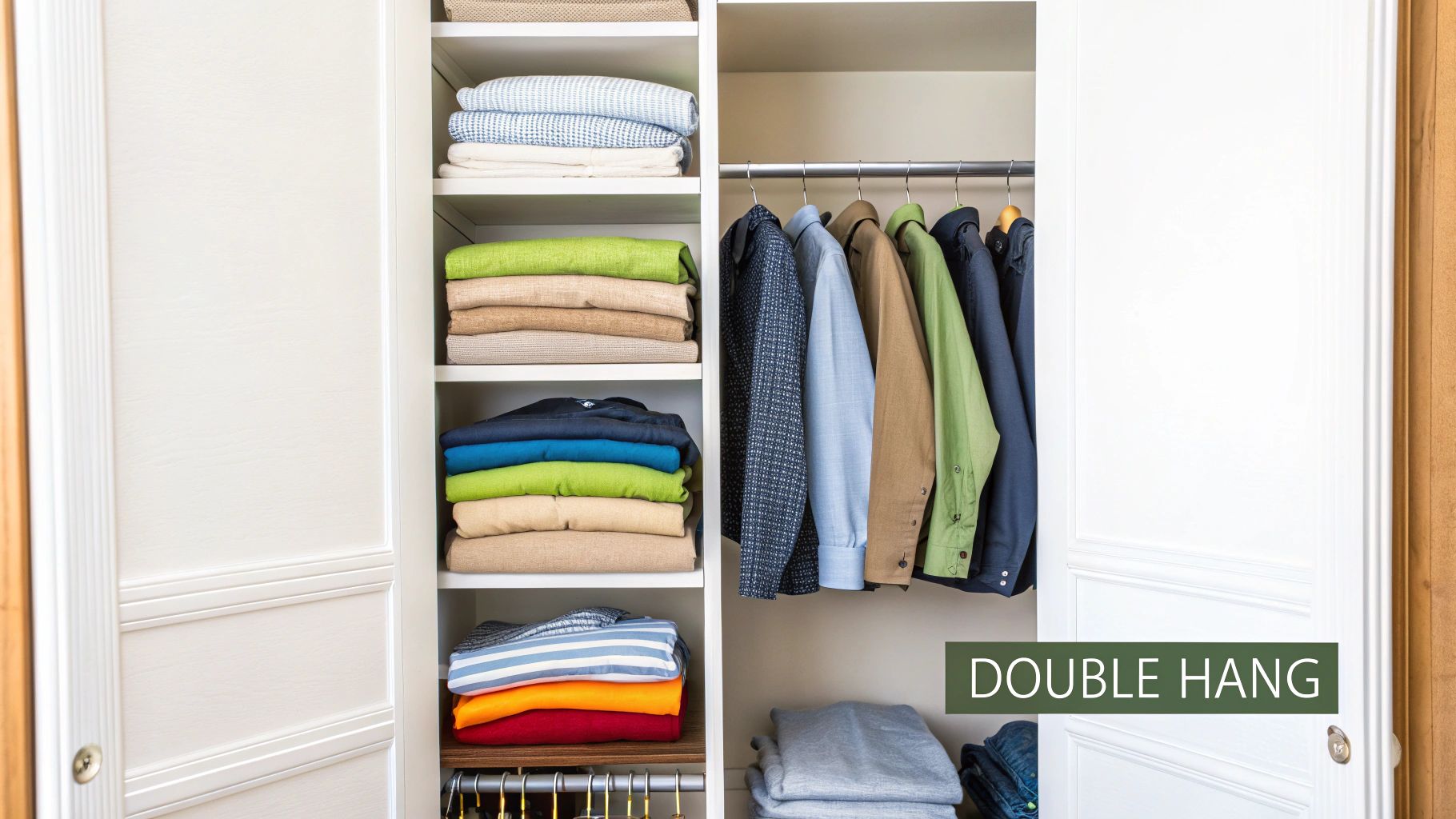
One of the most effective narrow closet ideas is to think vertically instead of horizontally. A vertical double-hang rod system is a game-changer for closet organization, instantly doubling your usable hanging space. This method involves stacking two closet rods one above the other, dedicating each rod to shorter garments like shirts, blouses, skirts, and folded trousers. It capitalizes on the often-wasted vertical space below standard-height hanging clothes, immediately improving your organizational capacity.
This approach is particularly brilliant for narrow closets where expanding outward isn't an option. By dividing the vertical area, you create two distinct, high-capacity zones without consuming any additional floor space, a core strategy for an organized closet in urban apartments and compact living spaces.
Why It Works for Narrow Closets
The double-hang system is a cornerstone of professional closet organization for a reason: it's incredibly efficient. Most clothing items simply don't need the full vertical drop from a single, high-mounted rod. This system reclaims that empty space, making it perfect for anyone whose wardrobe consists mainly of separates rather than long dresses or coats. Companies like ClosetMaid and The Container Store have popularized modular versions, making this professional-grade organizational solution accessible for DIY installation.
Pro Tip: Before installing, measure your longest "short-hang" item (like a blazer or tunic) and add six inches of clearance below it. This measurement will determine the ideal height for your lower rod, preventing clothes from dragging on the floor and maintaining a neat, organized look.
How to Implement a Double-Hang System
Getting this setup right involves a bit of planning, but the organizational payoff is immense. Follow these actionable steps for a flawless installation:
- Measure First: The standard placement for a top rod is around 80-82 inches from the floor, with the lower rod positioned at about 40-42 inches. This accommodates most shirts and folded pants perfectly, creating an orderly system.
- Organize for Accessibility: Place your most frequently worn items, like work shirts and daily-wear pants, on the lower, more accessible rod. The upper rod is ideal for less-used items, such as off-season blouses or formal wear, keeping your daily essentials within easy reach.
- Maximize with Hangers: To amplify the space-saving effect and organization, use uniform, slim-profile hangers. For instance, MORALVE’s velvet hangers grip clothing securely and have a minimal profile, allowing you to fit more garments side-by-side without creating a cramped, tangled mess.
- Consider a Pull-Down Rod: If reaching the top rod is a challenge, a pull-down closet rod (or pulldown wardrobe lift) brings the entire upper section down to you with a simple handle, combining high-density storage with perfect accessibility.
2. Slim Profile Hangers with Cascading Hooks
The hangers you choose are just as important as the closet system itself. Slim profile hangers are a cornerstone of modern closet organization, replacing bulky traditional hangers to instantly reclaim precious rod space. These ultra-thin hangers, often coated in non-slip velvet, are specifically engineered for narrow closets where every inch dedicated to organization counts.
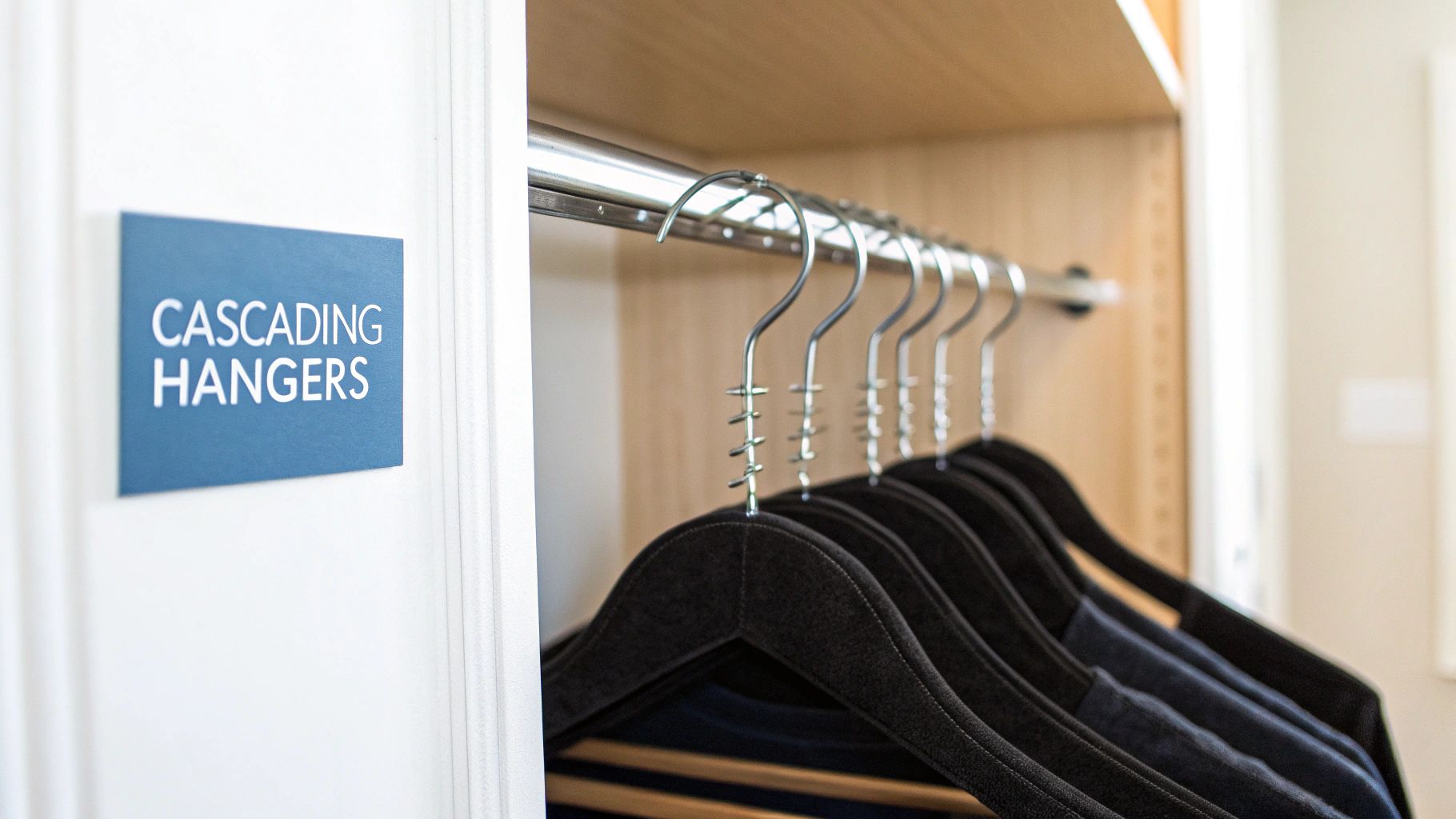
Many of these space-saving designs also feature cascading hooks, a brilliant innovation that allows you to hang garments vertically in a tiered system. This lets you organize multiple items, like a complete outfit or a collection of shirts, in the same vertical space one item would typically occupy. This is one of the most immediate and impactful narrow closet ideas you can implement for better organization.
Why It Works for Narrow Closets
Traditional wooden or plastic hangers can be up to an inch thick, devouring horizontal rod space. Slim profile hangers, measuring as little as 0.2 inches, can increase your hanging capacity by up to 50%. This solution was famously popularized by innovators like Joy Mangano and embraced by organization gurus like Marie Kondo and The Home Edit, who understand that uniformity is key to a tidy, functional space. The cascading feature takes this a step further, leveraging verticality to make your closet feel deeper and more organized.
Pro Tip: Use the cascading feature to group complete outfits together. Hook a skirt or pants hanger onto a shirt hanger, and add a blazer hanger on top. This not only saves space but also streamlines your morning routine by making outfit selection effortless and organized.
How to Implement a Slim Hanger System
Transitioning to a uniform slim hanger system is a simple project with a massive visual and functional payoff for your closet organization. Here are the steps to maximize your space:
- Commit to Uniformity: The biggest impact comes from replacing all your mismatched hangers at once. This creates a clean, cohesive look and ensures every garment takes up the same minimal amount of space for ultimate organization.
- Utilize Cascading for Categories: Group similar items vertically. For example, hang all your work blouses in one cascading chain and your tank tops in another. This keeps categories visually separate and makes your closet organization intuitive.
- Choose the Right Features: Opt for hangers with notches or divots to securely hold strappy dresses and tank tops. A velvet coating is excellent for preventing silky or wide-neck items from slipping off, keeping your organization intact.
- Maximize Your Investment: Using slim hangers is the first step, but proper care is also key to organization. For more tips on managing your new collection, you can explore the best ways for hanger storage and organization to keep your closet system efficient.
3. Over-the-Door Organizers and Pocket Systems
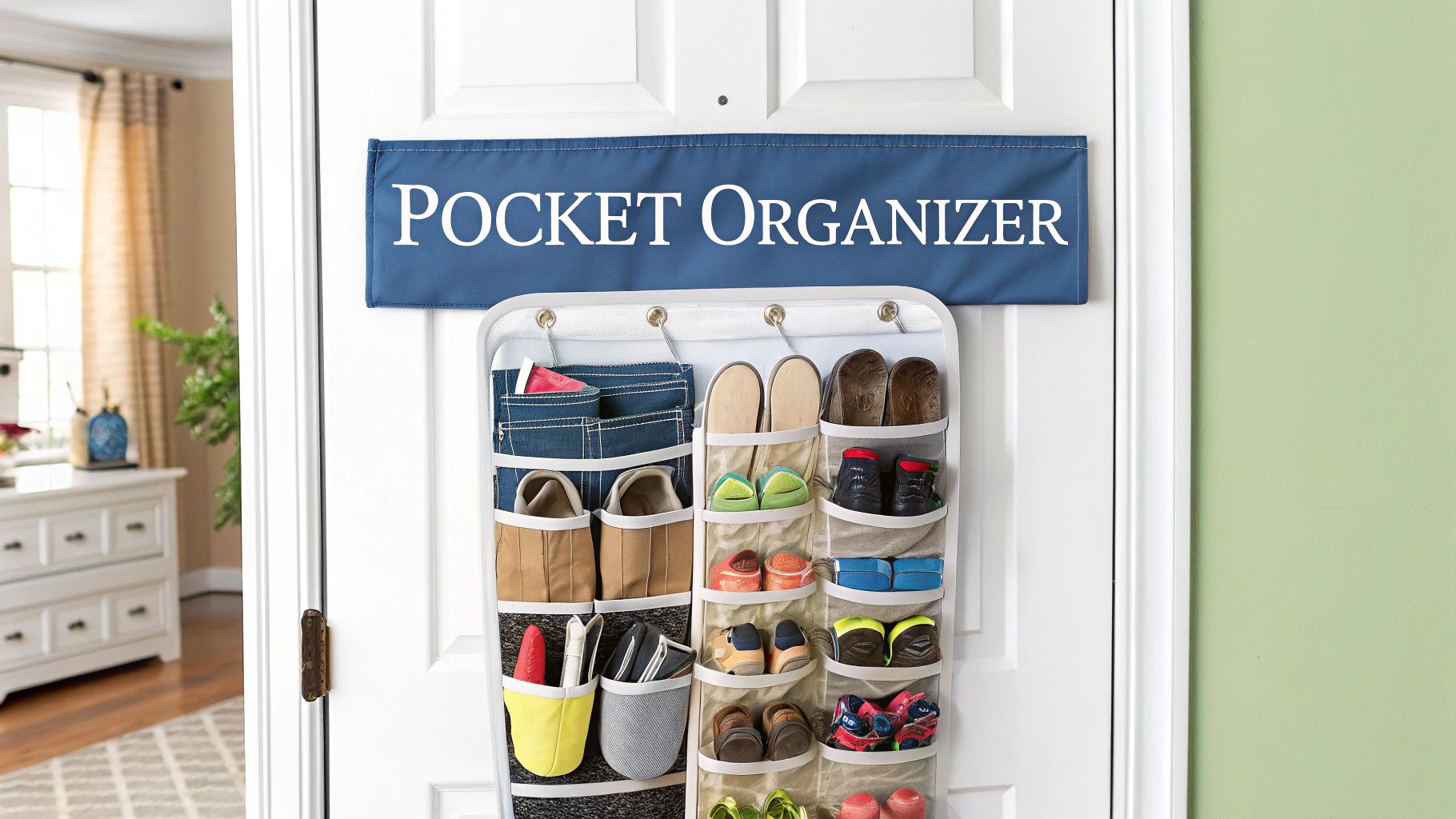
One of the most overlooked yet powerful narrow closet ideas involves claiming the unused space on the back of your closet door. An over-the-door organizer, with its series of fabric or clear plastic pockets, transforms this vertical surface into a high-capacity storage hub. This organizational tool is ideal for stashing shoes, accessories, folded t-shirts, and other small items that would otherwise clutter shelves or the closet floor.
This strategy is exceptionally effective for narrow closets because it adds a significant amount of organized storage without consuming a single inch of interior closet real estate. Brands like Whitmor and SimpleHouseware have made these organizers a staple for organization in compact living spaces, from college dorms to tiny homes, by providing an instant, tool-free storage upgrade.
Why It Works for Narrow Closets
The genius of an over-the-door system is its zero-footprint design. It leverages vertical space that has no other functional purpose, making it a pure gain in storage capacity and organization. This is crucial in a narrow closet where every square inch counts. Instead of trying to cram more bins onto a shelf or another shoe rack on the floor, you can neatly arrange up to two dozen pairs of shoes or countless accessories, as demonstrated in makeovers by Real Simple magazine.
Pro Tip: Before purchasing, measure the clearance between your door and the closet frame, as well as any shelves or rods. Ensure the organizer's hooks are thin enough to allow the door to close properly and that the filled pockets won't snag on your clothes, disrupting your organization.
How to Implement an Over-the-Door System
Putting this space-saving tool to work is simple, but a strategic approach to organization will maximize its benefits. Follow these actionable steps for the best results:
- Choose the Right Material: Opt for clear plastic pockets to store shoes or accessories so you can identify contents at a glance for easier organization. For items like socks or rolled-up scarves, breathable fabric pockets are a better choice to maintain freshness.
- Balance the Weight: When loading the organizer, start by filling the bottom pockets first. This distributes the weight evenly and prevents the door from becoming top-heavy, which can strain the hinges over time.
- Organize by Category: Dedicate specific rows or sections to different categories, such as belts, flats, cleaning supplies, or winter accessories. This creates an intuitive organizational system that makes finding what you need quick and effortless.
- Expand Your Hanger System: An over-the-door organizer frees up valuable floor and shelf space, allowing you to focus on your hanging clothes. Pair this with MORALVE’s space-saving hangers to further streamline your rod space, creating a comprehensively organized narrow closet.
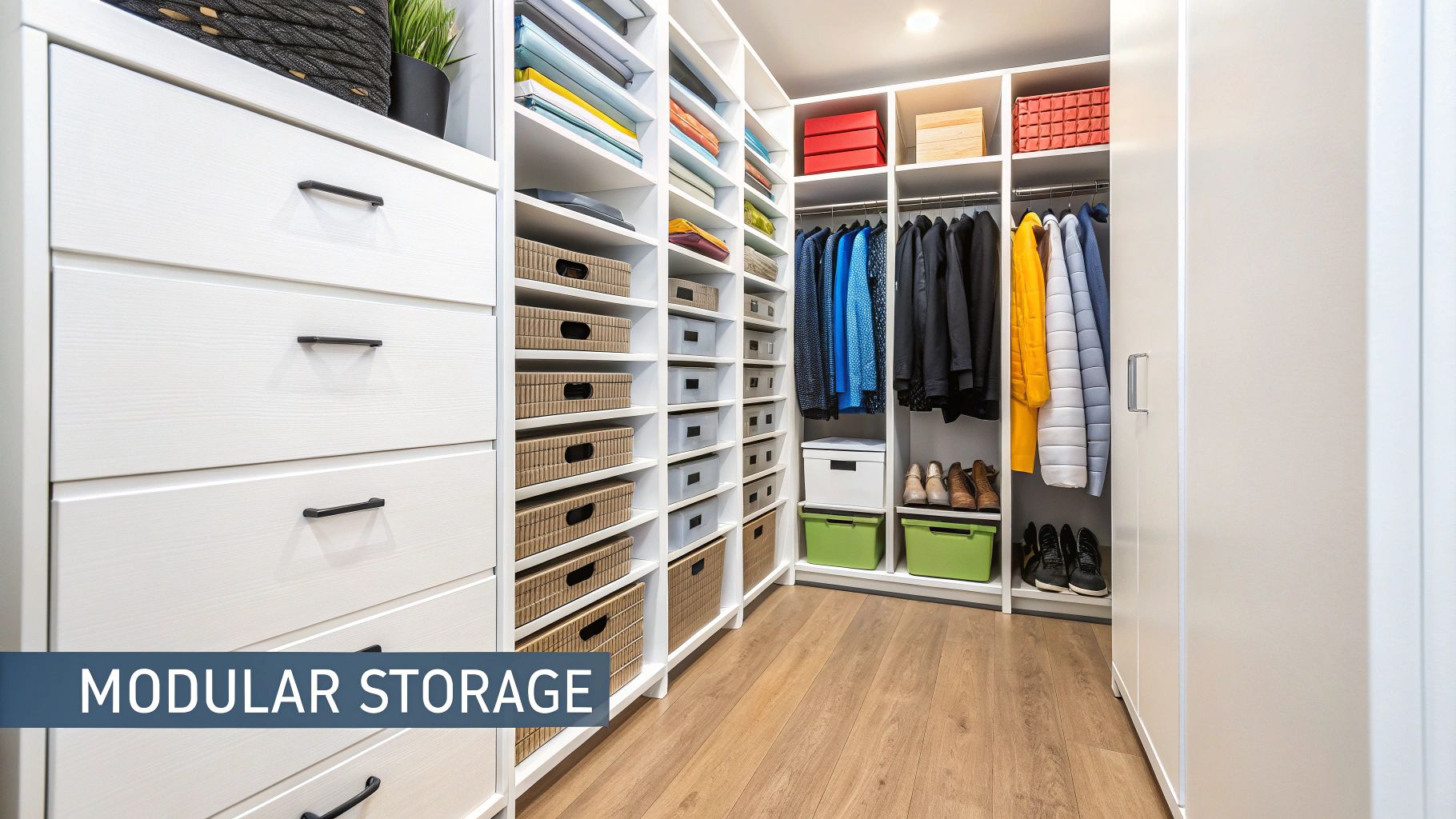
4. Modular Drawer and Shelf Inserts
One of the best narrow closet ideas is to introduce structure with modular drawer and shelf inserts. These are stackable, customizable units that create designated compartments for folded clothing, accessories, and shoes, effectively turning unused floor or shelf space into a highly organized hub. Unlike permanent built-ins, these organizational systems can be reconfigured, expanded, or moved as your needs evolve.
This approach brings order to the chaos often found at the bottom of a narrow closet. By creating specific homes for everything from sweaters to socks, modular systems prevent piles from forming and make every item easy to find and access. This organizational strategy has been popularized by giants like IKEA and The Container Store, who offer versatile solutions for any closet size.
Why It Works for Narrow Closets
Modular inserts are a perfect fit for narrow closets because they maximize vertical space without requiring costly renovations. They allow you to build organized storage upwards from the floor or downwards from a high shelf, filling in awkward gaps. This is especially useful for items that don't hang well, such as knitwear, denim, and T-shirts. Solutions like IKEA’s SKUBB boxes or ClosetMaid’s Cubeicals provide an affordable way to implement this custom-feel organization.
Pro Tip: Before you buy, precisely measure your closet's width, depth, and height. Subtract an inch from the width and depth measurements to ensure the units slide in easily without scraping the walls or door frame.
How to Implement Modular Inserts
Transforming your closet with modular units is straightforward and incredibly satisfying. Follow these actionable steps to create a perfectly organized space:
- Choose Your System: Select units that fit your wardrobe needs. Options range from Iris Ohyama’s sleek plastic drawers, ideal for socks and accessories, to sturdy open cubes for sweaters and bins.
- Divide and Conquer: Use drawer dividers inside the units to create smaller compartments for items like underwear, belts, and scarves. This micro-organization prevents a jumbled mess and makes finding small items effortless.
- Fold for Success: Implement a space-saving folding technique, like the KonMari method, to file clothes vertically within drawers. This not only maximizes capacity but is a key principle of good organization, allowing you to see every item at a glance.
- Balance with Hanging Space: While modular units are fantastic for organization, they work best when paired with efficient hanging solutions. Use MORALVE’s velvet hangers on the rod above your new drawers to keep shirts and blouses compact and orderly, creating a fully optimized closet from top to bottom.
5. Pull-Out Racks and Sliding Mechanisms
When width is the primary constraint in a narrow closet, the best organizational strategy is to maximize its depth. Pull-out racks and sliding mechanisms transform deep, hard-to-reach corners into highly accessible and organized storage. These systems bring the contents of your closet out to you, eliminating the need to rummage through dark, cramped spaces.
This clever organizational approach is a hallmark of modern closet design, incorporating specialized hardware like pull-out pant racks, sliding shoe shelves, and valet rods. It allows you to use every inch of depth efficiently, a critical advantage for narrow closet ideas where horizontal space is a luxury. Systems like IKEA’s KOMPLEMENT series and professional solutions from Rev-A-Shelf have made this high-end functionality widely available.
Why It Works for Narrow Closets
Sliding mechanisms are the ultimate solution for utilizing closet depth for better organization. Instead of items getting lost and forgotten at the back, a simple pull brings everything into full view and within easy reach. This is especially effective for pants, which can be hung neatly without creasing, and for shoes, which are often stored in disorganized piles on the floor.
Pro Tip: Invest in high-quality, full-extension ball-bearing slides for your pull-out mechanisms. They ensure a smooth, stable glide and can support more weight, preventing sagging and sticking over time, which is crucial for long-term organization.
How to Implement Sliding Mechanisms
Integrating pull-out features into your closet is a powerful organizational upgrade that requires careful planning. Follow these steps to maximize their impact:
- Select the Right Components: Identify your biggest organizational challenge. If it's trousers, a dedicated pull-out pant rack is ideal. For accessories, consider a sliding tie and belt organizer. Pull-out shelves are perfect for shoes or folded sweaters.
- Plan for Clearance: Before installing, ensure you have enough space in front of the closet for the mechanism to extend fully. A clearance of at least 24-30 inches is typically required for easy access.
- Use a Valet Rod: Install a pull-out valet rod to temporarily hang your outfit for the next day. This simple addition streamlines your morning routine and keeps your chosen clothes wrinkle-free and separate from the rest of your wardrobe.
- Pair with Efficient Hangers: While racks organize specific items, the rest of your hanging space still needs optimization. Use slim, non-slip hangers like MORALVE’s velvet hangers to complement your new system. Their sleek profile ensures you can hang more shirts and jackets above your pull-out racks, creating a fully integrated and high-capacity organizational solution. To explore more about this, you can check out these creative space-saving clothing storage ideas.
6. Corner and Vertical Wall Shelving
Many narrow closet ideas focus on the main walls, but the corners and vertical expanses are often overlooked goldmines of organizational potential. By strategically installing corner and vertical wall shelving, you can transform awkward, unused nooks and heights into highly functional storage zones. This approach involves using everything from L-shaped corner units to floor-to-ceiling shelf towers and floating shelves.
This organizational method is especially powerful in narrow closets where traditional, wide shelving won't fit or would make the space feel even more cramped. Instead of leaving corners empty, you can wrap storage around them, effectively reclaiming dead space and creating designated spots for folded clothes, shoes, and accessories.
Why It Works for Narrow Closets
Corner and vertical shelving is a favorite strategy of professional organizers because it maximizes every square inch. In a narrow reach-in or walk-in closet, corners are often difficult to access and become cluttered. A dedicated corner unit, like those offered by ClosetMaid or The Container Store's Elfa system, provides structured, accessible storage and organization. Similarly, vertical towers draw the eye upward and utilize the full height of the closet, perfect for items that don't need to be hung.
Pro Tip: When installing shelves, consider varying the depths. Place deeper shelves at the bottom for bulkier items like sweaters or storage bins and shallower shelves higher up for smaller items like hats or clutches. This creates better visibility and accessibility, key components of a well-organized space.
How to Implement Corner and Vertical Shelving
Properly integrating shelves requires a smart layout and a clear purpose for each organizational zone. Follow these actionable steps to turn your corners and walls into storage powerhouses:
- Map Your Zones: Designate specific areas for different types of shelving. Use a tall, narrow tower for folded sweaters and jeans, install floating shelves above your hanging rod for out-of-season items, and dedicate a corner unit to accessories and shoes.
- Use Baskets for Cohesion: To keep open shelves looking tidy and organized, use uniform storage bins or baskets. Label each one clearly (e.g., "Winter Scarves," "Workout Gear") to create a clean, library-like system that makes finding things effortless.
- Light It Up: Narrow closets can be dark, especially in the corners. Install battery-powered LED strip lighting under each shelf to illuminate the contents, making the space feel bigger and ensuring you can see everything in your organized closet at a glance.
- Maximize with Smart Hangers: While shelves handle folded items, your hanging space is still crucial. Using slim, non-slip hangers like MORALVE’s velvet hangers ensures your hanging sections remain as compact and efficient as your new shelving, creating a fully optimized organizational system. You can explore more comprehensive strategies in our guide to closet space saving ideas on moralve.com.
7. Multi-Functional Closet Accessories and Hooks
Beyond just hanging clothes, a truly organized narrow closet maximizes every square inch with specialized accessories. Employing a comprehensive system of multi-functional hooks, tiered hangers, and clever gadgets creates dedicated micro-zones for items that often cause clutter. This organizational approach turns unused surfaces like walls, doors, and even the underside of shelves into valuable storage real estate.
This strategy is essential for narrow closets because accessories like bags, belts, and scarves can quickly consume precious shelf or floor space. By giving each item a designated hanging spot, you keep surfaces clear and the closet visually organized. It's a method championed by professional organizers like The Home Edit, who excel at creating order from chaos using smart, targeted tools.
Why It Works for Narrow Closets
The power of this organizational approach lies in its versatility. A narrow closet has limited horizontal space, so using accessories that hang, stack, or adhere to vertical surfaces is a perfect solution. Instead of a messy pile of purses on the floor or a tangled drawer of scarves, each item gets its own accessible, organized home. Brands like Command have made damage-free hooks a staple in rental apartments, while ZOBER’s tiered hangers are a go-to for capsule wardrobe enthusiasts looking to organize skirts or pants compactly.
Pro Tip: Before buying accessories, conduct a quick inventory of your items. Count your handbags, belts, scarves, and ties to determine exactly which types of hooks and specialty hangers you need, avoiding unnecessary purchases and creating a truly organized system.
How to Implement This System
Creating a fully optimized accessory station in your closet is simple with the right organizational tools. Follow these actionable steps to reclaim lost space:
- Utilize the Rod: Use S-hooks to hang handbags, totes, or even jeans by their belt loops directly from the closet rod. This keeps them off the floor, organized, and easily visible.
- Leverage Wall and Door Space: Install adhesive hooks on the inside of your closet door or on a bare wall to hang robes, tomorrow's outfit, or frequently used accessories. For items like scarves or ties, a circular hanger mounted on the wall keeps them neat and untangled.
- Think in Tiers: Dedicate a single multi-tier hanger for items like tank tops, camisoles, or leggings. This groups similar garments together vertically, freeing up significant horizontal rod space and boosting organization.
- Add Under-Shelf Storage: Install simple under-shelf wire baskets to create a new storage level for clutches, wallets, or folded knit accessories without taking up existing shelf space.
- Choose Specialized Hangers: To keep your accessories pristine and organized, use hangers designed for the job. For example, MORALVE’s velvet hangers have a non-slip surface perfect for scarves or belts, ensuring everything stays securely in place.
Narrow Closet Ideas: 7-Item Feature Comparison
| Item | Implementation Complexity 🔄 | Resource Requirements ⚡ | Expected Outcomes 📊 | Ideal Use Cases 💡 | Key Advantages ⭐ |
|---|---|---|---|---|---|
| Vertical Double-Hang Rod System | Moderate - needs mounting or tension rods | Low - rods and basic hardware | Doubles hanging capacity vertically | Narrow closets needing better vertical organization | Maximizes vertical space; cost-effective |
| Slim Profile Hangers with Cascading Hooks | Low - just replace hangers | Low to Moderate - investment in quality hangers | Increases rod capacity by up to 70% | Narrow closets needing compact garment storage | Boosts organization; saves horizontal space |
| Over-the-Door Organizers and Pocket Systems | Very low - no installation, hang over door | Very low - inexpensive materials | Adds 12-24 pockets for small item organization | Rental spaces, dorms, narrow closets with limited floor space | No installation; renter-friendly organization |
| Modular Drawer and Shelf Inserts | Low to Moderate - freestanding, no installation | Moderate - purchasing modules | Customizable compartmentalized organization | Closets needing flexible, portable folded clothing storage | Highly customizable and portable |
| Pull-Out Racks and Sliding Mechanisms | High - requires mounting and possible professional install | High - hardware and mechanisms | Easy access via sliding, organized specialty items | Deep or narrow closets requiring easy visibility/access | Efficient use of depth; streamlined organization |
| Corner and Vertical Wall Shelving | Moderate - requires mounting hardware | Moderate - shelving units and brackets | Adds 30-50% more storage via corners and walls | Narrow closets with awkward corners or vertical space | Utilizes forgotten corners; structured organization |
| Multi-Functional Closet Accessories and Hooks | Very low - minimal or no installation | Very low - inexpensive accessories | Micro-organization of accessories | Renters, students, those needing flexible organization solutions | Affordable; highly customizable |
From Cramped to Curated: Your Next Steps to an Organized Closet
Transforming a narrow closet from a cluttered, frustrating space into a streamlined and functional asset is not just a dream, it's a completely achievable goal. Throughout this guide, we've explored a variety of powerful narrow closet ideas designed to conquer the constraints of limited square footage. The journey from cramped to curated is paved with smart, strategic organizational choices that maximize every available inch.
The core principle behind each successful transformation lies in a dual approach: optimizing the closet's structure and upgrading the organizational tools you use within it. By implementing structural solutions like a vertical double-hang rod system or corner shelving, you fundamentally change the geometry of your storage. Similarly, integrating modular drawers and pull-out racks introduces a level of accessibility and order that a simple rod and shelf can never offer. These are the architectural blueprints for your new, highly organized space.
Key Takeaways for Your Closet Transformation
The most impactful changes often come from combining these larger concepts with high-efficiency accessories. Remember these crucial organizational takeaways:
- Go Vertical: Doubling your hanging space with a second rod or utilizing wall height with shelving is the fastest way to increase capacity without increasing your closet's footprint.
- Think Slim and Uniform: The bulk and inconsistency of traditional hangers are silent space thieves. Switching to slim-profile, cascading hangers is a simple swap that can instantly reclaim up to 50% of your rod space and create visual order.
- Activate Dead Zones: Over-the-door organizers, corner units, and multi-functional hooks bring forgotten areas to life, providing dedicated homes for accessories, shoes, and belts that would otherwise create clutter.
- Create Accessibility: Pull-out mechanisms for pants, scarves, or bins prevent items from getting lost in the back of a deep, narrow closet, ensuring your organization system makes everything visible and easy to reach.
Your Actionable Next Steps
Feeling inspired but not sure where to begin? Don't try to tackle everything at once. Start with a single, high-impact organizational change. Begin by decluttering your wardrobe and then choose one of the ideas from our list that best addresses your biggest frustration. For many, the most immediate and satisfying improvement comes from upgrading their hangers. This one step sets the foundation for all other organizational efforts, creating the visual and physical space needed to implement further changes.
Mastering these narrow closet ideas is about more than just having a tidy wardrobe; it’s about creating an organizational system that supports your daily routine, reduces stress, and protects your clothing investment. A well-organized closet saves you time and energy every single day, turning a former point of chaos into a source of calm and control. You have the knowledge and the strategies; now is the time to take that first step and build the curated, functional closet you deserve.
Ready to build the foundation for your perfectly organized closet? Explore the full collection of space-saving hangers from MORALVE. Their innovative designs are engineered specifically to maximize space and create a uniform, elegant look, making them the perfect starting point for implementing any of these narrow closet ideas. Discover the MORALVE difference today.
Leave a comment