
A Guide to Organising Your Closet and Drawers

The real secret to a closet and drawers that stay organized for more than a week? Starting from zero. That means taking every single thing out, making some tough calls, and giving the space a good wipe-down before anything goes back in. This initial purge is, without a doubt, the most important part of creating a system that actually sticks.
Setting the Stage for an Organized Closet
We all want a picture-perfect closet with neatly folded rows, but you can't get there without first tackling the current chaos. The very first move isn't about fancy folding techniques or rushing to buy organizers; it's about giving yourself a completely fresh start. This groundwork ensures you're only making space for clothes you truly love and wear.
Start by emptying every single drawer and taking everything off the hangers. Don't just do one section at a time—pull it all out and pile it on your bed or the floor. It might look overwhelming, but seeing the sheer volume of what you own is a powerful reality check and the best motivation to get lean. When you’re staring at a mountain of clothes, it's a lot easier to be ruthless about what gets to go back in.
The Art of Sorting and Purging
With everything out in the open, it's time to sort. I find the classic three-pile method works best because it keeps you from getting bogged down in indecision. Make a space for each: Keep, Donate, and Discard.
- Keep: These are the clothes you reach for all the time, the ones that make you feel good and are in great shape. Be brutally honest here. If you haven't worn it in the last 12 months, it’s a candidate for another pile.
- Donate: Perfect for items that are still in good condition but just don't fit your life anymore, whether that's your style or your size. Let someone else enjoy them.
- Discard: This pile is reserved for anything that's seen better days—think stains, rips, or just being completely worn out.
Letting go can be surprisingly difficult. If you find yourself stuck, our guide on effective decluttering clothes tips has some great strategies to help you make those tough decisions without the guilt.
The Final Prep: A Deep Clean
Once your closet and drawers are completely empty, don't skip this final, surprisingly satisfying step: give them a deep clean. Grab a damp cloth and wipe down every surface, from shelves to hanging rods. You'll be amazed at the dust and lint that has built up over time.
Cleaning your empty closet is more than just a chore. It’s a mental reset—a way of preparing a clean, respected space for the items you’ve intentionally chosen to keep. This simple act solidifies the shift from cluttered chaos to curated order.
The right furniture makes all the difference, too. If you're building your organization system from the ground up, a solid piece like an Acacia Harmony Dresser with 5 Drawers can be the perfect foundation for your folded items. Starting with a clean, empty, and beautiful space provides the best possible canvas for what comes next.
Mastering Space-Saving Folding Techniques
With your closet clean and your clothes sorted, it’s time for the magic to happen. How you fold your clothes is genuinely the most important part of maximizing drawer and shelf space and keeping things tidy for good. When you just stack items, you can only ever see the one on top, which inevitably leads to rummaging around and creating a mess. The real goal is to see every single item at a glance.
This is where a few smart folding methods completely change the game. They do more than just make things look neat; they transform how you use your wardrobe. By thinking vertically instead of horizontally, you can fit so much more in and find what you need in seconds.
The KonMari Vertical Fold
The KonMari method, which Marie Kondo made famous, is an absolute game-changer for clothes drawers. The whole idea is to fold clothes into small, sturdy rectangles that can actually stand up on their own. Instead of stacking them, you file them in your drawer from front to back, just like files in a cabinet.
This vertical setup lets you see every single t-shirt or pair of shorts without digging through a pile. It’s brilliant for most everyday clothes and works especially well in shallow drawers where stacking is pretty much impossible anyway.
Give it a try: lay a t-shirt flat, fold both sides toward the middle to make a long rectangle, then fold that rectangle into thirds until it’s compact enough to stand up. It might take a little practice, but once you get the feel for it, you’ll be shocked at how much room you free up.
Of course, before you even think about folding, that initial clear-out is crucial. You have to start with a blank slate.
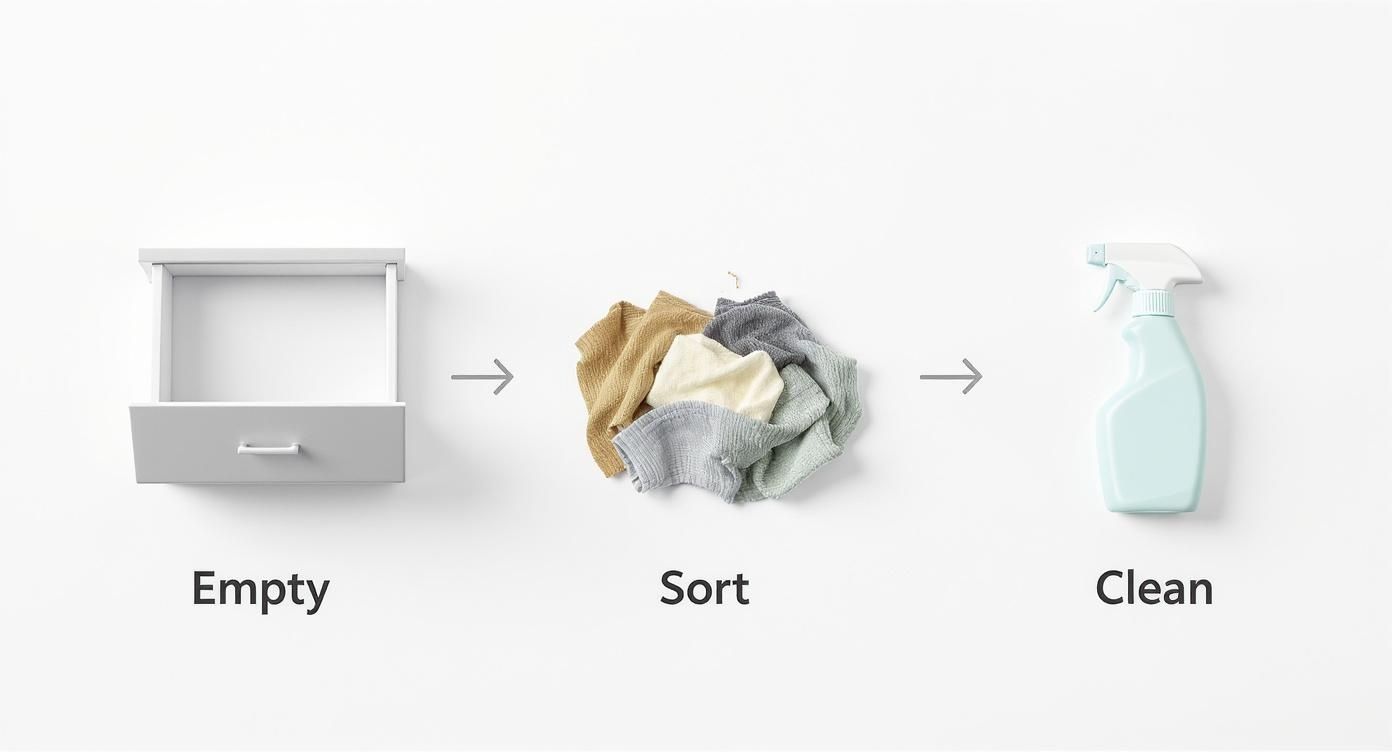
This just goes to show that any great organization project starts with decluttering and cleaning. It’s the groundwork for a system that will actually last.
The Ranger Roll for Ultimate Compression
For things you need to pack down really small—like gym gear, pyjamas, or leggings—the ranger roll is unbelievably good. This is a technique the military uses for efficient packing, and it creates tight little bundles that don't wrinkle easily and take up almost no space.
To ranger roll a t-shirt, lay it flat and fold the bottom hem up a couple of inches to make a little cuff. Then, fold the sides in and roll it as tightly as you can from the collar down. When you get to the end, you just flip that cuff you made over the roll to hold it all together. What you're left with is a perfect, dense cylinder that won't come undone.
This trick is a lifesaver for packing a suitcase, but it's just as amazing for deep drawers or storage bins at home. You can line up dozens of rolled items vertically, like little logs, making for an incredibly compact and organised space.
Choosing the Right Fold for Your Clothes
Not every piece of clothing needs the same fold. The secret is to mix and match techniques to create a system that works for your clothes and your closet. For a deeper dive, our detailed article has some fantastic visuals on folding clothes to save space.
To help you decide which fold to use where, I've put together a quick comparison of the most popular methods.
Folding Method Comparison
This table breaks down which folding style works best for different garments, helping you tailor your approach for maximum efficiency.
| Folding Method | Best For | Key Benefit |
|---|---|---|
| KonMari (File Fold) | T-shirts, trousers, shorts, jumpers | Everything is visible at a glance; easy access |
| Ranger Roll | Gym clothes, pyjamas, socks, underwear | Maximum space-saving; prevents unravelling |
| Simple Stack | Bulky, structured items (like thick sweaters) | Quick and easy; best for items on open shelves |
Ultimately, the best system is a hybrid one. Use the KonMari fold for your everyday tops and trousers in drawers, the ranger roll for your workout gear in a bin, and maybe a simple stack for those chunky sweaters on a high shelf.
By getting comfortable with a few folding styles, you’ll finally beat the clutter and unlock your closet's true potential. You’ll end up with a system that’s not just practical but also genuinely satisfying to look at.
Creating a Smart Closet Layout
Now that your clothes are neatly folded or ready to hang, it's time to think about where everything should live. This is more than just stuffing things back in; it's about creating a system that actually makes sense for your daily routine. Think of your closet as prime real estate—the space between your waist and eyes is the most valuable.
The best way I've found to do this is through zoning. It sounds technical, but it’s really just about giving specific areas a dedicated purpose. When you group similar items together, you start to build a mental map of your wardrobe, which saves you a ton of time and frustration. No more frantic searching for a clean pair of socks on a busy morning.

Prioritize by Frequency of Use
Here’s the golden rule for any closet layout: what you use most, keep most accessible. Your prime, easy-to-reach zones should be reserved for the things you wear all the time.
- Prime Real Estate (Eye-level hanging space, top drawers): This is for your daily essentials—work shirts, favorite jeans, underwear, and socks. They need to be front and centre for easy access.
- Secondary Zones (Lower hanging rods, middle drawers): A great place for less-worn trousers, occasion wear, and favorite activewear. These are still high-traffic items, but not as critical as your daily go-to's.
- Out-of-the-way Storage (High shelves, bottom drawers): Use this space for out-of-season or bulky stuff. Think thick winter jumpers you won't need until November, special occasion outfits, or memorabilia.
Arranging your closet like this creates a logical flow that matches how you get dressed. It's a small change, but the difference it makes in your daily efficiency is huge.
A well-zoned closet works with your habits, not against them. When your most-worn items are within easy reach, you’re far more likely to maintain the system because it’s just plain easier.
Refine Your System with Sub-Categories
Once you have your main zones sorted, you can get even more specific by organising the items within each area. This is where personal preference really comes into play. For a lot of people, organising by colour is a game-changer. It’s not just visually pleasing; it’s incredibly practical.
Imagine opening your closet to a neat rainbow of shirts. It makes finding that one specific grey top you wanted to wear almost instant.
If colour-coding isn't for you, try organising by type. On your hanging rod, for instance, you could group all your tank tops, then your short-sleeve shirts, and finally your long-sleeve ones. This is also a fantastic way to separate work clothes from casual clothes. The end goal is simple: create clear, logical homes for everything so you can grab what you need without a second thought.
Using Dividers and Organisers
You’ve put in the real work—the decluttering, the sorting, the folding. Now comes the secret to making it all stick: dividers and organisers.
Think of these tools as the scaffolding for your system. Without them, even the most perfectly folded t-shirts will start to slump and slide into a jumbled mess after a few busy mornings. They create designated homes for everything, preventing that slow creep back into chaos.
Choosing Your Organisational Tools
The right tool for the right item makes all the difference. You wouldn't use a hammer to turn a screw, and the same logic applies here.
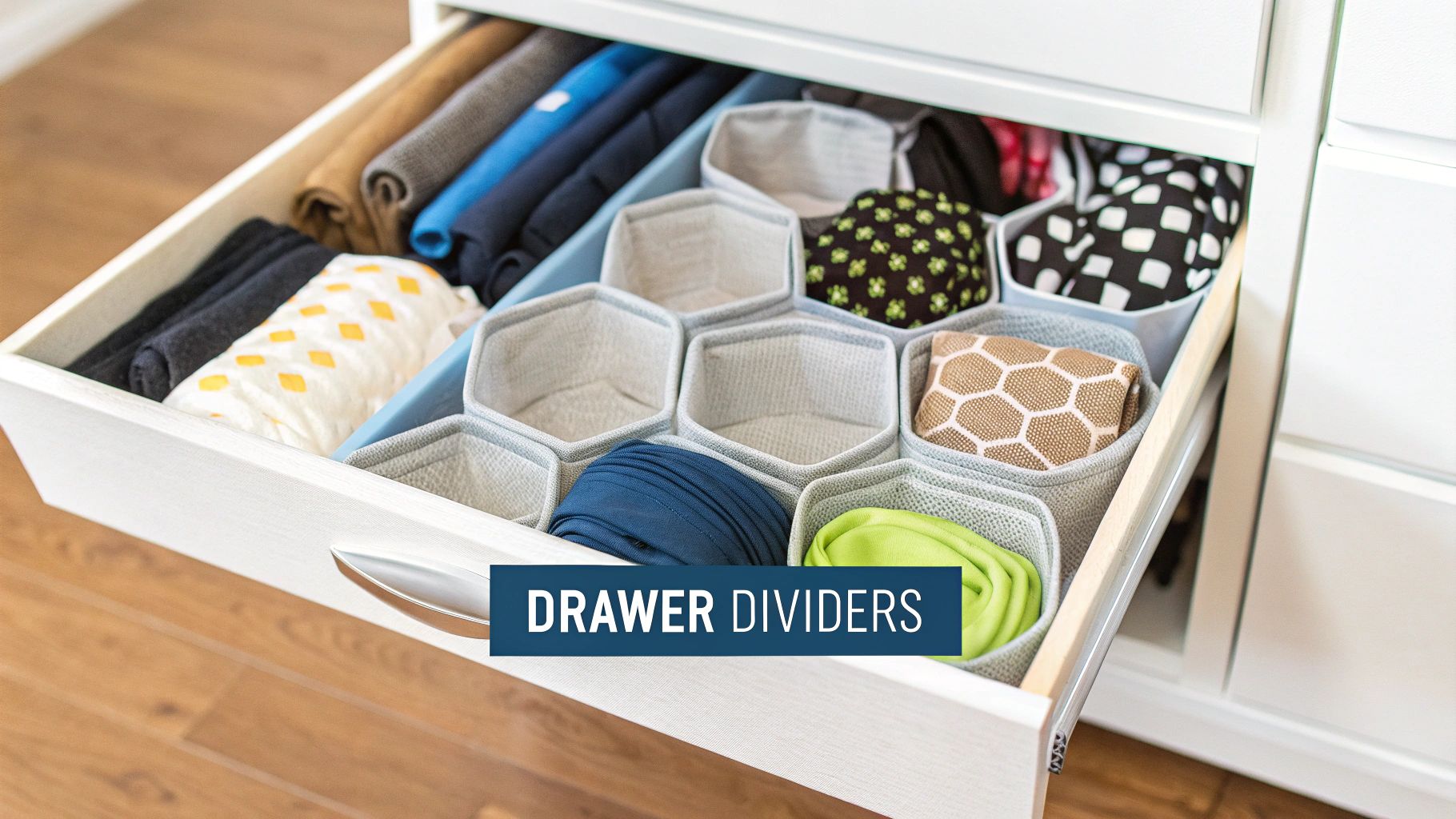
- Honeycomb Inserts: These are my go-to for small, rollable items that always seem to get lost in drawers. Each little cell is the perfect size for a pair of socks, underwear, or a rolled-up tie. No more digging for a matching pair.
- Adjustable Spring-Loaded Dividers: For bigger clothes like jeans or sweaters in drawers, these are a game-changer. They slide and lock into place, creating sturdy channels that keep your neat vertical rows from toppling over like dominoes.
- Fabric Bins and Boxes: I love these for creating soft, flexible zones inside a drawer or on a closet shelf. They're brilliant for corralling accessories like belts and scarves or for grouping entire categories like workout clothes or pyjamas.
It’s no surprise that the market for closet and drawer organisers is projected to reach USD 3.8 billion by 2027. People are catching on to how a few simple tools can completely transform their daily routines. Keeping an organised home just feels better, and these products make it genuinely achievable.
Matching Materials to Your Needs
The material you choose affects both how the organiser works and how your closet looks.
Bamboo Dividers: If you want a sturdy, premium feel, go with bamboo. The rigid construction is ideal for spring-loaded dividers holding back heavy stacks of denim. Plus, it’s a sustainable option that brings a nice, natural touch to your storage.
Plastic Organisers: Plastic is the versatile, budget-friendly workhorse. It comes in endless shapes and sizes, from clear boxes to the honeycomb inserts I mentioned earlier. They’re super easy to wipe clean, which makes them great for kids’ clothes or even swimwear.
Fabric Bins: These are your best bet for delicate items. Usually made of canvas or felt, they won’t snag lingerie or fine-knit scarves. Their flexibility is also handy for oddly shaped items on shelves. For those tight on space, our guide on clothes organizers for small spaces has some great tips on using fabric solutions to maximize every inch.
By investing in the right dividers, you're not just buying products; you're creating a permanent, self-sustaining system. It’s the final step that transforms your closet from temporarily tidy to consistently organised.
In my experience, the best solution is usually a mix-and-match approach. You might end up with sleek bamboo dividers for your jumpers, a honeycomb insert for your socks, and a couple of fabric bins for accessories—all working together to create a perfectly organised, functional space.
Keeping Your Closet Organised for Good
https://www.youtube.com/embed/fVyr1eC0YoM
That feeling of opening a perfectly organised closet is incredible, right? The real win, though, isn't just getting it organised once—it's keeping it that way. The secret isn't a constant, massive overhaul. It's all about building small, sustainable habits that stop the clutter from ever creeping back in.
Think of it less like a chore and more like protecting the calm you’ve created. When a system is working beautifully, you're naturally more inclined to maintain it.
Weave New Habits Into Your Routine
The key to making this stick is to bake a few simple rules into your everyday life. One of the most effective I've ever used is the 'one-in, one-out' rule. It’s simple: every time you bring home a new sweater, an old one has to go. This single habit is a game-changer for preventing that slow, sneaky buildup of clothes that leads to an overstuffed closet.
Another great strategy is to schedule a quick weekly reset. It’s easier than you think.
-
The 5-Minute Tidy: Set aside just five minutes over the weekend to quickly refold anything that's been rummaged through and re-hang misplaced items. Straighten the rows, tuck things back in. This tiny time investment prevents small messes from turning into a chaotic avalanche.
-
The Laundry Day Check-In: As you’re putting away clean laundry, take an extra 30 seconds per drawer or section of your closet. Make sure you’re folding items correctly and putting them back in their designated spot. This is what reinforces your system and keeps it working.
These aren’t heavy lifts; they're minor tweaks that have a huge impact over time. If you want to get really serious about making sure every item has a permanent home, especially in a busy household, this essential guide to name tag labels for clothes has some brilliant tips.
Schedule Seasonal Tune-Ups
About twice a year, usually when you’re swapping out your summer and winter clothes, do a quick audit. This is a much faster, lighter version of your big initial declutter. Just scan through your closet and drawers and ask a simple question: have I worn this in the last six months?
Your seasonal check-in is a chance to look at your wardrobe with fresh eyes. It's the perfect moment to let go of pieces that no longer fit your life and make room for the things that do. It keeps your collection feeling intentional, not accidental.
This process ensures you get ahead of the clutter before it even has a chance to take hold. By combining these small, consistent habits with a couple of quick reviews each year, you'll make sure that beautifully organised closet is here to stay, not just a one-time project.
Got Questions About Organizing Your Closet? We’ve Got Answers.
Even with the best intentions, you’re bound to run into a few tricky spots when organizing your closet. It's totally normal to hit a snag, especially with bulky clothes or awkward, shallow drawers. Let's tackle some of the most common questions I hear and get you set up with some practical, real-world solutions.
Think of these as the final hurdles between a pretty good system and one that actually lasts. Let's get them sorted.
How Do I Handle Bulky Stuff Like Sweaters and Hoodies?
Let's be honest, bulky sweaters and hoodies are notorious space-hogs. Just trying to cram them in with a normal fold is a battle you'll lose every time. The secret isn't brute force; it's about compressing them smartly. For those really thick sweaters, the ranger roll is a game-changer. It turns a bulky knit into a tight, compact log that uses a fraction of the space in a drawer or bin.
Once you’ve rolled them, stand them up vertically in your deepest drawers. It’s like stacking logs. This way, you can grab the one you want without having to dig through a whole pile.
But what if your drawers are just too shallow? For out-of-season sweaters, vacuum-sealed bags stored on a high shelf are your best friend. You will be shocked at how much space you get back. For the hoodies you actually wear, a simple flat fold placed on a shelf usually does the trick.
What’s the Best Way to Keep Small Items from Turning into Chaos?
When it comes to smalls—socks, underwear, ties—dividers are not optional. They are, hands down, the best tool for preventing that inevitable jumbled mess in your drawers.
If you want the most effective solution for small items, get a honeycomb-style drawer organiser. These inserts create dozens of little individual cells, giving every pair of socks or every rolled-up tie its own home. It’s basically impossible for things to get mixed up.
If you don't have one of those, you can get a similar effect using small fabric bins or even old shoebox lids. The most important habit to build, though, is to always roll or fold these items before they go in the drawer. Never just toss them in. That one small action makes all the difference in keeping that drawer tidy for the long haul.
How Can I Make the Most of Super Shallow Drawers?
Shallow drawers call for a whole different strategy. Here, it’s all about flat, vertical storage. This is where the KonMari vertical fold really shines. By folding clothes into small, self-standing rectangles, you can file them from front to back, just like files in a cabinet.
This method lets you see everything at a glance and fits way more than just stacking things on top of each other. To make this system even better, use adjustable spring-loaded dividers.
These dividers create neat little channels that hold your folded clothes upright so they don't all flop over. Tightly rolling t-shirts is another fantastic trick that works perfectly in shallow spaces, letting you line them up without adding any bulk.
Ready to tackle your entire closet, not just the drawers? MORALVE has a complete lineup of space-saving hangers built to squeeze every last inch of utility out of your wardrobe. From our multi-pant hangers to our versatile clothing hangers, we have the tools you need for a beautifully organized and functional closet. Check out the full collection and start your clutter-free journey today.
Leave a comment