

Small Closet Solutions for Maximum Organization

Feeling overwhelmed by a closet that seems to spit clothes back at you every time you open it? You’re not alone. The secret to conquering small closet chaos isn't just a quick tidy-up; it's about implementing smart, strategic small closet solutions. This is how you create a functional, organized system that actually sticks.
From Chaos To Calm: Your Closet Organization Game Plan
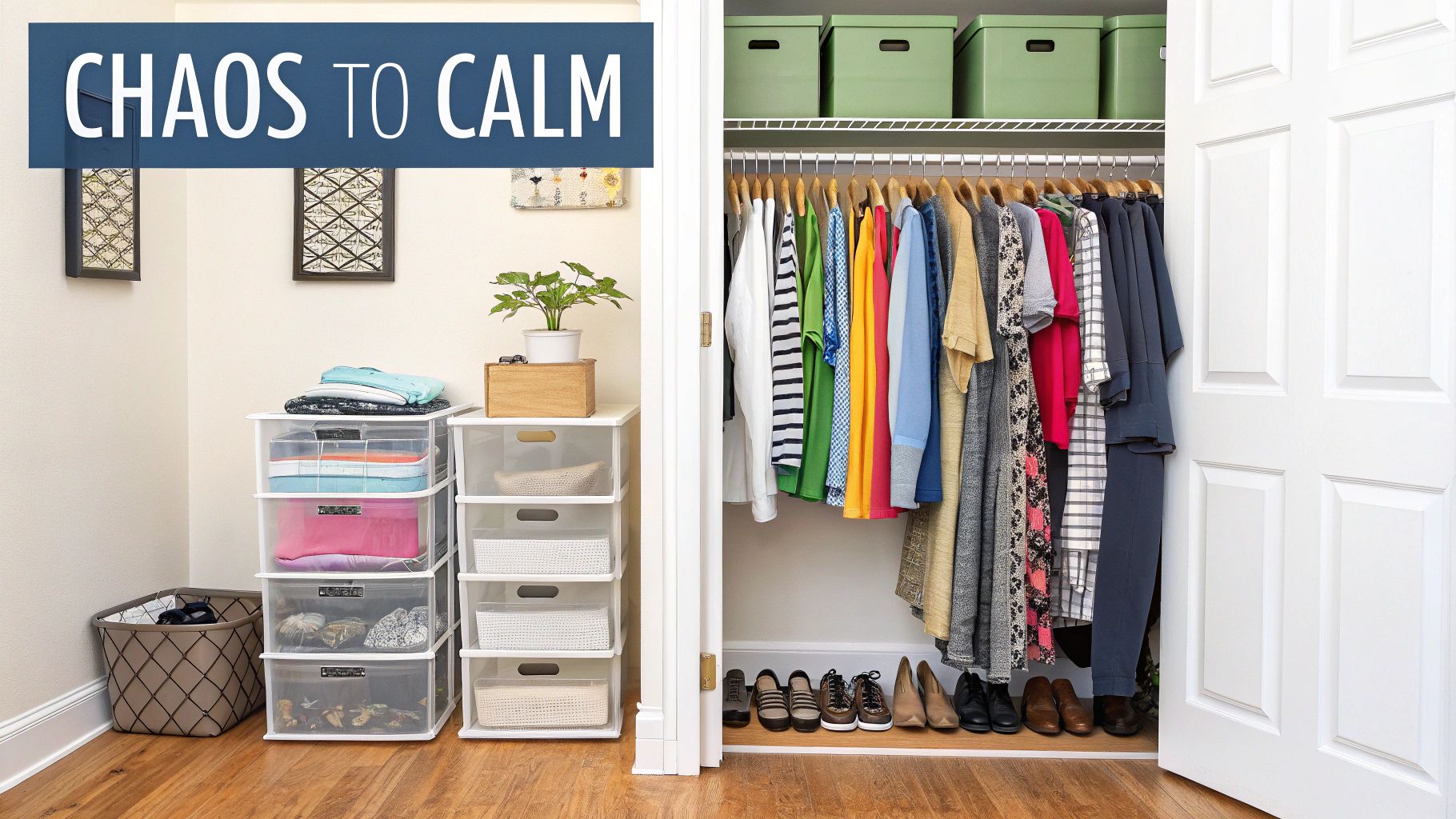
Trying to wrangle a cramped, overflowing closet can feel like an impossible battle. The daily frustration of not being able to find what you need can throw off your entire morning. This guide provides a real-world game plan for closet organization, moving past generic advice to turn that stressful space into one of calm and control.
First, let's shift your mindset. Most organizing tricks fall flat in compact closets because they don't solve the core problem: making the most of a seriously limited area. We’ll walk through a strategic approach that starts with an honest assessment of your wardrobe to pinpoint what’s really causing the clutter. This is about more than just making things look pretty; it's about building an organization system that fits seamlessly into your life.
Why Strategic Organization Matters
A well-organized closet does so much more than just look good. It brings a surprising amount of mental clarity and simplifies those daily "what to wear" decisions.
When you focus on strategic organization, you can:
- Slash Daily Stress: No more frantic, last-minute searches for that one specific top.
- Save Precious Time: Seeing everything at a glance means you can get ready faster and with less hassle.
- Protect Your Wardrobe: Proper storage is key to preventing wrinkles, snags, and damage to your favorite pieces.
The goal here is to build a sustainable organization system, not just a temporary fix. With the right tools and a solid plan, you can fundamentally change how you interact with your closet every single day.
To get there, it helps to borrow from proven efficiency methods, like the Lean 6S principles. This framework helps you sort, set in order, and sustain a clutter-free environment—perfect for a closet. For a deep dive into that crucial first step, our guide on how to declutter your closet is the perfect place to start.
It's no surprise that the demand for smart closet organization is booming. As more people move into cities, living spaces are getting smaller, and every square inch suddenly becomes prime real estate. The global Closet Organizers Market, valued at USD 8.5 billion, is expected to hit USD 15.2 billion by 2033. That massive growth highlights a universal truth: we all need smarter ways to store our stuff.
The Ruthless Edit: The First Step in Closet Organization
Before you buy a single new hanger or fancy organizer, we need to talk about the most important step: the ruthless edit. You can’t organize clutter. The whole point of this exercise is to make your small closet work for you, and that means everything inside has to earn its keep.
Let’s be honest, most of us are holding onto things for the wrong reasons. There’s the guilt over that expensive dress you wore once, the sentimental attachment to jeans that haven't fit in years, or the clothes you bought for a "fantasy self" who goes to galas every weekend. It’s no wonder our closets are bursting. A well-known rule of thumb says we wear 20% of our clothes 80% of the time. That means the other 80% is just taking up precious real estate.
A Sorting System That Actually Works
To avoid getting overwhelmed, forget a vague "keep" pile. You need an organization system that forces a decision. My go-to method for clients (and my own closet) is the Four-Box Method. It cuts through the emotional guesswork.
Grab four boxes, bins, or just designate four clear spots on your floor. Label them:
- Keep: These are your non-negotiables. You love them, they fit you right now, and you wear them regularly.
- Donate/Sell: Good-condition items that just aren't you anymore. Someone else will be thrilled to find them.
- Store: Think off-season gear like bulky winter parkas or that one formal gown. They don't need to live in your prime closet space all year.
- Toss/Recycle: Anything stained, torn beyond repair, or just plain worn out. Be realistic and let it go.
This structured approach eliminates that paralyzing "maybe" pile and keeps your organization process moving forward.
Get Real About What You Actually Wear
If you need a dose of reality, try the Reverse Hanger Trick. It's incredibly simple, but the results are always eye-opening for closet organization.
Turn every hanger in your closet so the hook faces out, pointing toward you. When you wear something and put it back, hang it the normal way (hook facing the back of the closet).
Check back in three, or even six, months. Any hangers still facing outward are holding the clothes you haven't touched. It’s hard to argue with that kind of visual proof.
This little trick gives you hard data on your own habits. It changes the internal monologue from "I might wear this someday" to "I literally have not worn this in half a year," which makes letting go so much easier.
Once your edit is complete, you'll be left with a wardrobe that actually reflects your current life and style. This is the solid foundation you need. Now, with only the good stuff left, you can start building an organization system that truly works.
Designing Your Closet Blueprint for Maximum Organization
Now that you’ve done the hard work of decluttering, you’re left with a curated collection of clothes you actually wear. This is where the organization really gets strategic. Think of yourself as an architect, and your closet is your next big project. It's time to draft a smart, efficient blueprint for organization.
Your most important tool right now? A simple tape measure. Before you even think about buying a single organizer, you need to know exactly what you're working with. Get the precise dimensions of everything: the height of the hanging rod, the depth of your shelves, and the usable floor space. Trust me, these numbers are your best friends—they’ll save you from the frustrating mistake of buying a perfect solution that’s half an inch too wide.
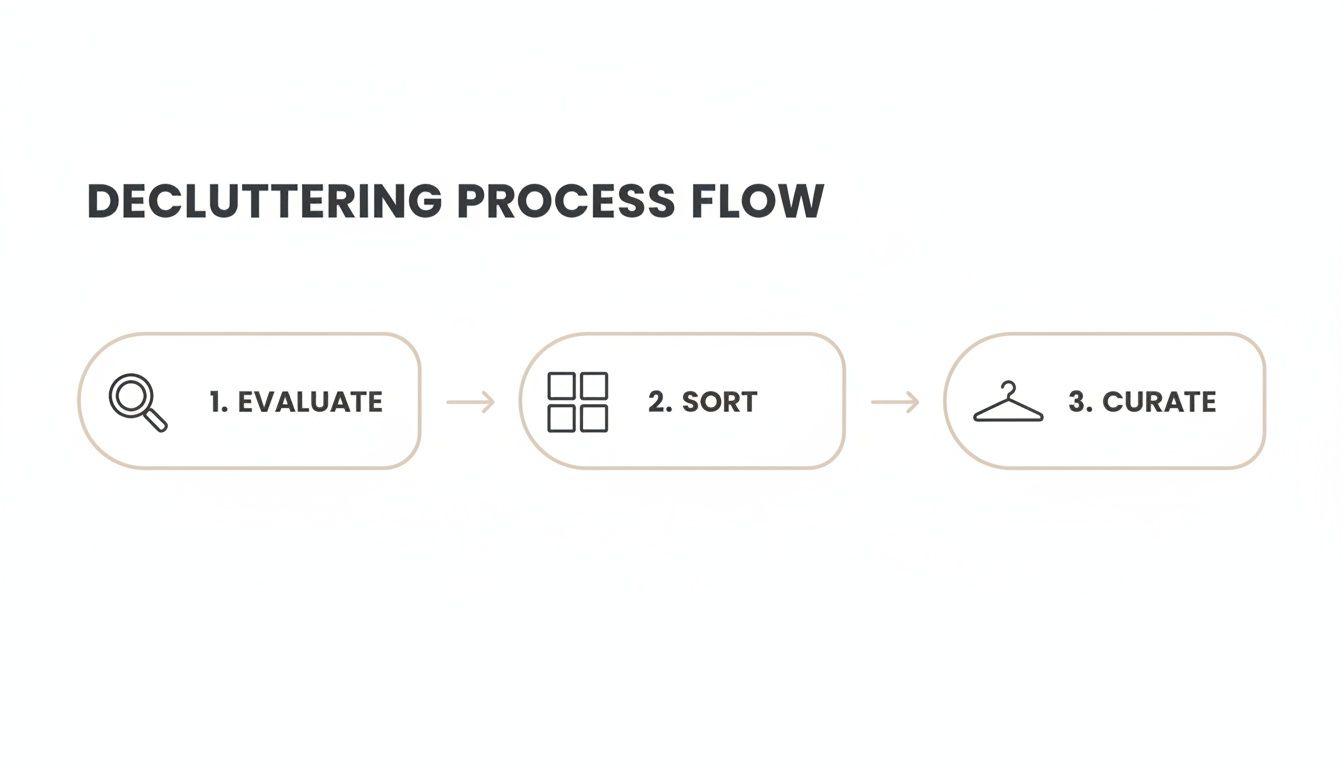
This diagram gives a great overview of the mindset you need to get your wardrobe ready for this planning stage.
Map Out Your Zones for Better Organization
With your measurements in hand, grab a piece of paper and sketch a rough layout of your closet. It doesn’t need to be a work of art; the goal is to visually carve up the space into distinct zones. This "zoning" strategy is a game-changer for closet organization because it assigns a specific purpose to every single inch.
Here’s how I typically break down a small closet:
- The Top Shelf: This is your "long-term storage" zone. Since it's a bit harder to reach, it's perfect for off-season clothes, travel bags, or that formal outfit you only wear once a year.
- The Hanging Rod: This is prime real estate. I like to segment it by clothing type—work blouses, casual tops, dresses, and jackets each get their own section for easy organization.
- The Floor Space: Often overlooked, this area has huge potential. It’s the ideal spot for a low-profile shoe rack, a basket for your gym clothes, or a couple of stackable bins for bulky sweaters.
- The Back of the Door: Don't forget this vertical goldmine! An over-the-door organizer here can instantly create a home for scarves, belts, hats, or even jewelry.
For a little extra inspiration, it can be really helpful to see how professionals tackle tight spaces. Looking at architectural designs for small homes can spark some truly clever ideas for using every nook and cranny. And if you want to dive even deeper, we have a whole guide on how to design a closet from the ground up.
To make this even clearer, here's a sample blueprint you can adapt for your own space.
Closet Zoning Blueprint
This table offers a simple framework for assigning roles to each part of your closet, ensuring everything has a logical and accessible home for better organization.
| Closet Zone | Ideal Contents | Organizational Tool Examples |
|---|---|---|
| High Zone (Top Shelf) | Off-season clothing, travel gear, sentimental items | Labeled bins, vacuum-sealed bags, luggage |
| Mid Zone (Hanging Rod) | Everyday shirts, blouses, dresses, jackets, pants | Slim velvet hangers, multi-pant hangers, tiered skirt hangers |
| Low Zone (Floor Space) | Shoes, bulky sweaters, workout gear, laundry | Stackable shoe rack, wire baskets, fabric bins |
| Vertical Zone (Door/Walls) | Accessories (belts, scarves), hats, small purses | Over-the-door hook rack, clear pocket organizer, wall hooks |
By thinking in zones, you create a natural flow that makes finding things and putting them away second nature.
From Blueprint to Reality
With your plan complete, you can finally—and confidently—start choosing your organization tools. You're not alone in this quest for a better closet. As more people move into smaller urban spaces, the demand for smart storage has skyrocketed.
Surveys reveal that a staggering 68% of apartment dwellers feel their closet space is inadequate, which has driven a 25% annual jump in sales for space-saving products. This trend has helped the Custom Closets Market grow to a value of over USD 33 billion. Clearly, getting organized is a major priority for modern living.
By planning your layout first, you move from guessing to strategizing. You ensure that every hanger, bin, and divider you bring in serves a specific purpose in your master organization plan, turning a cramped space into a model of efficiency.
Choosing Smart Tools to Multiply Your Storage
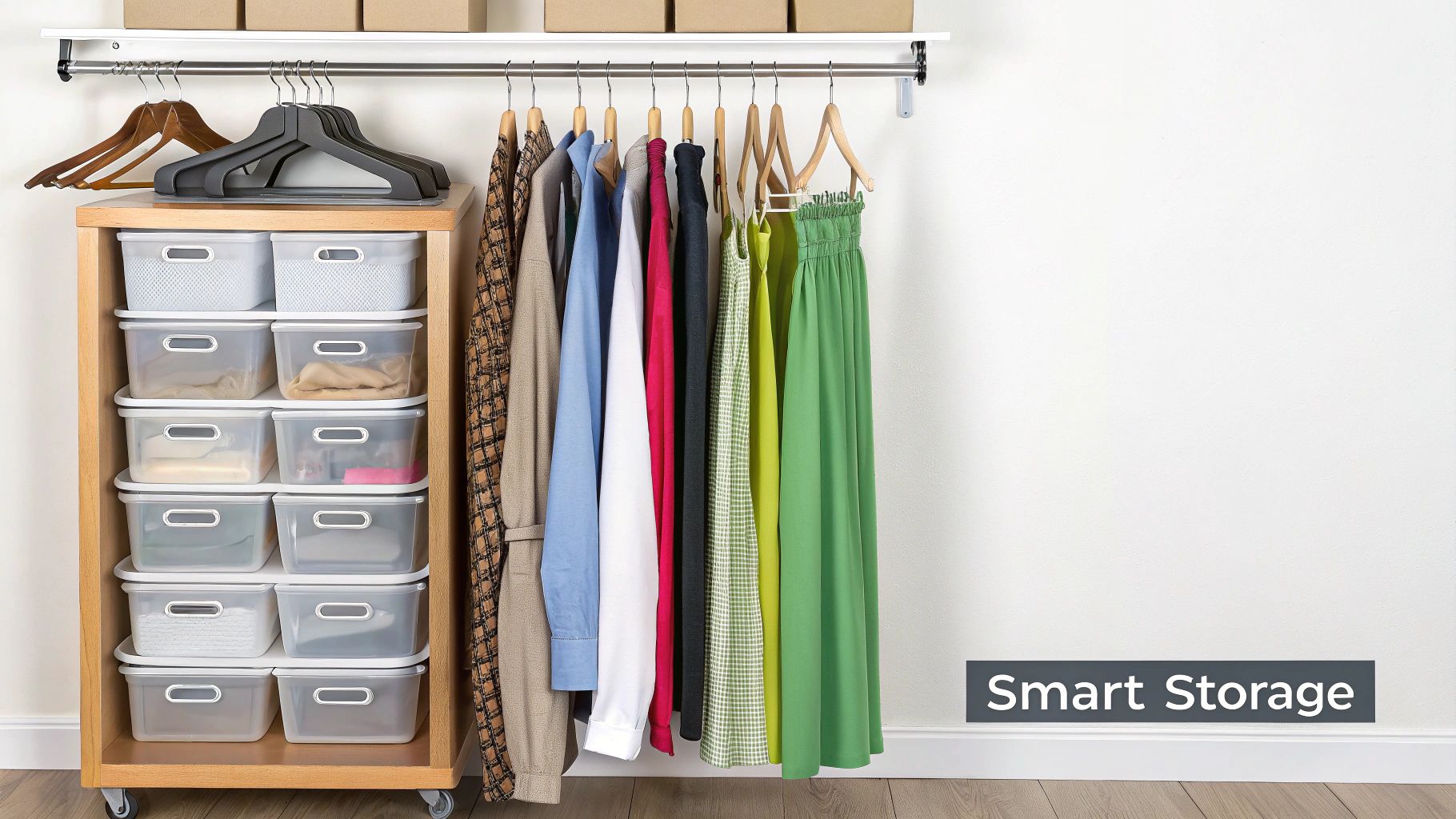
Alright, you’ve done the hard work of decluttering and you have a solid plan. Now for the fun part: picking the organization tools that will bring your vision to life. This is where you actually start creating more space by choosing clever products designed to work harder in a small footprint.
The biggest mistake people make with small closet organization is ignoring the vertical space. It’s your most valuable real estate! The right tools can easily double or even triple your storage without you having to knock down a single wall. It’s all about working smarter, not harder.
Harness the Power of Specialized Hangers
If you do only one thing, upgrade your hangers. Seriously. Those bulky, mismatched plastic hangers you've collected over the years are eating up precious rod space and making everything look chaotic. A uniform set of slim, velvet hangers is a great start, but to really level up your organization, you need to think specialized.
These aren't just hangers; they're space multipliers.
- Multi-Pant Hangers: These are a total game-changer for closet organization. Instead of five pairs of pants taking up five spots, a single hanger can hold them all vertically. You can neatly fold them over the bars or, for a crease-free option, find a style that uses clips to hang them by the waistband.
- Tiered Skirt Hangers: Just like the pant hangers, these use a tiered design with clips to let you hang several skirts in the space of one. The clips usually slide, so they work just as well for a denim mini as they do for a flowy A-line.
- Tank Top Hangers: Let's be honest, tank tops and camisoles are a pain to store. They slip off hangers or get lost in a drawer. One of these specialized organizers can hold a dozen of them neatly, freeing up a ton of space and letting you see every color you own.
For a deeper dive into what’s out there, you might want to check out our guide on the best space-saving hangers that fit every kind of wardrobe.
Organize Your Shelves and Surfaces
Your closet rod is only half the battle. Shelves and floor space can quickly become a free-for-all for sweaters, shoes, and bags. You need to give them some structure to stay organized.
Shelf dividers are your best friend for preventing those leaning towers of T-shirts. They slide right onto your existing shelves to create instant cubbies, keeping your folded piles neat and making it easy to grab something from the bottom without the whole stack collapsing.
For that high, hard-to-reach top shelf, grab some clear bins. Stash your out-of-season clothes or sentimental items in them. You'll be able to see exactly what’s inside without having to pull down three mystery boxes just to find your winter gloves.
Home organization is a big deal right now. The closet organizer market is valued at around USD 4.5 billion and is expected to hit USD 8.3 billion by 2033. With home renovation projects that include space-savers up by 15%, it's clear people are looking for smarter storage. And what are they choosing? A massive 79.42% prefer simple, effective solutions like specialized hangers.
Maximize Every Hidden Space for Organization
Don't forget the secret storage spots. The back of your closet door is prime, underutilized real estate. An over-the-door organizer is perfect here. You can find pocketed versions for shoes and scarves or hook racks for belts and purses. It gets those items out of drawers and makes them easy to see and organize.
By choosing just a few of these tools, you're not just tidying—you’re actively creating a more functional, organized closet. Each product should solve a specific problem you identified in your plan, resulting in a system that’s perfectly tailored to you.
Keeping Your Closet Organized For Good
So, you’ve put in the hard work. You’ve purged, planned, and put everything in its new, perfect place. Now comes the real test: keeping it organized. Let’s be honest, a tidy closet isn't a "set it and forget it" project. It’s all about building a few simple, sustainable habits that stop the clutter from ever creeping back in.
The idea is to prevent the mess before it even has a chance to start. Rather than letting things pile up until you need another major overhaul, you can weave a few tiny routines into your week. These small actions take almost no time but make all the difference, ensuring your small closet stays the calm, functional, organized space you worked so hard to create.
Adopt The One-In, One-Out Rule
If you only adopt one new habit, make it this one. The one-in, one-out rule is your secret weapon against closet creep. It’s brilliantly simple: every time you bring a new item home, a similar item has to leave.
Just bought a new sweater? Great! Before you hang it up, pull out one you haven't worn in a year to donate. This simple transaction forces you to be more intentional with your shopping and stops that slow, silent accumulation of stuff that eventually overwhelms your space. It keeps your wardrobe feeling fresh and curated, not just crowded.
Master the 5-Minute Weekly Tidy
You don't need to block out an hour every weekend for a massive closet clean-up. Consistency is the key to long-term organization. All you need is a quick, 5-minute reset once a week to keep everything in check.
Seriously, set a timer and just fly through these four things:
- Rescue the Wanderers: Grab those clothes draped over "the chair" or still sitting in the laundry basket and put them away.
- Fix the Hangers: Quickly face all your hangers in the same direction and slide them back into place. It’s a small detail that makes a huge visual impact.
- Fold the Folds: Straighten out any messy stacks of sweaters or t-shirts on your shelves.
- Clear the Floor: Put shoes back on their rack and toss any stray bags onto their hooks.
This isn’t about deep organization. It’s a lightning-fast tidy that hits the reset button and instantly makes your closet feel peaceful and under control.
A pro tip for making this even easier is to create "landing zones." Have one designated basket for clothes that need mending and another for dry-cleaning. This stops those items from ending up in a pile on the floor and creating visual noise.
Plan Your Seasonal Swap-Out
If you live somewhere with four distinct seasons, a wardrobe swap is a non-negotiable part of closet organization. But it doesn't have to be a frantic, overwhelming task. Instead of waiting until the first snowfall to find your winter coats, plan for it.
Set aside a specific weekend twice a year—say, in October and April—to rotate your clothes. Store your off-season items in clearly labeled bins or vacuum-sealed bags that can slide under the bed. This not only frees up a ton of prime real estate in your closet but also gives you a natural opportunity to reassess your wardrobe and let go of anything you didn't even touch last season.
Common Questions About Small Closet Organization
Even with the best game plan, a few tricky items always seem to throw a wrench in the works when you’re organizing a small closet. You’re definitely not alone if you’re staring at a mountain of shoes or a collection of puffy coats wondering where on earth they’re supposed to go.
Let’s tackle some of the most common organizational headaches head-on. These are the questions I get asked all the time, and the answers will help you fine-tune your strategy for a closet that actually stays organized.
How Should I Store Bulky Winter Coats?
Ah, the classic small-closet villain: the bulky winter coat. It takes up a ridiculous amount of rod space for half the year when you aren't even wearing it. The secret to organizing them isn't finding a better way to hang it—it's getting it out of your prime real estate altogether during the off-season.
Vacuum-sealed storage bags are a game-changer for this. Seriously. They can shrink a giant puffy coat down by as much as 75%, turning it into a flat, manageable package you can easily slide under your bed or stash on the top shelf. Just be sure to get your coats cleaned before you store them, or any hidden dirt or stains could set in permanently.
What Is The Best Way To Organize Shoes?
Shoes are notorious for creating chaos in a closet. One minute you have a neat row, the next it’s a jumbled pile on the floor. To get that space back, the key to shoe organization is to stop thinking horizontally and start thinking vertically.
- Over-the-Door Organizer: This is my go-to for anyone with zero extra floor space. A simple pocketed organizer keeps flats, sneakers, and sandals off the ground and easy to grab.
- Slim Shoe Rack: If you have a sliver of floor to spare, look for a narrow, tiered rack. The ones with angled shelves are even better because they save precious depth in a tight space.
- Clear Shoe Boxes: For those special-occasion heels or off-season boots, clear stackable boxes are perfect. They keep everything dust-free and let you see exactly what’s inside without having to open a dozen boxes.
This triple-threat approach to organization gets your shoes off the floor, keeps them protected, and makes finding the right pair a breeze.
Are Custom Closet Systems Worth It For A Small Space?
This is a great question, and the honest answer is: it depends. A full, professionally installed custom closet system is a dream for organization, as every single inch is designed around your specific wardrobe. It’s incredibly efficient, but it's also a serious investment.
The good news is you can get that "custom" feel for a fraction of the price with modular systems. Think about the flexible closet systems from places like IKEA or The Container Store. They let you mix and match adjustable shelves, drawers, and hanging rods to create a layout that fits your closet and your clothes perfectly. It’s a semi-custom approach that delivers most of the benefits without the high-end cost.
The real value isn't in the price tag but in the functionality. Whether it's a full custom build or a clever DIY setup, the goal is to create a system where every single inch serves a purpose, making your daily routine smoother and more efficient.
Ultimately, the best small closet solutions are the ones that work for you. By tackling these common challenges, you can put the finishing touches on your organization plan, ensuring everything from your chunkiest sweater to your strappiest sandals has a home.
Ready to transform your closet with smart, space-saving tools? Explore the collection at MORALVE and discover innovative hangers and organizers designed to maximize every inch of your space. Find your perfect closet solution at https://moralve.com.
Leave a comment