
Finding the Best Closet Organizing Systems

The "best" closet organizing system isn't a particular brand you can just go out and buy. It's the one that’s a perfect match for your space, your clothes, and your daily routine. The right fit could be a stunning custom built-in that uses every last inch of wall space, or maybe it's a flexible modular system you can change as your wardrobe evolves. The real goal is to find a setup that finally tames the clutter and creates a calm, functional space you actually enjoy using.
From Closet Chaos to Calm Control

We’ve all been there: staring into a closet so jam-packed you can't see what you own. It's a daily frustration that turns the simple act of getting dressed into a stressful dig. This guide is your way out.
We're going to show you that the best system isn't about spending the most money, but about designing a solution that's truly yours. Think of yourself as the architect of your own personal boutique. It's about building a smart, lasting strategy that simplifies your life, not just tidying up for a weekend.
Your Path to an Organized Wardrobe
The first step in transforming your closet is realizing that good organization is a skill, not just something you buy in a box. The aim is to build a system so intuitive that keeping it tidy is almost effortless. If you’re looking for a good starting point, many general home organization principles apply here. Checking out some organization tips and tricks for a clutter-free space can give you a solid foundation for tackling any closet.
To reclaim your closet, we'll walk you through a few essential steps:
- Understanding the Core Types: We'll break down the main options out there, from versatile modular kits to permanent, custom-built solutions.
- Planning and Measuring: You’ll learn how to properly take stock of your clothes to figure out exactly how much hanging space, shelving, and drawer storage you really need.
- Choosing Wisely: We’ll give you the confidence to pick a system that works with your budget and fits your closet's unique quirks.
A well-organized closet does more than just store your clothes; it gives you back time and mental energy every single day. It turns a source of frustration into a space of function and ease.
What to Expect From This Guide
Our approach is all about practical, step-by-step advice. We'll give you the knowledge you need to make a smart decision and find one of the best closet organizing systems for your specific home.
By the time you're done reading, you’ll have a clear, actionable plan to turn that chaotic space into a streamlined part of your home that makes getting ready feel effortless—maybe even a little bit fun.
Breaking Down the Types of Closet Systems

Stepping into the world of closet systems can feel overwhelming, but it gets simpler when you understand the basic categories. Think of it like this: before you compare car models, you first decide if you need a sedan, an SUV, or a truck.
The demand for tidy, functional closets has never been stronger. The market for closet organizers was valued at USD 4.2 billion and is expected to climb to USD 7.5 billion by 2033. This growth, driven by our desire for organized living, means there are more innovative solutions than ever. You can dive deeper into the closet organizers market and its trends to see where the industry is headed.
For now, let’s explore the four main types of systems to help you find the right fit for your space and needs.
Custom Built-In Systems: The Tailored Suit
Imagine a suit crafted by a master tailor to fit you perfectly—that’s exactly what a custom built-in closet system is. These are permanent installations, designed from the ground up by a professional to match your room’s exact dimensions and your personal storage habits. They make the most of every single inch, effortlessly handling tricky corners, sloped ceilings, and other architectural quirks.
Because they’re made just for you, the sky's the limit on design. You get to choose the precise mix of hanging rods, shelving, drawers, and special add-ons like built-in lighting, jewelry trays, or pull-out tie racks.
- Best For: Homeowners who are settled in for the long haul, people with oddly shaped closets, or anyone who wants a high-end, seamless look.
- Common Materials: You'll typically see solid wood, premium wood veneers, and heavy-duty melamine used for their durability and polished finish.
- Investment: This is the most premium option. Expect costs to start in the thousands and go up depending on the size, materials, and complexity.
Modular Systems: The Versatile Building Blocks
If a built-in is a custom suit, then a modular system is like a set of high-quality, mix-and-match building blocks. These systems are made up of individual components—shelf towers, drawer units, hanging rods—that you combine to create a semi-custom layout. It’s a fantastic middle ground, giving you a good dose of personalization without the custom price tag.
You can start with a basic setup and then add more pieces later as your wardrobe grows or your budget allows. This adaptability is what makes modular options one of the best closet organizing systems for anyone who values flexibility.
A huge plus for modular systems is that they can grow with you. The storage you need in your 20s is probably very different from what you'll need with a family, and a modular closet can change right along with you, no total overhaul required.
For those who are handy with a drill, installation is usually a doable DIY project. Otherwise, you can always hire a pro to put it together for you.
Hanging Organizers: The Quick And Easy Upgrade
Hanging organizers are the definition of instant gratification for closet chaos. These are typically fabric-based units with stacked compartments that hang directly from your existing closet rod. They are the perfect way to quickly add shelves for folded sweaters, jeans, shoes, or handbags.
Think of them as plug-and-play solutions. There’s no measuring, no drilling, no assembly—you just unbox, hang, and start organizing. They're a lifesaver in small closets, dorm rooms, or rentals where you can't make permanent changes.
- Best For: Renters, college students, or anyone needing a fast, cheap organization boost without any commitment.
- Common Materials: Usually made from sturdy fabrics like canvas or polyester, often with reinforced bottoms in each compartment to prevent sagging.
- Investment: Extremely budget-friendly. Most options are well under $50.
Standalone Units: The Flexible Furniture
Standalone units are simply pieces of furniture that act as a closet—think wardrobes, armoires, or rolling garment racks. Since they aren't attached to the walls, they give you total freedom to move them around the room or even take them with you when you move to a new home.
This type of system is a fantastic fix for bedrooms that were built without any closet space at all. A beautiful armoire can serve as a stunning focal point while hiding your clothes, and an open garment rack can give your room a cool, boutique-like vibe.
The main advantage here is mobility. Nothing is permanent, so you have complete control over your room's layout. This makes standalone units a smart and practical choice for anyone who moves frequently or just loves to rearrange their furniture.
Closet Organizing Systems at a Glance
To make the choice even clearer, here’s a quick side-by-side comparison. Use this table to quickly see how the four main types of closet systems stack up against each other.
| System Type | Best For | Average Cost | Flexibility | Installation |
|---|---|---|---|---|
| Custom Built-In | Homeowners, unique spaces, premium finish | $2,000 - $10,000+ | Low (Permanent) | Professional Only |
| Modular | DIYers, evolving needs, budget-conscious | $200 - $2,000 | High (Adaptable) | DIY or Pro |
| Hanging | Renters, small spaces, immediate needs | $15 - $50 | Very High (Temporary) | None |
| Standalone | No-closet rooms, frequent movers | $100 - $1,500+ | Very High (Mobile) | Minimal Assembly |
By looking at the cost, flexibility, and installation involved, you can zero in on the system that truly aligns with your lifestyle, budget, and long-term plans.
How to Plan Your Perfect Closet Layout
A truly great closet system doesn’t just happen—it’s planned. You wouldn't try to build a house without a blueprint, and buying shelves and bins without a solid plan will leave you with a cluttered, frustrating mess. This planning phase is where you turn the vague idea of "getting organized" into a real, actionable blueprint.
Think of it like being an architect for your own space. Your first job? Survey the land. And that means getting precise measurements.
Start with Accurate Measurements
Before you can make the most of your space, you have to know exactly what you're working with. Grab a tape measure and jot down the following numbers—trust me, you won't remember them later.
- Width: Measure the closet from wall to wall. Do this at the top, middle, and bottom, because walls are almost never perfectly straight. Always use the smallest number as your true width.
- Height: Simple enough—measure from the floor to the ceiling.
- Depth: Measure from the back wall out to the front edge of the closet opening.
- Obstacles: Make a note of anything that could get in the way. We're talking light fixtures, outlets, thermostats, or even a pesky sloped ceiling. These little things can have a big impact on your final design.
Getting these core dimensions down is step one. To really level up your plan, understanding optimal space planning strategies will help you work around those fixed obstacles and squeeze value out of every single inch.
Conduct a Wardrobe Inventory
Okay, this is the most important part of the entire process. You can't design the right home for your clothes until you know what needs to be stored. It's time to take everything out of the closet. Yes, everything.
Do what the pros do: pile it all on your bed. Seeing the sheer volume in one place is a powerful motivator. Now, sort every single item into categories. This isn't just about decluttering; it’s about gathering crucial data for your new layout.
Make piles for:
- Long-hanging items: Think dresses, long coats, and jumpsuits.
- Short-hanging items: This is your shirts, blouses, jackets, and trousers folded over a hanger.
- Folded items: Sweaters, t-shirts, and jeans belong here.
- Shoes: All of them—boots, heels, flats, you name it.
- Accessories: Don't forget bags, belts, scarves, and hats.
Once you have your piles, measure them. How many linear inches of hanging space do your shirts need? How about your long coats? Count your shoes and the height of your sweater stacks. This inventory tells you the exact ratio of hanging rods, shelves, and drawers you’ll need. For a deeper dive, our guide on how to design a closet offers even more helpful tips.
Your wardrobe inventory is the DNA of your closet design. It tells you whether you need double-hanging rods for a shirt-heavy collection or more shelf towers for a mountain of sweaters. Don't skip this step.
Visualize Your New Closet Layout
With your measurements and inventory in hand, it's time for the fun part: mapping out the design. You don't need fancy software—a simple sketch on graph paper works just fine.
Start by drawing the outline of your closet to scale. Then, start penciling in the different components based on the data you just collected. A really effective approach is to create "zones" for different categories. For instance, put your most-used items right at eye level, tuck seasonal stuff away on high shelves, and line up shoes near the floor.
Think about incorporating these common layout elements:
- Double-Hang Rods: This is the secret to maximizing space. A section with one rod stacked above another instantly doubles your capacity for shirts, skirts, and jackets.
- Shelf Towers: These are a lifesaver for folded clothes like sweaters and jeans. They’re also great for handbags or bins filled with smaller accessories.
- Dedicated Long-Hang Space: Make sure you have at least one section tall enough for dresses and coats to hang freely without crumpling at the bottom.
- Drawer Units: Perfect for corralling socks, underwear, and other small things that tend to get lost on open shelves.
By taking the time to measure, inventory, and visualize, you guarantee that the best closet organizing systems you choose will be a perfect fit for your life, not just a generic solution that fits your walls. This methodical approach turns what feels like a huge project into a manageable one, setting you up for a result that’s as functional as it is beautiful.
Matching a System to Your Space and Budget
Alright, you’ve dreamt up the perfect layout. Now comes the fun part: making it real. This is where your vision meets the two big constraints we all face: the actual space you have and the money you want to spend. The goal isn't about compromise; it's about making smart choices that give you the most bang for your buck without sacrificing style or function.
Choosing the right materials is probably the biggest decision you'll make at this stage. It's the foundation of your whole system and has a huge impact on cost, durability, and the overall vibe of your closet. It's a lot like picking out furniture—some options are gorgeous but need a delicate touch, while others are built to withstand years of daily use.
Finding the Right Materials for Your Budget
The material you choose really sets the tone. Let's break down the most common options you'll encounter.
-
Wire Systems: These are the undisputed champions of budget-friendly organizing. They're lightweight, a breeze to install for a weekend DIY project, and offer fantastic ventilation for your clothes. The downside? They can sometimes leave faint lines on delicate sweaters and don't exactly scream "luxury."
-
Laminate (MDF/Particleboard): This is the sweet spot for most people, and for good reason. Laminate gives you that clean, solid-shelf look in a ton of different finishes—from crisp white to surprisingly realistic wood grains. You get a high-end, custom appearance for a fraction of what you’d pay for the real thing.
-
Solid Wood: If you're looking for that premium, built-to-last feel, nothing beats solid wood. It's incredibly sturdy, timelessly beautiful, and has the unique advantage of being sandable and refinishable down the road. Of course, that heirloom quality comes with the highest price tag, making it a true investment for a long-term home.
Creating a closet that looks expensive doesn't always require a huge budget. For more clever tips, check out our guide on how to pull off a fantastic closet makeover on a budget.
Optimizing for Challenging Spaces
Let's be honest, most of us aren't working with a palatial, perfectly square walk-in closet. We're dealing with small reach-ins, narrow city apartment closets, or funky corners with weird angles. But this is exactly where a good organizing system proves its worth.
As more of us live in smaller, more compact homes, the demand for smart storage has exploded. In fact, the global market for closet organizers was valued at USD 7.64 billion and is expected to climb to USD 14.57 billion by 2032. This boom is all about making every square inch count.
To make the most of a tricky space, your new mantra should be: go vertical.
The most overlooked real estate in any closet is the empty air between your top shelf and the ceiling. Stashing seasonal items or things you rarely use up there can literally double your storage without taking up a single extra inch of floor space.
This simple process is the key to getting it right.
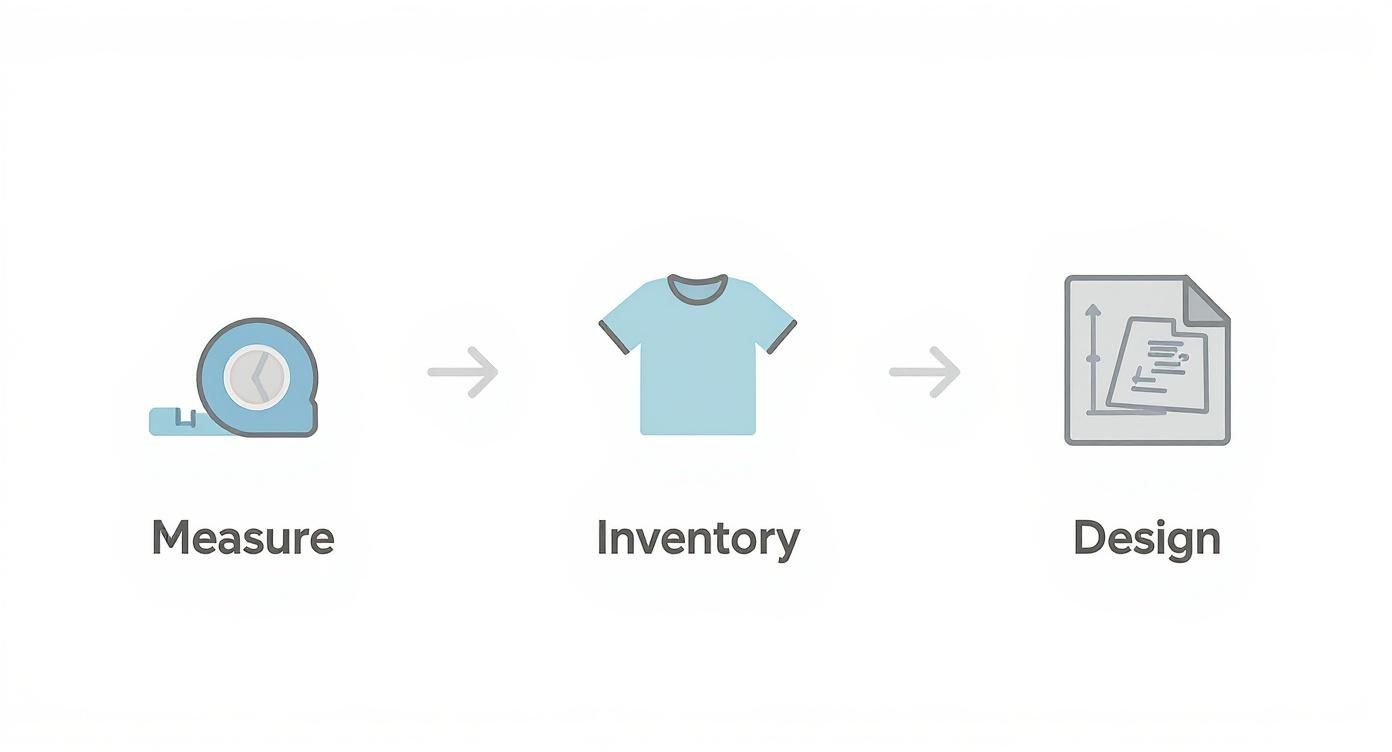
Stick to this flow—Measure, Inventory, Design—and you’ll ensure every choice you make is based on the reality of your wardrobe and your room, not just a guess.
Smart Accessories That Multiply Storage
Once you have the main structure of shelves and rods figured out, the real magic happens with the accessories. These smaller, clever add-ons are the secret to keeping a closet truly organized for the long haul.
Think about adding a few of these game-changers:
- Drawer Dividers: These cheap and cheerful inserts are miracle workers. They can instantly turn a chaotic "junk drawer" of socks, belts, and underwear into a neat, easy-to-navigate grid.
- Pull-Out Racks: No more digging for that one specific tie or scarf! Specialized pull-out racks keep these items perfectly displayed and untangled, saving you precious minutes every morning.
- Tiered Hangers: Hangers that let you stack multiple pairs of pants or skirts vertically are an absolute must for small closets. They let you store several items in the same space a single hanger would occupy.
- Shelf Dividers: Keep those neat stacks of sweaters or handbags from toppling over. Simple acrylic or wire dividers slide onto a shelf to create instant, stable cubbies.
By thoughtfully picking materials, using all your vertical space, and finishing with the right accessories, you can design a closet system that feels custom-made for your life and your wallet.
Installing Your System for a Professional Finish
You’ve done the hard part—the planning, the measuring, and picking out the perfect components for your dream closet. Now comes the exciting part: bringing that vision to life. A solid installation is the final, crucial step that makes sure your system is sturdy, level, and ready to go for years.
Whether you're a seasoned DIYer or you'd rather hand the job off to a professional, your approach to installation defines the end result. For those taking the hands-on route, the right tools and a little prep work are what separate a frustrating weekend from a truly rewarding project.
The DIY Installation Checklist
There's a special kind of satisfaction that comes from installing something yourself. To make the process go smoothly and sidestep common mistakes, it's all about having a game plan and the right gear ready before you even tear open the box.
Think of it like cooking a good meal—you wouldn't start without prepping your ingredients first. Before you begin, get these essential tools together:
- Stud Finder: This is non-negotiable. The shelves and hanging rods need to be anchored into solid wall studs to handle the weight safely.
- Drill with Assorted Bits: You’ll be using this for just about everything, from making pilot holes to driving in the final screws.
- A Good Quality Level: Just eyeballing it is a recipe for disaster. A 4-foot level is perfect for getting those shelves and rods perfectly horizontal.
- Tape Measure: The old rule "measure twice, cut once" has never been more true. Double-check everything before you drill.
- Correct Wall Anchors: If you absolutely can't hit a stud, using the right anchor for your wall type (drywall, plaster, or masonry) is critical to prevent a future collapse.
For a more detailed walkthrough, our guide to building a DIY closet organizer is packed with extra tips and step-by-step instructions to help you nail that professional look.
Hiring a Professional Installer
Let's be real—if you're short on time, don't feel confident with a drill, or you've invested in a complex custom system, hiring a pro is a smart move. But not all installers are the same. Finding the right one ensures your closet system is put together correctly and securely from the get-go.
To make sure things go off without a hitch, have a few questions ready before you hire anyone.
Asking the right questions upfront can save you from major headaches later. Inquire about their experience with your specific system brand, ask for proof of insurance, and get a clear, itemized quote in writing before any work begins.
Here’s how you can prepare for their arrival and what you should ask to make sure you’re getting a real expert:
- Prep Your Closet: Before the installer shows up, make sure the closet is completely empty and clean. A quick wipe-down and a vacuum will make their job much easier (and faster).
- Verify Experience: Ask them directly if they’ve installed this brand or type of system before. Someone with experience will know its quirks and the best assembly sequence.
- Confirm the Timeline: Get a realistic estimate of how long the job will actually take from start to finish.
- Discuss Debris Removal: Don't get stuck with a mountain of cardboard. Clarify ahead of time if they're responsible for hauling away the empty boxes and packaging.
Taking these simple steps helps you feel confident that your investment is being handled by a pro, resulting in a flawless installation that will stand the test of time.
Keeping Your Organized Closet That Way
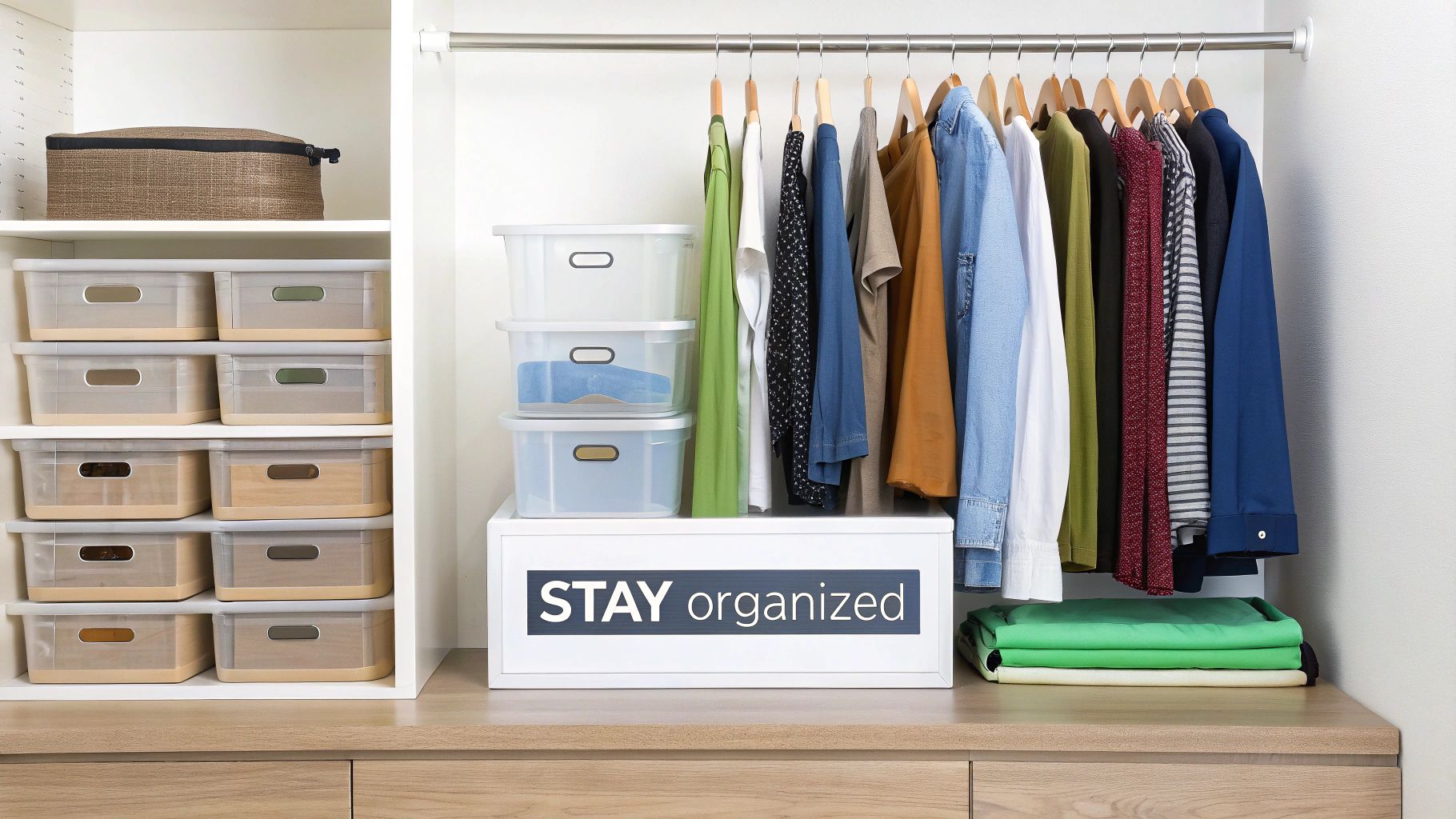
Getting that brand-new closet system installed feels fantastic, like you've finally crossed the finish line. But here’s the thing: that was just the setup. The real prize is keeping that beautiful, orderly space from slipping back into chaos.
Think of your closet like a newly planted garden. It needs consistent, gentle care to keep the weeds of clutter from creeping back in. This isn't about spending hours reorganizing every weekend; it's about building small, powerful habits that make tidiness second nature.
Adopt Sustainable Organizing Habits
Lasting organization isn’t about one big purge; it’s built on simple, repeatable actions that you barely have to think about. One of the most effective is the 'one in, one out' rule. Every time you buy a new shirt or pair of shoes, an old one has to go. This simple transaction keeps your wardrobe from overflowing its new, neatly defined boundaries.
Another game-changer is the mini seasonal swap. Forget the frantic, all-day closet overhaul you do twice a year. Instead, as the weather changes, spend just 20 minutes pulling out the relevant items and storing the off-season ones. This bite-sized approach feels manageable and keeps your closet functional for the current season.
It's no surprise that the demand for this kind of functional living has skyrocketed. The global market for closet organizers hit about USD 4.03 billion and is expected to nearly double by 2035, thanks to a huge wave of home improvement and a growing interest in organized lifestyles. You can dig into the numbers and trends over at Future Market Insights.
Elevate Your System with Smart Accessories
While the shelves and rods of your system are the foundation, the right accessories are what truly make it work for you. These are the tools that stop small items from becoming a jumbled mess and help you use every last inch of space.
Think of your closet system as the skeleton and accessories as the muscles. The structure is essential, but accessories do the heavy lifting of daily organization, turning a good system into a great one.
These add-ons can make a massive difference:
- Slim Velvet Hangers: If you do one thing, do this. Their thin profile can instantly free up as much as 30% of your hanging space. Plus, the non-slip surface means no more shirts puddled on the floor.
- Smart Drawer Dividers: Stop rummaging through that one chaotic drawer. Adjustable dividers create a neat grid for socks, underwear, and accessories, giving everything its own home so you can find it in seconds.
- Clear Storage Bins: For those high shelves, clear bins are a must. You can see what’s inside at a glance, which means you won't have to pull down three different boxes just to find that one chunky sweater.
By combining consistent habits with the right tools, you're making sure your investment in one of the best closet organizing systems pays off for years to come. Your closet will stay a calm, efficient space that simplifies your daily routine long after the initial setup is done.
Frequently Asked Questions
Getting started with a closet organization project always brings up a few key questions. Let's tackle some of the most common ones that pop up when you're trying to find the perfect system for your home.
How Much Should a Closet Organizing System Cost?
This is the big one, and the honest answer is: it depends. The price range is incredibly wide. You can get a simple, no-fuss wire kit for a small closet for under $100. It's a great starting point.
If you're looking for something a bit more substantial, like a modular system made from laminate, you’ll likely spend somewhere between $300 and $1,500. For a fully custom, professionally installed built-in system, the price tag usually starts around $2,000 and can go up from there depending on the size, materials, and any special features you choose. Don't forget to budget for installation if you're not planning to do it yourself!
Is a Custom Built-In Closet Worth the Investment?
A custom system can be an absolute game-changer, especially if you plan to stay in your home long-term. These systems are designed to fit your space like a glove, using every single inch to its full potential in a way that pre-made options just can't match.
A well-designed custom closet does more than just simplify your morning routine; it can genuinely add to your home's resale value. But if you're renting or working with a tighter budget, a good modular system offers fantastic flexibility and organization for a much smaller investment.
Can I Install a Closet Organizer Myself?
You absolutely can! The vast majority of wire and modular systems on the market are designed specifically for DIY installation. All you really need are some basic tools you probably already have: a drill, a level, a tape measure, and a stud finder.
The real key to success is taking your time with the planning and then carefully following the manufacturer's instructions to the letter. If you're looking at a more complex system or just don't feel comfortable with the project, there's no shame in calling a pro. A professional installer will guarantee a secure, perfectly finished result.
Ready to conquer closet clutter for good? The right hangers can double your space and keep your wardrobe neat. Discover space-saving solutions from MORALVE and transform your closet today.
Leave a comment