

Discover the best way to organize a clothes closet and reclaim your space

The real secret to the best way to organize a clothes closet isn't some magic formula. It’s about creating a system that actually fits your life, your space, and your specific wardrobe. It's less about a single trick and more about a smart combination of decluttering, thoughtful space planning, and using the right tools—like clever hangers—to make every inch count.
Your Blueprint for an Organized Closet
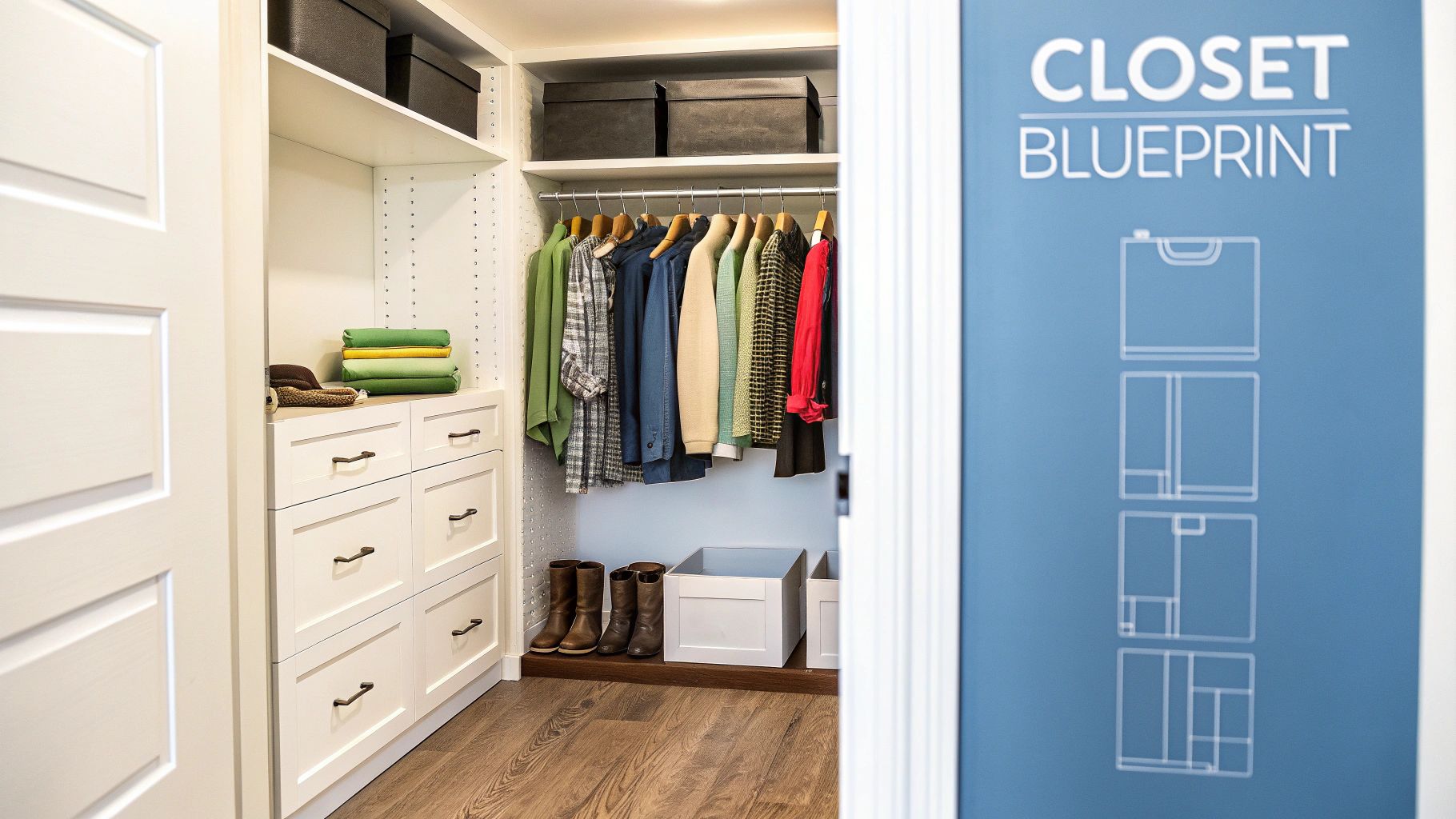
Let's get real for a moment. A truly functional closet does more than just hold your stuff. It saves you time on chaotic mornings, cuts down on decision fatigue, and even helps protect the investment you've made in your clothes.
This guide isn't about generic, one-size-fits-all tips. Think of it as your personal roadmap, taking you from a state of overwhelming clutter to a serene, efficient space that just works. We're going to break it all down by focusing on the three foundational pillars that make or break every closet organization project.
To give you a quick overview, this table summarizes the core principles we'll be diving into.
The Three Pillars of Closet Organization
| Pillar | Objective | Key Action |
|---|---|---|
| Declutter with Purpose | Curate a wardrobe you love. | Edit your collection, keeping only items you actually wear and feel good in. |
| Plan Your Space Strategically | Maximize every inch. | Measure your space and take inventory of your clothes before buying anything. |
| Use the Right Tools | Create a functional system. | Select smart storage solutions like hangers and bins that fit your specific items. |
By tackling your closet with these principles in mind, you’re not just tidying up for the weekend—you’re setting yourself up for long-term success.
The need for smart closet organization has never been greater. For many people, especially those in smaller urban homes, a smart system is a necessity. Efficient hangers for pants, skirts, and tanks are often the key to beating back the clutter that plagues so many households.
A well-designed closet isn't a luxury; it's a tool for a smoother, less stressful day. By dedicating time to create a personalized system, you're investing in your own peace of mind.
Thinking about it this way turns closet organization from a dreaded chore into an empowering project. Learning how to design a closet layout based on your unique needs is the critical first step.
Throughout this guide, we'll get into the nitty-gritty, practical techniques you can use right away, including how innovative solutions like MORALVE’s space-saving hangers can be total game-changers, especially when every inch of space feels like a luxury.
The Great Closet Cleanout: A Practical Purge
Before you even think about buying a single new hanger or storage bin, the real work begins. A truly organized closet isn’t about cramming more stuff in—it’s about thoughtfully curating what you already own. This first step is everything. It sets the stage for a wardrobe filled only with pieces you actually love and wear.
Forget the classic, overwhelming advice to dump your entire wardrobe onto your bed. That's a recipe for burnout, and you'll probably end up with a bigger mess than you started with. A much saner and more effective approach is the Four-Box Method.
The Empowering Four-Box Method
This technique is a game-changer because it forces a clear decision for every single item. All you need are four boxes (or just four designated piles on the floor). Label them:
- Keep: These are your non-negotiables. The clothes you love, wear often, and feel fantastic in. They fit you right now and suit your current life. No questions asked.
- Donate: Perfect for good-condition items that just aren't you anymore. That coat you haven't touched in two winters? The jeans that no longer match your style? Someone else will love them.
- Sell: This is for your higher-value pieces that are collecting dust but could make you some cash. Think designer bags, brand-name jackets, or shoes in great shape. Selling them can even fund a new item you'll truly use.
- Discard: This pile is for items that have lived a full life. Anything stained, torn, or just too worn out to be passed on belongs here. Be honest with yourself—it’s okay to let things go when they’re past their prime.
By breaking it down like this, you turn a huge, daunting project into a series of small, simple choices. It feels less like a chore and more like you're taking back control.
Making Tough Decisions Without the Guilt
Sorting the obvious "yes" and "no" items is easy. But what about all those "maybes"? That's where the clutter really lives. To cut through the indecision, ask yourself a few direct questions—it helps take the emotion out of it.
For each "maybe" item, ask:
- Have I worn this in the last 12 months? This is a classic rule for a reason. If a full cycle of seasons has passed and you haven't reached for it, chances are you won't next year either.
- Does this fit my body right now? Don't let your closet become a storage unit for "someday" clothes. It can be incredibly demotivating. Dress the person you are today.
- Does this match my current lifestyle? If you now work from home, that huge collection of formal office wear might be taking up valuable real estate.
The most organized closets aren't the largest; they're the most edited. Culling your wardrobe is about making space for your life, not just for your clothes.
And what about those sentimental pieces? The concert t-shirt from ten years ago or a dress from a special event? These items are important, but they don't need to hang next to your daily work shirts. If you can't bear to part with them, create a dedicated memory box and store it somewhere else. You're honoring the memory without cluttering your morning routine. If you're looking for more inspiration, there are many proven strategies for decluttering that can help you tackle your whole home.
Once you’re done, you'll be left with a collection of clothes that you genuinely want. This isn’t just about making a mess and tidying it up; it's about creating a clean slate for a closet that finally works for you, not against you.
Mapping Your Space From Chaos to Clarity
Okay, the hard part is over. You’ve purged and now you’re staring at a beautifully empty closet. This is where the real fun begins—turning that blank canvas into a space that actually works for you and your clothes. Think of yourself as the architect of your own personal boutique.
Before you even think about buying a single bin or velvet hanger, you need a solid plan. That plan starts with getting to know two things intimately: the physical space you have and the clothes you're keeping.
Taking Stock of Your Space and Stuff
First things first, grab a measuring tape. You need the hard numbers: the exact width, depth, and height of your closet. Jot down the location of any existing rods or shelves. How much vertical space do you have for long items like dresses and coats? How much for shorter things like shirts? These measurements are your blueprint.
Next, it's time to analyze that "Keep" pile. And I don't mean just eyeing it up. I mean actually categorizing and counting what’s there. How many sweaters made the cut? How many pairs of jeans? Differentiating between work blouses and casual tees is key. Realizing you own 25 sweaters but only have one tiny shelf is a lightbulb moment—it tells you exactly where to focus your efforts.
So many people make the mistake of buying cool-looking organizers before they even know what they need to organize. Measuring your space and taking inventory first saves you from wasting money and ending up with bins that just don't fit.
This quick audit isn't busy work; it's the data that will drive every decision you make from here on out. It swaps guesswork for a real strategy.
The process you just went through—all that sorting and deciding—can really be boiled down to these three simple paths for every item you touched.
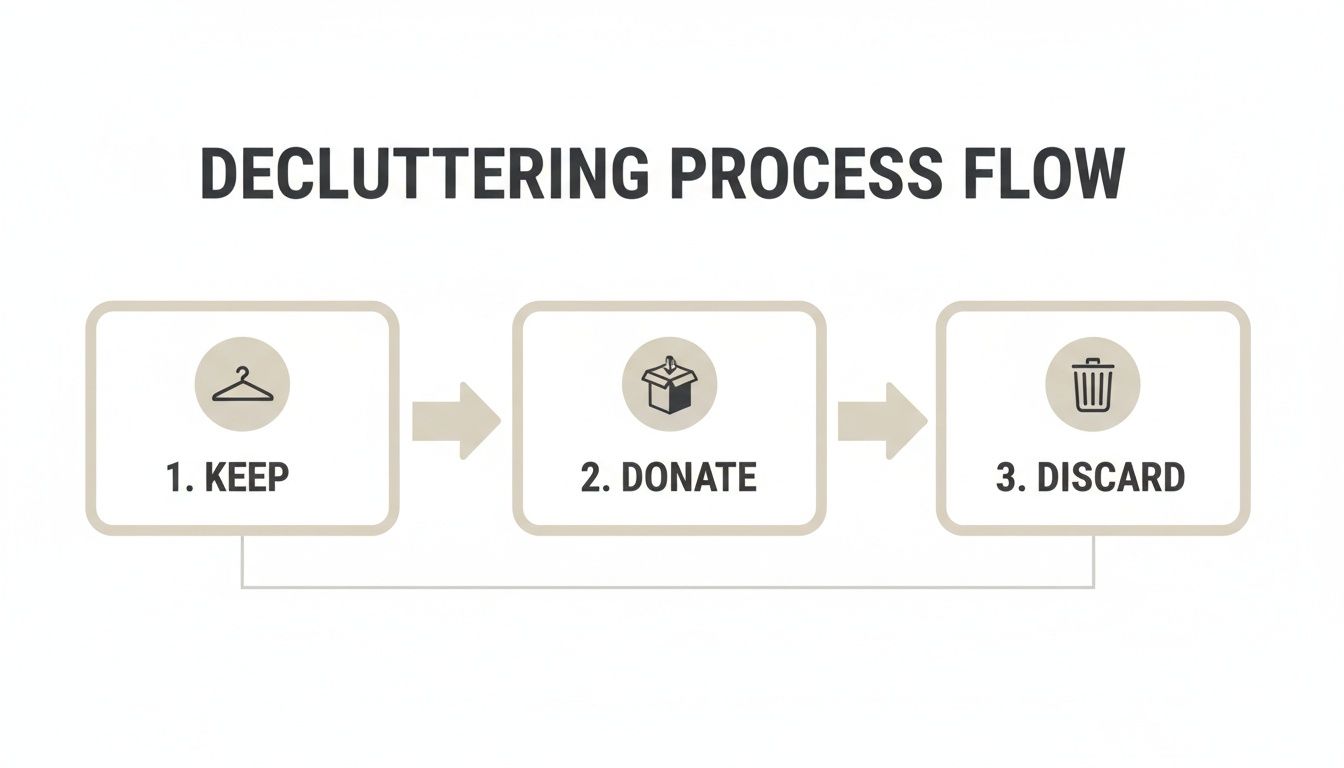
This little visual is a great reminder that every single piece should have a clear destination, whether it's staying with you, going to someone new, or heading out for good.
Designing Your Closet Zones
Now, let's talk about a concept that professional organizers live and die by: closet zoning. Honestly, this is the secret sauce for making a closet feel intuitive. It’s all about creating designated "neighborhoods" for different types of clothes based on how you actually live your life.
Your closet will go from a random jumble to a space with a logical flow. This simple shift makes getting dressed and, more importantly, putting clothes away, a total breeze.
Here are a few zone ideas to get you started:
- The 9-to-5 Zone: Give your workwear the prime real estate it deserves. Grouping blazers, work pants, and blouses together means you can pull a professional look together in seconds, even when you’re half-asleep on a Tuesday morning.
- The Weekend/Casual Zone: This is for your go-to comfy stuff—jeans, t-shirts, and cozy sweaters. It’s the spot you’ll turn to when you’re off the clock.
- The Activewear Zone: Get all your workout gear in one place. A dedicated drawer or shelf for leggings, sports bras, and gym tops stops that frantic pre-workout search for a matching set.
- The Special Occasion Zone: That black-tie gown or tuxedo doesn't need to be front and center. Tuck these items into a less-accessed corner, preferably in garment bags to keep them safe.
Creating zones means you’re organizing for your real life, not just for looks. It builds a kind of muscle memory; you’ll instinctively know where everything is.
Tailoring the Layout to Your Habits
Your closet's final layout should be a direct reflection of your daily routine. The things you grab most often need to be the easiest to get to. We’re talking eye-level and right in the middle.
Think about your own life:
- If you wear dresses almost every day: You'll need to maximize your long-hanging space. That might mean taking out a lower rod to give those hemlines room to breathe.
- If you have a serious sweater collection: Shelves and cubbies are your best friends. Folding sweaters is so much better for them than hanging (no more stretched-out shoulders!), and this way you can see them all at a glance.
- If you live somewhere with actual seasons: Those bulky winter coats need their own sturdy, dedicated section. Don't let them bully your lighter-weight jackets and everyday pieces out of the way.
The whole point of this planning phase is to give every single inch of your closet a purpose. By measuring, counting, and zoning, you're building a personalized system that clicks with how you live. This is the foundation that turns a temporarily tidy closet into one that stays organized for good.
4. Smart Storage: The Art of Hanging and Folding
Once your closet is planned out, it's time to put everything back—but this time, with a real strategy. The decision to hang or fold an item isn't just about what fits where; it’s about making your clothes last and keeping them in great shape. Getting this right is a huge part of creating a closet that actually works for you.
The rule of thumb I’ve always followed is simple: woven fabrics hang, and knit fabrics fold. Wovens, like your structured blouses, blazers, and trousers, do best on a hanger where they can maintain their shape. Knits, on the other hand—think of your cozy sweaters, t-shirts, and workout gear—can easily stretch out and get those annoying shoulder bumps if you hang them.
Keeping this basic principle in mind is the foundation for an organized closet where clothes stay looking their best. Your favorite sweater won't end up distorted, and your work blazers will always be crisp and ready to go.
To Hang or Not to Hang
Let's talk about what deserves that precious rod space. Anything that wrinkles easily or has a specific, structured shape is a definite candidate for hanging. This is especially true for materials like linen, silk, and most of your cotton dress shirts.
Here's a quick breakdown of what I always hang:
- Blouses and Button-Down Shirts: Hanging keeps them from getting those stubborn creases that are a pain to iron out.
- Dresses and Skirts: This is the best way to preserve their natural drape and avoid weird fold lines, particularly for midi and maxi lengths.
- Trousers and Slacks: Use either clip hangers or fold them neatly over a sturdy pant hanger to keep that sharp, professional look.
- Jackets, Blazers, and Coats: These items absolutely need the support of a good hanger to maintain their shoulder structure.
The goal isn't just to jam your clothes into a space. It's about caring for them. Choosing the right storage method is a simple form of wardrobe maintenance that pays off every single day.
If you find you’re running out of room but still have items that need to be hung or properly folded, beautiful freestanding wardrobes can be a fantastic way to expand your storage without a major renovation.
The Power of a Proper Fold
For all your knitwear, folding is your best friend. Sweaters are the biggest culprits here; they are notorious for stretching and losing their shape on a hanger. A neat fold protects the garment and is an incredibly efficient use of your shelf or drawer space.
I'm a big believer in the file-folding technique. You fold items into small, uniform rectangles and store them vertically, like files in a cabinet. This is a game-changer because you can see everything you own at a glance—no more digging through a messy pile for that one t-shirt.
This method works wonders for:
- Sweaters and Cardigans: It prevents stretching and frees up a ton of rod space.
- T-shirts and Casual Tops: File folding in a drawer makes them so easy to see and grab.
- Jeans and Denim: They’re sturdy enough to be folded and stacked on a shelf without any issues.
- Activewear: Leggings, workout tops, and shorts are perfect for file folding into drawers or storage bins.
By dedicating your shelves and drawers to these folded items, you automatically free up hanging space for the clothes that truly need it, creating a much more balanced and efficient closet system.
Multiply Your Space with Smart Hangers
Now for the part that feels like magic. So many of us don't realize that our bulky, mismatched hangers are the biggest space-wasters in our closets. A truly effective closet organization strategy leans into tiered, multi-functional hangers, which can increase your capacity by as much as 5x in a standard 6-foot closet.
Data shows that many people are wasting a significant amount of closet space simply because they use inefficient hangers. Switching to slim, cascading designs reclaims that valuable real estate. It's how you can suddenly fit 80 shirts in the same space where only 16 used to hang.
Think about it: a dozen pairs of pants can easily eat up a foot of rod space. But with a single MORALVE multi-pant hanger, you can store all of them in the vertical footprint of just one or two old hangers. This isn't just organizing; it's completely rethinking your closet's capacity.
Tiered hangers for skirts, blouses, and even tank tops work on the same principle, turning all that unused vertical air into prime storage. Suddenly, the space you thought was completely maxed out has doubled or even tripled its potential.
Of course, once you've upgraded, you'll have a pile of old hangers. Don't let them become clutter! It's a great idea to have a plan for your empties; check out our guide on how to store hangers to keep your newly organized closet looking neat. For many people, this one simple switch is the single most impactful change they can make, especially in a small closet.
Finishing Touches That Make a Difference
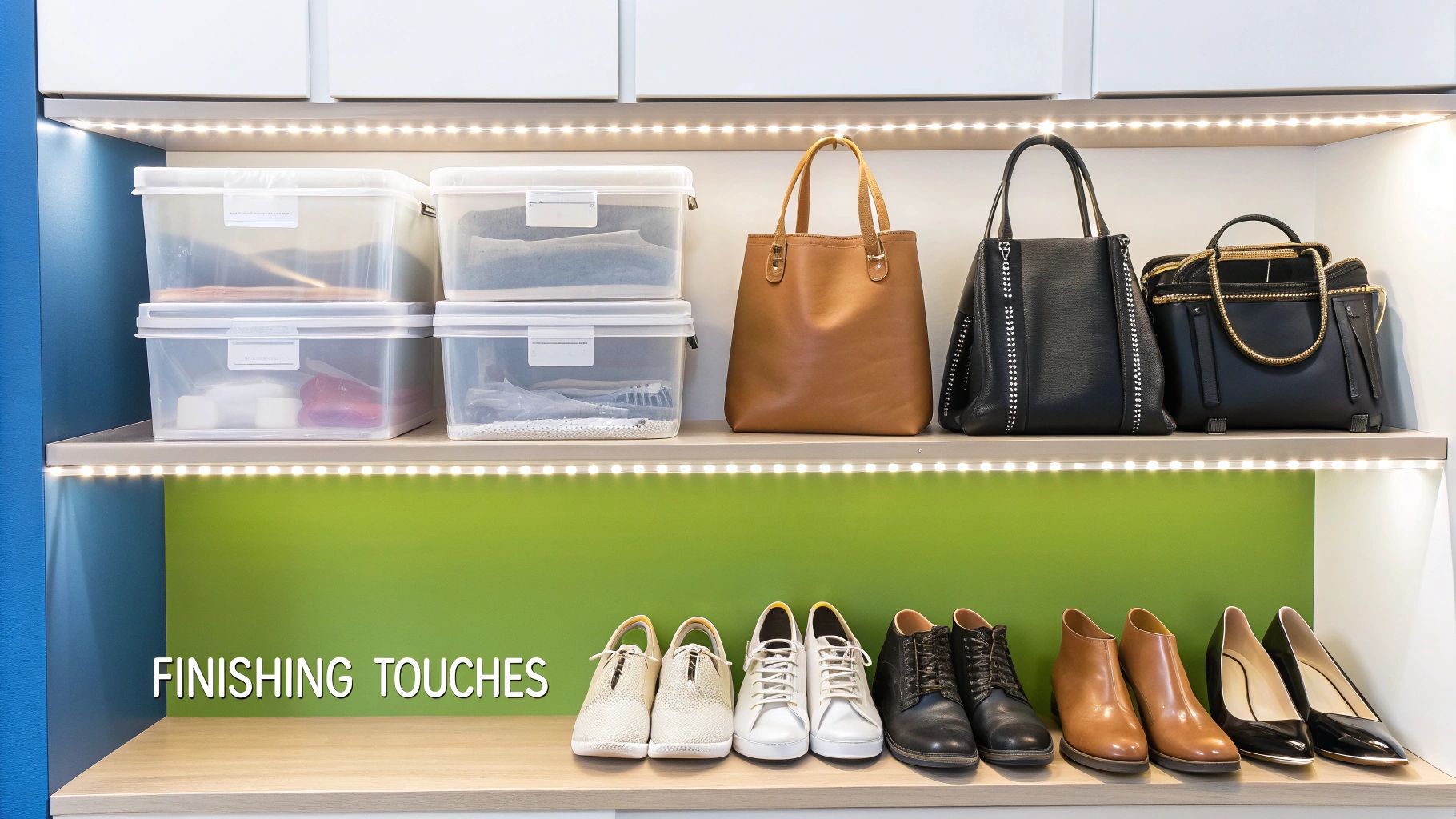
Alright, your clothes are hung, folded, and zoned. You're in the home stretch! But the difference between a good closet and a great one lies in the details. It’s these final touches that handle all the little things—the accessories, shoes, and other odds and ends that can quickly create chaos.
Taking the time to give every last item a proper home is what makes a closet system truly work for you. This is how you make your morning routine feel effortless.
Illuminate Your Space for Better Visibility
Let's talk about something most people completely forget: lighting. What good is a beautifully organized closet if you can't see anything in it? A dim, shadowy space is where clothes go to be forgotten. You end up grabbing the same few items over and over simply because they’re the only ones you can clearly see.
You don't need to hire an electrician. The easiest fix I've found is to install some battery-operated LED strip lights. They’re cheap, stick right under your shelves or along the closet frame, and instantly brighten everything up. Suddenly, you can actually tell your navy sweater from your black one without squinting.
Visibility is the unsung hero of closet organization. If you can't see what you have, you won't wear it. A small investment in lighting can completely change how you use and appreciate your wardrobe.
Tame Your Accessories with Smart Solutions
Scarves, belts, handbags, jewelry—these are the usual suspects when it comes to clutter. If they don't have a designated spot, they'll end up in a tangled pile. Luckily, there are simple, targeted solutions that work wonders.
- Belts & Scarves: Stop stuffing them in a drawer. A dedicated hanger with multiple hooks or loops is a game-changer. They hang right alongside your clothes, untangled and easy to grab.
- Handbags: Simple S-hooks on your closet rod are perfect for hanging bags by their straps. For clutches and smaller purses, I love using clear acrylic dividers on a shelf to keep them standing upright and looking neat.
- Jewelry: An over-the-door organizer with clear pockets is fantastic for statement pieces. For your everyday watch or rings, a small valet tray on a shelf keeps them safe and accessible.
Looking for more ways to maximize your shelves? Check out our guide full of creative closet shelving ideas to get the most out of every surface.
Conquer Shoe and Boot Clutter
Shoes have a way of taking over the entire closet floor, creating a mess that makes it impossible to find a matching pair. The first rule is to get them off the ground. A tiered shoe rack is a classic for a reason—it can easily double or triple your floor space.
Boots can be especially awkward. To keep them from flopping over and losing their shape, use boot shapers or special clip hangers to hang them from a lower closet rod. If you have the shelf space, clear stackable shoe boxes are my personal favorite. They protect your shoes from dust while letting you see exactly what's inside. Problem solved.
How to Keep Your Closet Organized for Good
You’ve put in the hard work—the sorting, the planning, the arranging—and now your closet is a beautifully functional space. So, how do you keep it that way? The secret to maintaining an organized closet isn't about scheduling another massive overhaul. It's about building simple, sustainable habits that stop clutter before it even starts.
This is where you shift from a one-time project to an ongoing, almost effortless routine. The goal is to make maintenance so easy that it just becomes part of your life, not another chore nagging you from the to-do list.
Build Habits That Stick
First things first: you have to become the gatekeeper of your closet. To prevent your thoughtfully curated wardrobe from ballooning back into chaos, start with the 'one-in, one-out' rule. It’s incredibly simple: every time a new piece of clothing comes in, an old one has to go out. This little trick forces you to be more intentional about your purchases and keeps your closet from overflowing.
Here's another tiny habit that makes a huge difference: have a designated spot for empty hangers. Instead of letting them get tangled up between your clothes, just slide them all to one end of the rod. When laundry day rolls around, you can grab them all at once without that frustrating hunt.
Think of your organized closet as a system. And like any good system, it runs on simple rules. Being consistent with these small habits will do far more for you than sporadic, weekend-long cleanouts ever could.
The 10-Minute Weekly Tidy-Up
Consistency beats intensity, every single time. Try setting aside just 10 minutes once a week for a quick closet reset. I find Sunday evening works perfectly, as it sets you up for a smooth week ahead. This isn’t a deep clean; it’s just a rapid-fire tidy.
Here’s what you can get done in that short window:
- Finally put away the clothes that have piled up on "that chair" (we all have one).
- Return shoes, bags, and belts to their proper homes.
- Quickly refold or straighten any piles on shelves and in drawers.
- Give dusty surfaces a quick wipe-down.
This brief weekly check-in is your best defense against small messes snowballing into overwhelming clutter. It keeps your closet in a constant state of ready-to-use calm.
Do a Quick Seasonal Check-In
Twice a year, usually when you’re swapping out your warm and cold weather clothes, take the opportunity for a mini-review. This is your chance to be honest about what you’ve actually been wearing. As you pack away the off-season stuff, pull out anything you didn't touch at all. Be ruthless!
This is also the perfect time to check on your gear. The market for durable, space-efficient organization tools continues to grow as more people realize that investing in quality pays off. Using quality hangers and organizers not only improves function but can also cut down on replacement costs over time. If you're curious about how quality tools impact long-term organization, you can explore insights on the home storage market.
Your Closet Questions, Answered
Got a few lingering questions? It's completely normal. Let's tackle some of the most common ones I hear from clients all the time.
How Often Should I Really Declutter My Closet?
For a full-blown, pull-everything-out declutter, I recommend doing it twice a year. The best time is right when the seasons change, as you're already swapping out your sweaters for sundresses (or vice versa). It’s a natural time to reassess what you actually wore.
For everything in between, a quick 15-minute weekly tidy-up does wonders. And try to live by the one-in, one-out rule: for every new shirt you bring home, an old one has to go. This single habit is a game-changer for preventing future closet chaos.
What's the Single Biggest Mistake People Make?
Hands down, the biggest mistake is buying storage bins and organizers before decluttering. People get excited about the "after" picture, but they end up just neatly organizing stuff they don't even like or wear.
You have to be ruthless first. A proper purge ensures every single thing you store is something you actually love. Think of it this way: you’re creating a home for your favorite items, not a museum for clothes you might wear someday.
It's a proven fact: most people find their closets work better simply by decluttering first, before buying a single new hanger or bin.
Are Those Space-Saving Hangers Actually Worth It?
In a word: absolutely. Especially if you’re working with a small or awkwardly shaped closet. Your standard chunky plastic or wooden hangers can eat up a huge amount of your available rod space. That’s a lot of wasted real estate!
Tiered hangers, like the ones that hold multiple pairs of pants or skirts, can literally multiply your hanging capacity by five. It’s one of the fastest, most effective ways to make every inch of your closet count.
What If I Run Into Problems?
Even the best-laid plans can go awry. Here’s how to handle a few common snags:
- Clothes are overflowing again: This is a sign your zones need a check-up. Are off-season items creeping into your prime daily-wear space? It’s probably time for a mini-purge to reclaim your boundaries.
- The clothing rod is sagging: This is a classic! You've got too much weight concentrated in one spot. Try moving heavy items like winter coats to a separate, sturdier rail or a freestanding wardrobe if you have one.
- My clothes keep slipping off the hangers: Ugh, the worst. Ditch the slippery plastic hangers and switch to slim velvet ones. They grip fabric gently but firmly, keeping everything from silky blouses to wide-neck tops in place.
Ultimately, organizing your closet isn't a one-and-done project. It's a mindset. Your wardrobe will change, your lifestyle will evolve, and your closet should adapt right along with you. Check in every few months, see what’s working, and don't be afraid to tweak your system.
Ready to take back your closet space? Find the perfect space-saving hanger solutions at MORALVE.
Leave a comment