
Brilliant Closet Shelving Ideas for Ultimate Organization

That feeling of staring into a jam-packed closet and thinking, "I have nothing to wear," is something we've all experienced. But what if the problem isn't your wardrobe, but the closet's organization system? The right shelving can completely change the game, turning a chaotic mess into an organized, functional space that simplifies your daily routine.
The secret isn't just buying more bins; it's about creating a logical home for everything you own through smart organization.
From Chaos to Calm: A Fresh Start for Your Closet
A truly organized closet does more than just look good—it simplifies your daily routine, cutting down on the morning scramble and a whole lot of stress. But before you can build the perfect organization system, you have to know what you’re working with. It's amazing how much of our wardrobe we forget about simply because it's buried in a dark, disorganized corner.
That’s why the first real step is always a thorough clean-out. Think of it as creating a blank canvas. By cleaning out your closet, you can finally see the true potential of your space and plan a layout that fits what you actually wear and love, setting the stage for lasting organization.
Why a Smart Shelving Strategy is a Game-Changer
Putting up a few shelves is easy, but implementing a smart shelving strategy is what makes all the difference in achieving long-term organization. It’s about building a system that works with you, not against you, turning that jumbled puzzle into your own personal boutique.
- You'll Actually See What You Own: When sweaters, shoes, and bags have a designated, organized spot on a shelf, you can see your entire collection at a glance. Putting together an outfit becomes so much easier.
- Maximize Every Inch of Space: Good shelving, especially solutions that take advantage of vertical height, can practically double the usable storage area, which is key to organizing even the smallest closets.
- Organization That Actually Lasts: An intuitive system is easy to maintain. When putting things away is quick and simple, your closet stays organized.
The real goal here is to design a closet where accessibility and order are built right in from the start. This approach ensures your hard work pays off for the long haul, turning a daily frustration into a moment of calm organization.
By thinking in terms of vertical storage and creating "zones" for different categories of clothing, you're building a foundation that supports your lifestyle. There's a reason millions of people are investing in better home organization—it brings a welcome sense of control and ease to our busy lives.
Planning Your Ideal Closet Layout
Diving into a closet remodel without a solid plan is a classic organization mistake. It's a bit like going to the grocery store starving—you're guaranteed to come home with a random assortment of stuff you don't actually need. A well-thought-out layout is the single most important part of the project. It’s what turns a simple storage box into a functional, intuitive system built specifically for your stuff and your daily routine.
The whole process really boils down to two key starting points: measuring your space and getting brutally honest about what you own. A great organizational design is born from understanding the physical limits of your closet and the reality of the items that need to live inside it.
This simple breakdown shows how to approach the project without getting overwhelmed.
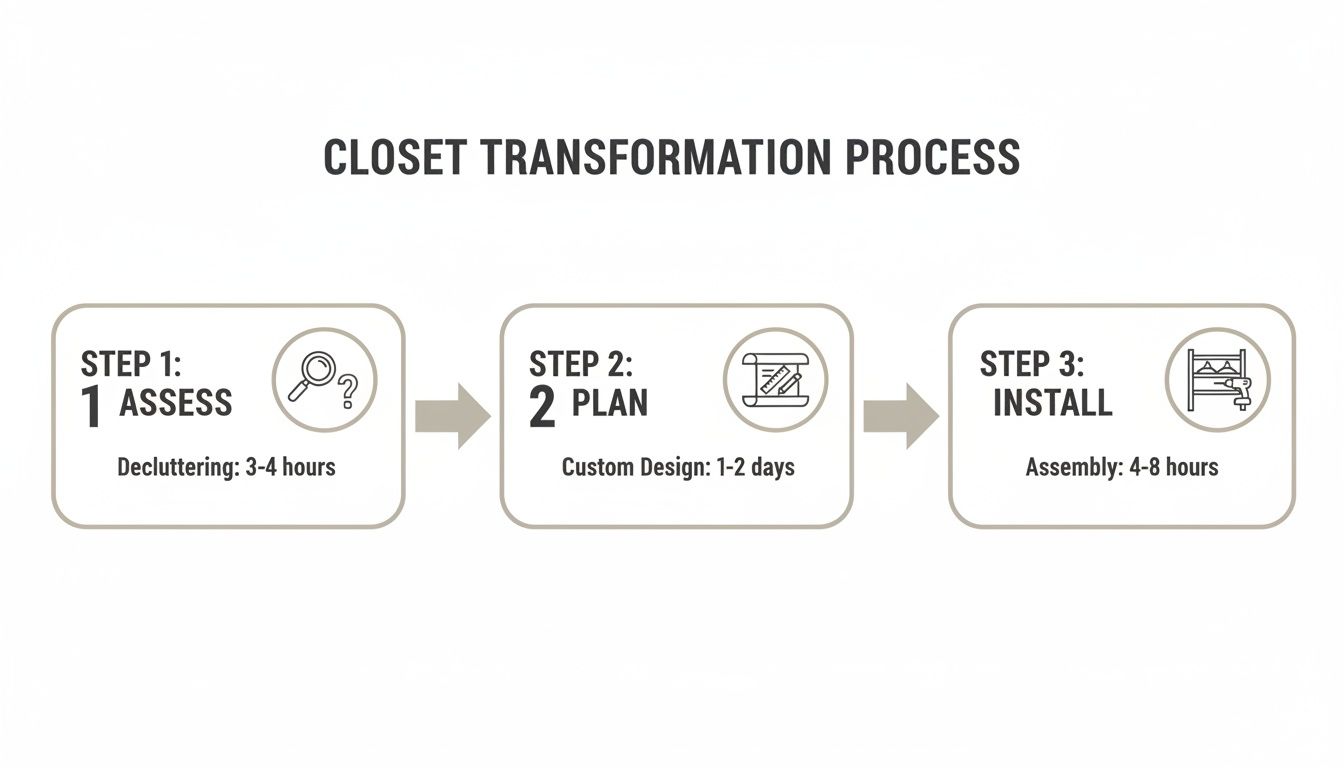
Thinking of it in these three distinct phases—assess, plan, and install—keeps things manageable and on track for an organized result.
Master Your Measurements
Let’s be clear: getting your measurements right is non-negotiable for a successful organization project. Grab a tape measure and check the closet’s width, depth, and height. Make sure to measure from a few different spots—walls are rarely perfectly straight. Don't forget to measure the door opening and account for how it swings. A gorgeous new shelving unit is totally useless if you can't open the door all the way.
You also need to map out any permanent obstacles you'll have to work around.
- Light fixtures or electrical outlets you can't (or don't want to) move.
- Sloped ceilings in an attic or loft space that will limit the height of your units.
- Baseboards or chunky trim that could stop a shelving unit from sitting flush against the wall.
I always recommend sketching a quick, not-to-scale diagram on a piece of paper. Just a simple box where you can jot down these numbers and mark where the obstacles are. This little map will be your blueprint for an organized closet.
Conduct a Wardrobe Audit
With your dimensions in hand, it's time to get real about what you're storing. A detailed inventory is the only way to figure out what kind of storage you actually need to stay organized. The best way to do this? Pull everything out. Yes, everything. Then, start sorting it into logical piles.
The goal here is to get a sense of volume. How many feet of hanging space do you need for dresses versus shirts? How many pairs of shoes are you trying to wrangle? This information is what will dictate your shelving choices and your entire organizational strategy.
Taking the time to inventory your wardrobe prevents the all-too-common mistake of designing a closet for an imaginary, perfectly curated collection instead of the clothes you actually own. It grounds your organization plan in reality.
The demand for smarter closet organization is exploding, with the global market expected to hit USD 8.3 billion by 2033. This isn't just a trend; it's a sign that people are tired of inefficient spaces. The right shelving can increase the usable space in a small closet by as much as 60%, a game-changer for organization.
Zone Your Closet for Efficiency
Okay, now it's time to bring your measurements and your inventory together to create "zones." Zoning is an organization technique that means dedicating specific areas of your closet to certain categories of items. Think of it like creating little neighborhoods for your clothes, shoes, and accessories.
- Daily Use Zone: This is prime real estate. Put the items you reach for most often right at eye level where they are easiest to grab.
- Long-Hang Zone: Set aside an uninterrupted vertical section for long coats, dresses, and suits.
- Folded Items Zone: Designate a stack of shelves for sweaters, denim, and t-shirts.
- Seasonal Storage: Those hard-to-reach upper shelves are perfect for stashing out-of-season clothes, luggage, or extra bedding.
Pencil these zones into your diagram to see how the layout flows. This crucial step is what makes the final design feel intuitive, helping streamline your morning routine and maintain organization. For a deeper dive, check out our complete guide on how to design a closet.
Choosing Your Shelving Materials and Styles
The real foundation of an organized closet isn't just the layout—it's what you build it with. The materials you choose will set the tone for your closet's durability, look, and overall feel. It's really a balancing act between your budget, how much weight the shelves need to hold, and the organizational vision you have for the space.
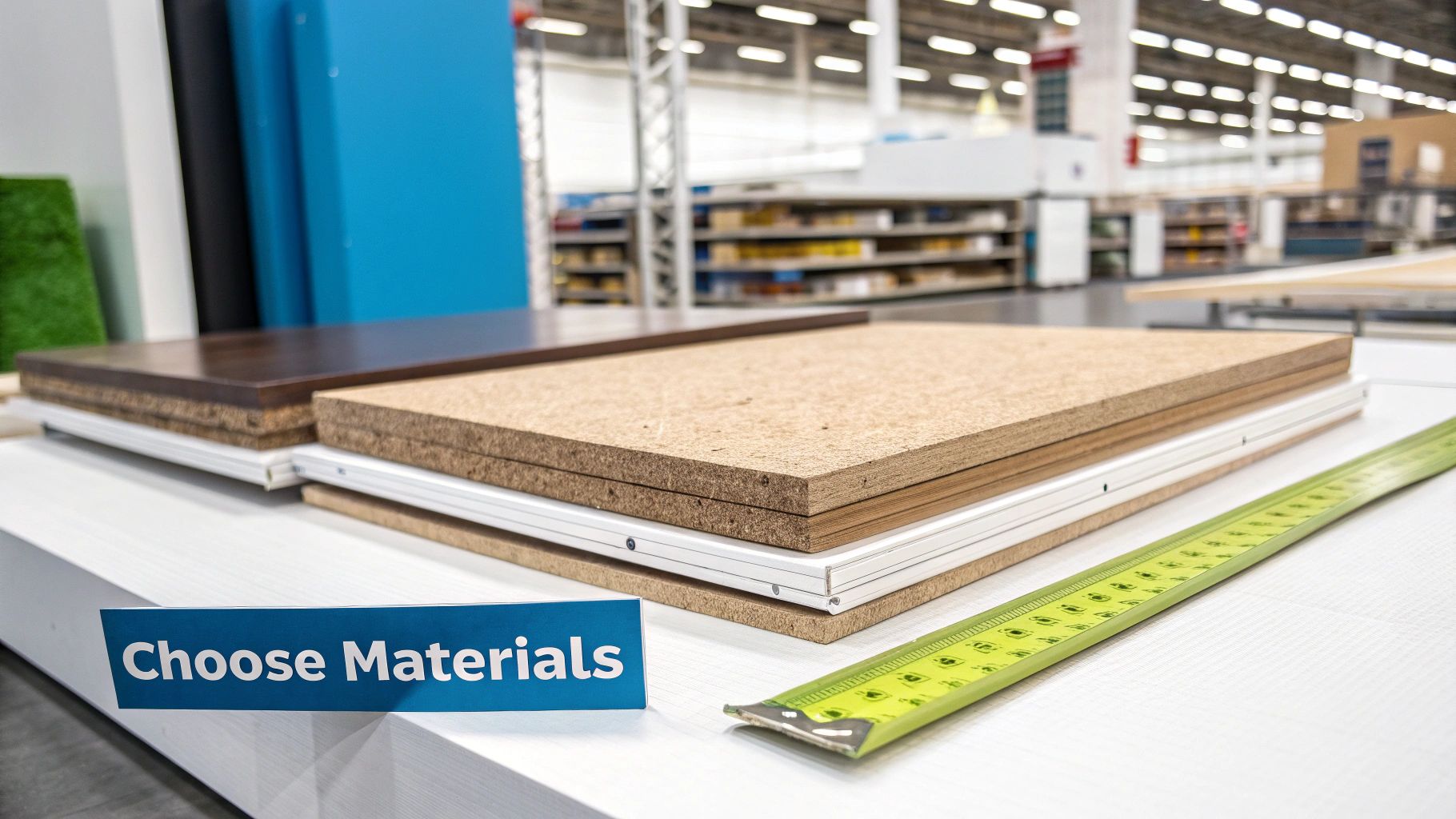
From classic solid wood to modern and airy wire systems, every material has its own personality. Let's dig into the most common options to figure out what's right for you.
A Look at Common Shelving Materials
Picking a material can feel like a big decision, but it usually boils down to a few key players. Each one has its pros and cons, making it a better fit for certain closets, budgets, and organizational needs.
-
Wire Shelving: This is easily the most budget-friendly option out there. Its open design is fantastic for airflow, which is a lifesaver in linen closets or damp basements where mustiness can be an issue. The downside? It can leave indentations on soft clothes, and small items can easily slip through the cracks.
-
MDF or Melamine: Think of this as the dependable workhorse of the closet world. Most of the closet systems you see at big-box stores are made from MDF (Medium-Density Fiberboard) coated in a tough melamine finish. It’s affordable, gives you a clean, solid surface for easy organization, and is a breeze to wipe down.
-
Plywood: If you need something stronger that resists sagging, plywood is a significant step up from MDF. It's constructed from thin layers of wood veneer glued together, making it incredibly sturdy. This is my go-to recommendation for shelves that need to hold heavy items like stacks of jeans, books, or hefty storage bins.
-
Solid Wood: For that timeless, high-end look, you just can't beat solid wood. Materials like pine, oak, or maple offer serious strength and can be painted or stained to match your decor perfectly. It's definitely the priciest option, but it's an investment that will last a lifetime.
To make the choice a little easier, here's a quick comparison of how these materials stack up against each other.
Closet Shelving Material Comparison
| Material | Average Cost | Durability | Best For |
|---|---|---|---|
| Wire | $ | Good | Budget projects, linen closets, pantries, and areas needing good ventilation. |
| MDF/Melamine | $$ | Good | Most standard reach-in and walk-in closets; a versatile, all-around choice. |
| Plywood | $$$ | Excellent | Heavy-duty storage, garages, and custom built-ins where strength is a priority. |
| Solid Wood | $$$$ | Superior | High-end walk-in closets, custom furniture-grade installations, and long-term investments. |
Ultimately, the best material aligns your budget with how you'll use the closet. A busy, shared walk-in might justify the investment in plywood for better organization, while a simple guest room closet could be perfectly outfitted with a clean melamine system.
Exploring Different Shelving Styles
After you've picked your material, it’s time to think about the style of shelving. This is all about function—how you'll organize the space day-to-day and how easily it can adapt to future needs.
Fixed Shelving
Just as the name implies, fixed shelves are permanently attached to the closet walls or built into a unit. They are rock-solid and dependable. This makes them the perfect choice for foundational storage where you know the height you need won't change. That top shelf in almost every closet? It's usually fixed because it's always used for the same thing: long-term storage.
Adjustable Shelving
If you crave flexibility, adjustable shelving is the undisputed champion of organization. These systems use tracks and brackets or a series of pre-drilled holes with pegs, letting you shift shelves up or down whenever you need to. They are an absolute game-changer in kids' closets—you can literally reconfigure the space as they grow.
Floating and Corner Shelves
For a sleek, modern vibe, floating shelves are a fantastic choice. They have no visible hardware, which creates a clean, minimalist look. I love using them to display beautiful handbags, hats, or a few curated decorative pieces as part of an organized design.
And don't forget the corners! Corner shelving is a brilliant organization trick to reclaim what is often dead, awkward space. You can transform a useless corner into a functional home for shoes, folded sweaters, or accessories.
Smart Shelving Ideas for Every Type of Closet
It’s a simple truth: not all closets are created equal. The shelving strategy that transforms a sprawling walk-in will just create chaos in a small reach-in. The secret to great closet organization isn't about having more space—it's about making the absolute most of the space you have.
For small closets, the name of the game is vertical organization. You have to think floor-to-ceiling.
Maximizing Small or Reach-In Closets
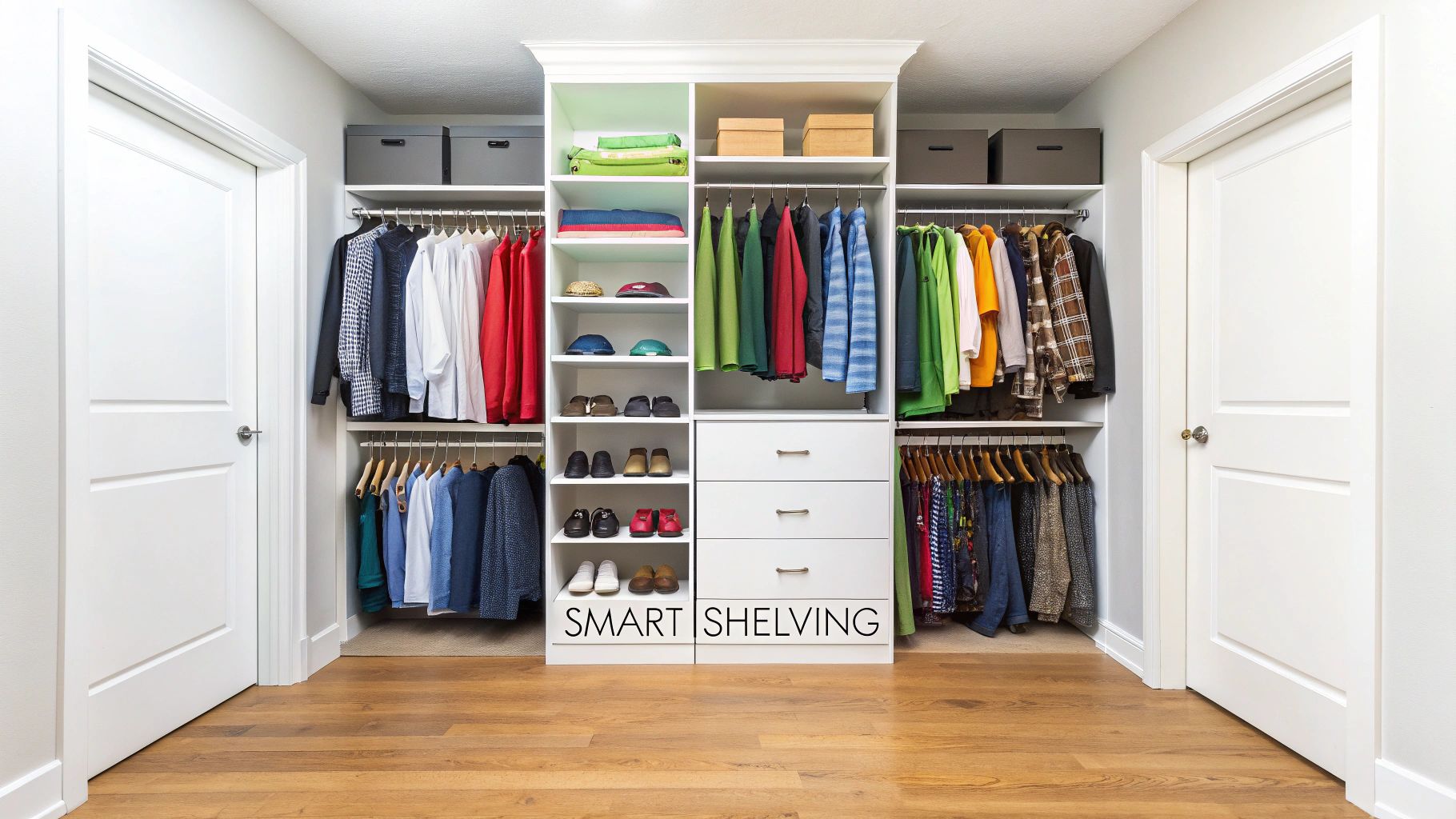
When you're dealing with a reach-in closet, every single inch is prime real estate. The main goal is to build layers of storage to stop everything from devolving into a jumbled mess on the floor. I've found that a narrow tower of shelves right in the center can be a total organizational workhorse for folded sweaters, jeans, and bins holding smaller accessories.
Here are a few high-impact organizational moves I always recommend:
- Double-Hang Rods: This is the easiest win. Install a second rod below the first to instantly double your hanging space for shirts, skirts, and blouses.
- Floor-to-Ceiling Shelving: That space above the top shelf? It's usually a dead zone. Add more shelving up there for out-of-season clothes or luggage you don't need every day.
- Skinny Shoe Shelves: A few shallow shelves on an unused side wall can get all your shoes off the floor and make them easy to grab.
There's a reason the custom closets market is projected to hit USD 67,944.75 million by 2035. Homeowners are realizing how much tailored organization matters. In fact, a whopping 72% of homeowners with custom shelving report a 40-50% boost in storage efficiency, which is a game-changer in a small apartment. You can dig into more of this data from Global Market Statistics.
Designing for Spacious Walk-In Closets
Having a walk-in closet feels like a luxury, but without a solid organization plan, it can quickly become just as cluttered as a tiny one. Here, the strategy shifts from just saving space to creating dedicated zones. You want it to feel less like a storage box and more like your own personal, organized boutique.
Try dedicating different walls to different purposes. One wall could be all about everyday wear with double-hang rods, while another becomes a feature wall with open shelving for handbags, hats, and neatly folded sweaters. Don't forget drawers—they are essential for hiding away socks, undergarments, and other small items to keep the visible areas feeling clean and calm.
A walk-in is all about creating flow and visibility. The best organizational systems mix open shelves, drawers, and varied hanging heights to build something that's as beautiful as it is functional.
Specialized Closets: Kids and Linens
Unique closets require their own unique organization solutions. A kid's closet, for example, has to grow with them. Adjustable shelving is non-negotiable here. You can start with rods and shelves low enough for them to reach their own clothes and simply move them up as they get taller.
Linen closets are a whole different beast. You need deep, sturdy shelves—I always aim for at least 14-16 inches—to hold bulky towels and sheet sets without bowing over time. Shelf dividers are another organizational lifesaver, as they keep those neatly folded stacks of towels from toppling into each other.
For more clever ways to organize compact spaces, check out our guide on small closet storage solutions.
Beyond Shelves: Integrating Smart Storage Accessories
Think of your new shelving layout as the perfect skeleton for your closet organization. It provides the essential structure, but it’s the smaller, smarter accessories that really bring it to life. These are the tools that transform a static set of shelves into a dynamic, highly efficient space where everything has a home.
This is where you finally get to solve all those little, everyday organizational frustrations. A simple set of shelf dividers, for example, can instantly stop those leaning towers of sweaters from collapsing. Suddenly, you have clean, defined cubbies that keep folded clothes neat and easy to grab.
Fine-Tuning Your Shelving System
With the main framework in place, it's time to zoom in and optimize each organizational zone. Look at your shelves and ask yourself: how can I make this space work even harder?
-
Contain the Clutter with Bins: Clear bins are a total game-changer, especially for high shelves. Instead of blindly fumbling for an out-of-season item, you can see exactly what’s inside, pull the whole bin down, and find what you need without causing an avalanche.
-
Improve Access with Pull-Out Trays: For lower shelves that can become dark black holes, pull-out trays or drawers are fantastic. They bring everything out to you, making them perfect for smaller things like scarves, belts, or jewelry that tend to get lost in the back.
-
Organize Behind Closed Doors: Don't forget about the back of your closet door! This is prime real estate that often goes completely unused. It's the perfect spot for slim, over-the-door organizers. If you want to dive deeper, we've got some great ideas for closet door storage you can check out.
Maximizing Rod Space with Vertical Hangers
One of the most impactful changes you can make involves rethinking your hanging space. Even with the best shelving in the world, a crammed clothing rod makes a closet feel chaotic. It's a surprisingly common organization problem—research shows that a staggering 62% of urban residents around the globe say closet clutter is a major source of stress.
By shifting from a "one hanger, one item" approach to a vertical system, you can reclaim a huge amount of horizontal rod space. This new breathing room can be used for more shelving or just to let your clothes hang without being crushed.
This is exactly what solutions like MORALVE's space-saving hangers were designed for. Their tiered design lets you hang several garments in the same vertical footprint as a single traditional hanger. It's a simple swap that can boost your closet's capacity by up to 70%, directly tackling the clutter that frustrates so many people.
By combining a solid shelving foundation with these clever smart storage solutions, you create a cohesive organizational system where every inch is optimized and clutter simply doesn't have a place to live.
Common Questions About Closet Shelving
Any time you start a closet organization project, a few questions are bound to pop up. Getting those answered ahead of time is the key to building a system you'll actually love and use for years to come. Let's dig into some of the most common things people ask when they're planning out their shelves.
What Is the Ideal Depth for Closet Shelves?
Shelf depth is one of those details that can make or break your whole organizational system. Get it right, and everything is easy to see and grab. Get it wrong, and you've just created a new black hole for your stuff.
For your go-to folded clothes like sweaters, t-shirts, and jeans, 12 inches is the magic number. It's the industry standard for a reason—it’s deep enough to hold a neat stack without anything getting lost way in the back.
Of course, not everything fits that mold.
- Shoes: You can get away with shallower shelves here, usually around 9-10 inches.
- Big Bins & Luggage: For those high-up shelves where you stash bulky items, you can push the depth to 14-16 inches.
I always tell people to think twice before going any deeper than 16 inches for regular items. Once you do, you can't see what's behind the first row, and that's when the mess starts creeping back in.
How Can I Add Shelving Without Drilling?
Living in a rental or just don't want to put a bunch of holes in your walls? You've got some great organizational options. The most obvious solution is a freestanding shelving unit. You just build it, slide it into your closet, and you're done.
Tension rod shelves are another clever trick. They wedge between the closet walls, using pressure to create a surprisingly sturdy shelf with zero screws involved. Modular cube systems are also fantastic because you can stack and configure them in endless ways to fit your exact space.
The secret to a great no-drill solution is finding stability without the commitment. Things like freestanding towers and tension systems give you all the organizational structure you need while leaving your walls completely untouched—a perfect setup for renters.
How Do I Decide Between Wire and Solid Shelving?
Picking between wire and solid shelves really boils down to three things: budget, function, and the final look you're going for.
Wire shelving is almost always the more budget-friendly choice. That open grid design is also great for air circulation, which can be a real bonus in a linen closet or any space that feels a bit stuffy. The downside? It can leave lines on your clothes, and smaller items have a tendency to slip right through the cracks.
Solid shelving, on the other hand, gives you that smooth, clean surface that looks custom-built. It's perfect for smaller accessories that would fall through wire racks and provides a solid, sag-free base for heavier stacks of clothing. While it costs a bit more, you don't have to choose just one. A hybrid approach often works best—maybe solid shelves for your clothes and wire for your linens.
Ready to reclaim your closet and make the most of every single inch? MORALVE has a whole range of space-saving hangers that work perfectly with a new shelving system. By hanging your clothes vertically, you can unlock so much more rod space, making your closet feel instantly calmer and more organized. Take a look at our closet organization solutions and start your journey to a clutter-free life.
Leave a comment