
Ultimate Guide: Closet Shelf Organizer Ideas for Transforming Your Space

We’ve all been there. Staring into a closet packed to the brim, yet somehow, you have absolutely nothing to wear. More often than not, the real problem isn't a lack of clothes—it's disorganized shelves. The best closet shelf organizer ideas are all about creating designated zones, using dividers to keep those T-shirt stacks from toppling over, and reclaiming all that wasted vertical space with smart, stackable solutions.
Getting your closet organization right can immediately cut through the clutter, making your daily routine feel calmer and much more in control.
From Closet Chaos to Calm Control
That top shelf, overflowing with a chaotic jumble of sweaters, bags, and who-knows-what-else, isn't just an eyesore. It’s a source of daily friction. Every time a neatly folded pile collapses or you can't find that one handbag you need right now, you're losing precious time and patience.
Rethinking how you use your closet shelves is the first step toward a wardrobe that actually works for you. This isn't about buying more bins just to hide the mess. It's about creating an intuitive system where everything has a logical home, making it effortless to find what you need and—just as importantly—put it away.
The Core Principles of Shelf Organization
To get started, just focus on three key actions: zone your space, maximize vertical real estate, and add the right tools to maintain it all.
- Zoning is simple: group similar items together. Think all your jeans in one spot, workout gear in another, and handbags on their own shelf.
- Maximizing vertical space means you stop ignoring the air above your folded clothes. Shelf risers or stackable bins let you use the full height of each shelf, instantly doubling your storage.
- Adding the right tools, like clear shelf dividers or fabric bins, corrals your items and prevents that dreaded visual clutter.
This simple flow from planning to execution is what makes a closet organization system stick.
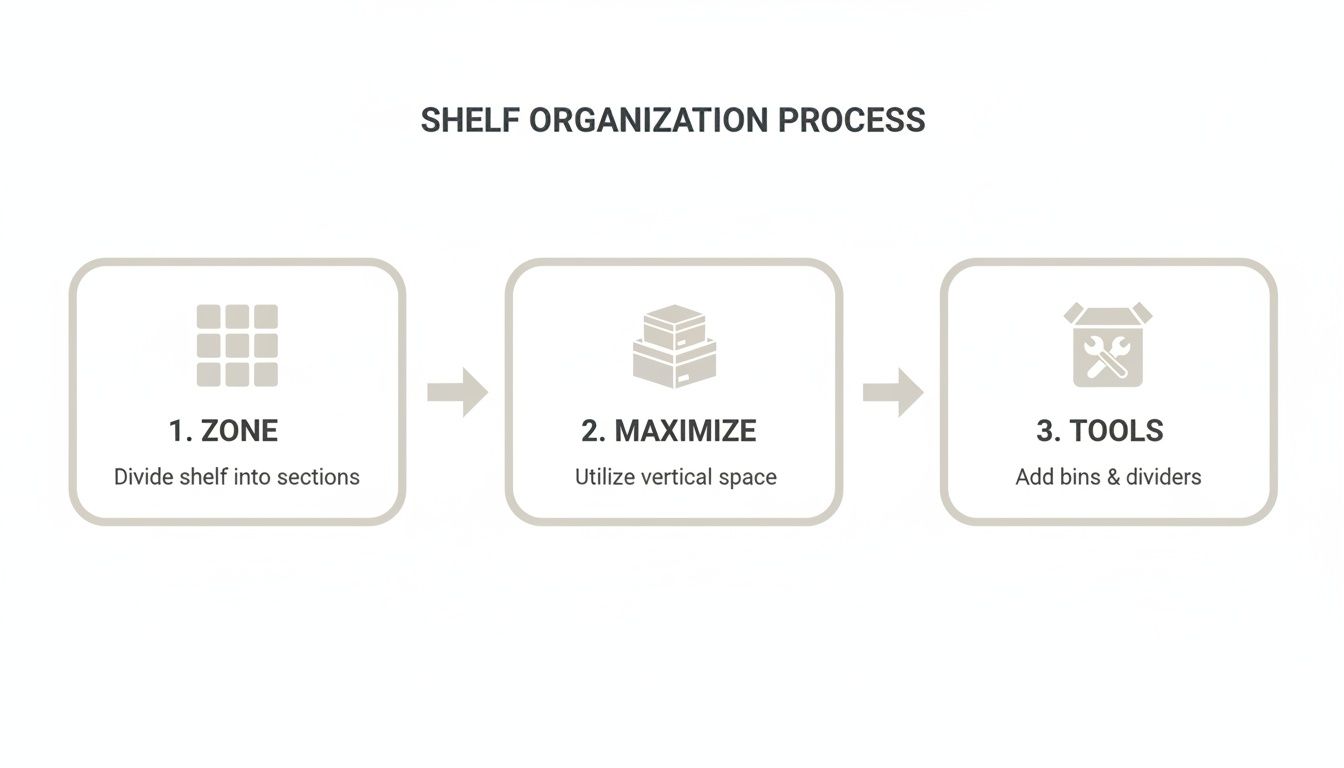
The big takeaway here? A truly organized shelf doesn't happen by accident. It starts with a plan and ends with carefully chosen tools that keep the system running smoothly.
To help you visualize the best solutions for your specific needs, here’s a quick-start guide that breaks down the most effective shelf organizers and what they do best.
Quick-Start Guide to Closet Shelf Organization
| Shelf Organizer Idea | Best For | Key Benefit |
|---|---|---|
| Acrylic Shelf Dividers | Sweaters, purses, and folded jeans | Creates clean, separate "cubbies" without drilling. |
| Shelf Risers/Doublers | Short items like shoes, clutches, or cosmetics | Instantly doubles usable surface area on a single shelf. |
| Stackable Bins | T-shirts, seasonal items, and small accessories | Uses vertical space and keeps categories contained. |
| Hanging Shelf Organizers | Closets with more rod space than shelves | Adds instant "shelves" for folded clothes and shoes. |
| Fabric Bins or Baskets | Oddly shaped items like scarves, belts, or socks | Hides visual clutter and makes items easy to grab. |
Each of these tools plays a specific role in bringing order to your shelves, so you can pick the ones that solve your biggest clutter challenges.
Why a System Matters More Than Products
While organizers are fantastic, it's the underlying system that guarantees your closet stays neat for the long haul. You could buy the most expensive containers on the market, but without a plan for what goes where, they’ll just become better-looking junk drawers.
A well-organized closet can reduce the time you spend managing your wardrobe by up to 40%, giving you back valuable hours each month.
Thinking systematically forces you to assess what you actually own before you buy a single organizer. This is a huge part of the closet decluttering process and helps you make mindful choices about what truly deserves a spot in your space. If you need a hand with that first step, our complete guide on how to declutter your closet will walk you through it.
And this logic isn’t just for clothes! The same principles apply to keeping linens tidy. For some great tips, check out this excellent resource on how to organize your linen cupboard. By focusing on your strategy first, you ensure every product you bring in serves a real purpose, helping you finally achieve a closet that stays calm and in control.
Measure and Map Your Closet Shelves
It’s tempting to rush out and buy a bunch of cool-looking organizers, but that's a classic mistake that often just adds to the chaos. The best closet shelf organizer ideas always start with a tape measure and a good, hard look at what you're actually working with. This initial groundwork is what separates a truly organized closet from a temporarily tidy one.
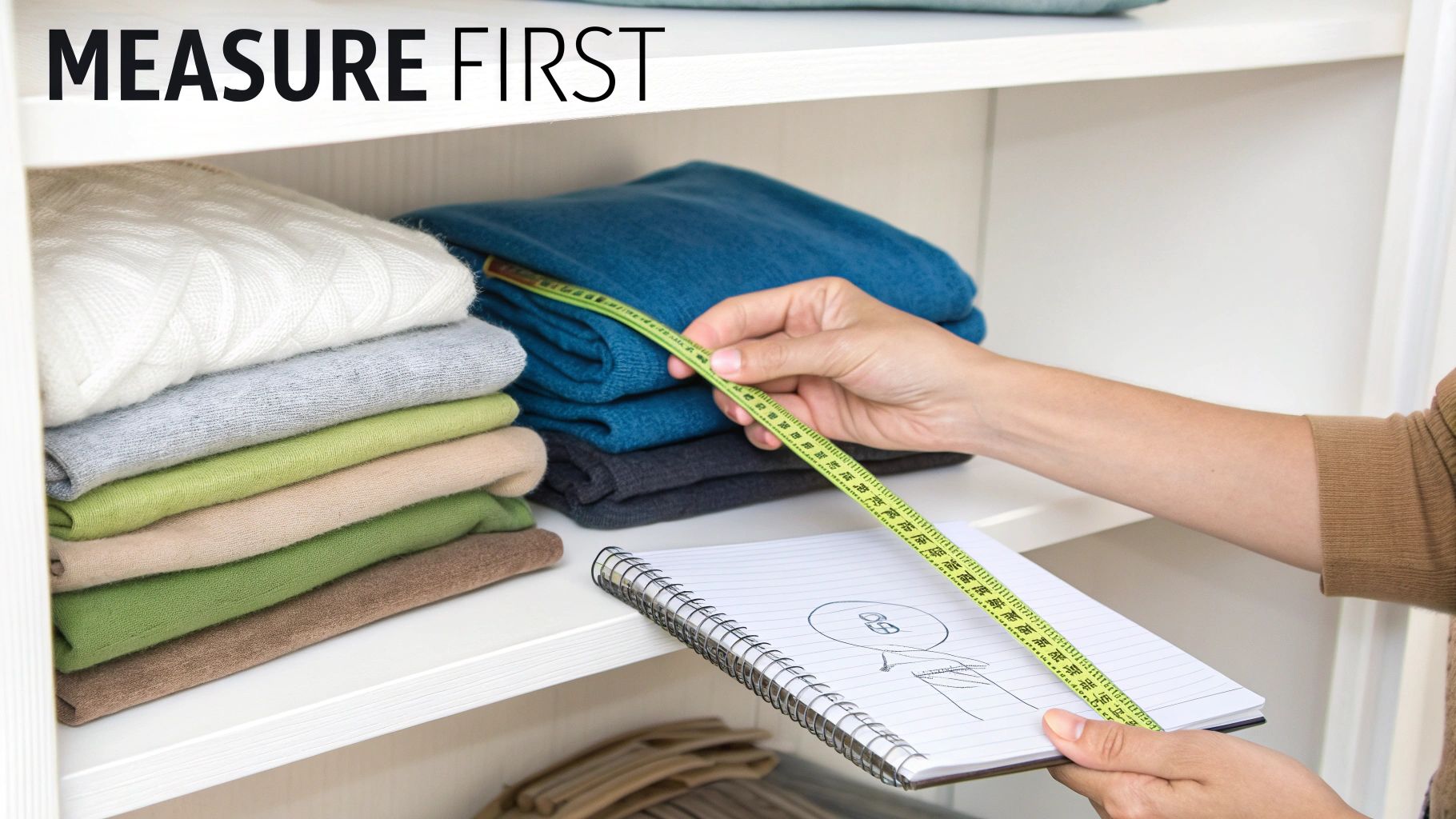
First things first, let's get the exact dimensions of your closet. Grab a tape measure and jot down these three key numbers for every single shelf:
- Width: The distance from one side to the other.
- Depth: How far it goes from the back wall to the front edge.
- Height: The open vertical space between each shelf.
Don’t just eyeball it. An organizer that’s off by even half an inch won't work, and there's nothing more frustrating than having to return something that almost fit. Getting these numbers right from the start saves a lot of headaches (and money).
Take a Realistic Inventory
Once you have your measurements, it's time to assess what's actually on those shelves. And I mean really look. This isn't just about counting items; it's about understanding the mess.
Are your sweaters in a constant state of collapse? Have your shelves become the default graveyard for purses, scarves, and other odds and ends? Has your neat stack of t-shirts devolved into one giant, wrinkled blob? Pinpointing these specific closet problems is the key to finding solutions that stick.
A quick, honest inventory tells you exactly what kind of storage you need. A closet packed with bulky knits calls for a totally different solution than one overrun with small accessories.
This simple audit helps you zero in on your biggest storage headaches. It’s the difference between buying a few random bins and choosing the perfect shelf dividers that will finally keep those sweater piles in line.
Create a Simple Storage Sketch
You don’t have to be an architect for this part. Just grab a piece of paper and sketch a rough outline of your closet shelves, labeling each one with the dimensions you just took.
Now, think about what should go where. Based on your inventory, start assigning a purpose to each zone. Maybe the top shelf is for "Off-Season Items" and the easily accessible one right at eye level is for "Everyday Sweaters." This little map becomes your game plan, helping you find organizers that fit both the space and their intended job. It turns a big, daunting task into a series of small, manageable steps.
Create Smart Zones on Every Shelf
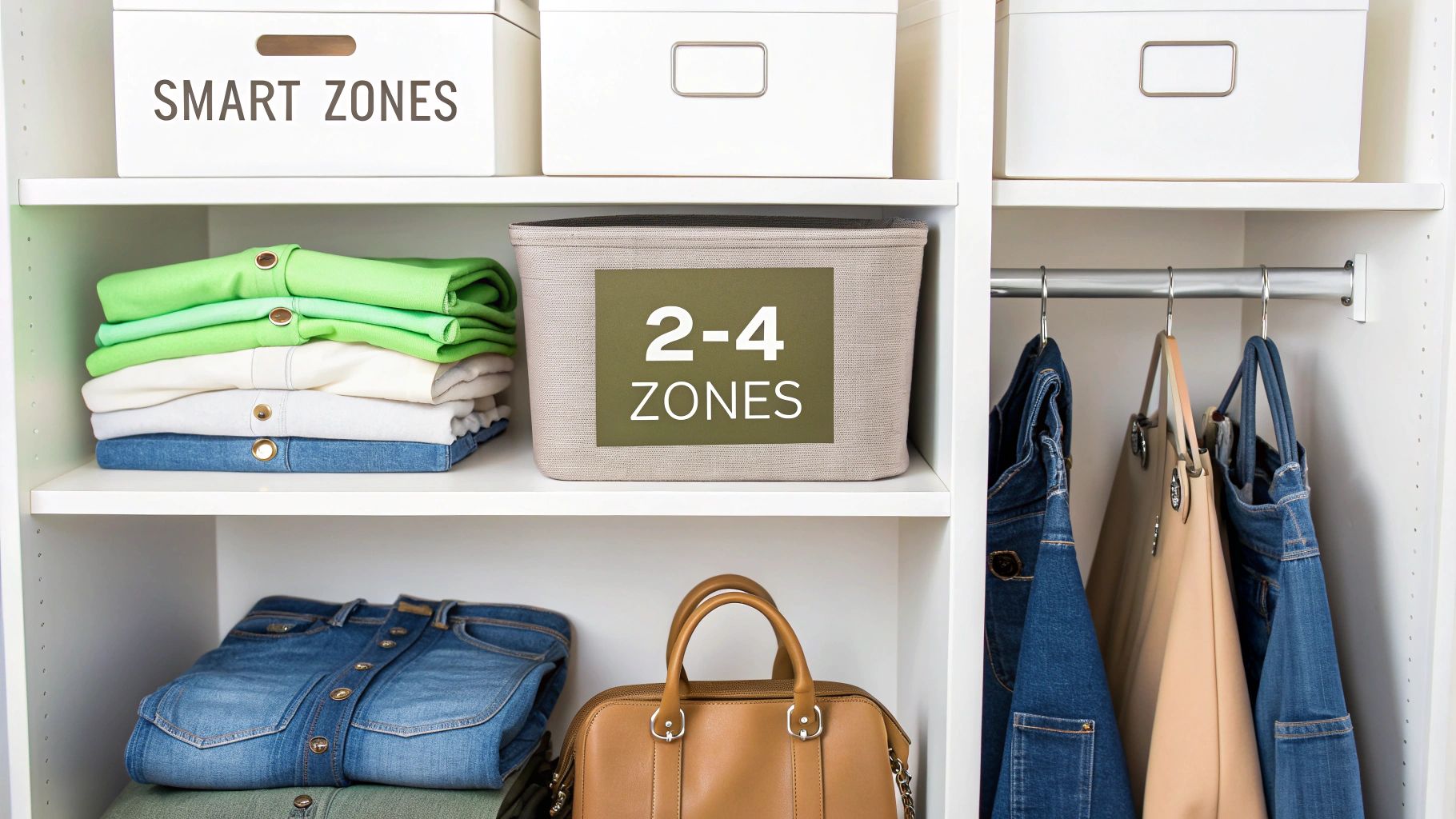
Once you’ve got the lay of the land, the real fun begins. The secret to a closet that actually stays organized has less to do with perfect folding and more to do with smart zoning. The idea is simple: give every single category of item a designated "home" on your shelves. When everything has a logical spot, you stop cleaning up and start maintaining an intuitive system that makes finding things—and putting them away—effortless.
Think of your closet shelves like a city map, with different neighborhoods for different things. The most valuable real estate? That’s whatever is right at eye level. This is where your daily essentials need to live.
Prioritize Prime Real Estate
The shelves that are at eye level and within easy reach are your closet's version of a beachfront property. These spots should be reserved exclusively for the items you use multiple times a week. This is one of the simplest yet most effective closet shelf organizer ideas out there because it works with your daily habits, not against them.
- Daily Wear: This prime zone is perfect for your go-to folded jeans, everyday t-shirts, and the sweaters you’re always reaching for.
- Grab-and-Go Accessories: If you have a few favorite handbags or clutches you use all the time, keeping them here means you won't have to go digging when you're in a rush.
Placing your most-used items where you can see and grab them in seconds eliminates a huge source of daily closet chaos. It's a small change that makes getting ready faster and keeps those main shelves from becoming a jumbled mess by the end of the week.
Assign Jobs to High and Low Shelves
What about the highest and lowest shelves? These are perfect for things you don't need to get to every day. Giving these out-of-the-way spots a specific purpose is the key to keeping long-term order in your closet.
A well-zoned closet isn't just about looking good; it's a functional framework that simplifies your life. When you give every category a home, you slash decision fatigue and make it so much harder for clutter to creep back in.
The top shelf is your go-to for long-term storage. Think seasonal stuff like bulky winter sweaters, special occasion shoes, or extra blankets. Using clear, labeled bins up there makes it easy to see what you've got and pull them down when needed. On the flip side, the lower shelves are great for heavier things like shoe boxes, workout gear in open bins, or baskets of accessories that don’t need to be at eye level. This strategy keeps your daily-use items front and center, right where you need them.
There's a huge demand for this kind of efficiency. The global market for closet organizers was valued at USD 8.5 billion and is expected to hit USD 15.2 billion by 2033, largely because we're all looking for smarter ways to use our space. A well-organized system with shelf dividers can cut down clothing clutter by as much as 40%, saving you a surprising amount of time. You can dig into more closet organizer market trends at markettrendsanalysis.com.
Zone by Lifestyle, Not Just by Item
Finally, think beyond just grouping "shirts with shirts." Get specific and zone based on your actual lifestyle. For example, a handbag lover might dedicate an entire shelf to their collection, using acrylic dividers to give each purse its own "parking spot." This protects their shape and puts the whole collection on display.
If you're dealing with a shared family closet, you could create a zone for each person’s folded clothes. Or, you could dedicate a lower shelf with labeled bins just for the kids’ sports uniforms and gear. The real goal is to build a closet organization system that reflects how you live your life, which is what makes it so easy to stick with for the long haul.
Choose the Right Organizers for Your Stuff
Once your closet is zoned and you have a plan, you can finally get to the fun part: picking the organizers that will make it all happen. This isn't just about grabbing a few cute bins. The real secret is matching the right tool to the right job, creating a system where every piece works together to solve a specific closet problem.
And you're not alone in this. With more people living in smaller spaces, the demand for smart storage is booming—the closet organizer market is seeing a 6.7% annual growth rate. A big driver is the 75 million millennials in the US, where nearly 70% are focused on home organization to make life easier. A well-organized closet can even boost your daily productivity by 15%, which adds up to a lot of time saved each week. You can dig into more of these closet organizer market insights at businessresearchinsights.com.
Match the Organizer to the Item
Don't just buy a bunch of identical bins. The material and design of an organizer should fit the items it's holding. Think about both function and style for everything from your sweaters to your socks.
For instance, those chunky knit sweaters need to be contained, but you still want to see them. That's where clear acrylic shelf dividers are brilliant. They create neat, stable cubbies that stop your carefully folded piles from collapsing, and the clear design keeps everything visible. Wire dividers can do a similar job and are often a more budget-friendly pick, especially for a linen closet where aesthetics might not be the main focus.
Fabric bins, on the other hand, are perfect for hiding away the small, messy stuff.
- Fabric Bins: These are my go-to for corralling things like scarves, belts, and socks. They hide the visual clutter and you can just pull the whole bin down to find what you need.
- Open-Front Bins: Perfect for file-folded t-shirts or a collection of clutches. The open design means you can see and grab what you want without having to unstack or move anything.
- Stackable Shelf Units: These are lifesavers for tall shelves. Pop one in and you've instantly created a second level for shoes, small purses, or folded shorts, doubling your usable space.
Creating a Cohesive System
The most effective closets use a mix of organizers that work in harmony. You might have acrylic dividers for sweaters on one shelf and a set of matching fabric bins for accessories on the shelf below. This approach creates a space that feels calm, looks intentional, and is incredibly functional.
Your goal is to select a family of organizers that work in tandem. A well-chosen system should make every square inch of your shelf space work harder, so you don't have to.
If you need ideas for seriously durable and adjustable setups, you might even find some unexpected inspiration by looking at laboratory shelving systems, which are built for maximum efficiency and strength.
At the end of the day, the right organizers are the ones that make your system feel effortless. It should be just as easy to put something away as it is to get it out. For more hands-on strategies, take a look at our guide for building a DIY closet organizer tailored to your space. When you choose your tools wisely, you're not just organizing a closet—you're making your daily routine a whole lot smoother.
Unlock Hidden Space with Vertical Layering
Take a peek at any standard closet shelf. What do you see? I'd bet there's a neat-ish stack of sweaters or jeans at the bottom, with a whole lot of empty air sitting right above it. That unused vertical real estate is one of the biggest missed opportunities in closet organization. Learning to layer vertically is like finding a secret room in your closet you never even knew existed.
The whole strategy is about thinking upwards. Instead of just spreading everything out horizontally across the shelf, you stack items in a smart, accessible way. It’s a simple shift in perspective that can honestly double or even triple your storage capacity without any complicated installations.
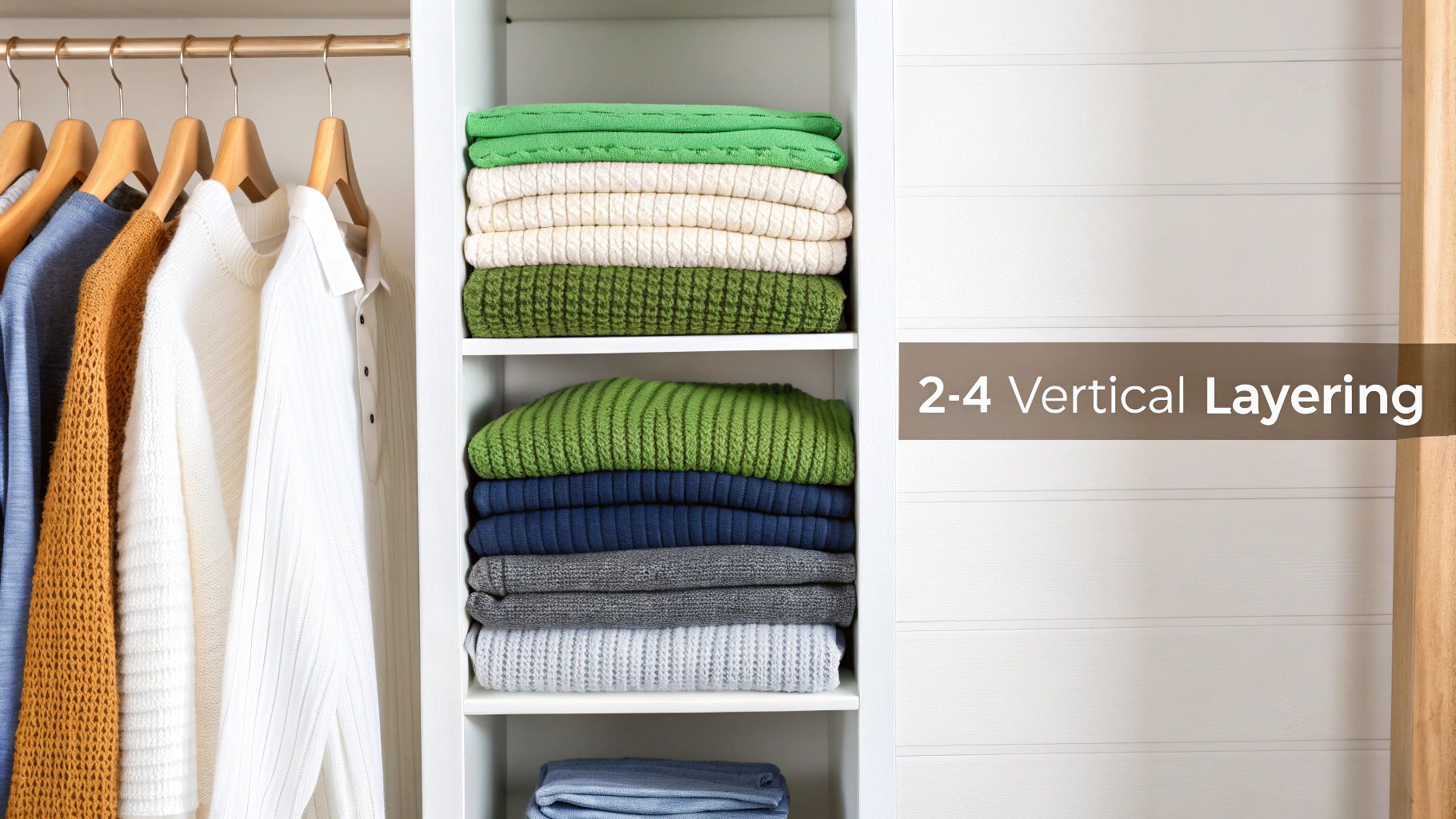
Add Tiers with Stackable Shelf Inserts
One of the most effective closet shelf organizer ideas is to add new levels with stackable inserts or risers. These simple tools act like mini-shelves on top of your existing ones, instantly creating multiple tiers where you once only had a single flat surface.
Imagine a shelf that’s currently home to one wobbly pile of t-shirts. Now, slide a wire or acrylic shelf riser right over them. Just like that, you've gained a second platform for another category, like shorts or leggings. This is a lifesaver for items that don't stack high on their own, such as clutches, shoes, or small accessory boxes.
Stacking items vertically is a total game-changer for efficiency. Studies have shown this one tactic can boost your shelf storage capacity by as much as 50%. That’s a massive win for anyone working with a small closet.
This approach has become incredibly popular for a good reason. As families look to optimize every inch of their homes, demand for customizable closet solutions is booming, with renovations incorporating shelf organizers rising 35% in recent years. Just by adding some adjustable dividers or stackers, you can accommodate 30% more inventory and slash overflow by 45%.
Use Cascading Hangers to Free Up Shelf Space
Vertical layering isn't just for folded clothes. The way you hang your garments has a direct impact on how much room you have on your shelves. When your closet rod is crammed full, bulky items like blazers or jeans often end up in messy piles on the shelf below.
This is exactly where cascading hangers, like the ones from MORALVE, come in and make a huge difference. These space-saving tools let you hang multiple garments vertically in the footprint of a single hanger. By consolidating five pairs of pants or several skirts into one streamlined drop, you free up a ton of horizontal rod space.
All of a sudden, your closet can breathe again. This newfound room means you can finally hang items that were hogging precious shelf real estate, leaving your shelves free for things that actually belong there—like neatly folded sweaters and tidy accessory bins.
For a deeper look into your options, check out our guide on shelving ideas for closets. When you combine smart hanging solutions with shelf layering, you create a fully optimized system that makes your closet feel twice as big.
Common Questions About Shelf Organization
Even the best-laid plans hit a snag. When you're deep into a closet overhaul, questions are bound to pop up. Let's tackle some of the most common hurdles people face, because getting these details right is what makes a new system stick for the long haul.
What Is The Best Way To Organize Sweaters On a Closet Shelf?
We’ve all seen it: the leaning tower of sweaters. The biggest challenge is keeping those bulky knits from collapsing into one messy pile. The secret is to give them some structure.
Forget trying to stack them in one tall, wobbly column. A much better approach is to use clear acrylic shelf dividers. These create neat, individual cubbies for smaller, more stable stacks. It's one of the most effective closet shelf organizer ideas because you can see everything at a glance, and nothing gets squished.
For your chunkiest sweaters, try file-folding them and lining them up in an open-front bin on the shelf. This is a game-changer. It stops the stacks from toppling and lets you slide one out without messing up the rest. Just remember, whatever you do, avoid hanging heavy knits on standard hangers—the weight will stretch out the shoulders and ruin their shape.
How Can I Organize My Closet Shelves On a Budget?
You don't need a high-end custom build to get a beautifully functional closet. You can get incredible results with a bit of ingenuity and a few smart, affordable choices.
Start with the free stuff: a ruthless declutter and a consistent folding technique. Seriously, these two steps alone make a massive difference without costing a dime. Next, look around for things you can repurpose. Old shoeboxes are surprisingly great for dividing drawers or corralling smaller items like socks and belts on a shelf.
Investing in just one or two high-impact, low-cost products can completely change your closet's capacity. The goal is to make every inch work harder without breaking the bank.
For example, a simple tension rod popped between two shelf supports gives you an instant mini-hanging section for scarves or ties. A single set of space-saving hangers can also be a surprisingly effective shelf organizer. By compacting your hanging clothes, you free up so much rod space that you suddenly have more room on your shelves for folded items. Two problems solved with one purchase.
How Do I Keep My Closet Shelves Organized Long-Term?
Here’s the truth: lasting organization comes from a system that’s ridiculously easy to maintain. If putting something away feels like a chore, clutter is going to creep back in. It's inevitable.
First, give every single item a "home." Use labels on bins and dividers so there’s no guesswork. When you know exactly where your workout tops go, you’re far more likely to put them back there.
Next, get into the "one in, one out" habit. Every time you bring home something new, an old item has to go. This simple rule stops accumulation in its tracks and keeps your closet from overflowing again.
Finally, schedule a quick 10-minute reset once a week. Use that time to refold any messy stacks and put back anything that’s migrated to the wrong spot. This small, consistent effort is what truly keeps the chaos at bay.
What Should I Store On The Top Shelf Of My Closet?
Think of your top shelf as prime real estate for long-term storage. It's the perfect spot for anything you don't need to grab on a daily or even weekly basis.
This is the ideal home for items like:
- Out-of-season clothes, safely stored in breathable bags or bins.
- Luggage, duffel bags, and other travel gear.
- Extra bedding, guest pillows, or bulky blankets.
- Formal wear, special occasion shoes, or that hat you wear once a year.
A quick safety tip: always use lightweight, clearly labeled bins to store things up high, preferably with handles. It makes getting them down much easier and safer. You want to avoid hoisting anything super heavy or fragile up there that could become a hazard if it fell.
Ready to reclaim your closet and make every shelf count? With the right strategy and tools, you can turn cluttered spaces into a perfectly organized system. Explore the full range of space-saving hangers from MORALVE and see for yourself how simple it can be to create more room than you ever thought possible. Start organizing today at moralve.com.
Leave a comment