
Genius Closet Organization Hacks to Maximize Your Space

Let's be honest, most "clothing storage hacks" are just temporary fixes for a bigger problem: a closet that's working against you. If you feel like you're constantly fighting a losing battle with clutter, it's time to build a solid foundation for your closet. This isn't about tidying up; it's about creating a smart, functional closet system that makes sense for your real life.
Your Foundation for an Organized Closet
Feeling suffocated by a closet that’s bursting at the seams? Before you can even think about clever hangers or space-saving tricks, you need to get back to basics. The first, and most crucial, step is a serious closet declutter. This isn’t just about tossing a few old t-shirts—it's about making a conscious decision for every single piece you own. An honest look at what you have versus what you actually wear is the key to reclaiming that precious closet real estate.
A Ruthless (But Necessary) Closet Edit
Alright, it's time to pull everything out of your closet. Yes, everything. Lay it all on your bed and create three distinct piles: Keep, Donate/Sell, and Store. This forces you to physically handle each item and make a real choice about its place in your closet.
As you pick up each piece, ask yourself:
- Have I worn this in the last year? Be honest.
- Does it fit me right now and make me feel good?
- Does it actually match my current lifestyle and personal style?
If you hesitate or answer "no" to any of these, it's time for that item to go. I know this initial purge is the hardest part, but trust me, it’s also the most rewarding. It sets the stage for a closet that only holds things you truly value. For a deeper dive, this ultimate guide to closet organization systems offers some fantastic, comprehensive solutions.
To make this process a bit less overwhelming, I use a simple decision framework with my clients. It helps remove the emotion and adds a layer of logic to the closet clean-out.
Your Closet Decluttering Decision Matrix
| Item Status | Action To Take | Key Question |
|---|---|---|
| Worn in the last 3 months & love it | Keep in Closet | Where is its permanent home? |
| Seasonal item (out of season) | Store Outside Closet | Is it still in good condition? |
| Doesn't fit or feel right | Donate/Sell | Can someone else love this more? |
| Worn out, stained, or damaged | Discard | Is it beyond repair? |
| Sentimental, but never worn | Store Outside Closet | Does it need to be in prime closet space? |
This little matrix can be a lifesaver when you're on the fence about a particular jacket or pair of pants. It streamlines the whole ordeal.
The Power of Closet Zoning
Once you have your curated "Keep" pile, it's time for my favorite closet organization strategy: closet zoning. Think of your closet like a well-organized city, with different neighborhoods for different parts of your life. Instead of just lumping all shirts together and all pants together, you create zones within your closet that reflect your actual routine.
For example, you could establish zones for:
- Work Attire: Everything you need for the office, all in one easy-to-grab spot.
- Casual & Weekend Wear: Your go-to jeans, comfy sweaters, and t-shirts.
- Special Occasions: That formal dress or suit you don’t need to see every day.
- Workout Gear: Activewear that’s ready to go when you are.
This simple shift completely changes your morning. No more frantic searching through dozens of hangers. You just go straight to the zone you need, which makes getting dressed faster and way less stressful.
The demand for smarter organization is exploding. The global home organization market is expected to jump from $13.27 billion in 2025 to over $20.21 billion by 2033. A big reason for this is that nearly 50% of city dwellers live in apartments under 600 sq ft, where standard closets often waste 60-70% of their potential space.
A well-zoned closet isn't just tidy; it's intuitive. It anticipates your needs and simplifies your decisions, giving you back precious time and mental energy every single day.
By taking the time to declutter with intention and strategically zone your wardrobe, you're not just cleaning up—you're creating a personalized, functional closet system. This groundwork is what makes every other space-saving hack truly effective, because you're organizing a wardrobe you genuinely love.
Think Vertically: The Secret to a Bigger Closet
Alright, once you've decluttered and created a basic plan for your closet, it's time for the real magic. I see people make the same mistake over and over: they treat their closet like a single, flat line. They use the hanging rod and maybe the floor, completely ignoring all that valuable real estate up high and down low.
You’ve got to start thinking in three dimensions. Looking up and down can literally double, sometimes even triple, your closet storage without a single sledgehammer. It’s a complete game-changer, especially if you're working with a tiny apartment closet or sharing space.
Let’s walk through how to reclaim all that wasted vertical space inside your closet.
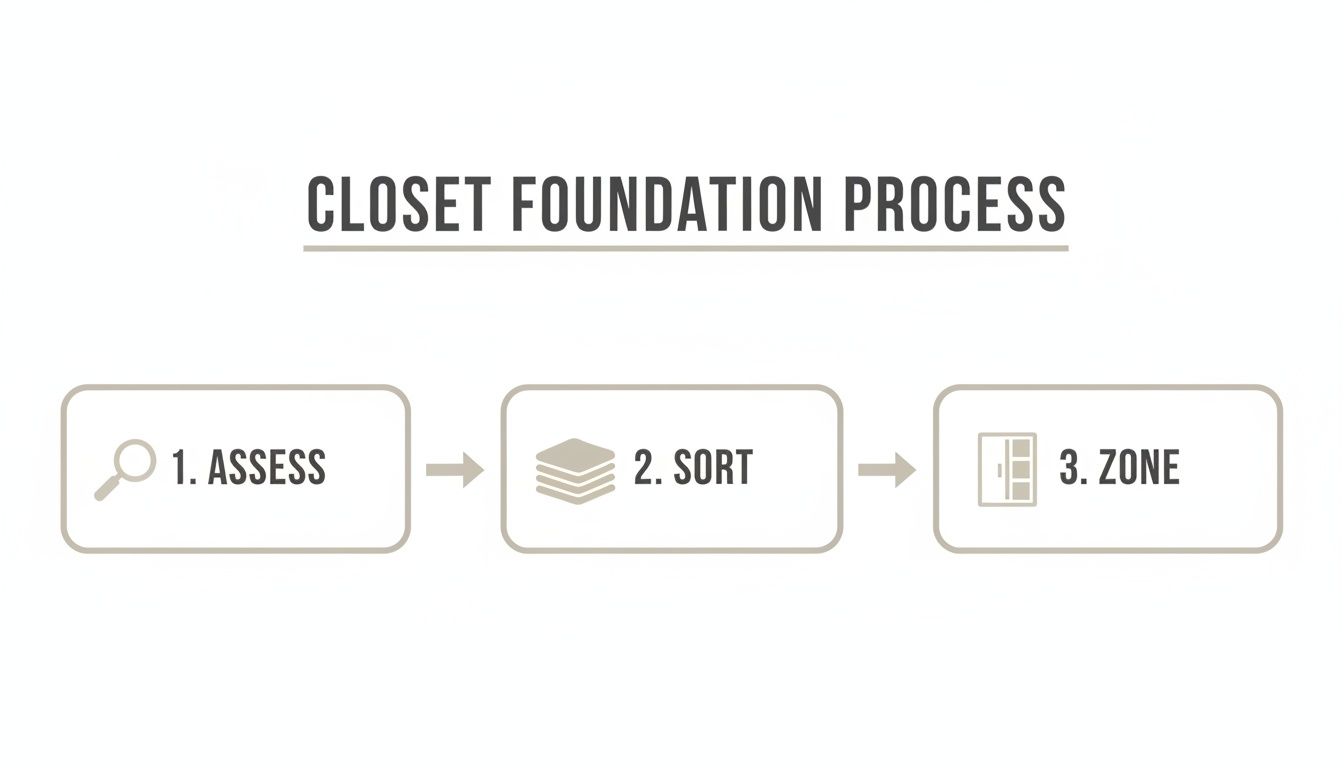
This process—Assess, Sort, Zone—is your groundwork. Nailing these steps first is what allows the closet organization tools we're about to discuss to work their wonders.
Instantly Double Your Hanging Space
Here's one of the quickest wins you can get. Most closets have a single high rod, leaving this giant, empty void underneath that just becomes a graveyard for shoes and tote bags.
An adjustable hanging rod that simply hooks onto your existing one will instantly create a two-tiered system. It’s perfect for separating your clothes. Think shirts, blouses, and blazers on top, with skirts and folded pants on the bottom rod. If you want something a bit more permanent, a sturdy tension rod works great, too. Just like that, you've doubled your closet's hanging capacity for shorter clothes.
The Power of the Right Hanger
Now, let's talk about the unsung heroes of a tidy closet: space-saving hangers. Those chunky plastic and wooden hangers you get from the dry cleaner? They're space killers. Swapping them for a slim, uniform set is a great start, but the real power lies in hangers built to go vertical.
The secret to a truly spacious closet isn’t just owning less; it’s making what you own take up way less room. This is where vertical hangers are non-negotiable.
There’s a reason these solutions are so popular. The global wardrobe market was valued at $69.96 billion in 2025 and is expected to hit $125.22 billion by 2034, largely because we all need smarter storage for smaller homes. Cascading hangers can boost hanging space by 50-80%, and a single tiered hanger stacking five or more garments can cut rod usage by a massive 80%.
Cascading Hangers in Action
I once worked with a client whose closet was so jammed she literally couldn’t see half of what she owned. The main culprit? A huge collection of pants and skirts devouring her entire hanging rod.
We brought in the MORALVE Space Saving Pant Hangers. These tiered hangers let you hang five pairs of pants in the same vertical space as just one traditional hanger.
Here’s the simple process we followed:
- Grouped the bottoms: We pulled out all her pants, jeans, and skirts.
- Moved to tiered hangers: Each hanger got five items, which we organized by type. One hanger held all her work trousers, another held her jeans, and so on.
- Freed up the closet rod: By condensing over 25 pairs of pants onto just five hangers, we reclaimed several feet of rod space. That new, open area became the perfect home for her dresses and blouses.
The change was incredible. Her closet went from a cramped, chaotic mess to a beautifully organized space where she could see everything at a glance. It made getting ready in the morning a breeze. This is a perfect example of how the right tool can completely transform your closet. For more on this, check out our guide on vertical storage solutions for small spaces. It's one of the most impactful changes you can make.
Master the Art of the Seasonal Swap
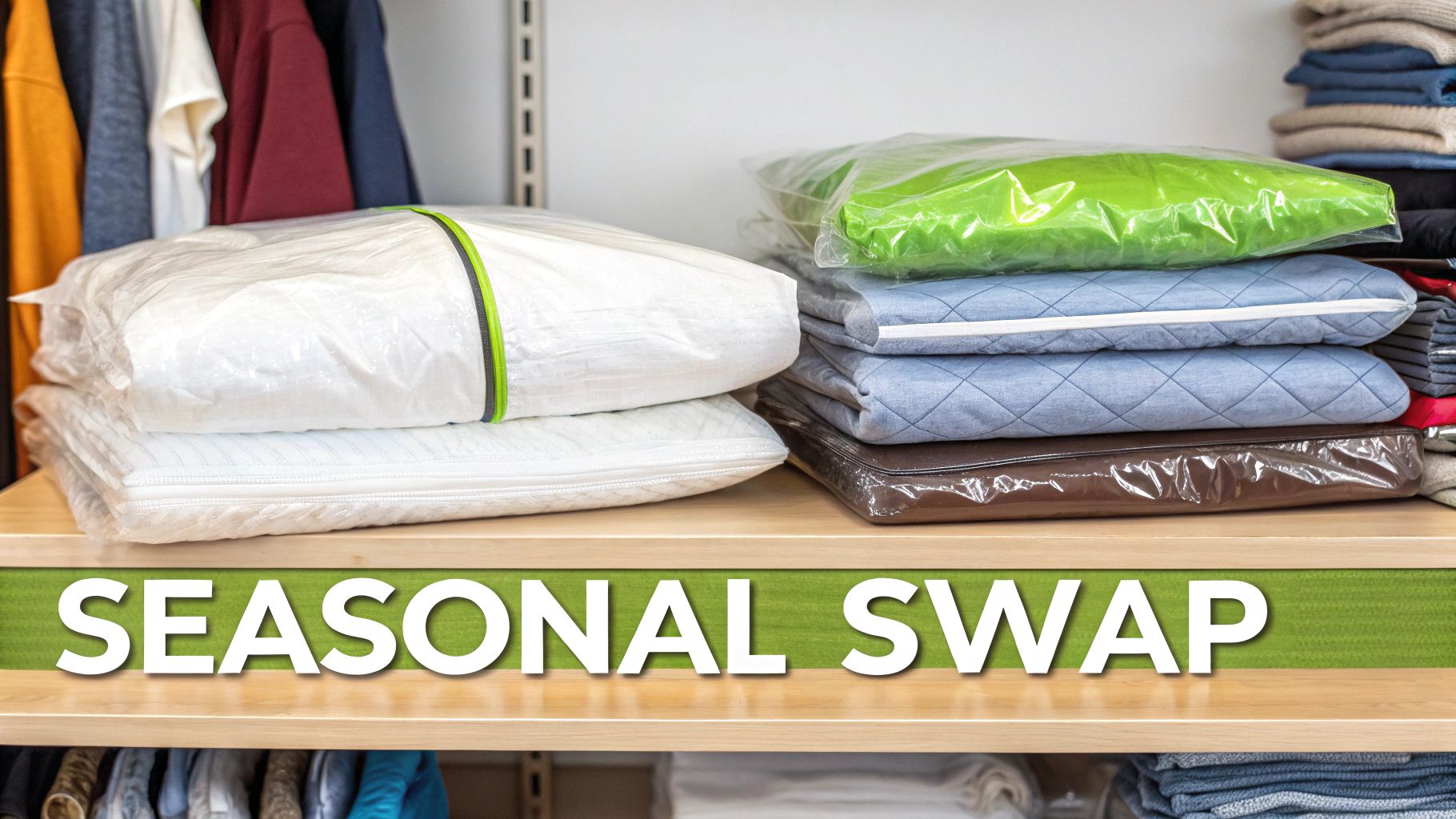
Think of your closet as prime real estate. Every inch should be working for you right now. Seeing a bulky winter coat hogging space next to a sundress in July just creates visual clutter and makes getting dressed a chore.
The best way to reclaim that closet space is with a seasonal swap. By rotating your wardrobe twice a year, you keep your closet relevant and surprisingly spacious. This isn't just about tidying up; it's a strategic move to protect your off-season clothes and make your daily routine a whole lot easier.
Get Your Gear Ready for Hibernation
Before you start packing things away, a little prep work is essential. The goal is to store everything in ready-to-wear condition, so you aren't met with unpleasant surprises six months from now.
First, clean everything. Seriously, this is non-negotiable. Even faint traces of body oils or a tiny food spill can attract pests and set into permanent stains over time. Give every single item a proper wash or dry-clean before it goes into hiding.
Next, play tailor for a minute. Scan for loose buttons, small tears, or finicky zippers. Fixing them now is a gift to your future self. There’s nothing worse than pulling out your favorite sweater on the first chilly day only to find it needs a repair.
Pick the Perfect Storage Solutions
How you store your clothes outside the closet is just as crucial as how you store them inside. The right container is your best defense against dust, moisture, and pests, keeping your garments in top shape.
-
Vacuum-Sealed Bags: A lifesaver for bulky puffers, ski gear, and chunky knits. They shrink everything down to a surprisingly small size, making them a game-changer for tiny apartments. Just be mindful with delicate natural fibers like cashmere, as long-term compression can sometimes crush their natural loft.
-
Breathable Garment Bags: For structured pieces like wool coats, blazers, or silk dresses, a fabric garment bag is the way to go. It keeps the dust off while allowing air to circulate, preventing that dreaded musty smell.
-
Under-Bed Bins: That space under your bed is gold. Low-profile bins, especially those with wheels, are perfect for folded clothes and shoes. I always opt for clear ones so I can see what’s inside at a glance.
Protecting your off-season wardrobe isn't just about storage—it's about preservation. The right container acts like a time capsule for your clothes, ensuring they emerge from storage in the exact same condition they went in.
By matching the storage type to the clothing, you're not just organizing; you're actively extending the life of your wardrobe. If you want to dive deeper, we cover even more tactics in our guide on how to properly store off-season clothes.
The Off-Season Hanger Hack
Even in storage, the wrong hanger can do some serious damage. Leaving sweaters on standard hangers for months will give you those permanent shoulder bumps, and folding tailored trousers can leave deep-set creases that are a pain to steam out.
A simple workaround is using hangers designed for the job. For pants, a multi-tier hanger like the MORALVE Space Saving Pant Hanger is brilliant. It lets you hang several pairs vertically, keeping them smooth and crease-free, which is worlds better than cramming them into a bin.
When it comes to sweaters, the best advice is to avoid hanging them at all. Fold them neatly and store them flat. If you absolutely have to hang a delicate knit, use the "fold-over" trick: fold the sweater in half vertically, place the hanger hook in the armpit area, and then drape the body and sleeves over the arms of the hanger. This technique distributes the weight so your favorite knits stay in perfect shape for their big return.
Organizing Folded Items and Accessories
A truly organized closet is more than just a tidy hanging rod. Let's be honest, the real battle is won or lost in the drawers and on the shelves. That's where folded clothes, accessories, and shoes tend to pile up into a chaotic mess. Conquering this final frontier is the secret to a space that's not just neat, but genuinely functional.
This is all about creating a logical home within your closet for every single item that doesn't belong on a hanger. From your favorite t-shirts and bulky sweaters to that ever-growing collection of scarves, a smart system is what separates a temporarily tidy closet from one that stays organized for good.
Revolutionize Your Closet Drawers and Shelves
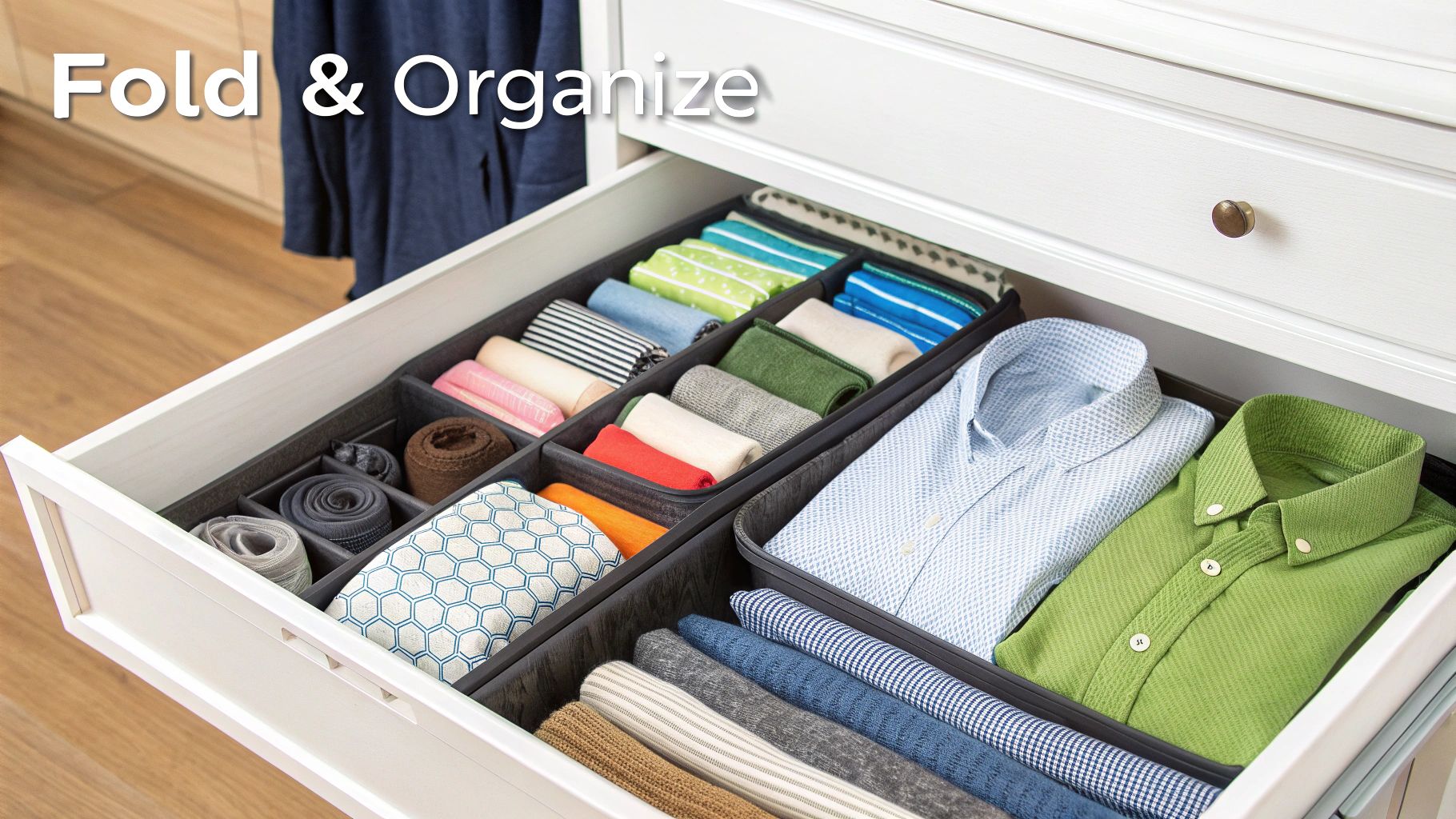
We’ve all been there—drawers and shelves so jumbled that finding anything feels like an archaeological dig. The key is to stop stacking and start structuring. You have to divide and conquer the space.
To get the most out of your folded items, it helps to understand the different features of bedroom furniture storage available. Knowing what’s out there helps you choose dressers and shelving that actually support your organization goals instead of working against them.
Adjustable drawer dividers are a game-changer. They let you create custom-sized compartments, turning one big chaotic drawer into a perfect grid for socks, underwear, and rolled t-shirts. For those deeper closet shelves, I swear by clear, stackable bins. They’re perfect for corralling things like scarves, hats, or clutches while keeping everything visible and dust-free.
Master the Art of the File Fold
How you fold your clothes makes a monumental difference. If you just stack them in traditional piles, you can only see the item on top, which is why you probably wear the same few things over and over. This is where file folding changes everything.
By folding shirts, sweaters, and pants into neat little rectangles that stand up on their own, you can line them up in a drawer like files in a filing cabinet. The payoff is huge:
- Total Visibility: You can see every single item at a glance. No more digging.
- Space Maximization: It compresses your clothes, letting you fit way more into a single drawer without creating a wrinkled mess.
This simple shift from stacking to filing can reclaim a surprising amount of space. Seriously. It also cuts down the time you spend rummaging for that one specific top. If you’re new to this, we’ve got a full guide on folding clothes to save space that breaks down all the best techniques.
The goal isn't just to make things fit; it's to make them accessible. An item you can't see is an item you won't wear. Visibility is the foundation of a functional wardrobe.
This approach ensures you’re using the full depth of your drawers and shelves, not just the front half.
Repurpose Hangers for Smart Accessory Storage
Think your hangers are just for shirts and pants? Think again. With a little creativity, they become amazing tools for organizing those tricky accessories that usually end up in a tangled heap. This is one of my all-time favorite closet organization hacks for keeping smaller items in check.
Take the MORALVE Tank Top Hanger, for instance. Its multiple hooks are incredibly versatile. I use one to hang my entire collection of ties—they stay smooth and are super easy to browse. You can do the same thing with belts; just loop the buckles over the hooks for a clean, simple display.
This trick also works wonders for necklaces, saving them from becoming a knotted nightmare in a jewelry box. By hanging them, you can see all your options at once. This strategy gets accessories off your dresser and integrates them right into your closet, giving every last piece a proper home.
How a Well-Organized Closet Saves You Money and Helps the Planet
Let's be real—organizing your closet isn't just about making things look tidy. It's a surprisingly powerful way to live a more sustainable, conscious lifestyle. When you stop thinking of it as a chore and start seeing it as a strategy, you'll notice real benefits for your bank account and the planet.
Once you have a system where you can actually see everything you own, your whole mindset shifts. You become a more mindful shopper. Those panicked "I have nothing to wear" moments that lead to impulse buys? They start to disappear because you can finally appreciate the clothes you already have.
Make Your Wardrobe Last Longer
The most immediate win from a well-organized closet is how it protects your clothes. Think of it as preventative care. When garments are jammed into a closet, they get creased, misshapen, and damaged. A little space and the right tools go a long way.
Here are a few simple changes that make a huge difference:
- Use Good Hangers: Swapping out those flimsy wire hangers is a game-changer. Sturdy wooden or velvet hangers properly support the shoulders of a jacket, while a cheap hanger can leave permanent dents.
- Stop Overcrowding: When clothes have room to breathe on the rod, they don't rub against each other. This simple step prevents the friction that causes pilling and premature wear on your favorite pieces.
- Fold Your Sweaters: Heavy knits belong on a shelf, not a hanger. Hanging them causes them to stretch out under their own weight, and they’ll never look the same again.
These small habits really do add up. You'll extend the life of your clothes, which means you're protecting the money you spent on them in the first place.
Cut Down on Waste and Shrink Your Carbon Footprint
It might not seem obvious, but there's a direct line between an organized closet and a healthier planet. The fashion industry is notorious for waste, but one of the most effective things we can do is simply take better care of the clothes we already own.
An organized closet is a rebellion against fast fashion. When you can see what you have, you buy less, waste less, and dramatically reduce your environmental impact.
This isn't just a nice thought—the numbers prove it. If you can make your clothes last just nine more months, you can cut their carbon, waste, and water footprints by a staggering 20-30%. Considering that 40% of people own over 100 items but only wear about 20% of them, just being able to find everything is a massive win. You can dig into more statistics on clothing consumption and waste to see the bigger picture.
Join the Circular Economy
A well-maintained wardrobe is your ticket into the circular economy. When you can easily see what’s not getting any love in your closet, you're far more likely to sell or donate it, giving those clothes a second chance instead of a one-way trip to the landfill.
An organized system makes it all so much easier:
- Quickly Spot Gems: You can easily pick out high-quality items you haven’t worn in a while—perfect for listing on a resale site.
- Keep Clothes in Great Shape: Garments that have been stored correctly are in much better condition, which makes them way more appealing to a new owner.
- Make it a Habit: Keep a designated bin in your closet for "sell/donate" items. Tossing things in as you go makes the whole process feel effortless.
The secondhand clothing market is absolutely booming, expected to reach $82 billion by 2026 and growing 16 times faster than the regular retail industry. Your closet isn't just for you; it's an asset. By taking care of your clothes, you preserve their value for yourself and for whoever gets to enjoy them next.
Common Questions About Closet Organization
Even with the best game plan, kicking off a closet organization project can feel a little daunting. A few questions always seem to pop up. Nailing down the answers can be the difference between a quick fix and a system that actually sticks. Let's dig into what people ask most often.
What Is the Single Most Effective Hack for a Tiny Closet?
If I had to pick just one thing, it's this: go vertical. Hands down, the biggest impact comes from using cascading, space-saving hangers to maximize the vertical real estate in your closet. Think about it—that standard closet rod almost always has a huge, empty pocket of air sitting right underneath your clothes.
By using hangers that let you stack garments one below the other, you can instantly fit five or more items in the space a single traditional hanger takes up.
This one simple switch frees up so much horizontal rod space, which you can then dedicate to your bulkier pieces like winter coats, blazers, or long dresses. It’s the fastest way to multiply your storage capacity without calling a contractor, making it the perfect first move for any small closet makeover.
The goal isn't just cramming more stuff in; it's creating a system where you can actually see and get to everything. Going vertical is the quickest way to win on both fronts.
How Do I Keep My Closet Organized Long Term?
The secret is maintenance. An Instagram-worthy closet can descend into chaos in a matter of weeks without a few solid habits. It’s all about consistency, not perfection.
First, get serious about the 'one-in, one-out' rule. Every time a new shirt or pair of pants comes into your home, an old one has to leave. Whether you donate, sell, or toss it, this habit stops the slow creep of clutter that caused the problem in the first place.
Next, schedule a quick weekly reset. It doesn't have to be a huge production. Just set aside 10-15 minutes every Sunday for a quick closet blitz.
- Finally hang up the clothes that have been living on "the chair."
- Straighten out any jumbled piles in your drawers.
- Put your shoes and accessories back where they belong.
This small, consistent effort is what keeps the whole system from falling apart, saving you from another massive overhaul six months from now.
Are Expensive Closet Organization Products Really Necessary?
Absolutely not. But—investing in a few high-quality, well-designed tools can make a world of difference. You can definitely get by with DIY solutions like old shoeboxes, but a durable set of space-saving hangers is a surprisingly affordable purchase that pays off immediately. Good tools don't just save space; they also protect your clothes from things like stretched-out necklines or those dreaded shoulder bumps.
My advice is to focus your budget on the items that solve your biggest headache. If your hanging rod is a jam-packed mess, tiered hangers are a smart buy. If your sock drawer is a black hole, a good set of dividers will give you more bang for your buck than a fancy bin. It’s not about the price tag; it's about finding the right tool for the job. You don’t need everything, just the right things.
Ready to conquer closet clutter for good? The right tools make all the difference. Explore the full range of smart, space-saving solutions from MORALVE and discover how easy it is to create a closet you love. Start your organization journey at https://moralve.com.
Leave a comment