

How to Store Off Season Clothes for Ultimate Closet Organization

Switching your wardrobe from one season to the next feels like a chore, but I like to think of it as a chance to hit the reset button on your closet. When you take the time to properly store your off-season clothes, you’re not just making space—you're protecting your favorite pieces and creating a closet that actually works for you. This guide is about more than just shoving sweaters in a box; it's about smart closet organization that prevents moth damage, mildew, and that overwhelming feeling of clutter.
Why Seasonal Closet Organization Matters
Think of a seasonal wardrobe swap as the key to a more organized life. Intentionally storing clothes you won't be wearing for months isn't just about clearing out room; it’s about curating a functional, organized closet that makes getting dressed every day easier. It’s pretty staggering when you think about it—the average American household has around 300,000 items, and a huge chunk of that is often clothing just sitting there, taking up valuable real estate in our closets.
This whole process is about creating breathing room. Imagine opening your closet and seeing only clothes you can actually wear right now, instead of digging through a chaotic mix of bulky winter coats and breezy summer sundresses. This is the foundation of good closet organization: reducing visual clutter, cutting down on the "what do I wear?" stress, and making your mornings run a lot smoother.
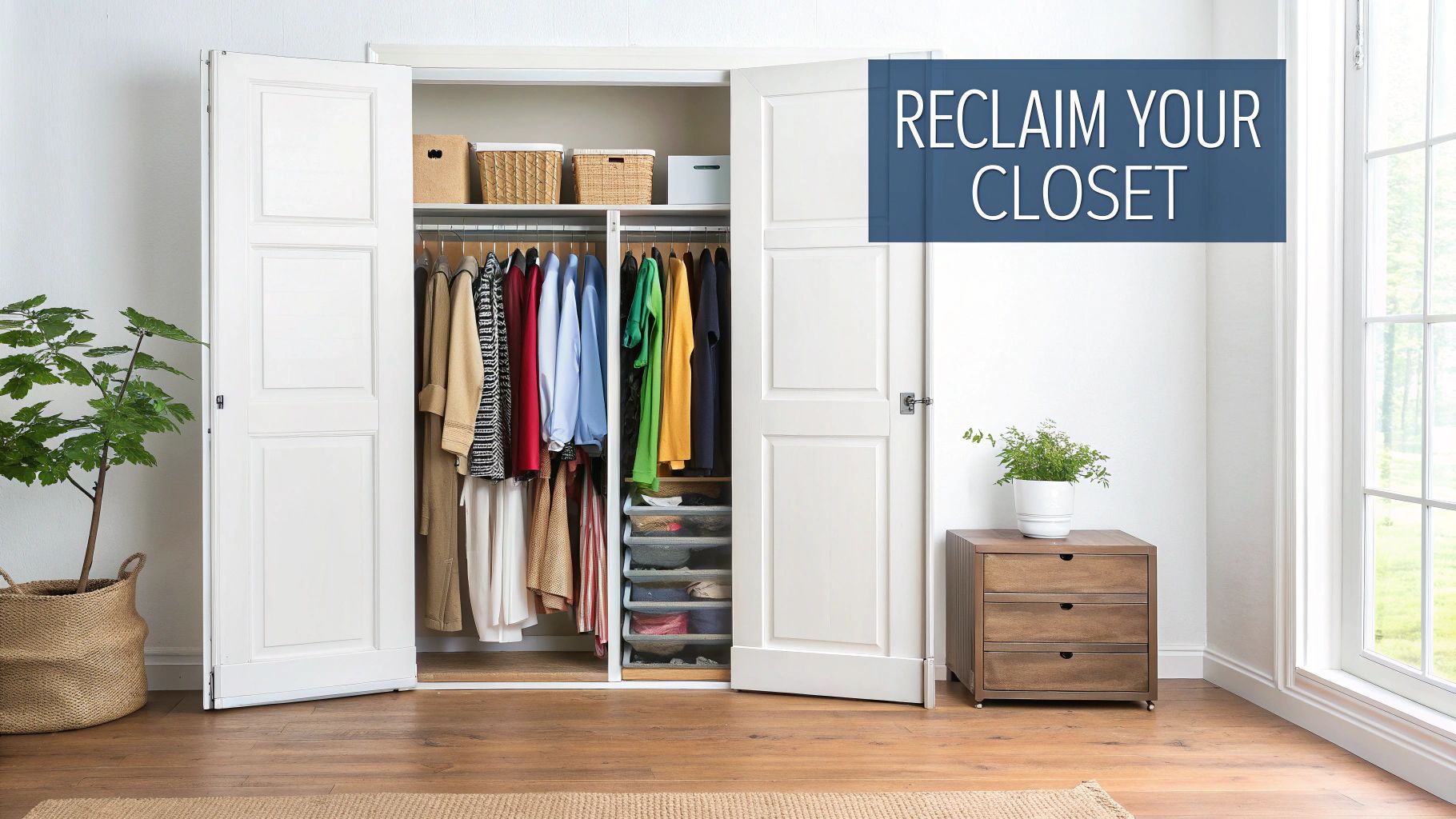
The Benefits of a Wardrobe Reset
Putting in the effort to organize your closet with the seasons really pays off. It's a small investment of your time that ensures your clothes stay in great shape and your personal space feels calm and under control.
- Preserves Garment Quality: When you store clothes the right way, you’re protecting them from pests, moisture, and stretched-out shoulders. This means your favorite pieces will last so much longer.
- Maximizes Closet Space: Getting things you won't wear for months out of the way creates more space for your current rotation. This strategic closet organization lets you finally see everything you have without rummaging.
- Reduces Daily Clutter: An organized closet means less stress. No more frantic searching for that one specific shirt—you'll know exactly where everything is.
- Encourages Mindful Consumption: Going through your entire wardrobe is a key closet organization task. It's the best way to see what you actually wear, helping curb impulse buys and shifting your focus to a more sustainable closet.
At the end of the day, this isn't just another cleaning project; it’s about taking back control of your space.
By dedicating a few hours to a seasonal swap, you are giving a gift to your future self—the gift of a functional, beautiful, and stress-free closet.
This guide will walk you through a proven method to turn this dreaded task into something genuinely rewarding. I’ll show you exactly how to prep, pack, and store everything, setting you up for a perfectly organized closet all year long. Let's say goodbye to wrinkled clothes and chaotic mornings for good.
The Pre-Storage Edit and Garment Prep
Before you even think about packing a single sweater into a bin, you’ve got to get your clothes ready. This decluttering phase is the first and most crucial step in any successful closet organization project. Putting in a little effort now is the secret to making sure your favorite pieces come out looking perfect months from now.
Start by getting real with your wardrobe. Pull out everything from the season that’s ending so you can get a clear picture of what you actually own. I find it’s easiest to sort it all into three piles.
- Keep: These are your non-negotiables—the items you loved, wore constantly, and can't wait to wear again.
- Donate or Sell: This is for the stuff that's still in great shape but just isn't you anymore. Maybe it doesn't fit right, or maybe it just sat there all season, unworn.
- Discard: This pile is for anything that's seen better days—think permanent stains, rips, or just being completely worn out.
You have to be a little ruthless here. If you found yourself skipping over an item all season long, what are the chances you’ll suddenly fall in love with it next year? Letting go is the first real win in mastering how to store off season clothes as part of a larger closet organization strategy.
The Most Important Step: A Thorough Cleaning
Okay, once you've decided what's staying, this next part is absolutely non-negotiable: every single piece needs to be cleaned. It doesn't matter if you only wore that shirt for an hour; it can still have invisible body oils, perfume, or tiny food specks on it. Over time, those residues are a magnet for pests like moths and can slowly turn into stubborn, yellowed stains.
Tossing dirty clothes into storage is one of the most common—and damaging—mistakes people make. Moths are especially drawn to natural fibers like wool and cashmere, and they love it when those fibers have traces of human scent. Washing or dry-cleaning everything first is your best line of defense. For a deeper look at getting your garments ready, our guide on how to store clothes long term has some extra pointers.
"A huge bummer when you’re unpacking and you're like, 'Oh, wait, I just chucked all this stuff in here and it smells and looks gross.'" - Jolie Kerr, Cleaning Expert
A Quick Fabric Cleaning Guide Before Seasonal Storage
Different fabrics need different kinds of TLC to make it through storage unscathed. I always say to check the care label first, but that's not always possible. To help you out, I’ve put together this quick reference table to ensure your clothes are cleaned correctly before they’re packed away. This simple step is your best defense against damage, discoloration, and pests.
| Fabric Type | Recommended Cleaning Method | Key Considerations |
|---|---|---|
| Wool & Cashmere | Hand-wash with a gentle wool-specific detergent or dry-clean. | Always lay flat to dry to prevent stretching. High heat can cause shrinkage and damage the delicate fibers. |
| Cotton & Linen | Machine-wash according to the label's temperature settings. | Ensure items are 100% dry before storing, as even a hint of dampness can lead to mildew and musty odors. |
| Silk | Hand-wash in cool water with a mild detergent or opt for professional dry-cleaning. | Avoid wringing out the fabric; instead, gently roll it in a towel to absorb excess water before air-drying away from direct sunlight. |
| Synthetics (Polyester, Nylon) | Machine-washable and generally durable. | These fabrics are less prone to pest damage but should still be thoroughly cleaned to remove any body oils or stains. |
By taking the time to handle these prep steps, you’re setting yourself up for success. When you pull everything out again next season, your clothes will be fresh, clean, and ready to wear right away—no nasty surprises.
Choosing the Right Storage Containers and Location
Alright, you've sorted and cleaned your clothes—now comes the pivotal moment: deciding where and how to tuck them away. Get this part right, and you'll be greeted by fresh, ready-to-wear pieces next season. Your choice here is a cornerstone of good closet organization, ensuring you protect your favorite items for the long haul.
The type of container you need really boils down to the fabric. Natural fibers like wool, cashmere, and silk absolutely have to breathe. If you seal them up tight, moisture can get trapped, leading to mildew. For these delicate pieces, breathable fabric bags or canvas bins are your best friends. They let air circulate while keeping dust and pests out.
Picking the Perfect Container
On the other hand, durable synthetic fabrics like polyester or nylon are much more forgiving and can be stored in airtight containers. I’m a big fan of clear plastic bins with secure latching lids for these items. You can see exactly what’s inside without having to open a thing, and they stack beautifully, which is perfect for maximizing space under a bed or on a high closet shelf.
Then you have vacuum-sealed bags. These things are miracle workers for bulky items like puffy winter coats and comforters, shrinking their volume by up to 75%. A word of caution, though: be careful using them with natural fibers. The intense compression can crush the fibers, leading to permanent creases you’ll never get out.
This little infographic is a great visual checklist to run through before you start packing things away.
It’s a simple reminder to be selective, ensuring only the clothes you actually plan to wear again make it into storage.
Finding the Ideal Storage Spot
Where you store your clothes is just as crucial as what you store them in. The golden rule for any closet organization plan is simple: find a spot that’s cool, dark, and dry. Big swings in temperature and any hint of humidity are the ultimate enemies of stored clothing.
Steer clear of attics, garages, and basements if you can. These spots are notorious for extreme temperature changes and dampness, which is basically an open invitation for mold, mildew, and pests.
A spare room closet, the space under your bed, or even a dedicated storage cabinet in a hallway are far superior options. These areas usually have a much more stable climate, which is exactly what your clothes need to stay safe. If you’re dealing with a lot of items, like winter coats, mastering the storage of inventory at home offers some fantastic, in-depth advice.
This push for smarter home storage isn't just a niche trend. The custom closets market is booming, expected to grow from USD 29,319.2 million in 2023 to USD 55,153.29 million by 2032. As more of us live in smaller spaces, we're all looking for intelligent ways to keep our homes organized. If you're looking for more ideas, we've put together a detailed breakdown of the best clothing storage solutions.
Mastering Smart Packing Techniques
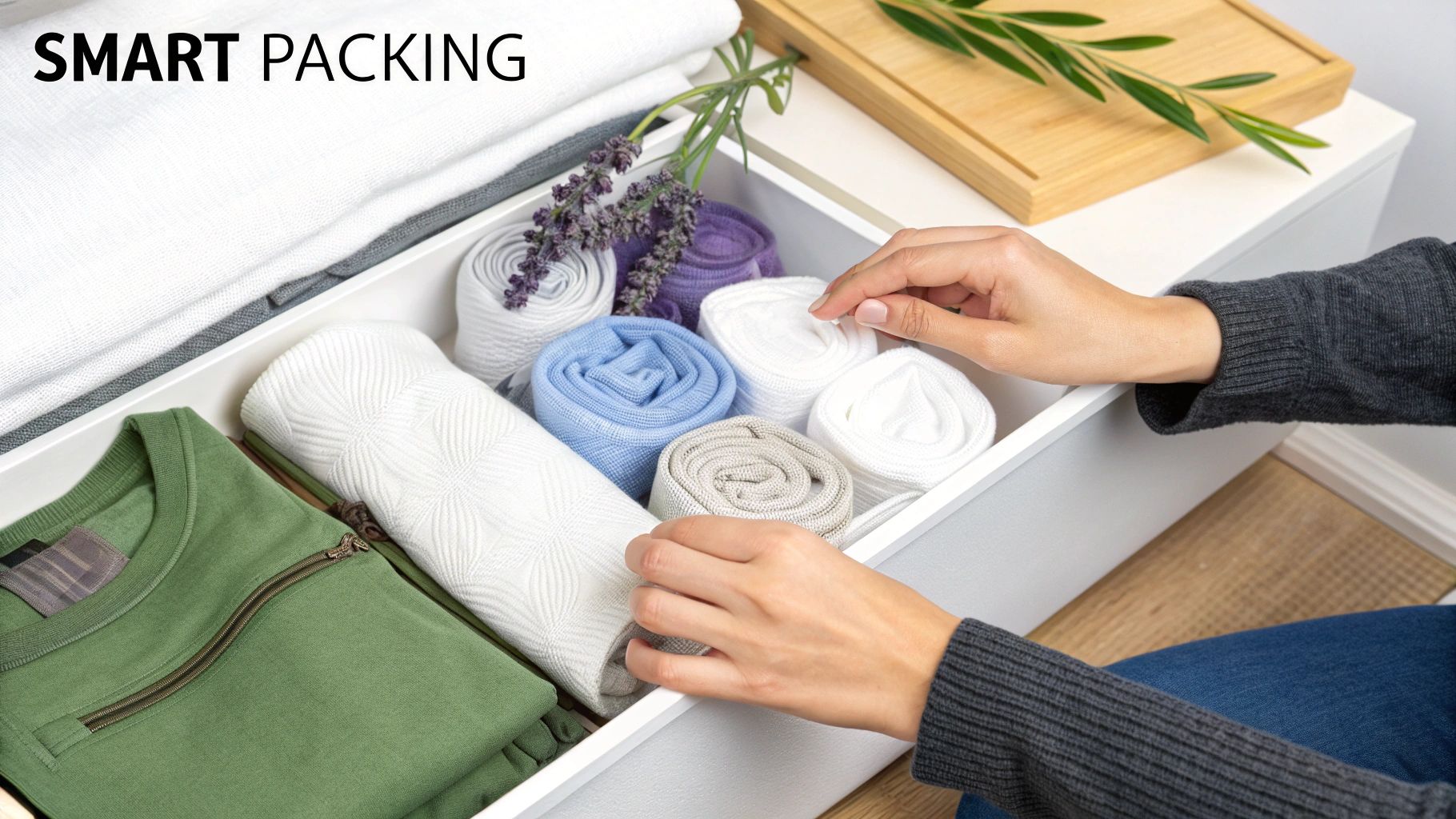
How you pack your clothes is just as important as where you stash them for the season. We’ve all been there: you toss everything into a bin, and when you open it months later, you’re greeted with a wrinkled, misshapen mess. Smart packing is your best defense against that frustration. It's all about preserving the shape, fabric, and freshness of your clothes so they’re ready to wear the moment you pull them out.
Think of it as putting your wardrobe into a comfortable hibernation. A bulky sweater needs a different approach than a silk blouse, so learning a few key methods will protect your investment and save you a ton of time on steaming and damage control down the road.
This focus on better organization is a huge trend. The global wardrobe market was valued at USD 66.31 billion in 2024 and is expected to climb to USD 108.00 billion by 2032. It just goes to show how much people are prioritizing well-organized, functional spaces. If you're curious, you can dig deeper into this wardrobe market analysis.
The Art of the Fold
The goal here is simple: minimize hard creases and maximize your storage space. This is a core skill for effective closet organization, whether for long-term storage or daily use.
-
Rolling for Casual Wear: When it comes to durable stuff like t-shirts, jeans, and cotton shorts, rolling is your best friend. It saves a surprising amount of space and helps you avoid those deep-set wrinkles that a standard fold can leave behind. Just lay the item flat, fold in the sides, and roll it up tightly from the bottom.
-
Flat-Folding for Delicates: For your chunky knits and delicate sweaters, always fold them flat. Hanging them for long periods can cause stretching and those dreaded shoulder bumps. For an extra layer of protection, slip a piece of acid-free tissue paper inside the fold—it acts as a cushion to prevent sharp creases.
Want to see more? Our guide on folding clothes to save space breaks down even more techniques.
Natural Pest Prevention Strategies
Nothing’s worse than unpacking your favorite sweater only to discover a tiny, moth-eaten hole. While mothballs get the job done, that chemical smell is overpowering and can cling to fabrics forever. Luckily, there are natural alternatives that work just as well without the toxic fumes.
Cedar is a classic for a reason. Its natural oils are fantastic at repelling moths and other pests, plus it leaves your clothes with a subtle, fresh scent. You can find it in all forms—blocks, balls, and even hangers.
Place a few cedar blocks or sachets in each storage bin. The trick is to refresh them every year. Just give the wood a light sanding or squeeze the sachets to release more of their essential oils.
Lavender is another great option. Not only do dried lavender sachets keep moths away, but they also give your clothes a lovely, clean fragrance. It’s a simple touch that ensures your garments smell fresh—not musty—when you finally pull them out of storage. A little bit of smart packing goes a long way in making sure your off-season clothes are preserved, protected, and ready for their next debut.
Labeling Your Storage and Organizing Your Active Closet
You've made it through the sorting, cleaning, and packing. Don't skip this last part, because it’s the step that makes all that effort worthwhile: creating a smart system for labeling and organizing. This is what separates a pile of forgotten clothes from a truly functional storage solution that enhances your closet organization.
Proper labeling is your secret weapon against the frantic "where did I put that?" search when the weather suddenly turns. No more tearing open every single bin just to find one sweater. A quick glance should tell you exactly what’s inside. Trust me, it’s a simple habit that pays off big time.
Create a Simple and Effective Labeling System
Your labeling system doesn’t need to be complicated, but it absolutely needs to be consistent. A basic adhesive label on each bin with a broad category like "Winter Sweaters & Scarves" is a solid start. If you want to get more granular, you can easily create a quick inventory list.
Here are a few approaches I’ve seen work well:
- Broad Categories: Just grab a thick marker and write the general contents on a label. Think "Summer Dresses & Skirts" or "Beach Gear." Simple and fast.
- Detailed Inventory: For those who love details, type up a list of every single item inside, print it, and tape it to the side of the bin. This is a lifesaver when you need a specific piece.
- QR Code System: Feeling a bit more high-tech? Use a free app to generate a QR code that links to a digital list of the bin's contents. Stick the code on the box, and a quick scan with your phone tells you everything.
For a really permanent solution, especially for kids' clothing or items you might lend to a friend, durable iron-on labels are a great option to apply before you pack things away.
Organize Your Now-Spacious Active Closet
With all your off-season stuff neatly tucked away, your closet finally has room to breathe. This is the perfect opportunity to implement a closet organization system that makes getting dressed easier and more enjoyable. The goal is simple: see everything you own at a glance.
Start by grouping like with like—all your shirts together, all your pants in another section. If you want to take it a step further, arrange each category by color. It creates a beautiful rainbow effect and, more importantly, makes finding that specific blue blouse a two-second job.
It’s not just you—everyone is craving better organization. The global closet organizers market is expected to hit USD 8,529.7 million by 2035, a clear sign that people are serious about finding smart, space-efficient solutions for their homes. A well-ordered closet is no longer a luxury; it's a modern necessity.
An organized closet isn’t just about looking good; it's about efficiency. When you can see what you own, you’re more likely to wear it. That means less wardrobe waste and a better return on your clothing investments.
This is where space-saving hangers can be a game-changer. Using something like MORALVE's multi-garment hangers can instantly multiply your hanging space. One hanger can hold five pairs of pants or several shirts, freeing up a massive amount of rod space. It’s often the single most impactful change you can make to declutter a cramped closet.
Answering Your Top Questions About Storing Seasonal Clothes
Even with the best plan, you're bound to have a few questions when you're figuring out how to store off season clothes. Let's walk through some of the most common head-scratchers I hear, so you can tackle any storage challenge with confidence. Nailing these little details is what really separates a decent seasonal swap from a great one.
A classic debate always comes up: should you hang or fold your sweaters? When it comes to those chunky, heavy knits, the answer is always fold.
Leaving a heavy sweater on a hanger for months puts a ton of stress on the shoulder seams, which inevitably leads to permanent stretching and those annoying hanger bumps. Folding them neatly is the only way to preserve their shape.
Troubleshooting Tricky Storage Spots
What if your only storage option is a less-than-ideal spot, like a basement or attic? If you're dealing with a space that isn't climate-controlled, your choice of container is everything.
In this scenario, you absolutely want to use airtight plastic bins withしっかり latches. These create a crucial barrier against humidity fluctuations and extreme temperatures, protecting your clothes from the elements.
As an extra layer of defense, toss in a few descant packs (like silica gel) to absorb any moisture that might sneak in. This simple step is a game-changer for preventing that musty smell and potential mildew growth.
Finding Pest Repellents That Actually Work (and Don't Stink)
Most of us cringe at the thought of traditional mothballs. That chemical smell is so strong and seems to linger in fabrics forever. The good news is, there are natural alternatives that work just as well without the headache.
I always recommend using cedar blocks or dried lavender sachets. They're fantastic for repelling moths and other pests, and they leave a subtle, pleasant scent behind.
Expert Tip: The secret to making natural repellents last is a little upkeep. Before you pack your clothes away, give your cedar blocks a quick sanding or gently squeeze the lavender sachets. This releases their natural oils and refreshes their pest-deterring power for the season ahead.
Another question I get all the time is about vacuum-sealed bags. They seem like a miracle for saving space, and they are—for certain items. They’re perfect for compressing bulky synthetic things like puffer coats and ski jackets.
However, you should avoid them for natural fibers. The intense compression can crush delicate wool and cashmere, leaving permanent wrinkles and stripping them of their fluffy, soft texture. Use them, but be smart about it.
By thinking through these common issues beforehand, you can protect every single item in your wardrobe like a pro.
Now that your off-season clothes are safely stored away, it's time to optimize your current closet. For brilliant ways to create more room, check out the collection of space-saving hangers from MORALVE. You can find the perfect solution at https://moralve.com.
Leave a comment