

How to Store Clothes Long Term by Mastering Closet Organization

The secret to successful long-term clothing storage doesn’t start with a box or a bin—it starts in your closet. Before you pack anything away, transforming your closet from a chaotic space into an organized hub is the most critical step. Proper organization not only preserves your clothes day-to-day but also makes seasonal storage a simple, streamlined process.
The Foundation: Why Closet Organization Comes First
Think of this initial phase as decluttering with a purpose. A well-organized closet is the foundation for everything that follows. It ensures that when you decide to store clothes for the long term, you're only preserving items you truly value, and they’re already in the best possible condition.
The first step is a thorough closet purge. This isn't just about freeing up space; it's about making intentional choices that will save you time, effort, and storage space later. Go through your wardrobe piece by piece.
Declutter Your Closet, Simplify Your Storage
Storing clothes you no longer love or that don't fit is a waste of valuable space and energy. A cluttered closet makes it impossible to see what you have, leading you to store duplicates or worn-out items. By decluttering first, you create an inventory of what's truly worth preserving.
An organized closet gives you a clear view of your wardrobe, streamlining the entire long-term storage process. When it’s time to pack for the off-season, you’ll be working with a curated collection, not a chaotic mess.
The Non-Negotiable Prep Work
Once your closet contains only the clothes you want to keep, the next step is ensuring everything is perfectly clean. Storing clothes that are even slightly dirty is an open invitation for pests and permanent stains.
Invisible body oils, microscopic food particles, or faint perspiration stains are a major threat. Over time, these residues can oxidize into stubborn yellow or brown spots. They also serve as a food source for pests like moths and silverfish, which can destroy your favorite fabrics.
A common mistake is assuming that if a garment looks clean, it's ready for storage. Unseen residues are a ticking time bomb for stains and a buffet for fabric-eating pests.
Every item must be washed or dry-cleaned and, crucially, completely dry. Even a trace of dampness trapped inside a storage container can lead to mildew, creating a musty odor that's nearly impossible to remove and can ruin fabric permanently. You can find excellent tips on how to keep clothes fresh in storage to avoid these common pitfalls.
Final Touches Before Packing
Before an item goes into long-term storage, handle any minor repairs. A loose button, a small tear, or a fraying hem can worsen under the pressure of being packed. A few minutes spent on a quick fix now will prevent a major repair job later.
This methodical approach to closet care is part of a larger trend toward mindful home organization. The market for closet and wardrobe organizers is projected to soar from $4.03 billion in 2025 to $8.53 billion by 2035. This growth reflects a real need for smarter storage solutions. Disorganization is a major problem, causing 75% of consumers to discard clothes prematurely. Furthermore, improper storage can accelerate fabric decay by 35% in a single year. This data, highlighted in an in-depth analysis of wardrobe organization statistics, proves that good closet habits are key to preservation.
Choosing the Right Storage Containers and Location
After organizing your closet and prepping your garments, selecting the right storage is the final, crucial step. The container and location are what protect your clothes from their biggest enemies: moisture, pests, and extreme temperatures. Think of it as creating a safe, stable home for your off-season wardrobe.
Your container is the first line of defense. It's tempting to use old cardboard boxes, but this is a costly mistake. Cardboard attracts pests, absorbs moisture, and its acidic content can cause fabrics to yellow and decay over time.
What to Look for in a Good Container
The best container depends on the fabric and your storage environment. It's a balance between protection, breathability, and practicality.
- Clear Plastic Bins: Ideal for everyday fabrics like cotton, denim, and synthetics. They effectively seal out dust and pests, and their transparency is a huge time-saver for organization. Ensure the lid isn't completely airtight, as a small amount of air circulation helps prevent moisture buildup.
- Breathable Cotton Garment Bags: A must-have for structured items like wool coats, suits, or delicate silk dresses. Avoid the plastic bags from the dry cleaner at all costs; they trap moisture and chemicals. Cotton bags allow fabric to breathe, preventing mildew and yellowing while protecting from dust.
- Acid-Free Archival Boxes: The top-tier choice for irreplaceable items like a wedding gown or family heirlooms. These boxes, often lined with acid-free tissue, are specifically designed to prevent discoloration and fabric deterioration, preserving items for generations.
This initial prep work is the foundation for everything that follows. It's a simple process, but getting it right is everything.
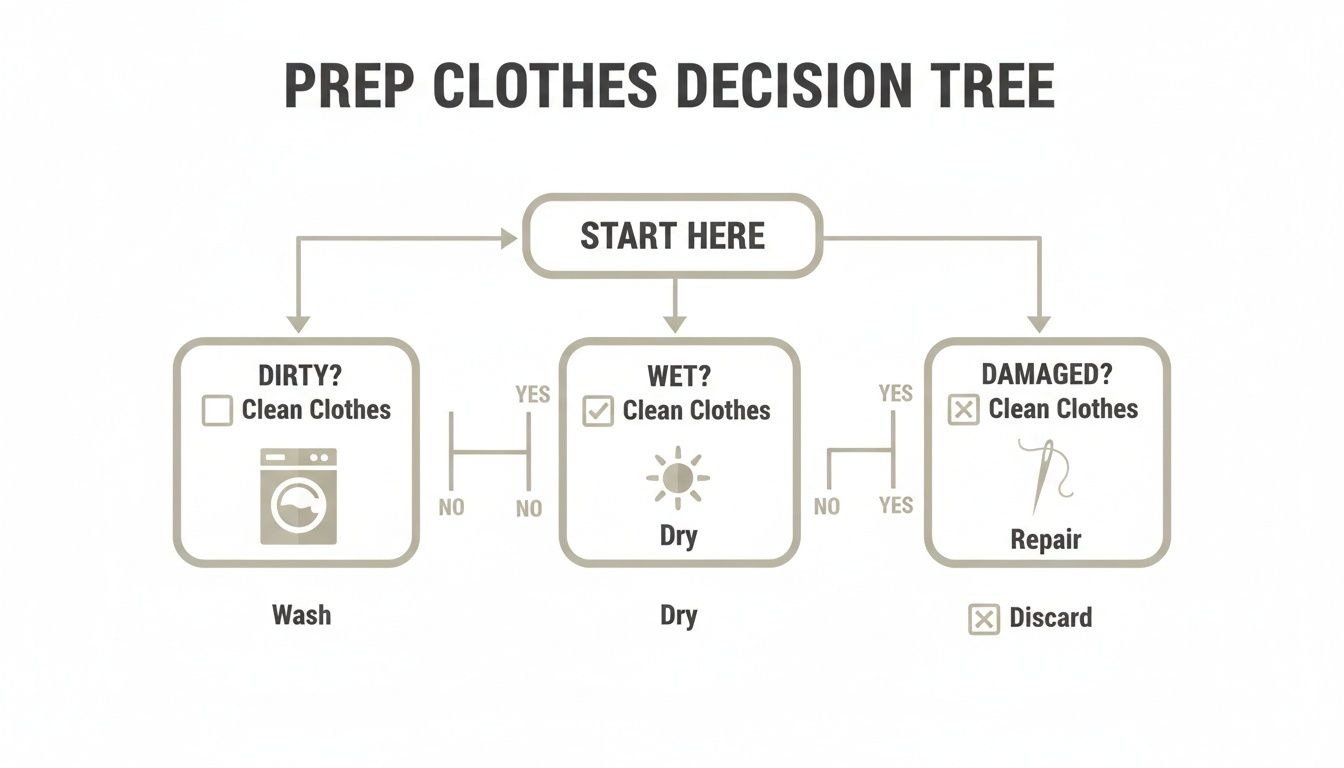
This decision tree nails the three most important checks: is it clean, is it dry, and is it in good repair? Only then is it ready for storage.
Storage Container Comparison for Long Term Use
To make the choice easier, here's a quick breakdown of the most common storage options. Each has its place, but knowing the pros and cons is key to protecting your clothes properly.
| Container Type | Best For | Pros | Cons |
|---|---|---|---|
| Plastic Bins | Cotton, denim, synthetics, folded sweaters | Protects from pests, water, and dust; stackable; clear sides for easy viewing. | Can trap moisture if airtight; potential for plastic odor; not breathable for delicate fibers. |
| Cotton Garment Bags | Suits, coats, wool, silk, delicate dresses | Breathable, prevents yellowing, protects from dust. | Offers minimal protection from moisture or crushing; pests can potentially chew through. |
| Acid-Free Boxes | Wedding dresses, heirlooms, delicate vintage items | Prevents acid damage and yellowing; provides a stable, chemical-free environment. | More expensive; opaque, so you can't see contents; offers less protection from water damage. |
| Cardboard Boxes | NOT RECOMMENDED (short-term moving only) | Cheap and widely available. | Acidic, attracts pests, absorbs moisture, not durable. A poor choice for long-term storage. |
Often, the best strategy is a mix of these options, tailored to the needs of your wardrobe.
What to Avoid at All Costs
Stay away from vacuum-sealed bags for long-term storage. While they are great space-savers for short periods, the intense compression can crush natural fibers like wool and cashmere, leaving permanent wrinkles and ruining their texture.
Finding the Ideal Storage Location
Once packed, the location is paramount. Remember the mantra: cool, dark, and dry. Extreme temperature and humidity fluctuations are the primary causes of fabric degradation.
This means avoiding high-risk areas like attics, basements, and garages. The ideal spot is likely already in your home—an interior closet, under a bed, or a high shelf. These locations typically have stable temperatures and are protected from damaging sunlight.
Your guest room closet or the space under your bed are far better choices for long-term storage than an attic or garage. Consistent temperature and humidity are key.
If home space is limited, a climate-controlled self-storage unit is an excellent alternative. These facilities maintain consistent conditions year-round. For more details, a practical guide to using a storage unit for clothes provides valuable insights.
How to Organize Your Closet for Active Storage
Your closet is your active storage hub—the place where the clothes you wear regularly live. An organized closet is the best defense for making clothes last. It’s not just about looking neat; it’s a critical part of long-term clothing care that simplifies seasonal swaps and daily routines.
A major benefit of an organized closet is improved airflow. Crammed clothes can't breathe, which leads to musty smells and potential mildew. Giving each garment space is essential for letting moisture and odors dissipate.
Maximize Space with Strategic Hangers
The right hangers are the unsung heroes of closet organization. They preserve garment shape, prevent stretching, and can dramatically increase your usable space. Ditch the flimsy wire hangers immediately.
- Velvet or Non-Slip Hangers: Perfect for silky tops and wide-neck items. Their slim profile saves a surprising amount of rod space compared to bulky plastic or wooden hangers.
- Multi-Pant Hangers: A game-changer for trousers and jeans. They store multiple pairs vertically, freeing up horizontal space and preventing creases.
- Tiered Skirt Hangers: Similar to pant hangers, these use vertical space to store several skirts without leaving clip marks.
- Padded Hangers: Reserve these for your most delicate items, like silk robes or formal dresses, to provide gentle shoulder support.
Investing in uniform, high-quality hangers is a small change with a massive impact on your closet's capacity and the lifespan of your clothes. Explore more options in our complete guide to the best clothing storage solutions.
The Economics of a Good Hanger
The clothes hanger market, valued at $2.352 billion in 2021 and projected to reach $4.114 billion by 2033, reflects a growing consumer demand for better clothing care. With global apparel volumes expected to hit 200.8 billion items by 2030, how we hang clothes is more important than ever.
Experts estimate that poor hanger choices cause about 45% of garment deformities, such as stretched necklines and shoulder bumps. Switching to quality, space-saving hangers is an act of preservation. Learn more about these market trends and their impact on clothing care.
Organize by Season and Use
A functional closet makes finding what you need effortless. The key is to group clothes logically into zones.
Start by separating your wardrobe by season. In summer, heavy wool sweaters shouldn't occupy prime real estate. Move them to a less accessible part of your closet or into their designated off-season storage bins.
For current-season clothes, categorize by type:
- Group work tops together.
- Hang casual shirts in another section.
- Keep dresses separate from pants and skirts.
This system saves time and gives you a clear inventory of what you own, preventing repeat purchases and ensuring every item has room to breathe.
The goal of closet organization isn't just neatness. It's about creating a system where accessibility and preservation go hand-in-hand. This turns your daily routine into an act of clothing care.
This "active storage" mindset transforms your closet into a dynamic tool. When it's time to pack away off-season items, the job is already half done. You can simply move the pre-sorted section into its long-term container.
Packing Techniques for Different Types of Fabric
Once your closet is organized and your off-season clothes are ready for a long rest, it’s time to pack them properly. A heavy wool sweater has completely different needs than a delicate silk blouse, and using the right packing technique is the key to making sure they emerge from storage looking as good as when they went in.
This goes beyond just folding versus hanging. It’s about understanding how different materials behave when they're put away for months at a time. Making the right choice now prevents permanent creases, stretched-out shoulders, and irreversible fabric damage down the line.
Folding Heavy Knits And Sweaters
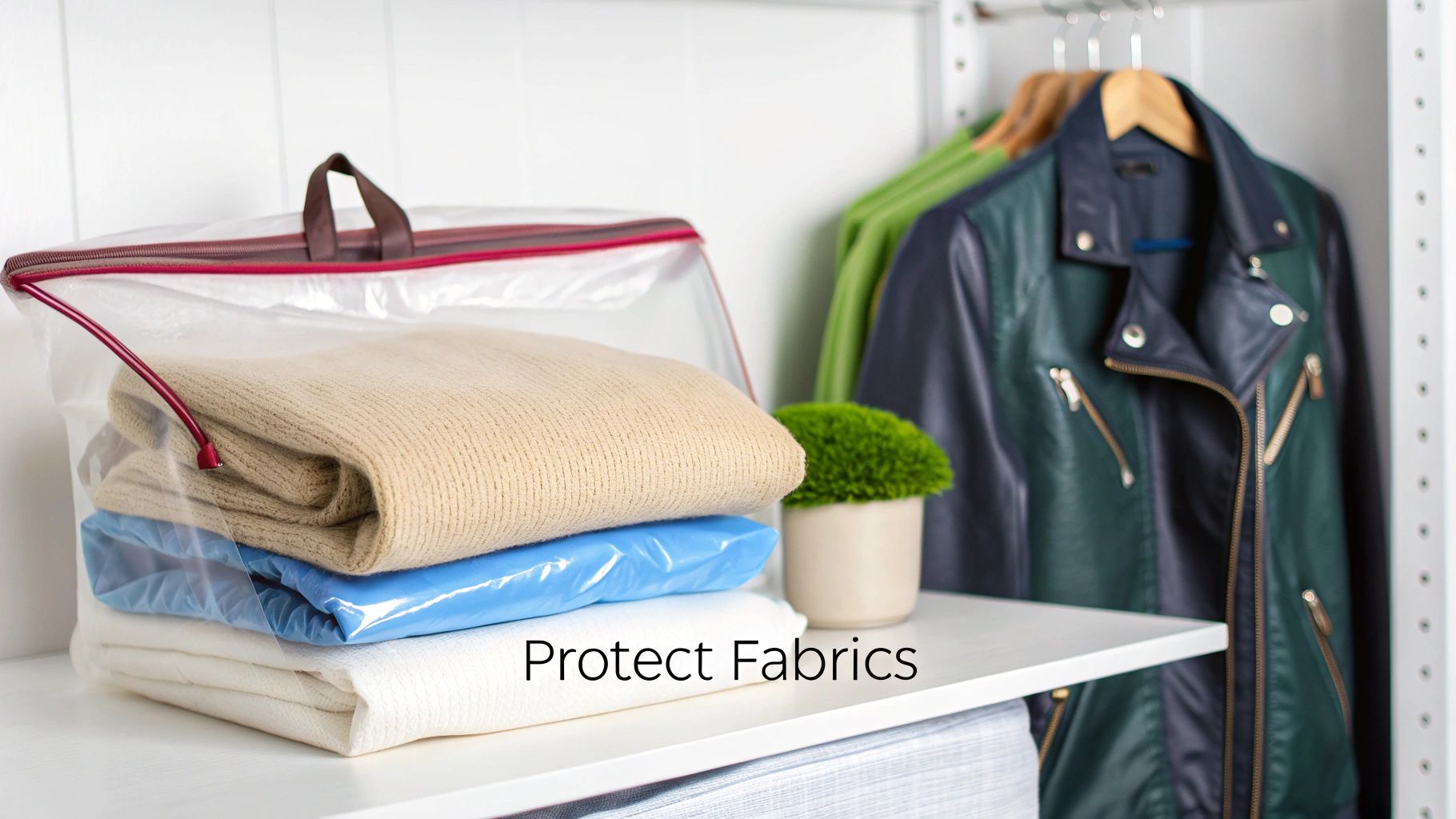
The golden rule for anything with a bit of weight or stretch—like wool, cashmere, or chunky knit sweaters—is to always fold, never hang. Gravity is the enemy of these garments. When a heavy sweater is left on a hanger for months, its own weight will pull it down, leaving you with distorted shoulders and a stretched-out neckline. The damage is often permanent.
Instead of a simple, sharp fold that can create a hard crease, try a gentler approach. Lay the sweater face down, fold the arms inward, and then fold the body in half from the bottom up. For an extra layer of protection, place a sheet of acid-free tissue paper inside the fold. This small step softens the crease and prevents the fibers from getting crushed.
Remember this simple mantra: If it can stretch, it belongs on a shelf. Gravity will win the battle against a heavy sweater on a hanger every single time.
This technique isn't just for sweaters. It works great for other heavy items like denim jeans. Rolling them instead of folding is another fantastic option that saves space and is surprisingly effective at minimizing wrinkles.
Hanging Structured And Delicate Items
On the other hand, some clothes are much better off hanging. This is true for anything that’s structured, prone to wrinkling, or especially delicate.
- Structured Blazers and Coats: These garments need to keep their tailored lines and shoulder shape. A sturdy, supportive hanger is a must.
- Delicate Silks and Linens: These fabrics seem to crease just by looking at them. Hanging is the only way to keep them smooth and ready to wear.
- Formal Gowns and Beaded Items: Folding can cause serious damage to intricate beadwork or crush fabrics like chiffon and organza.
For these items, always use a breathable cotton garment bag. Steer clear of the plastic bags from the dry cleaner—they're a huge mistake for long-term storage. Plastic traps moisture and chemicals, which leads to yellowing, mildew, and fabric decay. A breathable bag protects from dust while allowing air to circulate, which is essential for keeping the fabric healthy.
Special Care For Unique Materials
Some materials need a bit more attention before being packed away. Leather, for instance, can dry out and crack if it’s not stored correctly. Before you put a leather jacket away for the season, clean it with a proper leather cleaner and then apply a conditioner. This keeps the material supple and stops it from becoming brittle.
Delicate heirlooms, like a vintage lace dress or a wedding gown, require the highest level of care. These should be carefully wrapped in acid-free tissue paper and stored flat inside an archival-quality box. The tissue paper acts as a buffer between the folds and prevents acid from the box from seeping into the fabric and discoloring it over time. Museums use this exact method to preserve historical textiles. If you’re storing bulky seasonal items, you can find more great tips in this guide on how to store winter clothes.
A Quick Guide to Storing Different Fabric Types
To make things easier, I’ve put together a quick reference table. It breaks down the best way to store some of the most common materials you'll find in your wardrobe.
| Fabric Type | Best Storage Method | Key Considerations |
|---|---|---|
| Wool & Cashmere | Fold | Never hang to avoid stretching. Use tissue paper to soften folds. |
| Cotton & Denim | Fold or Roll | Very durable. Rolling can help prevent harsh crease lines. |
| Silk & Satin | Hang | Use padded hangers and store in a breathable garment bag. |
| Leather & Suede | Hang | Clean and condition before storage. Use a sturdy, wide hanger. |
| Linen | Hang | Prone to wrinkling. Store in a breathable bag to keep it smooth. |
| Beaded or Embellished | Hang or Lay Flat | Store in a garment bag or archival box to protect embellishments. |
By tailoring your packing methods to the specific needs of each fabric, you're ensuring that every piece—from your coziest sweater to your most elegant dress—stays in perfect condition, ready for you to enjoy for years to come.
Keeping Your Wardrobe Safe From Pests and Moisture
You've done the hard work of prepping and packing your clothes, but the final step is crucial: defending your wardrobe against its two biggest enemies, pests and moisture. These silent threats are behind most storage horror stories, from mildew-spotted sweaters to moth-eaten heirlooms. A solid defense plan is what ensures your clothes come out of storage looking just as good as they did going in.
Forget the overpowering, chemical smell of old-fashioned mothballs. Thankfully, modern pest control is much more pleasant and safer for your fabrics. We now focus on natural repellents that work beautifully without leaving behind that lingering, harsh odor.
Modern, Safer Ways to Prevent Pests
Natural, aromatic solutions are surprisingly effective at warding off common closet pests. Moths and silverfish, which just love to munch on natural fibers like wool and cotton, can't stand them.
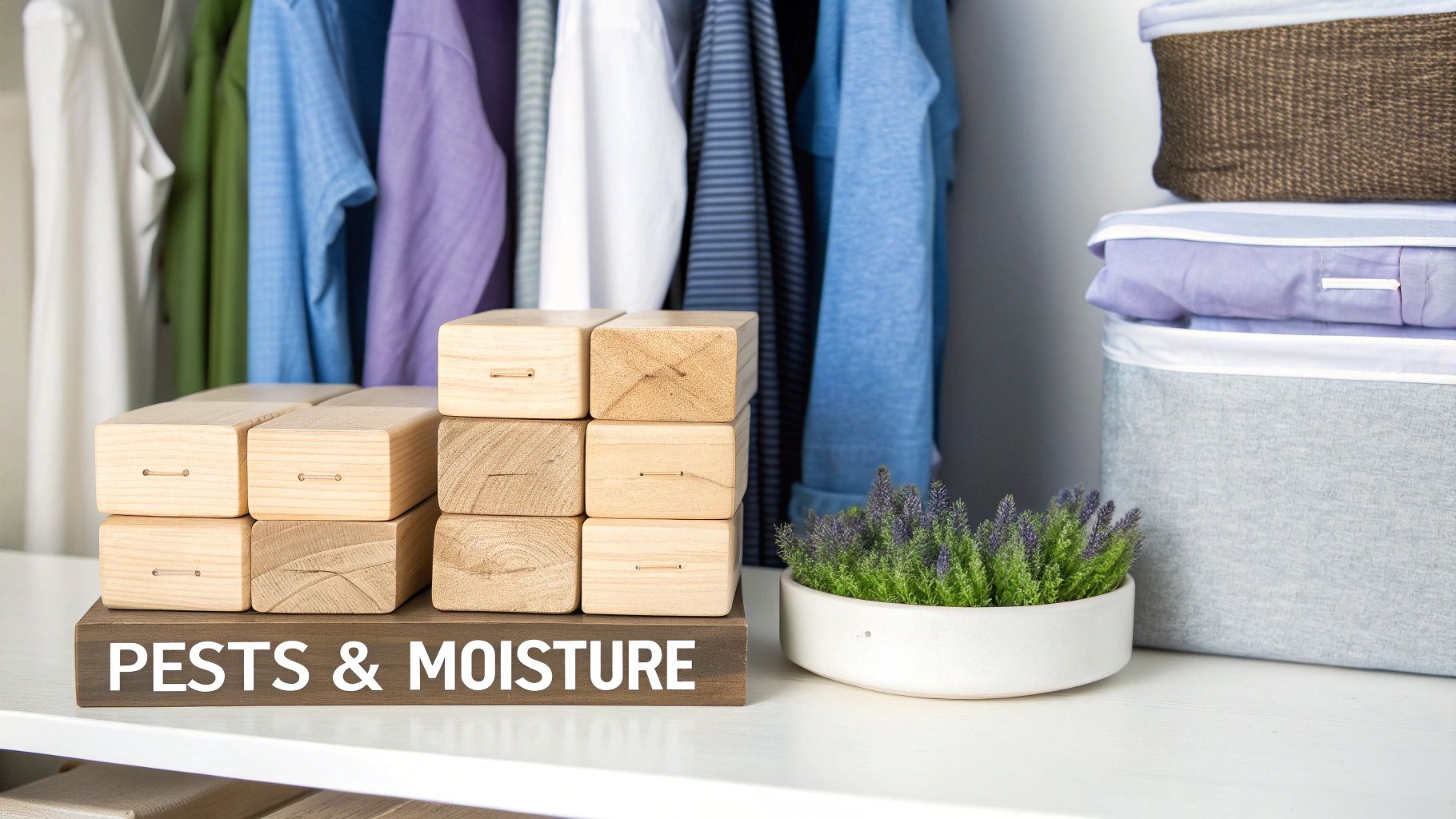
- Cedar Blocks or Balls: There's a reason cedar is a classic. Its natural oils are a powerful moth deterrent and, as a bonus, it helps absorb a bit of excess moisture. I just toss a few blocks into each storage bin or hang cedar rings on the hangers inside garment bags.
- Lavender Sachets: If you prefer a floral scent, lavender is a fantastic alternative. Not only does it smell amazing, but moths hate it. Pop a few small sachets into the corners of your containers for long-lasting protection.
The trick with natural options is remembering to refresh them. The scent will fade over time, so make a note to replace your lavender or give your cedar blocks a light sanding about once a year. This releases fresh oils and keeps their pest-fighting power at its peak.
The Secret to Winning the War on Moisture
Moisture is the real silent killer of stored clothes. It leads to that dreaded musty smell, which is actually mold and mildew that can permanently stain and weaken fabrics. Your goal is simple: keep the humidity level in your storage area low and stable.
This is where desiccants are a game-changer. These are just materials that are incredibly good at absorbing moisture right out of the air. You’ve seen them before—those little silica gel packets that come in new shoe boxes and handbags are perfect for the job.
For bigger bins or larger spaces, you can easily find larger silica packets or moisture-absorbing canisters online. Just place one inside each of your containers to create a dry micro-environment where mildew simply can’t grow.
A little prevention goes a long way. It's so much easier to drop a desiccant packet in a box when you're packing than it is to try and salvage a favorite sweater from mildew six months down the road.
A Quick Pest-Proofing Checklist for Your Storage Space
Beyond what you put inside the boxes, the storage area itself needs to be secure. Pests are resourceful, so a quick inspection of the space is a must before you move everything in.
- Seal Cracks and Gaps: Take a look around for any small openings near windows, pipes, or along the baseboards where pests could sneak in. A little bit of caulk can solve this in minutes.
- Clean Everything Thoroughly: Before you bring in the bins, give the area a good vacuuming. This gets rid of any dust, cobwebs, or crumbs that might attract unwanted visitors.
- Get Your Bins Off the Floor: If you can, store your containers on shelves instead of directly on the ground. This is especially important in a basement or garage, as it adds a barrier against both pests and potential water damage.
Knowing your enemy is half the battle. To truly protect your wardrobe, it's helpful to be able to identify threats before they become an infestation. Take a moment to understand what bed bugs look like, as they are a serious problem for any stored textiles.
Don't Just Set It and Forget It
Finally, a quick check-in now and then can save you a world of trouble. I recommend popping in to check on your things every six months or so. This lets you spot any early signs of trouble, like condensation or pest activity, before a minor issue becomes a major disaster. It's also the perfect time to refresh your cedar or lavender to keep the protection strong.
You’ve done all the hard work of cleaning, folding, and packing. Don't let it all go to waste by making it impossible to find anything later. This last step is what separates a pile of well-packed boxes from a truly organized, accessible wardrobe archive. Think of it as creating a map for your clothes so you can find that one specific sweater without an epic, frustrating search.
Labeling is everything. But just slapping a piece of tape on a bin that says "Sweaters" isn't going to cut it. You need specifics. The goal is to be able to grab exactly the right container without having to open a single one.
Smart Labeling That Actually Works
The trick is to give your future self enough information to know what's inside with just a glance. Vague labels are the enemy of an organized closet.
- Get Descriptive: Instead of "Sweaters," write something like "Winter Cashmere & Wool Sweaters." A box labeled "Pants" becomes "Summer Linen Trousers & Capris." See the difference?
- Add the Season: I always add the season to my labels, like "Spring/Fall Jackets." It makes the seasonal closet swap so much faster.
- Try Color-Coding: This is a great visual hack. Use a different colored label or even a different colored marker for each season—maybe blue for winter, green for spring. Your brain will instantly recognize the seasonal boxes.
A well-labeled box is a gift to your future self. I can’t stress this enough. Taking an extra 30 seconds to be specific now will save you 30 minutes of digging around in a panic later.
For the Super-Organized: The Digital Inventory
If you have a massive collection or just love being organized, creating a digital inventory is a game-changer. It sounds complicated, but it's not. A simple spreadsheet or even a note in your phone's app is all you need. This becomes your master list, a searchable database of your entire stored wardrobe.
For each bin or box, I log a few key things:
- Container ID: Give each box a unique number. Seriously, just write a big #1 or #2 on the side with a marker.
- Contents: This is where you get specific. For example, "Box 1 - Blue wool peacoat, black leather gloves, 3 cashmere scarves."
- Location: Note exactly where you put it. Is it "Under the guest bed" or on the "Top shelf, hall closet"?
This little digital log is honestly a lifesaver. The next time you're wondering where on earth you put that specific fall jacket, you can just search your list. In seconds, you'll know it's in Box #4 on the top shelf, saving you from having to tear apart three other perfectly packed containers. It’s a simple system that makes a world of difference.
Got Questions About Storing Clothes Long-Term? We’ve Got Answers.
Even with a solid plan, you're bound to run into a few tricky situations when packing clothes away for the long haul. What about that delicate wedding dress? Are those vacuum bags really a good idea? Let's clear up some of the most common questions we get, so you can store your wardrobe confidently.
Can I Use Vacuum-Sealed Bags for Long-Term Storage?
I see the appeal, I really do. They save a ton of space. But for anything longer than a season, vacuum-sealed bags can be a disaster for your clothes, especially natural fibers.
Wool, silk, and cotton need to breathe. When you suck all the air out, the intense compression crushes those delicate fibers and can set wrinkles in for good. Worse, if there's even a hint of moisture, you’ve just created the perfect environment for mildew.
My advice? Save the vacuum bags for short-term swaps with bulky items like duvets or ski jackets. For your treasured garments, stick with breathable containers—it’s a much safer bet.
How Often Should I Check on My Stored Clothes?
Out of sight, out of mind can be a dangerous game with stored clothing. I recommend a quick check-in every six to twelve months.
This isn't about a full-on re-organization. It’s a quick peek to spot any early signs of trouble, like pests or dampness, before they wreak havoc. It's also a great chance to refold items along different lines to prevent permanent creasing.
While you're at it, refresh any natural pest repellents you're using. Cedar blocks and lavender sachets lose their punch over time. A simple inspection twice a year is one of the easiest ways to prevent a major wardrobe catastrophe.
Don't just set it and forget it. A quick, twice-a-year check-in is one of the simplest and most effective ways to ensure your long-term clothing storage strategy is actually working.
What’s the Best Way to Store a Wedding Dress?
A wedding dress is more than just a garment; it’s an heirloom. It deserves special treatment. The absolute best approach is professional preservation. Specialists will expertly clean it and then pack it for you in a dedicated, acid-free archival box with acid-free tissue paper. It’s worth the investment.
If you decide to go the DIY route, professional cleaning is still the non-negotiable first step. From there, only use archival-quality materials. Never, ever store it in the plastic bag it came back in from the cleaner’s—residual chemicals can cause the fabric to yellow over time.
Once packed, find a stable, climate-controlled spot. Think under the bed in a guest room, not the attic or basement where temperature and humidity swings can cause serious damage.
At MORALVE, we believe that smart organization is the foundation of a long-lasting wardrobe. Our innovative, space-saving hangers are designed to help you create an efficient and protective closet system, making it easier to manage your clothes and keep them in perfect condition. Transform your closet and simplify your life by exploring our solutions at https://moralve.com.
Leave a comment