

How to Keep Clothes Fresh in Storage A Practical Guide

Before you even think about organizing your closet or packing storage bins, the real work of keeping your clothes fresh begins. The single most important thing you can do is to thoroughly clean and dry every single item. I can't stress this enough—it's the invisible body oils, tiny food particles, and lingering perfumes that attract pests and cause that dreaded yellowing over time.
Getting this first step right is the foundation for a well-organized and fresh wardrobe.
Always Start Clean: The Foundation for Freshness

It’s so easy to toss a sweater you only wore for a few hours into a storage box, thinking it's "clean enough." But from my experience, that's where the trouble starts. Even if it looks and smells clean, those unseen residues are a buffet for pests like moths and silverfish and a breeding ground for bacteria.
Over a few months, those substances can oxidize, leaving you with stubborn yellow stains that are next to impossible to get out later. Think of this cleaning phase as the first step in effective closet organization. It’s what separates a wardrobe that emerges fresh and ready-to-wear from one that comes out musty and damaged.
Choose the Right Cleaning Method
You wouldn't wash a silk blouse the same way you wash your gym socks, and the same logic applies to storage prep. Every fabric has its own needs.
- Silks and Lace: These almost always need a gentle hand-wash or a trip to a trusted dry cleaner. Their delicate fibers just can't handle a machine.
- Wool and Cashmere: Always, always check the care label first. Many beautiful knits can be carefully hand-washed with a pH-neutral wool detergent, but some are strictly dry-clean-only to keep their shape.
- Outerwear: Don't forget your bulky winter coats and jackets. These often need professional cleaning to get them truly clean before being packed away for the season.
If you’re storing bigger items, it's worth learning about properly washing larger fabric items to avoid any laundry mishaps.
To make it easier, here’s a quick-glance guide for some common materials.
Pre-Storage Cleaning Checklist by Fabric Type
| Fabric Type | Recommended Cleaning Method | Key Tip |
|---|---|---|
| Cotton & Linen | Machine wash | Wash in the warmest water the fabric can handle to remove all oils. |
| Synthetics (Polyester, Nylon) | Machine wash, cold | Avoid high heat in the dryer, as it can set in wrinkles or damage fibers. |
| Wool & Cashmere | Hand-wash (cool water) or dry clean | Use a no-rinse wool wash and lay flat to dry, reshaping while damp. |
| Silk | Hand-wash (cool water) or dry clean | Never wring it out! Gently roll in a towel to absorb excess water. |
| Denim | Machine wash, cold, inside-out | Wash sparingly to preserve color and fabric integrity. |
Remember, this table is a general guide. When in doubt, the care label on your garment is always your best friend.
Ensure Complete Dryness and Make Repairs
The absolute enemy of fresh clothing in storage is moisture. Even a hint of dampness will breed mildew, leaving you with that musty, basement smell that’s so hard to get rid of. After washing, make sure every item is 100% dry to the touch. Pay close attention to thick seams, cuffs, and waistbands, which can trick you into thinking they're dry when they're not.
This prep stage is also the perfect time to tackle any minor repairs. Sewing on a loose button or fixing a small tear now is far better than discovering a mending pile when you’re excited to wear your clothes again.
Proper storage is more than just organization; it’s an act of preservation. By extending the life of your garments, you’re making a smart economic and environmental choice.
This isn’t just about keeping your favorite sweater nice; it’s a sustainable practice. With millions of dollars in clothing discarded annually, preserving what you already own is a powerful way to combat textile waste.
Choosing the Right Storage Environment
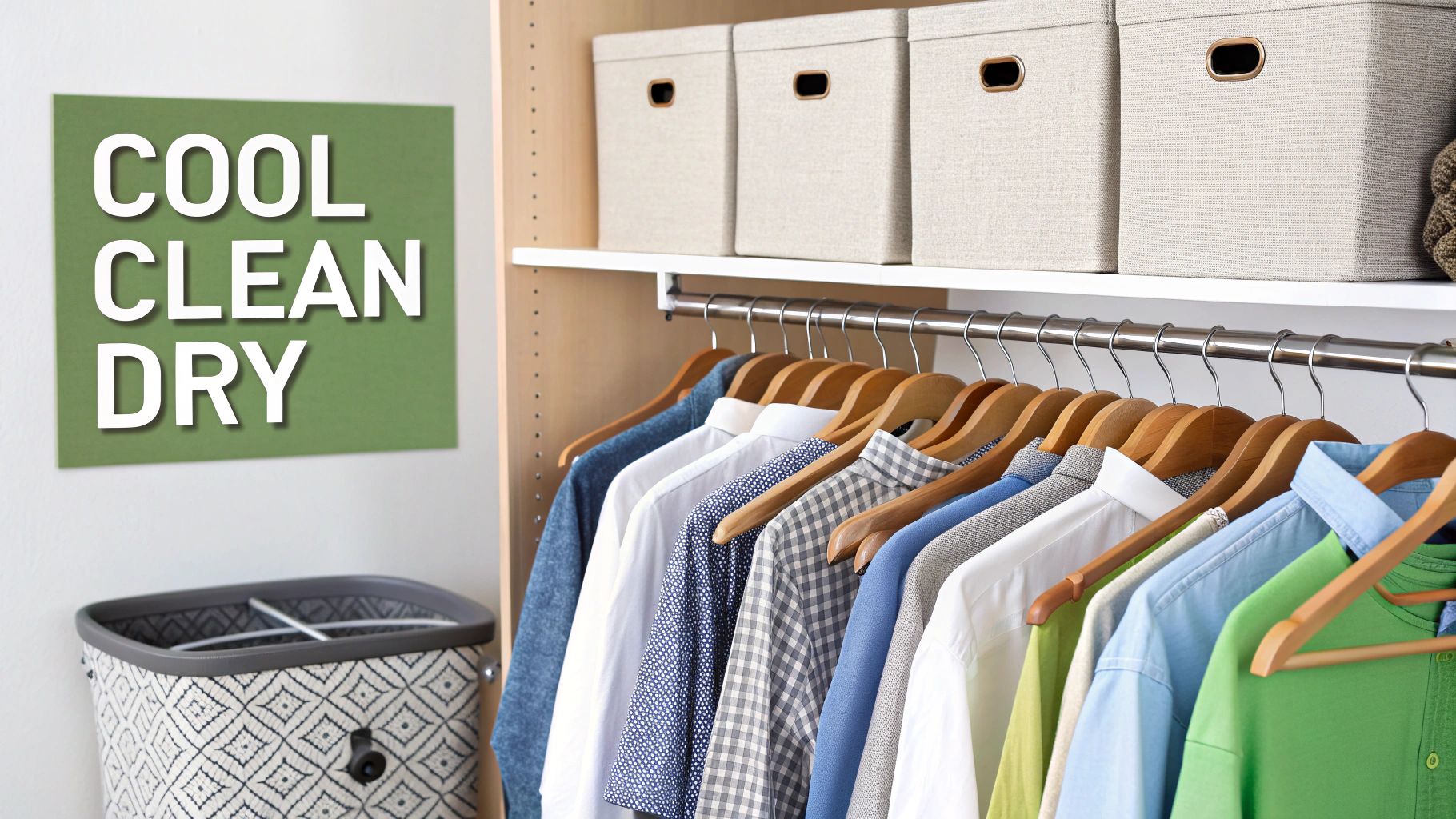
So, you’ve got your clothes perfectly clean and prepped. Now comes the part that makes or breaks all that effort: where you actually store them. The right spot is the unsung hero of long-term clothing care and a cornerstone of smart closet organization.
It’s tempting to just toss everything in the attic, basement, or garage. Out of sight, out of mind, right? But these places are often the absolute worst for your wardrobe. They’re known for wild temperature swings and high humidity, which is a recipe for disaster.
A hot, sticky attic will literally bake the life out of fabrics, while a cool, damp basement is basically an open invitation for mold and mildew. This is why finding a stable, climate-controlled spot inside your main living space is so important.
The Gold Standard Location
When it comes to storing clothes, I live by a simple mantra: cool, clean, dark, and dry. This magic combination is your best defense against the chemical reactions that cause yellowing, the moisture that breeds mildew, and the light that fades your favorite colors.
So where can you find a spot like this? Think about the places in your home that are naturally buffered from the outside elements. An unused closet in a guest room, the top shelf of a linen closet, or even a dedicated storage cabinet in your office are all excellent choices. They offer the kind of stability your clothes need to stay in pristine condition.
Maintaining the Perfect Climate
You don't need a high-tech setup to create the perfect storage climate. It's more about being aware of the environment and making a few smart adjustments.
- Keep an eye on humidity. A cheap little hygrometer from the hardware store is your best friend here. You want to keep the relative humidity below 55% to make sure mildew never gets a foothold.
- Let your clothes breathe. Don't cram everything together. Good closet organization means leaving a little bit of space between items allows air to circulate. This is key to preventing that dreaded musty, stale smell.
- Block out the light. Sunlight is a fabric-killer. If your storage area has a window, invest in some blackout curtains. If you're storing things out in the open, make sure you're using opaque bins or dark garment bags.
When it comes to preserving textiles, consistency is everything. It’s less about hitting one perfect number and more about avoiding those drastic hot-to-cold or damp-to-dry swings. A stable, moderate climate is the goal.
This isn’t just my opinion; it’s a core principle of professional textile conservation. Experts know that steady temperatures and protective coverings are proven to slow down how quickly fabrics break down. If you want to get really nerdy about it, you can explore detailed guidelines on textile preservation from the pros.
By being a little picky about your storage spot, you’re creating a safe haven where your clothes can rest without aging a day.
Mastering Your Closet: The Hang vs. Fold Debate
Proper closet organization is so much more than just a quick tidy-up. It's a real strategy for keeping your clothes fresh and looking their best, whether you're storing them for a season or just until next week. The simple choice of hanging an item versus folding it can mean the difference between a perfectly preserved garment and one with stretched-out shoulders, permanent creases, or even damaged fabric.
It really all boils down to the fabric and its weight. Take a heavy, chunky-knit sweater, for instance. If you leave that on a hanger for months, gravity is going to win every time. The knit will slowly but surely stretch out, leaving you with a saggy, misshapen mess. On the other hand, structured pieces like blazers, crisp linen shirts, and delicate silk blouses absolutely need the support of a good hanger to hold their shape and stay wrinkle-free.
The Great Hanger Swap
One of the single most effective upgrades you can make for your closet organization is to finally get rid of those flimsy wire and cheap plastic hangers. They're notorious for creating those weird, pointy bumps on the shoulders of your shirts and, in the case of wire hangers, can even rust and leave permanent stains.
Instead, it's worth investing in a few better options:
- Wooden Hangers: These are the workhorses of the closet. They’re fantastic for heavy coats and structured blazers because their substantial shape provides the support needed to maintain the garment’s form.
- Padded Hangers: For anything delicate—think silk, satin, or embellished tops—padded hangers are a must. They prevent snags and stop harsh creases from forming on fragile fabrics.
- Velvet Hangers: You've probably seen these everywhere, and for good reason. Their non-slip surface is a lifesaver for silky camisoles, wide-neck tops, and anything else that seems to have a mind of its own and constantly slides off.
Making this one change is a small effort with a big payoff for preserving the original fit and feel of your clothes. If you're tight on space, you can take it a step further by using specially designed space-saving hangers for clothes that let you organize more items without cramming everything together.
Smart Folding for Long-Term Freshness
Now, for everything that gets folded and put away in a drawer or bin, the container you choose is just as important as how you fold. Airtight plastic bins might seem like a good idea for protection, but they can actually cause problems. They trap any lingering moisture and completely cut off air circulation, which often leads to fabrics yellowing and developing that unmistakable stale, musty smell over time.
Breathable storage is always the better way to go. I'm talking about fabric bins, canvas boxes, or even archival, acid-free boxes for truly special pieces. These materials allow air to move freely, which is key to preventing moisture buildup and keeping your clothes smelling fresh. When you're organizing your closet shelves, try to make your stacks neat and not too tall—this prevents the items at the bottom from being crushed under the weight.
The right storage choice protects the integrity of each garment. A well-chosen hanger preserves the shape of a jacket, while a breathable box protects a sweater from stretching and moisture—both are essential for long-term freshness.
This mindful approach becomes even more critical when you stop and think about how much of our wardrobe we don't even wear regularly. Research has found that the average person owns around 132 clothing items, but almost 25% of those are considered unused. Storing that significant chunk of your closet correctly is the only way to protect your investment. You can dive deeper into the data in this study on wardrobe utilization and its implications.
To make the hang-or-fold decision easier, here's a quick reference guide.
Hanging vs Folding: A Quick Guide for Your Wardrobe
Deciding how to store each piece of clothing can feel like a puzzle. This table breaks it down, helping you make the best choice to keep your garments in top condition as part of your closet organization system.
| Garment Type | Best Method | Reasoning | Pro Tip |
|---|---|---|---|
| T-Shirts & Casual Tops | Fold | Hanging can stretch out the neckline and shoulders of cotton and jersey knits over time. | File-fold them vertically in drawers so you can see every shirt at a glance. |
| Sweaters & Heavy Knits | Fold | Gravity is the enemy here. Hanging will pull the knit, causing irreversible stretching and distortion. | Place a sheet of acid-free tissue paper between delicate knits to prevent snags. |
| Blazers, Jackets & Coats | Hang | These items have a structured silhouette that needs the support of a sturdy hanger to maintain its shape. | Always use a wide, contoured wooden or shaped plastic hanger that supports the entire shoulder area. |
| Dresses, Blouses & Skirts | Hang | Hanging prevents deep creases and wrinkles, especially for flowy or delicate fabrics like silk, chiffon, and rayon. | Use hangers with clips for skirts, but add a piece of felt to prevent indentations. |
| Pants & Trousers | Hang or Fold | Dress pants and linen trousers are best hung to avoid a center crease. Jeans and casual pants can be folded. | Hang trousers by folding them over the bar of a hanger or using a clamp-style hanger on the cuff. |
| Delicate Items (Lingerie, Silk) | Fold | These items are too fragile for most hangers and can easily snag or lose shape. | Store in a fabric-lined drawer or box, and consider using drawer dividers for extra protection. |
By pairing the right garment with the right storage method, you’re not just organizing—you’re actively preserving your wardrobe for years to come.
Natural Ways to Repel Pests and Odors
Even the most impeccably organized closet needs a good defense system. Once you've gone through the trouble of cleaning and prepping your clothes for storage, the last thing you want is for them to fall victim to moisture, odors, or pests. The good news is you can skip the harsh chemicals and the overpowering smell of old-fashioned mothballs.
There are simple, natural solutions that are incredibly effective at creating an environment that moths, silverfish, and mildew absolutely hate—but that you (and your clothes) will love. It's all about proactive protection that keeps your garments smelling fresh, not like they've been in hiding for a decade.
Winning the Battle Against Moisture
Moisture is the silent enemy of stored clothing. It doesn't matter how dry your closet seems; humidity has a way of creeping in, leading to that unmistakable musty smell and, in the worst-case scenario, mildew. The goal here is simple: keep the air inside your closet and storage containers as dry as possible.
A few smart, low-maintenance tools can make all the difference:
- Renewable Dehumidifiers: These are small, often cordless gadgets filled with silica gel beads that pull moisture right out of the air. When they get "full," you just plug them in to dry them out and they're ready to go again. A great, sustainable choice.
- Silica Gel Packets: You know those little white packets that come in new shoe boxes and purses? Don't toss them! Throw a few into your storage bins or drawers. They work passively to absorb any dampness.
- Activated Charcoal Bags: Charcoal is a powerhouse, absorbing both moisture and odors. I like to hang a few bags in my closet or place them in bins to keep everything smelling fresh and feeling dry.
Keeping Fabrics Fresh and Pest-Free
With moisture under control, you can turn your attention to repelling pests and adding a subtle, clean scent to your wardrobe. Forget the lingering chemical smell of traditional mothballs; nature provides much better—and far more pleasant—alternatives for your closet organization.
Cedar is a classic for a reason. Its natural oils are a major turn-off for moths and other common textile pests. You can place cedar blocks in the corners of your closet, tuck cedar balls into dresser drawers, or even slip cedar rings directly over your hangers for up-close-and-personal protection.
The secret to natural pest control is creating a sensory barrier that insects just can't stand. Potent scents like cedar and lavender are overwhelming to them, essentially putting up a "no vacancy" sign on your closet.
Lavender is another fantastic option. Dried lavender sachets not only smell amazing but are also surprisingly effective at deterring pests. Tuck them between folded sweaters or hang them from the closet rod. It's interesting how certain scents work in different ways; for example, learning about if does lavender repel ants just shows how powerful natural repellents can be all around the home.
To Hang or to Fold?
The tools you use can be tailored to how you store each specific item. Are you hanging a blazer or folding a cashmere sweater? The answer determines the best way to protect it.
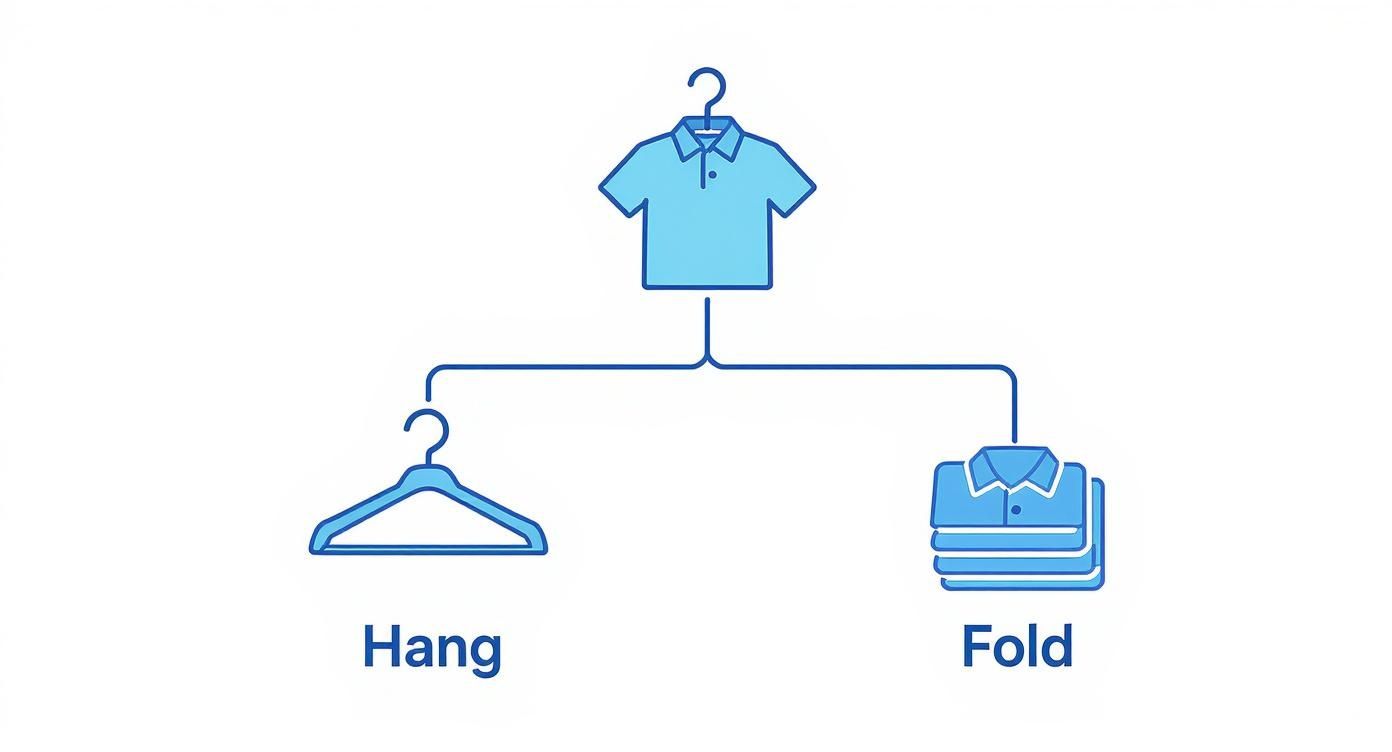
This simple visual guide gets straight to the point: structured pieces like jackets and blouses do best on hangers, while knits and delicates should be folded to protect their shape from stretching. From there, it's easy—slip cedar rings onto your hangers and tuck lavender sachets between your folded items for all-around freshness.
A Closer Look: Storing Your Most Delicate Fabrics
Your everyday t-shirts and jeans are pretty resilient, but what about those special pieces? When it comes to materials like wool, silk, and leather, a little extra attention goes a long way. These fabrics have their own unique quirks, and understanding them is the key to pulling them out of storage looking just as good as when you put them away.
It's not about complicated, time-consuming rituals. It’s about small, smart adjustments to your closet organization system. For instance, here's a trick I've used for years with my silk blouses: I use acid-free tissue paper to cushion the folds. Just lay a sheet along each crease before you fold it. This simple step prevents those sharp lines from becoming permanent, which can actually weaken and break the delicate silk fibers over time.
Keeping Wool and Leather in Top Shape
We all have those investment pieces, like a great wool coat or a favorite leather jacket. They deserve better than being shoved to the back of the closet.
A heavy wool coat, for example, should never be squashed into a vacuum-sealed bag. Wool is a natural fiber, and it absolutely needs to breathe. This air circulation is what helps it keep its shape and ward off musty smells. Your best bet is to hang it in a breathable garment bag on a sturdy, wide wooden hanger that can actually support its weight without pulling on the shoulder seams. Toss a few cedar rings on the hanger for good measure, and you’re set. We've got more tips like this in our guide on how to fold sweaters to save space, which covers techniques that also prevent stretching.
Leather has a different enemy: dryness. Before you store a leather jacket for the season, give it a quick wipe-down with a proper leather cleaner, then follow up with a good conditioner. This is a critical step. It replenishes the moisture in the hide, stopping the cracking and stiffness that can happen after months of neglect. Once it's prepped, put it on a shaped hanger and store it somewhere cool and dry, away from any sunlight or heat sources.
Protecting Vintage and Embellished Garments
Then there are the truly irreplaceable items—a beaded evening gown, a family heirloom, or that amazing vintage find. These pieces are incredibly sensitive to light, pests, and even their own weight. Think about it: all those beautiful beads and sequins are heavy, and they can put a ton of strain on fine fabrics like silk or chiffon.
For these precious garments, the goal is to eliminate stress on the fabric entirely. This often means fighting the urge to hang them and choosing to store them flat instead.
Here’s the professional approach I recommend for these high-value pieces:
- First, get an archival, acid-free box that’s big enough to hold the item with as little folding as possible.
- Line the bottom of the box with clean, acid-free tissue paper.
- Gently fold the garment, placing more tissue paper between each layer. I also like to stuff a bit inside the sleeves to help them keep their shape.
- Finally, store the box flat somewhere dark and climate-controlled, like under your bed or on a high closet shelf.
This method provides total support for the garment, so gravity can’t pull on delicate seams or stretch out the fabric. It’s the surest way to keep your most cherished pieces perfectly preserved.
Long-Term Storage and Seasonal Check-Ins
https://www.youtube.com/embed/1cM1XR0VuIU
Storing your summer dresses for a few months is one thing. But packing clothes away for a year or more? That requires a completely different strategy. It’s less about just stashing things and more about creating a preservation system that keeps your garments from becoming a musty, wrinkled mess.
I’ve seen it happen time and again. People swear by vacuum-sealed bags, and for the right items, they’re a game-changer. They work wonders on bulky synthetic pieces like ski jackets or polyester comforters, shrinking them down to a fraction of their size.
But here’s a pro tip: never use them on natural fibers. Materials like wool, silk, and cashmere need air to maintain their structure. Sucking all the air out crushes their delicate fibers, and trust me, that beautiful lofty sweater will never be the same again.
The Power of a Maintenance Schedule
The real secret to keeping clothes pristine over the long haul isn't some magic product—it's a simple maintenance schedule. You don't have to overhaul your entire closet, but a little proactive care goes a long, long way. I think of it as a quick wellness check for my off-season wardrobe.
I tell everyone to set a calendar reminder to check their stored items every six months. Seriously, put it on your phone right now. This quick peek is your best defense against slow-moving disasters like mildew or pests.
Your Six-Month Storage Check-In
This brief routine is your key to making sure everything stays in perfect shape. It’s short, simple, and saves you a world of headaches later.
Here’s what you need to do:
- Look for Trouble: Pop open your storage containers and garment bags. Are there any funky smells? Any signs of moisture, mildew, or heaven forbid, pests? Catching an issue early is the difference between a quick fix and a total loss.
- Refold and Rotate: Garments that sit folded in the same position for months on end will develop deep, stubborn creases. Take a few minutes to refold items along different lines. This simple act gives the fabric fibers a break and prevents those creases from becoming permanent.
- Refresh Your Repellents: If you’re using natural deterrents, their effectiveness wanes over time. The fragrant oils in cedar blocks dry out, and lavender sachets lose their punch. Give your cedar a quick refresh by lightly sanding the surface, and toss out old sachets for a fresh batch.
A proactive check-in transforms storage from a passive "pack and forget" activity into an active preservation strategy. This simple habit protects your clothing investment far more effectively than any single storage product.
Mastering an organized check-in like this is a core part of learning how to store clothes properly. It’s how you guarantee that when you finally pull out that favorite coat or dress, it’s just as fresh and ready to wear as the day you packed it away.
Ready to transform your closet from cluttered to streamlined? MORALVE offers a range of innovative, space-saving hangers designed to maximize your storage and keep your wardrobe perfectly organized. Discover the difference at https://moralve.com and create the closet you’ve always wanted.
Leave a comment