

Ultimate Closet Organization Tips for a Clutter-Free Wardrobe

The secret to a successful closet transformation has less to do with a massive purge and more to do with creating a sustainable organization system. From my experience, jumping in without a plan is the fastest way to get overwhelmed and give up. A little prep work—defining your style, grabbing the right tools, and setting aside dedicated time—is what truly sets the stage for a closet that stays organized for good.
Prepare Your Space and Mindset for Success
Before you pull everything out and create a mountain of clothes on your bed, take a breath. The most critical part of this process is planning for organization. I've seen countless decluttering projects fail because they start with chaotic energy and no real finish line in sight. This initial prep phase is all about building a solid foundation to ensure your hard work results in a simpler daily routine, not just a closet that looks tidy for a week.
Think of this planning stage as creating a sustainable system for yourself. It’s no surprise that the closet organizers market is booming, expected to jump from USD 4,033.3 million in 2025 to a massive USD 8,529.7 million by 2035. This isn't just about buying more containers; it reflects a huge cultural shift away from chaos and toward intentional, smart organization. People are tired of the clutter.
Define Your Vision and Style
First things first, ask yourself what you actually want from your closet. Do you dream of getting dressed in five minutes flat? Do you want an organized space where everything is easy to find? Jot down a simple vision statement. Something like, "My closet is a calm, organized space filled only with clothes that fit my body and my life right now."
Next, get clear on your personal style. This is a game-changer for long-term organization. Hop on Pinterest and create a small mood board, or just save a few images of outfits that you genuinely love and would wear. Having this visual style guide makes it so much easier to decide what stays and what goes. It turns those agonizing decisions into quick, confident "yes" or "no" answers. This mindset is a cornerstone of a more intentional life, a key theme in many minimalist lifestyle tips.
The goal isn't just a tidy closet—it's lasting change. It's about creating a space that genuinely serves the person you are today, not who you were five years ago. This process should leave you feeling lighter, freer, and more confident.
Assemble Your Decluttering and Organization Toolkit
Nothing kills momentum faster than having to stop and search for a trash bag or cleaning spray. Gather your supplies before you start. You don't need anything fancy, but having these basics on hand makes a world of difference for both decluttering and organizing.
- Sorting Bins: Grab four boxes, bins, or even garbage bags. Label them: Keep, Donate, Mend, and Undecided. This creates a clear, simple workflow.
- Cleaning Supplies: A few dust cloths, your vacuum with an attachment, and maybe a gentle all-purpose cleaner for wiping down shelves.
- Full-Length Mirror: This is non-negotiable! You need to try on anything you're unsure about to see how it really looks and feels.
- Good Lighting: Open the blinds or bring in an extra lamp. Good light helps you see colors accurately and spot any stains or wear and tear you might otherwise miss.
Sometimes, the sheer volume of stuff is just paralyzing. If that's you, know that there's real help with decluttering your overwhelmed home available in other resources designed for exactly that feeling.
Before you start pulling items out, a quick checklist can help ground the process and make sure you're truly ready.
Your Organization Prep Checklist
This quick-start guide covers the essential steps to take before you begin the physical sorting. It's all about setting yourself up for a smooth and successful project.
| Phase | Action Item | Why It Matters |
|---|---|---|
| Mental Prep | Create a style mood board or vision statement. | Gives you a clear filter for "keep" or "go" decisions, preventing regret. |
| Logistical Prep | Gather sorting bins, cleaning supplies, and a mirror. | Prevents interruptions and keeps your energy focused on the task at hand. |
| Time Prep | Block out a dedicated, uninterrupted time slot on your calendar. | Protects you from burnout and ensures you can finish what you start. |
| Space Prep | Designate a clear sorting area (like your bed or a clean floor). | Creates a "blank slate" and prevents new clutter from mixing with old. |
Completing this checklist turns a daunting chore into a structured, manageable project.
Block Out Realistic Time
Finally, be honest with yourself about how long this is going to take. A total closet overhaul is not a 30-minute task. Look at your calendar and block out a few solid, uninterrupted hours. A Saturday or Sunday morning usually works best.
If a whole morning feels like too much, break it down into zones. You could tackle just your shoes one day, then sweaters the next. This approach prevents that "I've made a huge mess and can't finish" feeling of despair. Scheduling it like any other important appointment is the key to actually seeing it through.
The Decisive Art of Sorting Your Wardrobe
Alright, this is where effective organization begins. With your space prepped and your head in the game, it’s time to face the clothes. Forget vague advice—what you need now is a practical, no-nonsense sorting system to power through this. It’s all about making confident decisions to curate the wardrobe you'll organize.
It’s shocking how easily we can get buried in our own stuff. Did you know the average American home has a staggering 300,000 items? It’s no wonder 25% of people with two-car garages can't even park a single car in them. This usually boils down to the classic ‘80/20 rule’: most of us wear only 20% of our clothes 80% of the time. The goal here is to find that hard-working 20% to build your new organized system around. If you're curious, you can get lost in some eye-opening clutter statistics here.
Setting Up Your Sorting Station
First things first, let's get organized. Grab those bins or bags you prepared earlier and label them: Keep, Donate, Mend, and Undecided. This creates a physical workflow, a destination for every single item you touch.
The key is to be disciplined. As you pick up a piece, it has to go into one of those categories immediately. No creating a new "I'll-deal-with-this-later" pile—that’s just clutter in disguise.
The "Undecided" box is your temporary safety net. It’s for those few items that genuinely stump you. But here’s the rule: by the time you're done for the day, that box has to be empty. You’ll come back to those pieces with fresh eyes and make the final call.
The Litmus Test for Every Item
As you handle each piece of clothing, you need to ask more than just "Do I like this?" Go deeper with a few direct questions that cut right through the emotional clutter and wishful thinking.
- Does this fit my body right now? I’m not talking about the body you had five years ago or the one you’re hoping for next year. If it doesn't fit you today, it's just taking up space.
- Have I worn this in the last 12 months? Be brutally honest. If something has sat through all four seasons without seeing the light of day, its spot in your closet is on shaky ground.
- Does this actually fit the personal style I’m aiming for? Glance back at that vision board you made. Does this t-shirt or dress really align with the look and lifestyle you want?
- If I saw this in a store today, would I buy it? This is my favorite gut-check question. If the answer is a hard no, it’s a crystal-clear sign your taste has moved on.
Holding onto clothes for a "someday" that never seems to arrive is the single biggest roadblock to a functional, organized closet. Letting go of an expensive mistake or a gift you secretly hated isn't failure. It's you reclaiming your space for the things you truly love and will actually wear.
For a little more help making these tough calls, our complete guide on decluttering clothes tips has even more strategies to try.
Tackling Sentimental Items and "Guilt" Clothes
Let’s be real—this is the hardest part. That sweater from your grandmother you never wear. The dress that cost a fortune but just isn't you. These pieces aren't just fabric; they’re tangled up with memories, expectations, and money.
For the purely sentimental things, think about their true purpose. If their value is in the memory, not in being worn, they don't belong in your daily-use closet. Give them the respect they deserve by creating a small, dedicated memory box.
As for those expensive mistakes, I get it. The guilt is real. But the money is already gone, and keeping the item won't bring it back. Try reframing it: thank the item for teaching you a valuable lesson about your personal style. Then, let it go. Donate or resell it so someone else can love it. You’re turning a moment of guilt into a bit of wisdom.
Mastering Smart Closet Organization
You’ve done the hard part—you’ve sorted, purged, and now you’re left with a wardrobe you genuinely love. The next, and arguably most satisfying, step is putting it all back with a clear system. This is about creating a structure that makes your daily routine smoother and turns your closet into a functional, even inspiring, space.
A well-organized closet is a game-changer. It's more than just tidy; it saves you precious time every morning and eliminates that "I have nothing to wear" feeling. Imagine opening the doors and seeing exactly what you have, with every piece in its logical home. Getting dressed becomes effortless.
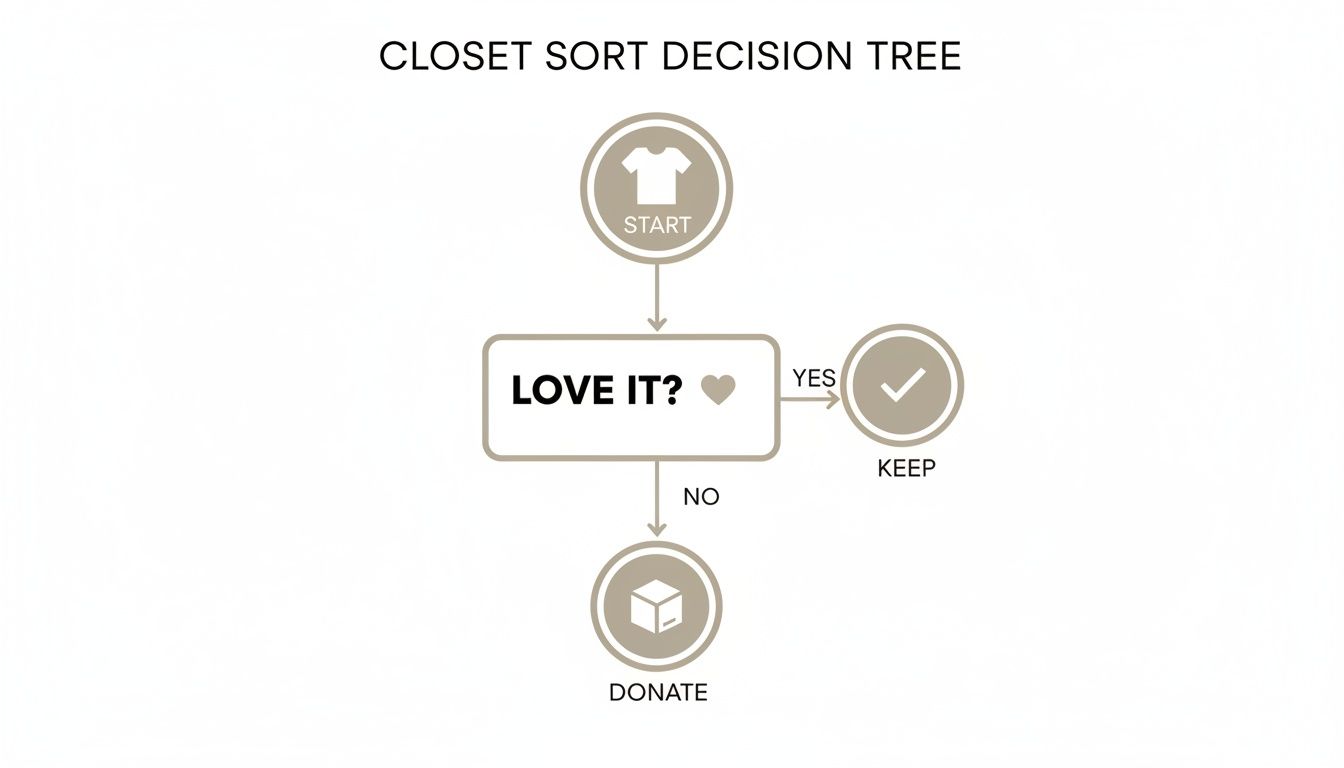
This decision tree perfectly illustrates the core of decluttering. If you love it and it serves a purpose in your life, it's earned its spot. As you organize, keep this simple test in mind—your closet should only house the items that pass with flying colors.
Create Functional Closet Zones
One of the most effective strategies for long-term organization is zoning. It’s simple: you group similar items together based on your life. Think of your closet as your own personal boutique, with different sections for every occasion.
- Organize by Lifestyle: This is a fantastic place to start. Create dedicated areas for your work clothes, workout gear, weekend outfits, and anything for special occasions. No more digging past a cocktail dress to find your favorite leggings on a lazy Sunday.
- Group by Item Type: Within those lifestyle zones, get more specific. Hang all your blouses together, then your jackets, then your skirts. This makes finding a particular piece a hundred times faster.
Creating these zones builds an intuitive map of your wardrobe. Your brain quickly learns where everything lives, which seriously cuts down on the mental energy it takes to pull an outfit together. You can dive deeper into this concept by checking out some of the best closet organizer systems out there, which often use zoning as a foundational principle.
To Fold or To Hang: A Practical Guide
Not everything belongs on a hanger. Knowing what to fold versus what to hang is a small detail with a big impact—it preserves your clothes, prevents damage, and makes the most of every inch of space you have.
Here’s a quick guide to help you decide.
| Clothing Item | Best Method | Reason |
|---|---|---|
| Sweaters & Knits | Fold | Hanging will stretch out the shoulders and warp the fabric over time. |
| T-shirts | Fold | Folding is more space-efficient and prevents those dreaded hanger marks on the shoulders. |
| Jeans & Denim | Fold or Hang | Denim is tough. You can fold it, but hanging by the belt loops is a great space-saver. |
| Dresses & Blouses | Hang | Hanging keeps delicate fabrics wrinkle-free and helps them maintain their shape. |
| Trousers & Skirts | Hang | Using clip hangers or specialty pant hangers is the best way to avoid sharp creases. |
Pro Tip: The biggest mistake I see people make is hanging heavy sweaters. It’s a surefire way to get stretched-out necklines and sad, misshapen shoulders. Fold them and place them on a shelf. You’ll protect your clothes and free up valuable rod space for items that actually need to be hung.
Making this simple switch is a crucial part of smart closet organization. It’s a practical step that ensures the clothes you worked so hard to curate stay in beautiful condition for years to come.
Pro-Level Closet Organization Strategies
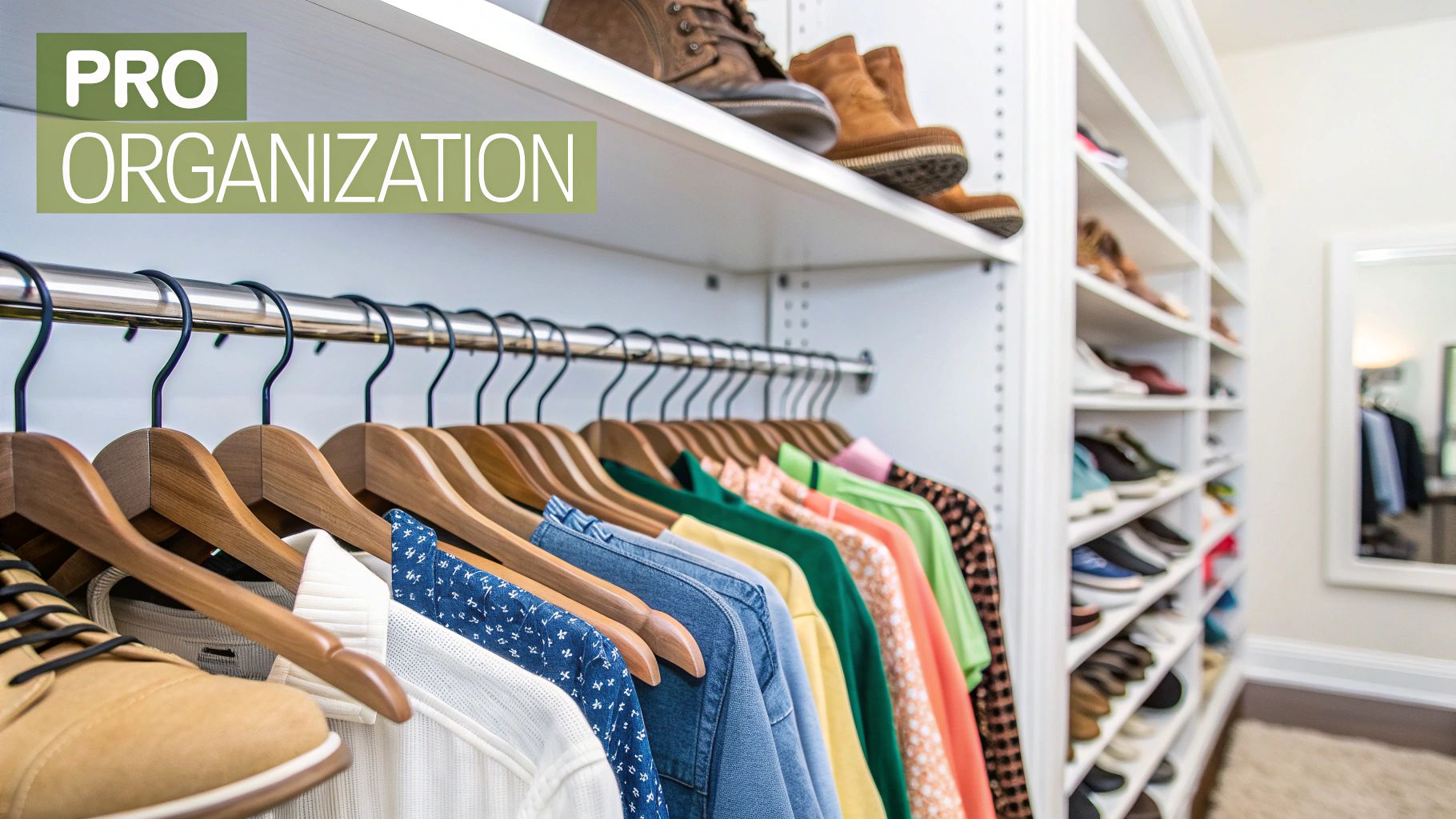
Alright, you’ve sorted through your clothes and curated your collection. Now comes the fun part: turning that wardrobe into a system that actually makes your life easier. This isn't just about tidying up; it's about creating a functional, beautiful space that works for you, day in and day out.
One of the most effective tricks for ongoing maintenance is the reverse hanger trick. It’s so simple. Just turn all the hangers in your closet so they face backward. When you wear something and put it back, hang it the normal way. Six months from now, you’ll have a stark visual of what you truly never wear—those backward hangers don't lie.
It's strategies like these that are driving the home organization market, which is projected to hit $13.27 billion in 2025. This little hanger trick alone can help you reclaim up to 40% of your closet space by taking the emotion out of the final purge. It’s amazing how much we hold onto “just in case.”
Arrange by Category and Color
Now that you know what's staying, let's organize with real intention. The first layer of logic is to group everything by category. All your pants go together, all your dresses in another section, and so on. This is the bedrock of a closet you can actually navigate.
But here’s where you take it to the next level: arrange each of those categories by color. Creating a gradient or rainbow effect with your shirts isn’t just for looks (though it is incredibly satisfying). It’s wildly practical. Need a white blouse? Your eyes will go straight to that section, saving you that frantic morning search.
I always tell my clients this method transforms their closet from a chaotic storage unit into their own personal boutique. You start to "shop" your own wardrobe, spotting new outfit combinations you never saw before.
Tame Your Accessories and Shoes
Let's be honest, accessories and shoes are usually the main culprits of clutter. A tangled pile of belts or a mountain of shoes on the floor can undo all your hard work. But a few smart organizational solutions can get them in line.
- Shoes: Got shelves? Try this clever trick. Arrange your shoes with one toe facing out and the other heel facing out. You get to see the front detail and the heel height at a glance, and it saves a surprising amount of shelf real estate.
- Bags: That pile of purses on the floor has to go. Shelf dividers are perfect for storing smaller clutches and purses upright, like books on a shelf. For your bigger tote bags, a few sturdy hooks on a bare wall or the back of your closet door work wonders.
- Scarves and Belts: Stop letting them become a tangled mess in a drawer. A dedicated scarf hanger with multiple loops is a game-changer. For belts, you can either roll them neatly into a drawer divider or hang them from simple S-hooks on your closet rod.
If you’re lucky enough to have a larger closet and are thinking about a more significant upgrade, something like installing sliding wardrobe doors can completely modernize the space and improve the flow, making everything feel more accessible.
Keeping Your Closet Organized for Good
You’ve put in the work and finally have a closet that feels organized and breathes. So, what’s the secret to keeping it that way? The real win isn’t the big purge; it’s building small, easy habits that stop the clutter from ever coming back.
Think of it less like a one-and-done project and more like simple, ongoing maintenance. By weaving a few routines into your life, you can make sure your closet stays a peaceful, functional space instead of a source of stress.
Live by the One-In, One-Out Rule
This is probably the single most powerful habit for preventing closet chaos. The concept is refreshingly simple: every time a new piece of clothing comes in, a similar item has to go out.
Bought a new pair of running shoes? Great, now it’s time to donate an old pair. That new jacket you just couldn't resist means an older one needs to find a new home. This simple transaction maintains a perfect balance in your wardrobe, effectively stopping accumulation in its tracks.
This rule does more than just control numbers; it makes you a more mindful shopper. You’ll start asking yourself if that new shirt is really worth giving up something you already own.
Master the Quick Weekly Tidy-Up
You don't need another marathon organizing session every weekend. The real magic is in the 15-minute weekly reset. Just find a small pocket of time—maybe Sunday evening before the week kicks off—to quickly bring your closet back to its baseline.
Here’s what that looks like:
- Grab any clothes that have landed on "the chair" and hang them up properly.
- Straighten out folded items on shelves that have gotten a bit messy.
- Line up your shoes so they look neat and are easy to find.
- Give the shelves a quick wipe-down to keep everything feeling fresh.
It’s a low-effort habit with a huge payoff. This little ritual prevents tiny messes from turning into a monster decluttering project down the road.
Schedule a Seasonal Check-In
About twice a year, usually when you’re swapping your wardrobe for the changing seasons, take a moment for a mini-review. This isn't a massive overhaul, just a quick audit to keep your organization system current.
As you pull out your winter coats and pack away summer dresses, ask a few questions. Did you even touch that heavy scarf last winter? Are those sandals still comfortable, or did they give you blisters every time? This is the perfect time to identify pieces you’ve fallen out of love with before they take up precious space for another six months.
Your Top Closet Organization Questions, Answered
Even with the best game plan, you're going to hit a few snags. It happens to everyone. Think of this as your go-to guide for navigating those common "what do I do now?" moments that can stop an organization project in its tracks.
Getting past these hurdles is what separates a half-finished attempt from a beautifully organized closet you'll love opening every day.
How Often Should I Really Be Organizing My Closet?
Most people think of closet organization as a massive, once-a-year event, kind of like spring cleaning. And yes, a big seasonal clear-out once or twice a year is a great idea. It’s the perfect time to get real about what you actually wore over the last six months and what just collected dust.
But the real secret to staying organized for good isn't that annual marathon session. It's the small habits you build along the way.
Try a quick 15-minute weekly tidy-up. This is your chance to re-hang clothes that have migrated to "the chair," put shoes back in their spot, and just generally reset the space. This little bit of consistency is so much more effective than letting things pile up until it becomes a full-day, overwhelming project.
What Do I Do with Sentimental Clothes I Never Actually Wear?
Ah, the sentimental items. This is probably the trickiest part of the whole process because it’s about emotion, not just function. The goal here is to honor the memory attached to the item without letting it clog up your valuable closet space.
Your everyday closet is for your current life, not a museum.
So, create a dedicated memory box or a nice storage container. This is the perfect home for truly special pieces—your wedding dress, that vintage band t-shirt, your baby’s first onesie. By giving these items a special place outside your main closet, you’re treating them with the respect they deserve while freeing up room for the clothes you wear now.
Here's a pro tip: If you're short on storage space, take a beautiful photo of the item. You can create a scrapbook or a digital album dedicated to these memories. This lets you keep the story and the feeling, without having to store the physical object.
I Have a Tiny Closet—What Are the Best Organization Tricks?
When you’re working with a small closet, every inch counts. You have to be ruthless in your decisions and clever with your strategy. Your main focus should be using vertical space and being incredibly honest about what you really need. There’s no room for "just in case" items.
Here are a few game-changers for small closets:
- Switch to slim, non-slip hangers. This is non-negotiable. Chunky plastic or wooden hangers are space thieves. Switching to a uniform set of slim hangers can genuinely change everything.
- Think vertically. Over-the-door organizers are your best friend. They are fantastic for shoes, belts, scarves, and even folded clothes, and they don't take up an inch of precious rod or shelf space.
- Use shelf dividers. If you have shelves, you know how quickly stacks of sweaters or jeans can turn into a leaning tower of chaos. Simple shelf dividers keep everything in its own neat lane.
For anyone with a small closet, the "one-in, one-out" rule is less of a guideline and more of a survival tactic. Every single thing in there has to earn its keep.
Ready to take back your closet and make your mornings a whole lot easier? Having the right tools is half the battle. At MORALVE, we create smart, space-saving hangers designed to help you maximize your closet's potential while keeping everything perfectly organized. Check out our collection and start building the clutter-free closet you've always wanted. See the difference at https://moralve.com.
Leave a comment