

8 Essential Minimalist Lifestyle Tips for an Organized Closet in 2025

Are you feeling overwhelmed by clutter and seeking a calmer, more intentional way of living? The minimalist lifestyle offers a powerful solution, trading excess for meaning and chaos for clarity. But where do you begin? While minimalism touches every aspect of life, the most impactful starting point is often the one you face every morning: your closet. It's a space that reflects our daily habits, consumer patterns, and personal style, making it the perfect microcosm for a larger life change.
This guide provides eight essential minimalist lifestyle tips designed to transform your wardrobe from a source of stress into a bastion of simplicity. We'll explore actionable strategies for significant decluttering, building a functional and versatile wardrobe, and maintaining long-term organization with intention. These principles can extend beyond your closet, too. To truly embrace a simpler aesthetic throughout your living spaces, you might also want to explore various minimalist interior design styles for inspiration on creating a cohesive, tranquil home environment.
Prepare to reclaim your space, your time, and your peace of mind. Let’s dive into the practical steps that will help you curate a life, and a closet, that you truly love.
1. Begin with a Decisive Declutter Using the KonMari Method
Embarking on a minimalist lifestyle begins with the most impactful space in your home: the closet. The first of our minimalist lifestyle tips is to perform a decisive declutter, and there's no better framework than the KonMari Method. Created by tidying expert Marie Kondo, this approach reframes decluttering from a dreaded chore into a mindful, transformative experience.
The Core Principle: Does It Spark Joy?
Instead of tackling your closet randomly, the KonMari Method instructs you to gather every single piece of clothing you own and place it in one large pile. This visual representation of your consumption is a powerful first step. From there, you pick up each item individually and ask yourself a simple, yet profound, question: "Does this spark joy?"
This question forces a shift in mindset. You're not looking for what to discard; you're actively choosing what to keep. It moves the decision from a logical one ("I might wear this someday") to an emotional one ("This makes me feel confident and happy"). By focusing on positive feelings, you curate a wardrobe filled only with items you genuinely love and value.
How to Implement the KonMari Closet Declutter
Follow these steps for a successful closet cleanout:
- Commit to the Process: Set aside a significant block of time, like a full weekend, to avoid stopping halfway through.
- Declutter by Category: Work through sub-categories in a specific order: tops, bottoms, dresses, outerwear, and so on. This creates structure and prevents overwhelm.
- Trust Your Instincts: The "spark joy" feeling is a visceral, immediate reaction. If you have to talk yourself into keeping something, it's likely a no.
This method is more than just tidying; it's about setting the foundation for a sustainable minimalist wardrobe. It ensures that every item earning a spot back in your closet is intentional and cherished. For a more detailed walkthrough, you can find a comprehensive guide on how to declutter your closet.
2. Implement a Capsule Wardrobe
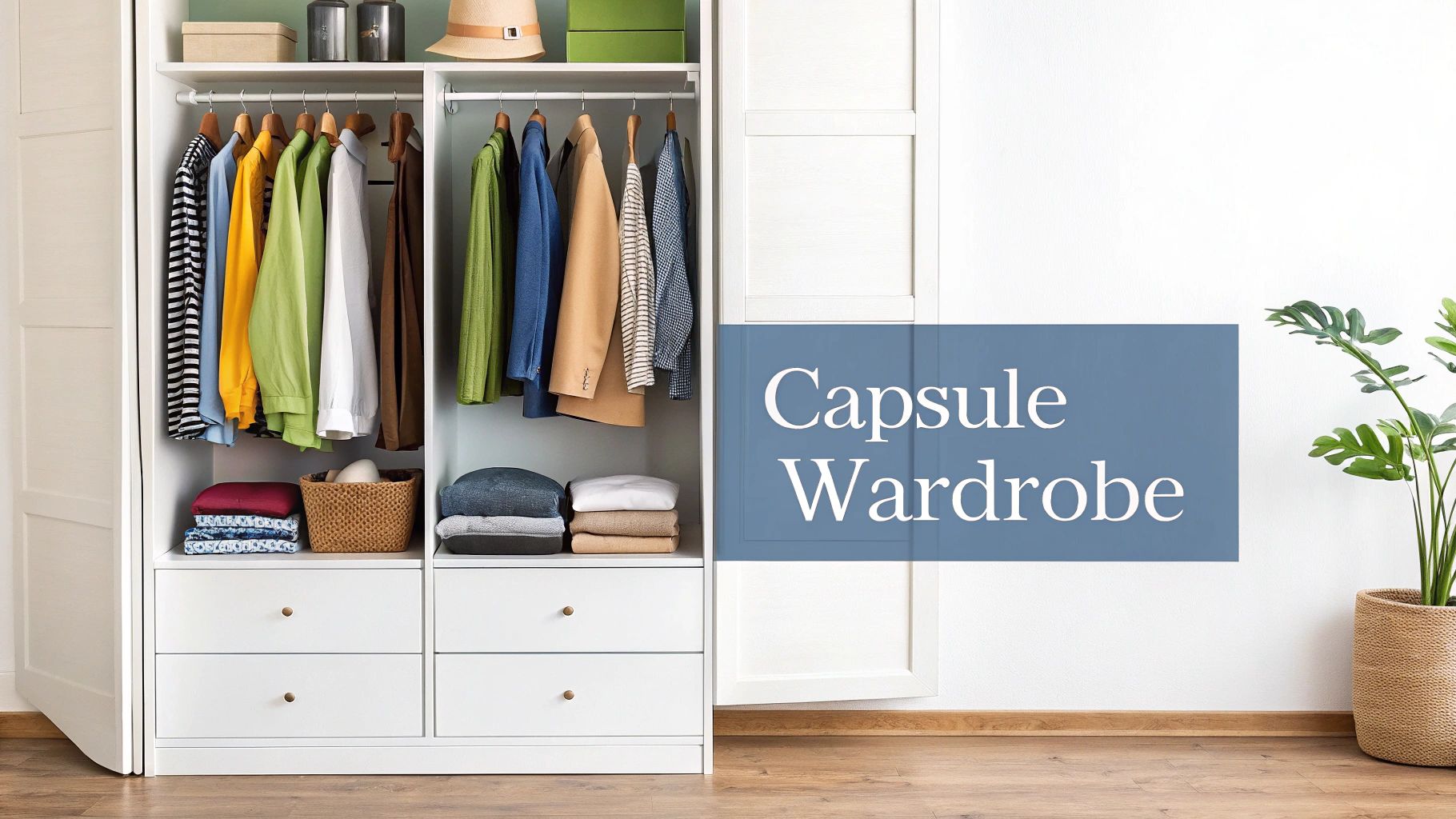
Once you've decluttered, the next of our minimalist lifestyle tips is to prevent your closet from becoming overwhelmed again. The solution is a capsule wardrobe: a curated collection of essential, versatile clothing pieces that work together harmoniously. This approach focuses on quality over quantity, significantly reducing decision fatigue and creating a more sustainable relationship with fashion.
The Core Principle: Less is More
The goal of a capsule wardrobe isn't deprivation; it's intention. Instead of a closet overflowing with single-use items, you build a small collection, typically 30-50 pieces per season, that can be mixed and matched to create numerous outfits. This intentional selection ensures every item serves a purpose and aligns with your personal style.
This mindset shift makes daily dressing effortless and more creative. You spend less time wondering what to wear and more time appreciating the high-quality, beloved pieces you’ve chosen. Beyond crafting a versatile collection, understanding the best ways to store clothes is essential for maintaining order and preserving your garments.
How to Build Your Capsule Wardrobe
Follow these steps to create a functional and stylish capsule:
- Define Your Lifestyle Needs: Start by identifying the primary activities you dress for, such as work, exercise, and social events. Your wardrobe should reflect this.
- Choose a Cohesive Color Palette: Select one or two neutral base colors (like black, navy, or beige) and add two to three accent colors that complement them and reflect your personality.
- Invest in Timeless Basics: Focus on versatile, high-quality staples. Think well-fitting jeans, classic t-shirts, a tailored blazer, and a neutral sweater that can be dressed up or down.
A capsule wardrobe is the ultimate tool for closet organization, ensuring your space remains tidy and functional. For more ideas on maintaining a streamlined closet, explore these effective ways to organize your closet.
3. Practice Mindful Consumption and the 30-Day Rule
After decluttering your closet, the next step in our list of minimalist lifestyle tips is to prevent new clothing clutter from accumulating. A powerful strategy for this is practicing mindful consumption, anchored by the 30-Day Rule. Popularized by The Minimalists, this principle is a practical filter for distinguishing genuine needs from fleeting fashion wants, ensuring your closet remains an intentional space.
The Core Principle: A Pause Before Purchase
The 30-Day Rule is simple yet profoundly effective: for any non-essential clothing or accessory you want to buy, you must wait 30 days before making the purchase. This mandatory waiting period acts as a "cooling-off" phase, allowing the initial emotional impulse of wanting a new garment to fade. You can then re-evaluate the purchase with a clear, logical mind.
This habit fundamentally shifts your relationship with shopping for clothes. It breaks the cycle of instant gratification that leads to unworn items with the tags still on. By creating a deliberate pause, you give yourself time to assess whether the item truly adds value to your wardrobe or if it was simply a reaction to a sale, a trend, or a mood.
How to Implement the 30-Day Rule
Follow these steps to integrate this rule into your shopping habits:
- Create a "Wish List": Instead of adding an item to your online cart, add it to a dedicated list in a notebook, a browser bookmark folder, or an app like Pinterest. Note the date you added it.
- Track Your Patterns: After a few months, review this list. You will likely find that the desire for most items has completely vanished, revealing your common impulse-buy triggers.
- Ask Critical Questions: When the 30 days are up and you still want the item, ask yourself: "Does this fill a real gap in my wardrobe?" and "Does it match at least three other items I already own?"
This practice is the ultimate defense against buyer's remorse and the accumulation of closet clutter. It guarantees that every new piece of clothing is a well-considered and valuable addition, preserving the minimalist sanctuary you've worked to create.
4. Digitize Your Wardrobe and Style Inspirations
While a minimalist wardrobe is crucial, the mental clutter of deciding what to wear can be just as overwhelming. One of the most effective minimalist lifestyle tips for your closet is to digitize your wardrobe. This involves creating a digital inventory of your clothes, allowing you to plan outfits, track what you own, and identify gaps without rummaging through hangers, reducing both physical and mental disarray.

The Core Principle: Create a Searchable, Visual System
The goal of digitizing your wardrobe is to create a functional, visual, and easily accessible catalog of your clothing. Instead of pulling everything out to see if you have something to wear for an event, you can browse your virtual closet and plan outfits with a few taps. This process transforms a chaotic morning routine into a streamlined, creative session.
By digitizing, you replace guesswork with a clear overview of your belongings. This not only makes daily dressing faster but also prevents you from buying duplicate items. It applies the same decluttering logic from your physical closet to your mental load, creating peace of mind and more intentional style choices.
How to Implement a Digital Wardrobe System
Follow these steps to effectively manage and reduce closet-related stress:
- Use Efficient Tools: Leverage wardrobe apps like Stylebook, Cladwell, or Acloset. These apps allow you to upload photos of your clothes, remove backgrounds, and organize them by category.
- Establish a "Lookbook": Create pre-planned outfits for different occasions (e.g., work, weekend, formal). When you're in a rush, you can simply choose a look you've already created.
- Digitize Style Inspiration: Use Pinterest or a similar app to create a digital mood board for your personal style. This helps you define your aesthetic and make more focused shopping decisions when you do need to add an item.
- Plan Your Packing: Use your digital wardrobe to plan packing lists for trips. This ensures you only bring what you need, preventing overpacking and making travel simpler.
5. Adopt the One-In-One-Out Rule
Once you've completed a major closet declutter, the next challenge is maintaining that hard-won space. This is where our fifth minimalist lifestyle tip comes in: adopting the one-in-one-out rule. This simple yet powerful principle acts as a gatekeeper for your wardrobe, ensuring that you never fall back into patterns of accumulation. It's a sustainable practice for long-term minimalism.
The Core Principle: Conscious Consumption as a Habit
The one-in-one-out rule is straightforward: for every new item you bring into your closet, a similar item must leave. This rule transforms purchasing from a casual act into a conscious decision. Instead of simply adding to your collection, you are forced to consider if the new item is a worthy replacement for something you already own.
This mental checkpoint is crucial for maintaining a minimalist wardrobe. It stops impulse buys and encourages you to evaluate the true value and necessity of each potential purchase. By treating your closet as a curated space with a fixed capacity, you ensure that every item has a purpose and is genuinely wanted, preventing the slow creep of clutter.
How to Implement the One-In-One-Out Rule
Follow these steps to make this rule an effortless part of your routine:
- Establish a "Donation Station": Keep a designated bag or box in your closet. When you bring a new shirt home, immediately place an old one in the box. This makes the process seamless.
- Pair Items Logically: The rule works best when applied to like-for-like items. If you buy a new pair of running shoes, the old pair goes. A new winter coat replaces the one you no longer wear.
- Use it as a Pre-Purchase Filter: Before buying something, ask yourself: "What will this replace?" If you can't identify an item to let go of, it’s a strong sign that you may not truly need the new one.
This discipline is one of the most effective minimalist lifestyle tips for preventing clutter from returning. It shifts your mindset from acquisition to curation, ensuring your closet remains a perfectly balanced and intentional space.
6. Embrace Sustainable Minimalism Through Conscious Sourcing
True minimalism extends beyond just owning less; it involves a conscious and ethical approach to acquiring new clothing. One of the most impactful minimalist lifestyle tips for your closet is to embrace sustainability by sourcing garments that are built to last, ethically made, and environmentally responsible. This philosophy shifts the focus from mere quantity reduction to quality and value alignment.
The Core Principle: Quality and Values Over Quantity
Sustainable minimalism reframes every potential clothing purchase as an investment in your values. Instead of asking "Do I need this?" you begin to ask, "Does this align with my ethical standards?" and "Is this made well enough to last for years?" This approach naturally leads to owning fewer, better garments that you can be proud of.
This principle directly combats the cycle of fast fashion and disposable consumerism. By prioritizing items from secondhand markets, ethical brands, or local artisans, you build a wardrobe filled with meaningful, durable pieces. For example, choosing one high-quality, ethically-made jacket that lasts a decade is more minimalist than buying five cheap alternatives that wear out in a single season.
How to Implement Conscious Sourcing
Follow these steps to integrate sustainable practices into your minimalist journey:
- Prioritize Secondhand First: Before buying new, explore platforms like thrift stores, Facebook Marketplace, Depop, or Vinted. This is the most sustainable option, as it gives existing garments a new life.
- Research Brand Ethics: When buying new is necessary, research a brand's commitment to sustainability and fair labor. Look for certifications and transparent supply chains.
- Invest in Timeless Durability: Choose classic, well-constructed pieces over fleeting trends. High-quality materials and craftsmanship ensure your items will endure, reducing the need for future replacements.
- Learn Basic Repair Skills: A simple sewing or patching skill can significantly extend the lifespan of your clothing, reinforcing the minimalist value of stewardship over your belongings.
Adopting this mindset ensures your minimalist wardrobe is not only clutter-free but also a true reflection of your personal values and a commitment to a healthier planet.
7. Optimize Your Closet Through Minimalist Design Principles
Applying minimalist design principles extends beyond your living room and into your closet, creating a storage space that feels calm, functional, and intentional. This is one of the most transformative minimalist lifestyle tips because it reduces the visual and mental clutter that contributes to stress every morning. A minimalist closet is about creating more with less: more space, more visibility, and more peace, all by carefully curating its structure and contents.

The Core Principle: Functionality Meets Serenity
At its heart, minimalist closet design champions the idea that every element should have a purpose. It's about removing superfluous items and focusing on clean lines, a cohesive color palette for your clothes, and high-quality, functional storage solutions. This approach isn't about creating a cold or empty closet; it’s about making room for what truly matters, allowing you to get ready with ease and clarity.
A minimalist closet isn't just tidy; its design actively supports an organized, streamlined life. By focusing on essential garments and smart storage—like using uniform hangers, clear bins, and drawer dividers—you create a space that is both beautiful and highly efficient, turning a daily routine into a moment of calm.
How to Implement Minimalist Design in Your Closet
Start small by focusing on one area at a time to build momentum and avoid feeling overwhelmed.
- Establish a Cohesive Look: Use matching, high-quality hangers. This simple change instantly creates a serene, unified look and treats your clothes with care.
- Keep Surfaces Clear: Aim to keep the closet floor and any shelves free of clutter. Store shoes on racks and fold items neatly in drawers or on shelves.
- Invest in Smart Storage: Choose solutions that maximize your space, like vertical shelf dividers or hanging organizers for accessories. This ensures every item has a designated home.
- Embrace Good Lighting: Ensure your closet is well-lit. Good lighting not only helps you see your clothes better but also enhances the feeling of an open, clean space.
By consciously shaping your closet environment, you support a lifestyle of intention and focus. For a deeper look into creating highly functional and beautiful storage areas, you can get more ideas on how to design a closet.
8. Create a Regular Closet Maintenance Routine
Just as we declutter our homes, we must also regularly maintain our closets to prevent them from reverting to chaos. The final of our minimalist lifestyle tips is to establish a consistent closet maintenance routine. This is a disciplined practice of tidying, reassessing, and organizing your wardrobe on a set schedule, ensuring it remains a functional and peaceful space.
The Core principle: Proactive Tidying Prevents Overwhelm
A maintenance routine shifts your approach from reactive, large-scale cleanouts to proactive, small-scale adjustments. Instead of letting clothes pile up until it becomes a massive chore, the goal is to perform quick, regular resets. This evaluation ensures every item in your closet continues to earn its place and supports your lifestyle.
This reframing helps you maintain the benefits of your initial declutter. By consciously curating your wardrobe on an ongoing basis, you reduce decision fatigue, keep your space visually calm, and make more room for the clothes that truly serve you. It’s about treating your closet as a dynamic space that evolves with you, not a static storage unit that collects clutter.
How to Implement a Closet Maintenance Routine
Follow these steps to keep your closet organized for the long term:
- Conduct a Weekly Reset: Dedicate 15 minutes each week to putting away any stray clothes, re-folding items that have become messy, and straightening your hangers.
- Perform a Monthly Audit: Once a month, quickly scan your wardrobe. Is there anything you haven't worn? Anything that needs mending? Use this time to pull out items for donation or repair.
- Do a Seasonal Switch: Twice a year, as the seasons change, perform a more thorough review. Store off-season clothing and use this opportunity to reassess if your current wardrobe still fits your needs and style.
This practice is about setting intentional boundaries to ensure your closet remains aligned with your minimalist values, fostering a more organized and focused lifestyle.
8-Point Minimalist Lifestyle Comparison
| Strategy | Implementation Complexity 🔄 | Resource Requirements ⚡ | Expected Outcomes 📊 | Ideal Use Cases 💡 | Key Advantages ⭐ |
|---|---|---|---|---|---|
| Declutter Using the KonMari Method | 🔄 High — category-based, hands-on, time-intensive | ⚡ Significant time and emotional effort; dedicated sessions | 📊 Deep, lasting organization; behavioral change; maintainable spaces | 💡 Whole-home refresh; people seeking emotional closure with possessions | ⭐ Lasting habit formation; highly organized systems |
| Implement a Capsule Wardrobe | 🔄 Medium — curation and seasonal planning | ⚡ Upfront investment in quality pieces; time to define style | 📊 Reduced decision fatigue; cost savings over time; easier travel | 💡 Busy professionals, travelers, those wanting style coherence | ⭐ Simpler daily choices; sustainable wardrobe |
| Practice Mindful Consumption & 30-Day Rule | 🔄 Low — simple habit to apply consistently | ⚡ Low time cost; requires discipline and tracking tools | 📊 Fewer impulse buys; significant savings; clearer priorities | 💡 Shoppers, FIRE community, anyone reducing spending | ⭐ Cuts impulse spending; clarifies true needs |
| Digitize Your Wardrobe | 🔄 Medium — initial photo-taking + system setup | ⚡ Wardrobe apps, time for initial organization | 📊 Faster outfit planning; prevents duplicate buys; better style clarity | 💡 Fashion enthusiasts, busy professionals, those seeking style coherence | ⭐ Reduces mental clutter; makes dressing easier |
| Adopt the One‑In‑One‑Out Rule | 🔄 Low — simple maintenance rule | ⚡ Minimal; donation/recycling system and habit formation | 📊 Prevents re-accumulation; steady clutter control | 💡 Post-declutter maintenance; households prone to impulse additions | ⭐ Easy to remember and enforce; continuous donations |
| Conscious Sourcing & Sustainable Minimalism | 🔄 Medium‑High — research and selective buying | ⚡ More time researching; possible higher upfront cost | 📊 Lower environmental impact; longer product lifespans; meaningful purchases | 💡 Ethically minded consumers; furnishing homes thoughtfully | ⭐ Promotes durability, ethics, and reduced waste |
| Optimize Spaces Through Minimalist Interior Design | 🔄 Medium‑High — design decisions + possible remodel | ⚡ Budget for multifunctional furniture; design time or pro fees | 📊 Calmer, more functional spaces; reduced maintenance | 💡 Redesigning homes/offices; small-space optimization | ⭐ Enhanced well‑being; efficient use of space |
| Create a Closet Maintenance Routine | 🔄 Medium — requires consistency and habit changes | ⚡ Small, regular time commitment; scheduling discipline | 📊 Sustained organization, reduced stress, less need for big cleanouts | 💡 Maintaining a decluttered closet; busy individuals | ⭐ Prevents clutter from returning; keeps space functional |
Embrace Simplicity, One Hanger at a Time
Embarking on a minimalist journey can feel like a monumental task, but as we've explored, it's a path built from a series of small, intentional choices. The minimalist lifestyle tips shared here are not about deprivation; they are about liberation. By starting with the tangible, manageable space of your closet, you create a powerful ripple effect that extends into every corner of your life. This is where the theory of minimalism becomes a practical, daily reality.
From Cluttered Closet to Intentional Living
The principles we’ve covered, from the transformative KonMari Method to the strategic elegance of a capsule wardrobe, all point to a single truth: a well-organized physical space fosters mental clarity. Your closet, often a hidden source of stress and decision fatigue, can become a sanctuary of calm. Implementing the one-in-one-out rule isn't just a tactic for maintaining order; it's a commitment to mindful consumption that saves you time, money, and precious mental energy.
Mastering these concepts is valuable because they provide a sustainable framework for simplicity. You’re not just cleaning up for today; you're designing a system for a less complicated tomorrow. Each item you mindfully part with, and each conscious purchase you make, reinforces your commitment to a life defined by purpose rather than possessions. The goal is to curate a wardrobe and a home that supports you, not one that you have to constantly manage.
Your Actionable Path to a Minimalist Wardrobe
The most important takeaway is that progress, not perfection, is the goal. Don't feel pressured to implement all eight minimalist lifestyle tips at once. Instead, choose one that resonates with you and begin there.
- Start Small: Pick one drawer or a single section of your closet. Apply a decluttering method and experience the immediate satisfaction.
- Systemize Your Space: Once decluttered, focus on optimization. This is where tools designed for efficiency become invaluable. A well-organized closet prevents the return of clutter.
- Build a Habit: Practice your chosen tip consistently for a month. Whether it's the 30-day rule for new purchases or a weekly closet reset, consistency turns action into habit.
By embracing these practical steps, you are not just tidying up. You are reclaiming your time, reducing your environmental footprint, and cultivating a profound sense of peace. The clarity you find each morning when you open a streamlined, beautifully organized closet will be a daily reminder of the power of living with less. It proves that true freedom isn't found in abundance, but in the intentional curation of what truly matters.
Ready to transform your closet and take the first crucial step on your minimalist journey? Discover how MORALVE's innovative space-saving hangers can help you create a beautifully organized, functional wardrobe that stays that way. Visit MORALVE to find the perfect tools to support your simpler, more intentional lifestyle.
Leave a comment