

How to Arrange Bedroom furniture for a Perfect Layout

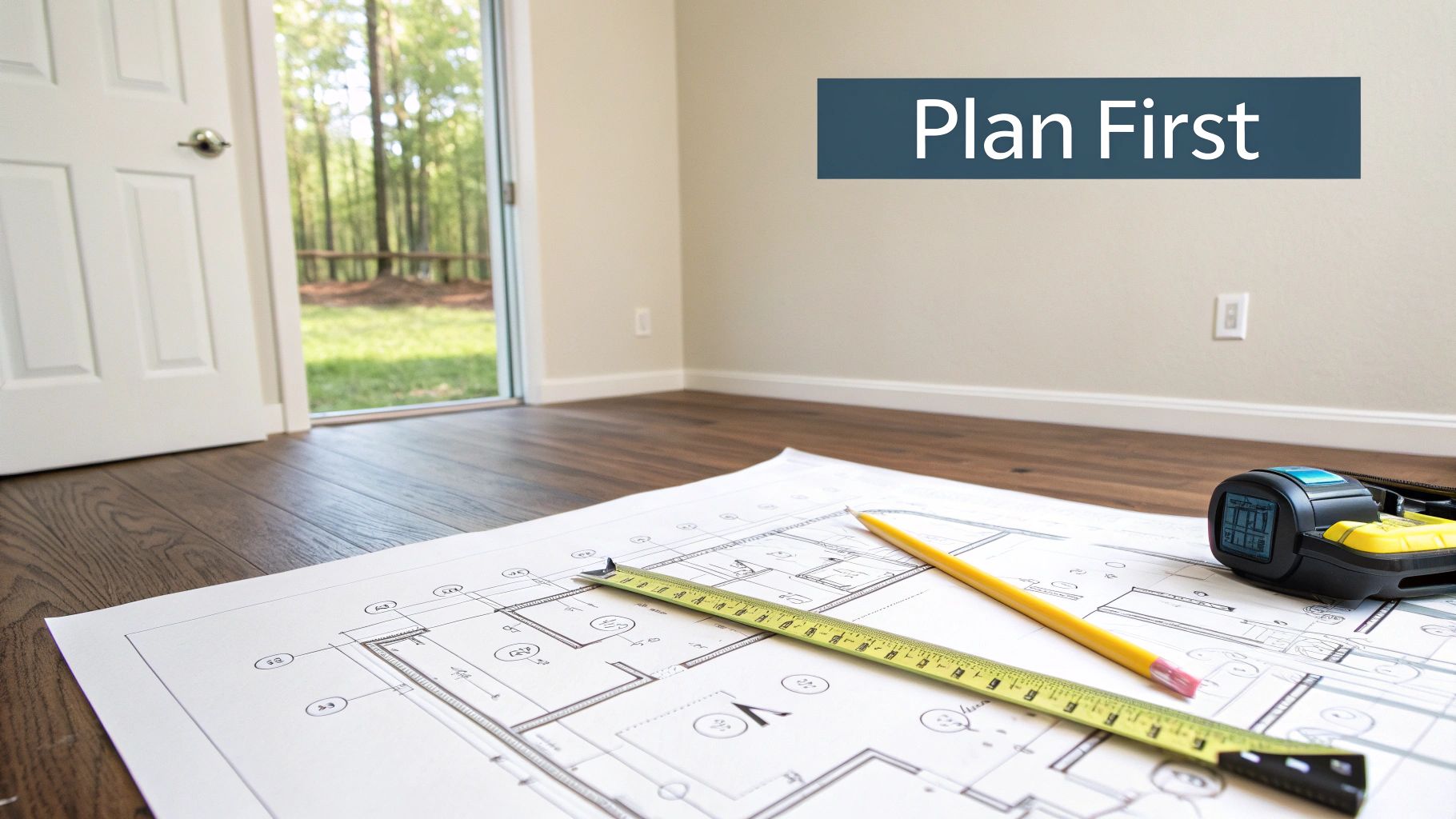
The first step in arranging your bedroom furniture isn't about moving heavy dressers—it's about a simple, thoughtful plan: measure your space, define your focal point, and map out the traffic flow. This is the secret to getting it right the first time, preventing that all-too-common mistake of just pushing everything against the walls and hoping for the best.
Your Blueprint For a Perfectly Arranged Bedroom
Staring at an empty bedroom can feel like looking at a blank canvas. It’s exciting, but it can also be a little intimidating. The key to turning that empty space into a true retreat isn’t guesswork; it’s all about creating a solid blueprint before you lift anything.
A few minutes of planning will save you hours of physical labor and frustration. Trust me, this initial step is the most critical part of the process. It's what separates a room that feels chaotic from one that feels intentionally designed for comfort and ease.
Start With Measurements and a Sketch
Before you do anything else, grab a tape measure. The foundation of any good room layout is knowing exactly what you're working with.
Jot down the length and width of each wall. But don't stop there—you also need to measure and mark the locations of permanent fixtures:
- Doors: Note which way they swing and how much space they need to open fully.
- Windows: Measure their width and how high they are from the floor.
- Outlets and Switches: Knowing where your power sources are is crucial for placing lamps and charging stations.
- Architectural Features: Document any radiators, built-in shelves, or awkward corners that you’ll need to work around.
Once you have these numbers, sketch a simple floor plan on a piece of paper or use a free online tool. This visual map is your playground for experimenting with different layouts without breaking a sweat.
Identify the Focal Point and Traffic Flow
Every room needs a focal point to anchor the design, and in a bedroom, that's almost always the bed. The best spot for your bed is usually the wall you see first when you walk in, or the longest wall without any windows or doors. Placing it there creates a natural sense of order.
Next, think about how you actually move through the space. You need clear pathways from the doorway to your closet, to the windows, and around the bed.
A key rule of thumb is to leave at least 24-30 inches for major walkways. This ensures you can move around freely without bumping into furniture, especially during a late-night trip to the bathroom.
This simple process—measure, plan, and then place—is the core strategy for a successful layout.
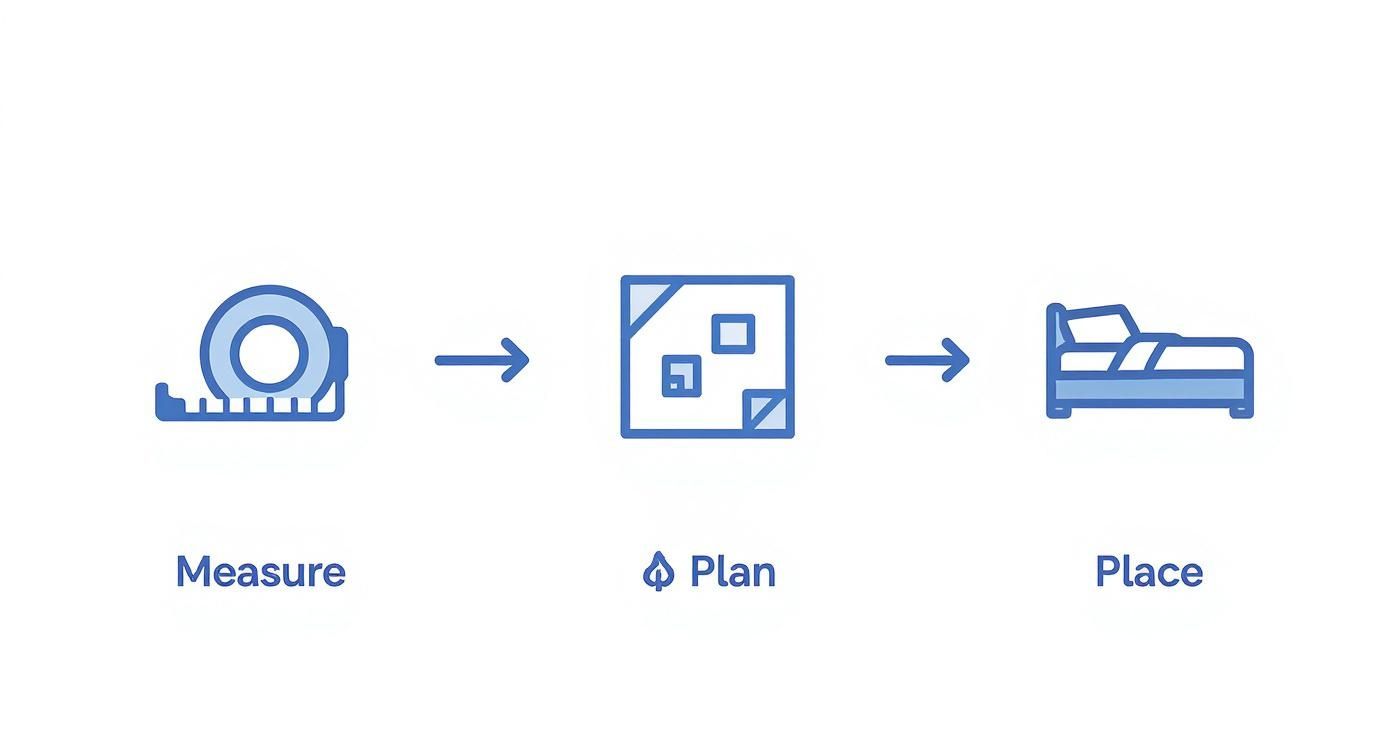
As you can see, a great layout comes from methodical planning, not random placement.
This emphasis on thoughtful arrangement is a huge trend right now. The global bedroom furniture market, valued at USD 247.55 billion in 2025, is projected to hit nearly USD 292.73 billion by 2034. This growth is fueled by our demand for furniture that's not just beautiful but also multifunctional and space-saving, especially in smaller urban homes.
To make sure your layout is both functional and visually stunning, it helps to think like a pro by staging a bedroom effectively.
Bedroom Layout Planning Checklist
Use this checklist to create a solid plan before you move any furniture. It will help you catch potential issues on paper instead of with a heavy dresser in your hands.
| Planning Step | Key Consideration | Action Item |
|---|---|---|
| Measure Everything | Accurate dimensions of the room, windows, doors, and all existing furniture. | Use a tape measure to get the exact numbers for your room and each furniture piece. Sketch it out. |
| Define the Focal Point | The bed is the star of the show. Its placement anchors the entire room. | Identify the best wall for the headboard (usually the first one you see or the longest uninterrupted wall). |
| Map Traffic Flow | Ensure clear, walkable paths from the door to the closet, bed, and windows. | Use your sketch to draw pathways, making sure they are at least 24-30 inches wide. |
| Position Key Furniture | Plan the placement of large items like dressers and nightstands after the bed. | On your sketch, place the largest items first, ensuring drawers and doors can open fully. |
| Account for Power | Know where your outlets are to avoid running extension cords across the room. | Mark all outlets and switches on your floor plan to inform lamp and electronics placement. |
Completing this checklist gives you a clear, actionable blueprint. With this plan in hand, you're ready to start arranging your furniture with confidence.
Placing the Bed, Dresser, and Nightstands
Alright, with your measurements and a rough plan in hand, we can get to the fun part: placing the big-ticket items. Your bed, dresser, and nightstands are the workhorses of the bedroom, and getting their relationship right is the key to a room that just feels right.
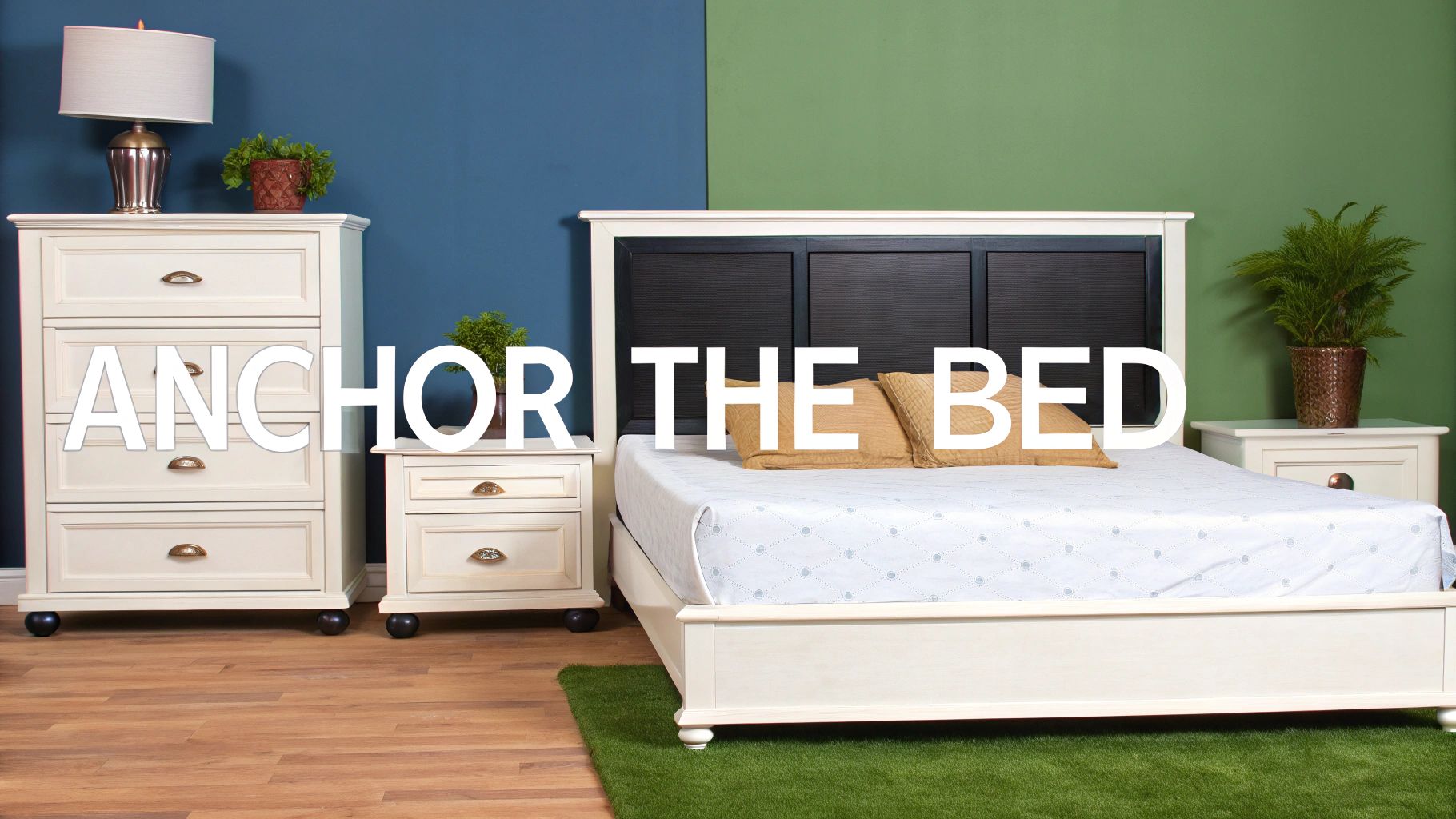
The bed is always the star of the show. Its placement sets the tone for the entire room. I’ve found the best spot is almost always with the headboard against a solid wall, preferably the one you see when you first walk in. This creates an immediate, welcoming focal point and makes the space feel grounded and secure.
If the wall opposite the door has windows or is just too short, don't worry. Your next best bet is the longest, uninterrupted wall. This gives you plenty of breathing room on either side and keeps the layout from feeling squished.
Finding the Right Spot for Your Dresser
Once the bed has found its home, it's time for the dresser. Think of it as the bed's supporting actor. To create a sense of harmony, try placing the dresser on the wall directly opposite the bed. This is a classic designer trick that balances the visual weight in the room perfectly.
Of course, not every bedroom is a perfect rectangle. If that layout doesn't work, an adjacent wall is a fantastic alternative. Just do a quick check to make sure you can still open all your drawers and closet doors without hitting anything.
A dresser is more than just storage; it’s a crucial piece of the puzzle. It's no surprise that dressers are the fastest-growing category in the global bedroom furniture market, with a projected 5.2% CAGR from 2025 to 2030. People are looking for functional, stylish pieces. You can discover more insights about these global furniture trends to see how design choices are evolving.
Selecting and Placing Nightstands
Finally, let's talk about nightstands. These are your bed's trusty sidekicks, holding your lamp, book, and morning alarm. The two most important things to get right here are scale and height.
Pro Tip: Your nightstands should be about the same height as the top of your mattress, maybe an inch or two lower. This makes everything easy to reach and creates a clean, pleasing line for the eye to follow.
They need to be useful without being overbearing. Keep these pointers in mind:
- Go Symmetrical: Two matching nightstands will always give you that classic, hotel-suite vibe. It’s balanced and timeless.
- Mix It Up: If you're tight on space or just love a more eclectic look, try an asymmetrical approach. A small table on one side and a narrow chest on the other can add a ton of personality.
- Keep It Functional: Make sure there's enough room for your must-haves without it looking like a cluttered mess.
If you find yourself trying to cram a bulky dresser into a layout that just won’t cooperate, it might be a sign to rethink your storage. Sometimes, a super-organized closet can completely eliminate the need for a dresser, freeing up valuable floor space. If that sounds like a game-changer for your room, check out these creative ideas on how to organize clothes without a dresser.
By nailing the placement of these three core pieces, you create a solid foundation that makes arranging everything else a breeze.
Mastering Closet Organization to Reduce Clutter
An effectively arranged bedroom isn't just about the perfect bed placement; it's also about what you don't see. A chaotic closet is often the real culprit behind a cluttered room, forcing you to use bulky dressers and armoires to manage the overflow.
Think of your closet as a strategic tool in your bedroom layout plan. By creating a hyper-efficient system behind those doors, you can dramatically reduce the need for extra furniture. This is the secret to freeing up valuable floor space and finally getting that open, serene retreat you've been aiming for.
Begin with a Strategic Purge
Before you can organize anything, you have to simplify. The first, most crucial step is to edit your wardrobe—ruthlessly. Most of us only wear about 20% of our clothes 80% of the time, which means a huge chunk of your closet is just taking up space.
Pull everything out. If you haven't worn an item in the last year, it's time to let it go. Be honest about what fits, what you genuinely love, and what no longer serves your lifestyle. This initial declutter is non-negotiable. For a more detailed guide, check out this step-by-step process on how to declutter your closet.
This isn't just about getting rid of stuff; it's about creating breathing room for a system that actually works. A streamlined wardrobe is infinitely easier to manage and stops your bedroom from turning into a secondary storage unit.
Maximize Every Inch with Vertical Space
Once you’re down to the essentials, the real organization can begin. The key to a small but mighty closet is to think vertically. Floor space is always at a premium, but your closet's vertical space is a goldmine of untapped potential.
This is where simple tools can make a monumental difference. One of the single most effective changes you can make is swapping out your bulky, single-item hangers for multi-tier, space-saving ones. It’s a small tweak with a massive impact.
By using multi-garment hangers, you can instantly reclaim up to 75% of your hanging rod space. This doesn't just create room; it transforms a cramped, jumbled mess into an orderly wardrobe where you can see everything at a glance.
Don't stop there. Consider other vertical solutions to get the most out of every corner:
- Hanging Shelves: These fabric organizers are perfect for bulky items like sweaters and jeans that can get stretched out on traditional hangers.
- Over-the-Door Organizers: The back of your closet door is prime real estate. Use it for shoes, scarves, or accessories to keep them off the floor.
- Drawer Dividers: Tame the chaos inside your drawers. Use simple dividers to create neat, designated compartments for socks, undergarments, and belts.
Smart Solutions for a Streamlined Closet
A well-organized closet is so much more than a convenience—it's a core component of your entire bedroom's design. When you maximize this space, you directly influence how you can arrange the rest of the room.
To really see the impact, it helps to compare the old way of doing things with smarter, modern solutions.
Closet Space-Saving Solutions
This table breaks down how a simple switch in tools can completely change your storage game.
| Feature | Traditional Method (e.g., Single Hangers) | Space-Saving Solution (e.g., MORALVE Hangers) | Benefit |
|---|---|---|---|
| Hanging Capacity | One item per hanger, taking up significant rod width. | Holds multiple items vertically on a single hanger. | Drastically increases the number of clothes you can hang in the same amount of space. |
| Visibility | Clothes are often crammed together, making it hard to see what you own. | Garments are cascaded, allowing for easy browsing and quick outfit selection. | Reduces morning stress and helps you use your full wardrobe, not just what's in front. |
| Space Usage | Primarily uses horizontal rod space, leaving vertical space empty. | Taps into the unused vertical dimension of your closet. | Frees up rod space for other items and makes the entire closet more efficient. |
| Overall Clutter | Leads to overstuffed rods and clothes spilling onto the floor or chairs. | Keeps items neatly contained, reducing visual clutter in both the closet and the bedroom. | Contributes to a calmer, more organized bedroom with less need for bulky storage furniture. |
By putting these organizational strategies into practice, you’re not just cleaning out a closet—you're actively designing your bedroom. You’re building a functional system that supports a clutter-free environment, giving you more freedom and creativity to arrange your furniture exactly how you want it. A well-managed closet truly is the foundation of a peaceful, well-arranged bedroom.
Adding the Final Layers: Seating, Lighting, and Rugs
Your bed and dressers are in place, your closet is a picture of efficiency. Now for the fun part—adding the layers that make a room feel like a personal retreat. Seating, lighting, and rugs are the finishing touches that pull everything together, injecting warmth, texture, and your own unique style.
Think of it like this: the main furniture is the foundation, but these elements are what make the house a home. Without them, even a perfectly arranged bedroom can feel a little cold and unfinished.
Carve Out a Space for Seating
Even the smallest bedroom feels more luxurious with a place to sit that isn't your bed. Creating a dedicated seating area, no matter how simple, gives you a spot to read, tie your shoes, or just take a breath before starting your day.
You don't need a massive armchair to make an impact. Here are a few practical ideas I've seen work wonders:
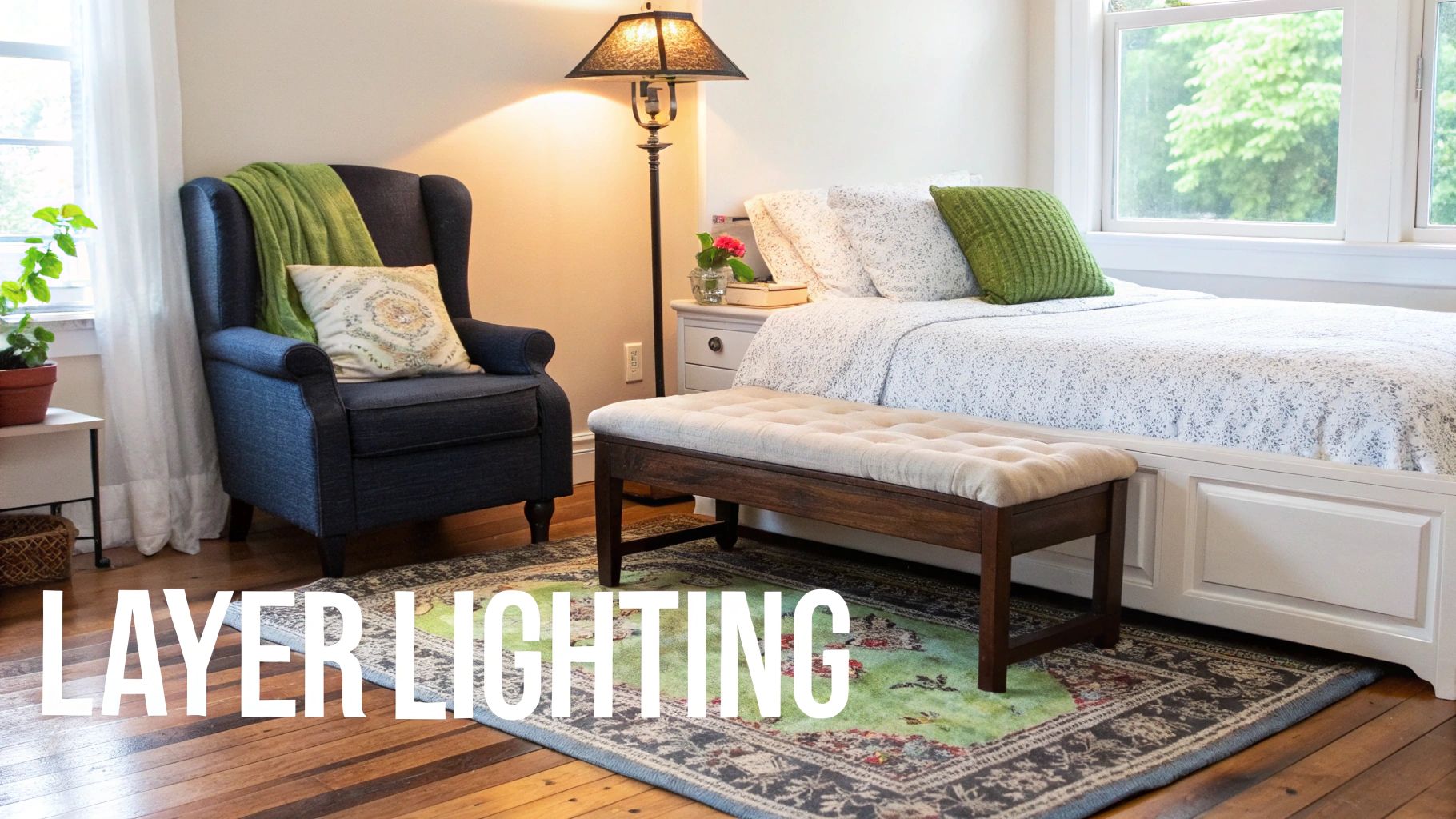
- Bench at the Foot of the Bed: This is a classic for a reason. It anchors the bed visually and provides a perfect perch without eating into your walking paths.
- A Cozy Corner Nook: Got an awkward, empty corner? Tuck a comfortable armchair and a small side table there. Instant reading nook. You've just created a whole new "zone" for relaxation.
- The Versatile Ottoman: An ottoman is a true multitasker. It can be a seat, a makeshift coffee table for a tray, or even hidden storage if you get one with a lift-top.
The key is to add function without cluttering the traffic lanes you worked so hard to define. A small seating element transforms the room from just a place to sleep into a true multi-purpose sanctuary.
Layer Your Lighting for the Right Mood
Relying on a single, harsh overhead light is probably the number one mistake I see in bedroom design. It casts unflattering shadows and does absolutely nothing for creating a relaxing vibe. The secret to a beautifully lit room is to layer your lighting sources.
A well-designed space should have three types of light working in harmony:
- Ambient: This is your general, room-filling light, usually from a central ceiling fixture like a chandelier or a simple flush-mount.
- Task: This is targeted light for specific activities. Think bedside lamps for reading or a floor lamp aimed over the shoulder of your new armchair.
- Accent: This is the subtle stuff that creates atmosphere. A small, low-wattage lamp on a dresser, or picture lights highlighting artwork, adds a soft, warm glow.
When you combine these three layers, you get total control over the room's atmosphere. You can make it bright and clean for getting ready or dim it down for a quiet, restful evening.
Ground Everything With the Right Rug
A rug is the single element that grounds your furniture and ties the whole room together. But here's a common pitfall: choosing one that's too small. A "postage stamp" rug floating in the middle of the floor makes the entire room feel smaller and disjointed.
As a rule of thumb, make sure your rug is large enough to extend at least 18-24 inches from the sides of the bed. This gives your feet a soft place to land in the morning and creates a cohesive foundation that makes the whole layout feel intentional.
This desire for a well-thought-out, personalized space isn't just a fleeting idea; it's a major market driver. The global bedroom furniture market is projected to swell from USD 254.3 billion to USD 403 billion between 2025 and 2032. This boom is fueled by a growing focus on home aesthetics and the demand for smarter, more adaptable furniture. You can learn more about these evolving bedroom furniture trends to see how design is shifting to meet our modern lifestyles.
By thoughtfully layering in seating, lighting, and a properly sized rug, you're not just arranging furniture—you're crafting a space that is functional, comfortable, and a true reflection of you.
Taming Tricky Layouts and Small Bedrooms
Let's be honest, not every bedroom is a perfect, easy-to-furnish rectangle. I've seen my share of awkward corners, rooms with too many doors, and footprints so small they feel more like a closet. It's easy to get frustrated, but the real secret is to stop seeing these quirks as problems.
Think of them as opportunities. A tricky layout is your permission slip to get creative and design a space that’s uniquely yours, not just a carbon copy from a catalog.
Go Vertical and Get Multi-Functional
When floor space is the most valuable real estate you own, every piece of furniture has to earn its keep. This is where you lean into multi-functional design. A bed with built-in storage drawers can completely replace a bulky dresser. A storage ottoman at the foot of the bed gives you a spot to sit and a place to hide away extra blankets.
Even more importantly, start thinking vertically. Your walls are your best friends in a small room. Instead of a wide, low dresser that hogs floor space, find a tall, narrow one that draws the eye up. Floating nightstands or wall-mounted shelves do the same thing—they get things off the floor, instantly making the room feel bigger and less cluttered.
This "think vertical" mindset is an absolute game-changer for your closet. A truly organized closet can completely alter your furniture needs.
Your Closet Is Your Secret Weapon
We often treat the closet as a separate entity, but it's one of the most powerful tools for managing your bedroom's layout. When your closet is overflowing, that chaos spills out into the room, demanding more dressers, more bins, and creating more visual noise.
By getting your closet in order, you directly influence the entire room's sense of calm. The simplest, most effective trick I've found is to ditch the clunky, single-use hangers. Swapping them for multi-garment versions is a small change with a massive impact. You can find all sorts of space-saving hangers designed to stack pants, shirts, or skirts vertically, often tripling your hanging space.
Once your closet is working at peak efficiency, you might realize you don't even need that second dresser. Suddenly, you've freed up an entire wall. That's a new opportunity for a reading nook, a vanity, or just some beautiful, open breathing room.
Smart Strategies for Awkward Shapes
Beyond just being small, some bedrooms have architectural quirks that can throw you for a loop. Here's how to handle the most common culprits:
-
The Long, Skinny Room: The classic mistake is lining all your furniture up against one wall, creating what designers call the "bowling alley effect." Don't do it. Instead, break the room into zones. Place your bed and nightstands at one end, then use a rug to define a separate zone at the other for a desk, a vanity, or a comfy armchair.
-
Rooms with Sloped Ceilings: That awkward sloped wall isn't a dead zone; it's the perfect home for your shorter furniture. A low dresser, a storage chest, or even the head of your bed can tuck neatly under the lowest point. This move utilizes an otherwise tricky spot and saves your full-height walls for taller pieces like an armoire or bookshelf.
-
Bedrooms with Too Many Doors or Windows: When wall space is scarce, you have to be bold. Try "floating" your bed by pulling it away from the wall. You can anchor it by placing a low bookshelf or a console table behind it to act as a headboard. It creates a powerful focal point and solves the problem of not having a clear wall to work with.
By mixing multi-purpose furniture with smart vertical storage and creative zoning, you can win against any tricky layout. The goal isn't just to make the room look bigger, but to make it function beautifully for the way you actually live.
Common Questions About Arranging Bedroom Furniture
https://www.youtube.com/embed/HjIg72N1pLw
Even with the best plan on paper, arranging furniture in the real world can throw you a few curveballs. As you start moving things around, you'll inevitably hit a few "wait, what about this?" moments. It happens to everyone.
Here are the answers to some of the most common questions I get asked, designed to help you solve those final layout puzzles with confidence.
Should My Bed Go Under a Window?
This is probably the number one question people have, and I get why. You see it all the time in design photos, but in practice, it’s usually best to avoid putting your bed under a window.
Placing your bed there often means blocking some natural light, getting tangled in curtains, and making it a pain to open or close the window. Practically speaking, it can also mean dealing with chilly drafts in the winter or a blast of sunlight waking you up way too early.
Of course, sometimes you have no choice. In a smaller room or one with an awkward layout, the windowed wall might be the only logical spot. If that's your situation, just opt for a lower headboard that won't block the view or get in the way of the window's operation.
How Much Space Should I Leave Around Furniture?
This is all about creating good traffic flow. A room can look perfect, but if you're constantly squeezing past things or stubbing your toe, it’s a failure. Your goal is to create clear, comfortable pathways.
Here are the numbers you absolutely need to know:
- Main Pathways: For any major walkway—like from the door to the closet—leave at least 30-36 inches of clear space. This prevents the room from feeling cramped.
- Around the Bed: You’ll want a minimum of 24 inches on either side of the bed. It’s just enough room to comfortably make the bed and get in and out without doing a weird sideways shuffle.
- Between Furniture: The gap between your dresser and your bed, or a desk and a chair, should be about 30 inches so you can walk through and open drawers without hitting anything.
Following these minimum clearances is the secret to making a layout feel right. It's the invisible structure that makes a room comfortable and effortless to live in.
What Do I Do With a Long and Narrow Room?
Ah, the classic "bowling alley" bedroom. It's a tough one. The natural tendency is to push all the furniture against the two long walls, but this just makes the room feel even more like a hallway.
The trick is to stop thinking of it as one long space. Instead, you need to divide and conquer. Use your furniture to create different zones.
For instance, you could group your bed and nightstands at one end to establish a clear sleeping area. Then, use a small area rug to anchor an armchair and a floor lamp at the other end, creating a distinct reading or dressing nook. This simple strategy breaks up that long, straight line and gives the room a much more balanced and purposeful feel.
Can I Use an Area Rug on Carpet?
Yes, absolutely! Layering an area rug on top of wall-to-wall carpet is a fantastic designer trick. It’s one of the easiest ways to inject color, texture, and personality into an otherwise plain room.
A layered rug is also a great tool for defining a space, like the area around your bed or a small seating area. The key is to create contrast. If you have a low-pile carpet, go for a fluffier, high-pile rug. If your carpet is plusher, a flatweave rug will look sharp.
Just remember that the normal sizing rules still apply. The rug needs to be large enough to properly anchor the furniture. For a bed, that means it should extend at least 18-24 inches out from the sides so it doesn't look like a tiny, random postage stamp in the middle of the floor.
A truly organized space begins with a clutter-free closet. At MORALVE, we design smart, space-saving hanger solutions that help you maximize every inch of your wardrobe, freeing up valuable space in your bedroom. Discover how our products can transform your closet and your room at moralve.com.
ggg
Nice
Leave a comment