

How to Maximize Small Closet Space Without a Total Renovation

To truly maximize a small closet, you have to create a strategic organization plan before buying a single container. The entire process hinges on a ruthless decluttering session paired with a smart, honest assessment of the space you're actually working with. This first phase is everything—it lays the groundwork for an efficient closet organization system that will actually last.
Your Blueprint for a Clutter-Free Closet
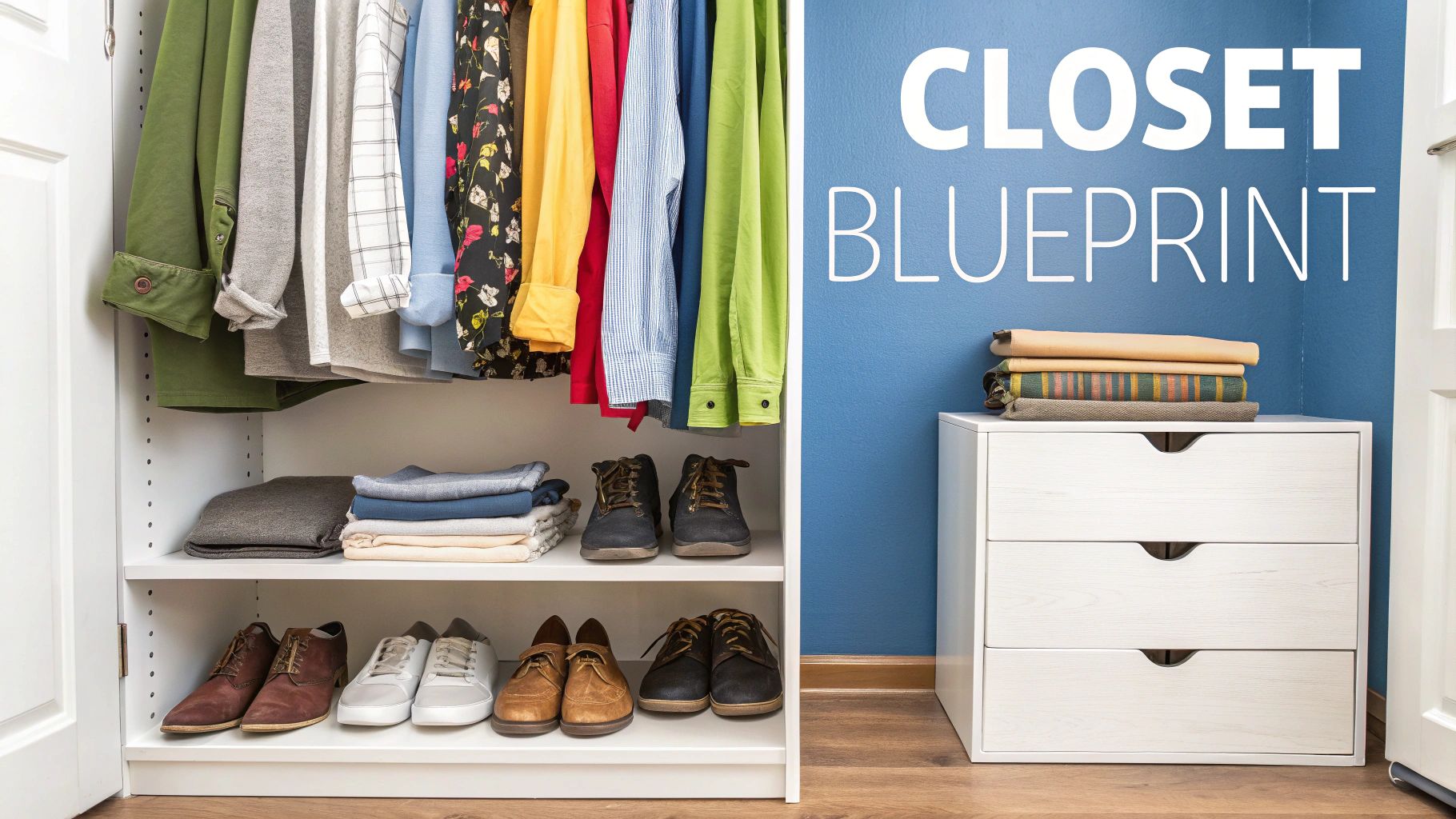
Feeling overwhelmed by a cramped, overflowing closet is a universal struggle. The solution, however, isn't about cramming more stuff in. It’s about being deliberate with your organization. Before you even think about buying a new hanger or bin, the most critical step is to create a totally clean slate. That means taking everything out and understanding the true dimensions of your space.
So many people make the classic mistake of buying storage solutions first. They get excited, bring home a bunch of bins and dividers, and then realize they don't fit the closet or the clothes they own. Starting with a full assessment helps you sidestep that costly and frustrating error. You’ll learn to see your closet not as a chaotic mess, but as a blank canvas with real organizational potential.
Think Like a Professional Organizer
The real secret to making the most of a small closet is to think like a pro. Professional organizers don't just tidy up; they strategize. They pinpoint underused areas—like that empty vertical space above the hanging rod or the floor hidden beneath your clothes—and map out a layout that fits your specific wardrobe and daily routine.
This involves mentally dividing your closet into functional zones, a concept we call closet zoning. By creating dedicated spaces for different categories—work shirts here, weekend jeans there, scarves in this corner—you build an intuitive system where everything has a logical home.
Here's why starting with an organizational plan is a game-changer:
- You prevent wasting money on organizers that don't solve your actual problems.
- You create a more efficient daily routine because finding what you need becomes second nature.
- You ensure every single inch of your closet is working as hard as it can.
This initial phase is about shifting your mindset. You're moving from just reacting to the clutter to proactively designing your organized space.
"The first rule of organization is to get rid of what you don't need. The second rule is to create a logical home for everything you decide to keep. Without these two steps, you're just rearranging clutter."
Creating Your Strategic Vision
Once your closet is completely empty, you can finally see its true organizational potential. Grab a tape measure and get the exact width, depth, and height. Take note of any built-in shelves, weird corners, or other quirks. This information is your blueprint.
With these measurements in hand, you can start to visualize the layout. Could a second tension rod double your hanging space for shirts and skirts? Maybe some slim shelving units could turn that jumbled pile on the floor into an organized shoe sanctuary. It's this vision that will guide every decision you make from here on out, ensuring every choice contributes to a more organized, spacious-feeling closet.
The next step is to face the pile of stuff you pulled out. A simple sorting method can make this process feel way less daunting. By sorting items into clear, actionable categories, you can make confident choices about what truly deserves to go back into your newly organized space.
The Four-Box Decluttering Method
To streamline your closet cleanout, try the Four-Box method. This is a simple, no-nonsense approach that forces you to make a decision about every single item, preventing the dreaded "I'll deal with this later" pile.
| Box Category | Actionable Guideline | Example Items |
|---|---|---|
| Keep | Items you love, wear regularly, and that fit well. | Your favorite pair of jeans, a go-to work blazer, the sweater you wore last week. |
| Donate/Sell | Good-condition items you no longer wear or need. | The trendy top from two seasons ago, pants that no longer fit, duplicate items. |
| Store | Seasonal or sentimental items you don't need daily access to. | Heavy winter coats, formal wear, a sentimental but unwearable concert t-shirt. |
| Discard | Anything that is stained, damaged, or worn beyond repair. | Socks with holes, a pilled sweater, a hopelessly stained shirt. |
This method is the cornerstone of effective closet organization. Be honest and decisive. If you hesitate on an item, it probably doesn't belong in the "Keep" box. This ruthless but rewarding process is what makes space for a closet that truly works for you.
The Art of the Closet Purge: What Stays and What Goes
You've done the initial sort and now you're staring at the "Keep" pile. This is where most people get stuck. We hang onto clothes out of guilt ("I spent so much on this!"), nostalgia, or for a fantasy "someday" that, let's be honest, probably isn't coming.
If you really want to reclaim your small closet, you have to be ruthless. The goal isn't just to toss things out; it's to curate a wardrobe that is easy to organize. A cluttered closet adds stress to your morning routine. A streamlined one gives you a calm, confident start to your day.
The Litmus Test for Every Garment
To get past the emotional attachment, you need a practical filter. Grab an item from your "Keep" pile and put it through this quick, honest-to-goodness evaluation.
- Have I worn this in the last 12 months? If the answer is no, it's a huge red flag. Formal wear and very specific seasonal gear get a pass, but that's it. Our lives change, and so do our tastes.
- Does this fit me right now? Not "after I lose 10 pounds." Not "if it shrinks a bit." Your closet needs to serve the body you have today. Keeping clothes that don't fit is just a recipe for guilt and wasted space.
- Do I feel good wearing this? You know the feeling. Some pieces look great on the hanger but make you feel awkward or self-conscious. If you don't feel confident the second you put it on, it has to go.
- Does this match my current life? That amazing collection of power suits might have been perfect for your old corporate job, but if you're working from home in joggers now, they're just dead weight. Your wardrobe should reflect your reality.
Asking these questions shifts the whole process. You’re no longer just getting rid of clothes; you're making smart, intentional decisions about what deserves a place in your organized closet.
Navigating the Tough Calls
Even with a solid system, some items are just plain hard to part with. The two biggest roadblocks? Expensive mistakes and sentimental pieces.
Let's talk about that designer jacket you snagged on sale but have never actually worn. The money is gone, whether it hangs in your closet or not. Keeping it just serves as a constant, space-hogging reminder of that buying decision. Let it go. Sell it, donate it, and let someone else actually enjoy it.
For sentimental items—like a t-shirt from a life-changing concert—ask yourself if its home is really in your active wardrobe. These items are memories. Consider creating a dedicated memory box instead of letting them take up prime real estate you need for your everyday clothes.
Your closet should be a functional tool, not a museum. Organize it for the life you're living now, not the one you used to have or the one you imagine for the future.
Think Like a Capsule Wardrobe Pro
Borrowing a few ideas from the capsule wardrobe movement can be a total game-changer, especially for tiny closets. The concept is simple: build a small collection of high-quality, essential pieces that all work together. It’s all about quality over quantity.
You don’t need to go full minimalist with only 30 items. Just start prioritizing versatility. Keep the classic-fit jeans, the neutral sweaters, the blazer that goes with everything, and the shirts you can easily dress up or down.
This strategy does more than just save space—it saves you from decision fatigue. When everything in your closet is organized to play well together, getting dressed is suddenly quick and easy. For a deeper dive, our guide on how to declutter your closet has some fantastic, in-depth strategies. Adopting this mindset is the final, crucial step in transforming your closet from a source of stress into your secret weapon.
Planning Your Closet’s Layout and Maximizing Space
With your wardrobe pared down to the essentials, it's time to put on your architect hat. This is where we shift from decluttering to designing a smart, strategic plan that makes every single inch of your small closet count. Skipping this step is a classic mistake—it's how you end up with organizers that don't quite fit and a layout that doesn't solve your actual storage problems.
Think of your empty closet as a blank canvas for organization. Before you even think about putting items back in, you need to understand the space you're working with. This planning phase is what separates a truly functional closet from one that just looks tidy for a week.
Measure Twice, Organize Once
First things first: grab a tape measure. Don’t just eyeball it—in a small space, a quarter of an inch can make all the difference. Precision is your best friend here. You need to get three crucial measurements to build a working blueprint for your closet.
- Vertical Height: Measure from the floor all the way up to the ceiling. Then, measure from the floor to the bottom of any existing shelves or rods. This tells you exactly how much vertical real estate you have to play with.
- Rod Length: Get the precise length of your closet rod. This number is your guide for figuring out how many slim hangers you can fit or whether adding a second tension rod is a realistic option.
- Shelf and Floor Depth: Measure from the back wall out to the front edge of your shelves and the floor. This dimension determines what size bins, baskets, or shoe racks can fit without blocking the door or making the space feel cramped.
Scribble these numbers down somewhere you won't lose them. This isn't just busywork; these figures are the foundation of your entire organization system and will save you a ton of guesswork later.
This whole process of mapping out your space starts with the decisions you make about what to keep, as this infographic illustrates.
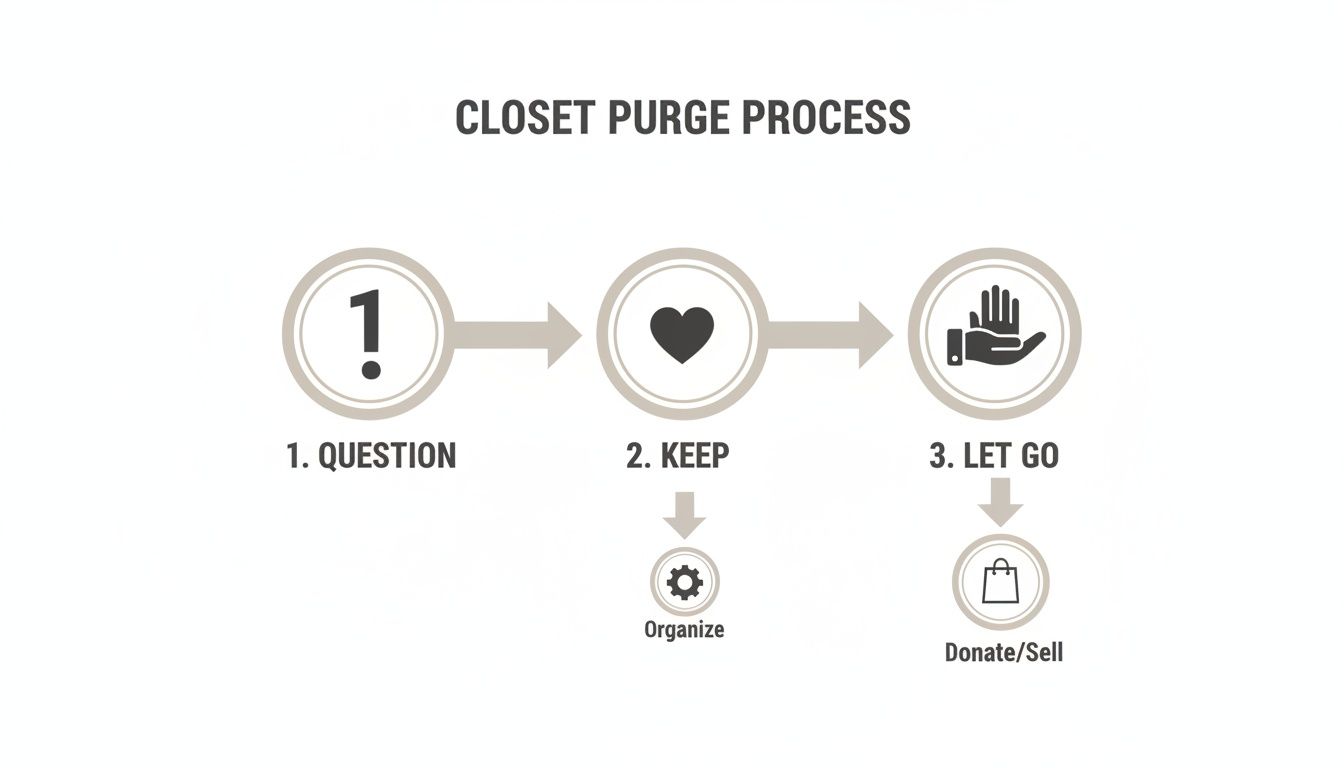
The flow from questioning to keeping and letting go is the groundwork you lay before any physical organization can truly begin.
Creating Your Closet Map
Now, let's turn those numbers into a simple visual guide. You don’t need any fancy software—a quick sketch on a piece of paper works perfectly. Draw the basic shape of your closet and label it with the measurements you just took.
This simple map is your tool for "zoning" your closet. Think about your daily routines and start assigning specific areas for different categories of clothes.
- Prime Real Estate (Eye Level): This easy-to-reach space is for your daily drivers—the clothes you grab without thinking. This is where your work shirts, favorite jeans, and go-to sweaters should live.
- The Upper Zone (High Shelves): This spot is perfect for things you don't need every day. Think off-season clothing, special occasion shoes, or extra linens.
- The Lower Zone (Floor Space): This area is ideal for shoes, baskets filled with workout gear, or even a small set of drawers for socks and folded clothes.
For those sentimental items you can't part with but don't have room for, utilizing self-storage solutions can be a smart move to free up that precious in-closet space.
Unlocking Your Vertical Potential
In any small closet, the most underused asset is almost always the vertical space. There's often a surprising amount of dead air between the top shelf and the ceiling, or between the hems of your hanging clothes and the floor. Tapping into this potential is a total game-changer for organization.
The demand for products that do just this is soaring. In fact, the global wardrobe market was valued at USD 66.31 billion and is projected to hit USD 108 billion by 2032, a trend largely fueled by our collective need for more space-efficient storage.
Here are a few practical ways I've seen clients reclaim that vertical space:
- Add a Second Rod: If you have enough height, a simple tension rod can instantly double your hanging space for shorter items like blouses, skirts, and folded trousers.
- Install More Shelving: Pop in a few slim shelves above your existing one. This is an easy win for creating a designated home for storage bins and baskets.
- Use Hanging Organizers: A fabric hanging shelf unit is a fantastic, no-installation-required way to create instant cubbies for sweaters, t-shirts, or handbags.
Taking a bit of time to plan your layout makes all the difference. If you're looking for more ideas, you might find some inspiration in our guide on how to design a closet from the ground up. When you treat your small closet like a mini design project, you can absolutely transform it from a point of frustration into a streamlined, functional part of your home.
Choosing The Right Tools: Space-Saving Hangers And Organizers
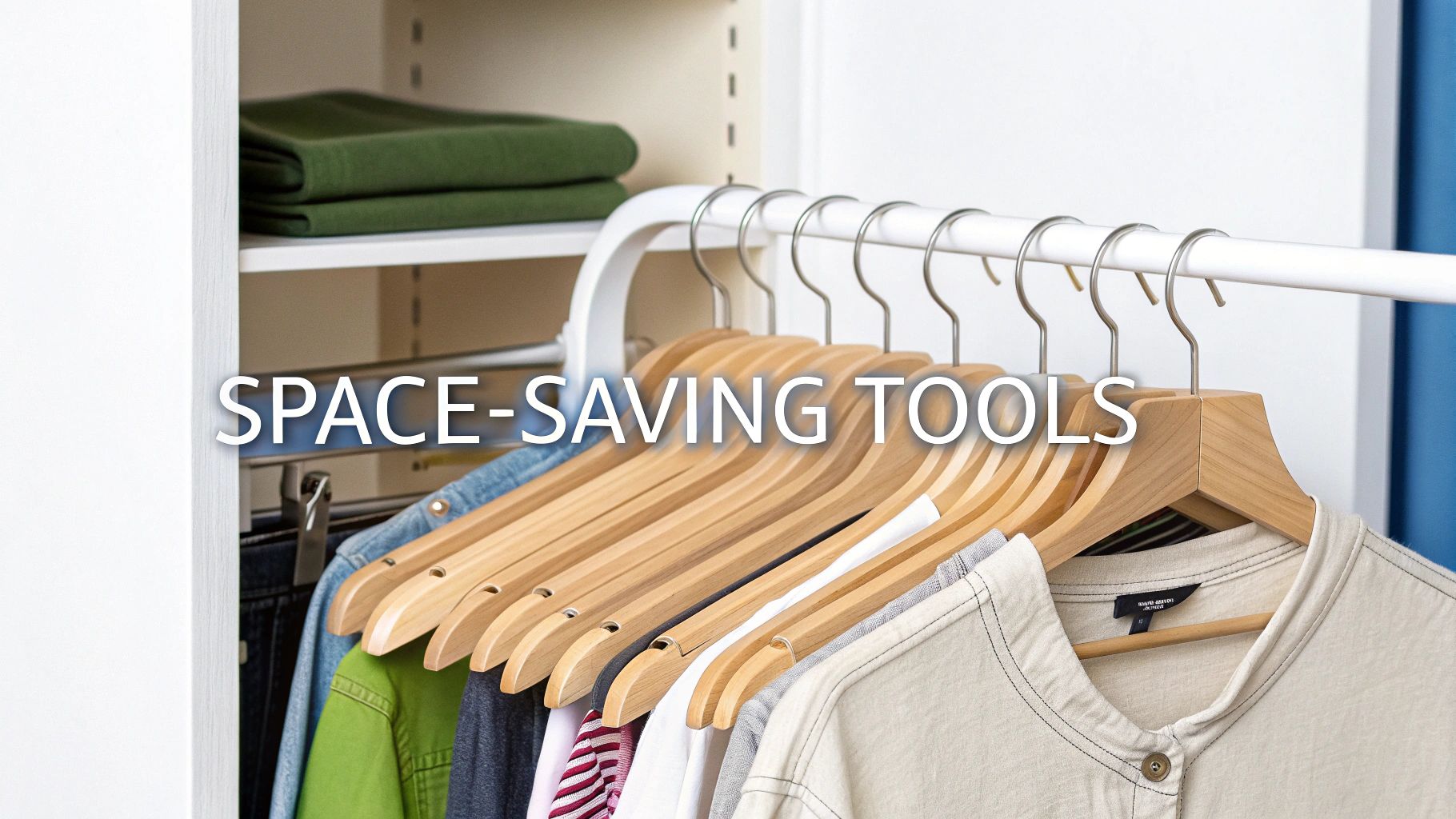
Alright, you've decluttered and sketched out a plan for your closet. Now for the fun part—picking the gear that makes it all work. This is where your organization vision becomes a functional, everyday reality. The right hangers and organizers aren't just accessories; they're the engine of an efficient closet.
Let's be honest, not all hangers are created equal. Those chunky plastic and flimsy wire hangers you’ve accumulated are secretly eating up your most valuable real estate: your hanging space. A simple swap is often the single most effective organizational change you can make.
The Game Changer: Slim Hangers
If you do just one thing, make it this: invest in a full set of uniform, slim hangers. They are the true unsung heroes of closet organization, instantly freeing up rod space before you even think about adding another organizer.
Think about it. A standard plastic hanger is about half an inch thick. A slim, velvet-flocked hanger is often less than a quarter of an inch. That tiny difference might not seem like much, but multiply it by 50 garments, and you've just magically created several extra inches of hanging room.
But the benefits go way beyond just saving space:
- No More Slipping: That non-slip surface is a lifesaver. It grabs onto silky blouses, wide-neck tops, and tank tops, finally keeping them off the closet floor.
- A Clean, Cohesive Look: A matching set of hangers brings a sense of calm and order. It makes your closet look intentionally organized, not chaotic.
- Better for Your Clothes: Unlike sharp wire or bulky wooden hangers, their gentle design helps preserve the shape of your garments over time.
This one upgrade is the foundation of a well-organized closet. By replacing your old hangers, you create a baseline of efficiency that every other tool will build upon.
The goal isn't just cramming more clothes in; it's being able to see and access what you own easily. The right hangers make your wardrobe more visible and less stressful to manage day-to-day.
Go Vertical With Specialized Hangers
Once you've set that solid foundation with slim hangers, it's time to get even smarter by using your vertical space. This is how you really maximize organization in a small closet. Instead of letting clothes spread horizontally across the rod, you start stacking them.
This is where specialized hangers come in. They are designed to hang multiple items in the footprint of a single standard hanger, dramatically increasing your storage capacity.
To help you find the right fit for your wardrobe, here’s a quick comparison of some of the most effective options from MORALVE.
Choosing Your MORALVE Space-Saving Hanger
| Hanger Type | Best For | Key Space-Saving Feature |
|---|---|---|
| Pants Hangers | Trousers, jeans, slacks, scarves | Hangs 5 pairs of pants vertically in the space of one. |
| Tank Top Hangers | Camisoles, tank tops, bras, slips | Holds up to 8 tank tops on a single hanger. |
| Skirt Hangers | Skirts, shorts, pants with clips | Features tiered clips to hang 4+ skirts vertically. |
These specialized tools are a game-changer. For example, a tiered pant hanger from MORALVE can take a whole bulky section of jeans and consolidate it, freeing up a surprising amount of rod space for dresses or jackets.
Similarly, other specialized hangers can solve common closet headaches:
- Skirt Hangers: Use clips to hang multiple skirts in one neat, vertical line.
- Tank Top Organizers: A single hanger can hold eight or more camisoles, clearing out both your rod and your drawers.
By thinking vertically, you multiply your storage without adding a single shelf. If you want to dive deeper, this guide to space-saving hangers for clothes is a great resource for exploring all the available options.
Selecting Organizers For Your Zones
With your hanging clothes sorted, turn your attention to the other zones you mapped out—the shelves, the floor, and the back of the door. The trick is to pick organizers that perfectly fit both the space and the items you plan to store in them.
For those upper shelves, using clear storage bins with lids is a fantastic strategy. They allow you to see what’s inside at a glance, so you don’t have to pull down three bins just to find one sweater.
- Over-the-Door Shoe Racks: A classic for a reason. It taps into completely unused space and gets your shoes off the floor.
- Hanging Shelf Units: These fabric organizers create instant cubbies for bulky sweaters or handbags, stopping them from toppling over.
- Drawer Dividers: If you have drawers in your closet, dividers are non-negotiable. They create designated homes for socks, belts, and underwear, preventing that dreaded "junk drawer" jumble.
It's clear people are catching on. The custom closets market was valued at USD 31,430.19 million and is projected to hit USD 67,944.75 million by 2035. This shows a huge trend toward creating highly organized, personalized spaces. By carefully picking a few key products that solve your specific storage problems, you can get a custom-closet feel and finally win the war against clutter.
Bringing Your Organization System to Life
You’ve done the hard work—the decluttering is done, you’ve got a smart layout in mind, and your new organizing tools are ready to go. Now for the fun part: putting it all together and bringing your highly functional closet to life. This is where all that planning pays off, turning your vision into a practical, everyday reality.
This final stage is more than just putting clothes back where they belong. It's about being deliberate with every choice to save yourself time, space, and stress for years to come. A few key organizational techniques will make your closet not only look incredible but also become a genuinely easy space to navigate.
The Art of Placement and Visibility
How you arrange items in your closet is just as important as the hangers you use. One of my favorite methods for creating instant visual order is color-coding. It might sound a bit obsessive, but trust me, arranging your tops, pants, and dresses in a light-to-dark or rainbow sequence makes finding that one specific shirt ridiculously fast.
Another game-changing organizational decision is knowing what to hang versus what to fold. Getting this right can free up a surprising amount of space.
- Hang these: Anything that wrinkles easily belongs on a hanger. Think blouses, dresses, blazers, and linen trousers.
- Fold these: Sturdier items are perfect for folding. This includes your jeans, chunky sweaters, and casual t-shirts. In fact, hanging heavy knits can actually cause them to stretch out of shape over time.
Making this simple distinction keeps your clothes in better condition and ensures you’re using every inch of shelf and rod space effectively.
Mastering the Seasonal Swap
Let's be realistic: in a small closet, keeping your entire wardrobe accessible all year round is a recipe for chaos. A smart seasonal rotation is a non-negotiable organization tactic. This just means tucking away off-season clothes to free up precious real estate for what you’re actually wearing right now.
Think of it as giving your closet a chance to breathe. At the end of each season, block out an hour or two to make the switch.
- Pack Away the Off-Season: Use vacuum-sealed bags to shrink bulky items like winter coats and sweaters. They’ll take up a fraction of the space and can be easily stashed in under-bed containers or on a high shelf.
- Bring Current Items Front and Center: Move your in-season clothes to the prime spots—eye-level and easy to reach.
- Do a Quick Mini-Purge: As you handle each piece, ask yourself a simple question. If you didn't wear that sweater once all winter, why store it? Maybe it’s time to donate it.
This simple ritual, performed just twice a year, keeps your closet organized and makes your daily routine so much smoother.
Creating Habits That Actually Stick
The truth is, an organized closet isn't a one-and-done project. It’s a habit. The good news? The upkeep doesn't have to be some monumental chore. A couple of simple, ingrained routines are all it takes to keep your hard work from coming undone.
The desire for this kind of order is massive. The global market for home storage and organization hit USD 46 billion in 2023 and is projected to climb to USD 76.1 billion by 2033. This boom is driven by people just like you, looking for solutions to create a more minimalist, organized home. You can dig into the market trends for home organization on SphericalInsights.com if you're curious.
To keep your closet from backsliding into chaos, just adopt these two simple rules:
The 'One In, One Out' Rule: For every new item of clothing you bring home, an old one has to go. This is the single most powerful habit for preventing your closet from becoming overstuffed again.
The 10-Minute Weekly Tidy: Set aside just ten minutes, once a week, to hit the reset button. Re-fold anything that’s gotten messy, put shoes back where they belong, and finally hang up the clothes from "the chair."
These small, consistent actions are what turn organization from a project into a lifestyle, ensuring your closet remains a calm, functional space day in and day out.
Got Questions? Let’s Talk Small Closet Troubleshooting
Even the most well-thought-out organization plan can hit a few snags. When you're dealing with a tiny closet, every inch and every decision counts, so it's completely normal for questions to pop up. I’ve heard just about all of them over the years, so I've put together answers to the most common ones that tend to trip people up.
Think of this as your go-to resource for fine-tuning your system. Getting the big picture right is one thing, but sometimes it’s the little details that make a closet system truly work for you in the long run.
"How Often Should I Really Be Decluttering My Small Closet?"
This is probably the most important question because it gets to the heart of keeping your closet organized for good: maintenance. The best approach isn’t one big annual event but a mix of deep dives and small, consistent habits.
I always recommend a major declutter once or twice a year. The perfect time to do this is when you’re swapping your seasonal clothes. You’re already handling every single item, so why not use that moment to make a quick decision about what stays and what goes?
To keep things from getting out of hand between those big sessions, try a quick 10-minute closet check-in once a month. This isn't a massive purge. It’s just a chance to refold that one messy stack of sweaters or pull out that shirt you realize you haven't touched.
But honestly, the most powerful habit you can build is the 'one in, one out' rule. Every time you bring home a new piece of clothing, an old one has to leave. This simple practice is what will actually stop your closet from slowly getting overstuffed again.
"Are Expensive Custom Closet Systems Worth It for Such a Small Space?"
It’s easy to fall into the trap of thinking a high-end, professionally installed closet system is the only way to tame a small space. And while they look incredible, they are absolutely not a must-have. You can get 90% of the benefits for a tiny fraction of the cost by being clever with modular organization solutions.
At their core, custom systems just do three things well: they use vertical space, create specific zones, and make every inch count. You can do all of that yourself on a budget.
Here’s how to get that custom feel without the hefty price tag:
- Add More Shelves: Pop a few extra shelves above your existing rod. It’s the perfect spot for bins with off-season sweaters or accessories you don't use daily.
- Double Up with Tension Rods: A simple tension rod can instantly double your hanging space. Use it for shorter items like shirts or skirts, hanging it below your main rod.
- Get Better Hangers: This is a big one. Investing in great tools like MORALVE’s space-saving hangers immediately frees up room on the rod you already have, giving you that streamlined, efficient look of a custom design.
The goal here is function, not a fancy facade. By hand-picking organizers that solve your specific storage headaches, you can build a system that feels like it was custom-made just for you.
"What’s the Biggest Mistake People Make When Organizing a Tiny Closet?"
I see this one all the time. The single biggest mistake is buying a single organizer before you've decluttered and measured your space. It's the classic cart-before-the-horse scenario. People get so excited about the "after" picture they have in their heads that they rush out and buy a bunch of bins, dividers, and cool-looking hangers.
The problem? They don't yet know what they actually need to store, nor do they know the exact dimensions they're working with. This almost always ends in frustration. You come home with bins that are too deep for your shelf, a shoe rack that keeps the door from closing, or organizers that just don’t fit the clothes you decided to keep.
To avoid wasting money and time, always follow this order: First, declutter. Second, measure everything and make a plan. Only then should you go shopping for organizing tools. This ensures every single thing you buy has a purpose.
A very close second mistake is forgetting about all that vertical space. In a small closet, the area above the rod and the floor below it are prime real estate. Leaving them empty is a huge missed opportunity.
Ready to put these ideas into action with tools that really work? The right hangers are the foundation of any great closet. At MORALVE, we're obsessed with creating innovative, space-saving solutions that help you fit more, find it faster, and finally keep your closet looking great for good.
Leave a comment