
How to Organize Closet on a Budget: Quick & Smart Storage Tips

Organizing your closet on a budget really comes down to a smart, three-part game plan: ruthlessly decluttering what you don’t need, planning your layout before you buy a single thing, and then picking out inexpensive storage solutions. This strategy makes sure every dollar you spend actually solves a problem, giving you a functional space without the hefty price tag.
Your Blueprint For a Clutter-Free Closet Without The High Cost
Transforming a chaotic closet into a serene, organized space feels like a project that should cost a fortune. But the secret to getting that high-end look isn't about expensive custom systems. It’s all in a solid plan that focuses on function and makes the most of every inch you already have. Honestly, the real work starts long before you even think about heading to the store.
This initial blueprint is your roadmap. It stops you from wasting money and ensures you only bring home items that perfectly fit your needs and your closet's specific dimensions. By taking the time upfront to declutter, measure, and budget, you're setting yourself up for a smooth and seriously rewarding project.
Starting With A Clear Vision
The most important part of any budget-friendly organization project is starting with a clear, actionable plan. Think of it as creating a map that takes you from total clutter to a state of calm.
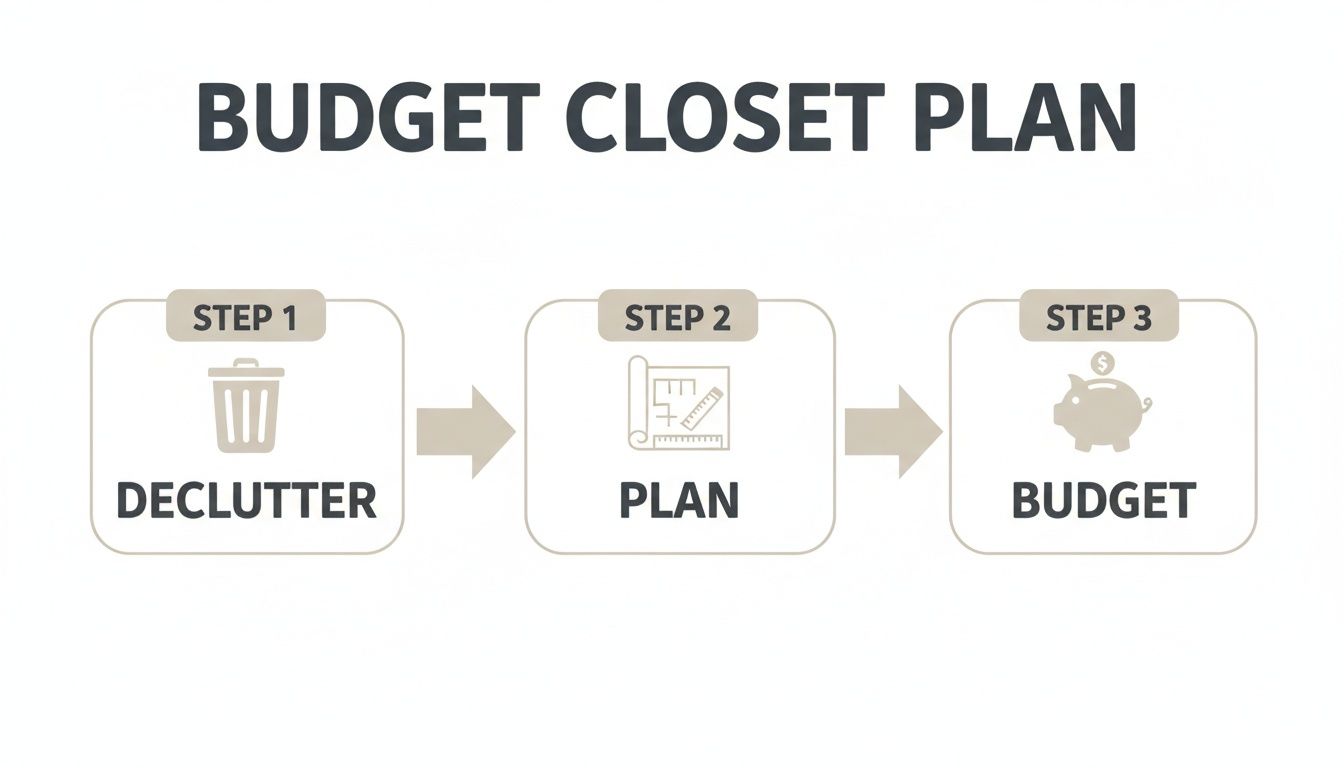
This visual guide really drives home the point that organization isn't just about buying more bins. It's a strategic process: first you declutter, then you plan, and then you budget for only what you truly need.
This kind of strategic thinking is key for closet success. The market for closet organizers is booming, with more people trying to maximize storage in smaller living spaces. This has led to some great affordable options. Modular shelving units made from materials like medium-density fiberboard (MDF) or sturdy plastic have become total game-changers, often costing under $50 per unit.
The goal here is to create a system so simple that keeping it tidy feels effortless. Before spending a dime, you should be able to close your eyes and picture exactly where every sweater, pair of shoes, and accessory will live.
Creating Your Financial Framework
Before we dive in, here is a quick overview of the plan we're about to build. This table breaks down the entire project into manageable phases, helping you see the big picture right from the start.
Quick Budget Closet Makeover Plan
| Phase | Action Item | Estimated Cost |
|---|---|---|
| 1: Foundation | Ruthless decluttering & sorting | $0 (just your time!) |
| 2: Planning | Measure space, sketch layout, create shopping list | $0 |
| 3: Budgeting | Set a firm spending limit | $0 |
| 4: Execution | Purchase necessary storage & hangers | $50 - $200 |
This plan shows that the most critical work happens before you even open your wallet, setting you up for a successful and affordable transformation.
Setting a realistic budget is a non-negotiable part of this process. It forces you to get creative and stops you from making impulse buys that don't actually fit your plan. Knowing your spending limit helps you prioritize the must-haves, like uniform space-saving hangers or versatile bins, over accessories that are nice but not essential.
To make this plan work, it helps to have a good handle on your finances in general. Learning how to save money on a tight budget can give you a solid foundation in mindful spending. That mindset will guide you to make smarter choices throughout your organization journey, keeping your closet makeover affordable and totally stress-free.
The Great Closet Cleanout: A Ruthless Decluttering Method
Before you even think about buying a single bin or hanger, the most crucial—and completely free—step is the cleanout. And I don’t mean a quick tidy-up. This is a ruthless edit of every single thing you own. The goal here is to create a blank canvas, reclaiming your closet's prime real estate for only the items you truly love and actually use.
Let’s be honest, a cluttered closet often leads to a cluttered mind. There's real data to back this up. Post-pandemic, a surprising 82% of millennials pointed to closet clutter as a direct source of stress. That feeling drove a 25% jump in sales for things like multifunctional storage racks. The payoff for clearing it out is huge, too; simply sorting your clothes into clear categories can slash your daily decision-making time by 40%. A little effort now saves you a headache every single morning.
This process is about changing your perspective. You'll stop seeing a problem and start seeing pure potential.
Embrace The Four-Box Method
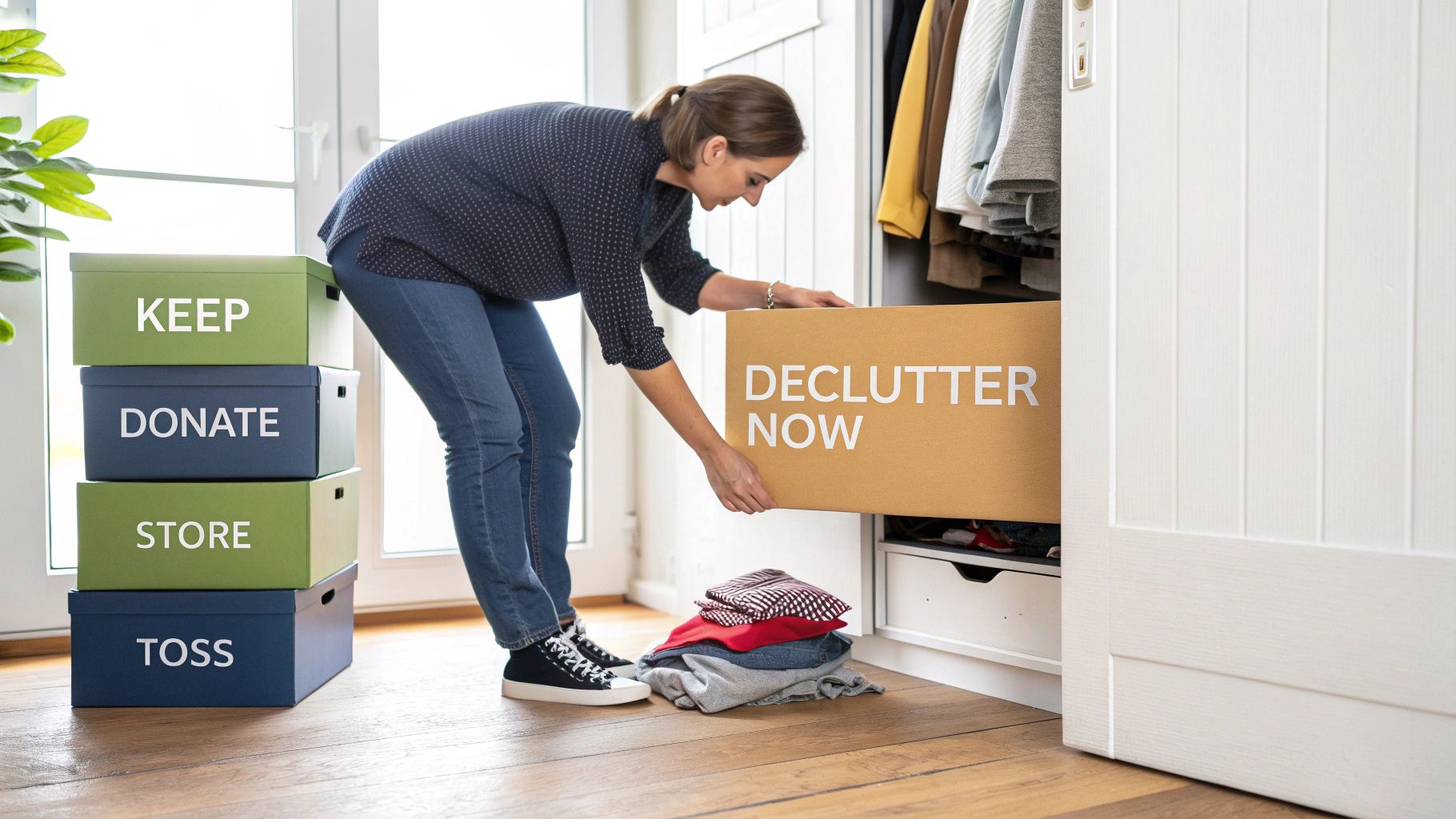
To avoid getting completely overwhelmed by a mountain of clothes, I always recommend the tried-and-true "Four-Box Method." Just grab four boxes or clear four distinct spots on the floor and label them: Keep, Donate, Store, and Toss. That's it. Every single item from your closet has to go into one of these piles—no exceptions and no "maybe" pile!
This system forces a decision. It cuts out the hesitation that kills momentum and turns a weekend project into a month-long saga. The trick is to work fast and trust your gut.
- Keep: This is for the stuff you love, wear regularly, and that fits who you are right now.
- Donate: For anything in good shape that just doesn't serve you anymore.
- Store: Think seasonal gear (heavy coats, ski pants) or sentimental pieces you can't part with but don't need cluttering up your daily space.
- Toss: For items that are stained, damaged beyond repair, or just plain worn out.
By breaking the massive task into a series of small, manageable decisions, you'll find the whole process much less daunting. When you're done, you're left with only the things that truly belong, which makes organizing what's left a breeze. For a deeper dive, check out our in-depth article on how to declutter your closet.
Ask The Tough Questions
As you pick up each item, you need a mental checklist to keep things moving. Hesitation is the enemy here, so having a few go-to questions ready will help you power through.
Be honest with yourself. This isn't about the person you once were or the person you hope to be in five years. It’s about what works for your life, right now.
If you get stuck on an item, run it through this quick filter:
- Have I worn this in the last year? If the answer is no (excluding special occasion wear), it’s a strong candidate for the donate pile.
- Does this still fit me and make me feel good? Stop holding onto "goal" clothes that just make you feel guilty. Your closet should be a source of confidence.
- Would I buy this again today? This question is brilliant for cutting through sentimental attachment and forces you to evaluate an item based on your current style.
- Is this item damaged or worn out? Be real with yourself. Are you actually going to mend that shirt? If not, it's time to let it go.
While we're focused on closets, these principles are universal. You can find more simple steps for decluttering any room in this helpful guide. It’s all about building the right mindset to reclaim your space, one room at a time.
Mapping Out Your Budget-Friendly Closet Layout
Alright, the clutter is gone. You’re looking at a clean slate. This is the moment to pause and think like a designer before you even think about opening your wallet. Trust me, jumping straight to the store to buy cute bins is the number one mistake people make. It's the fastest way to blow your budget on stuff that doesn't actually fit your space or your clothes.
A little bit of planning is what separates a truly functional closet from a temporarily tidy one. Taking a few minutes to measure and sketch things out means every dollar you spend has a purpose. This strategic step keeps you from buying organizers that are too big, too small, or just plain wrong for what you need to store.
Measure Twice, Buy Once
First thing’s first: get the hard numbers. Grab a tape measure and find out the exact dimensions you’re working with. It sounds tedious, but it's a game-changer.
- Width: Measure from one wall to the other.
- Height: Go from the floor all the way to the ceiling.
- Depth: Measure from the back wall to the front edge of the closet opening.
- Existing Stuff: Jot down the height of any shelves or hanging rods that are already in there.
These numbers are your blueprint. They’ll tell you exactly what size bins will fit on that top shelf or if a shoe rack can actually slide underneath your hanging shirts. Without these measurements, you’re just guessing, and guessing gets expensive.
Sketch a Quick Closet Map
You don’t need to be an architect for this. A simple sketch on a piece of paper is perfect for visualizing where everything will go. Draw the basic shape of your closet, marking where the current rod and shelves are.
Now, think about your daily routine and create "zones." Maybe your work clothes should be front and center, while that bridesmaid dress you wore once can go on a higher shelf. Grouping like items together is the golden rule of organization—it just makes finding things so much easier.
A good plan turns a vague shopping trip into a surgical strike. You’ll walk into the store with a specific list, grab what you need, and get out, saving a ton of time and money.
Uncovering Hidden Storage Real Estate
This is my favorite part of the planning process—finding all the overlooked spots just waiting to be used. Most closets are full of untapped potential. You just have to learn to see it.
Look for these hidden gems in your own space:
- The Back of the Door: This is prime real estate! An over-the-door organizer is perfect for shoes, but it can also hold scarves, belts, or small purses.
- Vertical Wall Space: Got a tall, empty stretch of wall? A few simple hooks can instantly create a home for hats, necklaces, or your outfit for tomorrow.
- The Floor Zone: The area under your hanging clothes often becomes a black hole. With the right measurements, you can find a low-profile shoe rack or some slim bins that fit perfectly without getting in your way.
- The Top Shelf: Use this hard-to-reach space for things you don’t need every day, like off-season sweaters or extra bedding. Inexpensive fabric bins work beautifully up here.
By mapping out your space and spotting these opportunities before you shop, you'll have a rock-solid plan for how to organize your closet on a budget. This thoughtful approach ensures every bit of effort—and every cent spent—is a smart investment in a system that will actually work for you.
Finding Affordable Storage That Looks Expensive
This is where the real fun begins. You've decluttered, you've measured, and now it's time to bring your vision to life with some smart shopping. Getting a closet that looks cohesive and high-end doesn't require a celebrity-sized budget—not even close. The secret is to focus on a few key items that create a powerful sense of order and uniformity.
The right storage can completely transform a space. Instead of a random jumble of mismatched containers, you're aiming for a curated look that feels intentional. It’s all about finding those budget-friendly heroes at places like Target, IKEA, or even Amazon that give you a custom-made feel without the custom price tag.
Start With The Hangers
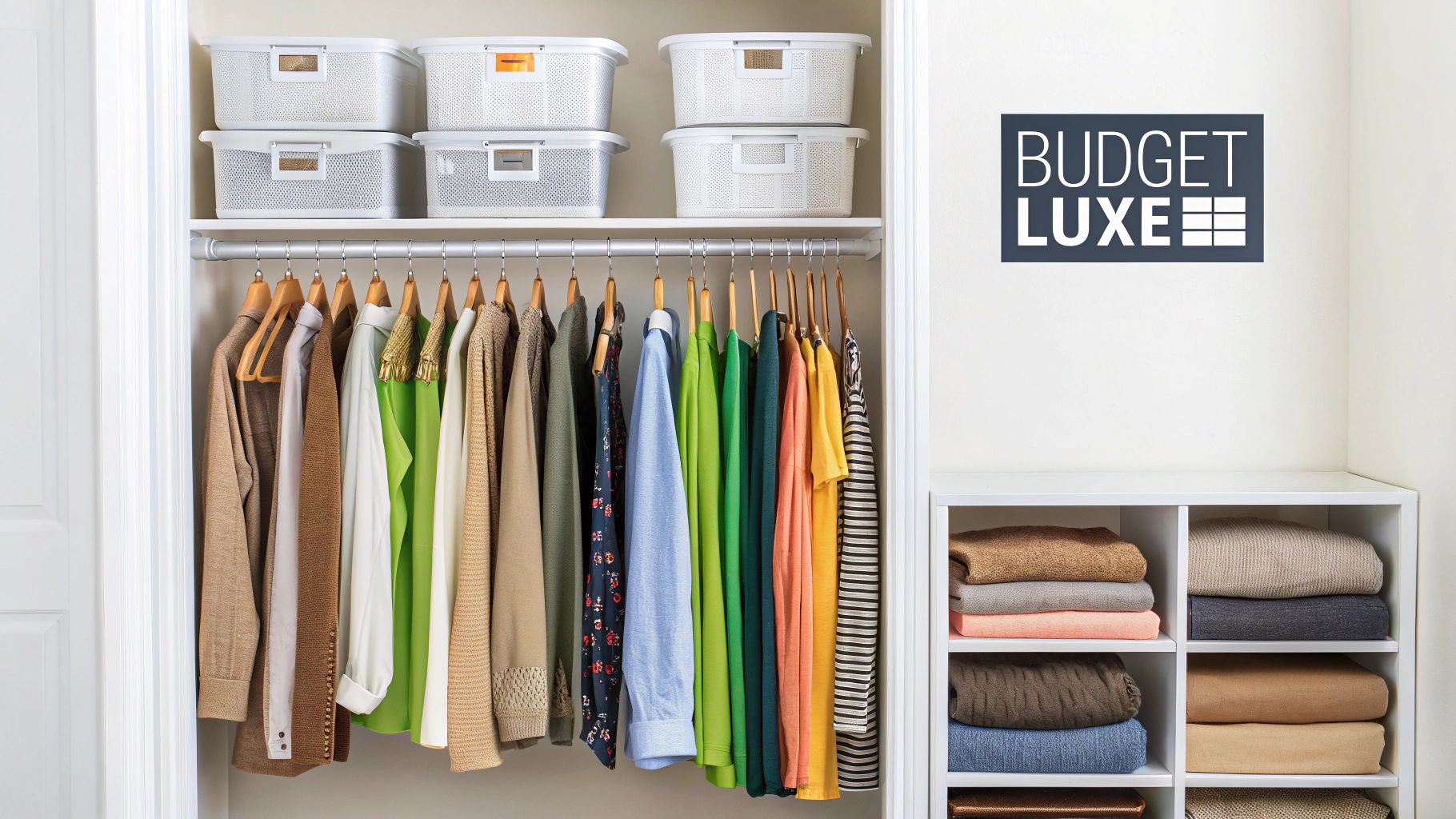
If you're going to spend money on just one thing, make it uniform hangers. Seriously. Nothing says "I've got this" like a neat row of matching hangers. Swapping out that chaotic mix of plastic, wire, and old wooden hangers for a single style instantly creates visual harmony and calms the space down.
Slim velvet hangers are a fantastic choice, and they won't break the bank. Their non-slip grip keeps silky tops from sliding off, and their ultra-thin profile can genuinely double your hanging space. You’ll be shocked at how much more room appears. For a deep dive, check out our guide on the best space-saving hangers for clothes.
Choose Versatile and Inexpensive Bins
Once your hanging space is looking sharp, turn your attention to the shelves. Fabric bins are a lifesaver for hiding clutter and creating a clean, minimalist look. I love using them on high shelves to store bulky sweaters, scarves, or other off-season items. Just be sure to pick a single color or a coordinating pattern to keep things looking streamlined.
For things you actually need to see, like folded t-shirts or jeans, clear stackable boxes are a game-changer. They protect your clothes from dust while letting you see exactly what's inside, so you aren't rummaging through every container to find that one specific top.
Pro Tip: Always think vertically. When you're picking out bins and boxes, look for stackable options. This lets you use every single inch of vertical space, a crucial move for anyone learning how to organize a closet on a budget.
Find Your Multi-Functional Heroes
The best budget storage items are the ones that can pull double or even triple duty. These are the workhorses of a well-organized closet, offering maximum impact for a minimal cost.
- Hanging Shelf Organizers: These fabric shelves hang right on your closet rod, giving you instant cubbies for sweaters, purses, or shoes. They’re a lifesaver if your closet is short on built-in shelving.
- Over-the-Door Shoe Organizers: Don't let the name fool you. These things are brilliant for storing accessories, cleaning supplies, craft items, and even rolled-up t-shirts. They make use of space that is almost always ignored.
- Drawer Dividers: A simple set of dividers can turn a messy "junk drawer" into a perfectly sorted home for socks, underwear, or belts. Adjustable bamboo or plastic ones are both affordable and incredibly effective.
Today, there is a huge demand for multi-functional designs. For example, plastic organizers are about 40% less than metal alternatives, which is great news for renters and anyone on a budget. And a simple item like a hanging shelf organizer can cut down on visible clutter by up to 50%.
Budget Organizer Cost Comparison
To give you a better idea of what to expect on your shopping trip, I've put together a quick comparison of some of the most popular and effective organizers. This should help you map out your budget and prioritize what you need most.
| Organizer Type | Average Cost | Best For | Space-Saving Tip |
|---|---|---|---|
| Slim Velvet Hangers | $20 - $30 (for 50) | Uniformity, maximizing rod space | Their thin profile can nearly double the number of garments you can hang. |
| Fabric Storage Bins | $15 - $25 (for a set of 2-4) | Bulky sweaters, off-season items | Use on high shelves to store items you don't need daily access to. |
| Clear Stackable Boxes | $20 - $40 (for a set of 4-6) | Shoes, folded t-shirts, accessories | Being able to see the contents prevents you from making a mess while searching. |
| Hanging Shelf Organizer | $10 - $20 | Folded clothes, purses, hats | Instantly adds vertical shelving without needing any tools for installation. |
By picking and choosing a few of these smart solutions, you can absolutely achieve that high-end, organized look. It’s not about how much you spend; it’s about spending your money wisely on the items that create consistency, calm, and a closet you actually enjoy using.
Creative DIY Hacks for a Zero-Budget Closet
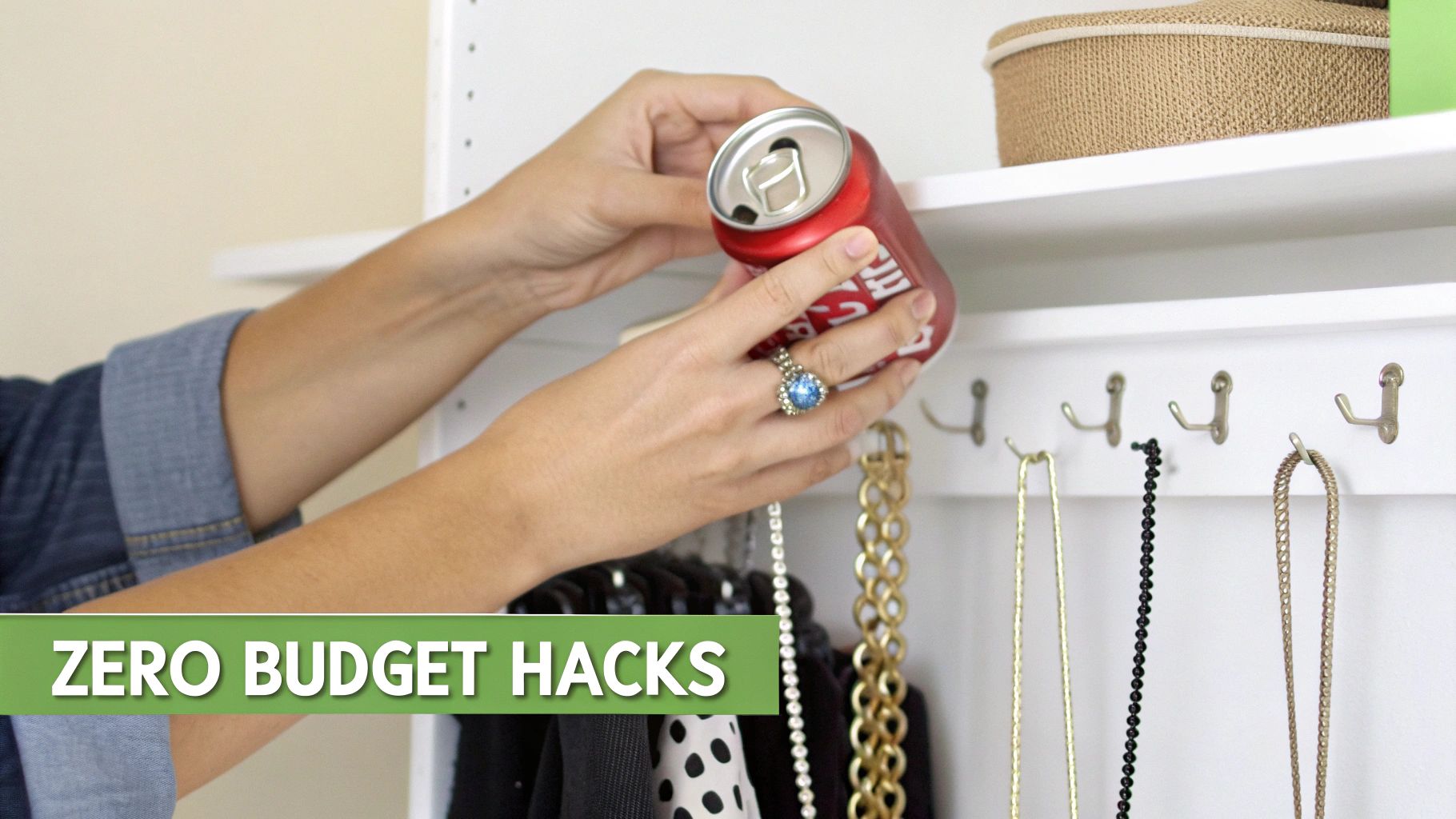
Sometimes the budget for a closet makeover isn't just small—it’s zero. But that's when the real creativity kicks in. You can turn everyday household items into genuinely brilliant organizational tools without spending a single dime.
This is all about looking at what you already own through a new lens. A simple soda can tab, a forgotten shoebox, or a spare tension rod can become the heroes of your new closet system. These simple hacks are the ultimate proof that resourcefulness beats a big budget every time.
Master the Art of Repurposing
The absolute best way to tackle a zero-budget project is to shop your own home first. Before you even think about buying something, challenge yourself to find an item you already have that can do the job. You will be amazed at what’s hiding in plain sight.
This mindset shift is the key to successfully learning how to organize a closet on a budget. It’s about turning potential trash into functional treasure, which gives you a huge sense of accomplishment without touching your wallet.
Don’t underestimate the power of simple materials. Leftover wrapping paper, empty jars, and even toilet paper rolls can be transformed into surprisingly stylish and practical organizers with just a little bit of effort.
Double Your Hanging Space Instantly
One of the most popular and effective zero-budget hacks involves an item you probably throw away every day: a soda can tab. This tiny piece of aluminum can literally double your hanging capacity in seconds.
- The Hack: Just slide the top hole of the soda can tab over the hook of a hanger. This leaves the bottom hole free, ready to hold the hook of a second hanger.
- The Result: You can now hang two items in the vertical space of one. This is perfect for pairing outfits—like a blazer and a blouse—or just for cramming more into a cramped closet rod.
This trick is a classic for a reason. It costs nothing, is ridiculously easy to do, and makes an immediate, visible difference in your closet’s capacity.
Craft Custom Drawer and Shelf Dividers
Messy drawers and jumbled shelves can make even a decluttered closet feel chaotic. The solution? Create your own custom dividers using items you were probably going to recycle anyway.
Shoeboxes as Drawer Organizers
Empty shoeboxes are the perfect size for creating compartments within a deep drawer. I use the lids for shallower items like socks and belts, while the boxes themselves are great for rolled t-shirts or scarves. For a more polished look, you can cover them in leftover wrapping paper, fabric scraps, or even a quick coat of paint.
Cardboard as Shelf Dividers
Cut sturdy pieces of cardboard from old shipping boxes to create simple, effective shelf dividers. These can be wedged into place to separate stacks of sweaters from piles of jeans, preventing them from collapsing into one big mound.
For more inspiration, check out our guide to building your own DIY closet organizer. It's packed with ideas to help you create a custom system using low-cost materials.
Add More Storage Out of Thin Air
Sometimes you just need a little extra space for specific items. With a few common household objects, you can conjure up new storage spots without any drilling or complicated installation.
- Tension Rod Magic: A simple spring-loaded tension rod can be installed in seconds between two walls or inside a deep shelf. It’s perfect for creating an extra hanging rod for scarves, ties, or even lightweight shirts. You can also use S-hooks on the rod to hang purses or belts.
- Jewelry Organizer from a Corkboard: Have an old corkboard or even a piece of styrofoam packaging? Mount it to the inside of your closet door or an empty wall. Then, use pushpins or thumbtacks to hang necklaces, bracelets, and earrings. It keeps everything tangle-free and easy to see at a glance.
Keeping Your Newly Organized Closet That Way for Good
Getting your closet organized is a fantastic feeling, but the real win is keeping it that way. The final piece of the puzzle in learning how to organize a closet on a budget isn’t about buying more things—it’s about building simple habits that stop clutter from creeping back in.
Think of it less as a one-time project and more as a new, easier way of living. These little routines are what make all your hard work stick.
Make a Few Small Habits Your New Normal
The secret to lasting order is small, consistent actions. You don't need to block out an hour every weekend for a massive cleanup. A few minutes each day is all it takes to keep the chaos at bay.
Try a quick five-minute reset before bed. Hang up the coat you draped over a chair or put away the shoes you kicked off by the door. Another game-changer? Put clean laundry away immediately. Don't let the basket become a secondary dresser.
The whole point is to make these small tidying tasks so routine you do them without thinking. When something takes less than two minutes, doing it now prevents it from joining a dozen other small tasks that become a weekend-long chore.
Stick to the "One In, One Out" Rule
If you adopt only one new rule, make it this one: the 'One In, One Out' policy. It's brutally simple and incredibly effective. For every new item of clothing you bring home, an old one has to leave.
This simple habit forces you to be a much more conscious shopper. Before you buy that new shirt, you have to ask yourself, "What am I willing to get rid of to make room for this?" It's a fantastic check against impulse buys and ensures your closet is only ever filled with things you truly love and wear.
Get Smart with a Seasonal Swap
Unless you’re lucky enough to live somewhere with the same weather all year, a seasonal swap is a non-negotiable for closet harmony. Stashing your off-season clothes opens up a ton of breathing room for what you're actually wearing now. Your closet will feel twice as big.
- Vacuum-Sealed Bags: These are your best friend for bulky sweaters and winter coats. They shrink everything down to a surprisingly small size, perfect for sliding under a bed or tucking away on a top shelf.
- Under-Bed Containers: Slim plastic bins are ideal for folded items like jeans or boots that you won't need for a few months.
- Label Everything: Don't skip this! A quick label on each bin or bag saves you from frantically digging through everything when an unseasonably warm day pops up in October.
By making these simple practices part of your routine, you’re not just cleaning your closet—you’re protecting the time and energy you just invested. Your calm, organized space is here to stay.
Your Top Questions About Budget Closet Organization Answered
Even with the best plan laid out, a few questions are bound to pop up once you start digging into your closet. It happens every time! Let's tackle some of the most common ones I hear, so you can keep your project moving without breaking the bank.
So, How Much Should I Actually Budget For This?
This is always the first question, and the answer is—it really depends on your goals, but it’s probably less than you think. You can make a massive difference for under $50 if you're ruthless with decluttering and focus your cash on one high-impact item, like a great set of slim hangers.
If you’re aiming for a more complete overhaul with new bins, shelf dividers, and maybe a shoe rack, a budget of $100 to $150 is a very realistic target. The most important thing to remember is that the biggest step, clearing out what you don't need, costs absolutely nothing.
Where Are The Best Places to Find Cheap Organizers?
Forget the expensive specialty stores. The real deals are hiding in plain sight. Here are my go-to spots for wallet-friendly finds:
- Discount & Dollar Stores: Seriously, don't sleep on these. Places like Target's dollar spot (Bullseye's Playground), Walmart, and your local dollar store are treasure troves for cheap bins, hooks, and baskets.
- IKEA: A classic for a reason. IKEA is fantastic for affordable and stylish modular pieces, boxes, and accessories that give you a high-end look for less.
- Online Marketplaces: Amazon and similar sites are perfect for buying in bulk. You can often find multi-packs of hangers, drawer dividers, and fabric bins that bring the cost-per-item way down.
My one non-negotiable tip: Always, always, always shop with your closet measurements on your phone. A super-cheap organizer is just wasted money if it doesn't actually fit your space.
Should I Buy a Closet Kit or Pick Out Individual Pieces?
I get why those all-in-one closet kits are tempting—they seem so easy! But nine times out of ten, buying individual items is the smarter, more affordable way to go.
Kits often force you to pay for pieces you’ll never use (like a tie rack when you don't own ties) and they rarely fit the unique quirks of your space. When you buy à la carte, you put your money exactly where the problem is. If you're drowning in sweaters, you can invest in the perfect shelf dividers or bins. This targeted strategy is the secret to learning how to organize closet on a budget effectively. Every dollar you spend solves a real-world problem, leaving you with a custom setup that actually works for you.
Ready to build that clean, uniform look that makes getting dressed a joy? It all starts with the right foundation: high-quality hangers. MORALVE has a fantastic selection of space-saving hangers specifically designed to double your hanging space and create that cohesive look instantly. Check out the collection and take the first real step toward the organized closet you deserve.
Leave a comment