
How to Organize Purses in Closet: A Simple Guide to Better Storage

Figuring out how to organize purses in your closet really just comes down to a simple, effective system. It's about curating your collection first, picking the right kind of storage for each bag, and then placing them somewhere you can actually see and grab them. This is how you go from closet chaos to a functional, beautiful space where every bag has a home.
Your Blueprint for a Perfectly Organized Purse Collection
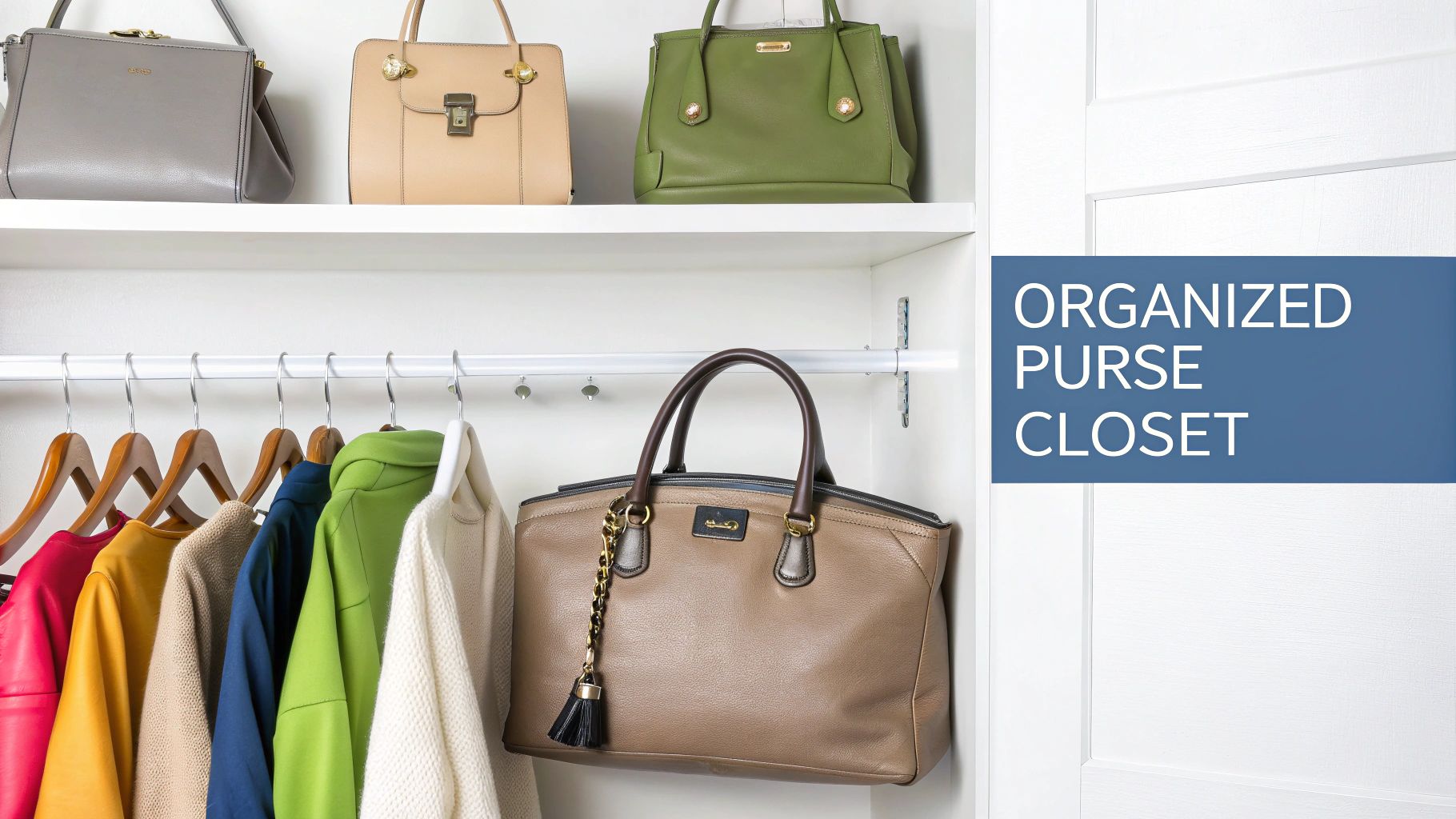
It’s a familiar story: a pile of purses slowly taking over a corner of your closet. But this guide is about more than just a quick tidy-up. It’s about creating a smart, stylish, and sustainable system for your whole collection. I'll walk you through how to organize your purses not just to save space, but to protect your bags and make your daily routine a little bit easier.
We’re going to tackle all the common frustrations, from tangled straps to crushed bags, and lay out a clear path forward. You’ll get a behind-the-scenes look at how to honestly assess your collection, choose the right storage, and arrange everything for a closet that works for you.
Before we get into the nitty-gritty, let's map out the initial game plan. This table breaks down the first few crucial actions that set the stage for a successful closet transformation.
| Your Quick Purse Organization Action Plan |
| :--- | :--- | :--- |
| Action Step | Why It Matters | Time Estimate |
| Take Everything Out | You can't organize what you can't see. This gives you a clean slate. | 15-30 mins |
| Sort and Declutter | Decide what to keep, donate, or sell. It’s the most impactful step. | 30-60 mins |
| Clean Your Bags | Gives your keepers a fresh start and preserves their condition. | 20-45 mins |
| Measure Your Space | Knowing your closet dimensions prevents buying the wrong organizers. | 10 mins |
Tackling these four steps first makes the rest of the process smoother and far more effective.
Why a System Matters More Than Ever
Let's be real—a system for your bags is a practical necessity. The global handbag market is projected to grow at a compound annual growth rate (CAGR) of over 5% from 2025 to 2032. And with surveys showing that 68% of women own 10 or more purses, our collections are clearly getting bigger. All those bags can lead to a ton of wasted space—one report estimates that up to 40% of closet space is lost simply due to disorganization.
Having a dedicated system pays off in a few key ways:
- Protects Your Investment: Proper storage means no more creases, scuffs, or misshapen bags. You're actually extending the life of your favorite pieces.
- Saves Precious Time: Gone are the days of frantically digging for the right bag. When you can see everything at a glance, you can just grab what you need and go.
- Maximizes Your Space: Smart solutions, like the vertical hangers from MORALVE, can instantly reclaim shelf and rod space you didn't even know you had.
The goal is to create a system that is both functional and beautiful—a space that makes you feel calm and in control every time you open your closet door.
Understanding the basic principles of keeping a collection tidy is a great starting point. For a broader perspective, check out these smart storage and organization ideas for collections that apply to more than just purses. Now, let's turn that closet chaos into an organized, functional space you'll actually love.
First, Take Stock and Edit Your Collection
Before you even think about new hangers or bins, the most important part of organizing your purses has to happen. It's the editing process—deciding what actually deserves to take up valuable real estate in your closet. A truly organized space doesn't start with buying storage solutions; it starts with a hard look at what you already have.
The first step is a bit of a treasure hunt. Pull every bag out of your closet—from shelves, the floor, and hooks. Lay them all out on your bed or the floor so you can see your entire collection in one place. Trust me, seeing everything together can be a real eye-opener and is the only way to start making smart decisions.
Set Up Your Sorting Piles
With your full collection on display, it's time to play curator. The goal here isn't just to be neat; it's to build a collection of bags that you actually love and that works for your life right now. To make it less overwhelming, create four distinct piles.
-
The Keepers: These are your ride-or-die bags. The ones you use all the time, the ones that spark joy, and the ones that just work with your outfits. Don't overthink this—if you love it and it serves a purpose, it’s a keeper.
-
The Donations: This pile is for any purse that’s still in good shape but just isn't "you" anymore. Maybe it was a gift that missed the mark or a trend you’ve since moved on from.
-
The Resale Candidates: Got any designer bags or high-quality pieces collecting dust? Consignment stores or online marketplaces are fantastic for giving a beautiful bag a second life while putting a little cash back in your pocket.
-
The Mending Pile: Don't toss that bag with the broken strap or sticky zipper just yet! Set these aside with a real plan to get them repaired so they can get back into the rotation where they belong.
I know letting go can be hard, especially when a bag is tied to a memory. If you're stuck on a sentimental piece you never carry, try taking a photo of it. Sometimes, all you need is the memory, not the item itself, freeing up physical space for things you'll actually use. This whole decluttering phase is the bedrock of good organization. For a deeper dive, our complete guide on how to declutter your closet has tons of practical advice to get you through it.
Group Your Bags for Easy Grab-and-Go
Once you've whittled it down to your final "keep" pile, the next move is to group them in a way that makes sense for you. There are no hard-and-fast rules here; it's all about creating a system that makes finding the right accessory an effortless part of your routine.
Think about sorting your final collection using one of these methods:
- By Type or Size: Put all your totes in one spot, your clutches in another, and your crossbody bags in their own zone. This is probably the most straightforward and visual way to organize.
- By Occasion: Create sections for work bags, fancy evening clutches, weekenders, and casual everyday purses. When you're getting ready for something specific, you'll know exactly where to look.
- By Season: It makes sense to store your heavy leather bags for winter separately from your light straw totes for summer. This keeps the bags you're most likely to use front and center.
- By Color: If you're a visual person, organizing your purses by color can look absolutely stunning, like your own private boutique. It also makes matching a bag to your outfit a total breeze.
The best categorization method is the one you’ll actually maintain. It’s personal. The whole point is to make your daily routine feel a little simpler and more streamlined.
Getting this foundation right—the editing and the categorizing—is what makes the rest of the process work. It ensures you're only spending time and space on the purses you truly love, making any organization system you implement that much more effective.
Find the Perfect Storage for Every Handbag
Now that you've edited your collection down to the keepers, it's time to give each bag a proper home inside your closet. This is where a lot of people get stuck, but the secret is simple: not all storage solutions work for all bags. A structured tote has completely different needs than a soft, slouchy hobo bag. Getting this right isn't just about making your closet look tidy—it’s about preserving the shape, material, and value of your bags for years to come.
Think about it. You wouldn't hang a heavy knit sweater and expect it to keep its shape. The same logic applies here. Moving from just "cleaning up" to creating a real, functional organization system means treating each bag with the care it deserves.
Shelving for Structure and Support
Shelves are the absolute best friends of any bag that needs to stand up on its own. Structured totes, satchels, and doctor bags are perfect candidates for shelf storage. If you hang these heavier bags, gravity will eventually stretch the handles and cause ugly creases in the material.
Let them stand tall and proud on a shelf to prevent sagging and misshaping. To really do it right, stuff them with purse shapers, acid-free tissue paper, or even balled-up, clean t-shirts. It's a small step that makes a huge difference in keeping them looking new.
Pro Tip: Keep your most-used bags on the shelf that's at eye level. This makes grabbing your daily driver a breeze. Seasonal or special occasion bags can go on higher or lower shelves, saving that prime real estate for what you actually use.
Acrylic shelf dividers are another great tool. They create neat, individual cubbies that stop your bags from flopping over and starting a domino rally. It’s a simple trick that gives your closet that polished, high-end boutique feel.
Vertical Hanging Solutions for Space-Saving Brilliance
What about crossbody bags, clutches, and shoulder bags? For these, hanging is almost always the most efficient option, especially if you're working with a small closet where every inch of shelf space counts. This is where you can start thinking vertically.
This is exactly why products from MORALVE are so effective. Their tiered hangers are specifically designed to hold several bags in one compact spot, turning a tangled mess of straps into an orderly, cascading display. A single hanger can organize a whole collection of crossbody bags, instantly freeing up an entire shelf. It also stops straps from getting knotted and lets you see everything you own in one quick glance.
Before you even start storing, it helps to have a clear idea of what stays and what goes. This simple decision-making framework is the foundation of a well-organized closet.
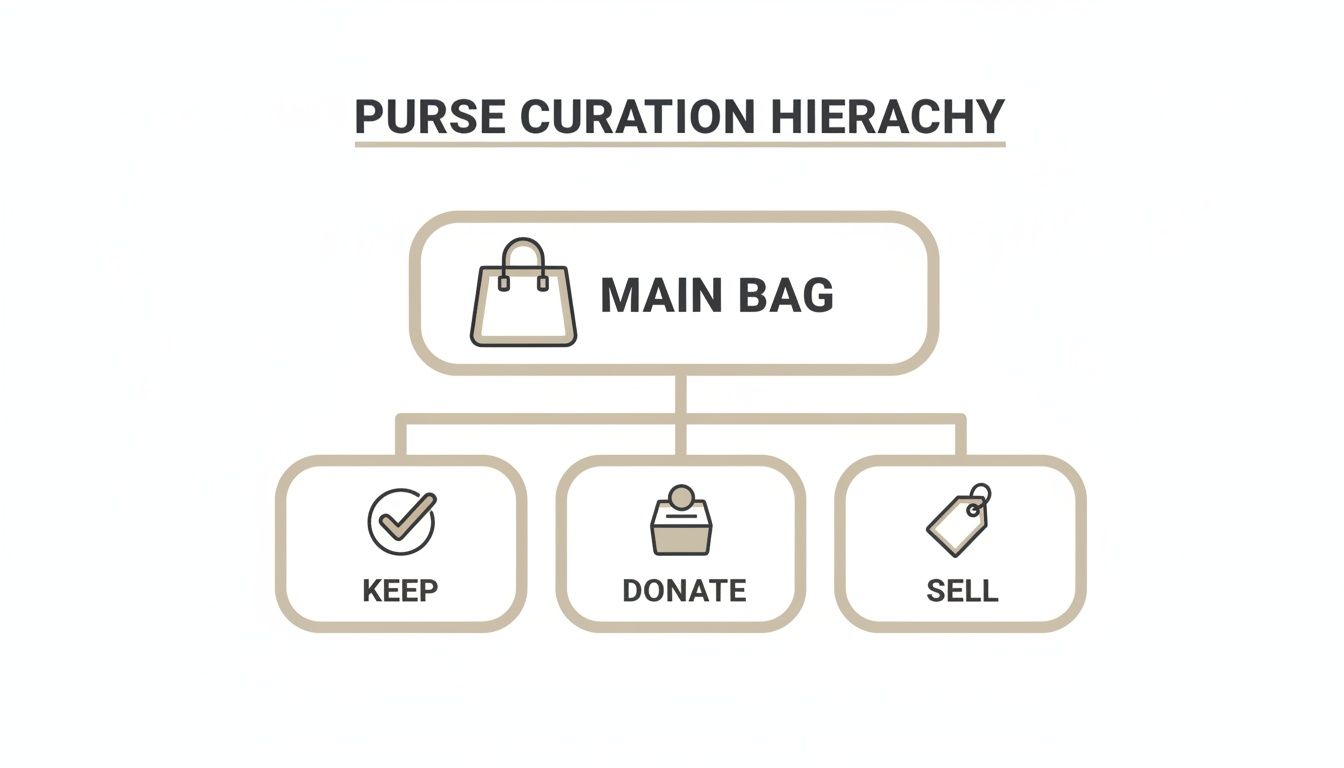
This process ensures you’re only dedicating precious closet space to the bags you truly love and use.
For smaller bags like clutches or wristlets, look for MORALVE hangers that have gentle, non-slip clips. These can secure delicate items without leaving dents or marks. It's a much better solution than tossing them in a drawer where they get scuffed, forgotten, and are impossible to find when you need them. If you want to dive deeper, our guide on the best way to store handbags has even more detailed strategies.
To make it easier to choose the right method for your collection, here’s a quick comparison of common storage solutions.
Purse Storage Method Comparison
| Purse Type | Recommended Storage Method | Pros | Cons |
|---|---|---|---|
| Structured Totes & Satchels | Shelves with Dividers | Maintains shape; easy visibility; boutique feel. | Can take up significant shelf space. |
| Crossbody & Shoulder Bags | Multi-Tier Hangers | Saves tons of vertical space; keeps straps untangled. | Not suitable for very heavy, structured bags. |
| Clutches & Wristlets | Hangers with Clips / Clear Pockets | Easy to see and grab; prevents scuffs. | Clips could damage extremely delicate materials. |
| Slouchy & Hobo Bags | Decorative Bins or Baskets | Hides clutter; good for oddly shaped items. | Bags are not individually visible or accessible. |
| Luxury & Designer Bags | Original Dust Bag on a Shelf | Maximum protection from dust and light. | Hides the bag, making it harder to identify. |
This table can serve as a great starting point, but don't be afraid to mix and match methods to create a system that's perfectly tailored to your space and your collection.
Protecting Your Most Prized Possessions
Luxury and designer bags are investments, and they need to be treated that way. Protecting them from dust, sunlight, and humidity is non-negotiable. The original dust cover your bag came in is your first line of defense—always use it. If you've misplaced it, a simple cotton pillowcase is a fantastic substitute.
The need for smart organization isn't just in our heads. In the US, a staggering 57% of adults struggle with closet clutter, and purses make up 22% of misplaced items. With the average woman aged 25-44 owning 18 purses—a figure that's up 40% since 2015—the problem is only growing.
This is where smart products come in. MORALVE’s tank top hangers, for example, have been adapted by savvy organizers for purses; their non-slip grips can hold up to 10 lbs per slot. For a closet full of bags, tiered hanging systems can even cut the time it takes to find the right one by an incredible 60%.
Creative Solutions for Unique Bags and Small Spaces
What about those odd-shaped bags or when you're just plain out of room? It's time to get creative.
- Over-the-Door Organizers: These are a lifesaver in small closets. Find one with deep, clear pockets to hold clutches, wallets, and smaller bags.
- Decorative Bins and Baskets: A stylish wicker basket on the floor or a high shelf can be perfect for slouchy bags or seasonal items like straw totes. Just don't cram them in too tightly.
- Wall Hooks: A few elegant hooks can turn a blank wall inside your closet into a functional display for your favorite, most-used bags.
Ultimately, the goal is a system that works for you. And if you're looking to take your decluttering game beyond the closet, check out these effective decluttering and storage furniture tips. By matching the right storage to the right bag, you’ll finally create a closet that feels organized, accessible, and inspiring.
Maximize Your Closet Space with Smart Placement
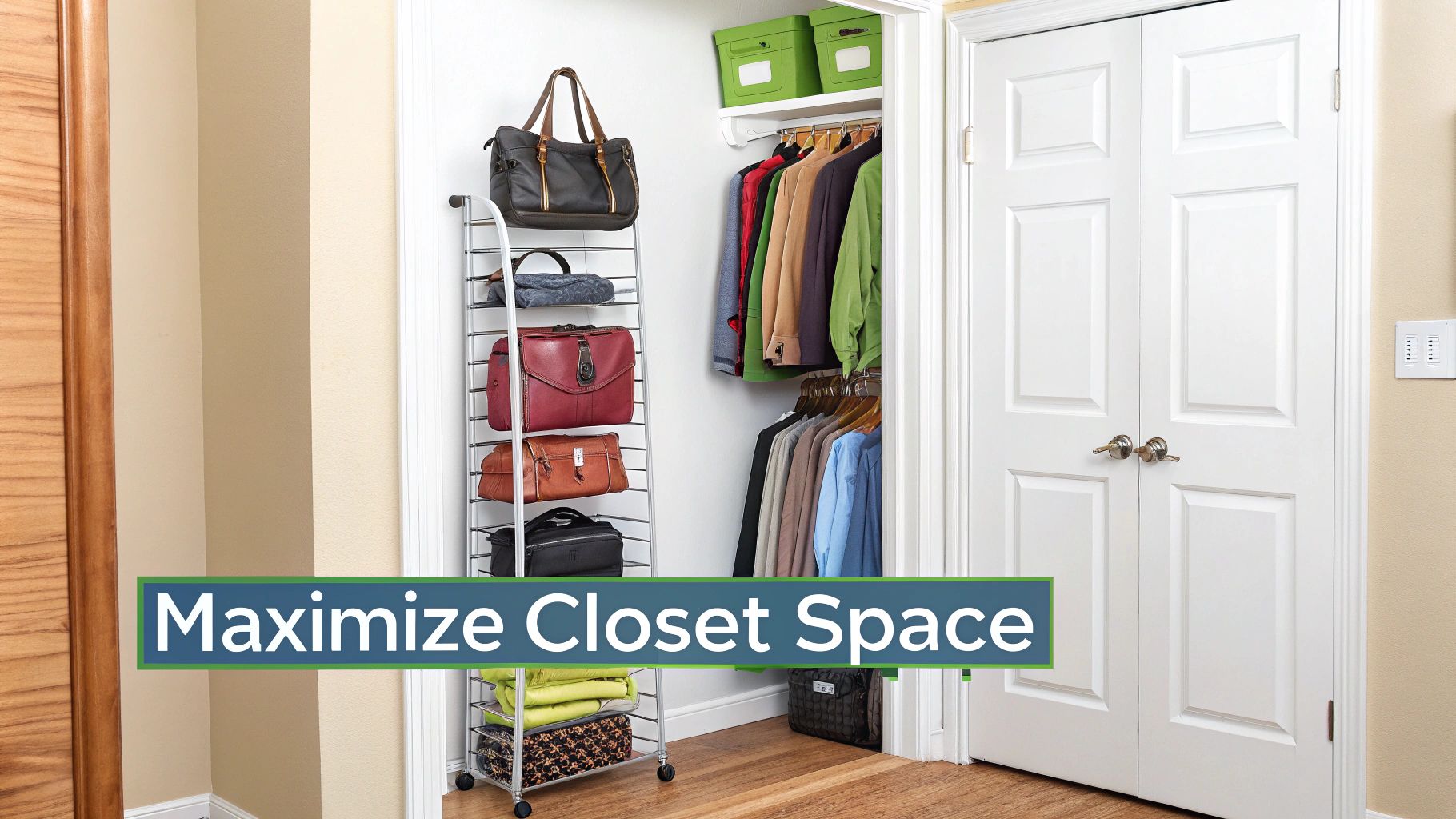
You've sorted your collection and have your storage solutions ready—now for the final piece of the puzzle: smart placement. The way you arrange your purses can be the difference between a system that actually works and one that descends back into chaos within a week. This is where a little concept I call closet zoning comes into play. It's all about arranging your bags to make them easy to grab while creating a layout that’s genuinely a pleasure to look at.
The idea is pretty simple. Not all bags are created equal in terms of how often you use them. Your daily tote shouldn't be trapped behind a sequin clutch you only pull out twice a year. By being strategic, you can make sure your most-used items are always within arm's reach, which makes getting ready in the morning so much faster and less stressful.
Establish Prime Real Estate Zones
Think of your closet like a city map. The area right in the center—roughly between your eye level and your waist—is the prime real estate. It's the most valuable space because it’s the easiest to see and access without stretching or bending. This is exactly where your everyday heroes belong.
- Your Go-To Bags: The one or two purses you grab on most days should live here. Put them on an easy-to-reach shelf or on a dedicated hook right at the front. No digging required.
- Frequently Rotated Purses: For the bags you use weekly, give them the next-best spots. This could be the shelf just above or below your daily driver, or on a hanging organizer close by.
When you create these zones, you put an end to that frantic morning rummage for your favorite bag. Everything has a logical home based on how you actually live, transforming a jumbled pile into a functional, intuitive system.
The real goal of closet zoning is to make your routine effortless. Your most-used items should take the least amount of effort to get to, while lesser-used pieces can be tucked away in less convenient spots.
This simple shift in thinking—from just "storing" to "zoning"—is what elevates a cluttered closet into a space that truly works for you. Now, what about everything else?
Secondary Storage for Less-Used Items
So, what do you do with your seasonal bags, formal clutches, or those sentimental pieces you just can't part with? These items don't need to hog the spotlight. They can be stored neatly in secondary zones that keep them safe but out of the way.
- High Shelves: The top shelf of your closet is perfect for off-season purses. Think straw beach totes in the winter or heavy leather satchels in the summer.
- Back of the Closet: The far corners or the very back of the closet rod can be a great home for special-occasion bags that you only need a few times a year.
- Under-Shelf Baskets: If you have shelves with a lot of vertical dead space, adding a simple under-shelf basket can instantly create a new spot for smaller items like wallets or wristlets.
For any bag you're putting into longer-term storage, always use a dust cover. It’s a small step that goes a long way in protecting them from dirt and fading while they wait for their turn. If you're looking for more ways to make your shelves work harder, check out these brilliant shelving ideas for closets.
Hacks for Making Small Closets Work Harder
If you're working with a small closet, trying to organize purses can feel like an impossible game of Tetris. The trick is to start thinking vertically and take advantage of every unconventional space you can find. This is especially true if you live in an apartment, where closet clutter is a constant battle.
The data really highlights this problem: 65% of apartment residents say that tumbling purses waste 20-30% of their precious closet space, adding a frustrating 10-15 minutes to their daily search for things. This is exactly the kind of problem products like MORALVE's multi-bag hangers, which can hold 5-7 purses each, were designed to solve. In fact, one survey of 5,000 fashion-conscious people found that 62% prioritize organization tools, with tiered hangers proven to reduce daily stress by 28%. You can dig into more stats like these on Capital One Shopping's digital wallet report.
Here’s how you can apply that space-saving mindset:
- Go Vertical with Hanging Organizers: A single MORALVE hanger can turn one small spot on your closet rod into storage for your entire crossbody collection. It’s probably the most effective way to reclaim shelf and floor space.
- Use the Back of the Door: Don't forget this valuable real estate! An over-the-door organizer with clear pockets is fantastic for clutches, wallets, and other small accessories. It uses a surface that is otherwise completely wasted.
- Install Wall Hooks: If you have even a small patch of empty wall space inside your closet, a few decorative hooks can become a beautiful display for your favorite bags. It's storage that doubles as decor.
By combining smart zoning with these vertical solutions, even the tiniest closet can become an organizational powerhouse, giving every single bag a designated, accessible home.
Keep Your Purse Closet Organized for Good
Getting your closet beautifully organized is a fantastic feeling, but let's be honest—the real victory is keeping it that way. The final piece of the puzzle is building a few simple, sustainable habits that stop the clutter from creeping back in.
This isn’t about creating a rigid, complicated system. It’s about making a few small adjustments that fit into your real life, turning a one-time project into an easy, ongoing routine. A little low-effort maintenance is all it takes to make sure your hard work actually lasts.
Adopt the "One In, One Out" Rule
If you only adopt one new habit, make it this one. The "one in, one out" rule is the most effective strategy I've found for preventing a future purse avalanche. It’s simple: whenever a new purse comes into your closet, one of the old ones has to go.
This little rule forces you to be so much more mindful about what you buy. Before you click "add to cart," you have to mentally decide which bag it’s going to replace. It’s a powerful gatekeeper that stops your collection from slowly overflowing your beautifully organized space.
Master a Few Essential Care Habits
Keeping your system in check goes hand-in-hand with taking care of the bags themselves. A well-cared-for bag is just easier to store and frankly, more enjoyable to use. Two habits make all the difference.
Properly Stuff Your Bags to Maintain Their Shape
When you’re done with a purse for the day, don’t just toss it back on the shelf empty. An unstuffed bag, especially a structured one, will eventually sag, crease, and lose its beautiful shape over time.
- Gently fill them with acid-free tissue paper, old (but clean!) t-shirts, or even dedicated purse shapers.
- This simple step helps them stand tall on shelves, making everything look neater and preventing permanent damage.
- Just be careful not to overstuff, which can put a lot of strain on the seams and zippers.
Rotate Your Collection Seasonally
Just like you swap out your sweaters for sundresses, give your purses the same treatment. There’s really no reason for your favorite straw beach tote to take up prime real estate in the middle of December.
A seasonal rotation keeps your most-used bags front and center, making your daily grab-and-go so much easier. It also gives you a natural opportunity to inspect and wipe down your bags before you put them away for a few months.
The only system that truly works is one that adapts to your life. The goal isn't perfection; it's a sustainable routine that keeps your closet functional and beautiful without adding more stress to your day.
When you nail this, your closet starts working for you, not the other way around.
Your Simple Monthly Reset Checklist
Even the best systems can use a quick tune-up. Set aside just 15 minutes once a month for a quick reset. It's a tiny investment that prevents a little bit of disorganization from snowballing into a huge project later on.
Run through this quick checklist to keep your purse closet looking pristine:
- Round up the stragglers. Grab any bags left around the house and return them to their designated closet spots.
- Do a quick reshape. Glance over your shelves and give any slouching bags a quick fluff and restuff.
- Wipe down surfaces. A quick dusting of shelves and organizers keeps everything feeling fresh and clean.
- Briefly re-evaluate. Take a quick look at your collection. Is there a bag you haven't reached for in ages? Maybe it's time to consider consigning or donating it.
This simple routine ensures that organizing your purses isn't just a one-time fix. By weaving these habits into your life, you transform your closet from a source of stress into a calm, curated space that actually stays organized for good.
Purse Organization FAQs: Your Top Questions Answered
Even the best-laid plans can hit a snag. When you're in the middle of a closet overhaul, specific questions always seem to pop up. Let's tackle some of the most common purse organization dilemmas I hear about all the time.
How Should I Store My Vintage or Delicate Purses?
Vintage and delicate bags need a gentler touch. Their materials, unlike modern leathers, can be incredibly sensitive to light, humidity, and even their own weight. The golden rule is to always store them in a breathable dust bag. If you don't have the original, an old cotton pillowcase works wonders.
Once it's covered, give it a spot on a shelf, safely away from direct sunlight. Whatever you do, don't hang it. The constant pull on an aging strap is a recipe for disaster. Let it rest comfortably, with plenty of breathing room, and it'll last you for years to come.
What Is the Best Way to Handle Oversized Totes and Weekenders?
Big bags are the space hogs of any closet. Just tossing them on a shelf usually results in a floppy, messy pile that takes up way too much room. My favorite trick? Put them to work on the floor.
That often-wasted space beneath your hanging clothes is the perfect home for bulky totes and weekenders. Stuff them with old sweaters or acid-free paper so they stand up straight, and line them up. Problem solved. The very top shelf of your closet is another great out-of-the-way spot, especially since you probably don't reach for these bags every single day.
The key takeaway for large bags is to keep them off prime shelving. Reserve eye-level spots for your everyday purses and relegate the bulky, less-used items to the top or bottom zones of your closet.
This one zoning strategy makes a massive difference in how easy it is to grab what you need.
Should I Keep My Purses in Their Original Boxes?
It's tempting, I know. It feels like the ultimate protection for a nice bag. But honestly, keeping purses in their original boxes is a bad idea for a functional closet. Those boxes are incredibly bulky and eat up shelf space like nothing else.
Even more importantly, they violate the number one rule of organization: visibility. If you can't see your beautiful bags, you're simply not going to use them. It's the classic "out of sight, out of mind" trap. A soft dust bag on a shelf provides plenty of protection without making your collection invisible.
How Can I Stop My Bag Straps from Getting Tangled?
Ah, the dreaded strap tangle. This is where a great vertical hanging system, like the hangers from MORALVE, really proves its worth. Hanging bags with long straps—think crossbody or shoulder bags—lets the straps fall naturally, completely preventing them from becoming a knotted mess.
If you're committed to shelf storage, you still have options:
- Tuck them in: The simplest fix is to gently coil the strap and place it inside its own purse.
- Use strap keepers: Small Velcro cable ties or even clear hair elastics are great for bundling a long strap neatly before you put the bag away.
For a closet full of crossbody bags, though, a multi-bag hanger is a game-changer for keeping those straps perfectly in line.
Ready to finally win the battle against closet chaos? The right tools can turn a cluttered mess into a beautifully organized display. Check out the clever, space-saving solutions from MORALVE and see how their hangers can completely transform your closet. Visit moralve.com to find the perfect organizers for your purses today!
Leave a comment