
Closet Zen Using Large Stackable Storage Bins

If you're tired of a chaotic closet, large stackable storage bins are the architectural secret to getting it under control. By building upwards, these containers can essentially double your storage capacity without the headache or cost of a full renovation. They are a deceptively simple tool for creating a closet organization system that actually lasts.
The Foundation Of A Clutter-Free Closet
Let's be real—a perfectly organized closet can feel like a myth. We've all been there: buying more containers only to realize they've become part of the problem, not the solution. The trick isn't just about having bins; it's about building a cohesive system from the ground up. And that's where large stackable storage bins come in. They are the pillars of your new, streamlined closet.
Instead of letting bulky sweaters or seasonal gear pile up on the floor or get lost on a high shelf, these bins create dedicated, easy-to-access zones. Suddenly, all that dead space is transformed into prime storage real estate.
Building Upwards, Not Outwards
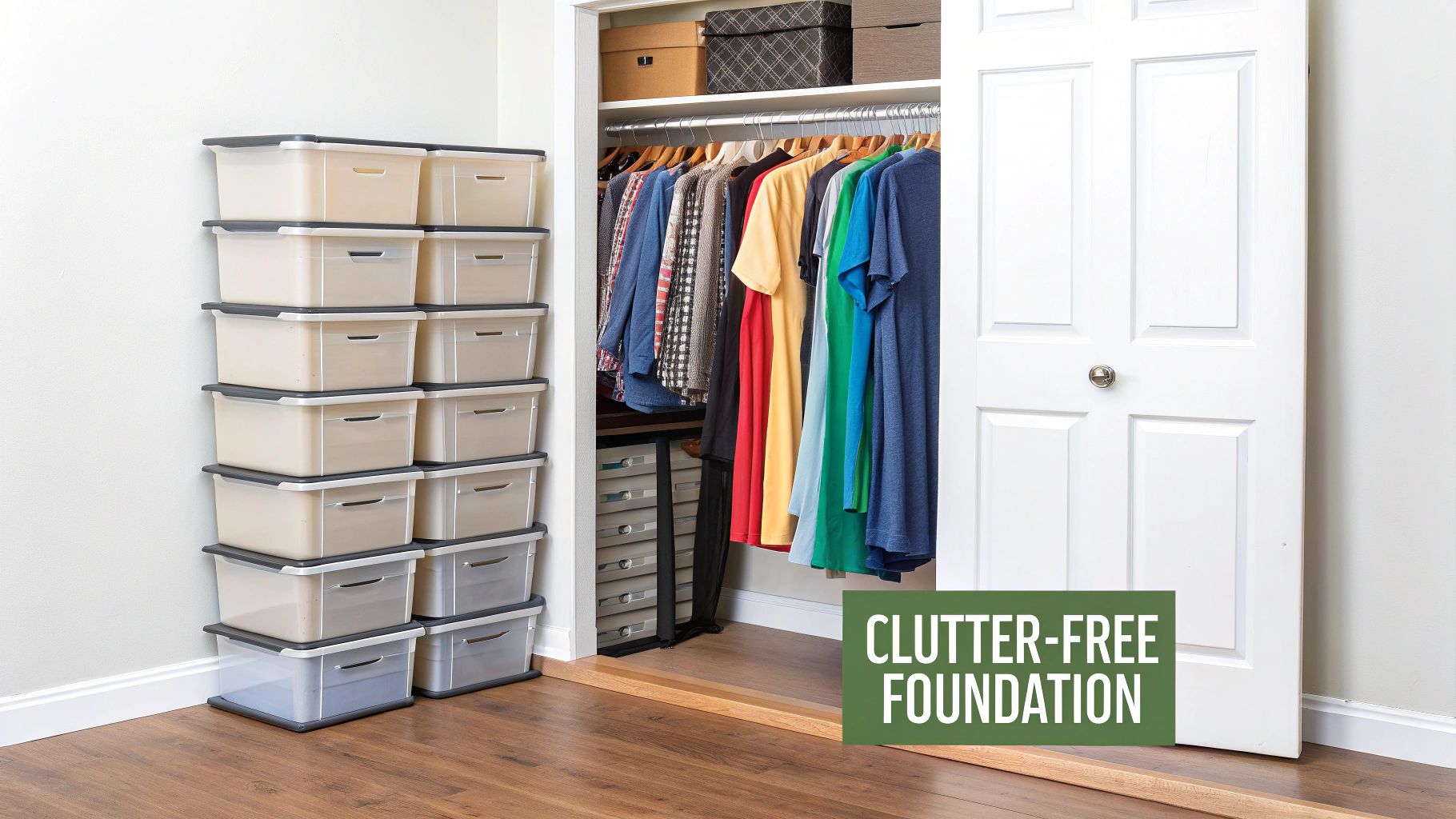
The magic of using large stackable storage bins is all about verticality. Look at your closet—chances are, there's a ton of unused space above the hanging rod or below your shirts. Stacking bins lets you tap into that wasted height, creating neat columns of storage for shoes, accessories, or out-of-season clothing.
This isn't just about cramming more stuff in. It’s a smarter way to protect your belongings. Items tucked away in bins are safe from dust, moisture, and pests, keeping them in great condition. Plus, a well-organized system makes your morning routine so much smoother. No more frantic searching for that one scarf.
It seems like everyone is catching on. The global market for stackable containers is proof that homeowners everywhere are looking for smarter ways to use their space. Valued at USD 19.5 billion in 2025, it's expected to climb to USD 30.8 billion by 2035, growing at a steady 4.7% each year. This isn't just a fleeting trend; it’s a fundamental shift toward more efficient living, especially within our closets.
To give you a clearer picture, here’s a breakdown of why these bins are so effective in a closet setting.
Key Benefits Of Using Large Stackable Bins In Your Closet
| Benefit | Impact On Your Closet | Best For |
|---|---|---|
| Maximizes Vertical Space | Doubles or triples storage by using overlooked height. | Closets with high ceilings or lots of space above/below hanging rods. |
| Protects Belongings | Shields items from dust, moisture, pests, and crushing. | Storing delicate fabrics, seasonal clothing, or keepsakes. |
| Creates Visual Order | Reduces visual clutter for a calmer, more organized look. | Anyone who feels overwhelmed by a messy, disorganized space. |
| Improves Accessibility | Keeps items contained and easy to find and retrieve. | Out-of-season items, accessories, shoes, and bulky sweaters. |
These benefits work together to create a closet that is not just organized, but truly functional.
Creating a Cohesive System
Stackable bins are great on their own, but they're even better when they're part of a bigger plan. Think of them as team players. Pairing your bin system with MORALVE's space-saving hangers, for example, creates a perfectly balanced closet ecosystem. You could store your folded knits in bins directly below their hanging counterparts, creating logical "outfit zones."
A truly organized space is one where every item has a designated home. Large stackable bins provide those homes, turning your closet from a source of stress into a space of calm and order.
To get lasting results, it helps to understand how to effectively solve clutter issues throughout your entire home. This mindset is crucial. Before you even start stacking, a good decluttering session is a must. Check out our guide on https://moralve.com/blogs/news/how-to-declutter-your-closet to get started on the right foot. Trust me, this initial step makes organizing with bins so much easier.
Choosing The Perfect Large Stackable Bins
Walking into the storage aisle can feel surprisingly overwhelming. With so many options, how do you even begin? Picking the right large stackable bins for your closet isn't just about grabbing what looks good—it's a strategic move that will save you a ton of space, time, and future headaches.
The whole point is to find bins that actually fit your space, protect your clothes and accessories, and work with your daily routine. Get this part right, and you'll buy only what you need, sidestepping that classic trap of creating more clutter in your quest to get organized.
Start With The Right Materials
The material of your bin dictates what you can store in it and how long it's going to last. Most of us immediately reach for the sturdy, rigid plastic bins. They’re a fantastic choice for their sheer durability, making them perfect for heavier closet items like winter boots, bulky sweaters, or handbags.
But plastic isn't the answer for everything. For more delicate items—think linen shirts, fine wool sweaters, or that heirloom quilt from your grandmother—breathable fabric bins are a much better option. They allow air to circulate, which prevents that musty smell and moisture buildup, keeping your prized textiles fresh. Always think about what you're storing first, then pick the material.
This practical approach to organization is why the market is booming. The demand for large stackable plastic bins is growing steadily, with a projected CAGR of 5.1% between 2025 and 2031. North America is a massive driver of this trend, with the market valued at USD 8.5 billion in 2024. For a deeper dive, you can find a ton of info on the global stackable plastic storage bin market on Lucintel.com.
Measure Twice, Buy Once
We’ve all been there. You get home, excited to start organizing your closet, only to find the bins you just bought are a half-inch too wide for the shelf. It’s beyond frustrating. The only way to avoid that trip back to the store is to get precise with your measurements before you go.
- Height: Measure from the floor to the ceiling (or the bottom of the shelf above). This tells you the absolute maximum height for your stack.
- Width: Get the full width of your closet shelf or floor space. Don’t forget to account for pesky things like door frames or support brackets that might get in the way.
- Depth: Measure from the back wall out to the front edge of the shelf. You want the bins to sit flush, not hang over the edge.
Pro Tip: Once you have your numbers, subtract about an inch from both the height and width. This little bit of "breathing room" is a game-changer, making it so much easier to slide bins in and out without scraping up your walls.
The Great Lid Debate: Snap-On vs. Hinged
The type of lid you choose really comes down to how often you need to get inside the bin. Each style has its own place in a truly functional closet.
For things you only pull out once a year—like seasonal decorations or off-season coats—airtight snap-on lids are your best bet. They create a solid seal that locks out dust, moisture, and pests, keeping everything inside in perfect condition.
On the flip side, for items you're grabbing all the time, like workout clothes, scarves, or kids' shoes, hinged or flip-top lids are a lifesaver. You can just pop one open with one hand, grab what you need, and close it. No fumbling with a separate lid. Many of the best clothing storage solutions actually use a mix of both types to match how different items are used.
Clear vs. Opaque: A Matter of Style and Function
Last but not least, think about the visuals. Do you want to see everything at a glance, or are you aiming for a clean, minimalist closet aesthetic?
Clear Bins: The main benefit here is obvious: visibility. You know exactly what’s inside without pulling down a single bin or squinting at a label. This is a huge win for things like shoes, handbags, or any collection where you need to find a specific item quickly.
Opaque Bins: If you crave a calm, clutter-free aesthetic, opaque is the way to go. These bins hide what's inside, giving your closet a serene, uniform appearance. They’re perfect for items you don't need to see every day, and they force you into the excellent habit of creating a solid labeling system.
Stacking Bins For Stability And Safety
Anyone can throw a few bins on top of each other, but there’s a real art to building a stable, safe tower that won’t come crashing down at the slightest nudge. A wobbly stack isn't just messy; it’s a genuine hazard, especially in a busy closet or a kid's room. The key is to work with gravity, not against it.
The Foundation: Heavy-to-Light Stacking
This is the golden rule of stacking, and it’s non-negotiable. Always, always place your heaviest bins at the bottom. This isn't just a good idea—it's basic physics.
Putting dense items like winter boots, books, or heavy coats at the base creates a low center of gravity, anchoring the entire column. Lighter things—think spare pillows, out-of-season sweaters, or scarves—belong in the bins at the very top. This one simple change makes a world of difference in stability.
Secure Stacking Techniques
With your items sorted by weight, you can start building. The design of your bins matters a lot here. Most quality stackable bins have grooves or raised edges on their lids that are specifically designed to "lock" into the base of the bin above.
Take a moment to make sure these features are properly aligned. You should feel a satisfying little click or see the bins settle perfectly flush. If there's a gap or a bulge, something’s off. It usually means a bin is overstuffed, or you're mixing and matching sets that aren't compatible.
As you place each bin, give it a quick "wobble test." A gentle push from a few different angles will tell you everything you need to know. A solid stack will barely budge. If you feel any significant swaying, stop and figure out why. The culprit is often an uneven base or a lid that isn't seated correctly.
Getting these fundamentals right from the start is crucial. This simple guide breaks down the three core decisions that lead to a better, safer stack.
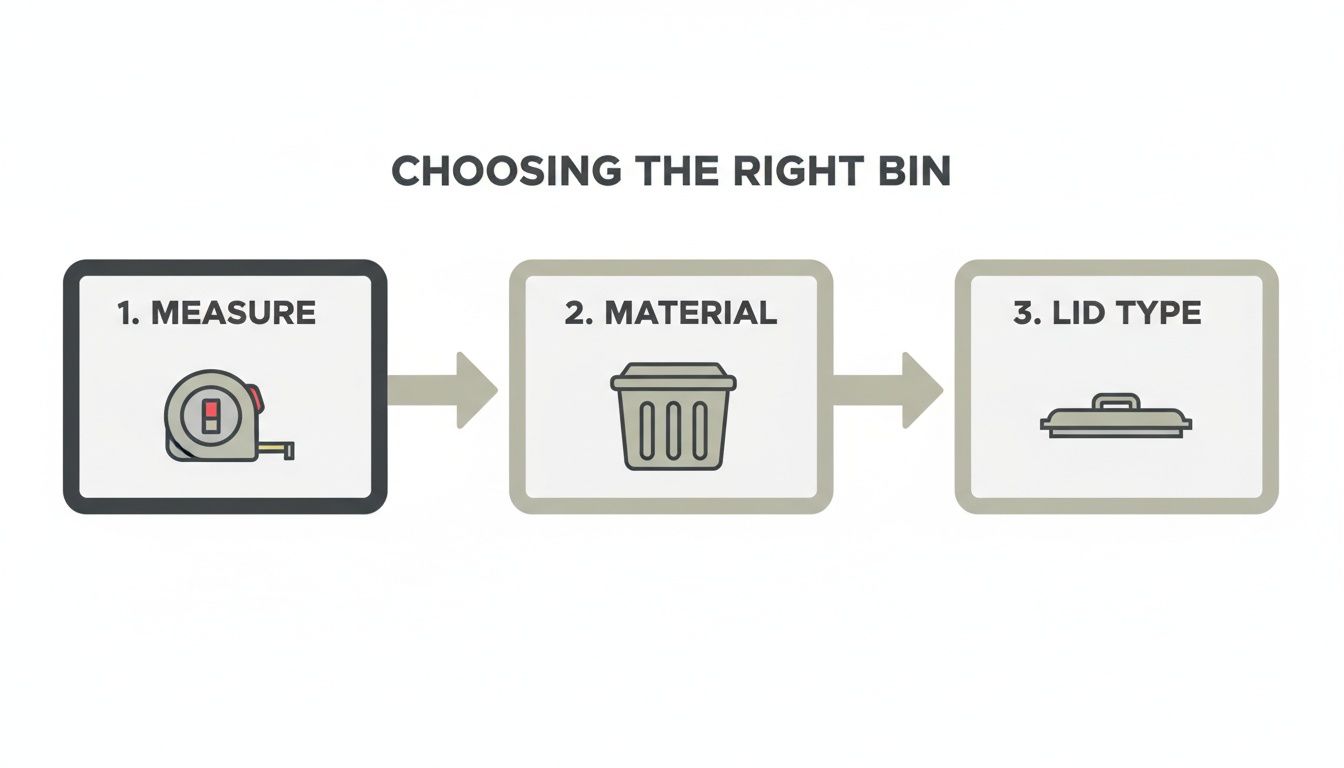
It all begins with accurate measurements, choosing the right material for the weight of your items, and picking a secure lid type.
Know Your Limits: Weight Capacity And Safety
Every bin has a weight limit, a detail that’s too often overlooked. Pushing past this limit can cause the plastic to crack, buckle, or even shatter, bringing the whole stack down with it. Always check the manufacturer’s guidelines for both individual bin capacity and the total recommended stacking weight.
Pro-Tip: Remember, the bottom bin isn’t just holding its own contents. It’s supporting the combined weight of every single bin stacked on top of it. Plan accordingly!
If you have small children or pets, securing your stack is a must. A good rule of thumb is to anchor any stack that's taller than it is wide. You can do this in minutes with simple furniture straps or L-brackets from any hardware store. Attaching the top bin to a wall stud provides an essential layer of security and peace of mind.
For more expert advice on securing your setup, check out our guide on vertical storage solutions for small spaces for tips on making the most of your space safely.
Stacking Techniques Comparison
Choosing the right stacking method depends on what you're storing and where in your closet. Here’s a quick breakdown of common approaches to help you decide.
| Technique | Best For | Safety Considerations | Pro Tip |
|---|---|---|---|
| Pyramid Stacking | Creating a stable base with heavier, wider bins at the bottom and smaller bins on top. | Excellent stability, but can be inefficient with closet shelf space. Ensure the base is perfectly level. | Best suited for walk-in closets or storage rooms where you have more floor space to work with. |
| Column Stacking | Uniformly sized bins in a straight vertical line to maximize vertical space. | Most space-efficient but requires perfectly interlocking bins and adherence to weight limits. | Use for lighter items like clothing or linens. Always anchor stacks taller than 4 feet. |
| Interlocking | Bins specifically designed with grooves and ridges that lock together. | The most secure method for uniform stacks. Check that each bin is fully seated before adding the next. | Stick to one brand and model of bin to ensure a perfect, stable fit every time. |
Ultimately, the best technique is the one that prioritizes safety for your specific environment while keeping your belongings accessible and protected.
Creating Your Smart Organization System
Okay, you've got your bins stacked and stable. Now for the fun part: turning that neat pile of plastic into an organization system that actually works for you. This is where we move beyond just storing stuff and start creating a setup that saves you time and brainpower every single day.
The goal here isn't just to have tidy-looking boxes. It's to build a system so intuitive you can find anything in your closet in seconds. Think of it as creating a personal search engine for your belongings—fast, efficient, and totally customized to your life.
Beyond Basic Labeling Methods
Look, a Sharpie on a piece of masking tape has its place, but if you want a system that lasts, it’s time to level up. The right labeling strategy means no more rummaging through your closet bins.
Here are a few methods I’ve seen work wonders:
- Color-Coding: This is a fantastic visual shortcut. Assign a color to a category—maybe blue for denim, green for workout clothes, and yellow for beach gear. Your brain will start to associate the color with the contents, letting you find what you need without reading a single word.
- Photo Labels: A total game-changer, especially for shoes or accessories. Just snap a quick picture of the contents, print it, and tape it to the outside of the bin. It completely removes the guesswork.
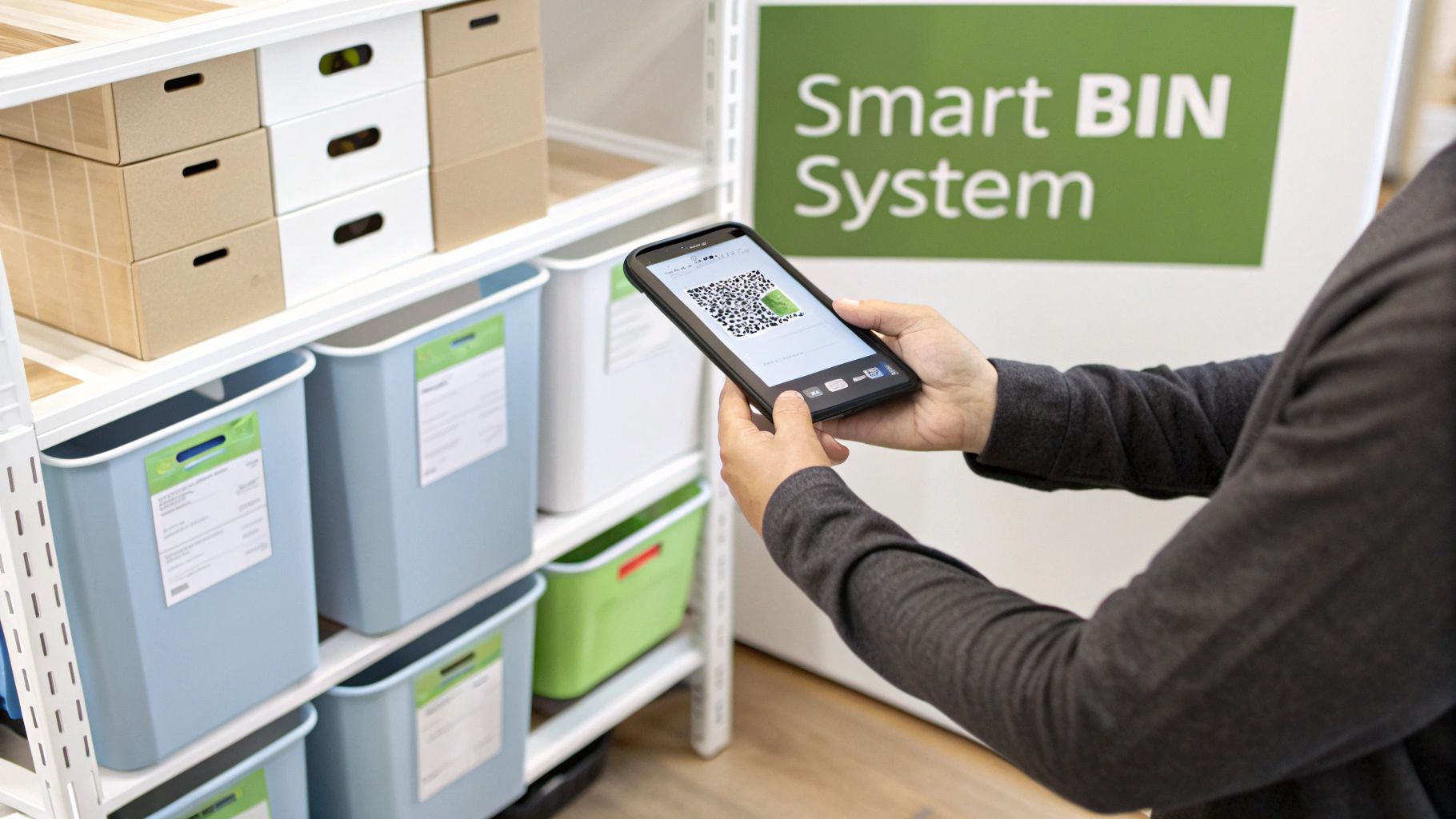
- QR Code Systems: For anyone who loves a bit of tech, QR codes are brilliant. You can use a free app to generate a unique code for each bin that links to a detailed list of its contents on your phone. This is perfect when you have tons of bins and want to know exactly what’s inside without pulling them all down.
It’s no surprise that people are getting more serious about storage. The global market for stack and nest containers—which includes the large stackable storage bins we're talking about—was valued at USD 63.29 billion in 2023. It’s projected to climb to USD 102.06 billion by 2032. That huge jump shows just how much we all crave smarter, more reliable ways to keep our homes in order.
Sorting Strategies That Fit Your Life
The best organization system is one that’s built around you. Forget generic categories. The secret to making it stick is to sort things in a way that reflects how you actually live and get dressed.
Think about how you naturally group your belongings.
- By Season: This is a classic for a reason. Stash bulky winter sweaters during the summer and pack away sundresses when it gets cold. It’s the easiest way to free up prime real estate in your closet for what you’re actually wearing now.
- By Occasion: This is one of my favorite tricks. Create bins for specific events or activities. You could have one for formal wear, another for ski trips, and a third for beach vacations. When the time comes, you just grab the bin and go—no last-minute panic.
- Capsule Wardrobes: If you love the idea of a curated wardrobe, dedicate a few bins to different "capsules." One might hold your core work outfits, while another has everything for a weekend getaway. It makes getting dressed or packing a suitcase incredibly simple.
Your closet should support your life, not complicate it. When you categorize items in a way that makes sense to you, you're building a system that you'll actually maintain.
Integrating Bins With Your Hanging Clothes
A truly organized closet is a symphony, not a collection of solo artists. Your stackable bins shouldn't feel like a separate entity; they need to work in harmony with the clothes hanging on the rod.
The easiest way to achieve this is by creating "zones." For instance, place a stack of bins with your folded jeans and sweaters directly below the rod where your shirts and blazers hang. This creates a logical flow, putting your entire outfit in one vertical slice of the closet.
This is where great hangers, like the space-saving ones from MORALVE, can really shine. They can free up enough horizontal rod space to let you create these zones properly, making your closet feel intuitive, not chaotic. To really get the most out of your space, researching effective storage solutions can give you a bigger picture. After all, a truly smart system uses every tool available.
Maintaining Your Organized Closet for the Long Haul
Getting your closet organized is a great feeling, but keeping it that way is the real win. You've got your large stackable storage bins perfectly arranged, but without a little upkeep, chaos has a way of creeping back in. This isn't about marathon cleaning sessions; it's about creating small habits that keep your hard work from coming undone.
Think of it like tending a garden. A bit of regular attention ensures your organized space continues to thrive, making your daily routine that much easier.
Embrace the Seasonal Reset
One of my favorite tricks for staying on top of things is the twice-yearly seasonal reset. I set aside a little time in the spring and again in the fall to give the whole system a once-over. This simple ritual keeps your bins from becoming a time capsule of forgotten clothing.
When it's time to swap your sweaters for shorts, pull out those off-season bins. Before you just shove them into the back of the closet, take a quick inventory. Did you actually wear that chunky knit sweater last winter? Are those sandals still your style? This is the perfect moment to declutter what you no longer need, which frees up so much precious closet space.
While you're at it, check your labels. A quick update ensures you know exactly what’s where, saving you from a frantic search later.
Keeping Your Bins in Great Shape
Like anything else, storage bins can get a little dusty and grimy over time. A quick wipe-down as part of your seasonal reset keeps them looking good and protects the clothes inside.
Here’s a simple maintenance routine I follow:
- Dust the Outside: A quick pass with a damp microfiber cloth does wonders for the bin exteriors.
- Clean the Inside: Empty the bin and give the interior a wipe with a gentle cleaner.
- Dry Completely: This is crucial. Let the bin air dry completely before refilling it to avoid any musty smells or mildew.
- Inspect for Damage: Give the lids and any locking parts a quick check for cracks. A secure lid is key for stable stacking!
A little care goes a long way. Treat your bins like any other tool, and they’ll serve you well for years, protecting your belongings and your investment.
The Magic of "One In, One Out"
To stop clutter in its tracks, I swear by the "one in, one out" rule. It’s incredibly simple but has a huge impact. Every time you buy a new shirt, a new pair of jeans, or a new handbag, another item in that same category has to go.
This little habit forces you to be mindful about what you own. It prevents that slow, steady buildup of clothes you never wear, which is how closets get out of control in the first place. Whether you donate, sell, or toss the outgoing item, the important thing is to do it right away.
Your System Should Evolve with You
Life changes, and your closet organization should be able to keep up. That's the real beauty of using large stackable storage bins—they’re incredibly adaptable. A new job with a different dress code, a new fitness obsession, or a growing family will all change what you need to store.
Maybe you need to dedicate a whole stack to your newfound hiking gear, or perhaps you're repurposing a bin for baby clothes. Don't hesitate to relabel, rearrange, and rethink your setup whenever you need to. Your organization system works for you, not the other way around.
Got Questions About Your Storage Bins? We've Got Answers
Even after you’ve planned out your closet makeover, a few questions always seem to pop up. That’s perfectly normal, especially when you're trying to build a storage system that's not just tidy, but also safe and built to last.
Let's walk through some of the most common things people wonder about when using large stackable storage bins in their closets. Getting these details right is the final step to feeling confident in your new, organized space.
Just How High Can I Safely Stack These Things?
This is probably the most important question, and the answer isn't a magic number—it's all about stability. As a general rule, a freestanding stack shouldn't be taller than it is wide. In a typical closet, I tell people to aim for no more than four feet high unless you can anchor it to a wall.
But that’s just a starting point. The real limit comes down to:
- The Bins Themselves: Cheaper, thin-walled bins just can't handle the pressure and will start to give.
- The Weight: Pay close attention to the manufacturer's weight limit. That goes for each individual bin and the total weight of the stack.
- The Wobble Test: This is my go-to reality check. Give the stack a gentle nudge. If it sways noticeably, it's too high or the weight isn't distributed properly. Time to rethink it.
Help! My Bins Are Starting to Bow and Warp. What Do I Do?
A bowing lid or bulging sides is a major warning sign. It means the bin is either overstuffed with too many sweaters or the items inside are simply too heavy. This is a big deal because a warped lid creates an unstable foundation for the bin above it, compromising the whole stack.
If you see this happening, don't ignore it.
- Lighten the Load: The quickest fix is to pull out some of the heavier contents. Maybe those winter boots can go in a bin at the bottom.
- Repack Strategically: Sometimes it’s not just the weight, but how clothes are packed. Try to fold bulky items evenly so they don't push against one spot.
- Upgrade to a Stronger Bin: Let's be honest, some bins just aren't cut out for heavy-duty storage. If you've lightened the load and it still warps, you may need a more robust model for that specific job.
Can I Mix Bins from Different Brands in the Same Stack?
I know it's tempting, especially when you see a good sale, but mixing brands in a vertical stack is almost always a bad idea. Those little grooves and ridges on the lids and bottoms are designed to lock together perfectly with bins from the same line. A lid from one brand just won't seat properly on the base of another.
My Two Cents: An ill-fitting connection is a recipe for disaster. It creates a weak point that can make the whole stack wobbly and unsafe. For your peace of mind, stick with the same brand and model within a single stack.
Now, this doesn't mean your entire closet has to be uniform. You can absolutely have a stack of Brand A sitting right next to a stack of Brand B on your closet shelf. Just don't mix them on top of each other.
How Can I Remember What's Inside My Solid-Colored Bins?
Opaque bins are great for achieving that clean, uncluttered look in a closet. The downside? You can't see what's inside. Forgetting what you stored where can turn a quick search for a sweater into an hour-long project of unstacking and restacking.
The trick is to have a simple, clear system from the get-go. A label maker is your best friend here.
For a more high-tech approach, try creating a quick digital inventory. A simple spreadsheet or even a note on your phone works wonders. Just number each bin and list the contents. You can even use a free online tool to generate a QR code for each bin that links directly to its inventory list—just scan it with your phone, and you'll know exactly what's inside without moving a thing.
Ready to create an organized closet that truly works for you? Having the right tools is half the battle. MORALVE offers innovative, space-saving solutions designed to build a system that’s both beautiful and functional. Find the perfect hangers and accessories to complete your setup today.
Leave a comment