

Maximize Your Closet with Storage Bags for Clothing

We’ve all been there. Staring at a closet so packed you can't see what you own, feeling that familiar wave of frustration. It’s a scene that plays out in homes everywhere, but the key to a permanently organized closet is simpler than you might think: storage bags for clothing.
These aren't just glorified plastic bags. Think of them as your first line of defense in the battle for an organized, functional closet. They’re the secret to protecting your clothes from dust, moths, and moisture, all while helping you finally reclaim that precious closet space.
Turn Closet Chaos into Organized Calm
An overstuffed closet is more than just an eyesore; it's a daily source of stress. It makes finding anything a chore and leaves your clothes wrinkled and forgotten. The right storage strategy is what turns that chaos into a calm, workable space you can actually enjoy using.
Storage bags are the cornerstone of that strategy. They let you group, protect, and put away the things you don't need right now—like bulky winter sweaters in July or your favorite sundresses in January. By getting off-season items out of the way, you suddenly create breathing room in your closet for the clothes you’re actually wearing. It’s a simple move that preserves your favorite pieces and makes getting dressed in the morning so much easier.
More Than Just Tidying Up
Getting serious about using clothing storage bags is about more than a one-time cleanup. It’s about building a smarter, more sustainable system for managing your closet for the long haul. The payoff is immediate and pretty significant.
- Protect Your Investments: Your clothes are kept safe from dust, humidity, and pests that can cause real damage over time.
- Maximize Every Inch: Suddenly, the top of your closet or the space under your bed becomes prime real estate for storage.
- Simplify Seasonal Transitions: Switching your wardrobe between seasons stops being a weekend-long project and becomes a quick, painless swap.
It's no surprise that people everywhere are looking for better storage solutions. The market for bags, including these organizational lifesavers, was valued at $45.8 billion in 2025 and is expected to climb to $63.5 billion by 2035. This isn't just a trend; it's a clear signal that everyone is craving practical ways to save space. You can dig into more of the data on this growing demand over at Future Market Insights.
To truly maximize space in a small closet, the real magic happens when you combine storage bags with other smart tools. Pairing them with something like slim, space-saving hangers can completely transform your closet’s capacity, creating a system where everything has its place and is easy to find.
Choosing the Right Storage Bag for Your Closet
Let's be honest, not all storage bags are created equal. Trying to use the wrong one is like attempting to flip a pancake with a soup ladle—it might get the job done, but it’s going to be messy. The perfect bag really comes down to what you're storing, whether it's a massive ski jacket or a delicate silk blouse. Getting this choice right is the first step to protecting your clothes and actually organizing your closet for good.
Think of vacuum-sealed bags as your secret weapon for compressing bulky items. They are hands-down the best solution for anything puffy and non-delicate that’s hogging prime closet real estate. We're talking winter coats, comforters, and those chunky sweaters that can shrink down to a surprisingly small size, freeing up an incredible amount of shelf and rod space.
On the flip side, breathable fabric bags act more like a gentle, protective shield for your more sensitive pieces. Natural fibers like wool, cashmere, and leather genuinely need to breathe to stay in good shape. If you seal them in airtight plastic, you risk trapping moisture, which can lead to that dreaded mildew smell or yellowing over time. Breathable bags let the air circulate while keeping dust and pests out.
This little flowchart can help you visualize how a simple decision can completely transform your closet from chaos to calm.
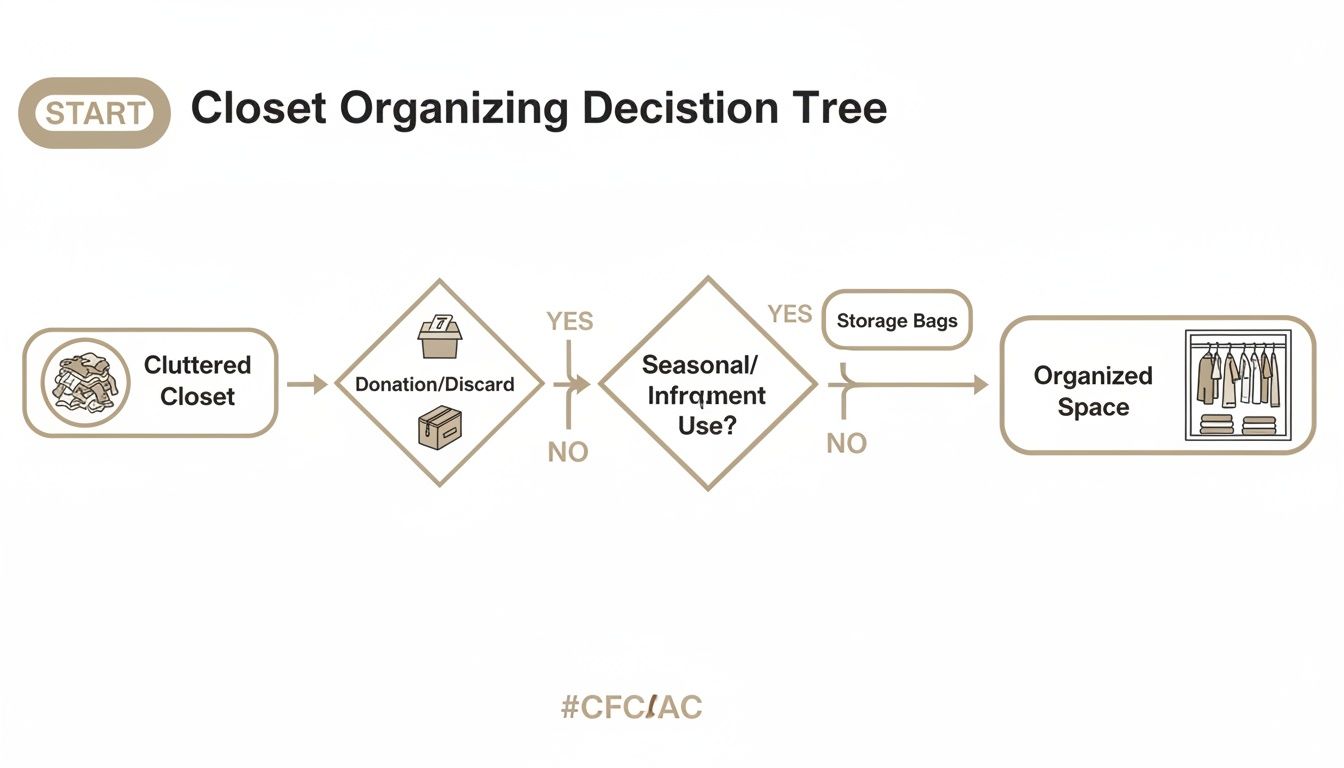
As you can see, the path from a cluttered closet to a streamlined one starts with picking the right tools for the job—in this case, the right storage bags.
A Closer Look at Common Bag Types
To really get a handle on closet organization, you need to know the pros and cons of each type of storage bag. This is what helps you build a system that keeps your clothes looking their best, season after season.
-
Vacuum-Sealed Bags: These are the undisputed champions of space-saving. By sucking out all the air, they can shrink down soft goods by up to 80%. The catch? That intense compression can create some serious wrinkles that are tough to get out. They're also a bad match for anything with structure, like a tailored blazer, or delicate natural fibers.
-
Breathable Fabric Bags: Usually made from cotton or a non-woven polypropylene, these bags are much gentler on your clothes. They are perfect for the long-term storage of natural fibers, preventing that musty smell while offering solid protection from dust. Their only real downside is that they don't save you any space since they don't compress.
-
Clear Garment Bags: These are what you want for formalwear—suits, dresses, and gowns that you need to protect within the closet. The clear vinyl lets you see exactly what’s inside without having to unzip anything. Just remember, plastic can trap moisture, so these are best used for short-term protection inside a climate-controlled closet, not for stashing things away in the attic for years.
Comparing Clothing Storage Bag Types
Feeling a bit overwhelmed by the options? Don't be. Breaking it down by what you need to store makes the decision-making process a whole lot easier. This quick-glance table is designed to help you match your clothing items to the perfect bag for your closet organization goals.
| Bag Type | Best For | Pros | Cons |
|---|---|---|---|
| Vacuum-Sealed | Bulky items like winter coats, duvets, and pillows | Maximizes space; protects from water, pests, and dust. | Can cause deep wrinkles; not for natural fibers. |
| Breathable Fabric | Wool sweaters, cashmere, leather jackets, and natural fibers. | Allows air circulation, preventing mildew and odors. | Doesn't compress items, so offers no space-saving benefit. |
| Clear Garment | Suits, formal dresses, and special occasion wear. | Easy identification of contents; good for dust protection. | Can trap moisture; not ideal for long-term storage. |
| Durable Zip Totes | Folded clothes like jeans, t-shirts, and linens. | Stackable and easy to carry with sturdy handles. | Can be bulky; risk of overstuffing and damaging items. |
Ultimately, having a mix of these different bag types on hand is the key to creating a truly flexible and effective storage system for your entire wardrobe.
How to Pack Clothes for Maximum Protection
Picking the right storage bag is a huge step, but what you do next is just as important. How you actually pack your clothes inside those bags is your secret weapon for great closet organization. Think of it as the difference between just stashing things away and strategically preserving them for later.
Proper packing is what stands between your clothes and a future of wrinkles, mildew, and damage. Get it right, and your favorite outfits will come out of storage looking exactly as they did when you put them away.
The first rule, and it's a non-negotiable one, is to make sure every single item is completely clean and bone-dry. Storing clothes with even a hint of perfume, body oil, or a tiny food spot is like sending out an invitation to pests. It can also lead to permanent stains down the road. And any lingering dampness? That's a recipe for musty, mildewed clothes—a smell that is notoriously hard to get rid of.
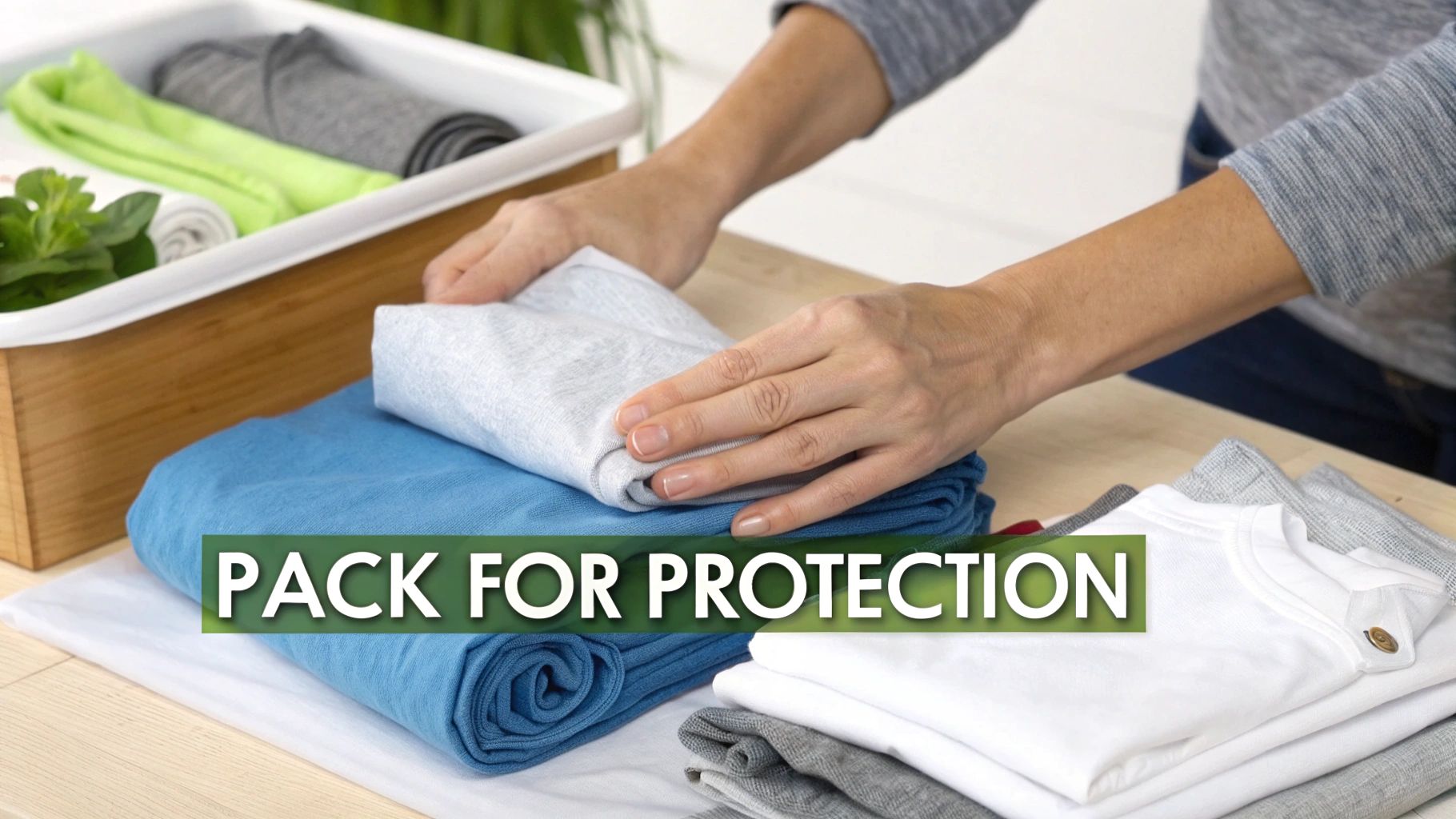
Master the Art of Folding and Rolling
With everything clean, it's time to get packing. Your main goals here are to avoid creases and use every inch of space in your storage bags for clothing. Different clothes need different approaches.
- Rolling for Casual Wear: For your t-shirts, jeans, and casual knits, rolling is almost always the better choice. It's fantastic for preventing those sharp, set-in creases that you get from flat folding, and you’ll be amazed at how much more you can fit in each bag.
- Folding for Structured Garments: When it comes to blazers, structured blouses, or anything with a defined shape, a gentle flat fold is the way to go. Just lay the item flat, fold the arms in, and then fold it in half. This helps maintain the garment’s structure without putting stress on the seams.
Spending a few minutes learning these techniques really pays off. If you want to see exactly how it’s done, check out our guide on folding clothes to save space for some easy-to-follow visual tips.
Add a Final Layer of Protection
A couple of extra steps can take your storage game from good to great. These are the little tricks that professional organizers swear by to ensure everything stays pristine and fresh for the long haul.
In the bustling world of home organization, the garment bags market has emerged as a key player for clothing storage solutions, with 62% of consumers in the U.S. and Europe reporting using garment bags to combat closet clutter in a 2024 survey, reducing wrinkles by up to 80% compared to open hanging. Discover more insights about the garment bags market on Cognitive Market Research.
For those really delicate fabrics like silk or cashmere, it's a great idea to place a sheet of acid-free tissue paper between the folds. This simple move prevents colors from bleeding and protects delicate fibers from snagging.
Finally, toss in a few natural moth repellents. Cedar blocks or lavender sachets are perfect—they keep pests away and leave your clothes with a subtle, clean scent. It’s a much nicer welcome when you unpack them next season.
Integrating Storage Bags into Your Closet System
Okay, so you’ve got your off-season clothes neatly packed away. Now what? The next step is to make those storage bags for clothing work with your closet, not just get stuffed into it. This isn't about hiding things; it's about creating a smart, functional system that makes your daily routine easier.
The real goal here is to free up that prime real estate for the clothes you're actually wearing right now.
Think of your closet as having different zones. The easiest spots to reach—like your main hanging rod and eye-level shelves—should be dedicated to your current wardrobe. The harder-to-reach places? That's where your long-term storage bags go. It’s a simple shift in thinking that can unlock a ton of space you didn't even know you had.
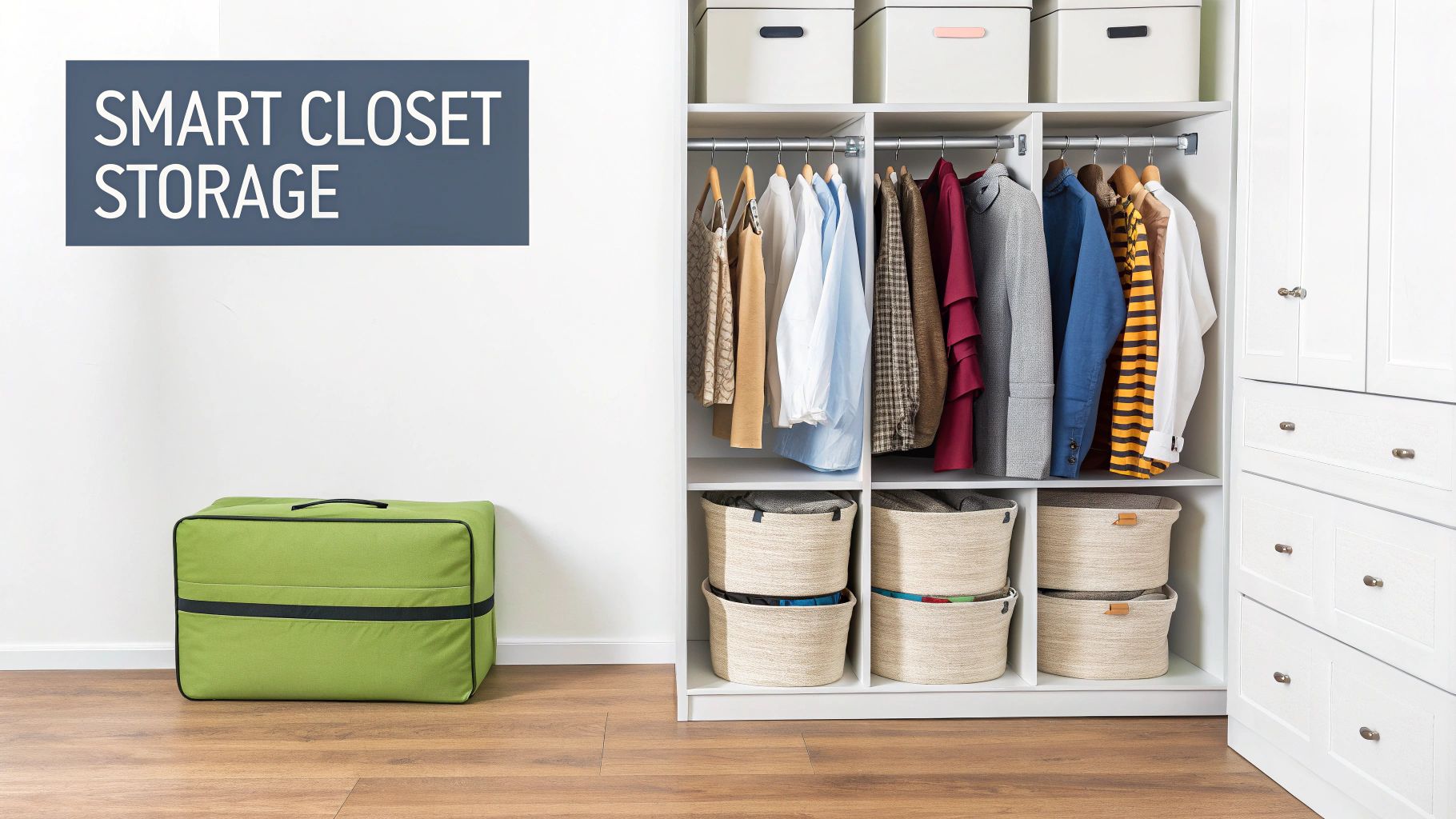
Unlocking Hidden Storage Zones
Every closet has them: those overlooked nooks and crannies just waiting to be used. By putting these forgotten spaces to work, you can seriously boost your storage capacity without needing a bigger closet.
- High Shelves: That top shelf is prime territory. Instead of letting it become a chaotic pile, use sturdy, stackable storage bags. They’re perfect for bulky sweaters or extra linens. Just be sure to label everything clearly so you don't need a ladder every time you're looking for something.
- Under the Bed: This is the go-to spot for low-profile bags, especially the vacuum-sealed kind. They slide right under the bed, keeping your winter parkas and heavy comforters out of the way but still easy to grab when the temperature drops.
- Floor Space: Don't forget about the back corners of your closet floor. This is a great place to tuck larger, more durable storage containers for things you don't need often, like sentimental items or special occasion outfits.
This kind of strategic thinking is catching on. People are getting creative, and even everyday tote bags are finding a new life in closets. In fact, the tote bag market has grown into a $2.8 billion industry in 2024, partly because they're so handy for organization. One survey found that 58% of apartment dwellers use totes for stashing off-season clothes, which is a clever way to maximize limited space.
Creating a Cohesive Organizational Flow
A truly organized closet is one where everything works together. When you pair your storage bags with other smart tools, you create a powerful system that’s both efficient and nice to look at.
The secret to a perfectly organized closet is synergy. Storage bags get the seasonal clutter out of the way, and then tools like space-saving hangers make the most of the active space you just reclaimed. It’s a one-two punch for a wardrobe that actually works.
Think about it: once you've packed away all those bulky winter sweaters, you suddenly have a ton of extra room on your clothing rod. That's the perfect moment to switch to slim, multi-garment hangers. They condense the space your remaining clothes take up, letting them hang freely without getting crushed or wrinkled.
Our guide on how to store hangers has some great tips for keeping the whole system tidy. By combining smart storage with the right hangers, you build a closet where everything has its place, making getting dressed in the morning faster and a whole lot less stressful.
Common Mistakes to Avoid When Storing Clothes
It seems straightforward enough—put clothes in a bag, stick them in the closet. Simple, right? But a few common missteps can turn your best organizational intentions into a nightmare for your favorite garments. Knowing what not to do is just as critical as learning the best packing techniques for your closet organization system.
The absolute biggest mistake is storing clothes that are even the tiniest bit damp. Any moisture trapped inside a bag is an open invitation for mold and mildew. That stuff can permanently stain fabrics and leave behind a musty smell that’s nearly impossible to get rid of. Before anything goes into a bag, make sure it's 100% bone-dry.
Another classic error is overstuffing. I get it, it’s tempting to squeeze just one more sweater in to maximize space, but this is a recipe for disaster. An overpacked bag puts a ton of stress on the zipper, which is often the first thing to break. More importantly, it smashes your clothes together, creating deep-set wrinkles and even damaging the fabric's structure.
Choosing the Wrong Container for the Job
Not all fabrics play by the same rules, and using the wrong type of storage bag can cause irreversible harm, especially to your delicate or natural fiber pieces. This is where a lot of closet organization plans fall apart.
A major pitfall is using airtight plastic containers—like vacuum bags—for the wrong things. They’re fantastic space-savers for bulky synthetic items like ski jackets or comforters, but they can be the kiss of death for natural fibers.
Sealing natural materials like leather, fur, or wool in an airtight bag is a critical mistake. These fibers need to breathe to maintain their texture and integrity; trapping them without air circulation can lead to drying, cracking, and a loss of their natural luster over time.
Instead of preserving these valuable pieces, you end up ruining them. For anything made of natural fibers, you absolutely need a breathable fabric bag that protects from dust while still letting that all-important air flow through.
Other Small but Costly Errors
Finally, a couple of smaller oversights can completely undermine all your hard work. Forgetting to clean clothes before storing them can attract pests and allow small, invisible stains to oxidize and set permanently.
Likewise, stashing your clothes in places with wild temperature swings—think attics, garages, or damp basements—can cause the fabrics to break down over time. By sidestepping these common blunders, you can be confident your clothes will come out of storage looking just as fantastic as they did going in.
Keeping Your Stored Clothes Fresh for the Long Haul
Getting your clothes properly packed away is a great first step, but the job isn't quite finished. Think of clothing storage as an ongoing process, not a one-time chore. To make sure your favorite pieces come out of hiding looking just as good as they went in, a little periodic care is essential.
This is what makes the difference between pulling out a perfectly preserved sweater and discovering a musty, wrinkled disaster. Long-term storage is a marathon, not a sprint. The goal is to keep everything in top condition, which means scheduling a quick check-in once or twice a year. This is especially important if you live somewhere with big swings in humidity.
The Annual Freshness Checkup
This yearly ritual is your secret weapon for keeping clothes in pristine shape. It’s your chance to spot problems like moisture or pests before they do any real damage to items stored in your closet or elsewhere.
The most important step? Let them breathe. Take everything out of their storage bags for clothing and let them air out in a well-ventilated room for a few hours. Textiles trap moisture and odors over time, and this simple act helps release them, preventing that stale, "been in a box forever" smell. If you want to dive deeper, you can learn more about how to keep clothes fresh in storage with a few extra tricks.
While everything is out, give both the clothes and the bags a quick inspection. Here’s what to look for:
- Mildew: Keep an eye out for any small, discolored spots that could signal a moisture problem.
- Pests: Check for tiny holes or webbing, especially on natural fibers like wool and cashmere.
- Bag Condition: Make sure the zippers still glide smoothly and that there aren't any new rips or cracks in the material.
"To maintain your garments in long-term clothing storage, it’s important to give them a little attention each year. Textiles need to breathe, so make an effort to take your clothes out of their containers annually and let them air out for a few hours."
This is also the perfect moment to refold items differently to prevent permanent creases from setting in. A little annual maintenance goes a surprisingly long way. For more great ideas, check out these tips for storing winter clothes to keep your seasonal wardrobe in perfect condition.
Got Questions About Storage Bags? We've Got Answers.
Jumping into the world of closet organization can bring up a few questions. To help you get it right, I've rounded up some of the most common ones I hear and shared the straight-up answers you need.
How Long Can I Keep Clothes in Vacuum Sealed Bags?
This is a big one. While vacuum bags are fantastic for maximizing closet space, they aren't a "set it and forget it" solution. I generally tell people not to leave clothes sealed for more than a year at a time, especially natural fibers like wool or cotton.
Think of it like this: those fibers need to breathe. Keeping them squashed for too long can crush their natural loft and set in some seriously stubborn wrinkles. My rule of thumb? Open the bags up every 6 to 12 months. Let everything air out for 24 hours, then feel free to seal them back up. It’s a small step that makes a huge difference in keeping your clothes looking great.
Are Cedar Blocks or Lavender Sachets Really Necessary Inside Storage?
Necessary? Maybe not. A really smart idea? Absolutely. I strongly recommend them, particularly if you're storing anything made of wool, cashmere, or other natural fibers that moths just love.
Cedar and lavender don't just repel pests; they also absorb moisture and keep things smelling fresh. It's an easy way to add another layer of defense and prevent that musty, "stored-away" smell. Your clothes will come out of storage ready to wear, not ready for an emergency wash.
Can I Store Delicate Fabrics Like Silk in Any Storage Bag?
Please don't! This is where you can do some real damage if you're not careful. Delicate items like silk, lace, or anything with beading should never go into a vacuum bag. The pressure is just too much—it can flatten the fibers, break embellishments, and permanently ruin the garment's shape.
For your most precious pieces, you need a gentler approach inside your closet:
- Breathable Garment Bags: Look for ones made of pH-neutral cotton. These protect from dust without trapping moisture or causing discoloration.
- Fabric-Lined Boxes: They give you structure and protection without the squish factor.
- Acid-Free Tissue Paper: No matter what you choose, always wrap delicates in this first. It prevents snagging and stops colors from bleeding onto each other.
Taking that extra bit of care is what will keep those special items looking beautiful for years to come.
Ready to transform your closet from cluttered to calm? The right tools make all the difference. Explore the innovative, space-saving solutions from MORALVE and discover how our hangers can perfect your organization system. Find your perfect closet solution at moralve.com.
Leave a comment