
A Guide to the Best Types of Hangers for an Organized Closet

Choosing the right types of hangers is the very first, and most important, step in turning a chaotic closet into a calm, functional space. It’s about more than just getting clothes off the floor; it's about picking the perfect tool to protect your garments, maximize your storage, and make getting dressed every day so much easier.
Why Your Choice of Hanger Matters
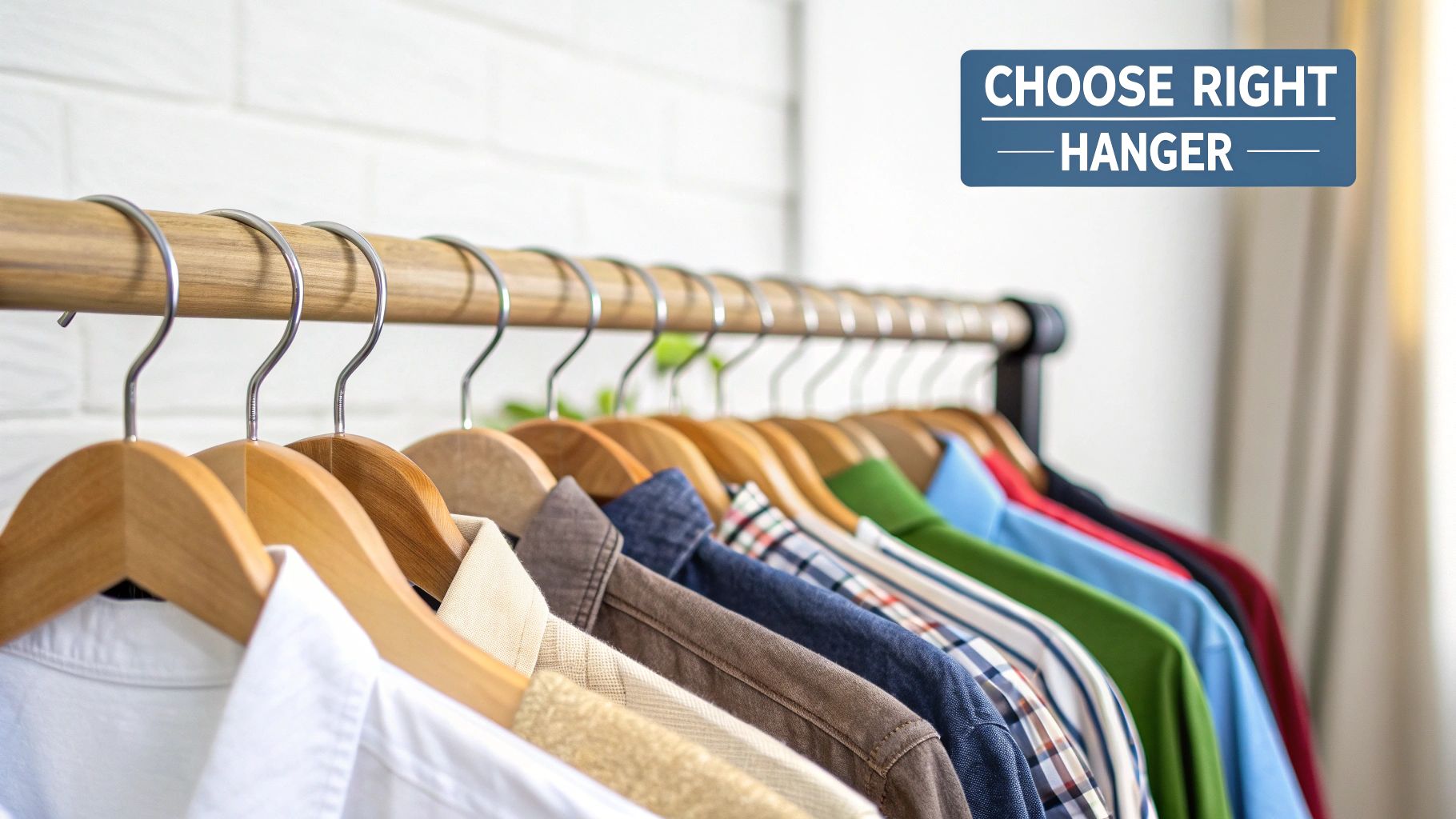
Think of your hangers as the foundation of your closet organization system. You wouldn't build a house on shaky ground, right? So why trust your favorite clothes to flimsy, mismatched hangers that do more harm than good? Using the wrong kind can cause stretched-out necklines, stubborn shoulder bumps, and creases that just won't iron out.
A truly organized closet is built on a smart system, and hangers are the building blocks. When you have a uniform set of hangers that are right for your clothes, everything hangs at the same height. This creates a clean, visually pleasing line that lets you see what you own and find what you need in seconds.
The Impact Of A Cohesive Hanger System
Creating a unified look isn't just for aesthetics—it’s about pure function and organization. Switching to a streamlined hanger system delivers some incredible, tangible benefits for your closet:
- Improved Visibility: When your clothes hang neatly, nothing gets lost in the shuffle. You can scan your entire wardrobe with a single glance, making it easier to put outfits together.
- Space Optimization: Slim and specially designed hangers can seriously increase the amount of hanging space you have. For small closets, this is a total game-changer for reducing clutter.
- Garment Preservation: The right hanger provides the proper support for each item, preventing damage and helping your clothes keep their original shape for years to come. A well-cared-for wardrobe is an organized wardrobe.
This growing desire for better organization has fueled huge interest in closet solutions. The global clothes hanger market, valued at USD 27.00 billion in 2019, is on track to hit USD 34.00 billion by 2026. This just shows how much people are looking for smarter wardrobe tools.
From Personal Closets To Professional Presentation
It's not just about our closets at home. The right hanger is also crucial for how clothes are first presented for e-commerce, setting the stage even before advanced AI product photography techniques come into play. It highlights just how fundamental hangers are to how we care for and perceive our clothing.
A thoughtfully chosen hanger does more than just hold a garment; it preserves its shape, extends its lifespan, and transforms a cluttered space into an orderly sanctuary. It is the single most effective tool for reclaiming control over your wardrobe.
In this guide, we'll walk through all the different types of hangers out there, breaking them down by material and purpose. From sturdy wood for your heavy coats to soft velvet for delicate silks, you’ll learn exactly how to pick the perfect hanger for every single item you own. Let's get that closet organized.
Understanding Hanger Materials, From Velvet to Wood
Choosing the right hanger is the very first step toward a closet that actually works for you. I like to think of a hanger collection as a toolkit for organization—you need different tools for different jobs. You wouldn't use a hammer to turn a screw, right? In the same way, you can't expect one type of hanger to work for every single piece of clothing in your wardrobe.
Getting a handle on the strengths and weaknesses of each material is the key to protecting your clothes, saving space, and finally creating a closet system that feels effortless. Let's break down the most popular options you'll find out there.
Velvet Hangers: The Gentle Grippers
Velvet hangers are the unsung heroes of closet organization, especially for delicate or slippery fabrics. Their magic lies in that soft, flocked surface, which creates a fantastic non-slip grip. Say goodbye to finding your silky blouses, wide-neck tops, and camisoles in a heap on the floor.
Think about trying to hang a silk shirt on a slick plastic hanger—it’s an organizational nightmare. A velvet hanger, on the other hand, acts like a gentle but firm glove, keeping the garment exactly where you put it. Their ultra-slim profile is another huge plus, often letting you fit way more clothing onto a single rod, which is essential for maximizing space.
For anyone looking to organize their closet while keeping delicate items safe, velvet is a fantastic choice. If you’re tired of playing pick-up with your tops, you can find a deeper dive into the best non-slip hangers right here.
Wood Hangers: The Sturdy Bodyguards
When you need serious support for your heavier garments, nothing beats a solid wood hanger. These are the bodyguards of the hanger world, built to preserve the shape and structure of your most substantial clothes, which is a key part of long-term closet management.
Picture a tailored suit jacket or a heavy wool winter coat. These pieces have defined shoulders that need proper support. A flimsy hanger will just buckle under the weight, eventually causing the shoulders to droop and pucker.
A well-made wood hanger, especially one with wide, contoured arms, mimics the natural slope of a person's shoulders. This provides the robust support needed to ensure your blazers, suits, and coats keep their intended shape for years to come.
Wood hangers are truly an investment in the longevity of your most valuable garments. By providing unmatched support, they prevent the stretching and distortion that can permanently ruin heavy or structured clothing.
Sure, they’re bulkier and take up more closet real estate than other types, but their strength is absolutely essential for certain pieces. Plus, they bring a classic, high-end look to your closet that just feels organized and timeless.
Plastic Hangers: The Everyday Workhorses
Plastic hangers are probably the most common sight in closets everywhere, and for good reason. They’re lightweight, cheap, and come in a million different colors and styles, making them a super practical choice for all your everyday items.
Their versatility is their biggest asset for daily closet maintenance. They’re perfect for t-shirts, casual button-downs, and kids' clothes. Since they’re moisture-resistant, they’re also a great option for air-drying laundry before it goes into the closet.
This widespread use isn't just an observation; it's a market reality. Plastic hangers have become the clear leaders in the global hanger market, capturing over 60% of the market share thanks to their low cost and easy moldability. This is happening as the entire hanger market, valued at USD 1.9 billion in 2023, continues to grow, driven by urbanization and the ever-expanding fashion industry.
Metal Hangers: The Sleek Minimalists
For a modern, minimalist aesthetic in your closet, metal hangers are a fantastic choice. Usually made from materials like stainless steel or chrome, they’re incredibly durable and resistant to rust, making them a long-lasting addition to any organizational system.
Their main benefits are strength and a slim design. A single metal hanger can typically hold more weight than a standard plastic one without bending or breaking. And just like velvet hangers, their thin profile helps you conserve that precious closet space.
You do have to choose wisely, though. Those basic wire hangers from the dry cleaner are an organization killer—they offer zero shoulder support and can cause ugly stretching. Instead, look for sturdier metal designs that have notches for straps or rubber coatings to keep clothes from sliding off. These thoughtfully designed metal hangers offer a sleek, strong solution for a contemporary and well-organized wardrobe.
Matching Hangers to Garments for Perfect Care
Knowing your hanger materials is a great start, but the real magic of closet organization happens when you match the right hanger shape to the right piece of clothing. If you’ve ever pulled a shirt off a hanger only to find two weird, pointy bumps in the shoulders, you know exactly what I’m talking about. Using the wrong hanger is the fastest way to stretch out necklines, create those dreaded shoulder dimples, or even leave permanent marks on your favorite clothes.
It helps to think of each hanger as a specialized tool in your organizational toolkit. You wouldn't use a butter knife to chop vegetables, right? The same logic applies here. A well-chosen hanger doesn't just hold an item up; it actively preserves its shape, fabric, and overall lifespan. This simple shift in thinking is what turns a regular closet into a personal archive for your wardrobe.
The Anatomy of a Perfect Match for Tops and Jackets
The shoulders are the most vulnerable part of any shirt, jacket, or blazer when it's on a hanger. All the garment's weight pulls down on those two small points, so giving them the right support is non-negotiable for keeping your closet orderly and your clothes in good condition.
-
For Tailored Suits and Blazers: Structured pieces like these need hangers with broad, curved shoulder supports. A contoured suit hanger is designed to mimic the natural slope of your shoulders, which prevents a tailored jacket from sagging or puckering. Putting a beautiful suit on a flimsy wire hanger is a recipe for disaster—it will ruin the garment's form in no time.
-
For Dress Shirts and Blouses: These don't need the heavy-duty support of a suit hanger, but they do need a hanger that's wide enough to reach the shoulder seam. This prevents the ends of the hanger from pushing up into the fabric and creating those annoying bumps. For a deeper dive, check out our guide on the best hangers for dress shirts.
-
For Knitwear and Sweaters: Let's be clear: the best way to store heavy sweaters is to fold them. Gravity is the enemy of knitwear. But if you absolutely must hang them, use a padded hanger or a specialty sweater hanger with an extra-wide, gentle curve. This helps distribute the weight and stops the knit from stretching out of shape.
Hanger Material vs Garment Compatibility
To make this even clearer, let's break down which materials are best suited for specific types of clothing. Think of this table as your quick-reference cheat sheet for making the right choice every time you hang something up and organize your closet.
| Hanger Material | Best For | Avoid For | Key Feature |
|---|---|---|---|
| Velvet | Silky blouses, tank tops, delicate dresses | Heavy winter coats, wet or damp clothing | Ultra-slim, non-slip surface |
| Wood | Suits, blazers, heavy coats, tailored trousers | Very delicate or thin-strapped items (without notches) | Sturdy, supportive, maintains garment shape |
| Plastic | T-shirts, lightweight shirts, kids' clothes | Heavy suits, structured jackets, delicate fabrics | Inexpensive, versatile, good for everyday items |
| Metal/Wire | Dry-cleaning (temporary), very light items | Almost everything else, especially sweaters & suits | Slim profile (but prone to causing damage) |
| Padded/Satin | Lingerie, formal gowns, delicate vintage | Heavy outerwear, casual everyday wear | Gentle on fabric, prevents snags and creases |
Ultimately, pairing the right material with the right garment isn't just about organization—it's about preservation. Using a strong wooden hanger for a heavy coat or a gentle velvet one for a silk camisole ensures each piece stays in pristine condition.
Choosing the Right Hanger for Pants and Skirts
How you hang your pants and skirts is the difference between a wrinkle-free outfit and a last-minute ironing session. There are two main players here for closet organization: clip hangers and bar hangers, and they each have their place.
A drape-over or bar hanger is fantastic for casual trousers, jeans, and anything made from wrinkle-resistant material. Just fold them over the bar and you're done. For the best results, look for a bar with a non-slip coating—like velvet or rubber—to keep pants from sliding off and ending up in a sad pile on your closet floor.
On the other hand, clip hangers are your best friend for creased dress pants, skirts, and items made from delicate fabrics like linen or silk. These hangers let the garment hang to its full length, allowing gravity to gently pull out any minor wrinkles.
A pro tip for clip hangers: always adjust the clips to match the width of the waistband. Clamping them at the very edges helps the garment hang flat and keeps the clips from leaving little indentations in the fabric.
Conquering Closet Chaos with Specialty Hangers
Beyond the everyday hangers, there's a whole world of specialty hangers designed to solve those nagging organizational problems. These are the clever tools built for all the tricky items that just don't play well with standard hangers.
This simple decision tree is a great visual guide for matching a hanger material to what you need to hang.
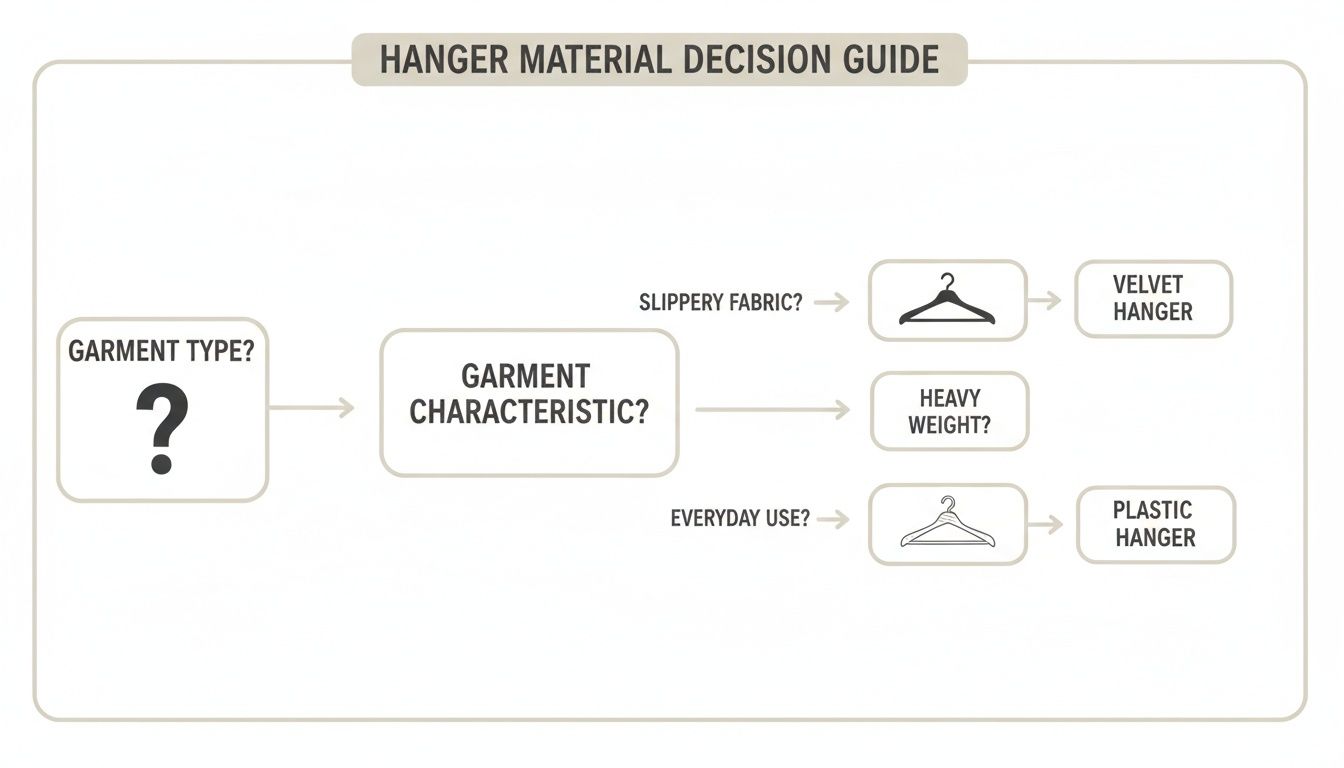
As you can see, the choice between velvet, wood, or plastic really comes down to the garment’s weight and fabric. Following this logic helps you protect your clothes while keeping things tidy.
- Tank Tops and Camisoles: A specialty tank top hanger, like the ones we offer at MORALVE, can hold multiple items on a single hanger, freeing up a massive amount of closet rod space. Built-in notches or hooks make sure those skinny straps stay put.
- Scarves and Ties: A dedicated hanger with multiple loops or bars keeps all your accessories organized, easy to see, and free from snags.
- Belts: A simple hook or a multi-pronged belt hanger is perfect for preventing buckles from getting scratched and stopping leather from getting permanently bent.
Wooden hangers are a popular choice for these specialty designs because of their sheer strength and timeless look. They definitely represent the premium end of the market, making up about 20-25% of market value thanks to their durability and garment-friendly design. In the United States, where North America accounts for 79.16% of the hanger market, wooden hangers are especially favored for skirts and pants. In fact, their contoured designs can save 30-40% more space than basic plastic versions. By matching the right specialty hanger to the right item, you can finally bring a sense of calm to even the most cluttered corners of your closet.
Maximizing Space with the Right Hanger Designs
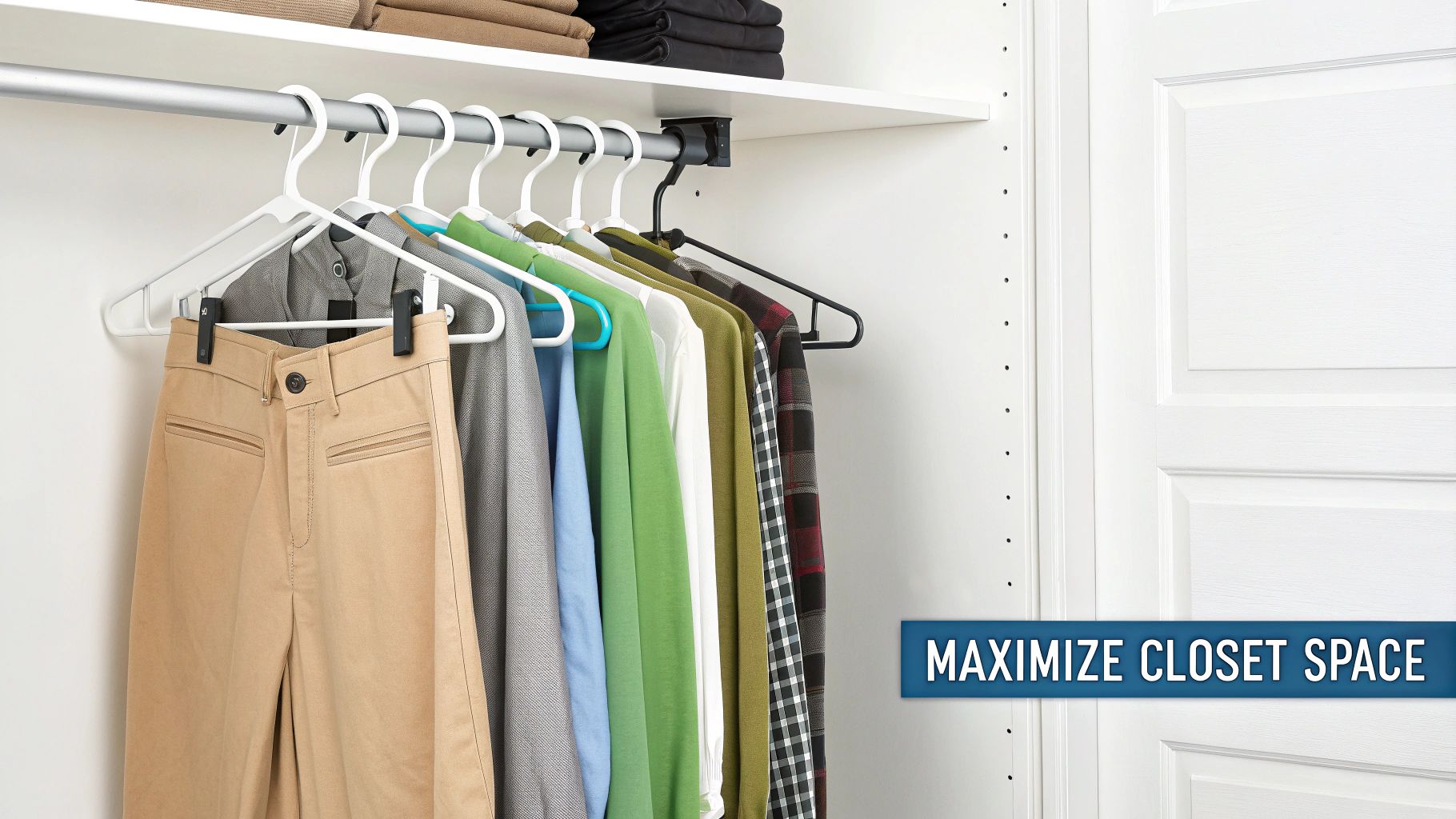
If you've ever battled with a small closet, you know that every single inch is precious real estate. This is especially true in apartments or older homes where storage was an afterthought. To win the war against clutter, you have to get strategic with your hanging space, moving beyond basic hangers to designs that work smarter, not harder.
Think of your closet rod as a finite resource. A standard plastic hanger holds one item and takes up a predictable amount of horizontal space. A space-saving hanger, on the other hand, is a tool that cleverly uses vertical space to house more clothes within the very same footprint, maximizing your organizational potential.
The Power of a Slim Profile
One of the fastest ways to reclaim closet space is to ditch your bulky, mismatched hangers. Those thick plastic or chunky wooden hangers are closet hogs, eating up valuable rod space and creating a tangled mess that makes finding an outfit feel like an archaeological dig.
Making the switch to a uniform set of ultra-slim hangers, like velvet or streamlined metal ones, delivers an instant organizational win. Their lean profile lets you hang clothes much closer together without crushing them, and it’s not an exaggeration to say it can feel like you’ve doubled your closet space overnight. Plus, the clean, consistent look just makes your whole wardrobe easier on the eyes.
The real win with a space-saving strategy isn't just about cramming more stuff in. It’s about creating a system where every item is visible, accessible, and properly cared for. The right hanger design can reclaim up to 80% of previously wasted space, turning chaos into order.
For a truly organized closet, pairing smart storage with a minimalist mindset is key. Learning how to build a capsule wardrobe is a perfect complement to choosing the right hangers, ensuring every piece you own has a purpose and a proper home.
Unlocking Vertical Space with Tiered Hangers
When you've maxed out your horizontal rod space, the only way to go is up—or in this case, down. Tiered and cascading hangers are genius inventions designed to tap into all that empty vertical space dangling below your clothes. These are game-changers for organizing specific parts of your wardrobe.
-
Multi-Pant Hangers: These feature several stacked bars, letting you hang four or five pairs of pants in the same vertical space that one used to occupy. The MORALVE Pant Hanger is a fantastic example, consolidating your trousers so you can see all your options in a single glance.
-
Tiered Skirt Hangers: Working on the same principle, these have multiple levels of clips. They're perfect for organizing skirts of any length, keeping them free of wrinkles while saving a ton of rod space.
-
Cascading Hooks: Some hangers have a built-in hook that lets you hang another hanger from it, creating a chain reaction. This is incredibly useful for grouping entire outfits together or keeping similar items like blouses neatly organized.
Consolidate and Conquer with Specialty Designs
It's not just pants and skirts that can be consolidated. Specialty multi-garment hangers are made to tackle some of the most common closet-clutter culprits. Think about it: a single, well-designed hanger can neatly hold a handful of tank tops or camisoles, which can otherwise overwhelm a closet rod in no time.
Choosing the right space-saving hangers really can transform your closet. For more great ideas, check out our guide on the best space-saving hangers. By strategically picking hangers that stack, tier, and consolidate, you can turn a packed-to-the-gills closet into a functional, streamlined wardrobe, no matter how small it is.
How to Choose and Care for Your Hangers
Alright, now that we've covered the different types of hangers out there, let's get down to the practical side of things: picking the right ones for your closet and making sure they last. Think of choosing hangers as an investment in your closet's organization. A little thought now will save you a lot of headaches later and keep your favorite clothes looking their best.
Before you even think about buying, take a moment to assess your closet's needs. This isn't just about counting your shirts. It's about really understanding what your clothes need to stay organized and well-maintained.
What to Consider Before You Buy
Making a smart choice here is about more than just finding a style you like. A few quick checks will ensure you build an organizational system that genuinely works for you and your space.
- Measure Your Closet: Seriously, grab a tape measure. Note the width of your closet rod and, just as importantly, the vertical hanging space. This simple step can save you from buying hangers that let your long dresses or coats drag on the floor, creating clutter.
- Do a "Weight Check" on Your Wardrobe: Are you a fan of heavy wool suits, denim jackets, or bulky outerwear? If so, you absolutely need to lean towards strong wooden hangers or a heavy-duty plastic set. Flimsy hangers will just bend or break, ruining your organized look.
- Commit to a Uniform Look: This is one of the biggest (and easiest) upgrades you can make to your closet. A matching set of hangers instantly makes your closet feel organized and calm. Plus, it makes everything hang at the same height, so you can actually see what you have.
Switching to a single, cohesive system—like all slim velvet hangers—is a game-changer. It’s not just for looks; it's about pure function. When all your hangers are the same, they glide past each other without getting into a tangled, frustrating mess.
Making Your Hangers Last
Once you've brought home your new hangers, a little bit of care will go a surprisingly long way. Good maintenance means they'll support your clothes properly for years and won't transfer dust onto your freshly cleaned outfits. You're protecting your investment in an organized space.
A quick, simple cleaning routine is really all it takes. This keeps that layer of dust from building up and settling onto the shoulders of your clothes.
Think of your hangers like any other tool—they work best when you keep them in good shape. A clean hanger doesn't just look nice; it protects your clothes from dust and snags, preserving the garment and the hanger itself.
For most types, a quick wipe-down is all you need. Here's how to handle it:
- Velvet Hangers: A lint roller is your best friend here. You can also use a slightly damp cloth to gently wipe away any dust, but never soak them—too much water can ruin the fuzzy coating.
- Wooden Hangers: Just dust them with a dry microfiber cloth every now and then. If you find a sticky spot, use a cloth that’s barely damp with a wood-safe cleaner.
- Plastic and Metal Hangers: These are the easiest of all. A damp cloth does the job, and you can use a little all-purpose cleaner for anything stubborn. Just be sure to dry them completely.
Finally, just be gentle. Try not to yank clothes off the hanger, as that can stress the hook over time and eventually cause it to break. By choosing well and treating them with a little care, you're building a solid foundation for a closet you'll actually love using.
Hanger FAQs: Your Questions, Answered
Alright, so you know the difference between a suit hanger and a skirt hanger. But when it's time to actually tackle that messy closet, the real-world questions start to pop up. Let's get into some of the most common organizational dilemmas I hear about all the time.
Do My Hangers Really Need to Match?
Look, it's not a law, but creating a uniform set of hangers is the single fastest way to make your closet feel instantly organized. When every hanger is the same style and color, the visual chaos just melts away, leaving your clothes as the main focus.
But it’s not just about looking good. There’s a huge practical advantage for organization. Using matching hangers, especially slim ones, means all your clothes hang at the same level with the same spacing. It makes browsing your wardrobe so much easier and stops smaller items from getting swallowed up by bulkier ones.
Are Those Wire Hangers From the Dry Cleaner Really That Bad?
In a word? Yes. Think of those flimsy wire hangers as a disposable taxi for your clothes. Their only job is to get your garments from the dry cleaner to your house—that's it. They are absolutely not meant for long-term storage in an organized closet.
The thin wire provides zero support, which is what causes those dreaded "shoulder bumps" in your shirts and sweaters as the fabric stretches under its own weight. Worse yet, the sharp edges can snag delicate fabrics, and the frame itself will buckle under anything heavier than a light t-shirt, creating a messy look.
Pro Tip: Make it a habit to take your clothes off those wire hangers the second you walk in the door. Moving them to a proper, supportive hanger right away is one of the best things you can do to maintain your closet's organization and keep your clothes in great shape.
How Many Hangers Should I Actually Buy?
This is a fantastic question, and the answer begins with a quick closet inventory. Before you click "add to cart," just count how many items you currently have hanging. That number is your starting point for building an organized system.
Here's my rule of thumb: buy about 10-20% more hangers than what you currently need. This little buffer is a lifesaver. It gives you extras for laundry day, for that new jacket you've been eyeing, or for when an old hanger finally gives up. It's what keeps your system from falling back into a mismatched mess.
And don't forget to think vertically! For things like tank tops, skirts, or pants, using multi-garment hangers can dramatically cut down the total number of individual hangers you need, which frees up a ton of precious rod space.
Can the Wrong Hanger Actually Ruin My Clothes?
Oh, absolutely. This is one of the most overlooked culprits behind damaged clothing and a disorganized closet. Using a hanger that's a poor match for a garment can cause real, irreversible harm over time, dramatically shortening the life of your favorite pieces.
Just think about these common mistakes:
- Heavy Coats on Flimsy Plastic: That thin plastic hanger was never meant to hold a heavy wool coat. It will sag and bend, causing the shoulders of your coat to stretch and pucker into a shape they'll never recover from.
- Knit Sweaters on Standard Hangers: Hanging a knit sweater on a regular hanger is asking for trouble. Gravity will pull the delicate weave down, leaving you with permanently stretched-out, misshapen shoulders.
- Harsh Clips on Delicate Fabrics: Some clip hangers have aggressive metal grips. Clamp those onto a silk skirt or linen trousers, and you’re likely to find permanent dents or even small tears in the fabric later on.
Choosing the right hanger for the garment's weight, fabric, and shape isn't just about being neat—it's about proper clothing care. The right support protects your investment and keeps everything looking its best for years to come.
Ready to transform your closet from a source of stress to a source of calm? Check out the full range of space-saving and specialty hangers at MORALVE. Our designs are all about helping you reclaim your space, protect your clothes, and finally get the organized wardrobe you deserve. Discover your perfect hanger system at MORALVE today!
Leave a comment