
Best Closet Organization System: Your Ultimate Guide to a Clutter-Free Life

Let’s get one thing straight: the best closet organization system isn't a magical, one-size-fits-all product. It’s the one that’s built for your space, your clothes, and your budget. Think of it less like a product and more like a personal recipe for a calmer, more orderly life through effective closet organization.
What Is the Best Closet Organization System?
Finding the right system is about building a functional ecosystem inside your closet. At its core, it's about combining a solid foundational structure—like modular shelving or a custom built-in—with smart, hardworking accessories. The structure is the skeleton, but the accessories, like specialized hangers and drawer dividers, are the muscles that make your closet organization work.
When you get this combination right, your closet stops being a passive box where clothes get lost. It becomes an active tool that simplifies your daily routine. A well-designed closet organization system gives every item a home, making it a breeze to find what you need and, just as importantly, effortless to put things away.
The Foundation of an Organized Closet
The first step to a perfectly organized closet is built, not bought. It starts with self-reflection and a measuring tape. You need to take a hard look at what you own and the physical space you're working with. Do you have a mountain of sweaters that need shelves? Or is your collection of dresses crying out for more long-hanging space?
Figuring this out is the crucial first step in your closet organization journey. If you want to dive deeper into this process, you can find helpful tips in our complete guide to designing a closet system.
This shift toward personalized storage isn’t just a passing trend. People are seeing closets as strategic command centers for their homes, not just dumping grounds. The global closet organizer market is valued at USD 7.64 billion in 2024 and is expected to climb to around USD 8.3 billion by 2033. This growth is fueled by people needing to make every inch count in their quest for better closet organization.
The goal is a closet that works for you—where everything has a place, your favorites are easy to find, and your wardrobe highlights the version of you that you are right now.
To help you figure out where to start, let's look at the most common types of systems out there.
Closet Organization Systems at a Glance
Here’s a quick comparison of the most common closet system types to help you identify the best fit for your closet organization needs.
| System Type | Best For | Flexibility | Avg. Cost |
|---|---|---|---|
| Custom Built-Ins | Homeowners wanting a permanent, perfectly tailored solution. | Low | $1,500 - $8,000+ |
| Modular Systems | Renters and those whose needs may change over time. | High | $200 - $1,000 |
| Freestanding Units | Rooms without closets or those needing extra portable storage. | High | $100 - $500 |
| Hanging/Rail Solutions | Minimalists or for adding simple hanging space quickly. | Medium | $50 - $200 |
Each of these systems offers a different balance of cost, customization, and permanence. The key is to match the system's strengths to your specific closet organization situation.
The Main Players: A Guide to Closet System Types
Choosing a closet organization system is like putting together an outfit. You need to know the basic pieces before you can create a look that works perfectly for you. Do you need something custom-tailored, a versatile mix-and-match set, or just a simple, functional accessory?
Let's walk through the four core types of closet systems. Understanding these is the first step toward creating a closet that simplifies your life instead of complicating it.
The Tailored Suit: Custom Built-Ins
Think of a custom built-in system as a bespoke suit for your closet. It’s measured and constructed to fit your closet's exact dimensions, accounting for every nook. This is a permanent installation, a true part of your home’s architecture, usually handled by professionals.
The beauty is in the absolute control you have over your closet organization. You decide the precise height of hanging rods, the number of drawers for sweaters, and the perfect depth for shoe shelves. It’s designed from the ground up around your specific wardrobe.
This level of customization comes at a price. Built-ins are the most expensive option and a serious investment. Because they're permanent, they’re not a great fit for renters.
- Best For: Homeowners settled in for the long haul who want a high-end, perfectly optimized storage solution.
- Pros: Total customization, maximises every inch of space, and delivers a seamless, premium look.
- Cons: Highest cost, it’s a permanent fixture, and generally requires professional installation.
The Mix-and-Match Outfit: Modular Systems
If a built-in is a custom suit, a modular system is like a wardrobe of great separates. You can combine individual components like shelving units, drawer stacks, and hanging rods to create endless closet organization layouts.
This flexibility is what makes modular systems so popular for closet organization. You can start with a basic setup and add more pieces later as your needs change. Most are designed for DIY installation, which helps keep costs down.
The real magic of modular systems is their adaptability. You’re not locked into one design, which is a lifesaver for renters or homeowners whose storage needs are bound to change.
Moving to a new place? Your system can be reconfigured for a different closet. Realize you need more shelf space? Just swap the components around. It’s an incredibly practical approach to closet organization.
The Grab-and-Go Solution: Freestanding Units
Freestanding units are the armoires and garment racks of the closet world. They are self-contained, portable pieces of furniture that don’t need to be mounted to a wall. You can place them inside a walk-in or use them to create a "closet" in a room that doesn't have one.
These solutions can be as simple as a metal garment rack or as comprehensive as a large wardrobe. Their biggest selling point is their sheer simplicity and portability, making them a quick closet organization fix.
This makes them a fantastic choice for:
- Renters: No installation means no holes in the walls.
- Guest Rooms: A quick way to add storage for visitors.
- Temporary Needs: Perfect for dorm rooms or as a stop-gap solution.
While they won’t give you the wall-to-wall efficiency of an integrated system, their convenience and affordability are hard to beat for instant closet organization.
The Simple Accessory: Hanging and Rail Systems
Finally, we have hanging and rail systems—the most minimalist closet organization option. These systems usually involve wall-mounted tracks that hold hanging rods, shelves, and other small accessories.
They are incredibly space-efficient and give your closet a clean, open feel, making them a favorite in modern design. While they don't offer much enclosed storage like drawers, they are unbeatable for maximizing hanging space, especially in a small closet. Having everything out in the open encourages you to keep things tidy.
How to Choose a System That Fits Your Life
Picking the best closet organization system has everything to do with how you actually live. The right solution is the one that fits your space, your wardrobe, and your wallet. Let's walk through a three-step assessment to help you make the right call for your closet organization.
Start with Accurate Measurements
Before you can dream about your new closet, you need to know the exact dimensions you're working with. So, grab a tape measure and document everything.
- Height, Width, and Depth: Measure the inside of your closet from wall to wall. A pro tip? Measure at a few different points—top, middle, and bottom—because walls are rarely perfectly straight.
- Obstacles: Make a note of anything that could get in the way. This includes baseboards, light fixtures, electrical outlets, or window frames.
- Unique Features: Pay close attention to any tricky spots like sloped ceilings or awkward corners. These architectural quirks will influence what kind of system you can use.
Taking a few extra minutes to get precise measurements now will save you headaches later. After all, a system that doesn't fit is just another form of clutter.
Audit Your Entire Wardrobe
Now for the most revealing part: getting brutally honest about what you actually own. A closet designed for business suits will look different from one built for casual t-shirts. A quick decluttering session before you start will give you a clearer picture of your real closet organization needs.
Lay it all out and take inventory. Ask yourself:
- How much long-hanging space do I need for dresses and coats?
- How much short-hanging space do I need for shirts and jackets?
- How many items need to be folded, like sweaters and jeans?
- What about all the extras? Count up your shoes, bags, and accessories.
This personal audit is the blueprint for your closet's design. It tells you whether to prioritize hanging rods, shelves, or drawers, ensuring the final layout truly serves your wardrobe.
To make things even clearer, this decision tree can help you see which type of system aligns with your goals.
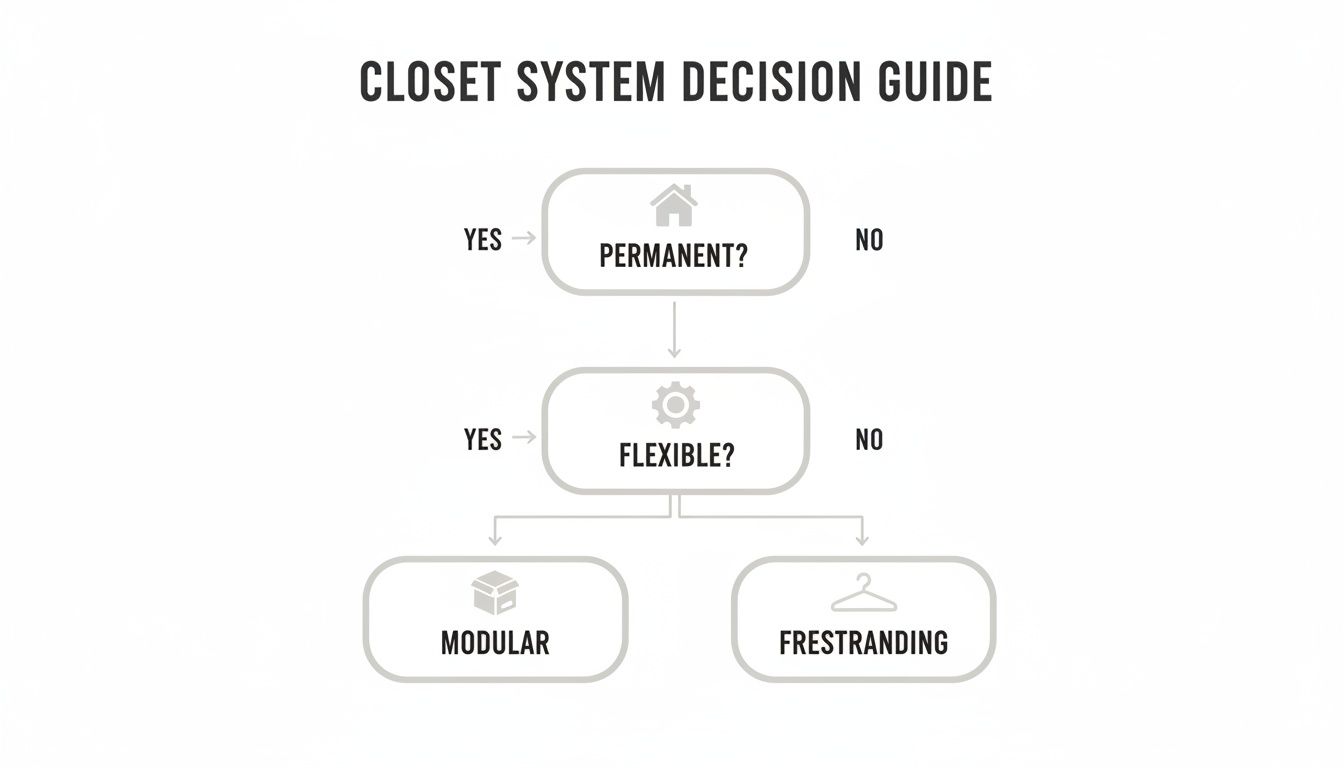
As the chart shows, if you're looking for a permanent, long-term solution, a built-in is probably your best bet. On the other hand, modular and freestanding systems offer the kind of flexibility that's perfect for renters or anyone whose needs might change.
Set a Realistic Budget
Finally, let's talk money. Your budget will be the ultimate guide in your decision-making process. The cost of closet organization systems can vary wildly, so having a clear number in mind is crucial for narrowing down your options.
This focus on closet organization isn't just a personal preference; it’s part of a much bigger trend. The home organization market is booming, valued at USD 13.13 billion in 2024 and projected to soar to USD 17.67 billion by 2032. Closet organizers are a huge category in this market, showing how vital structured storage has become.
The secret to lasting closet organization is matching a system to your reality. It’s about creating a space that doesn’t just store your clothes but actively supports your daily routine.
By carefully measuring your space, auditing your wardrobe, and setting a firm budget, you'll be ready to choose a system that feels like it was custom-made for you. For more tips, check out our article on the best clothing storage solutions.
Unlocking Hidden Space with Smart Accessories
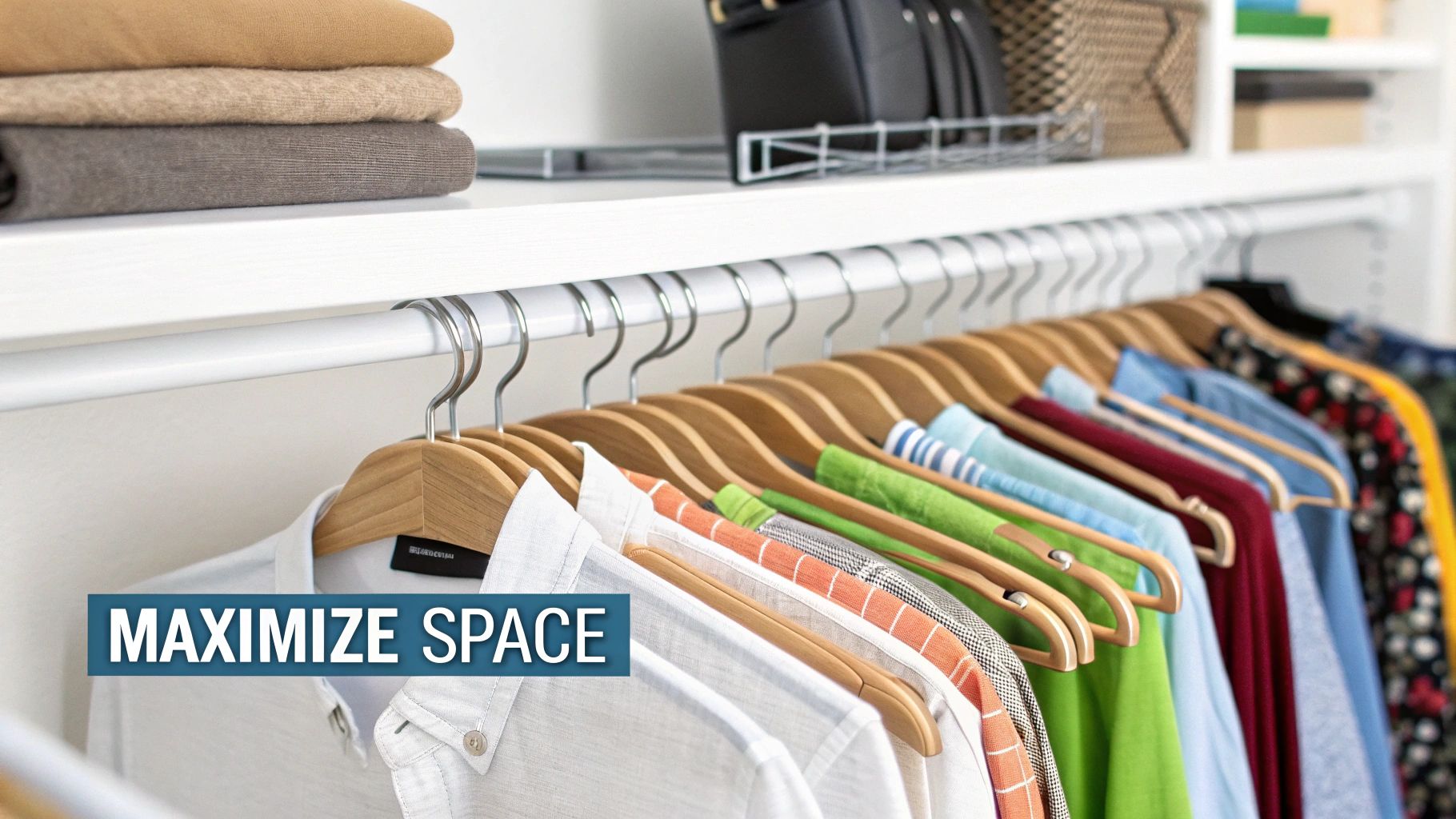
A great closet system is more than just shelves and a hanging rod. Accessories are the tools that turn a basic storage box into the best closet organization system that actually works for you.
These add-ons are the unsung heroes of a tidy closet. They're often small, inexpensive additions that create order out of chaos, letting you squeeze function out of every inch. Without them, even a custom-built system can quickly fall back into a jumbled mess.
Accessories give your stuff structure. They solve specific closet organization problems—like tangled belts or a leaning tower of sweaters—making your closet not just neater, but easier to use every single day.
The Power of Specialized Hangers
If you make only one change to improve your closet organization, make it your hangers. Swapping that random jumble of hangers for a uniform set is a total game-changer. It gives you a clean, boutique-like look instantly, but the real magic is in the space savings.
Specialized hangers are purpose-built to solve common storage problems. They don’t just hold your clothes; they optimize the space those clothes take up.
For instance, these are a few workhorses for closet organization:
- Tiered Hangers: Masters of vertical space. A single hanger can hold several pairs of pants or skirts, effectively multiplying your rod space.
- Multi-Garment Hangers: Perfect for grouping outfits or corralling all your tank tops in one spot.
- Slim Velvet Hangers: Their non-slip texture keeps silky tops from sliding onto the floor, while their ultra-thin design can free up a surprising amount of room on the rod.
By using these strategically, you can often fit twice as much clothing into your closet. To see how much of a difference the right design can make, explore some of the best space-saving hangers out there.
Beyond the Hanger: Smart Storage Add-Ons
Once your hanging clothes are sorted, it’s time to tackle the piles on your shelves and floors. This is where dividers, bins, and other clever closet organization solutions shine.
These accessories help you create "zones" in your closet, giving every item a proper home. This doesn't just look better; it dramatically cuts down on the time you spend digging for that one specific t-shirt.
The goal of closet organization isn't just to store your clothes—it's to highlight them. You want to make it easier to see, access, and actually wear the things you love.
Some of the most effective tools for the job include:
- Shelf Dividers: These simple clips slide onto your shelves, creating neat stacks of sweaters and jeans. No more toppling piles!
- Drawer Organizers: From honeycomb inserts for socks to adjustable dividers for t-shirts, these turn a chaotic drawer into a perfect grid.
- Over-the-Door Racks: The back of your closet door is underused real estate. Use it for belts, scarves, or bags.
- Clear Storage Bins: For seasonal clothes, clear bins let you see what's inside at a glance.
To get the most out of your setup, look into all the innovative shelving accessories available. It’s these small additions that ultimately create a system that feels effortless.
Your Game Plan for Installation and Organization

You’ve done the hard work of measuring and picking the perfect system. Now comes the satisfying part: bringing it all to life. This is where your plan becomes a real, functional space that makes your day easier.
Let's walk through this process in three straightforward stages. We'll start with a clean slate, get into the nuts and bolts of installation, and finish with the smart way to put everything back.
First Things First: The Great Closet Purge
Before you think about installation, you have to empty the closet. Completely. This is the non-negotiable first step to lasting closet organization. You can’t build the best closet organization system on a foundation of things you don't even wear.
You need a clear space to work, but more importantly, you need to be sure that only the good stuff goes back in. Why waste precious, newly organized space on clothes you'll never touch again?
Think of it this way: you’re not just storing clothes, you’re curating them. The goal of closet organization is to see what you have, love what you see, and make it effortless to grab the pieces that make you feel fantastic.
Sort every item into three piles: Keep, Donate/Sell, and Toss. Be ruthless. If you haven't worn it in a year, if it doesn't fit, if it's no longer your style—it’s time to say goodbye. This initial declutter sets you up for successful closet organization.
Installation: To DIY or Not to DIY?
With a sparkling clean and empty closet, it's time to build. Your approach here boils down to the system you chose and how comfortable you are with a toolkit.
Many modular and freestanding systems are made for a weekend warrior. They usually come with step-by-step instructions and only require basic tools like a drill, a level, and a screwdriver. Tackling it yourself can be a rewarding project that saves you money.
On the other hand, for complex setups or custom built-ins, calling in a pro is often the best money you'll spend. A professional installer guarantees everything is secure, level, and perfectly fitted. If you're hesitant about your skills, hiring it out saves time, frustration, and the risk of a costly mistake.
The Smart Reload: It's All About Zoning
Your new system is in place. Now for the final move: putting everything back in. But don’t just shove it all back. This is your chance to organize with purpose. Think like a visual merchandiser and create dedicated "zones" for your wardrobe.
This one strategy turns your closet from a chaotic holding pen into an intuitive machine for getting dressed.
Here’s how to start zoning your closet:
- Zone by Category: This is the most straightforward method. Group all like items together—blouses in one spot, pants in another, sweaters on their own shelves. It gives you an instant visual inventory.
- Zone by Occasion: Want to take it up a notch? Carve out sections for different parts of your life. Create a workwear zone, a weekend zone, and a spot for gym clothes.
- Maximize Vertical Space: Use every inch of height. Stash off-season items on the highest shelves. Your daily go-to items should be at eye level, easy to see and grab.
How to Keep Your Closet Organized for Good
You did it. You installed the best closet organization system, and everything has a place. But the real challenge isn't getting organized; it's staying organized. A truly functional closet is the result of small, consistent habits that stop clutter from creeping back in.
Think of it like a freshly detailed car. It looks amazing at first, but without regular upkeep, it quickly returns to its old state. The goal is to ditch the frantic, once-a-year cleanout for a simple, ongoing maintenance routine for your closet organization.
Adopt Sustainable Tidying Habits
The best way to maintain your closet organization is to stop messes before they begin. By building a few simple rules into your routine, you can maintain that "just organized" feeling with minimal effort.
A game-changer is the "one in, one out" rule. It's simple: every time you buy a new shirt, an old one has to leave. This prevents your wardrobe from overflowing and makes you more intentional about your purchases.
Another great practice is the seasonal swap-out. As you pack away sweaters and pull out your summer wardrobe, take an extra 15-20 minutes to quickly edit your collection. It’s the perfect moment to spot items that are worn out or don't fit anymore.
Maintaining closet organization is less about marathon cleaning and more about simple, repeatable systems. It's about making tidiness the path of least resistance.
Perform Simple System Maintenance
Your closet organization system itself needs a little TLC. Every so often, give the shelves a quick wipe-down, check that drawer pulls are tight, and make sure your hanging rods aren't sagging under too much weight. For practical, ongoing advice, this expert guide on how to organize closet shelves is a fantastic resource.
Taking these small steps is an investment in the longevity of your system. It's no surprise that the global custom closets market is projected to jump from USD 33.7 billion in 2026 to nearly USD 59.1 billion by 2033. Read more on the growing custom closet market. A few minutes of care ensures your investment in closet organization pays off for years to come.
Got Questions? We've Got Answers
Even the best-laid plans can leave you with a few questions when it's time to pull the trigger on a new closet organization system. We’ve pulled together some of the most common questions to give you clear, straightforward answers.
Think of this as your final checklist to ensure you're heading into your closet organization project with confidence.
How Much Should I Expect to Spend on a Closet System?
The honest answer is: it depends. The cost can swing wildly, so it's smart to set a budget first. A simple wire or rail system is a great starting point and might only set you back a few hundred dollars.
Moving up, you’ll find modular systems generally land in the $200 to $1,000 ballpark, which is often the sweet spot for flexibility and value. If you’re dreaming of a fully custom built-in, be prepared to invest anywhere from $1,500 to over $8,000, depending on the size of your closet and the materials you pick.
Is It Worth Hiring a Professional Organizer?
Hiring a pro can be a game-changer for your closet organization, especially if you’re feeling overwhelmed. They have a knack for seeing a space’s potential and can be the objective voice you need to finally part with things you no longer wear.
On the other hand, if you love a good DIY project and already have a solid idea of what you want, you can absolutely get amazing results on your own. It really boils down to your comfort level, your budget, and how much time you can realistically dedicate to it.
Just remember, the whole point is to create a system that makes your life easier. Whether you fly solo or bring in an expert, the end goal is a closet that works for you.
What Do I Do with My Weird, Awkwardly Shaped Closet?
Slanted ceilings, shallow nooks, and bizarre corners are a fact of life, but they’re not a lost cause for closet organization! This is where modular systems and clever accessories really shine.
- Go Vertical: If you have high or slanted ceilings, mount shelves as high as they’ll go. It's the perfect spot for stashing out-of-season items.
- Think Slim: For shallow closets, slim-profile shelves, hooks, and rail systems are your best friends. They give you storage without crowding the space.
- Conquer the Corners: A corner shelf unit or even a simple tension rod can turn an odd corner into a handy place to hang bags or scarves.
The trick is to get creative. Instead of seeing a challenge, look at those quirks as an opportunity to build a truly custom-fit solution for your closet organization.
Ready to turn that cluttered closet into a calm, organized space? The right tools make all the difference. At MORALVE, we specialize in designing space-saving hangers that help you get the most out of every single inch, no matter what system you have. Take a look at our collection and kickstart your organization journey at https://moralve.com.
Leave a comment