

The Best Way to Organize Your Closet for Good

The secret to a truly organized closet isn't about achieving some impossible, picture-perfect ideal. It's about creating a system that genuinely works for your life. The process starts with a simple "closet audit"—a realistic look at what you own versus what you actually wear. This approach is all about function over fantasy, creating a space that makes your daily routine easier, not harder.
Your Blueprint for an Effortless Closet
Let’s be honest, those perfectly curated closets splashed all over social media can feel completely out of reach. We're going to skip the pressure of perfection and focus on what works in the real world. Think of this guide as your blueprint for turning closet chaos into a calm, functional space that simplifies your routine, one hanger at a time.
This is more than just a quick tidy-up. It's about building a sustainable system that saves you precious time every morning, cuts down on decision fatigue, and helps you fall back in love with the clothes you already have. It’s a small change that can have a surprisingly big impact on your day.
The Power of a Plan
Before you even think about pulling a single shirt off its hanger, you need a roadmap. Trust me, jumping in without a plan is the fastest way to get overwhelmed and give up, leaving you with a bigger mess than when you started. A successful closet overhaul is built on a few core principles.
- The Closet Audit: This is ground zero. You’ll go through everything you own and make honest, practical decisions about what stays and what goes.
- Strategic Zoning: This is where you create dedicated spaces for different parts of your wardrobe. Think separate zones for work attire, weekend casuals, and workout gear.
- Smart Storage Solutions: Once you know exactly what you're keeping, you can choose the right tools to make every inch of your space work harder. For a deep dive, check out our guide on powerful closet storage and organization ideas.
Investing in Your Space
It's not just you—people everywhere are focusing more on making their closet spaces more functional. The global home storage and organization market is booming, projected to grow significantly as people seek to improve their daily routines. This isn't just a fleeting trend; it shows a real shift towards investing in organization as a way to improve daily life. You can find more insights into this growing market on globalgrowthinsights.com.
A well-organized closet isn't about having more space; it's about making the most of the space you have. The goal is to create a system where every item has a logical home, making it effortless to find what you need and put things away.
By following a clear process, you can transform your closet from a source of stress into a streamlined, functional part of your home. This guide will walk you through each phase, providing the actionable steps needed to build your ideal closet system.
For a quick overview of what's ahead, here’s a look at the key phases of the closet organization process.
Closet Organization At a Glance
| Phase | Key Action | Estimated Time |
|---|---|---|
| 1. Declutter | Empty the closet and sort items into Keep, Donate, and Toss piles. | 2-4 hours |
| 2. Plan & Measure | Measure the space and sketch a layout for shelves, rods, and drawers. | 1 hour |
| 3. Sort & Categorize | Group the "Keep" pile by item type (shirts, pants) and occasion. | 1-2 hours |
| 4. Choose Tools | Select hangers, bins, and dividers that fit your space and needs. | 1 hour |
| 5. Install & Organize | Install any new systems and place categorized items back in the closet. | 2-3 hours |
| 6. Maintain | Establish a weekly or monthly routine to keep the system in order. | 15 mins/week |
This table provides a realistic timeline, helping you break the project down into manageable chunks instead of trying to tackle it all at once.
How to Purge Your Wardrobe with Confidence
This is where the real work—and the real magic—begins. Staring down a mountain of clothes can feel pretty daunting, I get it. But the whole point here is to make clear, confident decisions that leave you with a wardrobe you genuinely love and actually wear.
The first step is always the toughest: getting brutally honest with yourself. That shirt might have been a steal on the sale rack, but if it’s been hanging there with the tags on for a year, it’s not doing you any favors. I always tell my clients to ask one simple but powerful question: "If I saw this in a store today, would I buy it again?" If the answer is a hard no, it's time to say goodbye.
The Four-Box Method
To keep the sorting process from turning into total chaos, I swear by the four-box method. It’s a simple strategy that forces you to make a decision about every single item, so you’re not just shuffling clutter from one side of the room to the other.
Grab some boxes or just make four distinct piles on your bed:
- Keep: These are your non-negotiables. They fit perfectly, you feel fantastic in them, and they fit the life you're living right now. Don't overthink these—if it's a definite yes, it stays.
- Donate: These are pieces that are still in great shape but just don't fit your style or your body anymore. Someone else will be thrilled to give them a second life.
- Mend: This pile is for those clothes you absolutely love but that need a little TLC. Think missing buttons, a small tear, or a hem that needs fixing.
- Store: This is where you put seasonal items (like that heavy winter coat in July) or sentimental pieces you just can't part with but don't need taking up prime real estate.
This closet audit chart is a great visual to keep you on track. It really helps you distinguish between what you own and what you actually wear.
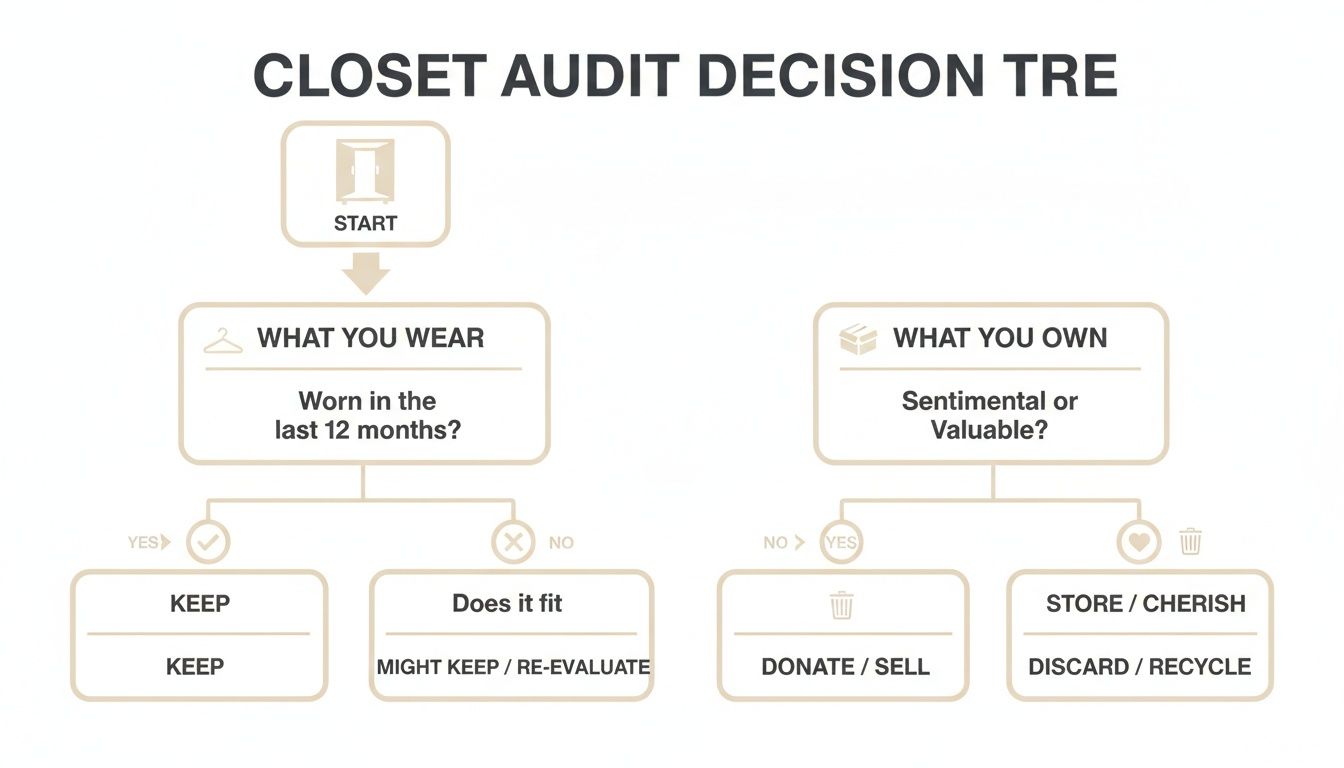
The goal is for every item left in your closet to have a clear purpose, whether that’s for wearing tomorrow, fixing next week, or storing for a special memory.
Overcoming Emotional Hurdles
Let's be real: letting go of clothes can be surprisingly emotional. You might feel a pang of guilt over that expensive, unworn dress or get sentimental about a top you wore on a first date five years ago. It’s totally normal to feel that way, but don’t let it derail your progress. The key is to organize for the person you are today, and the person you want to be.
Your closet should be a reflection of who you are now, not a museum of who you used to be. Letting go of clothes that no longer serve you makes space for pieces that do.
If you’re stuck, try the "one-year rule." If you haven't worn something in the last 12 months (special occasion wear is the exception!), it's a prime candidate for the donate pile. This little rule forces you to assess what you truly use versus what you think you might use "someday."
For a deeper dive into these techniques, you can check out our complete guide on how to declutter your closet.
Remember, this process isn't just about throwing things out. It's about reclaiming your space, redefining your personal style, and creating a wardrobe that only contains pieces that make you feel confident and happy every single time you open your closet doors.
Designing a Smarter Closet Layout
With all the clutter gone, you can finally see your closet for what it is: pure potential. This is where the fun begins. It's time to think like a designer and map out a layout that actually works for your life, not against it. We're not talking about a full-blown renovation, just a smart plan to make every square inch count.
First things first, grab a tape measure. Get the exact width, depth, and height of your closet. Don't eyeball it! Knowing these numbers will save you the headache of buying beautiful bins or shelves that just don't fit. Once you have your dimensions, a quick sketch on a piece of paper can help you visualize how to transform a simple box into a truly functional space.
Identifying Your Prime Real Estate
Think about your closet the way a grocery store sets up its aisles. The most valuable space is right at eye level—it's what you see first and can grab without a second thought. In your closet, this "prime real estate" is the zone between your eyes and your knees. This is where the clothes you wear all the time should live.
- Top Shelf: This is for the stuff you don’t need every day. Think out-of-season clothes, bulky guest bedding, or that box of sentimental t-shirts you can't part with.
- Eye-Level Rod: This is for your heavy hitters. Your work shirts, favorite dresses, go-to jackets—anything you reach for on a regular basis.
- Lower Rod/Shelves: A great spot for pants, skirts, or shoes. I find that organizing clothes the way you get dressed (tops above, bottoms below) makes putting an outfit together almost automatic.
- Floor Space: Keep this area for your most-worn shoes or for easy-to-grab bins holding things like gym clothes or chunky winter sweaters.
Your closet should be a direct reflection of your daily life. If you’re a lawyer who wears suits five days a week, your blazers and trousers should be front and center. If you live in jeans, make them easy to grab, not shoved in a bottom drawer.
People are really starting to invest in making their closets work for them. The custom closets market is growing rapidly, showing just how much people value organization that’s built for their specific needs.
Creating Logical Zones
Creating "zones" is my secret weapon for an organized closet, especially if you're sharing the space or working with a tiny footprint. The concept is simple: group like with like. You could dedicate the left side of the closet to your work clothes and the right side to everything you wear on weekends and evenings.
If you share a closet, creating zones is a must for keeping the peace. Draw an imaginary line down the middle and give each person their own turf. This simple boundary keeps clothes from mysteriously migrating and causing chaos.
For smaller closets where every inch is precious, you have to think vertically. Installing a second rod to create a double-hang section is a game-changer for maximizing space. If you're struggling with a tight wardrobe, you'll find some great ideas in these practical tips for organizing a small wardrobe.
Picking Your Arsenal: Smart Storage Solutions
With your layout mapped out, it’s time to choose the tools that will make it all happen. This is where the magic really begins. The right storage solutions are what transform a cluttered closet into a truly functional, even beautiful, space. It’s less about buying every organizer you see and more about strategically picking pieces that solve your specific problems.
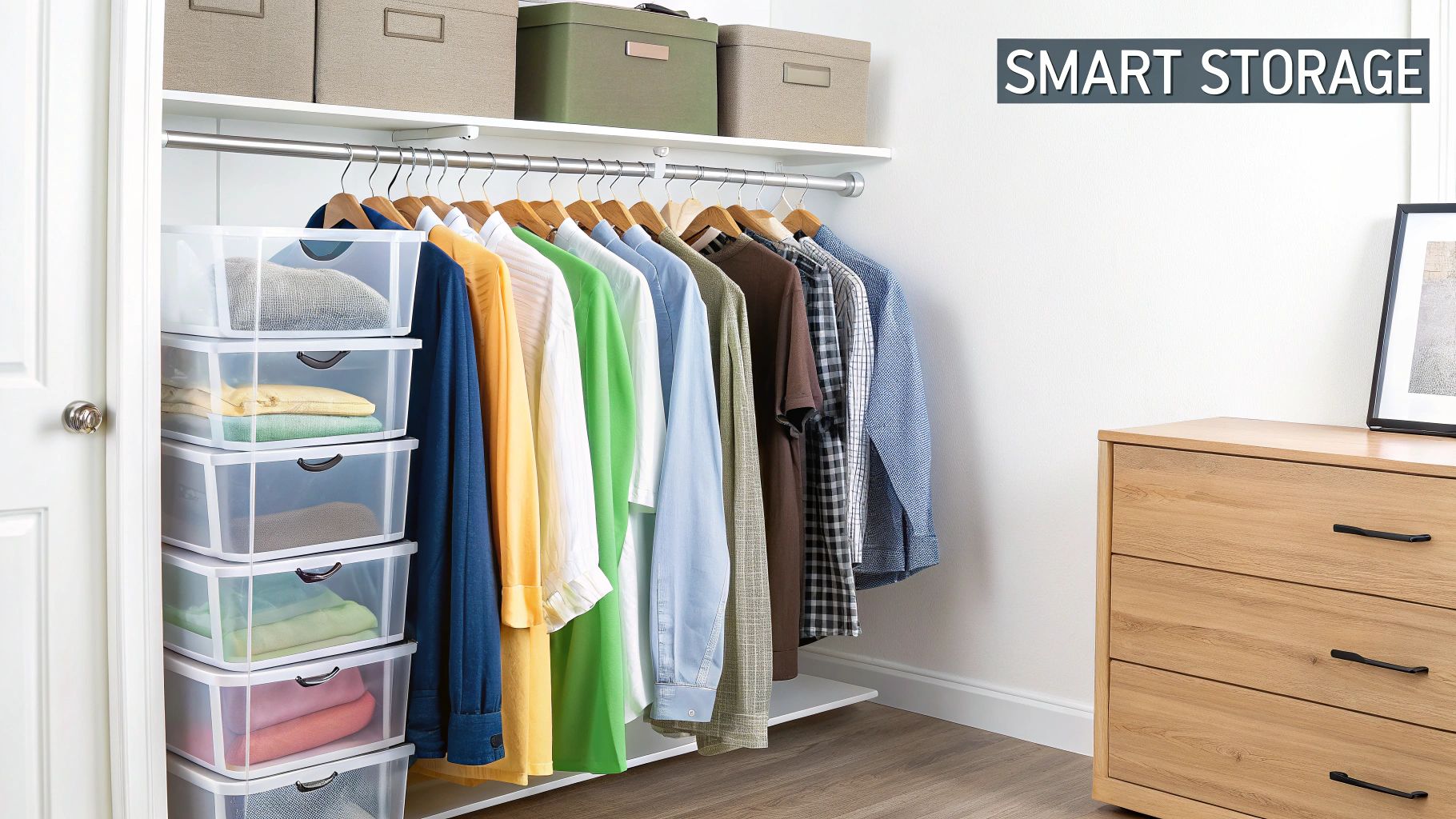
Think of it this way: if your pain point is a jam-packed hanging rod, the solution isn't necessarily a bigger closet—it might just be better hangers. If it's messy drawers, dividers are your answer. Let's get into the specifics.
Hangers: The Unsung Heroes of Closet Space
If you only make one change, upgrade your hangers. Seriously. Those bulky, mismatched plastic hangers you’ve collected over the years are space-sucking villains. Simply switching to a uniform set of slim hangers will instantly give you back a surprising amount of room on the rod.
But if you want to take it to the next level, multi-level hangers are an absolute game-changer. I’ve seen them completely revolutionize small closets.
- Tiered Pant & Skirt Hangers: Instead of one hanger for every single pair of pants, these amazing tools let you hang five or more pairs in the same amount of vertical space. It’s a simple switch that can slash the room your bottoms take up by as much as 80%.
- Cascading Shirt Hangers: These work on the same principle, letting you hang several shirts or blouses from a single hanger that drops down. It's perfect for grouping like-items together and makes finding your favorite top so much easier.
A smart use of vertical hanging solutions can literally double your hanging capacity without making the rod feel overstuffed. Your clothes stay neater, are easier to see, and you’ll finally have room to breathe.
Selecting the right hanger is more than just aesthetics; it's about maximizing every inch of your available space.
Choosing the Right Hanger Type
| Hanger Type | Best For | Space Efficiency | Example Use Case |
|---|---|---|---|
| Standard Plastic | Everyday shirts, lightweight items | Low | Basic, budget-friendly option for a dorm room or guest closet. |
| Velvet "Huggable" | Silky blouses, wide-neck tops, dresses | High | Prevents clothes from slipping off; their slim profile saves significant space. |
| Tiered Pant Hanger | Trousers, jeans, slacks, skirts | Very High | Storing five pairs of work trousers in the space of one. |
| Cascading Hanger | T-shirts, blouses, tank tops | Very High | Grouping all your casual tees together for easy access in a small closet. |
Ultimately, a mix of hangers is often the best approach, using specialized options for categories where you need to save the most space.
More Than Just a Hanging Rod: Other Essentials
A truly organized closet needs more than just great hangers. You have to think about everything else—from bulky sweaters to small accessories. Every single item needs a home.
Drawer dividers are an absolute must. They are the difference between a chaotic pile of clothes and a beautifully organized drawer where you can see every t-shirt, pair of socks, or stack of underwear. No more frantic digging on a busy morning.
For items you don’t need every day, like seasonal clothing, clear storage bins are your best friend. Stash your bulky winter coats or swimsuits in labeled bins on a high shelf. You can see what’s inside at a glance, and your clothes are protected from dust. If you need more ideas, check out our complete guide on the best clothing storage solutions.
And please, don't forget the back of your door! It’s one of the most underused spaces in a closet. A simple over-the-door organizer can be a powerhouse, holding shoes, belts, scarves, or clutches. It’s a trick I recommend to anyone living in a small apartment. It's no wonder the market for closet organizers is booming as more people discover how much of a difference these smart solutions can make.
Putting It All Back and Keeping It That Way
Alright, this is the moment of truth. You’ve decluttered, planned, and picked out the right tools. Now it's time to bring your vision to life and put everything back into the closet—but this time, with intention. We're not just refilling the space; we're creating a system that makes your mornings easier and stops the clutter cycle for good.
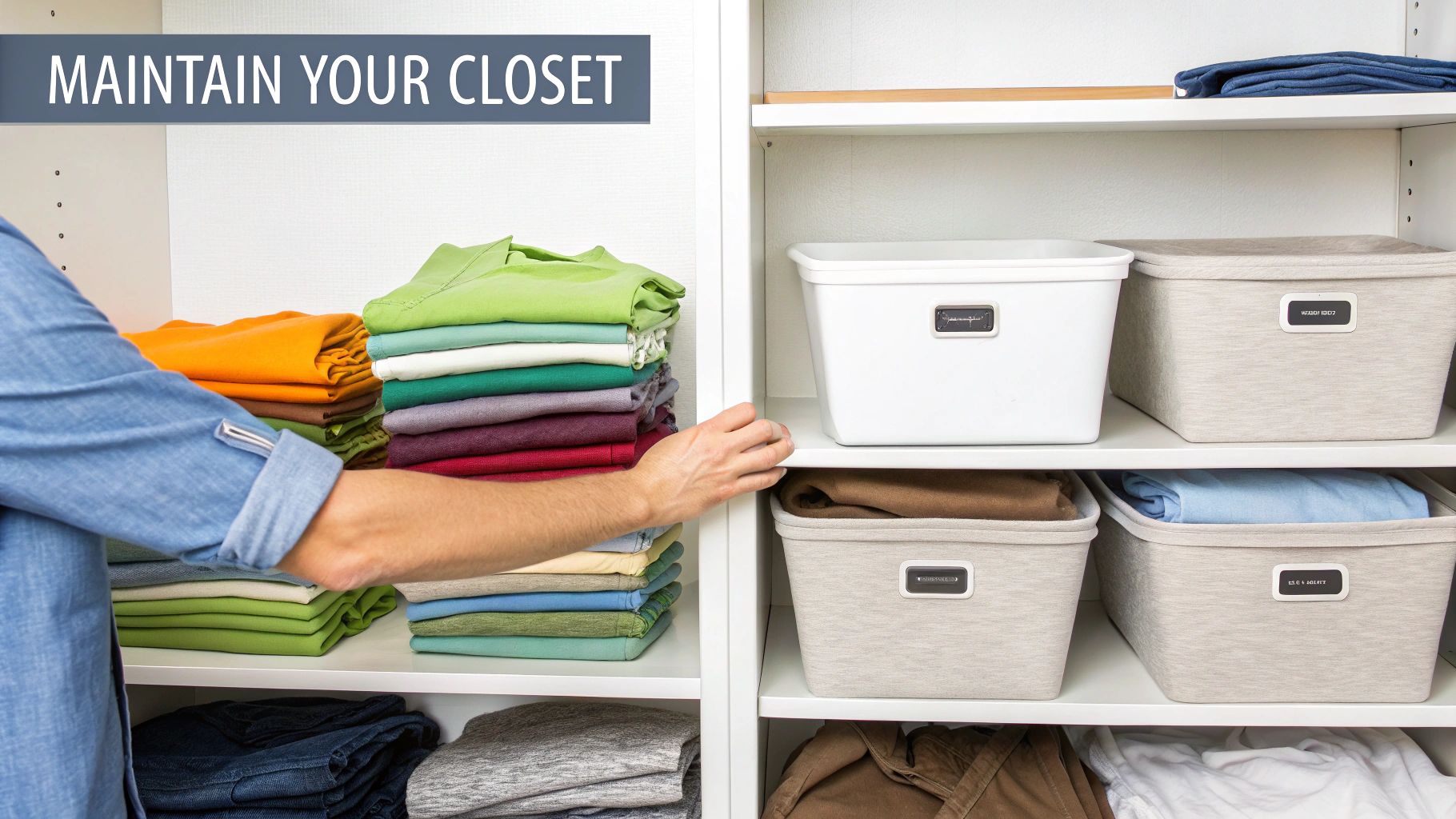
The first, most fundamental rule is to group like items together. All your t-shirts belong in one zone, your jeans in another, and those chunky sweaters get their own dedicated shelf. It might sound basic, but this is the bedrock of a closet that makes sense. You’ll always know exactly where to look for something, and you’ll know at a glance if your favorite shirt is actually in the laundry hamper.
Strategic Hanging and Folding
Once you’ve grouped everything by category, it’s time to add another layer of order: color-coding. Arranging your hanging clothes in a rainbow sequence (or simply light to dark) within each section is a game-changer. It’s not just visually pleasing; it’s incredibly practical. Need that black top? You can head straight to that section without sifting through a mess of different colors.
When it comes to folded items, your technique makes all the difference. Ditch the traditional stacking method and give file folding a try.
- File Folding: This is where you fold items like t-shirts, sweaters, and even jeans into tight little rectangles that can stand up on their own inside a drawer or bin.
- The Payoff: It lets you see every single item you own in one glance. No more digging through a precarious pile and undoing all your hard work.
- Best For: This method is a lifesaver for t-shirts, workout gear, pajamas, and denim.
This simple switch will not only maximize your drawer space but also make grabbing what you need totally effortless.
An organized closet is not a one-time project; it's a collection of sustainable habits. The goal is to build a system so simple that maintaining it feels like second nature, not a chore.
Building Lasting Habits for Closet Organization
Let's be real: a perfectly organized closet will only stay that way if you have a plan to maintain it. The secret to keeping your closet organized for good is building a few simple routines that stop the clutter before it starts.
Here are three habits that I swear by:
- The 'One-In, One-Out' Rule: This is the golden rule of closet maintenance. Every time you bring home a new piece of clothing, an old one has to leave. It forces you to continuously edit your wardrobe and prevents that slow, creeping accumulation of stuff.
- The 10-Minute Weekly Tidy: Dedicate just 10 minutes every weekend to a quick reset. Hang up the clothes that have piled up on "the chair," put your shoes back on the rack, and straighten out any messy stacks. It's amazing what you can accomplish in such a short amount of time.
- The Seasonal Swap-Out: Twice a year, as the seasons change, take an hour to reassess. Pack away the off-season items and do a quick purge of anything you didn't wear at all last season.
These small, consistent actions ensure your closet remains a functional, peaceful space. If you're looking for more general strategies to keep your whole room tidy, check out these tips for organizing a bedroom and transforming clutter into calm. By making these simple habits part of your routine, you’ll keep your closet in top shape with minimal effort.
Answering Your Top Closet Organization Questions
Even with the best game plan, you're bound to hit a few snags during a major closet overhaul. It happens to everyone. This is where we get into the nitty-gritty and tackle those common "what do I do with..." challenges.
Let's dive into some of the questions I hear most often and get you the practical answers you need to make your project a total success.
How Should I Store Bulky Sweaters?
This is a big one. Please, whatever you do, don't hang your chunky knit sweaters! It’s the fastest way to get those dreaded shoulder bumps and a permanently stretched-out neckline. The weight of the sweater just pulls everything down and ruins its shape.
The best way to store them is folded neatly on a shelf. If you’re low on shelf space, file-folding them in a deep drawer or a fabric bin works just as well. Worried about your sweater stacks toppling over? Grab a few simple shelf dividers. They create instant cubbies and keep everything contained, so you can pull one out without causing an avalanche of wool and cashmere.
I can't stress this enough: Never hang heavy sweaters on traditional hangers. Folding is the only way to go if you want to preserve their shape and keep them looking great for years to come.
What Is The Best Way To Organize Shoes?
Ah, shoes. They have a special talent for creating chaos on the closet floor. How you wrangle them really comes down to the size of your collection and the space you're working with.
Here are a few tried-and-true methods:
- Your daily drivers: For the shoes you wear all the time, an open-front shoe rack on the floor or a low shelf is perfect. Everything is visible and easy to grab on your way out the door.
- The special occasion pairs: I love clear, stackable shoe boxes for heels or boots you don't wear as often. They keep everything dust-free, and you can see exactly what’s inside without having to guess.
- When space is tight: An over-the-door shoe organizer is an absolute game-changer. It makes use of that totally forgotten vertical space and gets your shoes off the precious floor and shelves.
How Do I Keep My Closet Organized Long-Term?
The secret to a closet that stays organized isn't some magic formula—it's about creating simple habits that stick. It's about consistency, not perfection.
A great place to start is with the “one-in, one-out” rule. Every time you bring home a new shirt, an old one has to go. This simple practice prevents your closet from getting overstuffed again.
Another lifesaver is the quick weekly reset. Seriously, just set aside 10-15 minutes every weekend to put things back where they belong. It’s a tiny time commitment that stops small messes from turning into overwhelming clutter.
Ready to conquer the clutter and reclaim your closet space for good? The right tools make all the difference. Explore the collection at MORALVE and discover how our innovative space-saving hangers can double your hanging space and transform your closet into a beautifully organized system. Start your journey to an effortless wardrobe today at https://moralve.com.
Leave a comment