
The Best Way to Store Belts and Organize Your Closet

Figuring out the best way to store your belts really comes down to two things: your closet space and the size of your collection. Generally, the most effective closet organization strategies are hanging them for easy access, rolling them to protect the material, or using drawer organizers for a super tidy look. A simple hanger is great for a quick grab-and-go from your closet rod, but rolling is the gold standard for keeping delicate leather in top shape within a drawer.
Your Quick Guide to Smarter Belt Storage
Let's be honest, a tangled heap of belts shoved in a drawer or haphazardly draped over a hanger is just frustrating. Finding a good storage solution isn't just about being neat—it's about protecting your accessories and making your morning closet routine a little less chaotic. Getting rid of that mess starts with understanding the three main ways to organize your belts within your closet.
Each approach solves a different closet organization problem. If you've got plenty of closet rod space, a dedicated belt hanger puts everything on display, so you can spot the one you need in a second. On the other hand, if you're trying to protect your investment in high-quality leather belts and prevent stretching or creasing, carefully rolling them in a closet drawer is a much better bet.
Choosing Your Path
The real trick is to match your storage method to your lifestyle and the layout of your closet. Start by taking a quick look at what you have more of: vertical hanging space or empty drawer space?
- Hanging: This is for you if you have extra room on your closet rod or even some open wall space. It gives you the best visibility and makes grabbing a belt a breeze.
- Rolling: Your best bet for protecting materials like leather from damage. Rolled belts fit perfectly into drawers, bins, or shelf cubbies within your closet.
- Dividers: Perfect for anyone who loves an ultra-organized closet drawer where every single belt has its own designated slot.
This decision tree helps visualize which method is best for you based on your available closet space.
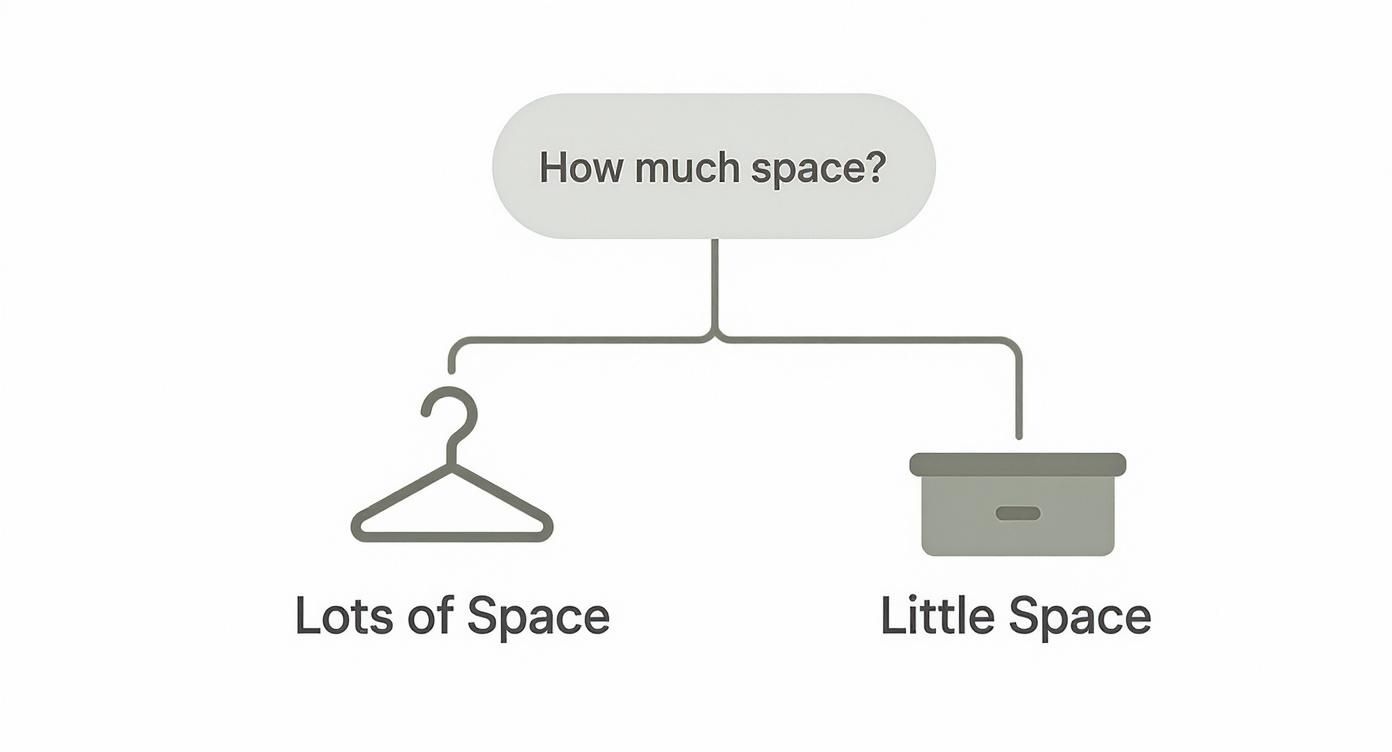
As you can see, for most of us, the decision really boils down to whether hanging or drawer storage makes more sense for our closet's layout.
Belt Storage Methods at a Glance
To help you decide, here’s a quick comparison of the top three belt storage methods for your closet. Think about what works best for your closet and your collection.
| Storage Method | Best For | Space Requirement | Pros | Cons |
|---|---|---|---|---|
| Hanging | Quick access & visibility | Vertical (closet rod/wall) | Easy to see all belts at once; prevents creasing from folding. | Can stretch out delicate materials over time; requires hanging space. |
| Rolling | Protecting leather & fabric | Horizontal (drawers/shelves) | Protects buckles & material; compact and saves closet space. | Harder to see the whole collection; can be time-consuming to roll. |
| Drawer Dividers | Maximum organization | Horizontal (drawers) | Each belt has its own spot; looks very clean and tidy in a closet. | Requires drawer space; dividers can be an added cost. |
Ultimately, the best system is the one you'll actually stick with. Whether you choose a hanger, a set of dividers, or just a simple rolling technique, the goal is a closet that works for you.
Key Takeaway: The "best" way to store belts isn't a one-size-fits-all rule. It’s a personal solution based on your closet’s layout, how many belts you own, and your daily routine.
To get your entire closet in order, you might find that effective decluttering tips and storage furniture can be applied to more than just belts. A truly organized closet is a system where everything has a home, making life just a little bit easier. This quick overview should give you a good starting point for building that perfect system.
Finding the Right Belt Storage for Your Closet
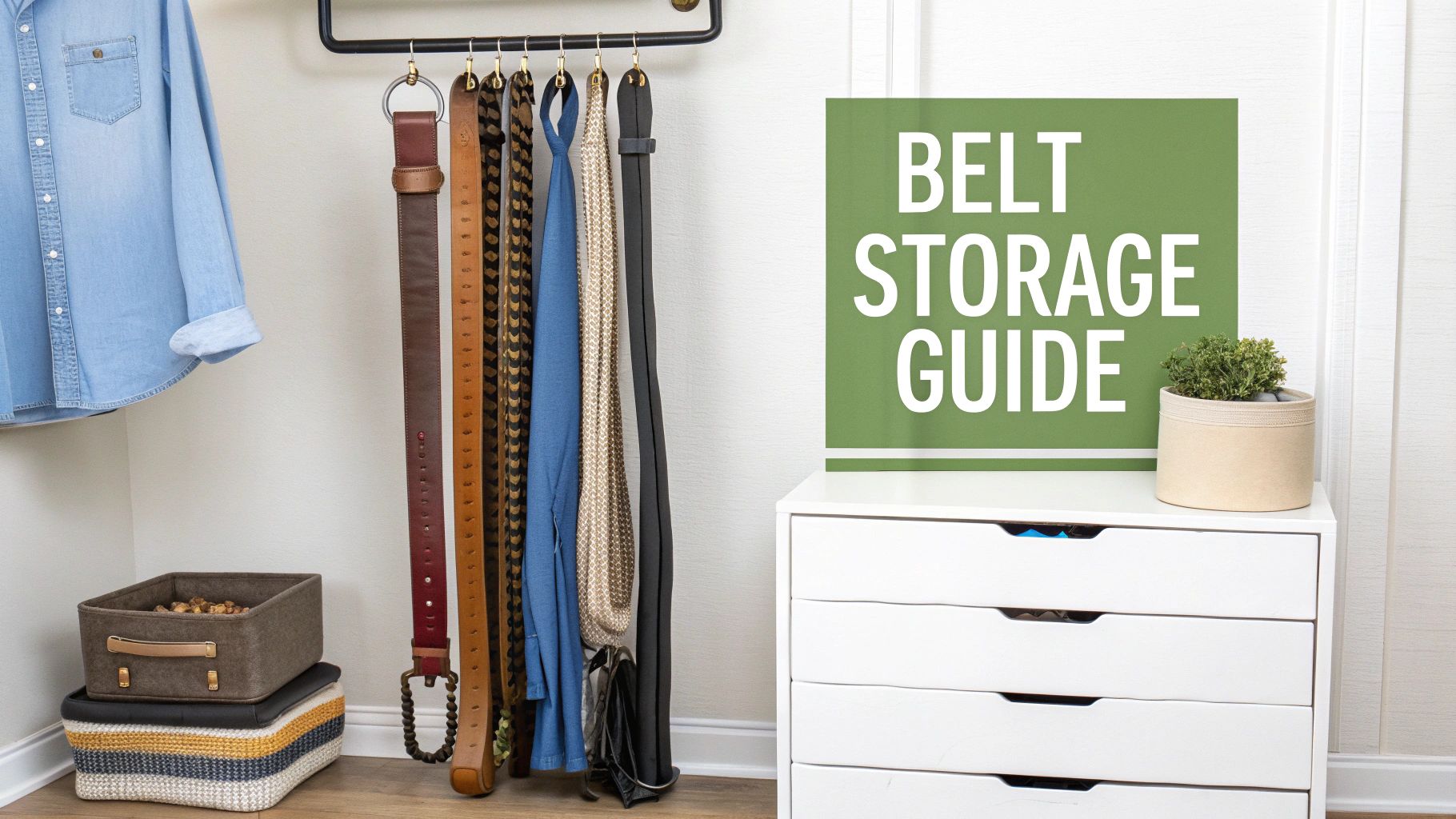
Before you rush out and buy a bunch of new organizers, let’s pause for a second. The absolute best way to store your belts is to find a system that actually fits your closet space and the kind of belts you own. Trust me, a one-size-fits-all approach is a recipe for closet frustration, but figuring out what works for you can be a game-changer for your daily routine.
First things first, take a hard look at your closet. Are you working with a roomy walk-in that has miles of open wall space? Or are you trying to make the most of a tiny closet where every inch counts? The space you have is the biggest clue to finding the right solution. And don't forget to look for those hidden-gem spots, like the back of the closet door or that narrow strip of wall right next to the frame.
Assess Your Closet Space
Let your closet's layout guide you. Which of these sounds most like your situation?
- Plenty of Vertical Space: If you’ve got empty wall space or some extra room on your closet rod, hanging your belts is a no-brainer. Think wall-mounted racks, over-the-door hangers, or those clever organizers that slide right onto the rod. They keep everything in sight and easy to grab from your closet.
- An Empty Drawer: A spare closet drawer is basically organizational gold. With a few simple dividers or small trays, you can turn that cluttered space into a perfect home for your belts, keeping them neatly rolled and protected from dust.
- Shelf Room to Spare: Have some open shelving in your closet? You can use decorative boxes or even clear acrylic containers to line up your rolled belts. It’s a great way to keep things tidy while giving your closet a clean, boutique-like feel.
Consider Your Belt Collection
Now, let's turn to the belts themselves. A collection of wide, heavy statement belts with big, chunky buckles needs a much sturdier closet setup than a few skinny fabric ones. I’ve seen flimsy plastic hangers snap under the weight of just a couple of heavy leather belts.
An effective storage system doesn't just organize; it protects. Choosing a method that supports the material and weight of your belts will extend their lifespan and keep them looking great for years to come.
For example, I always recommend storing heavy leather belts either rolled in a drawer or laid flat to prevent the material from stretching out over time. Lighter fabric or braided belts, on the other hand, do just fine hanging in a closet. If your collection is a mix of both, you might need a hybrid approach within your closet space.
These same ideas apply to other accessories, too. For more tips on keeping everything in pristine condition, check out our guide on the best way to store ties.
Hanging Your Belts: The Ultimate Grab-and-Go System
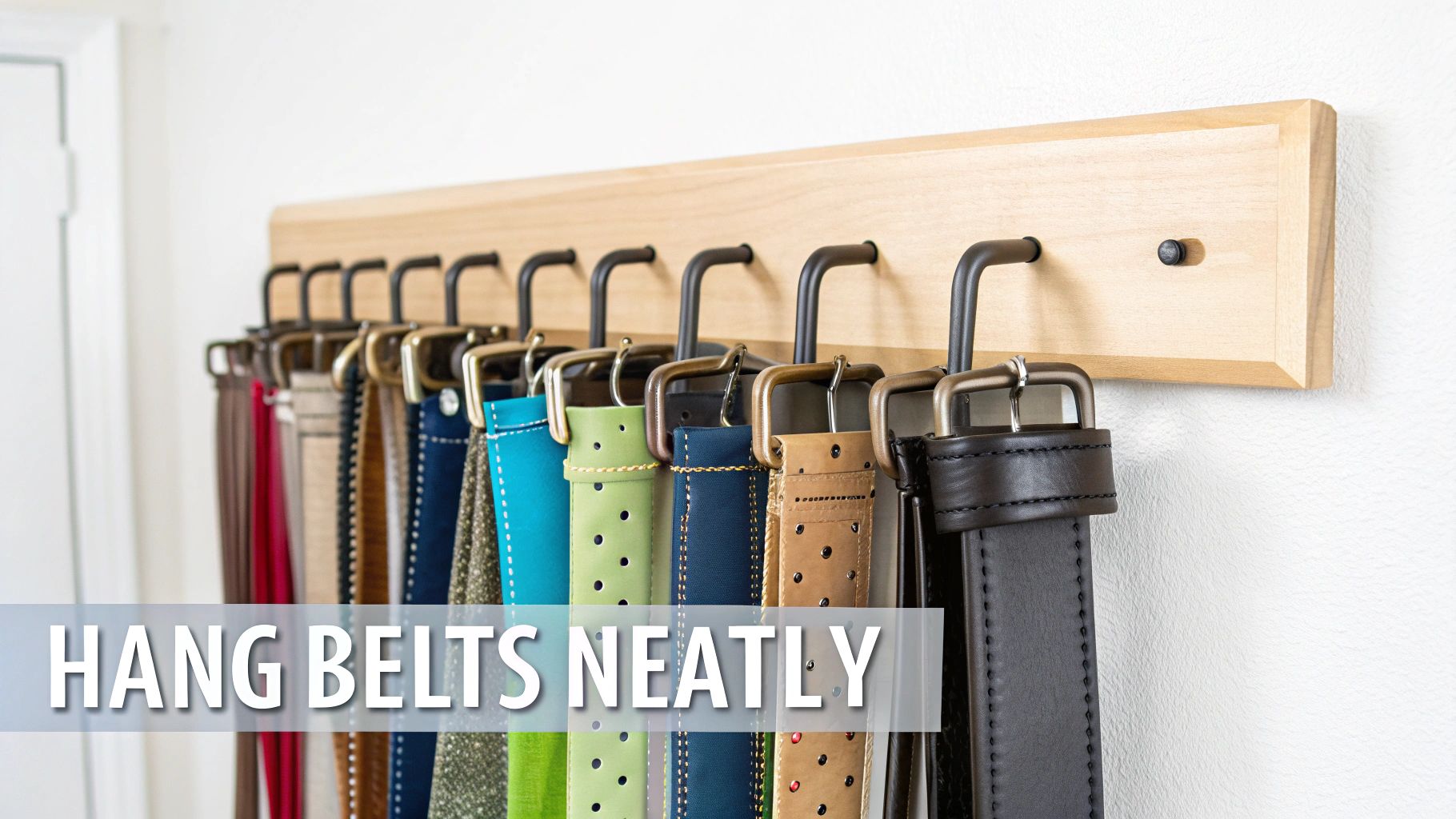
Hanging is my go-to recommendation for most belt collections. Why? Because it puts everything in plain sight within your closet, making it incredibly easy to grab the one you need without digging through a drawer. This method is a lifesaver for preventing creases in leather and frees up precious drawer space for other things.
The easiest way to get started is with a multi-hook belt hanger that you can just loop over your closet rod. I’ve seen these hold everything from 8 to over 20 belts in one tidy, vertical spot. They come in all sorts of materials, from classic wood to sleek, modern metal, so you can find one that fits your closet's vibe.
Another great closet organization trick, if you have a bit of empty wall space, is a wall-mounted rack. Even that small, forgotten strip of wall next to the door frame can be transformed into a functional and surprisingly stylish display for your collection.
A Smarter Way to Hang
Just throwing your belts on a hanger isn't enough—a little bit of strategy goes a long way here. The real magic happens when you organize them in a way that makes sense for you. This is what turns a cluttered closet into a system that genuinely speeds up your morning routine.
Here are a few ways I've seen work really well in closets:
- Group by Vibe: Keep your sharp, formal leather belts in one section and your casual canvas or braided belts in another. No more sifting through weekend accessories to find your best work belt.
- Organize by Color: This is my personal favorite because it's both practical and looks great. Arranging belts from black to brown and then to more colorful options makes coordinating with an outfit almost effortless.
- Prioritize Your Favorites: Put the belts you wear most often right at the front of your closet rod. It sounds simple, but it’s a game-changer when you’re in a rush.
A well-organized hanging system isn't just about storage; it's about creating an efficient routine. Making your most-used belts the easiest to grab is a tiny tweak that pays off every single day.
Which Belts Should You Hang?
Hanging works beautifully for most belts, especially standard leather, fabric, and braided styles. It keeps them straight and accessible in your closet.
However, I'd be careful with any belts that have extremely heavy or oversized, decorative buckles. Over time, the sheer weight of a heavy buckle can put a strain on the material, potentially stretching it out where it hangs. For those special, statement pieces, rolling is probably a safer bet.
For just about everything else, a good hanger offers the perfect mix of visibility and care. And if you're looking to totally transform your closet, check out our guide on the best space-saving hangers for even more ideas.
The Rolling Method for Drawers and Shelves
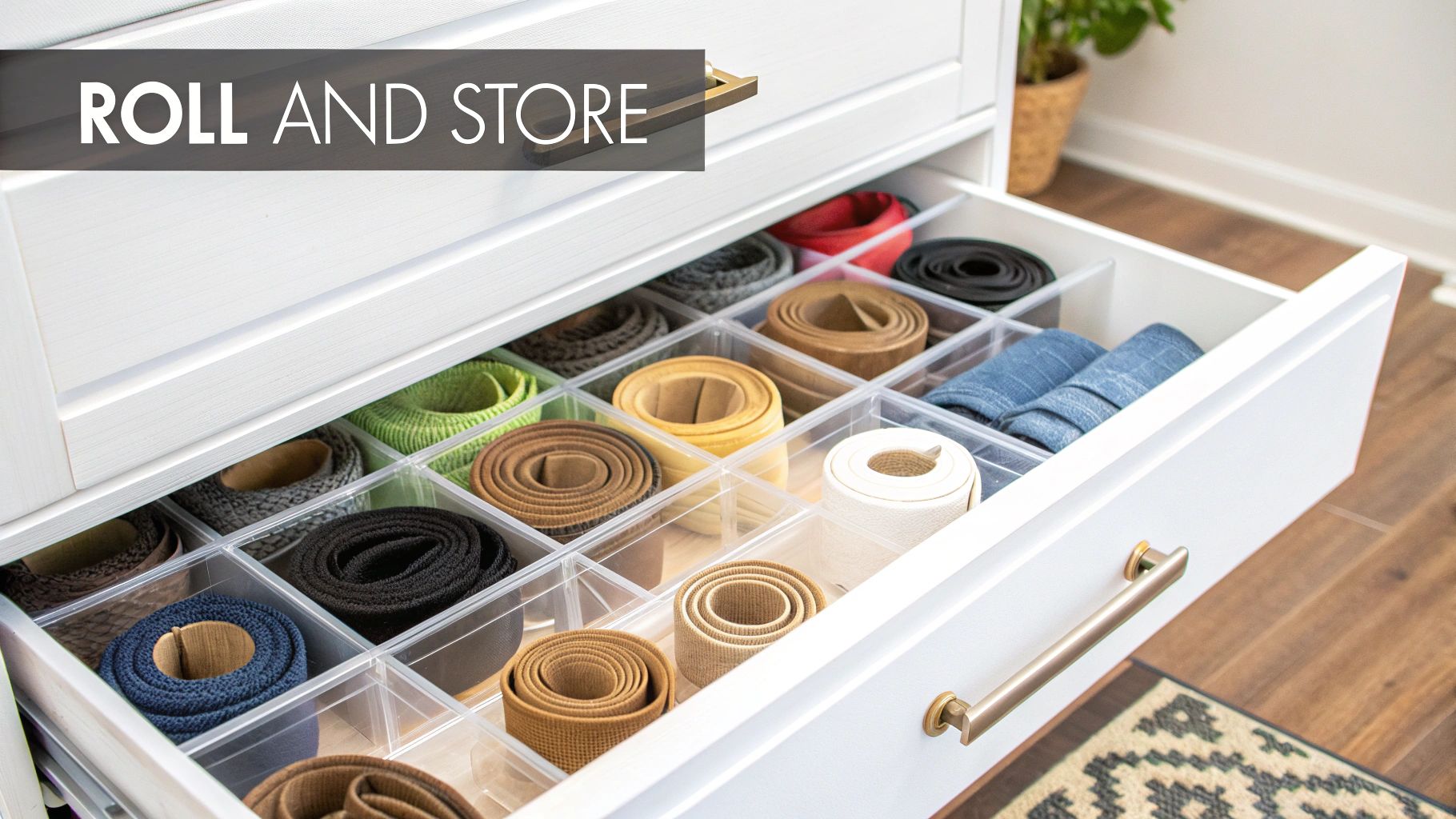
If you're aiming for a clean, minimalist closet look—or just happen to have more drawer space than hanging space—rolling your belts is the way to go. It’s my go-to recommendation for protecting high-quality leather and delicate fabric belts, as it prevents the material from stretching or getting permanent creases.
The trick is to roll them correctly. You want a firm roll, but not so tight that you're straining the buckle or the material itself. I always say, think of rolling a yoga mat, not coiling a rope. This keeps the belt's shape without putting any stress on it.
Creating Order with Dividers
Of course, just tossing a bunch of rolled belts into a closet drawer is a recipe for chaos. The real magic happens when you introduce some structure. This is where drawer organizers come into play, turning a jumble into a beautifully arranged collection.
- Honeycomb Drawer Dividers: These are a game-changer for closet organization. The interlocking pieces create perfect little cubbies for each belt. They're fantastic because you can adjust them to fit just about any drawer, and they keep everything neatly contained.
- Clear Acrylic Boxes: For a really sleek, modern aesthetic in your closet, shallow acrylic trays or small boxes are a great choice. They let you see everything at a glance and work just as well on a shelf as they do inside a drawer.
- DIY Solutions: You don't need to spend a lot to get organized. Even sturdy cardboard or old gift boxes can be cut down to create custom compartments for your closet drawers. It's all about making a designated spot for each item.
The goal here is simple: give each rolled belt its own dedicated home. This stops them from unrolling and tangling together, transforming a messy drawer into a functional, even beautiful, accessory hub.
Take your closet organization a step further by grouping your belts by color or occasion. Imagine opening your drawer and seeing all your brown leather belts lined up, with your colorful woven belts in the next section. It makes finding the right accessory totally effortless.
Proper organization isn't just a closet hack; it’s a massive industry. The market for specialized warehouse and storage conveyor belts is expected to grow by USD 475.32 million between 2023 and 2028. You can read the full research about these market trends to see how valuable efficiency is. Bringing that same mindset to your closet ensures your accessories are always in top condition and ready to wear.
Creative and DIY Belt Storage Hacks
Getting your belts organized doesn't have to mean a trip to the store or a hit to your wallet. Honestly, some of the most effective closet organization solutions I've seen come from a little bit of outside-the-box thinking. You can craft something that fits your closet space and your collection perfectly.
These little projects are surprisingly easy. Got an awkward, narrow nook in your closet? Pop a tension rod in there, add a few S-hooks, and you’ve got an instant, custom-fit hanging station. Another simple trick is to mount a decorative towel bar on an empty bit of wall—it looks elegant and keeps your favorite belts ready to grab.
Repurpose with Purpose
Before you buy anything, take a look around your house for items that could pull double duty. Giving common household objects a new job is a fantastic way to save money, reduce waste, and add a personal touch to your closet.
- Wooden Coat Racks: A simple wooden coat rack, whether it's vintage or brand new, looks fantastic mounted on a closet wall. Just hang your belts from the pegs by their buckles. It turns your collection into a kind of functional wall art inside your closet.
- PVC Pipe Cubbies: This is a great one for drawer storage. Just cut a wide PVC pipe into small sections. Each piece becomes a perfect little cubby for a rolled-up belt, stopping them from uncoiling and creating a neat, honeycomb-like grid in your closet drawer.
Key Takeaway: The best DIY solutions are born from seeing the hidden potential in everyday items. A little creativity goes a long way in building a system that’s cheap, effective, and perfectly tailored to your closet.
I often look for inspiration in clever space hacks designed for tiny homes or campers—they’re brilliant at maximizing every inch. And if you're feeling ambitious and ready for a bigger project, our guide to building a DIY closet organizer has tons of ideas for a complete closet overhaul.
Answering Your Top Belt Storage Questions
Even after you've picked a storage strategy, a few practical questions always come up. Getting your closet just right often means drilling down into these little details. Let’s tackle the most common dilemmas I hear about.
Is it Better to Roll or Hang Leather Belts?
When it comes to high-quality leather, my vote is for rolling, especially for long-term care. Rolling helps a belt keep its natural shape and avoids the subtle stretching that can happen over time when a heavy buckle is pulling it downward on a closet rod.
Now, that doesn't mean hanging is bad! It's perfectly fine for everyday access or for belts made of lighter materials. But if you're trying to preserve a truly beautiful leather belt for years to come, roll it loosely and give it a home in a closet drawer.
What’s the Trick for Storing Belts in a Tiny Closet?
When you’re tight on closet space, you have to think vertically. An over-the-door hanger is an absolute game-changer because it uses zero rod space. It's the perfect solution for tapping into that unused real estate behind your closet door.
Another go-to move for small closets is to find a sliver of empty wall space and install a few decorative hooks or even a small towel bar. If all you have is a single shelf, grab a few small, clear boxes to stack your rolled belts—it's a surprisingly effective way to keep your closet tidy.
How Should I Handle Belts with Really Big Buckles?
Belts with those heavy, statement-making buckles need a different approach. Simply hanging them can put a lot of stress on the material right where it connects to the buckle, leading to creasing or even damage.
The best way to protect both the buckle and the belt is to roll the belt loosely, keeping the buckle on the outside. Then, give it its own little spot in a drawer organizer within your closet. This stops the buckle from getting scratched and keeps its weight from warping the belt.
Ready to take your closet from chaotic to beautifully organized? MORALVE offers a complete range of space-saving hangers and organizers designed to make the most of every last inch. Find the perfect fit for your home at moralve.com.
Leave a comment