

A Complete Guide to Door Storage Racks for Closets

We’ve all been there: staring into a closet so packed you can't find a thing. It’s a frustrating feeling, but the solution is often right in front of you—literally. Door storage racks are one of the simplest and most effective ways to reclaim precious vertical space, turning the back of your closet door from a blank slate into an organizational powerhouse.
These racks get your clothes and accessories off the floor, free up jam-packed shelves, and finally give everything a proper home.
Unlock Your Closet's Untapped Potential
A messy closet can be a real source of stress, especially in a small apartment. That daily scramble to find a matching pair of shoes or dig out your favorite sweater from a pile is no way to start the day. Most of us just see a closet door as a way in and out, but it's secretly the key to a much more organized space.
Just by adding a simple rack, you instantly activate a whole new storage surface you never knew you had. This isn't just about cramming more stuff in; it’s about creating smarter, more accessible closet storage. You’re essentially adding a new wall of shelves without calling a contractor.
Reclaim Your Closet Real Estate
The real magic of a door storage rack is how it immediately frees up prime real estate inside your closet. All those things hogging valuable shelf and floor space can be moved to the door, giving the rest of your wardrobe some much-needed breathing room.
This one simple move has a huge ripple effect on your closet organization:
- Frees Up Shelves: Bulky sweaters, handbags, and shoeboxes that used to clutter your shelves can now hang neatly on the door.
- Clears the Floor: Say goodbye to that mountain of shoes you have to kick aside. A vertical shoe rack gets them off the ground for good.
- Improves Visibility: When your belongings aren't crammed together, you can actually see what you own. Getting dressed in the morning just got a whole lot easier.
To get the most out of your space, it helps to think like an organizer. Many of the same principles used in office design ideas for small spaces that maximize storage can be applied right inside your closet to make it feel bigger and work better.
The goal isn't just to store more stuff—it's to store it smarter. A door rack gives you a new organizational dimension, letting you create specific zones for everything from accessories to everyday essentials.
This guide will walk you through everything you need to know to pick, install, and make the most of your door storage for a perfectly organized closet. By the time we're done, you'll never look at a closet door the same way again.
Finding the Perfect Door Storage Rack for You
Choosing the right door storage rack is a lot like picking the perfect tool for a job. You wouldn't use a hammer to turn a screw, right? The same logic applies here. The best rack for your closet depends entirely on what you're trying to organize, how heavy those items are, and even whether you rent or own your place.
The first step is getting to know the three main players: over-the-door racks, wall-mounted racks, and hanging pocket organizers. Each one has its own strengths, and figuring out which one fits your closet and lifestyle is key to finally conquering that clutter.
The Renter-Friendly Champion: Over-the-Door Racks
Think of an over-the-door rack as the ultimate no-commitment storage solution. It’s like a trusty backpack you can just sling over your closet door—no tools, no holes, no fuss. This is exactly why it's a go-to for renters, college students, or anyone who wants an instant organization win without leaving a trace.
These racks usually consist of a metal or plastic frame with baskets, shelves, or hooks. They're incredibly versatile and can hold anything from shoes and handbags to folded sweaters and accessories.
- Best for: Renters, dorm rooms, or anyone wanting a quick, damage-free setup for their closet.
- Installation: Literally just hook the brackets over the top of your door. Installation takes less than a minute.
- Pros: Super easy to install and remove, portable, and requires zero drilling.
- Cons: Can't handle super heavy items, might rattle a bit when you open the door, and you need a little clearance between the door and the frame.
The Heavy-Duty Hero: Wall-Mounted Racks
If you’re looking for serious stability and strength for your closet, the wall-mounted rack is your champion. This is the permanent fixture of the door storage world—think of it as a built-in bookshelf for your door. It screws directly into the door, giving it maximum muscle for heavier items like a large handbag collection, bulky winter boots, or a massive shoe collection.
Because it's securely fastened, there's no risk of it shifting or falling off. This makes it a fantastic long-term solution for homeowners who want a robust, "set it and forget it" closet system. Sure, it takes a bit more effort to install, but the payoff is a rock-solid organizer that can handle a hefty load.
The Small-Item Specialist: Hanging Pocket Organizers
Hanging pocket organizers are like a vertical filing cabinet for all those small, easy-to-lose closet accessories. Usually made of fabric or clear vinyl, these organizers are all about their pockets—perfect for corralling things that would otherwise create chaos in your drawers. Think shoes, scarves, belts, jewelry, socks, or even rolled-up t-shirts.
Just like their over-the-door cousins, they hang from hooks and won't damage your door. Their soft construction is also gentle on your belongings, making them ideal for delicate items.
Key Takeaway: The best door storage isn't just about holding stuff—it's about creating a system. Pocket organizers are brilliant for grouping similar small items, keeping everything visible and easy to grab in a hurry.
To make this even easier, here's a quick rundown of how these three options stack up against each other for closet use.
Door Storage Rack Type Comparison
| Rack Type | Best For | Installation | Pros | Cons |
|---|---|---|---|---|
| Over-the-Door | Renters, dorms, quick setups | Hooks over door | No tools needed, portable, damage-free | Lower weight capacity, can rattle |
| Wall-Mounted | Homeowners, heavy items | Screws into door | Very sturdy, high weight capacity | Requires tools, creates holes |
| Pocket Organizer | Small accessories, shoes, crafts | Hooks over door | Great for small items, damage-free | Not for bulky items, can look cluttered |
Choosing the right rack really just comes down to matching its features to your specific closet storage problem. One person's perfect accessory organizer is another's ideal shoe rack.
This flowchart can help you think through your own closet challenges and see where a door rack fits in.
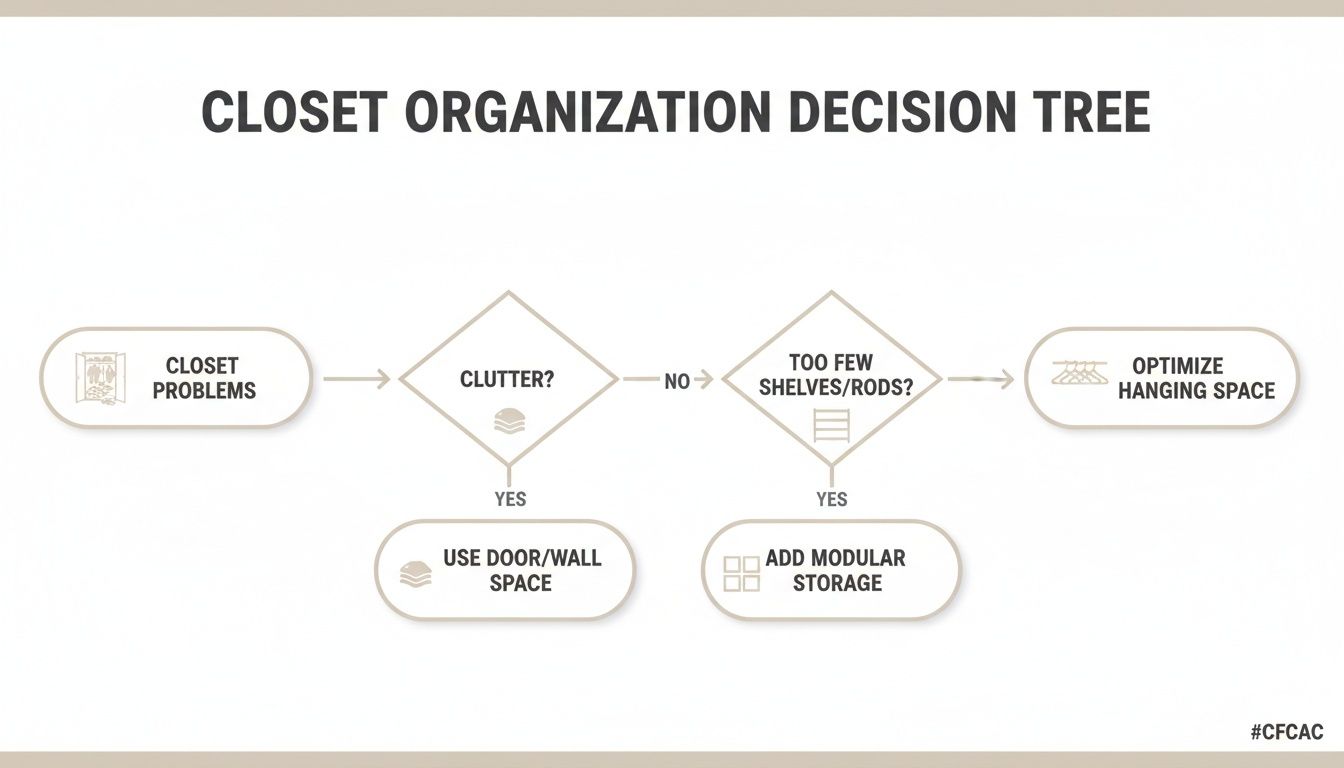
As you can see, when closet clutter is the main issue, using that empty vertical space on your door is one of the most effective first moves you can make.
By figuring out what you need to store, you can turn that unused door into a powerhouse of organization. For more ideas, check out our deep dive into other vertical storage solutions for small spaces. This knowledge will help you choose with confidence and start getting organized today.
How Materials and Weight Capacity Impact Your Choice
It's easy to get caught up in how a door rack looks, but what it's made of and how much it can hold are what really matter for your closet. Think of it like this: a heavy-duty steel rack is your go-to for a growing shoe collection, but a soft fabric organizer is perfect for delicate scarves. Nailing this choice from the start means your rack will last and, more importantly, won't damage your door or your stuff.
Getting a feel for different materials is key to understanding their strength and longevity. While it might seem like overkill, this detailed guide to choosing shelving materials for industrial use shares some great insights. The core principles of what makes a material strong apply just as much to your closet as they do to a warehouse.
A Breakdown of Common Materials
When you start shopping, you’ll quickly see that most door storage racks fall into one of three camps. Each one has its own set of pros and cons, making it a better fit for certain closet jobs.
- Metal (Steel, Coated Wire): This is the workhorse of the bunch. Metal racks, especially steel ones, are the strongest and most durable you can find. If you need to store heavier things like shoes, bulky sweaters, or a pile of handbags, this is your best bet to avoid that dreaded sag over time.
- Plastic: Plastic racks are a great all-rounder—they're lightweight and usually easier on the wallet. They are a smart pick for a bathroom closet where moisture is a concern. Just know they can't handle the same heavy loads as metal, so they're better suited for toiletries, kids' toys, or lighter clothing items.
- Fabric: Usually designed as pocket organizers, fabric is the go-to for all your small, lightweight accessories. The soft pockets are perfect for protecting jewelry, belts, and scarves from getting scratched or tangled up. Just don't ask it to hold anything heavy.
The Critical Role of Weight Capacity
That weight capacity listed on the box isn't just a friendly suggestion—it's the most important safety spec on the whole product. Exceeding it is like ignoring the weight limit on an elevator. You're just asking for trouble.
An overloaded rack can buckle or snap, sending all your neatly organized items crashing down. Even worse, all that extra weight puts a ton of stress on your door's hinges. A rack that’s too heavy can make the door sag, stop it from closing right, or even rip the screws right out of the frame. This is a huge risk with hollow-core doors, which are common in newer homes and apartments and just aren't built to support a lot of weight.
Always check the manufacturer's specified weight limit before you buy. It’s much smarter to get a rack that can hold more than you think you need than to push one to its absolute limit day after day.
Estimating the Weight of Your Items
It’s amazing how quickly the little things add up. A few pairs of shoes or a couple of sweaters might not feel like much on their own, but their combined weight can be surprising.
Here’s a quick way to get a real-world feel for the load in your closet:
- 10-15 pounds: Think of a large bag of potatoes. A lightweight plastic or fabric organizer can typically handle this. It’s perfect for things like scarves, hats, and a few t-shirts.
- 20-30 pounds: Picture carrying a toddler or a big case of water bottles. This is where sturdier over-the-door metal racks shine. They can comfortably hold several pairs of shoes, handbags, or folded jeans.
- 40+ pounds: Now you’re talking about the weight of a large bag of dog food. This is firmly in wall-mounted territory. Only a rack screwed directly into a solid-core door can safely manage this kind of weight, which you might need for a large shoe collection or heavy winter gear.
By respecting the weight capacity of your door rack, you ensure it stays a helpful organizing tool instead of becoming a disaster waiting to happen.
A Foolproof Guide to Installation
You've picked out the perfect door storage rack—that's the easy part. Now comes the moment that makes all the difference: a proper installation. A wobbly, rattling rack that scrapes the doorframe is more of a nuisance than a solution. We'll walk through the simple steps to get your rack set up securely, whether you chose a simple over-the-door model or a sturdier mounted version.
Taking a few minutes to do this right means your organizer will be a quiet, reliable workhorse for years. Think of it as building a solid foundation; a little care now prevents a lot of headaches later.
The Golden Rule: Measure Everything First
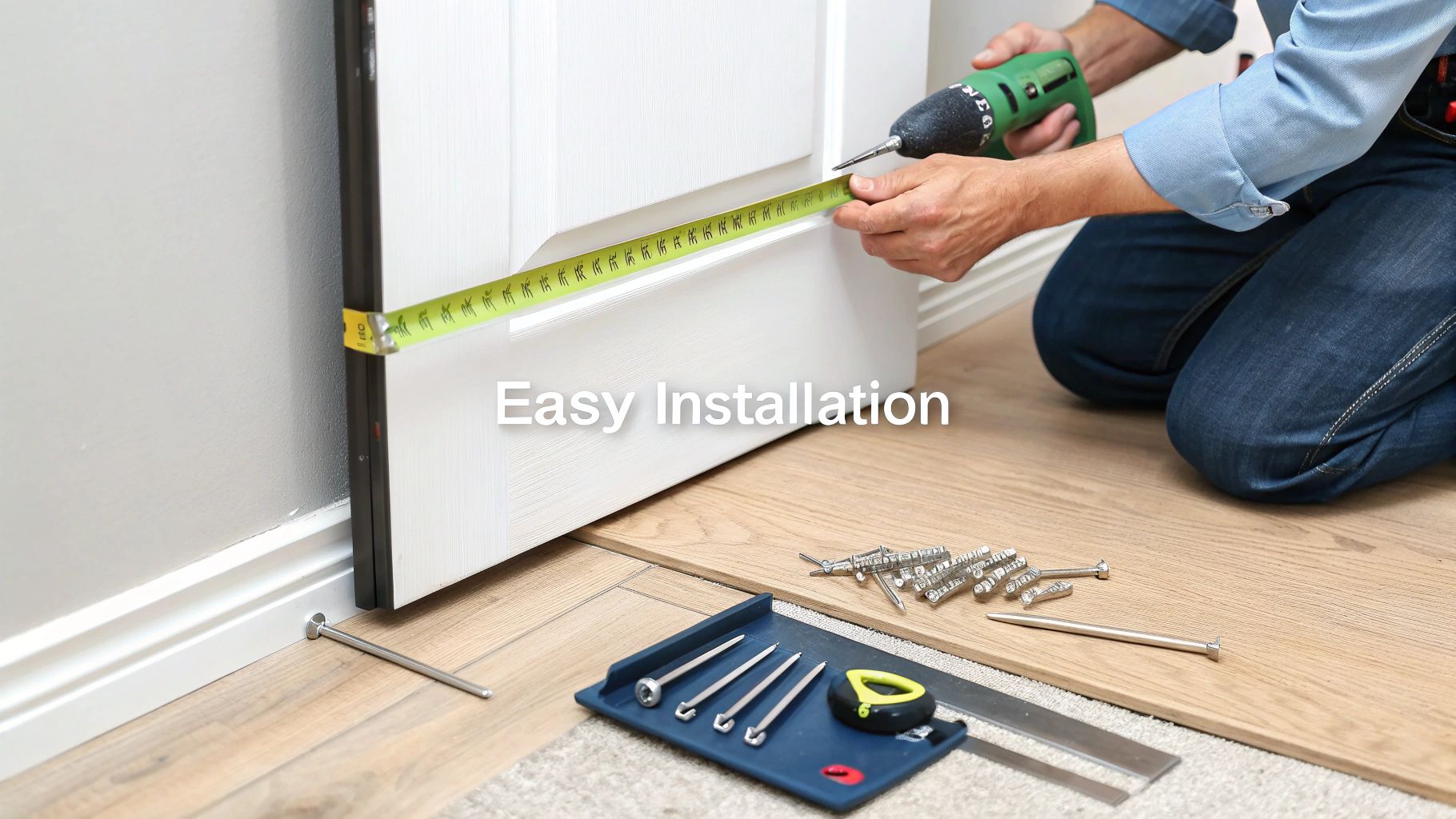
Before you even tear open the box, grab your tape measure. Trust me on this one. Skipping this step is the single biggest reason people end up with a rack that just doesn't fit. You only need to check three key spots to ensure a perfect match.
- Door Thickness: Most modern interior doors are about 1 3/8 inches thick, and the hooks on most racks are made for this standard. But older or custom doors can be thicker, so always measure to make sure the hooks will fit snugly and not rock back and forth.
- Door Width: A quick check of your door's width ensures the rack itself won't hang over the edges. This is especially important for those narrow linen or pantry closet doors.
- Clearance Space: This is the one everyone forgets! Look at the gap between the very top of your door and the doorframe. You need enough room for the over-the-door hooks to slide in without scraping the paint off the frame every single time you open it.
Installing Over-the-Door Racks
The beauty of an over-the-door rack is its simplicity. Installation is a completely tool-free affair that should honestly take you less than five minutes.
First, snap the rack together based on the manufacturer's instructions. Then, just slide the metal hooks over the top of the door, spacing them out evenly. Finally, hang the rack right onto those hooks. It's that easy.
Pro Tip: To stop that annoying rattling sound and protect your door's paint, stick a few small felt pads or clear silicone bumpers on the back of the rack. Focus on the spots where it touches the door. This tiny trick makes a world of difference.
This easy setup is exactly why over-the-door models are a renter's best friend—you get all the organization without leaving a single mark.
Installing Wall-Mounted Racks
If you opted for a wall-mounted rack, you're getting superior stability, but it will require a few basic tools and a little more effort. The most crucial step is figuring out what kind of door you're working with.
Give your door a gentle knock. If you hear a deep, solid thud, you've got a solid-core door—perfect for mounting heavier racks. If it's a lighter, hollow echo, you have a hollow-core door, which is far more common in modern homes and apartments.
For Solid-Core Doors:
- You can drill directly into the door with confidence.
- Use the screws that came with your rack. Just make sure they're long enough for a secure grip but not so long they pop out the other side!
- A power drill makes this a quick and easy job.
For Hollow-Core Doors:
- You absolutely must use hollow-door anchors. These special fasteners expand behind the door's thin surface, creating a solid point to anchor your screws.
- Screwing directly into a hollow door is a recipe for disaster; the screws will pull right out as soon as you put any weight on the rack.
Getting your rack securely fastened is non-negotiable. After all, the same basic principle of matching the right fastener to the right surface applies everywhere, from your closet door to massive industrial storage systems. The core concept is about creating a stable, reliable structure.
Once it's up, your new door rack can work beautifully with other closet solutions. For instance, moving bulky sweaters to the door frees up prime real estate on your closet rod. You can then maximize that new space with a specialized hanging closet rod to instantly double your hanging capacity. It’s all about creating a system that makes your whole closet more efficient.
Creative Ways to Organize Your Closet
Let's be honest, a door storage rack is so much more than just a place to line up your shoes. When you start thinking creatively, the back of your closet door can become a seriously effective, hyper-organized command center. This isn't just about cramming more stuff into a small space; it's about building smarter systems that make your daily life just a little bit easier. By strategically moving certain items to the door, you free up your main closet and can actually find things when you need them.
The secret is to think about function and frequency. What are the things you're constantly reaching for? What collections are currently buried on a shelf or lost in a drawer? A well-chosen door rack is the perfect new home for all of it, bringing a bit of calm to the chaos. Let's walk through a few practical closet setups you can try right now to take back your closet.
Create a Grab-and-Go Station
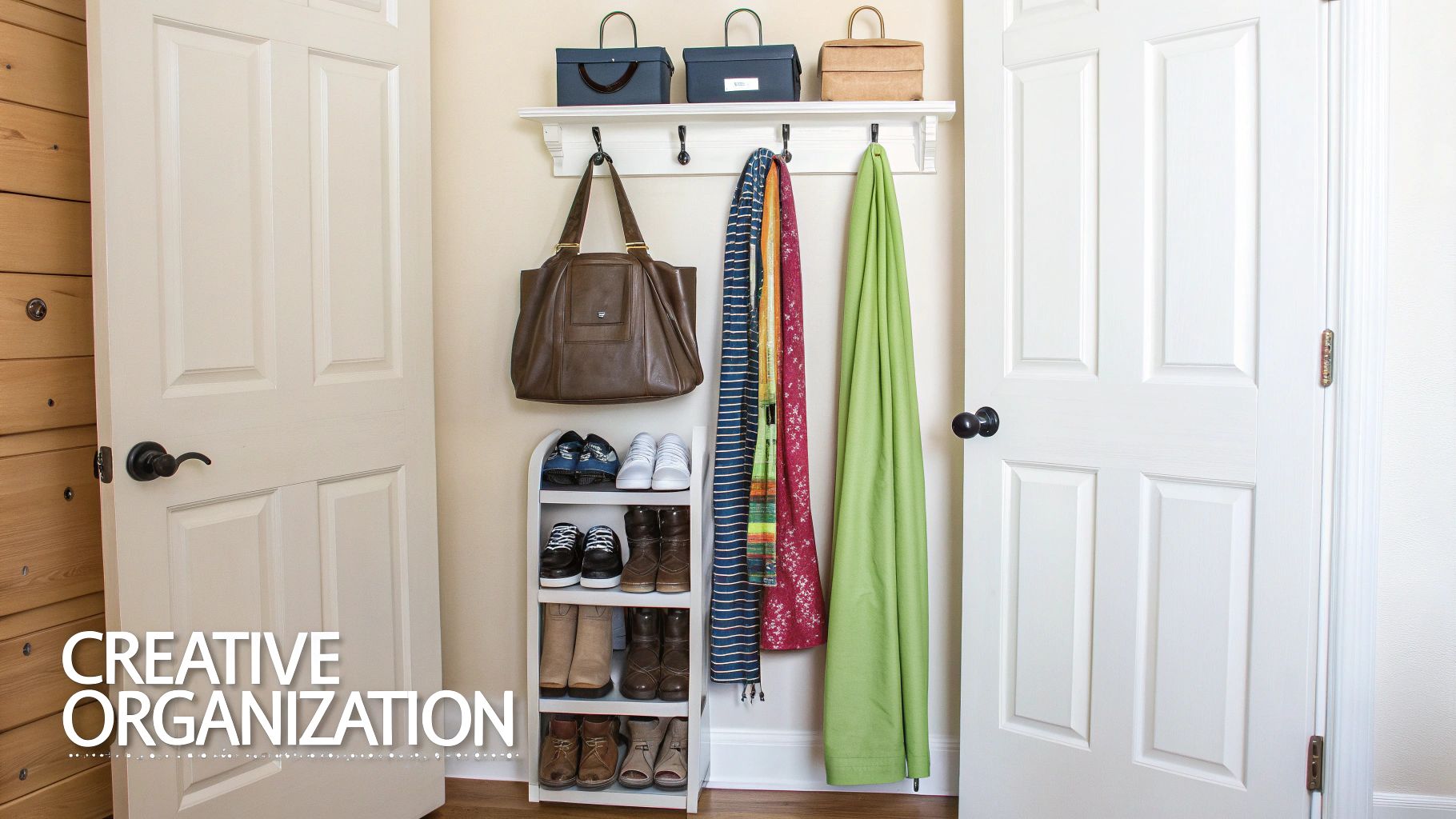
Picture the typical morning scramble. You're dressed, but now the hunt begins for the right belt, that specific scarf, or your work bag. Instead of digging through a pile or rummaging in a drawer, a "grab-and-go" station on your closet door puts all those daily accessories right in front of you.
This setup is a game-changer for streamlining your morning. Find a rack that has a mix of hooks and small baskets to create a personal dashboard for your day.
- Hooks for Handbags and Totes: Use a few sturdy hooks for the bags you use most often. This keeps them off the closet floor and helps them hold their shape.
- Baskets for Small Essentials: A shallow wire basket is perfect for your wallet, keys, and sunglasses—everything you need to snatch on your way out.
- Tiered Rods for Scarves and Belts: Look for organizers with small rods or specialized hooks to hang scarves and belts so they stay tangle-free and unwrinkled.
Designate a Vertical Accessory Hub
Accessories are notoriously difficult to organize. Jewelry, hats, and ties almost always end up in a jumbled mess. A door storage rack can become an elegant and surprisingly practical display, essentially turning your collection into functional decor. Not only does this keep things tidy, but it also helps prevent chains from tangling and hats from getting crushed.
A pocket organizer or a grid-style rack works beautifully here, letting you see everything in a single glance. You’ll probably find yourself wearing pieces you'd forgotten you even owned. It’s a fantastic solution for all those small, awkward-to-store items.
By dedicating a specific zone for accessories, you stop them from getting lost in the closet's ecosystem. This simple act of containment makes a huge difference in maintaining long-term order.
This targeted approach frees up an incredible amount of shelf and drawer space. If you want to dive deeper into making the most of every inch, check out our guide on closet door storage for more strategies that can revolutionize your space.
Build a Folded Clothing Powerhouse
Who decided hanging space was the most important real estate in a closet? For things like bulky sweaters, jeans, and t-shirts, folding is often a much better storage method. A sturdy, multi-tiered metal rack mounted on your door can act like a set of open-air shelves, getting all those items out of your overstuffed drawers.
This strategy works especially well for the clothes you wear all the time. Rolling your t-shirts or "filing" your jeans vertically in a basket makes it easy to see all your options without wrecking a neat stack. This system keeps your go-to clothes front and center, improves airflow, and finally puts an end to the "drawer avalanche" that happens when you pull one thing from the bottom. It’s a simple, construction-free way to instantly expand your closet's shelf space.
How to Keep Your Rack (and Door) in Great Shape
Think of your door storage rack as a long-term organizational partner. With a little bit of care, both the rack and your closet door will look and function perfectly for years to come. A few simple, consistent habits are all it takes to prevent wear and tear.
Keeping the Rack Itself Clean
First things first, let's talk about keeping the rack clean. The best approach really depends on what it's made of, since different materials need different care.
- Metal Racks: Dust is the main culprit here. A quick pass with a dry microfiber cloth every few weeks is usually all you need. If you’ve got a sticky spill, a damp cloth with a touch of mild soap will handle it.
- Fabric Organizers: Good news—many fabric pocket organizers are machine washable! Always check the tag first, but a gentle cycle with cold water can make them feel brand new. If not, spot cleaning with a damp cloth is the way to go.
- Plastic Racks: Plastic is by far the easiest. Just wipe it down with your favorite all-purpose cleaner to keep it looking fresh and hygienic.
Protecting Your Door from Scuffs and Scratches
Beyond cleaning the rack, the most critical part of maintenance is protecting the door itself. A little proactive care goes a long way in preventing scuffs, scratches, and long-term strain on the door and its frame.
For wall-mounted door storage racks, get in the habit of checking the screws every so often. The constant movement of opening and closing the door can gradually loosen them over time, so a quick tighten-up is smart.
If you have an over-the-door model, your best friend is a good buffer.
Stick a few inexpensive silicone bumpers or felt pads anywhere the rack touches the door's surface. This one tiny step is the single most effective way to stop scratches before they start and get rid of that annoying rattling sound for good.
Finally, always be mindful of the weight limits. By distributing the weight evenly across the organizer, you stop it from pulling to one side. This simple action takes a huge amount of strain off the door's hinges, ensuring it continues to open and close smoothly without sagging.
Answering Your Top Questions About Door Storage Racks
Even after seeing all the benefits, you might still have a few nagging questions before you're ready to buy a door storage rack. That's totally normal. Getting these details ironed out is the key to buying with confidence and making sure your new closet organizer works perfectly.
Let's tackle the questions I hear most often.
Will an Over-the-Door Rack Damage My Door?
This is probably the number one concern for both renters and homeowners, and for good reason! Nobody wants to deal with scuffs and scratches. The good news is that with a little care, door damage is almost completely avoidable. The risk really only comes from a poor fit, putting way too much weight on the rack, or constant friction from a wobbly unit.
Here's how to keep your door looking brand new:
- Get a Snug Fit: Double-check that the hooks on the rack are designed for your door's thickness. A loose, wobbly rack is a recipe for rubbing and scuff marks.
- Stick to the Weight Limit: Don't get carried away and overload the rack. That puts a ton of stress on the organizer's hooks and, in turn, on the door itself.
- Use Protective Padding: This is my non-negotiable tip. Stick a few small felt pads or clear silicone bumpers on any part of the rack that makes contact with the door. This tiny step creates a soft cushion that prevents scratches and absorbs shock when the door moves.
How Do I Know Which Rack Will Actually Fit My Door?
There's nothing more frustrating than ordering the perfect organizer, only to find it doesn't fit. You can avoid that headache by taking just a couple of minutes with a tape measure before you start browsing online.
Think of it as a quick pre-purchase checkup for your door.
- Measure Door Thickness: Most interior doors are a standard 1 3/8 inches thick, but it never hurts to confirm your own.
- Measure Door Width: This one's obvious but easily forgotten—make sure the rack itself isn't wider than your door.
- Check Top Clearance: This is the one most people miss! Measure the gap between the top edge of your door and the door frame above it. You need enough room for the hooks to slide over without scraping paint every single time you open and close the door.
What Should I Actually Store on a Closet Door Rack?
The real magic of a door storage rack is how it frees up the most valuable real estate inside your closet—your shelves and hanging rods. When you move the right items onto the door, you suddenly create so much more breathing room for your clothes.
The best items to move to a door rack are whatever is causing the most clutter right now. What’s stuffed in a drawer, piled on the floor, or hogging prime shelf space? Start there.
Here are a few great candidates for a new home on your door:
- Shoes: Getting your shoe collection off the floor is probably the single biggest upgrade you can make to a messy closet.
- Accessories: Things like belts, scarves, hats, and handbags are absolutely perfect for door organizers.
- Folded Clothes: T-shirts, leggings, and even sweaters can be tucked into rack baskets, freeing up a ton of drawer space.
- Beauty Products: A rack on the back of a bedroom or bathroom door can become an amazing vertical vanity for your hair tools, sprays, and makeup.
Giving these items a dedicated spot makes your entire closet feel more functional and look so much cleaner.
Ready to get your own closet in order? The secret is finding smart solutions that use every last inch of space. MORALVE is all about space-saving hangers and organizers that work in harmony to give you a beautifully tidy wardrobe. Explore our collection and start building the organized closet you've been dreaming of.
Leave a comment