

How to Arrange Furniture in Small Bedroom: A Space-Savvy Guide

Ever feel like the walls are closing in on your small bedroom? It’s a common story. You shove the bed against one wall, then another, hoping to find that one magic spot where everything suddenly clicks. But it never quite does, and you’re left with a space that feels more chaotic than calm.
The truth is, creating a serene and functional bedroom isn't about finding more square footage—it's about being smarter with the space you already have. It starts with a solid plan, choosing furniture that pulls double duty, and finally taming that overstuffed closet.
From Boxed In to Blissed Out: A Guide to Small Bedroom Layouts
Let's be honest, fighting with a cramped bedroom is frustrating. But you can absolutely win this design battle. The trick is to stop seeing the limitations and start seeing the possibilities. Your goal is to create a room that not only feels bigger but actually functions better, supporting a more organized and peaceful life.
This guide is your step-by-step playbook. We’ll walk through the practical strategies for arranging furniture in a small bedroom, focusing on:
- Mapping It Out First: How to create a blueprint before you move a single thing.
- Choosing Smarter Furniture: Finding pieces that work harder so you don't have to.
- Mastering the Closet: Why great organization can free up valuable floor space.
Why We’re All Living a Little Smaller
If your bedroom feels a bit tight, you're in good company. With more than 56% of people worldwide now living in cities, compact living is the new standard. This shift has completely reshaped the furniture industry.
The demand for smart, space-saving designs is exploding. In fact, the bedroom furniture market is expected to jump from USD 126.80 billion in 2025 to a massive USD 158.40 billion by 2030, and a huge part of that growth comes from our need for better solutions in smaller homes. You can learn more about bedroom furniture market trends and see just how designers are innovating for modern living.
The real secret to making a small bedroom work is proving that even the most compact rooms can feel open and restful. It’s all about making every single square inch count.
With a few key strategies, you can take your room from cluttered to genuinely peaceful. It's time to prove that great style has nothing to do with size.
Map Your Layout Before You Move a Thing
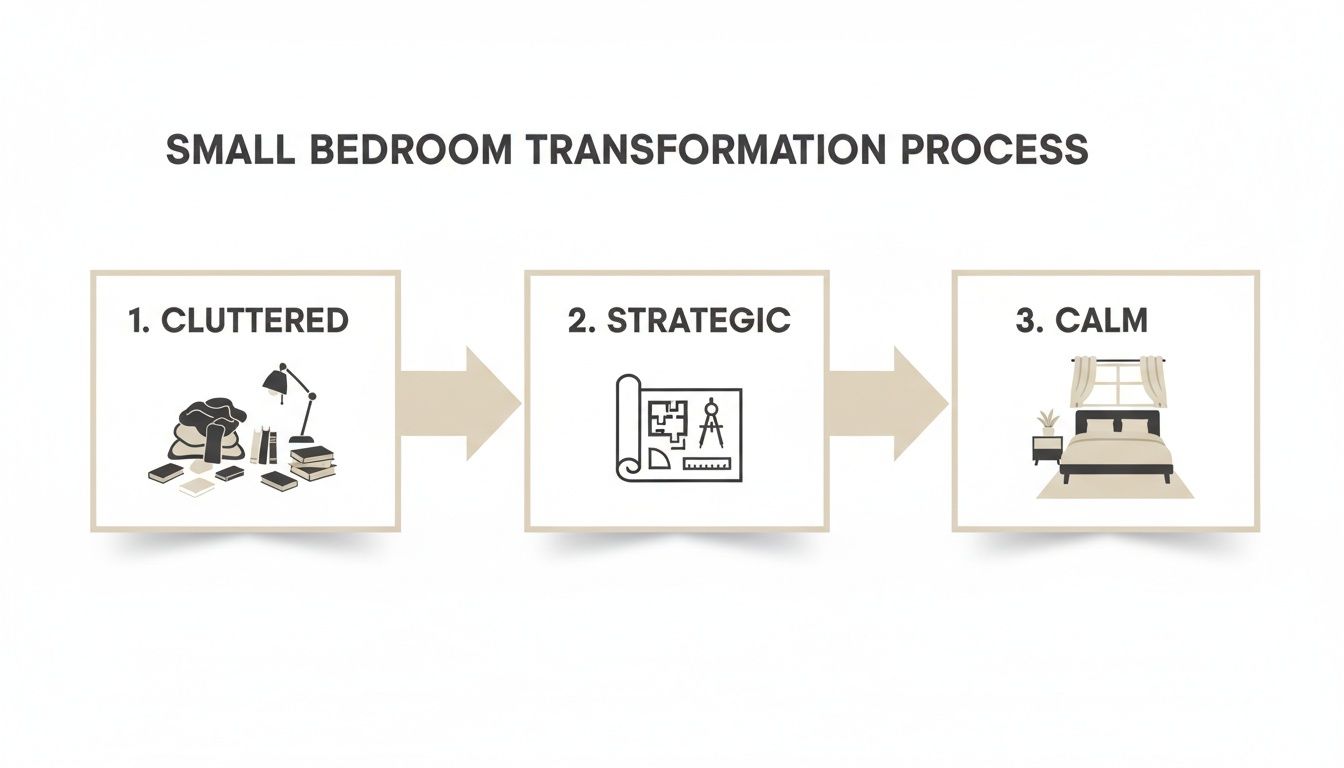
Before you even think about straining a muscle, put down the furniture sliders and pick up a tape measure. The secret to conquering a small bedroom isn't brute force; it's a solid game plan. A few minutes spent sketching out a blueprint now will save you hours of frustrating furniture-shuffling later.
Start by getting the room's vital statistics—the length and width of the walls. But don’t stop there. You need to account for every permanent fixture. Note the exact placement and size of windows, doors (and which way they swing!), outlets, light switches, and any awkward radiators or vents. Trust me, there's nothing worse than finding the perfect spot for your bed, only to realize it completely blocks the closet door or the only usable outlet.
This is the critical step that takes a room from feeling chaotic to feeling calm and collected.
Sketch it Out
You don't need fancy software or an architecture degree. A simple piece of graph paper is your best friend here—let one square equal six inches, for example. Draw the room's outline and then sketch in those fixed features you just measured. If you're more digitally inclined, plenty of free online room planners can help you create a 2D map.
Think of this as creating the foundation for a room that actually works for you. Before you start placing furniture cutouts on your map, it's a great idea to check out an expert guide on arranging bedroom furniture for professional tips and layout inspiration. A little research upfront helps you sidestep common design blunders.
Key Takeaway: A plan on paper is infinitely easier to change than a solid oak dresser is to move. The goal is to avoid the exhausting game of trial-and-error with heavy furniture.
Create Your Zones
Even the smallest bedroom can be divided into functional "zones." This simple interior design trick helps give every square foot a clear purpose, which is absolutely essential when you're figuring out how to arrange furniture in a small bedroom. Just think about what you actually do in your room every day.
Most small bedrooms can be broken down into a few key areas:
- The Sleeping Zone: This is your non-negotiable anchor, centered around the bed and at least one nightstand.
- The Dressing Zone: This is where your dresser, closet, and maybe a full-length mirror live. It's your personal getting-ready station.
- The Flex Zone: Have a little corner left over? This is your bonus space. It could become a cozy reading nook with a small accent chair, a compact desk for catching up on emails, or simply be left open for stretching or yoga.
By defining these zones on your sketch, you start placing furniture with real intention. It's what turns a random collection of items into a cohesive layout that supports your daily routine, making the room feel intuitive and purposefully designed.
Choose Furniture That Works Smarter, Not Harder
In a small room, every piece of furniture has to earn its keep. This isn't just about cramming in smaller items; it’s about being incredibly intentional with your choices. You want pieces that are clever, multi-talented, and don't feel visually heavy. Once you adopt this "less, but better" mindset, you'll be amazed at the potential you unlock.
So, let's ditch the idea of a traditional, matching bedroom set that devours your precious floor space. Instead, we're going to think like designers. How can each piece serve more than one purpose? A bed isn't just a bed—it’s a potential storage goldmine. That's the secret sauce when you're figuring out how to arrange furniture in a small bedroom.
Embrace Multi-Functional Marvels
As more of us move into cities, bedrooms seem to be shrinking. This has made multi-purpose furniture more of a necessity than a nice-to-have. In fact, with predictions that 68% of the world's population will live in urban areas by 2050, you can see why pieces that do double duty are no longer a niche market.
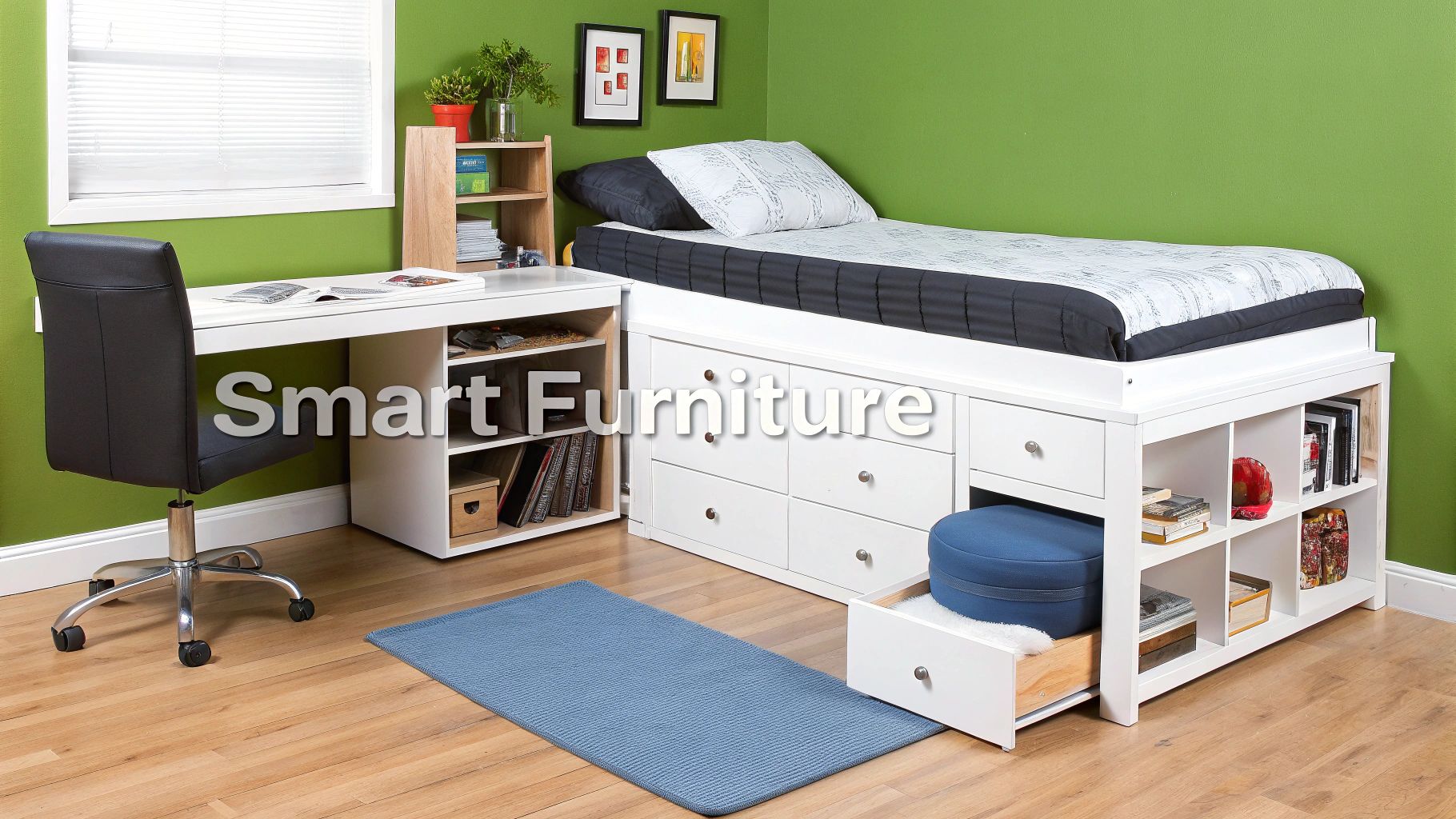
Take the storage bed, for instance. It’s a hero piece in small spaces because it can completely eliminate the need for a bulky, separate dresser.
Here are a few of my favorite smart swaps:
- The Storage Bed: A bed frame with built-in drawers is the perfect spot to stash off-season clothes, extra bedding, or shoes. Everything is tucked away and out of sight.
- The Clever Headboard: Look for a headboard with integrated shelving or small cabinets. It’s an easy and stylish replacement for a traditional nightstand.
- The Humble Storage Ottoman: Instead of a decorative chair that just collects clothes, try a chic storage ottoman. It gives you a place to sit and a hidden spot for blankets or books.
Making these kinds of choices is the foundation for a room that feels both open and organized. For even more inspiration, check out our guide on space-saving furniture for small bedrooms.
Go Vertical and Create Visual Space
Once you’ve got your storage consolidated, the next goal is to create the illusion of more space. The trick is to draw the eye upward and keep the floor as clear as humanly possible.
Look for furniture with visible legs—think mid-century modern dressers or nightstands. When you can see the floor underneath a piece, your brain registers the room as larger and more open. Along those same lines, a tall, narrow dresser is a much better friend to a small room than a short, wide one. It uses vertical space efficiently and gives the illusion of a higher ceiling.
Pro Tip: Wall-mounted furniture is a complete game-changer. Floating nightstands or a fold-down desk that mounts directly to the wall frees up the floor entirely. This creates clean, unobstructed sightlines that make a room feel way less crowded.
This isn't about sacrificing style or comfort. It’s about making deliberate, intelligent choices. When you select furniture that works harder, you create a calm, functional retreat where every piece has a purpose. The result? A small bedroom that feels thoughtfully designed and surprisingly spacious.
Master Your Bedroom Layout for Better Flow
Now that you've got your furniture picked out, it's time to bring your floor plan to life. The first—and most critical—decision is where to put the bed. Since it's the biggest piece in the room, its placement will define everything else and is the key to figuring out how to arrange furniture in a small bedroom.
Get this right, and the rest of your layout will naturally fall into place. You’ve got a few go-to options, and the best one depends entirely on your room's unique shape and size.

Find the Perfect Spot for Your Bed
The classic approach is to center the head of the bed against the longest solid wall. This creates a strong focal point and usually gives you the most space on either side for nightstands and walking around. It just feels balanced and intentional.
But what if your room is super narrow or has an odd layout? In that case, the traditional setup might not work. A great alternative is to push the bed into a corner. Sure, one person might have to do a little scoot to get out, but this move can free up a massive chunk of floor space, making the room feel so much more open and usable.
Create Clear and Comfortable Pathways
With the bed in place, your next job is to make sure you can actually walk around. Nothing makes a room feel more cramped and frustrating than a blocked pathway. You want a clear, easy route from the door to your bed, and from the bed to your closet.
As a rule of thumb, I always recommend leaving at least 24 to 30 inches for your main walkways. This gives you enough room to move without having to turn sideways or constantly bump into things.
It's a simple standard, but it makes a world of difference in how a room feels and functions day-to-day. It’s what makes a layout feel right.
Make a Big Impact with Visual Tricks
Beyond the physical layout, a few tried-and-true designer tricks can make your room feel much bigger than it is. These don't take up any floor space but have a huge visual impact.
- Harness the Power of Mirrors: A large mirror is the oldest trick in the book for a reason—it works. Hang one on the wall opposite a window to bounce natural light all around the room. It instantly makes the space feel brighter and creates an illusion of depth.
- Let the Light In: Heavy, dark drapes can feel like they're sucking all the light and space out of a room. I always suggest switching to sheer or light-colored curtains that let the sunlight pour in. It’s one of the easiest ways to make any room feel more airy and expansive.
Rethink Your Closet to Free Up Floor Space
Sometimes, the real space-hog isn't the bed—it's that bulky dresser. If you feel like your dresser is monopolizing your last good wall, the answer might actually be inside your closet.
By seriously optimizing your closet, you can often fit way more than you think, which could mean getting rid of that dresser entirely. Imagine what you could do with that reclaimed floor space! You could finally find the perfect spot for your bed or just create a much-needed clear path. For some brilliant strategies on this, check out these tips on how to organize clothes without a dresser. It’s a total game-changer for small bedrooms.
Unlock Your Closet to Declutter Your Bedroom
Here’s a little secret I've learned after arranging countless small bedrooms: the key to a spacious-feeling room often isn't in the room itself, but inside the closet. When your closet is bursting at the seams, that clutter has nowhere to go but out into your bedroom, completely undermining even the most thoughtfully planned furniture layout.
Think about it. If you can truly get your closet organization dialed in, you might be able to get rid of that bulky dresser or clunky storage chest altogether. Imagine freeing up an entire wall, opening up brand new possibilities for where your bed can go or creating space for a small reading chair. This is about more than just tidying up; it's about reclaiming prime real estate.
Rethink Your Hanging Space
The closet rod is almost always the first point of failure. We jam hangers in so tightly that nothing can move, but the fix isn't a bigger closet—it's smarter hangers. Specialized hangers that use vertical space can instantly compress your wardrobe, sometimes even doubling your storage capacity with one simple change.
This simple swap keeps everything neatly tucked away. In my experience, excess furniture can shrink the usable space in a small bedroom by as much as 40%, and a poorly organized closet is a big reason why people feel they need that extra furniture in the first place. When you realize that the closet itself can take up 15-20% of the room's footprint, making it incredibly efficient becomes a no-brainer.
I've seen innovative tools like MORALVE’s tank top hangers, which can stack over 10 items in a single spot, cut down hanging rod usage by a staggering 60%. That’s the kind of efficiency that truly transforms a cramped room.
A well-organized closet isn't just a nice-to-have; it's the foundation of a calm, functional small bedroom. It's the one move that makes every other layout decision so much easier.
Master the Art of Closet Zoning
Just like you zone your bedroom for sleeping and relaxing, you should apply the same logic to your closet. Grouping similar items together not only makes your morning routine faster but also shines a light on where your storage is being wasted. This is a core idea in any good guide on how to declutter your closet.
Start by creating logical categories for everything you own:
- Everyday Essentials: Keep work clothes, favorite jeans, and go-to shirts right at eye level, where you can grab them without a second thought.
- Seasonal Storage: Bulky winter sweaters or summer dresses? Store them on higher shelves or in vacuum-sealed bags during their off-season.
- Occasion Wear: That suit or formal dress you wear twice a year can live in a garment bag toward the back.
- Accessories Hub: Give your bags, belts, and scarves a dedicated home using hooks, clear bins, or drawer dividers.
Going through this process forces you to be honest about what you actually wear. You'll almost certainly find things you no longer need, which is the perfect chance to make some cuts and free up even more space. Once you've decided what to part with, you can call in professional junk removal services to handle the haul-away for you.
Maximize Every Forgotten Corner
Your closet is so much more than a hanging rod and a shelf. There are little pockets of unused space just waiting to be put to work. Look at the floor, the back of the door, and the empty air between your shelves.
Smart Closet Storage Solutions
| Unused Space | Solution | Key Benefit |
|---|---|---|
| Back of the Door | An over-the-door organizer with clear pockets. | Instantly adds storage for shoes or accessories without taking up any floor space. |
| Closet Floor | A low-profile shoe rack or matching storage bins. | Keeps shoes or folded items from becoming a messy pile on the floor. |
| High Shelves | Labeled bins or baskets for out-of-season items. | Makes it easy to see what you've stored up high and keeps things dust-free. |
| Empty Wall Space | Stick-on hooks or a small pegboard. | Perfect for hanging jewelry, belts, or hats, turning a blank wall into functional storage. |
By making your closet work harder, you take the storage burden off the rest of your room. This frees you from the need for extra furniture, giving you the creative license to design a layout that feels open, airy, and perfectly suited to your life.
Answering Your Lingering Questions
Even the best-laid plans can leave you with a few lingering questions. When you're dealing with tight quarters, some common challenges seem to pop up again and again. Let's tackle them head-on so you can finalize your layout with confidence.
What's the Single Biggest Mistake People Make?
Hands down, the most common mistake I see is choosing furniture that's completely out of scale with the room. A giant, chunky bed frame or an oversized dresser will instantly devour a small space, making it feel claustrophobic no matter how well you arrange it.
The fix is simple: think lean. Opt for pieces with a smaller footprint, choose multi-functional furniture, and always, always build up with vertical storage to keep your floor space as clear as possible.
Are Dark Colors Totally Off-Limits?
Not at all! You just have to be smart about how you use them. While it's true that light, airy colors are the safest bet for creating an illusion of space, dark colors can work wonders when used strategically.
A deep navy or charcoal accent wall, especially behind the bed, can add a layer of sophistication and make the room feel incredibly cozy. The key is balance. Pair that dark wall with light-colored bedding, a well-placed mirror, and plenty of good lighting to prevent the space from feeling like a cave.
Here's a pro tip: a dark accent wall can actually make a room feel bigger. The color visually recedes, creating an illusion of depth that tricks the eye into thinking the wall is further away than it is. It's a fantastic way to add personality without shrinking the room.
How Do I Deal With a Really Awkward Room Shape?
The trick is to work with the room's quirks, not against them. See that funny little nook? Don't try to hide it—it's the perfect, sheltered spot for your bed or a compact desk. Turning an architectural oddity into a functional zone is the ultimate small-space win.
Floating shelves are your best friend here, too. They can transform an unusual corner into prime real estate for books or decor. Instead of viewing that weird layout as a problem, think of it as a creative challenge. You'll end up with a custom, character-filled space that a boring square room could only dream of.
Ready to conquer that final frontier of clutter—the closet? So much of creating a serene bedroom comes down to what's happening behind that door. At MORALVE, we specialize in designing innovative, space-saving hangers that can literally double your storage. Imagine freeing up enough space to ditch that bulky dresser for good.
Explore our collection and see how you can transform your closet today.
Leave a comment